UNIVERSAL DESIGN
FOR LEARNERS


  Sarah Terrone   November
  27, 2011
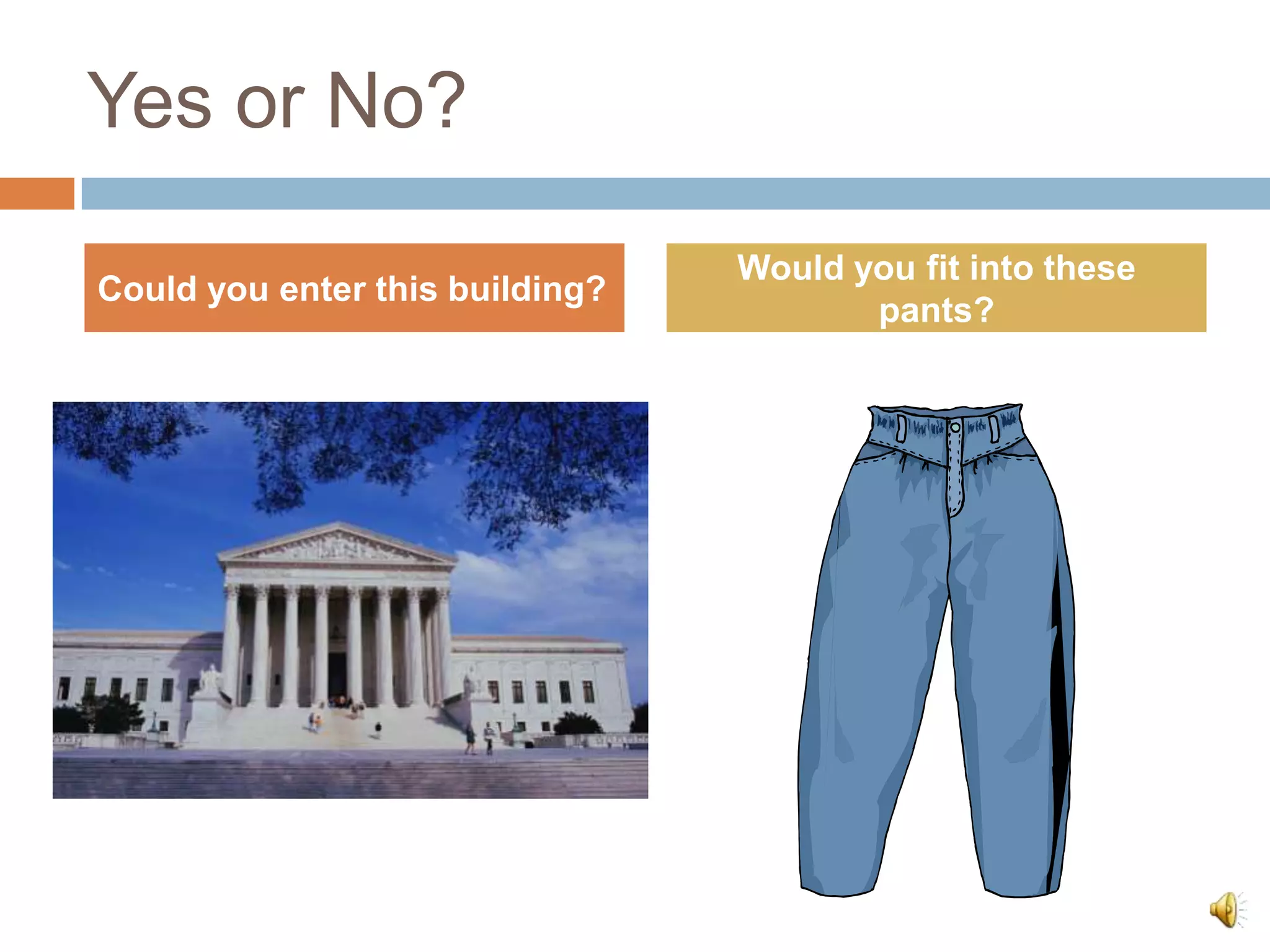
Yes or No?
                                 Would you fit into these
Could you enter this building?
                                        pants?
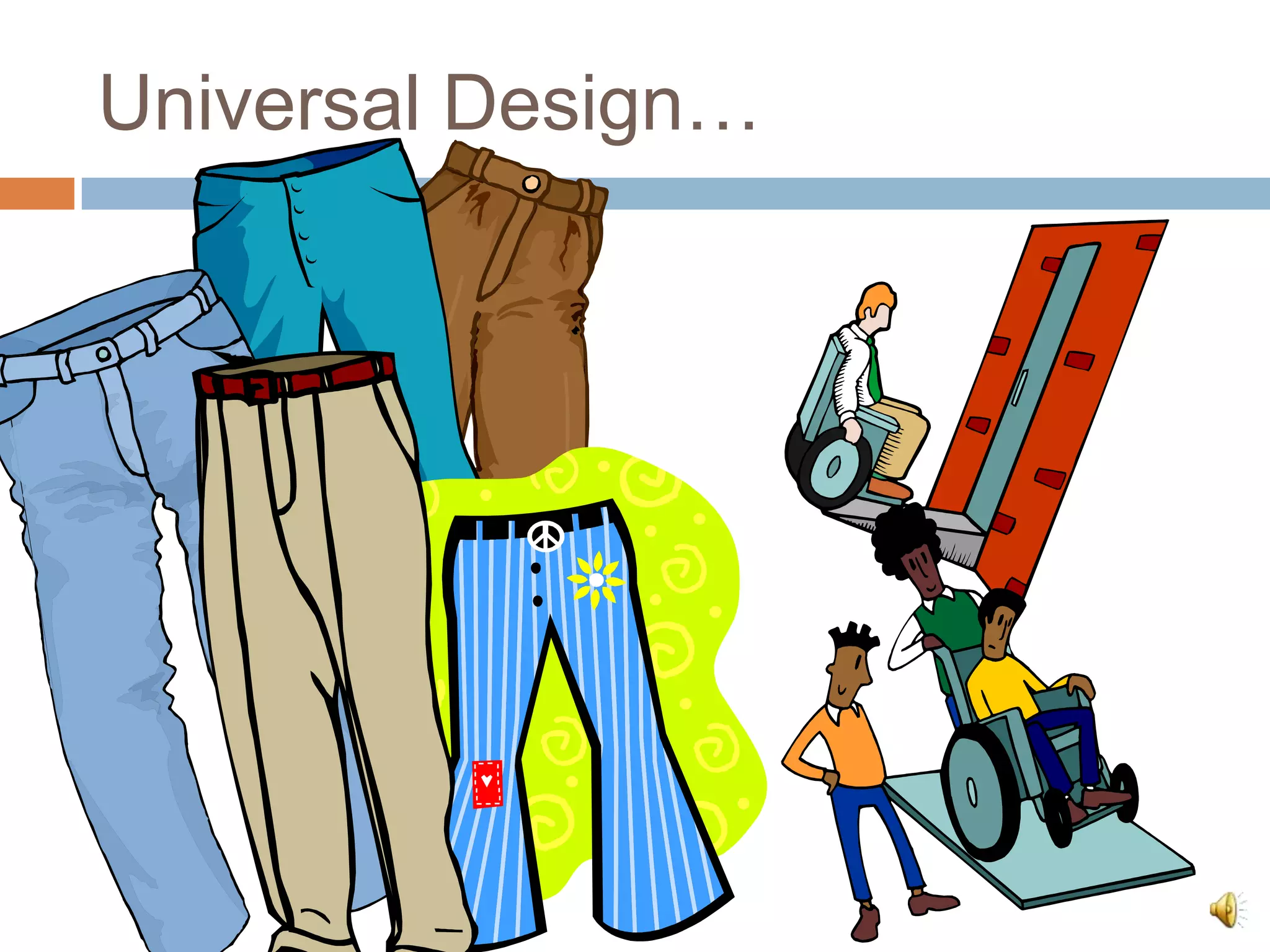
Universal Design…
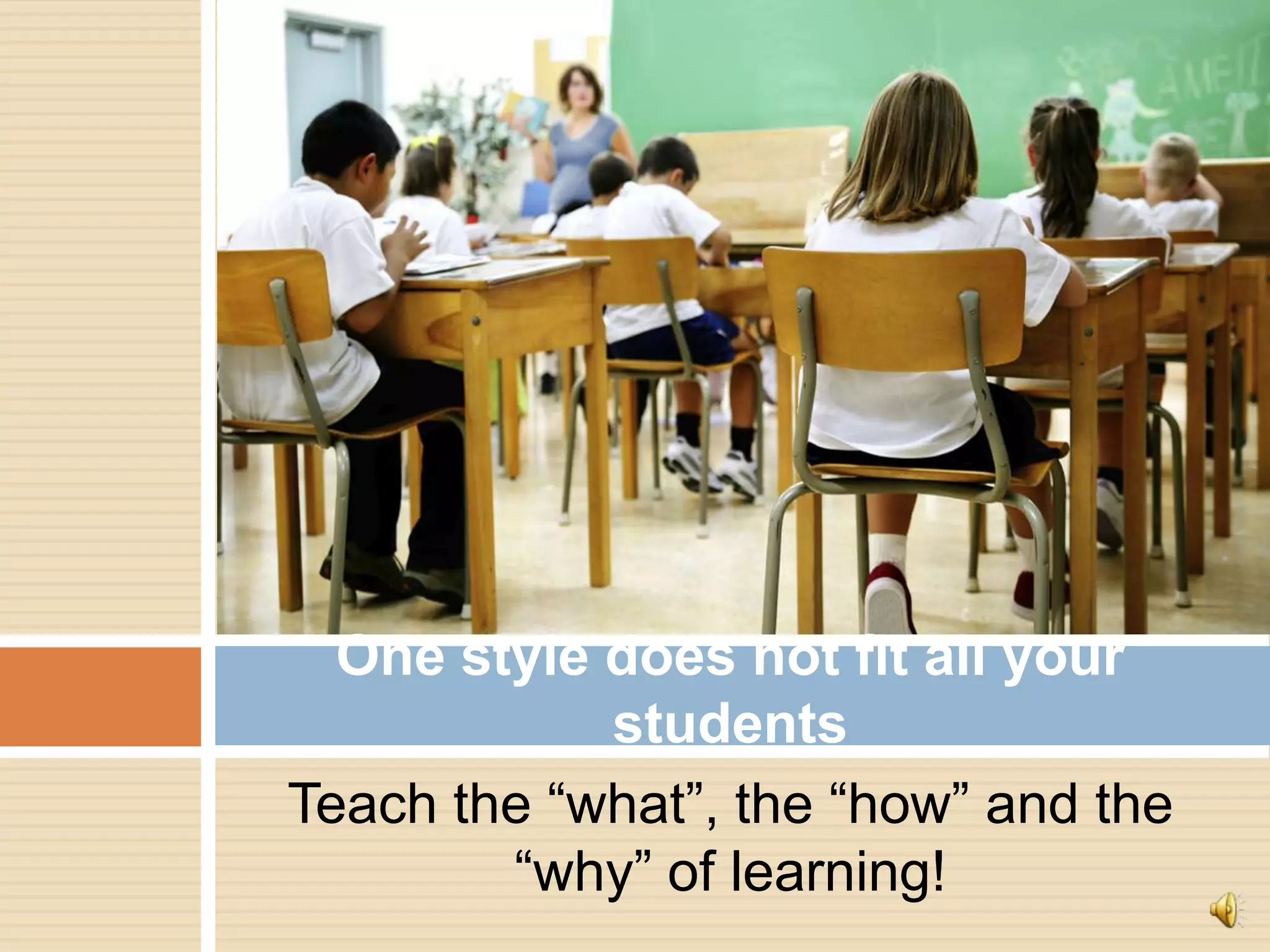
One style does not fit all your
            students
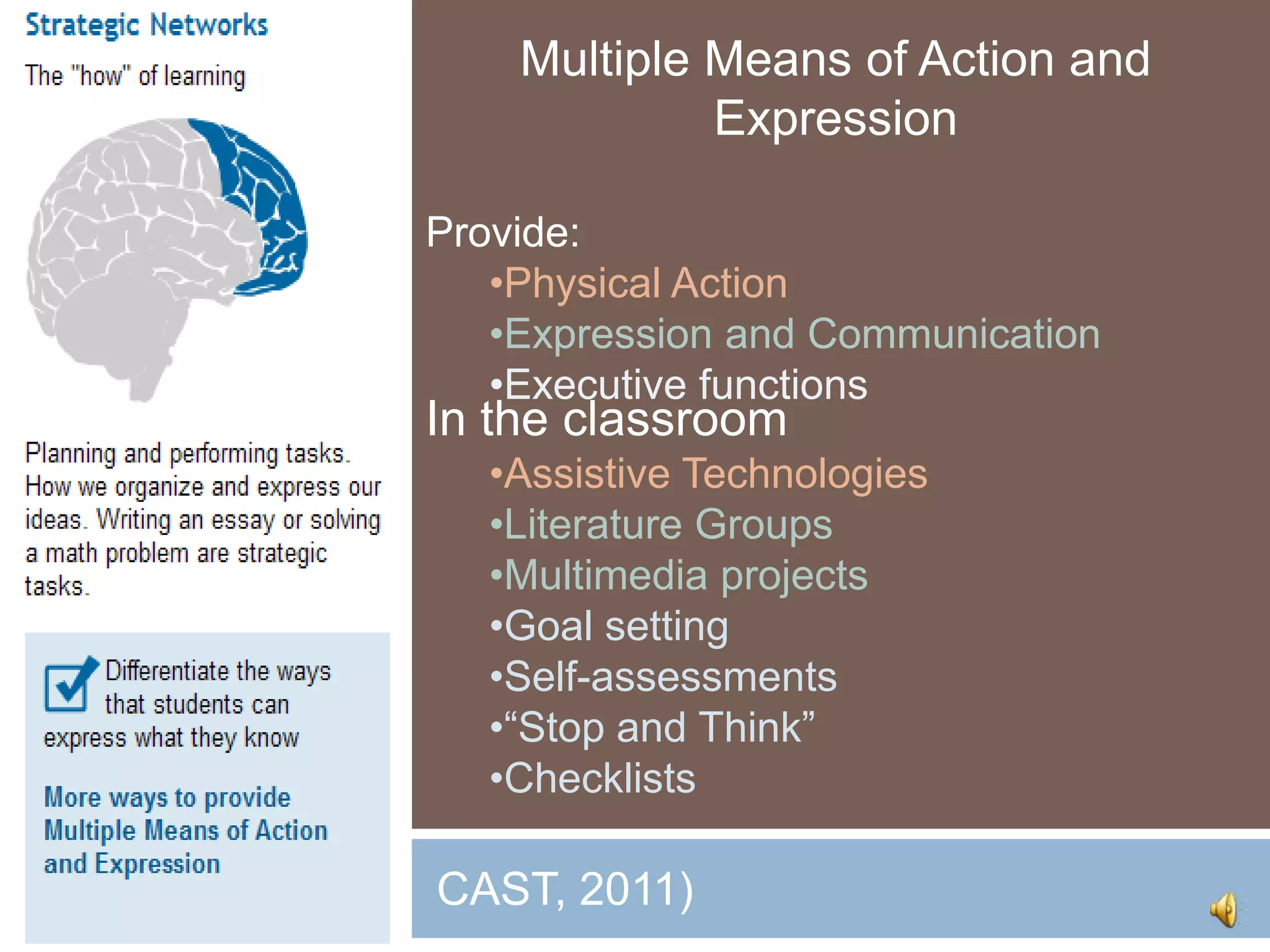
Teach the “what”, the “how” and the
        “why” of learning!
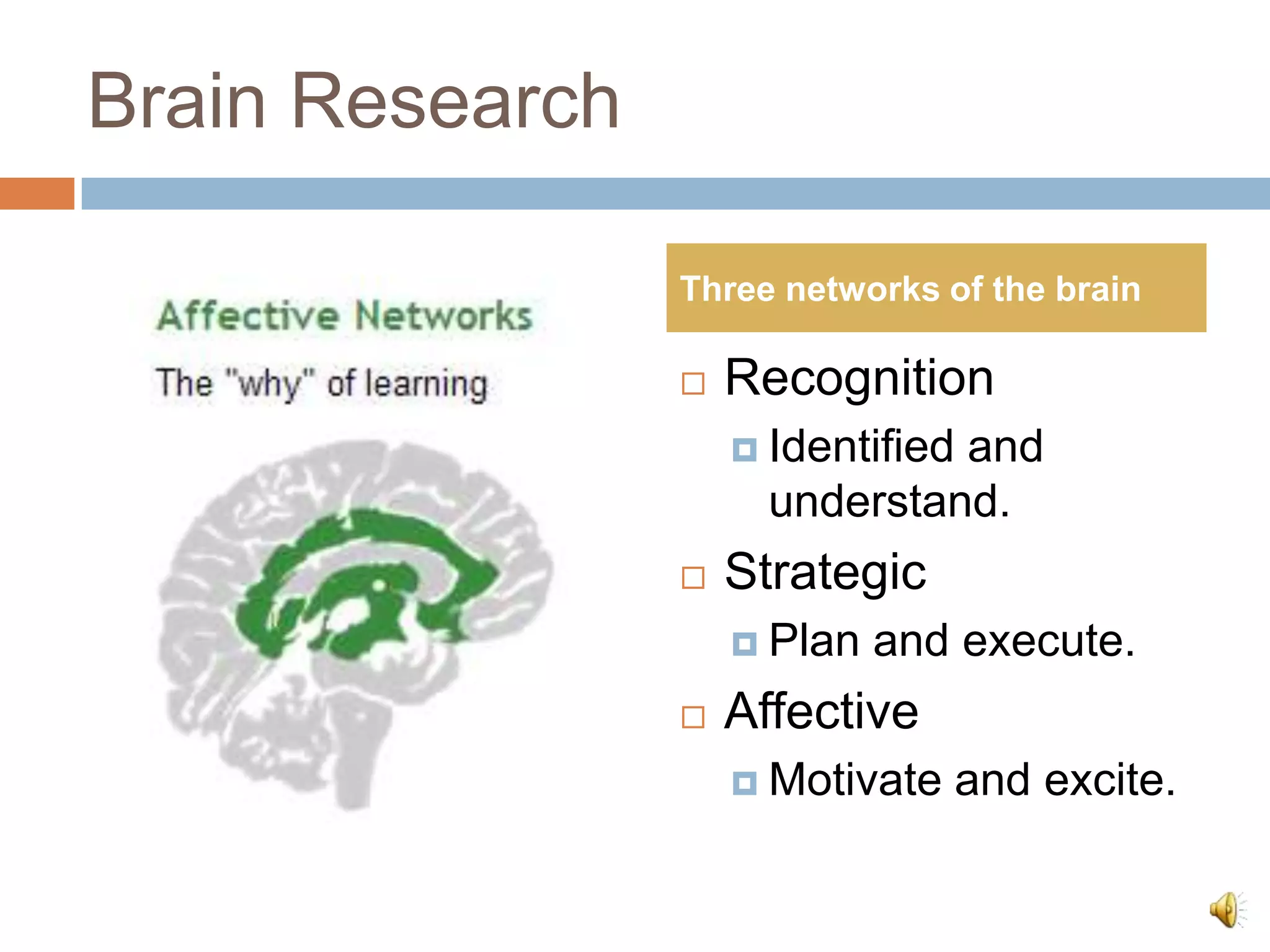
Brain Research

                 Three networks of the brain

                    Recognition
                      Identified
                                and
                       understand.
                    Strategic
                      Plan   and execute.
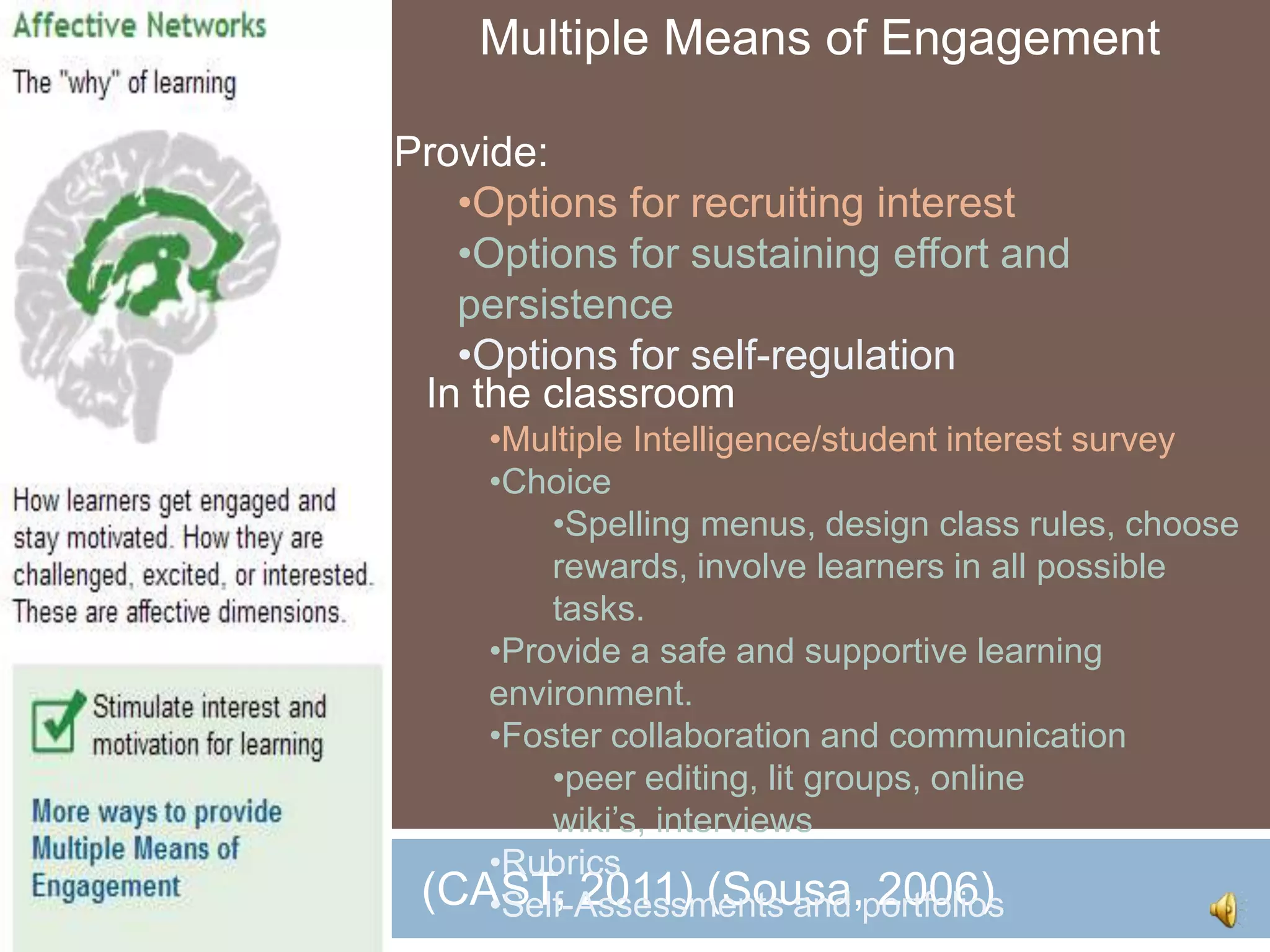
                    Affective
                      Motivate   and excite.
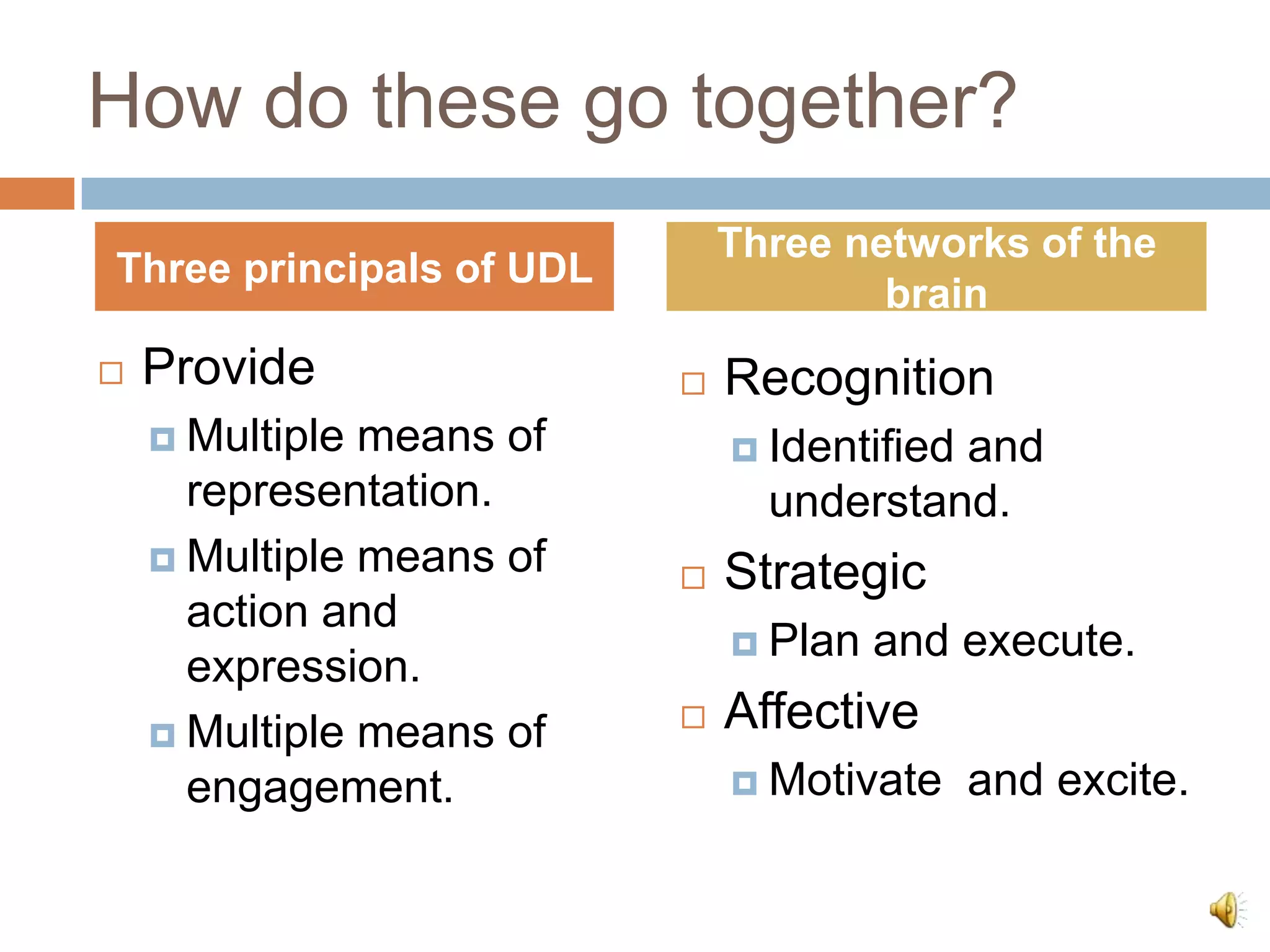
How do these go together?
                              Three networks of the
Three principals of UDL
                                      brain
   Provide                  Recognition
     Multiple means of        Identified
                                         and
      representation.           understand.
     Multiple means of
                             Strategic
      action and
                               Plan   and execute.
      expression.
     Multiple means of
                             Affective
      engagement.              Motivate     and excite.
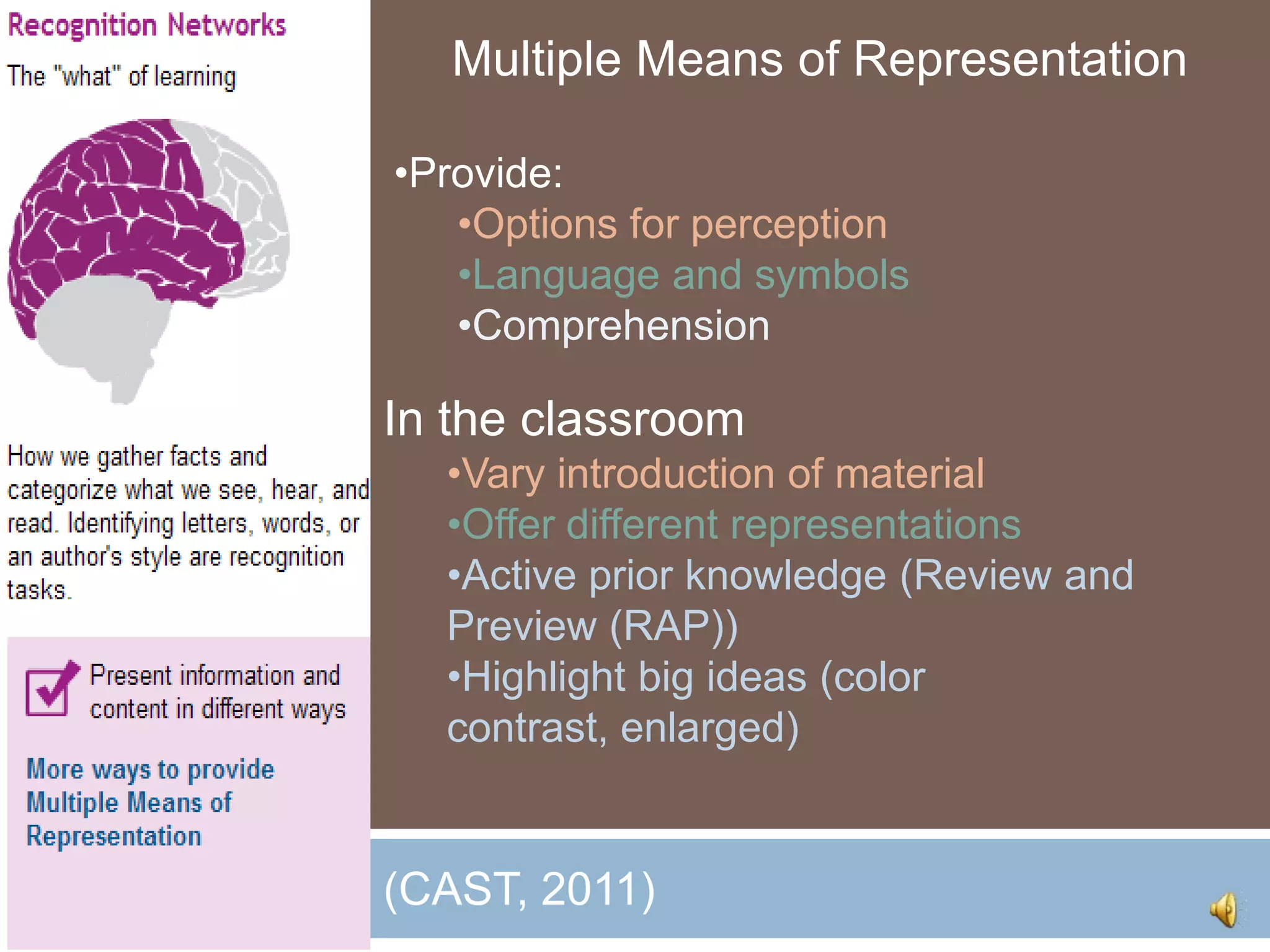
Multiple Means of Representation

•Provide:
   •Options for perception
   •Language and symbols
   •Comprehension

In the classroom
  •Vary introduction of material
  •Offer different representations
  •Active prior knowledge (Review and
  Preview (RAP))
  •Highlight big ideas (color
  contrast, enlarged)


(CAST, 2011)
Multiple Means of Action and
              Expression

 Provide:
    •Physical Action
    •Expression and Communication
    •Executive functions
 In the classroom
    •Assistive Technologies
    •Literature Groups
    •Multimedia projects
    •Goal setting
    •Self-assessments
    •“Stop and Think”
    •Checklists

( CAST, 2011)
Multiple Means of Engagement

Provide:
   •Options for recruiting interest
   •Options for sustaining effort and
   persistence
   •Options for self-regulation
 In the classroom
    •Multiple Intelligence/student interest survey
    •Choice
        •Spelling menus, design class rules, choose
        rewards, involve learners in all possible
        tasks.
    •Provide a safe and supportive learning
    environment.
    •Foster collaboration and communication
        •peer editing, lit groups, online
        wiki’s, interviews
    •Rubrics
 (CAST, 2011) (Sousa,portfolios
    •Self-Assessments and 2006)
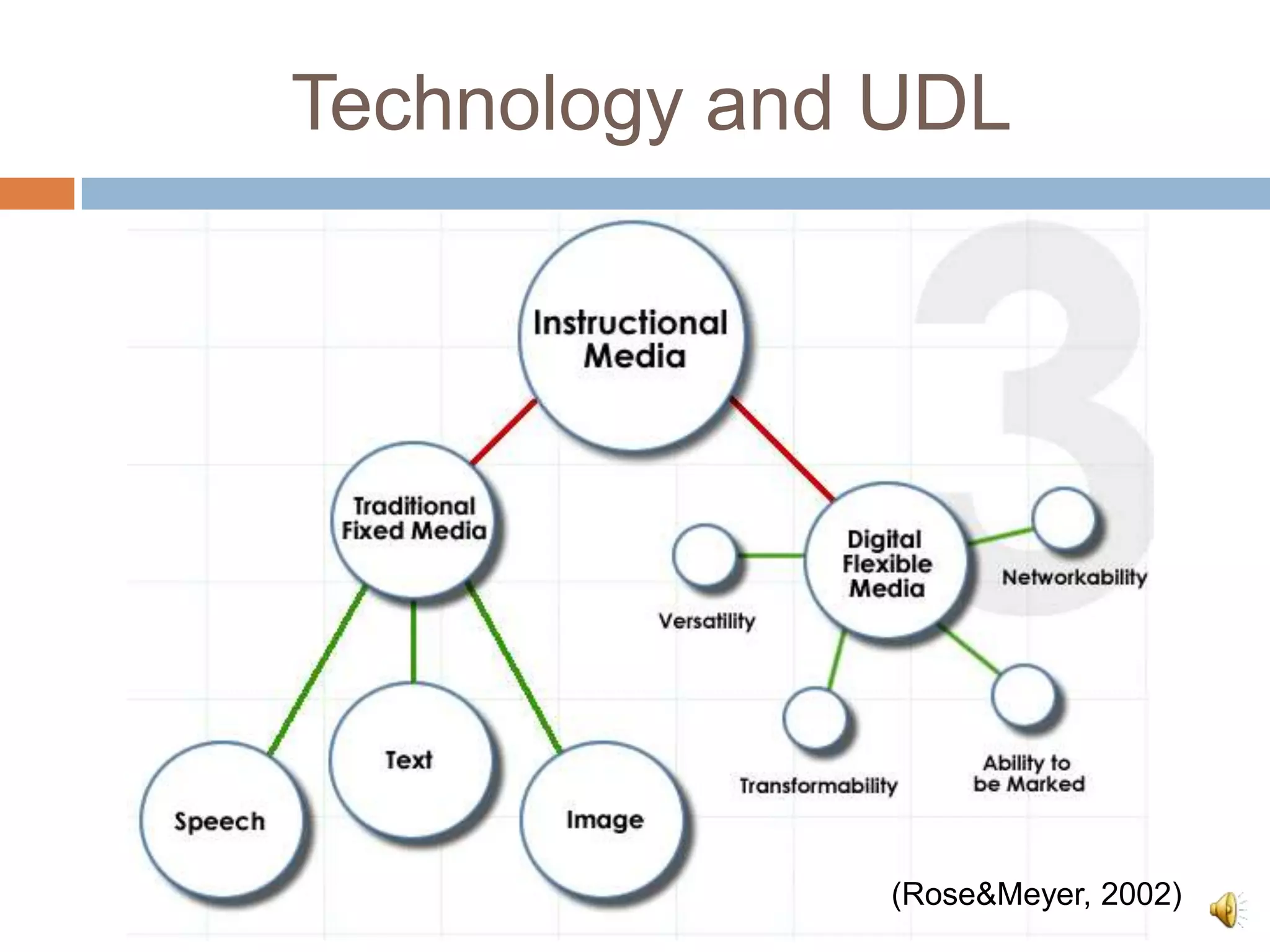
Technology and UDL


              (Rose&Meyer, 2002)
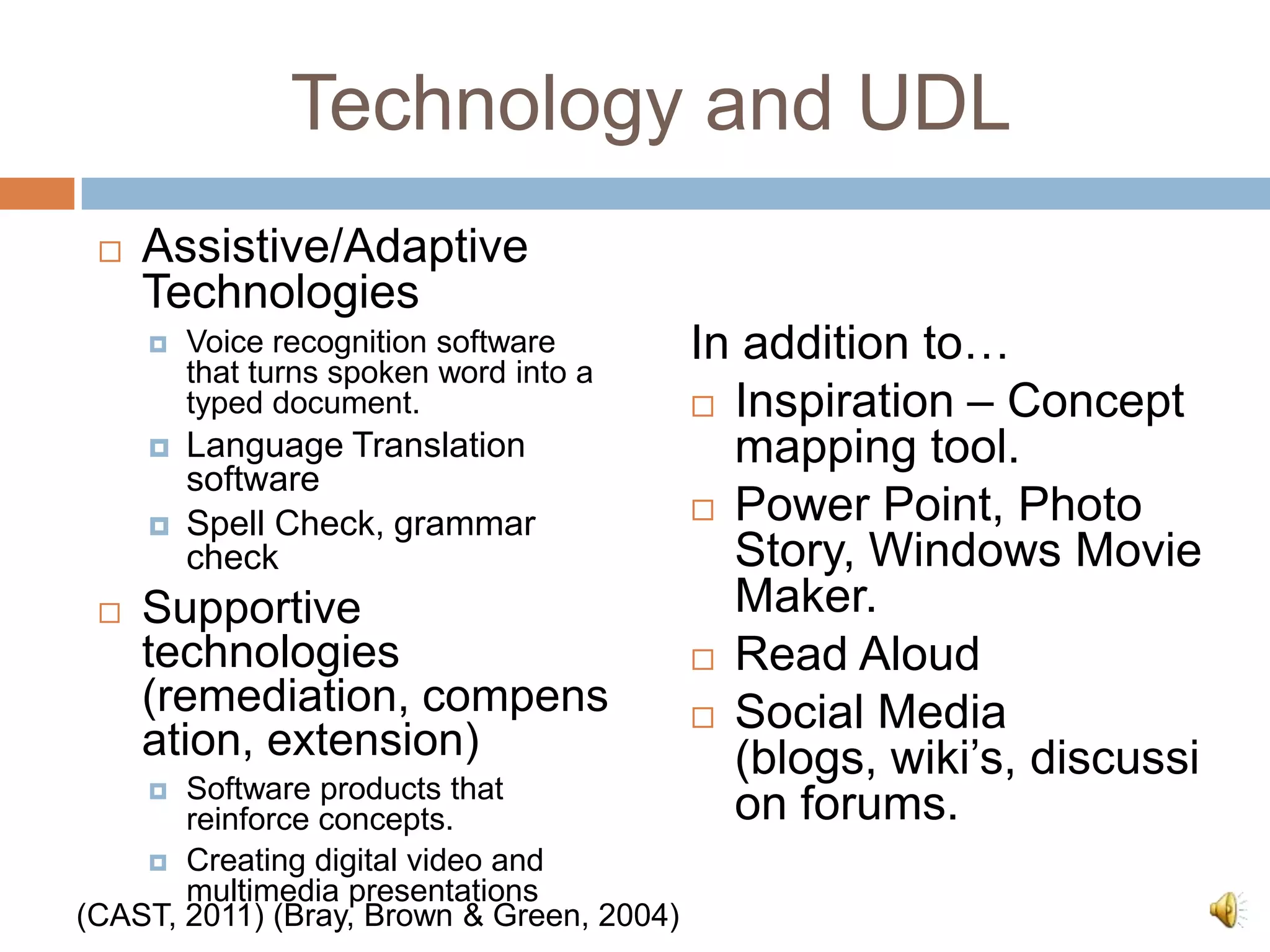
Technology and UDL
    Assistive/Adaptive
     Technologies
        Voice recognition software        In addition to…
         that turns spoken word into a
         typed document.                    Inspiration – Concept
        Language Translation                mapping tool.
         software
                                            Power Point, Photo
        Spell Check, grammar
         check                               Story, Windows Movie
    Supportive                              Maker.
     technologies                           Read Aloud
     (remediation, compens                  Social Media
     ation, extension)                       (blogs, wiki’s, discussi
      Software products that
       reinforce concepts.                   on forums.
     Creating digital video and
       multimedia presentations
(CAST, 2011) (Bray, Brown & Green, 2004)
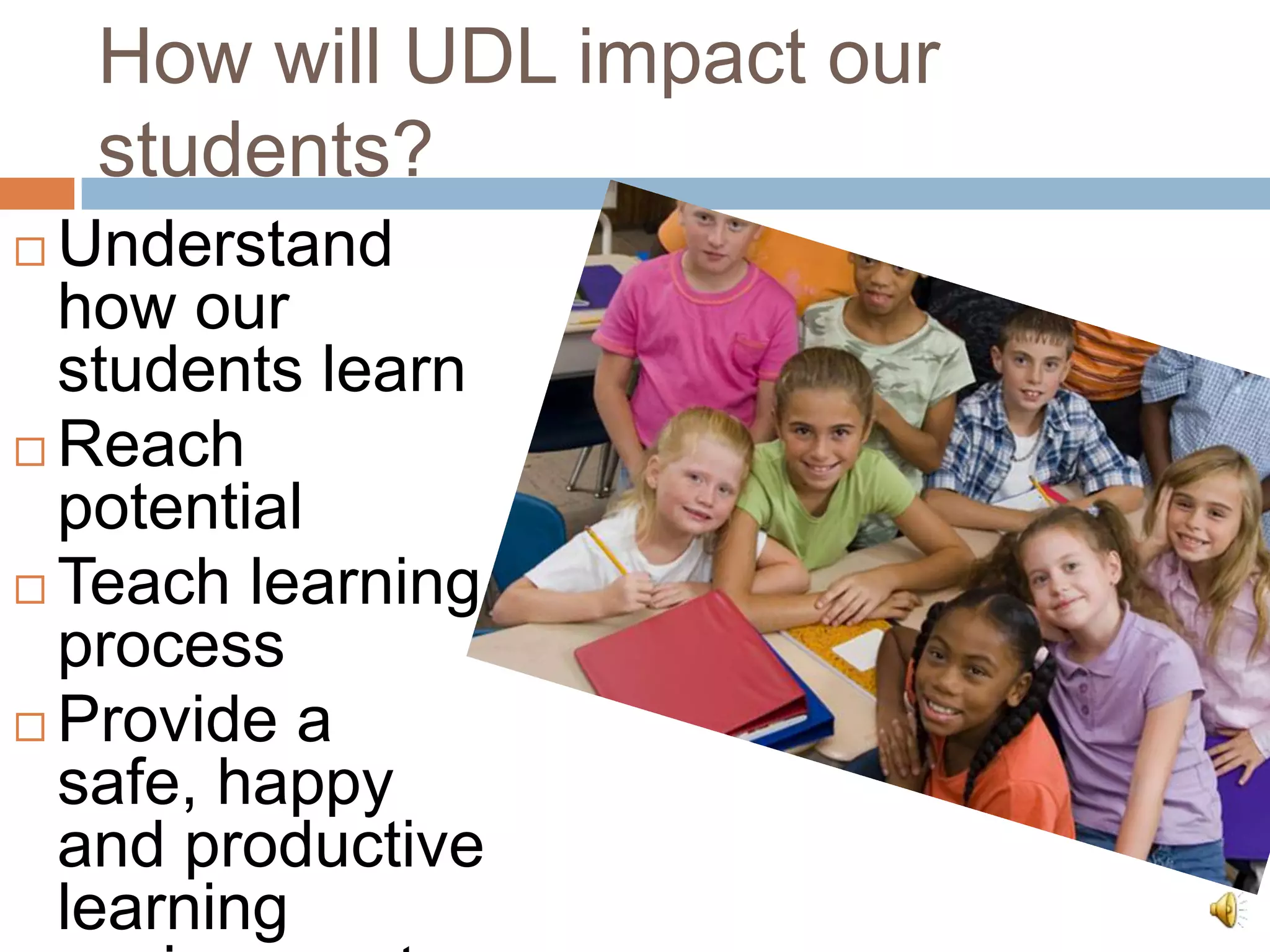
How will UDL impact our
    students?
 Understand
  how our
  students learn
 Reach
  potential
 Teach learning
  process
 Provide a
  safe, happy
  and productive
  learning
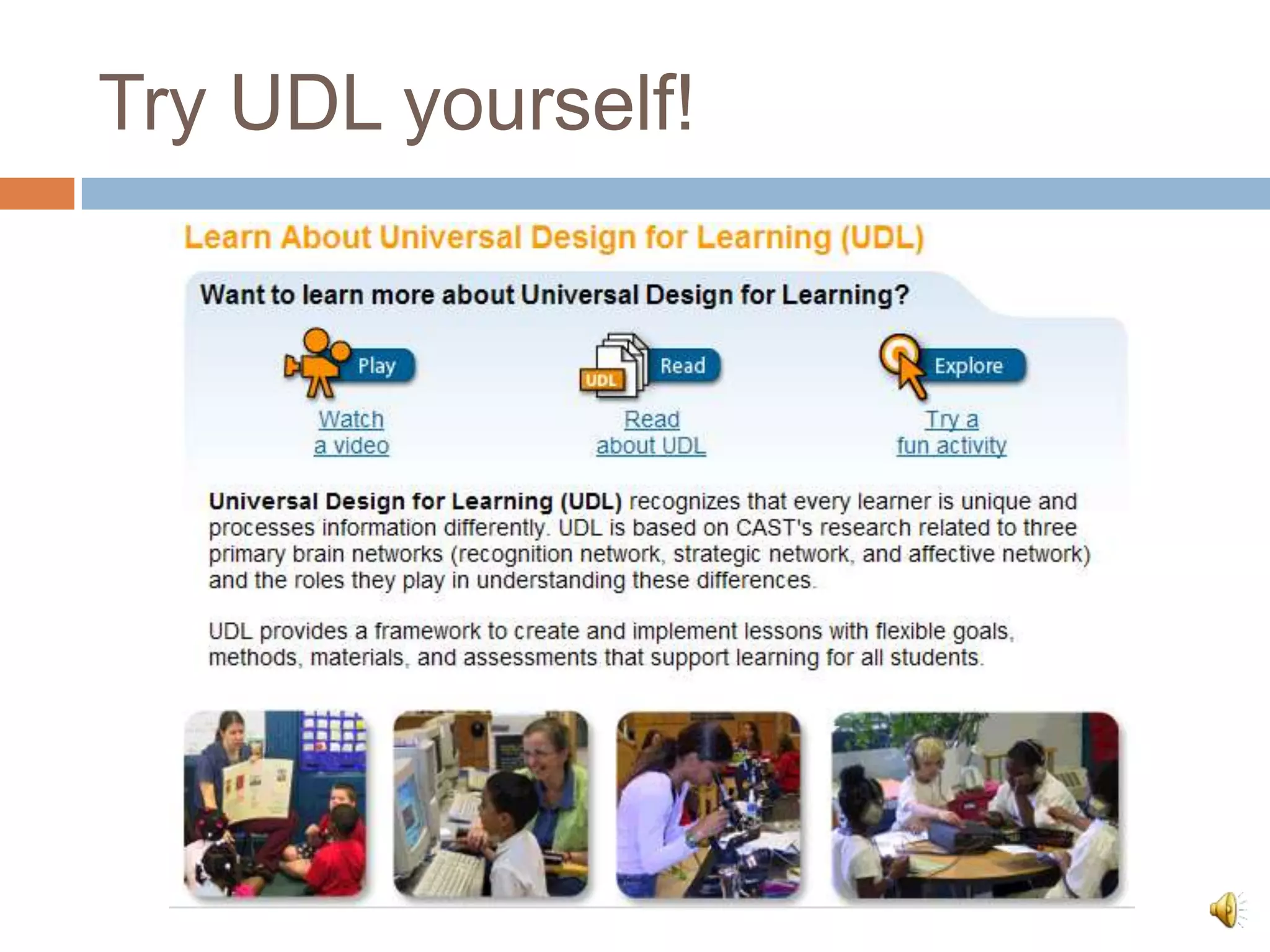
Try UDL yourself!
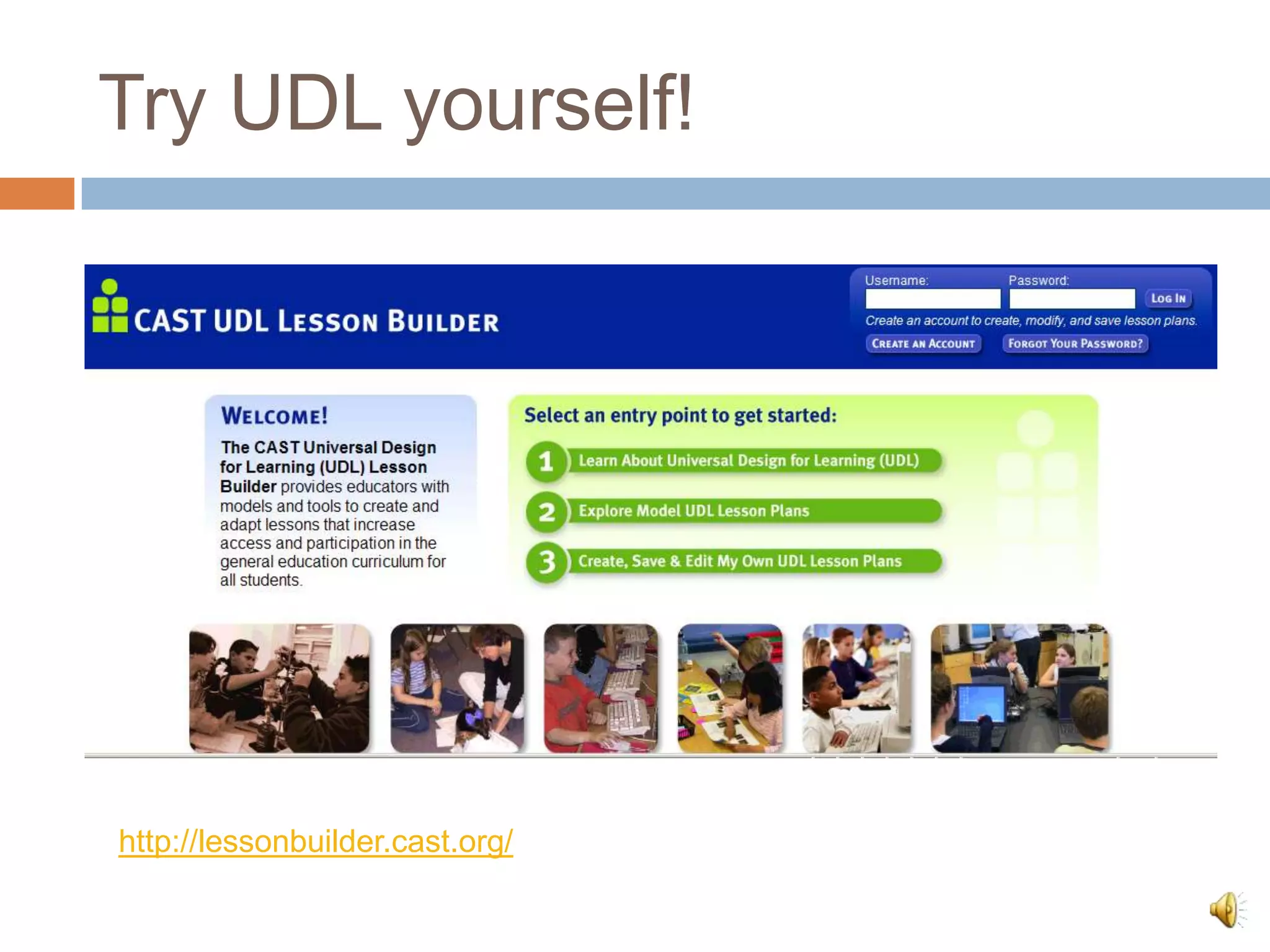
Try UDL yourself!


http://lessonbuilder.cast.org/
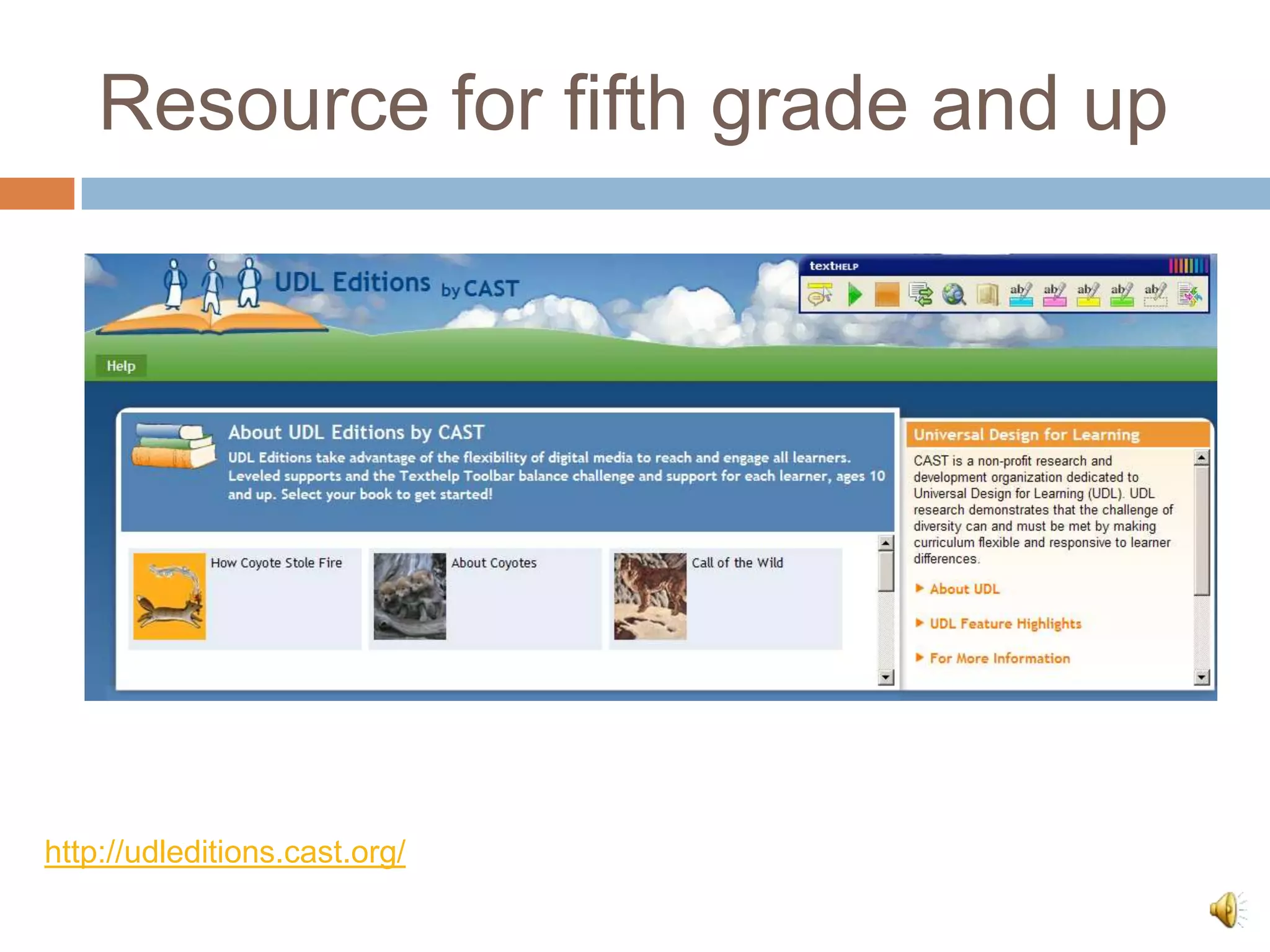
Resource for fifth grade and up


http://udleditions.cast.org/
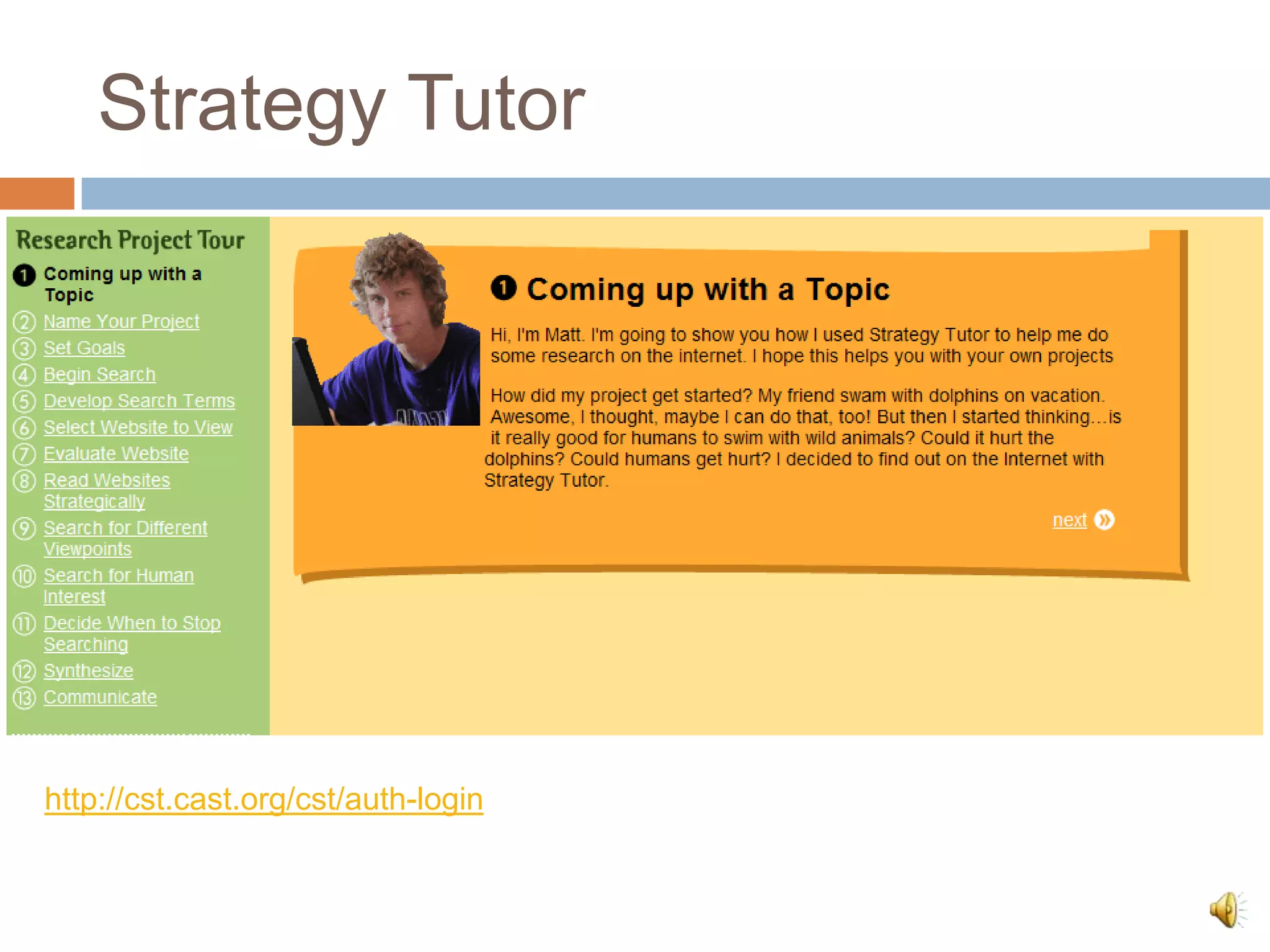
Strategy Tutor


http://cst.cast.org/cst/auth-login
References
CAST (2011). Universal Design for Learning Guidelines version 2.0. Wakefield, MA: Author.

CAST, Inc. (2005–2011c). UDL lesson builder. Retrieved from http:/lessonbuilder.cast.org/

Log In. (n.d.). UDL Curriculum Self-Check. Retrieved November 16, 2011, from
    http://udlselfcheck.cast.org/check.php?op=edit

CAST, Inc. (2006-2011). UDL Strategy Tutor. Retrieved from http://cst.cast.org/cst/auth-login

CAST, Inc. (2006-2011). UDL Editions by Cast. Retrieved from http://udleditions.cast.org/

Laureate Education, Inc. (Executive Producer). (2010). Universal Design for Learning. Baltimore, MD:
    Author.

Rose, D., & Meyer, A. (2002). Teaching every student in the digital age: Universal design for learning.
    Retrieved from http://www.cast.org/teachingeverystudent/ideas/tes/

Sousa, A. (2006). How The Brain Learns. California: Corwin Press.

Log In. (n.d.). UDL Curriculum Self-Check. Retrieved November 16, 2011, from
    http://udlselfcheck.cast.org/check.php?op=edit

Universal design for learners

  • 1.
    UNIVERSAL DESIGN FOR LEARNERS Sarah Terrone November 27, 2011
  • 2.
    Yes or No? Would you fit into these Could you enter this building? pants?
  • 3.
  • 4.
    One style doesnot fit all your students Teach the “what”, the “how” and the “why” of learning!
  • 5.
    Brain Research Three networks of the brain  Recognition  Identified and understand.  Strategic  Plan and execute.  Affective  Motivate and excite.
  • 6.
    How do thesego together? Three networks of the Three principals of UDL brain  Provide  Recognition  Multiple means of  Identified and representation. understand.  Multiple means of  Strategic action and  Plan and execute. expression.  Multiple means of  Affective engagement.  Motivate and excite.
  • 8.
    Multiple Means ofRepresentation •Provide: •Options for perception •Language and symbols •Comprehension In the classroom •Vary introduction of material •Offer different representations •Active prior knowledge (Review and Preview (RAP)) •Highlight big ideas (color contrast, enlarged) (CAST, 2011)
  • 9.
    Multiple Means ofAction and Expression Provide: •Physical Action •Expression and Communication •Executive functions In the classroom •Assistive Technologies •Literature Groups •Multimedia projects •Goal setting •Self-assessments •“Stop and Think” •Checklists ( CAST, 2011)
  • 10.
    Multiple Means ofEngagement Provide: •Options for recruiting interest •Options for sustaining effort and persistence •Options for self-regulation In the classroom •Multiple Intelligence/student interest survey •Choice •Spelling menus, design class rules, choose rewards, involve learners in all possible tasks. •Provide a safe and supportive learning environment. •Foster collaboration and communication •peer editing, lit groups, online wiki’s, interviews •Rubrics (CAST, 2011) (Sousa,portfolios •Self-Assessments and 2006)
  • 11.
    Technology and UDL (Rose&Meyer, 2002)
  • 12.
    Technology and UDL  Assistive/Adaptive Technologies  Voice recognition software In addition to… that turns spoken word into a typed document.  Inspiration – Concept  Language Translation mapping tool. software  Power Point, Photo  Spell Check, grammar check Story, Windows Movie  Supportive Maker. technologies  Read Aloud (remediation, compens  Social Media ation, extension) (blogs, wiki’s, discussi  Software products that reinforce concepts. on forums.  Creating digital video and multimedia presentations (CAST, 2011) (Bray, Brown & Green, 2004)
  • 13.
    How will UDLimpact our students?  Understand how our students learn  Reach potential  Teach learning process  Provide a safe, happy and productive learning
  • 15.
  • 16.
  • 17.
    Resource for fifthgrade and up http://udleditions.cast.org/
  • 18.
  • 20.
    References CAST (2011). UniversalDesign for Learning Guidelines version 2.0. Wakefield, MA: Author. CAST, Inc. (2005–2011c). UDL lesson builder. Retrieved from http:/lessonbuilder.cast.org/ Log In. (n.d.). UDL Curriculum Self-Check. Retrieved November 16, 2011, from http://udlselfcheck.cast.org/check.php?op=edit CAST, Inc. (2006-2011). UDL Strategy Tutor. Retrieved from http://cst.cast.org/cst/auth-login CAST, Inc. (2006-2011). UDL Editions by Cast. Retrieved from http://udleditions.cast.org/ Laureate Education, Inc. (Executive Producer). (2010). Universal Design for Learning. Baltimore, MD: Author. Rose, D., & Meyer, A. (2002). Teaching every student in the digital age: Universal design for learning. Retrieved from http://www.cast.org/teachingeverystudent/ideas/tes/ Sousa, A. (2006). How The Brain Learns. California: Corwin Press. Log In. (n.d.). UDL Curriculum Self-Check. Retrieved November 16, 2011, from http://udlselfcheck.cast.org/check.php?op=edit

Editor's Notes

  • #4 We all know that when it comes to clothing “one size does not fit all.” We also know that not all people can enter a building using stairs. To things Universal was have to change the design. Such as various sizes and styles of pants or building ramps to enter or building or elevators to change floors. It is the same way with teaching.
  • #5 One style will not reach all learners…This is the inspiration and foundation of UDL. UDL helps teachers develop their lessons to reach all the learners in their class and optimize their learning potential. (CAST WEBSITE) UDL also teaches children how to be highly proficient learners in any given environment. (CAST, 2011).Using the universal design for learning your lessons will be developed in way that supports brain research on how children learn best and will give them the tools to becoming lifelong learners.
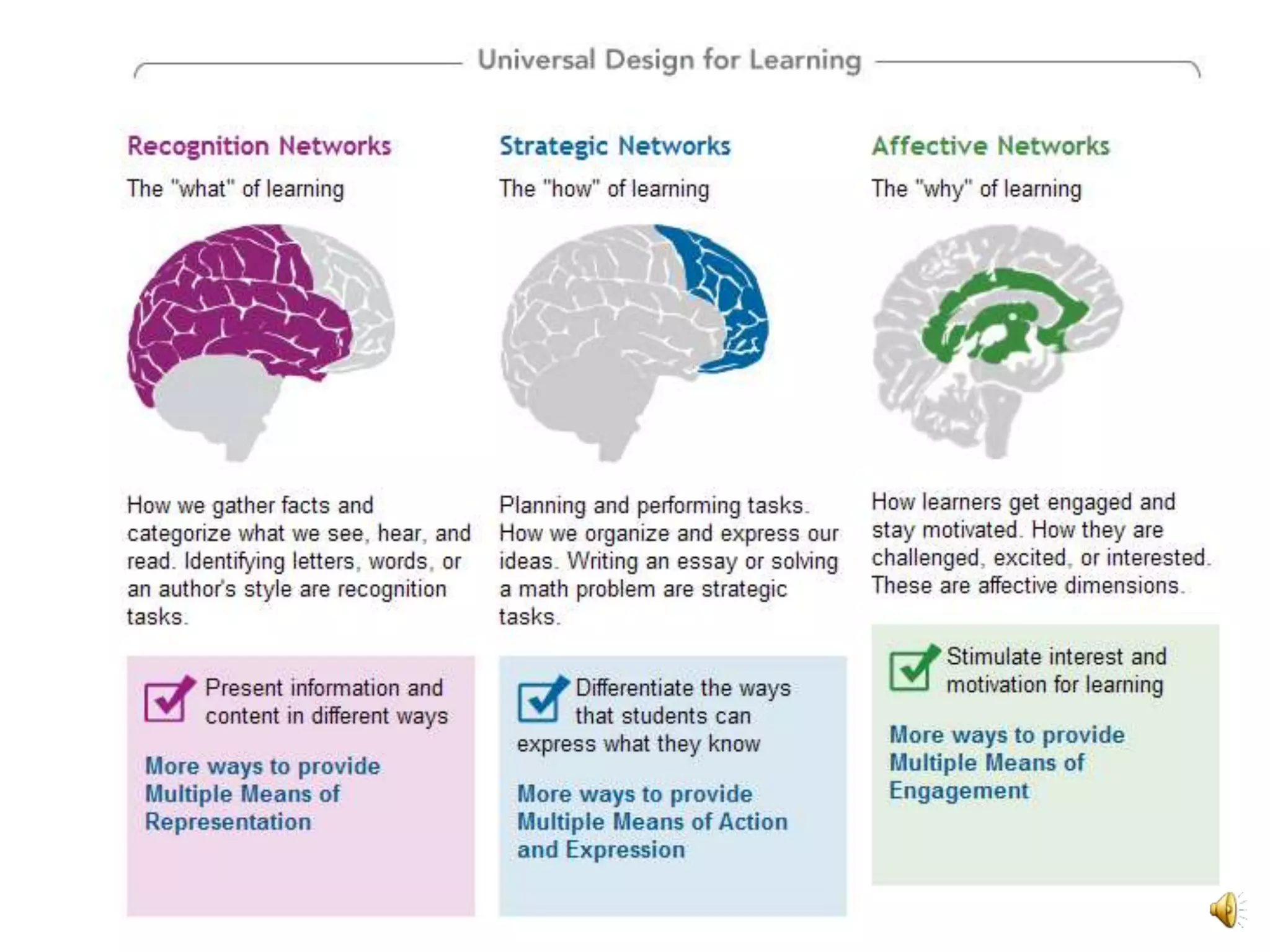
  • #6 UDL is based on brain research that shows us how the brain distributes and processes information. Although, the overall process is the same for everyone, the rate at which it is completed or areas of strength are different for each person. The three networks that determine what, how and why we learn work together when new information is presented to create a memory or learnt material. Recognition – What of learning – is located in the back of the brain and holds the sensory axons. Here information is brought into the brain through our senses. We are able to recognize, sort and gather incoming facts. Strategic – How of Learning – located at the front of the brain. How we plan and execute our ideas. Affective – The why of learning – in the inner part of the brain. Deals with emotions, what we like and don’t like. What interests us, motivates and excites us.
  • #7 The three principals of Universal Design for Learners are to provide multiple means of representation, action and expressions, and engagement. It is impossible to learn, if you do not understand the means in which it is presented to you. Provide your students with multiple means of representation.Visual: on Smart Board or in notebookAuditory: Video, voice thread, read aloud, lectureKinesthetic: give students manipulativesAdjustability: enlarge text, sound
  • #9 re
  • #10 Because of the many barriers students in the classroom may have it is important to have a variety of ways for them to express themselves. A typical classroom could have a child with language barriers due to an impairment of a cultural difference. A physical handicap where moving around the room is difficult or lack strategic skills such as organization.
  • #11 Because of the many barriers students in the classroom may have it is important to have a variety of ways for them to express themselves. A typical classroom could have a child with language barriers due to an impairment of a cultural difference. A physical handicap where moving around the room is difficult or lack strategic skills such as organization.