WORKING REMOTELY
The story behind the remote workforce revolution.
WHAT IS THE REMOTE WORKFORCE?
TYPES OF REMOTE WORK ARRANGEMENTS
Hybrid
Employee
Full-time
Employee
Outsourced/
contractors
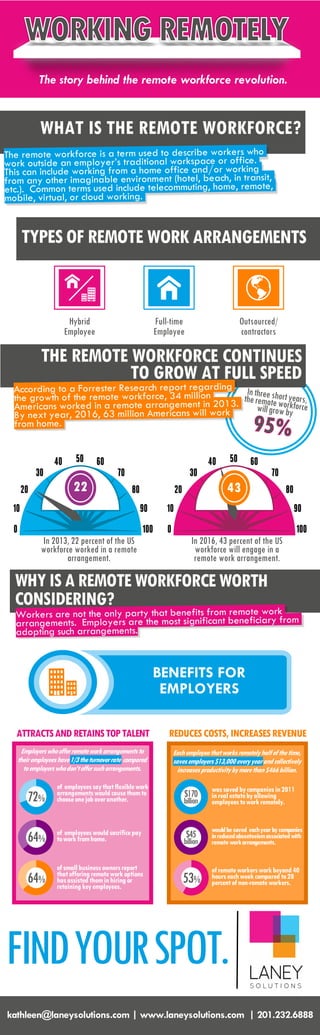
According to a Forrester Research report regarding
the growth of the remote workforce, 34 million
Americans worked in a remote arrangement in 2013.
By next year, 2016, 63 million Americans will work
from home.
THE REMOTE WORKFORCE CONTINUES
TO GROW AT FULL SPEED
The remote workforce is a term used to describe workers who
work outside an employer’s traditional workspace or office.
This can include working from a home office and/or working
from any other imaginable environment (hotel, beach, in transit,
etc.). Common terms used include telecommuting, home, remote,
mobile, virtual, or cloud working.
WHYIS A REMOTEWORKFORCEWORTH
CONSIDERING?
In 2013, 22 percent of the US
workforce worked in a remote
arrangement.
22 43
In 2016, 43 percent of the US
workforce will engage in a
remote work arrangement.
Inthreeshortyears,theremoteworkforcewillgrowby
95%
Workers are not the only party that benefits from remote work
arrangements. Employers are the most significant beneficiary from
adopting such arrangements.
BENEFITS FOR
EMPLOYERS
ATTRACTSANDRETAINSTOPTALENT
ofsmallbusinessownersreport
thatofferingremoteworkoptions
hasassistedtheminhiringor
retainingkeyemployees.
64%
64%
of employeeswouldsacrificepay
toworkfromhome.
72%
of employeessaythatflexiblework
arrangementswouldcausethemto
chooseonejoboveranother.
REDUCESCOSTS, INCREASESREVENUE
$170
billion
wassavedbycompaniesin2011
inrealestatebyallowing
employeestoworkremotely.
wouldbesaved eachyearbycompanies
inreducedabsenteeismassociatedwith
remoteworkarrangements.
$45
billion
ofremoteworkersworkbeyond40
hourseachweekcomparedto28
percentofnon-remoteworkers.53%
FINDYOURSPOT.
kathleen@laneysolutions.com | www.laneysolutions.com | 201.232.6888

Working Remotely: The story behind the remote workforce revolution

  • 1.
    WORKING REMOTELY The storybehind the remote workforce revolution. WHAT IS THE REMOTE WORKFORCE? TYPES OF REMOTE WORK ARRANGEMENTS Hybrid Employee Full-time Employee Outsourced/ contractors According to a Forrester Research report regarding the growth of the remote workforce, 34 million Americans worked in a remote arrangement in 2013. By next year, 2016, 63 million Americans will work from home. THE REMOTE WORKFORCE CONTINUES TO GROW AT FULL SPEED The remote workforce is a term used to describe workers who work outside an employer’s traditional workspace or office. This can include working from a home office and/or working from any other imaginable environment (hotel, beach, in transit, etc.). Common terms used include telecommuting, home, remote, mobile, virtual, or cloud working. WHYIS A REMOTEWORKFORCEWORTH CONSIDERING? In 2013, 22 percent of the US workforce worked in a remote arrangement. 22 43 In 2016, 43 percent of the US workforce will engage in a remote work arrangement. Inthreeshortyears,theremoteworkforcewillgrowby 95% Workers are not the only party that benefits from remote work arrangements. Employers are the most significant beneficiary from adopting such arrangements. BENEFITS FOR EMPLOYERS ATTRACTSANDRETAINSTOPTALENT ofsmallbusinessownersreport thatofferingremoteworkoptions hasassistedtheminhiringor retainingkeyemployees. 64% 64% of employeeswouldsacrificepay toworkfromhome. 72% of employeessaythatflexiblework arrangementswouldcausethemto chooseonejoboveranother. REDUCESCOSTS, INCREASESREVENUE $170 billion wassavedbycompaniesin2011 inrealestatebyallowing employeestoworkremotely. wouldbesaved eachyearbycompanies inreducedabsenteeismassociatedwith remoteworkarrangements. $45 billion ofremoteworkersworkbeyond40 hourseachweekcomparedto28 percentofnon-remoteworkers.53% FINDYOURSPOT. kathleen@laneysolutions.com | www.laneysolutions.com | 201.232.6888