Task 3 . TEMPERATE CLIMATES
a. MEDITERRANEAN CLIMATE
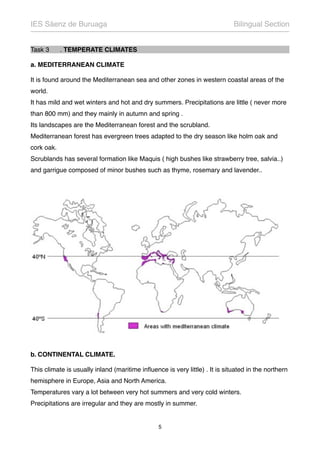
It is found around the Mediterranean sea and other zones in western coastal areas of the
world.
It has mild and wet winters and hot and dry summers. Precipitations are little ( never more
than 800 mm) and they mainly in autumn and spring .
Its landscapes are the Mediterranean forest and the scrubland.
Mediterranean forest has evergreen trees adapted to the dry season like holm oak and
cork oak.
Scrublands has several formation like Maquis ( high bushes like strawberry tree, salvia..)
and garrigue composed of minor bushes such as thyme, rosemary and lavender..
b. CONTINENTAL CLIMATE.
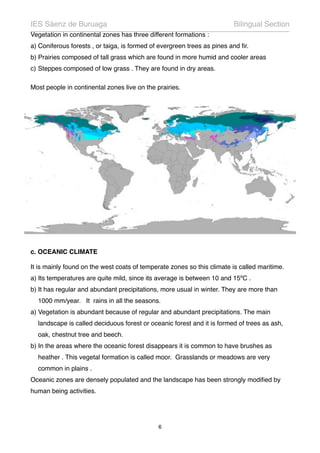
This climate is usually inland (maritime influence is very little) . It is situated in the northern
hemisphere in Europe, Asia and North America.
Temperatures vary a lot between very hot summers and very cold winters.
Precipitations are irregular and they are mostly in summer.
IES Sáenz de Buruaga! Bilingual Section
5
Vegetation in continental zones has three different formations :
a) Coniferous forests , or taiga, is formed of evergreen trees as pines and fir.
b) Prairies composed of tall grass which are found in more humid and cooler areas
c) Steppes composed of low grass . They are found in dry areas.
Most people in continental zones live on the prairies.
c. OCEANIC CLIMATE
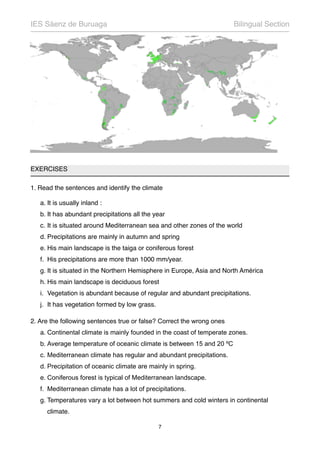
It is mainly found on the west coats of temperate zones so this climate is called maritime.
a) Its temperatures are quite mild, since its average is between 10 and 15ºC .
b) It has regular and abundant precipitations, more usual in winter. They are more than
1000 mm/year. It rains in all the seasons.
a) Vegetation is abundant because of regular and abundant precipitations. The main
landscape is called deciduous forest or oceanic forest and it is formed of trees as ash,
oak, chestnut tree and beech.
b) In the areas where the oceanic forest disappears it is common to have brushes as
heather . This vegetal formation is called moor. Grasslands or meadows are very
common in plains .
Oceanic zones are densely populated and the landscape has been strongly modified by
human being activities.
IES Sáenz de Buruaga! Bilingual Section
6
EXERCISES
1. Read the sentences and identify the climate
a. It is usually inland :
b. It has abundant precipitations all the year
c. It is situated around Mediterranean sea and other zones of the world
d. Precipitations are mainly in autumn and spring
e. His main landscape is the taiga or coniferous forest
f. His precipitations are more than 1000 mm/year.
g. It is situated in the Northern Hemisphere in Europe, Asia and North América
h. His main landscape is deciduous forest
i. Vegetation is abundant because of regular and abundant precipitations.
j. It has vegetation formed by low grass.
2. Are the following sentences true or false? Correct the wrong ones
a. Continental climate is mainly founded in the coast of temperate zones.
b. Average temperature of oceanic climate is between 15 and 20 ºC
c. Mediterranean climate has regular and abundant precipitations.
d. Precipitation of oceanic climate are mainly in spring.
e. Coniferous forest is typical of Mediterranean landscape.
f. Mediterranean climate has a lot of precipitations.
g. Temperatures vary a lot between hot summers and cold winters in continental
climate.
IES Sáenz de Buruaga! Bilingual Section
7
h. Scrublands are typical of Mediterranean climate.
i. Temperatures of continental climate are mild.
j. Precipitations of continental climate are mainly in winter.
k. Mediterranean has cold and wet winters
3. Complete the chart
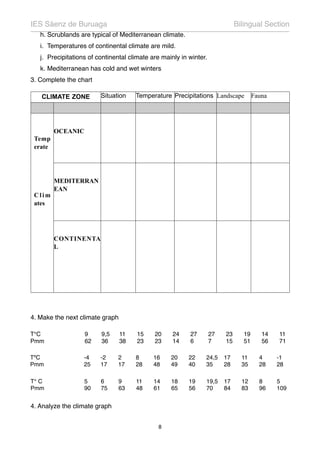
CLIMATE ZONECLIMATE ZONE Situation Temperature Precipitations Landscape Fauna
Temp
erate
Clim
ates
OCEANIC
Temp
erate
Clim
ates
MEDITERRAN
EAN
Temp
erate
Clim
ates
CONTINENTA
L
4. Make the next climate graph
Ejercicios de climogramas 3ºESO
Realiza los siguientes climogramas comentándolos, para ello halla su temperatura media, la amplitud térmica
sus precipitaciones totales, su estación seca y su estación húmeda.
Indica además el tipo de clima que és y localizalo geográficamente.
! E! F! M! A! M! J! J! A! S! O! N! D
1)
T°C! 9! 9,5! 11! 15! 20! 24! 27! 27! 23! 19! 14! 11
Pmm! 62! 36! 38! 23! 23! 14! 6! 7! 15! 51! 56! 71
2)
T° C! 5! 6! 9! 11! 14! 18! 19! 19,5! 17! 12! 8! 5!
Pmm! 90! 75! 63! 48! 61! 65! 56! 70! 84! 83! 96! 109
3)
TºC ! -4! -2! 2! 8! 16! 20! 22! 24,5! 17! 11! 4! -1
Pmm! 25! 17! 17! 28! 48! 49! 40! 35! 28! 35! 28! 28
4)
T°C! 16! 16! 17! 18! 19! 20! 21! 21! 21! 20! 19! 17!
! 7! 5! 5! 1! 1! 0! 0! 0! 7! 1! 15! 7
Ejercicios de climogramas 3ºESO
Realiza los siguientes climogramas comentándolos, para ello halla su temperatura media, la amplitud térmica,
sus precipitaciones totales, su estación seca y su estación húmeda.
Indica además el tipo de clima que és y localizalo geográficamente.
! E! F! M! A! M! J! J! A! S! O! N! D
1)
T°C! 9! 9,5! 11! 15! 20! 24! 27! 27! 23! 19! 14! 11
Pmm! 62! 36! 38! 23! 23! 14! 6! 7! 15! 51! 56! 71
2)
T° C! 5! 6! 9! 11! 14! 18! 19! 19,5! 17! 12! 8! 5!
Pmm! 90! 75! 63! 48! 61! 65! 56! 70! 84! 83! 96! 109
3)
TºC ! -4! -2! 2! 8! 16! 20! 22! 24,5! 17! 11! 4! -1
Pmm! 25! 17! 17! 28! 48! 49! 40! 35! 28! 35! 28! 28
4)
T°C! 16! 16! 17! 18! 19! 20! 21! 21! 21! 20! 19! 17!
! 7! 5! 5! 1! 1! 0! 0! 0! 7! 1! 15! 7
5)
T°C! 24! 24! 24! 25! 24! 23! 23! 24! 24! 24! 24! 23
Pmm! 97! 142! 127! 142! 157! 86! 97! 99! 178! 226! 216! 137
6)
Ejercicios de climogramas 3ºESO
Realiza los siguientes climogramas comentándolos, para ello halla su temperatura media, la amplitud térmica,
sus precipitaciones totales, su estación seca y su estación húmeda.
Indica además el tipo de clima que és y localizalo geográficamente.
! E! F! M! A! M! J! J! A! S! O! N! D
1)
T°C! 9! 9,5! 11! 15! 20! 24! 27! 27! 23! 19! 14! 11
Pmm! 62! 36! 38! 23! 23! 14! 6! 7! 15! 51! 56! 71
2)
T° C! 5! 6! 9! 11! 14! 18! 19! 19,5! 17! 12! 8! 5!
Pmm! 90! 75! 63! 48! 61! 65! 56! 70! 84! 83! 96! 109
3)
TºC ! -4! -2! 2! 8! 16! 20! 22! 24,5! 17! 11! 4! -1
Pmm! 25! 17! 17! 28! 48! 49! 40! 35! 28! 35! 28! 28
4)
T°C! 16! 16! 17! 18! 19! 20! 21! 21! 21! 20! 19! 17!
4. Analyze the climate graph
IES Sáenz de Buruaga! Bilingual Section
8

Landscapes of the world. Task 3

  • 1.
    Task 3 .TEMPERATE CLIMATES a. MEDITERRANEAN CLIMATE It is found around the Mediterranean sea and other zones in western coastal areas of the world. It has mild and wet winters and hot and dry summers. Precipitations are little ( never more than 800 mm) and they mainly in autumn and spring . Its landscapes are the Mediterranean forest and the scrubland. Mediterranean forest has evergreen trees adapted to the dry season like holm oak and cork oak. Scrublands has several formation like Maquis ( high bushes like strawberry tree, salvia..) and garrigue composed of minor bushes such as thyme, rosemary and lavender.. b. CONTINENTAL CLIMATE. This climate is usually inland (maritime influence is very little) . It is situated in the northern hemisphere in Europe, Asia and North America. Temperatures vary a lot between very hot summers and very cold winters. Precipitations are irregular and they are mostly in summer. IES Sáenz de Buruaga! Bilingual Section 5
  • 2.
    Vegetation in continentalzones has three different formations : a) Coniferous forests , or taiga, is formed of evergreen trees as pines and fir. b) Prairies composed of tall grass which are found in more humid and cooler areas c) Steppes composed of low grass . They are found in dry areas. Most people in continental zones live on the prairies. c. OCEANIC CLIMATE It is mainly found on the west coats of temperate zones so this climate is called maritime. a) Its temperatures are quite mild, since its average is between 10 and 15ºC . b) It has regular and abundant precipitations, more usual in winter. They are more than 1000 mm/year. It rains in all the seasons. a) Vegetation is abundant because of regular and abundant precipitations. The main landscape is called deciduous forest or oceanic forest and it is formed of trees as ash, oak, chestnut tree and beech. b) In the areas where the oceanic forest disappears it is common to have brushes as heather . This vegetal formation is called moor. Grasslands or meadows are very common in plains . Oceanic zones are densely populated and the landscape has been strongly modified by human being activities. IES Sáenz de Buruaga! Bilingual Section 6
  • 3.
    EXERCISES 1. Read thesentences and identify the climate a. It is usually inland : b. It has abundant precipitations all the year c. It is situated around Mediterranean sea and other zones of the world d. Precipitations are mainly in autumn and spring e. His main landscape is the taiga or coniferous forest f. His precipitations are more than 1000 mm/year. g. It is situated in the Northern Hemisphere in Europe, Asia and North América h. His main landscape is deciduous forest i. Vegetation is abundant because of regular and abundant precipitations. j. It has vegetation formed by low grass. 2. Are the following sentences true or false? Correct the wrong ones a. Continental climate is mainly founded in the coast of temperate zones. b. Average temperature of oceanic climate is between 15 and 20 ºC c. Mediterranean climate has regular and abundant precipitations. d. Precipitation of oceanic climate are mainly in spring. e. Coniferous forest is typical of Mediterranean landscape. f. Mediterranean climate has a lot of precipitations. g. Temperatures vary a lot between hot summers and cold winters in continental climate. IES Sáenz de Buruaga! Bilingual Section 7
  • 4.
    h. Scrublands aretypical of Mediterranean climate. i. Temperatures of continental climate are mild. j. Precipitations of continental climate are mainly in winter. k. Mediterranean has cold and wet winters 3. Complete the chart CLIMATE ZONECLIMATE ZONE Situation Temperature Precipitations Landscape Fauna Temp erate Clim ates OCEANIC Temp erate Clim ates MEDITERRAN EAN Temp erate Clim ates CONTINENTA L 4. Make the next climate graph Ejercicios de climogramas 3ºESO Realiza los siguientes climogramas comentándolos, para ello halla su temperatura media, la amplitud térmica sus precipitaciones totales, su estación seca y su estación húmeda. Indica además el tipo de clima que és y localizalo geográficamente. ! E! F! M! A! M! J! J! A! S! O! N! D 1) T°C! 9! 9,5! 11! 15! 20! 24! 27! 27! 23! 19! 14! 11 Pmm! 62! 36! 38! 23! 23! 14! 6! 7! 15! 51! 56! 71 2) T° C! 5! 6! 9! 11! 14! 18! 19! 19,5! 17! 12! 8! 5! Pmm! 90! 75! 63! 48! 61! 65! 56! 70! 84! 83! 96! 109 3) TºC ! -4! -2! 2! 8! 16! 20! 22! 24,5! 17! 11! 4! -1 Pmm! 25! 17! 17! 28! 48! 49! 40! 35! 28! 35! 28! 28 4) T°C! 16! 16! 17! 18! 19! 20! 21! 21! 21! 20! 19! 17! ! 7! 5! 5! 1! 1! 0! 0! 0! 7! 1! 15! 7 Ejercicios de climogramas 3ºESO Realiza los siguientes climogramas comentándolos, para ello halla su temperatura media, la amplitud térmica, sus precipitaciones totales, su estación seca y su estación húmeda. Indica además el tipo de clima que és y localizalo geográficamente. ! E! F! M! A! M! J! J! A! S! O! N! D 1) T°C! 9! 9,5! 11! 15! 20! 24! 27! 27! 23! 19! 14! 11 Pmm! 62! 36! 38! 23! 23! 14! 6! 7! 15! 51! 56! 71 2) T° C! 5! 6! 9! 11! 14! 18! 19! 19,5! 17! 12! 8! 5! Pmm! 90! 75! 63! 48! 61! 65! 56! 70! 84! 83! 96! 109 3) TºC ! -4! -2! 2! 8! 16! 20! 22! 24,5! 17! 11! 4! -1 Pmm! 25! 17! 17! 28! 48! 49! 40! 35! 28! 35! 28! 28 4) T°C! 16! 16! 17! 18! 19! 20! 21! 21! 21! 20! 19! 17! ! 7! 5! 5! 1! 1! 0! 0! 0! 7! 1! 15! 7 5) T°C! 24! 24! 24! 25! 24! 23! 23! 24! 24! 24! 24! 23 Pmm! 97! 142! 127! 142! 157! 86! 97! 99! 178! 226! 216! 137 6) Ejercicios de climogramas 3ºESO Realiza los siguientes climogramas comentándolos, para ello halla su temperatura media, la amplitud térmica, sus precipitaciones totales, su estación seca y su estación húmeda. Indica además el tipo de clima que és y localizalo geográficamente. ! E! F! M! A! M! J! J! A! S! O! N! D 1) T°C! 9! 9,5! 11! 15! 20! 24! 27! 27! 23! 19! 14! 11 Pmm! 62! 36! 38! 23! 23! 14! 6! 7! 15! 51! 56! 71 2) T° C! 5! 6! 9! 11! 14! 18! 19! 19,5! 17! 12! 8! 5! Pmm! 90! 75! 63! 48! 61! 65! 56! 70! 84! 83! 96! 109 3) TºC ! -4! -2! 2! 8! 16! 20! 22! 24,5! 17! 11! 4! -1 Pmm! 25! 17! 17! 28! 48! 49! 40! 35! 28! 35! 28! 28 4) T°C! 16! 16! 17! 18! 19! 20! 21! 21! 21! 20! 19! 17! 4. Analyze the climate graph IES Sáenz de Buruaga! Bilingual Section 8