Unit 7: Communication,
Perception, Leadership
Certified Business
Analyst
Private and Confidential 2
Agenda
In this session, you will learn about:
• Appreciate the importance of various behavioral
aspects with context to a BA Role :
o Communication skills
o Perception
o Leadership
Communication:
An Art
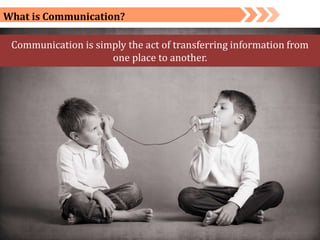
What is Communication?
Communication is simply the act of transferring information from
one place to another.
Private and Confidential 5
What is Communication?
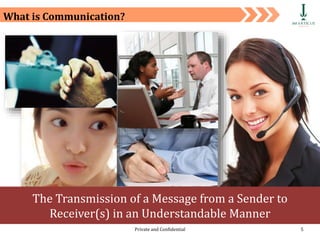
The Transmission of a Message from a Sender to
Receiver(s) in an Understandable Manner
Private and Confidential 6
What is Communication?
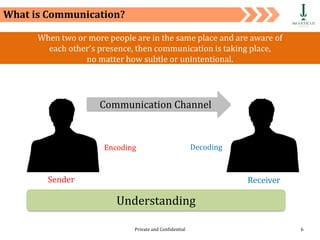
Communication Channel
Understanding
Sender Receiver
Encoding Decoding
When two or more people are in the same place and are aware of
each other's presence, then communication is taking place,
no matter how subtle or unintentional.
Private and Confidential 7
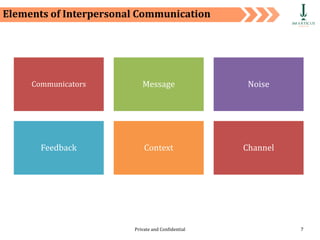
Elements of Interpersonal Communication
Communicators Message Noise
Feedback Context Channel
Private and Confidential 8
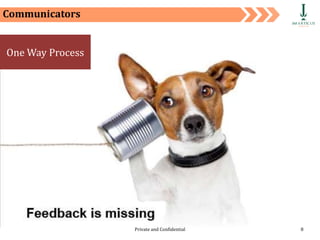
Communicators
One Way Process
Private and Confidential 9
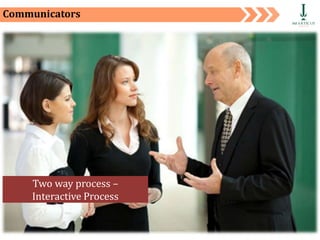
Communicators
Two way process –
Interactive Process
Private and Confidential 10
Message
Message not only means the speech used or information conveyed….
Private and Confidential 11
Message
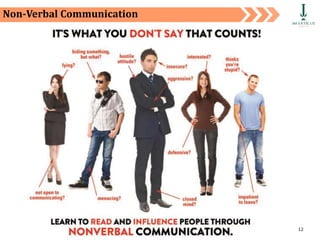
…But also the non-verbal messages exchanged such as facial
expressions, tone of voice, gestures and body language.
Private and Confidential 12
Non-Verbal Communication
Private and Confidential 13
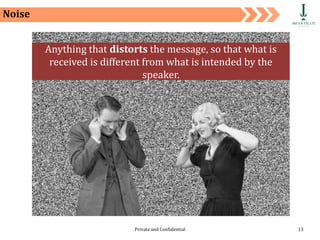
Noise
Anything that distorts the message, so that what is
received is different from what is intended by the
speaker.
Private and Confidential 14
Noise
The use of complicated jargon,
inappropriate body language,
inattention, disinterest, and cultural
differences can be considered 'noise‘.
Private and Confidential 15
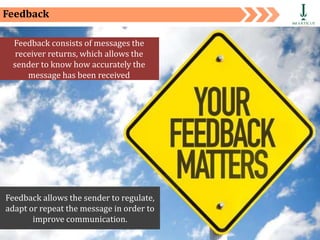
Feedback
Feedback consists of messages the
receiver returns, which allows the
sender to know how accurately the
message has been received
Feedback allows the sender to regulate,
adapt or repeat the message in order to
improve communication.
Private and Confidential 16
Context
All communication is influenced by
the context - Situational and Social
- in which it takes place.
Private and Confidential 17
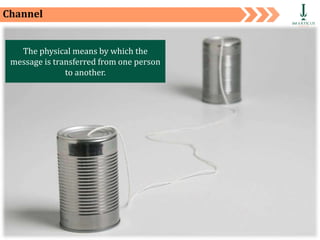
Channel
The physical means by which the
message is transferred from one person
to another.
Private and Confidential 18
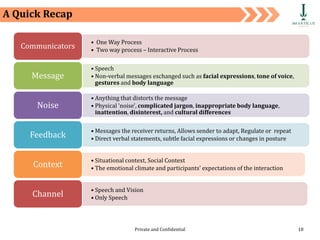
A Quick Recap
• One Way Process
• Two way process – Interactive Process
Communicators
• Speech
• Non-verbal messages exchanged such as facial expressions, tone of voice,
gestures and body language
Message
• Anything that distorts the message
• Physical 'noise', complicated jargon, inappropriate body language,
inattention, disinterest, and cultural differences
Noise
• Messages the receiver returns, Allows sender to adapt, Regulate or repeat
• Direct verbal statements, subtle facial expressions or changes in posture
Feedback
• Situational context, Social Context
• The emotional climate and participants' expectations of the interaction
Context
• Speech and Vision
• Only Speech
Channel
Private and Confidential 19
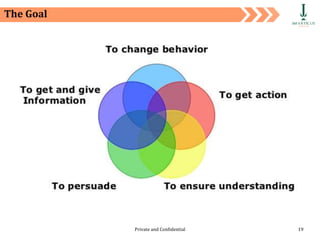
The Goal
Private and Confidential 20
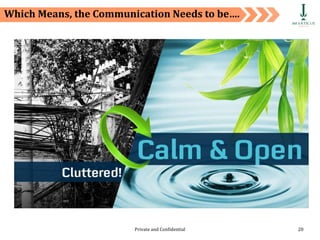
Which Means, the Communication Needs to be….
Private and Confidential 21
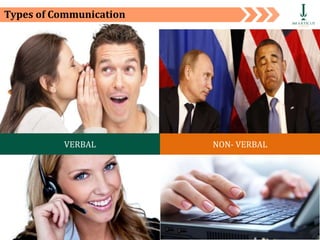
Types of Communication
VERBAL NON- VERBAL
Private and Confidential 22
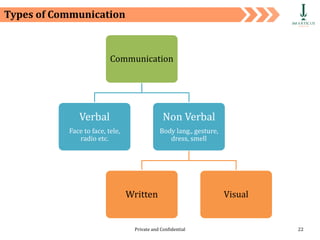
Types of Communication
Communication
Verbal
Face to face, tele,
radio etc.
Non Verbal
Body lang., gesture,
dress, smell
Written Visual
Private and Confidential 23
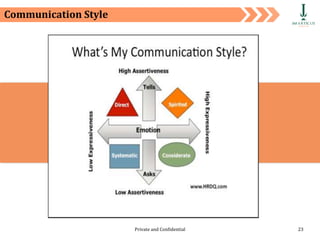
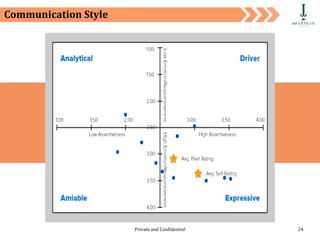
Communication Style
Private and Confidential 24
Communication Style
Private and Confidential 25
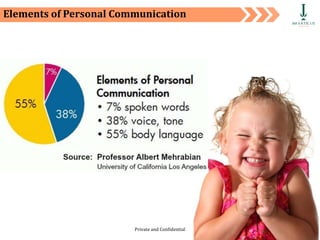
Elements of Personal Communication
Private and Confidential 26
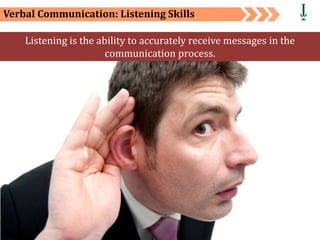
Verbal Communication: Listening Skills
Listening is the ability to accurately receive messages in the
communication process.
Private and Confidential 27
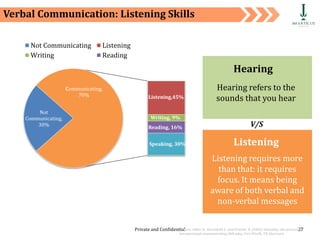
Verbal Communication: Listening Skills
Source: Adler, R., Rosenfeld, L. and Proctor, R. (2001) Interplay: the process of
interpersonal communicating (8th edn), Fort Worth, TX: Harcourt.
Not
Communicating,
30%
Listening,45%
Writing, 9%
Reading, 16%
Speaking, 30%
Communicating,
70%
Not Communicating Listening
Writing Reading
V/S
Hearing
Hearing refers to the
sounds that you hear
Listening
Listening requires more
than that: it requires
focus. It means being
aware of both verbal and
non-verbal messages
Private and Confidential 28
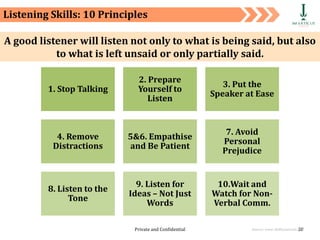
Listening Skills: 10 Principles
Source: www.Skillsyouneed.com
1. Stop Talking
2. Prepare
Yourself to
Listen
3. Put the
Speaker at Ease
4. Remove
Distractions
5&6. Empathise
and Be Patient
7. Avoid
Personal
Prejudice
8. Listen to the
Tone
9. Listen for
Ideas – Not Just
Words
10.Wait and
Watch for Non-
Verbal Comm.
A good listener will listen not only to what is being said, but also
to what is left unsaid or only partially said.
Private and Confidential 29
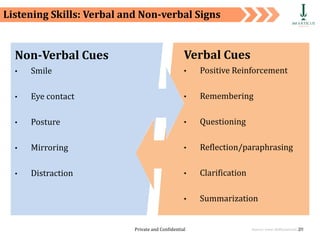
Listening Skills: Verbal and Non-verbal Signs
Source: www.Skillsyouneed.com
Non-Verbal Cues
• Smile
• Eye contact
• Posture
• Mirroring
• Distraction
Verbal Cues
• Positive Reinforcement
• Remembering
• Questioning
• Reflection/paraphrasing
• Clarification
• Summarization
Perception
Private and Confidential 31
Perception Matters!
YOUR
PERCEPTION
IS YOUR
REALITY!
Private and Confidential 32
We have to consider not just the
single element but how the
totality
is perceived.
In Totality
Private and Confidential 33
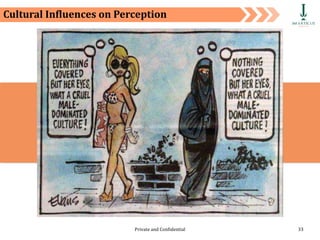
Cultural Influences on Perception
Leadership
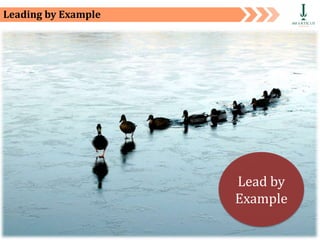
Leading by Example
Lead by
Example
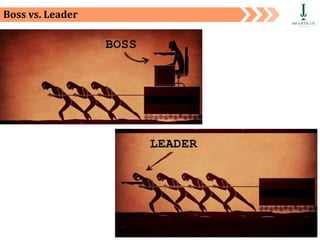
Boss vs. Leader
Private and Confidential 37
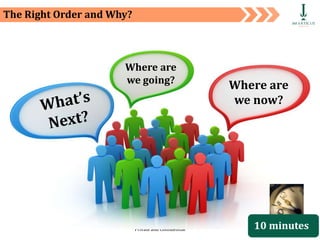
The Right Order and Why?
30 minutes
10 minutes
Where are
we going?
Where are
we now?
Private and Confidential 38
A BA is a Leader Without a Title
Private and Confidential 39
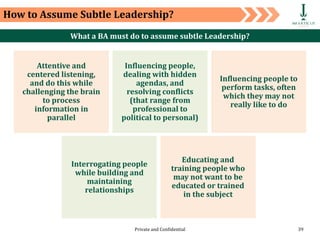
How to Assume Subtle Leadership?
Influencing people,
dealing with hidden
agendas, and
resolving conflicts
(that range from
professional to
political to personal)
Influencing people to
perform tasks, often
which they may not
really like to do
Educating and
training people who
may not want to be
educated or trained
in the subject
Interrogating people
while building and
maintaining
relationships
Attentive and
centered listening,
and do this while
challenging the brain
to process
information in
parallel
What a BA must do to assume subtle Leadership?
Private and Confidential 40
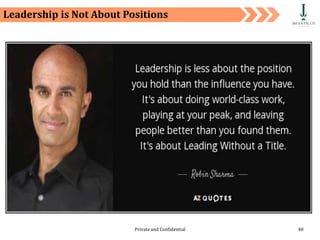
Leadership is Not About Positions
Private and Confidential 41
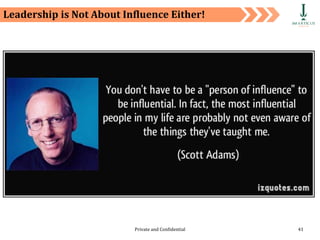
Leadership is Not About Influence Either!
Private and Confidential 42
Just Imagine….
Imagine if corporations
eventually allowed BA's
to take on the mantle of
a leader and also
provide them with the
appropriate level of
authority…..
How much more
effective BAs could be
as leaders?
Private and Confidential 43
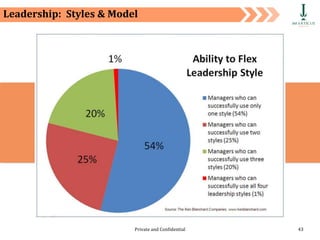
Leadership: Styles & Model
Private and Confidential 44
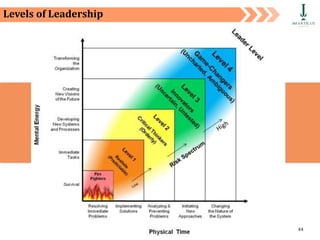
Levels of Leadership
Show The Way
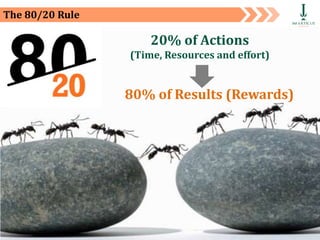
The 80/20 Rule
20% of Actions
(Time, Resources and effort)
80% of Results (Rewards)
Eat That Frog!
"If you have to eat two frogs,
eat the ugliest one first!"
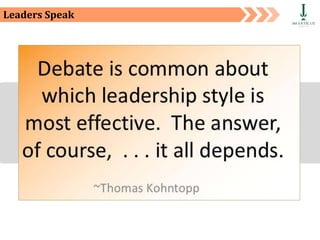
Leaders Speak
&
Thank
You
For Your
Attention

Unit 7 Communication, Perception, Leadership.ppt

  • 1.
    Unit 7: Communication, Perception,Leadership Certified Business Analyst
  • 2.
    Private and Confidential2 Agenda In this session, you will learn about: • Appreciate the importance of various behavioral aspects with context to a BA Role : o Communication skills o Perception o Leadership
  • 3.
  • 4.
    What is Communication? Communicationis simply the act of transferring information from one place to another.
  • 5.
    Private and Confidential5 What is Communication? The Transmission of a Message from a Sender to Receiver(s) in an Understandable Manner
  • 6.
    Private and Confidential6 What is Communication? Communication Channel Understanding Sender Receiver Encoding Decoding When two or more people are in the same place and are aware of each other's presence, then communication is taking place, no matter how subtle or unintentional.
  • 7.
    Private and Confidential7 Elements of Interpersonal Communication Communicators Message Noise Feedback Context Channel
  • 8.
    Private and Confidential8 Communicators One Way Process
  • 9.
    Private and Confidential9 Communicators Two way process – Interactive Process
  • 10.
    Private and Confidential10 Message Message not only means the speech used or information conveyed….
  • 11.
    Private and Confidential11 Message …But also the non-verbal messages exchanged such as facial expressions, tone of voice, gestures and body language.
  • 12.
    Private and Confidential12 Non-Verbal Communication
  • 13.
    Private and Confidential13 Noise Anything that distorts the message, so that what is received is different from what is intended by the speaker.
  • 14.
    Private and Confidential14 Noise The use of complicated jargon, inappropriate body language, inattention, disinterest, and cultural differences can be considered 'noise‘.
  • 15.
    Private and Confidential15 Feedback Feedback consists of messages the receiver returns, which allows the sender to know how accurately the message has been received Feedback allows the sender to regulate, adapt or repeat the message in order to improve communication.
  • 16.
    Private and Confidential16 Context All communication is influenced by the context - Situational and Social - in which it takes place.
  • 17.
    Private and Confidential17 Channel The physical means by which the message is transferred from one person to another.
  • 18.
    Private and Confidential18 A Quick Recap • One Way Process • Two way process – Interactive Process Communicators • Speech • Non-verbal messages exchanged such as facial expressions, tone of voice, gestures and body language Message • Anything that distorts the message • Physical 'noise', complicated jargon, inappropriate body language, inattention, disinterest, and cultural differences Noise • Messages the receiver returns, Allows sender to adapt, Regulate or repeat • Direct verbal statements, subtle facial expressions or changes in posture Feedback • Situational context, Social Context • The emotional climate and participants' expectations of the interaction Context • Speech and Vision • Only Speech Channel
  • 19.
  • 20.
    Private and Confidential20 Which Means, the Communication Needs to be….
  • 21.
    Private and Confidential21 Types of Communication VERBAL NON- VERBAL
  • 22.
    Private and Confidential22 Types of Communication Communication Verbal Face to face, tele, radio etc. Non Verbal Body lang., gesture, dress, smell Written Visual
  • 23.
    Private and Confidential23 Communication Style
  • 24.
    Private and Confidential24 Communication Style
  • 25.
    Private and Confidential25 Elements of Personal Communication
  • 26.
    Private and Confidential26 Verbal Communication: Listening Skills Listening is the ability to accurately receive messages in the communication process.
  • 27.
    Private and Confidential27 Verbal Communication: Listening Skills Source: Adler, R., Rosenfeld, L. and Proctor, R. (2001) Interplay: the process of interpersonal communicating (8th edn), Fort Worth, TX: Harcourt. Not Communicating, 30% Listening,45% Writing, 9% Reading, 16% Speaking, 30% Communicating, 70% Not Communicating Listening Writing Reading V/S Hearing Hearing refers to the sounds that you hear Listening Listening requires more than that: it requires focus. It means being aware of both verbal and non-verbal messages
  • 28.
    Private and Confidential28 Listening Skills: 10 Principles Source: www.Skillsyouneed.com 1. Stop Talking 2. Prepare Yourself to Listen 3. Put the Speaker at Ease 4. Remove Distractions 5&6. Empathise and Be Patient 7. Avoid Personal Prejudice 8. Listen to the Tone 9. Listen for Ideas – Not Just Words 10.Wait and Watch for Non- Verbal Comm. A good listener will listen not only to what is being said, but also to what is left unsaid or only partially said.

  • 29.
    Private and Confidential29 Listening Skills: Verbal and Non-verbal Signs Source: www.Skillsyouneed.com Non-Verbal Cues • Smile • Eye contact • Posture • Mirroring • Distraction Verbal Cues • Positive Reinforcement • Remembering • Questioning • Reflection/paraphrasing • Clarification • Summarization
  • 30.
  • 31.
    Private and Confidential31 Perception Matters! YOUR PERCEPTION IS YOUR REALITY!
  • 32.
    Private and Confidential32 We have to consider not just the single element but how the totality is perceived. In Totality
  • 33.
    Private and Confidential33 Cultural Influences on Perception
  • 34.
  • 35.
  • 36.
  • 37.
    Private and Confidential37 The Right Order and Why? 30 minutes 10 minutes Where are we going? Where are we now?
  • 38.
    Private and Confidential38 A BA is a Leader Without a Title A BA is a Leader Without a Title
  • 39.
    Private and Confidential39 How to Assume Subtle Leadership? Influencing people, dealing with hidden agendas, and resolving conflicts (that range from professional to political to personal) Influencing people to perform tasks, often which they may not really like to do Educating and training people who may not want to be educated or trained in the subject Interrogating people while building and maintaining relationships Attentive and centered listening, and do this while challenging the brain to process information in parallel What a BA must do to assume subtle Leadership?
  • 40.
    Private and Confidential40 Leadership is Not About Positions
  • 41.
    Private and Confidential41 Leadership is Not About Influence Either!
  • 42.
    Private and Confidential42 Just Imagine…. Imagine if corporations eventually allowed BA's to take on the mantle of a leader and also provide them with the appropriate level of authority….. How much more effective BAs could be as leaders?
  • 43.
    Private and Confidential43 Leadership: Styles & Model
  • 44.
    Private and Confidential44 Levels of Leadership
  • 45.
  • 46.
    The 80/20 Rule 20%of Actions (Time, Resources and effort) 80% of Results (Rewards)
  • 47.
    Eat That Frog! "Ifyou have to eat two frogs, eat the ugliest one first!"
  • 48.
  • 49.