unit 4
Distribution Strategy
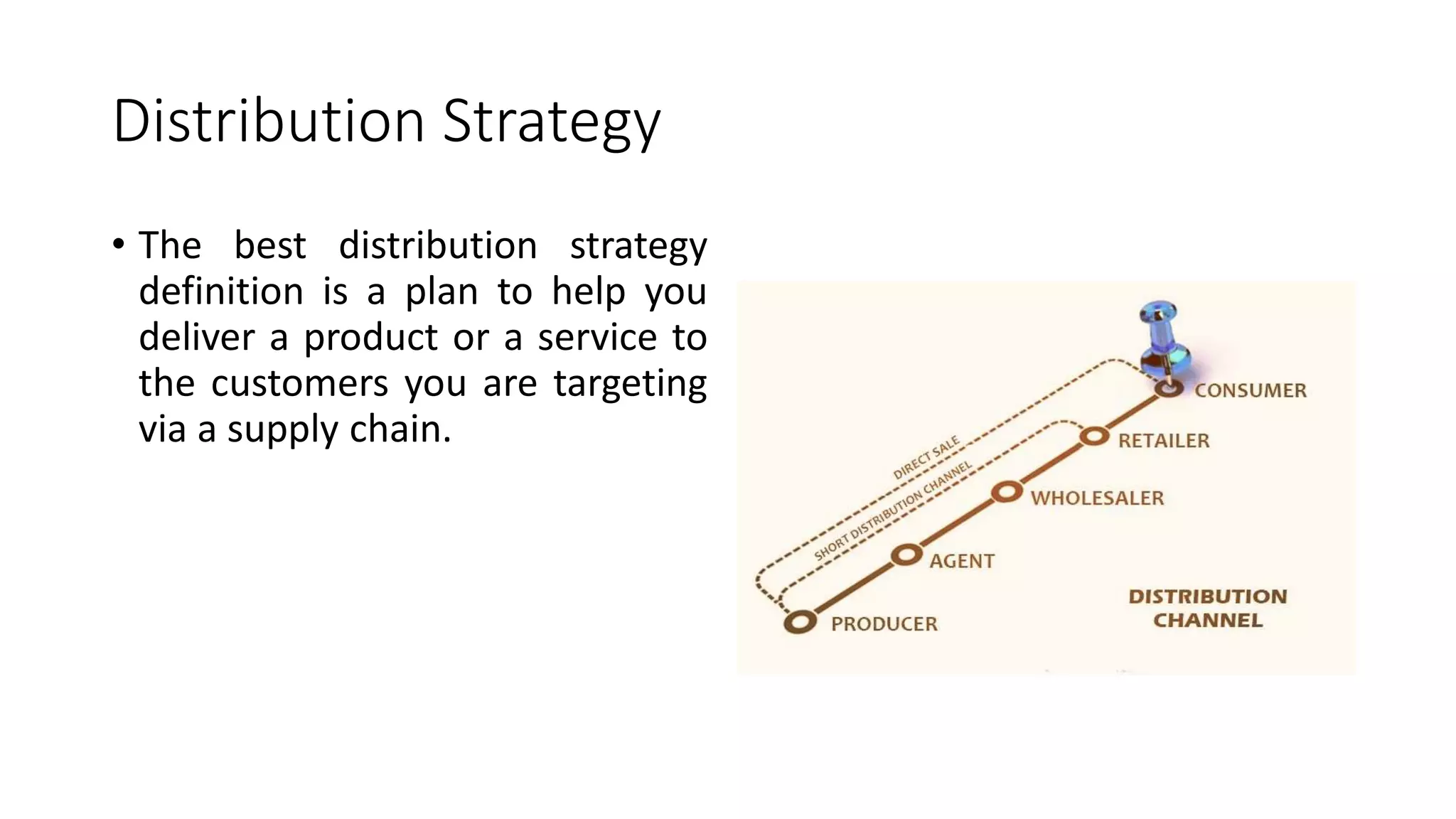
• The best distribution strategy
definition is a plan to help you
deliver a product or a service to
the customers you are targeting
via a supply chain.
How to select the right Distribution Strategy
• Check the market status right
now
• Distribution costs
• Do you sell complex or simple
products?
• What profits are you targeting?
• What will be your market
share?
• Where your product is in its life
cycle
Types of distribution strategies
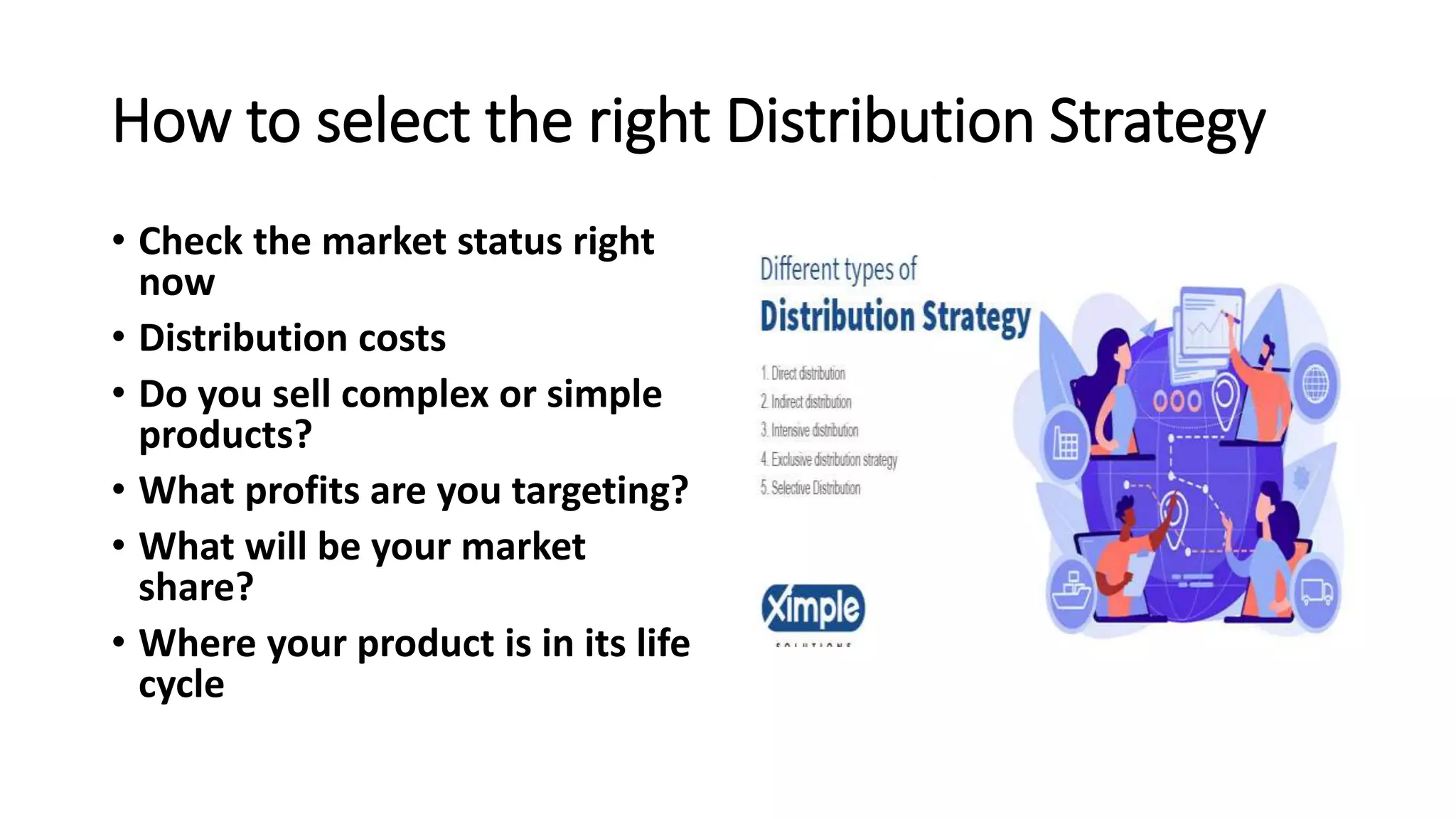
• a direct channel occurs when a
manufacturer sells straight to the
consumer.
• An indirect marketing channel, it
occurs when the path is long and
complex.
• An intensive distribution strategy is
more intensive and considers more
than just the size of a distribution
channel.
• an exclusive strategy when it has a
high brand value to protect. It will
open stores in major cities with
upper-income and classy customers
and still outdo its competitors
• a selective distribution strategy.
You will find them on almost every
street, or they may start a few
stores in every major town.
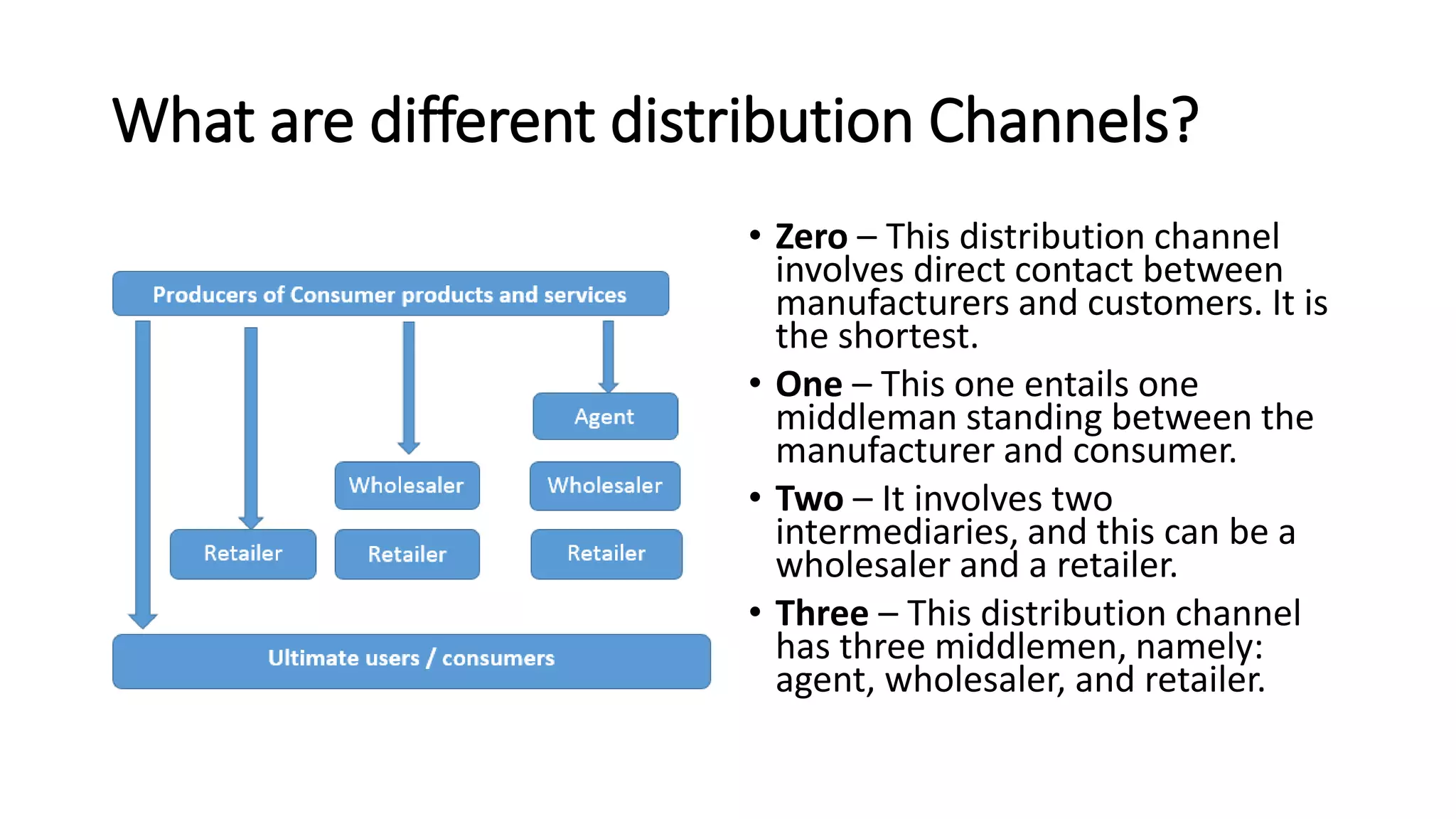
What are different distribution Channels?
• Zero – This distribution channel
involves direct contact between
manufacturers and customers. It is
the shortest.
• One – This one entails one
middleman standing between the
manufacturer and consumer.
• Two – It involves two
intermediaries, and this can be a
wholesaler and a retailer.
• Three – This distribution channel
has three middlemen, namely:
agent, wholesaler, and retailer.
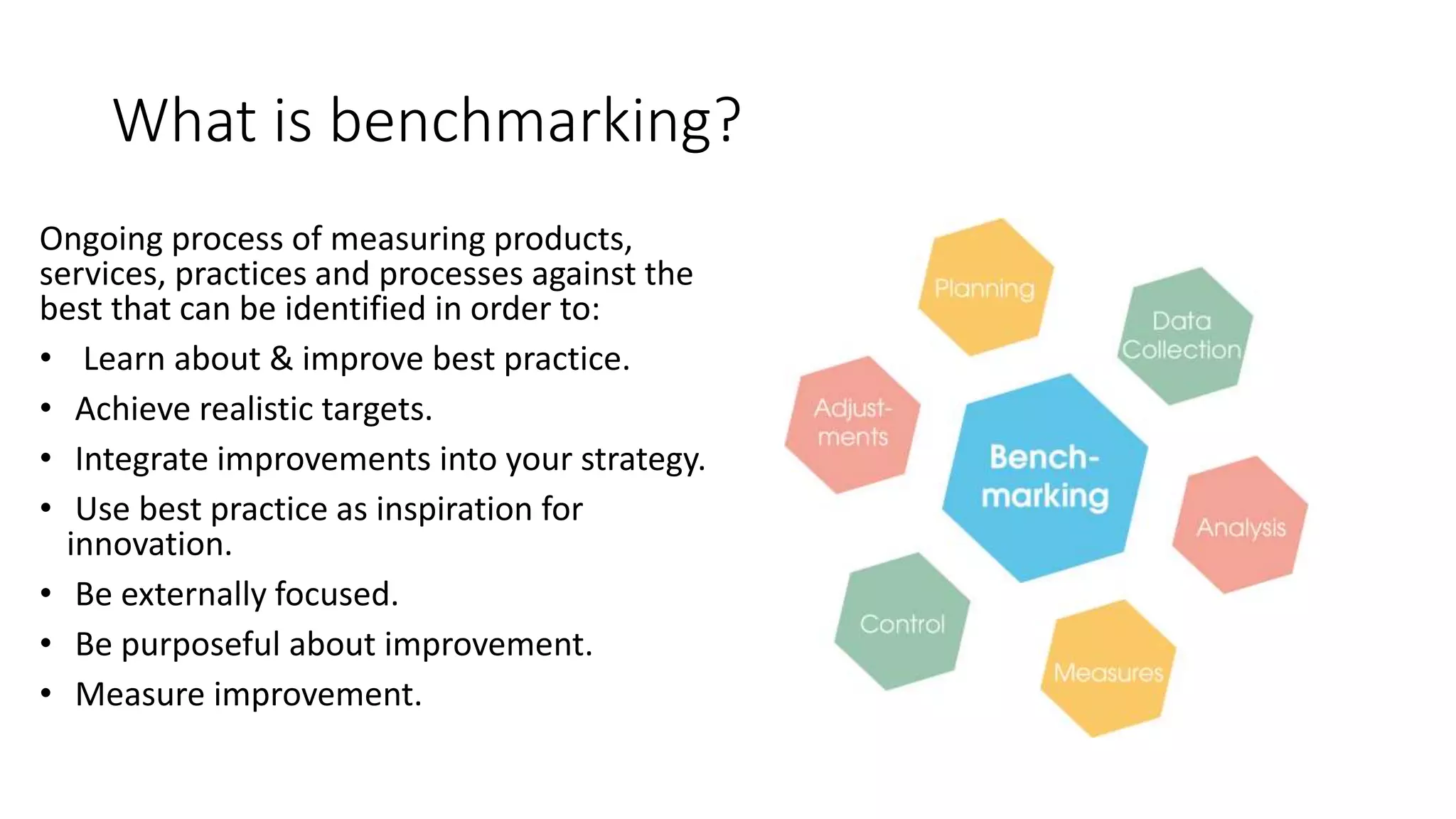
What is benchmarking?
Ongoing process of measuring products,
services, practices and processes against the
best that can be identified in order to:
• Learn about & improve best practice.
• Achieve realistic targets.
• Integrate improvements into your strategy.
• Use best practice as inspiration for
innovation.
• Be externally focused.
• Be purposeful about improvement.
• Measure improvement.
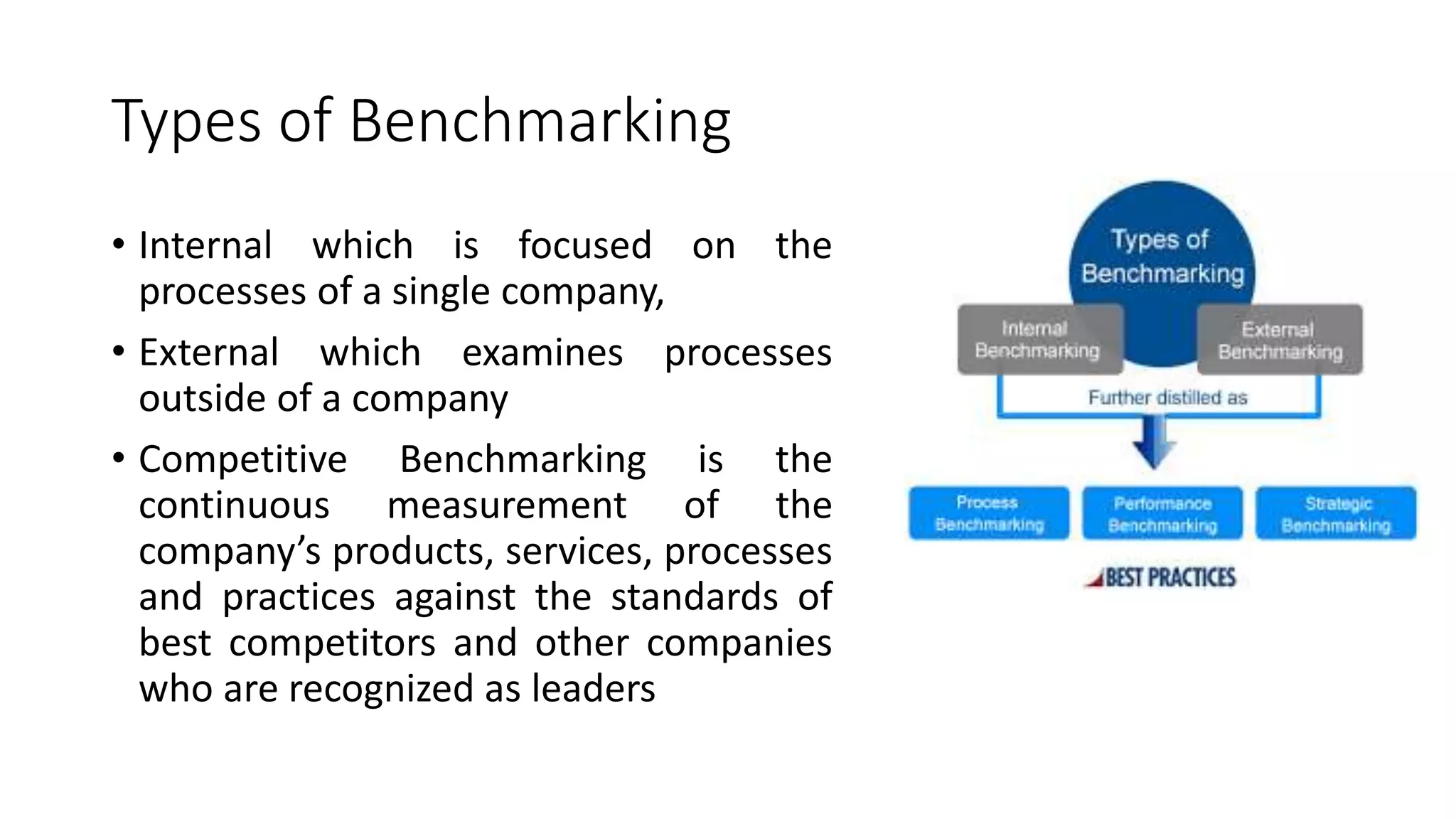
Types of Benchmarking
• Internal which is focused on the
processes of a single company,
• External which examines processes
outside of a company
• Competitive Benchmarking is the
continuous measurement of the
company’s products, services, processes
and practices against the standards of
best competitors and other companies
who are recognized as leaders
Components of Benchmarking
• Financial benchmarking
• Product benchmarking
• Performance benchmarking
• Strategic benchmarking
• Functional benchmarking
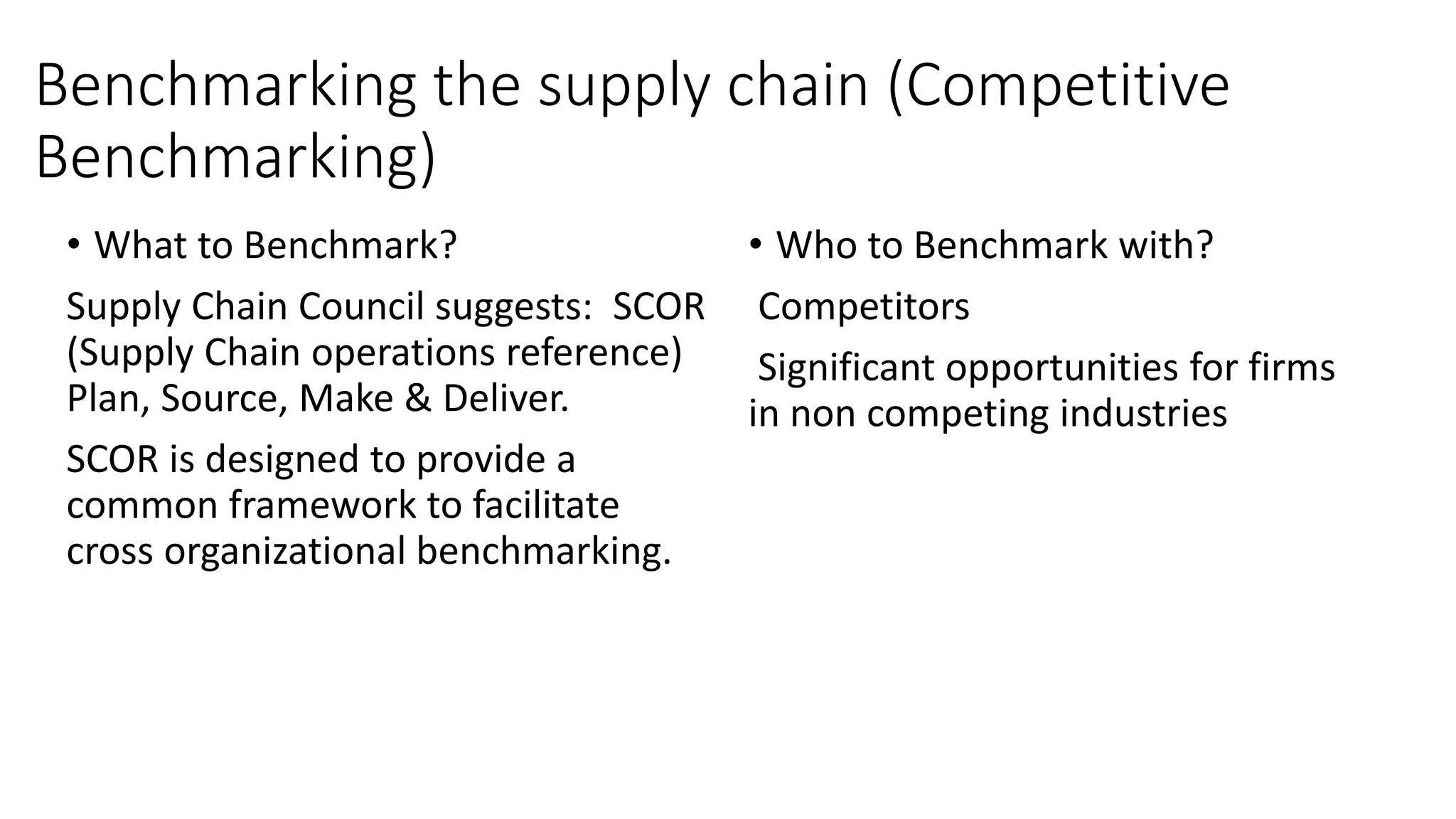
Benchmarking the supply chain (Competitive
Benchmarking)
• What to Benchmark?
Supply Chain Council suggests: SCOR
(Supply Chain operations reference)
Plan, Source, Make & Deliver.
SCOR is designed to provide a
common framework to facilitate
cross organizational benchmarking.
• Who to Benchmark with?
Competitors
Significant opportunities for firms
in non competing industries
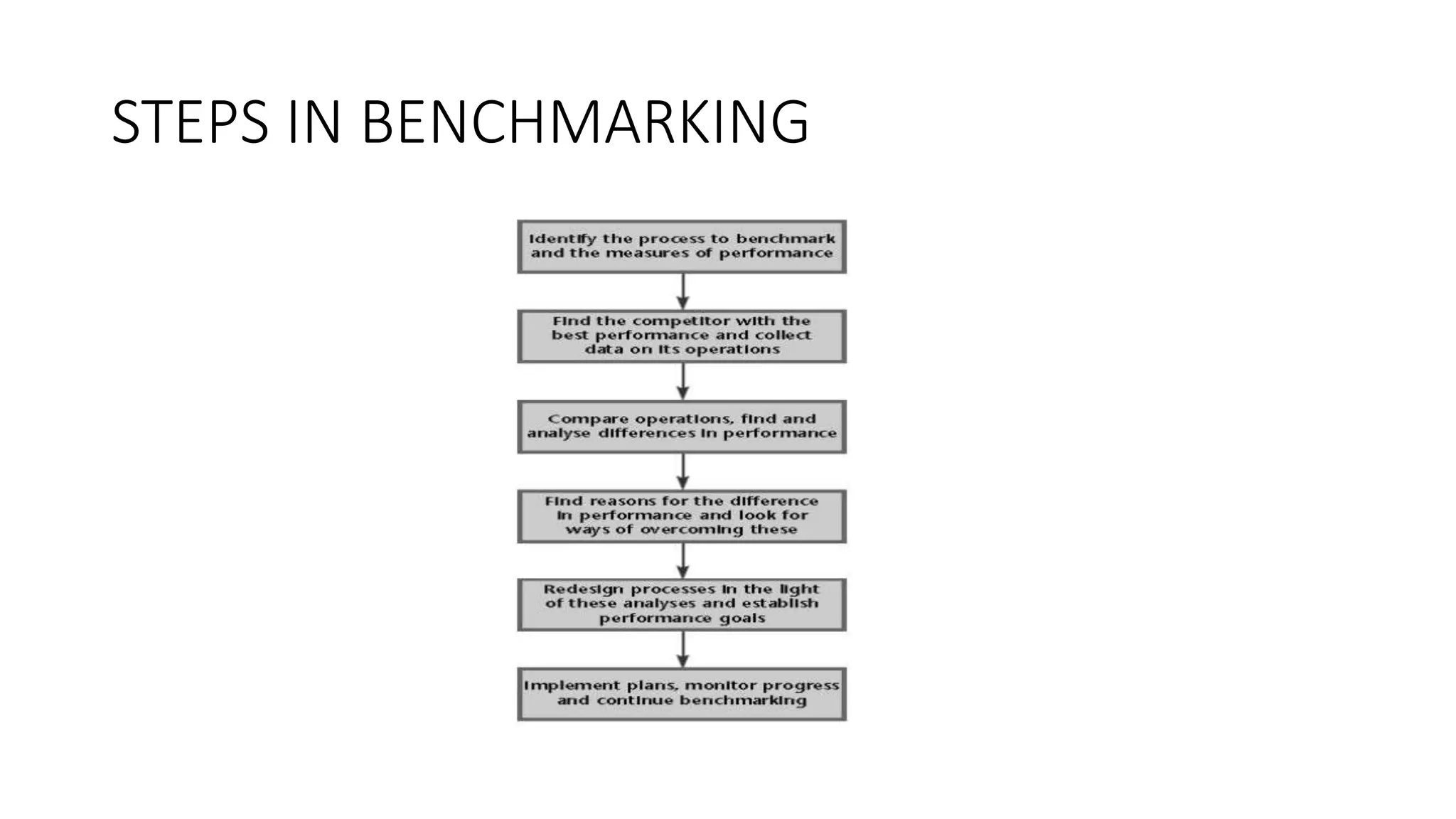
STEPS IN BENCHMARKING
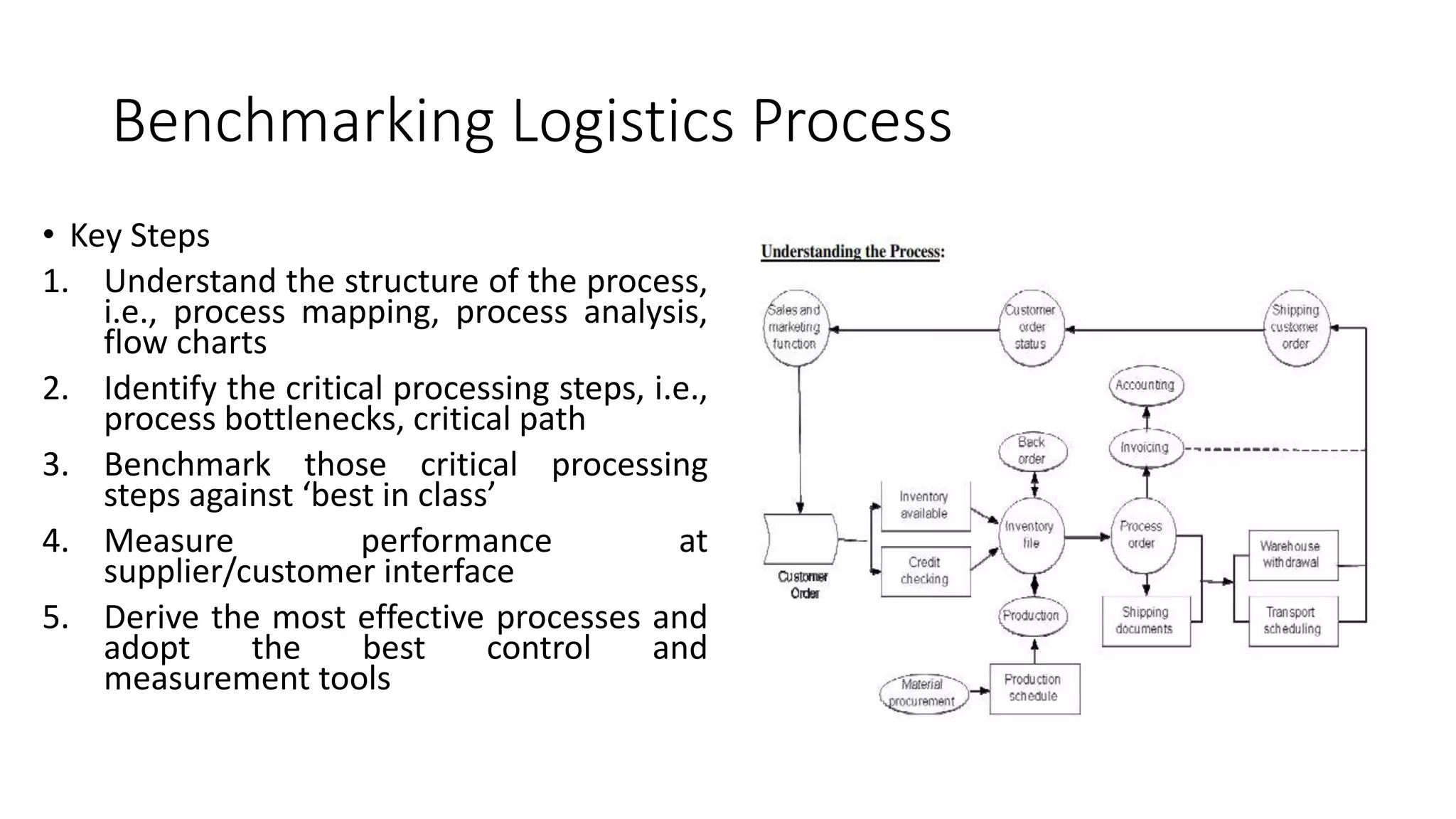
Benchmarking Logistics Process
• Key Steps
1. Understand the structure of the process,
i.e., process mapping, process analysis,
flow charts
2. Identify the critical processing steps, i.e.,
process bottlenecks, critical path
3. Benchmark those critical processing
steps against ‘best in class’
4. Measure performance at
supplier/customer interface
5. Derive the most effective processes and
adopt the best control and
measurement tools
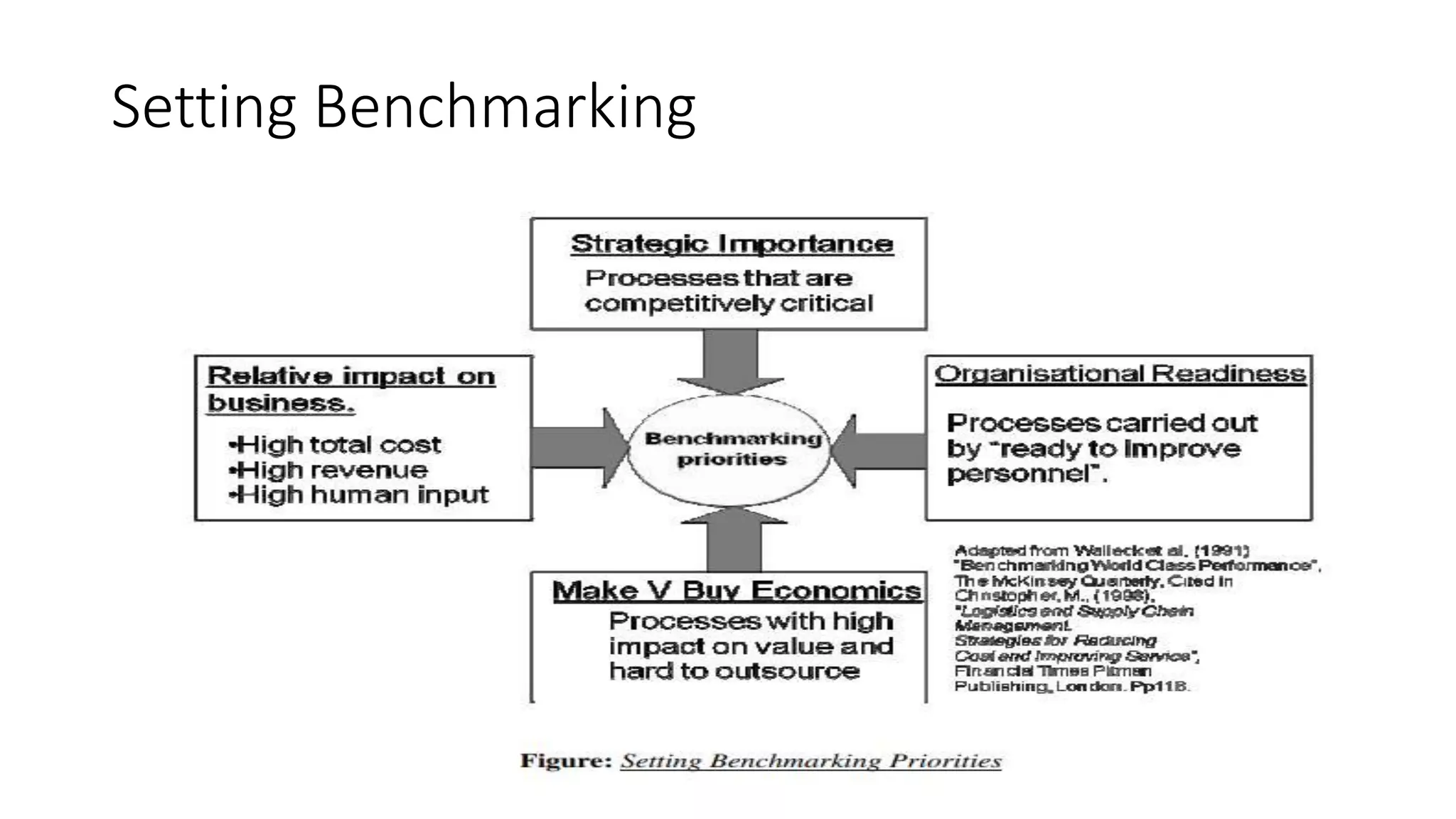
Setting Benchmarking
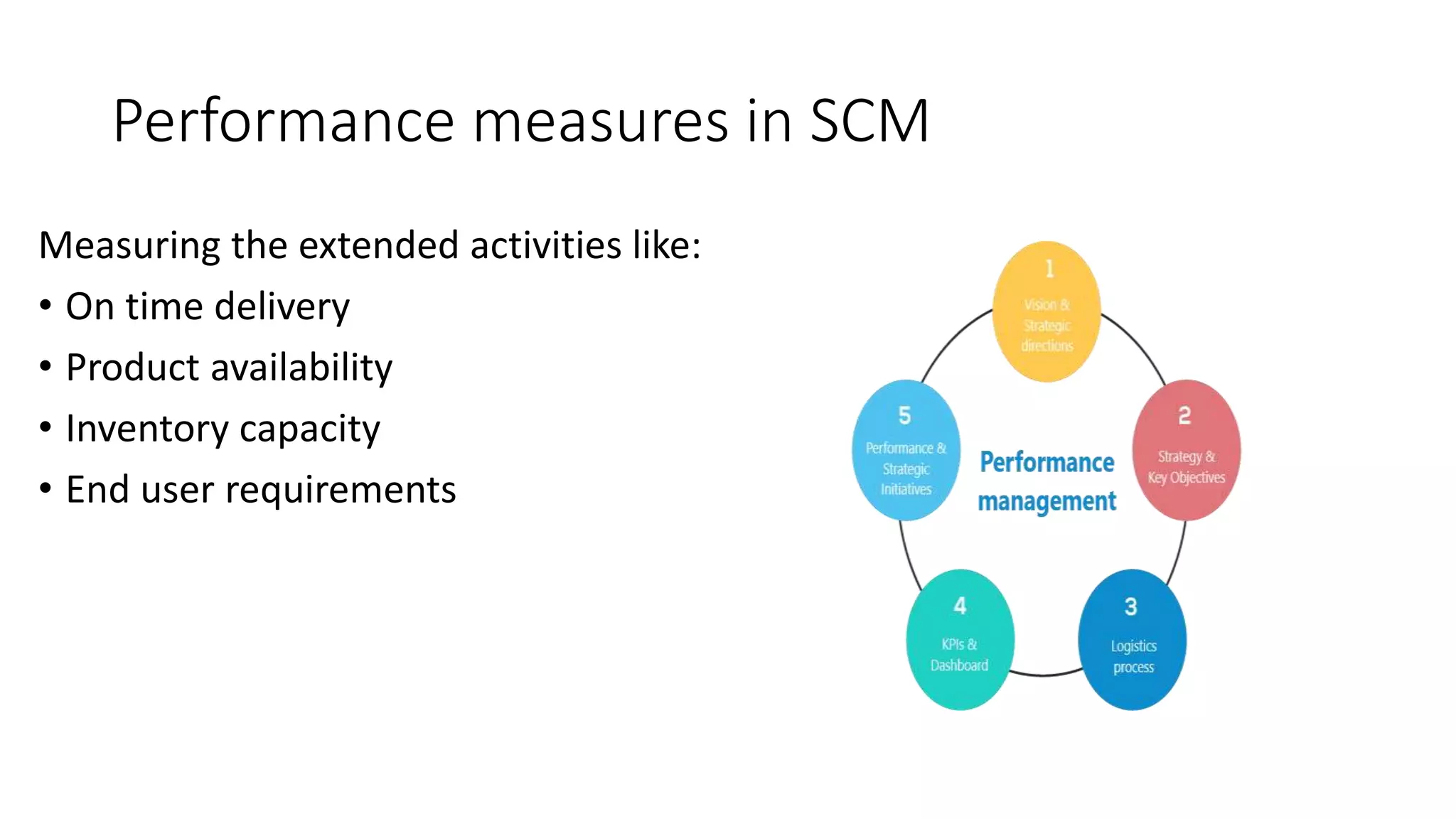
Performance measures in SCM
Measuring the extended activities like:
• On time delivery
• Product availability
• Inventory capacity
• End user requirements
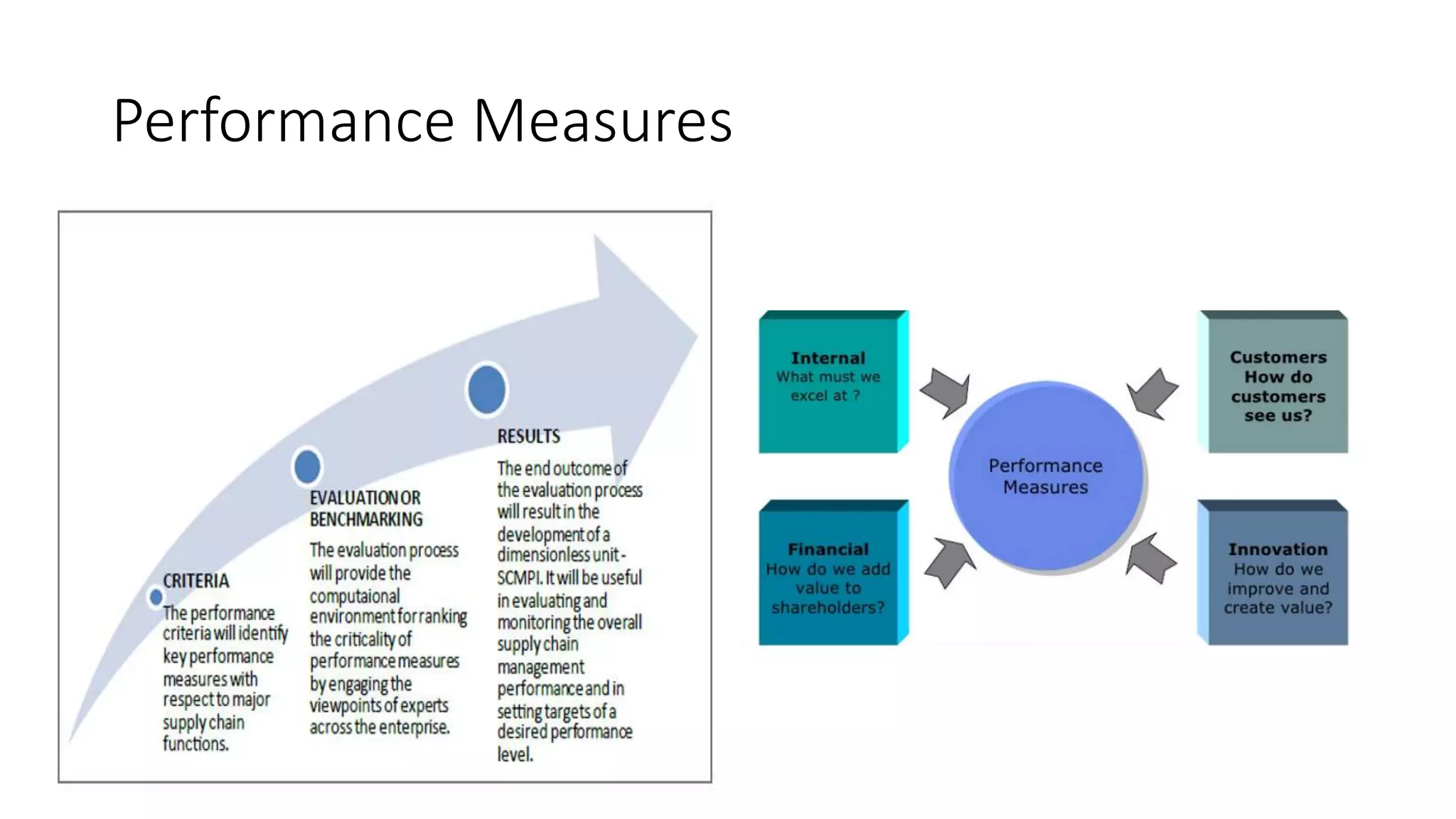
Performance Measures
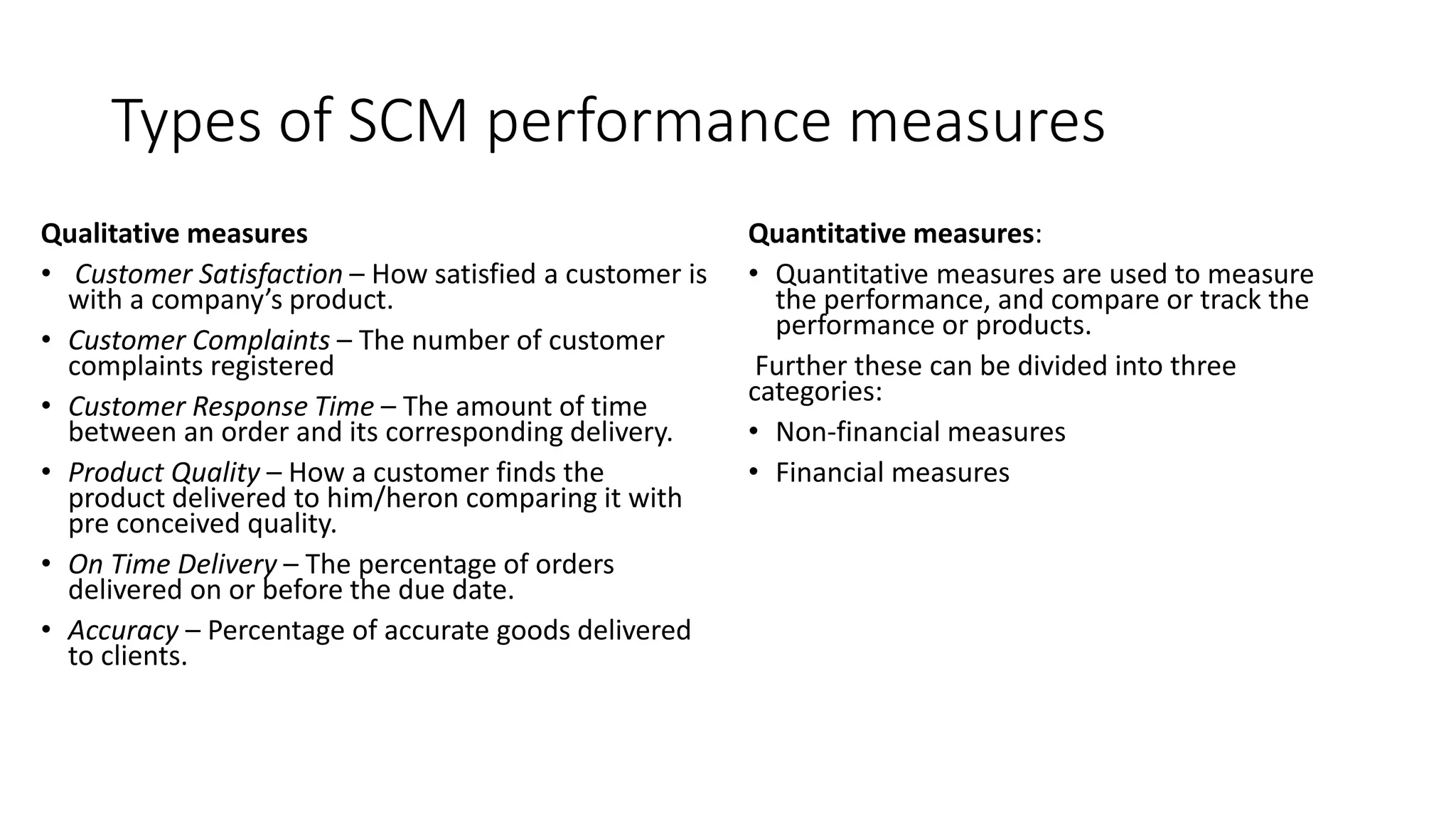
Types of SCM performance measures
Qualitative measures
• Customer Satisfaction – How satisfied a customer is
with a company’s product.
• Customer Complaints – The number of customer
complaints registered
• Customer Response Time – The amount of time
between an order and its corresponding delivery.
• Product Quality – How a customer finds the
product delivered to him/heron comparing it with
pre conceived quality.
• On Time Delivery – The percentage of orders
delivered on or before the due date.
• Accuracy – Percentage of accurate goods delivered
to clients.
Quantitative measures:
• Quantitative measures are used to measure
the performance, and compare or track the
performance or products.
Further these can be divided into three
categories:
• Non-financial measures
• Financial measures
Product Outsourcing
• Outsourcing logistics is when a
company uses an external provider (a
third-party) to handle various supply
chain functions.
• These can include a mix of shipping,
storing, packing and/or delivering a
company’s physical goods, from raw
materials all the way to the finished
product.
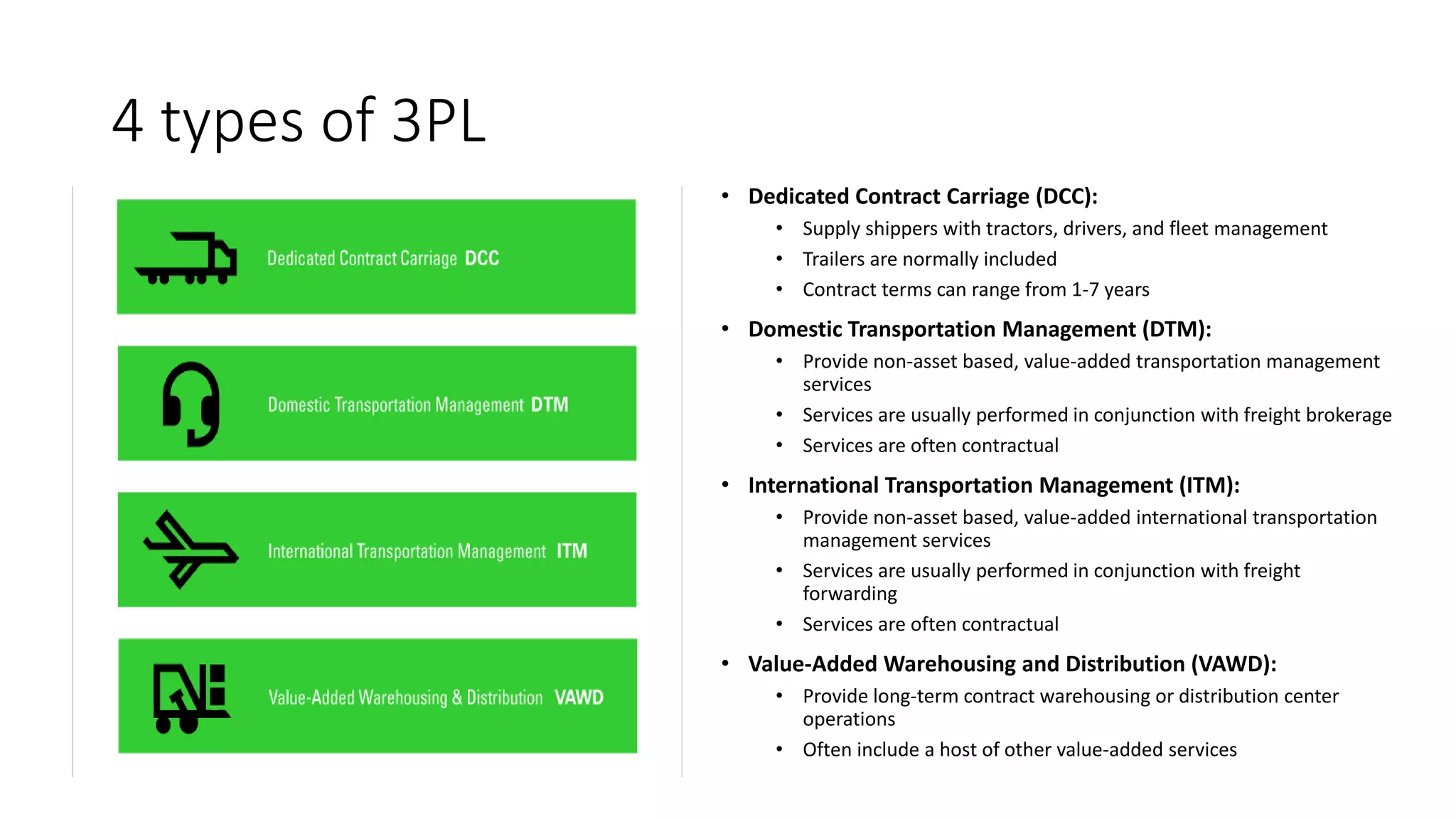
4 types of 3PL
• Dedicated Contract Carriage (DCC):
• Supply shippers with tractors, drivers, and fleet management
• Trailers are normally included
• Contract terms can range from 1-7 years
• Domestic Transportation Management (DTM):
• Provide non-asset based, value-added transportation management
services
• Services are usually performed in conjunction with freight brokerage
• Services are often contractual
• International Transportation Management (ITM):
• Provide non-asset based, value-added international transportation
management services
• Services are usually performed in conjunction with freight
forwarding
• Services are often contractual
• Value-Added Warehousing and Distribution (VAWD):
• Provide long-term contract warehousing or distribution center
operations
• Often include a host of other value-added services
Programmes to Improve Quality and
Productivity in LSCM
• https://www.youtube.com/watc
h?v=PSFjsQ2Fk4M
Cost of LSCM
• Inventory management cost
• Warehousing Cost
• Transportation Mode Shifting Cost
• Distribution Costs
unit 4.pptx

unit 4.pptx

  • 1.
  • 2.
    Distribution Strategy • Thebest distribution strategy definition is a plan to help you deliver a product or a service to the customers you are targeting via a supply chain.
  • 3.
    How to selectthe right Distribution Strategy • Check the market status right now • Distribution costs • Do you sell complex or simple products? • What profits are you targeting? • What will be your market share? • Where your product is in its life cycle
  • 4.
    Types of distributionstrategies • a direct channel occurs when a manufacturer sells straight to the consumer. • An indirect marketing channel, it occurs when the path is long and complex. • An intensive distribution strategy is more intensive and considers more than just the size of a distribution channel. • an exclusive strategy when it has a high brand value to protect. It will open stores in major cities with upper-income and classy customers and still outdo its competitors • a selective distribution strategy. You will find them on almost every street, or they may start a few stores in every major town.
  • 5.
    What are differentdistribution Channels? • Zero – This distribution channel involves direct contact between manufacturers and customers. It is the shortest. • One – This one entails one middleman standing between the manufacturer and consumer. • Two – It involves two intermediaries, and this can be a wholesaler and a retailer. • Three – This distribution channel has three middlemen, namely: agent, wholesaler, and retailer.
  • 6.
    What is benchmarking? Ongoingprocess of measuring products, services, practices and processes against the best that can be identified in order to: • Learn about & improve best practice. • Achieve realistic targets. • Integrate improvements into your strategy. • Use best practice as inspiration for innovation. • Be externally focused. • Be purposeful about improvement. • Measure improvement.
  • 7.
    Types of Benchmarking •Internal which is focused on the processes of a single company, • External which examines processes outside of a company • Competitive Benchmarking is the continuous measurement of the company’s products, services, processes and practices against the standards of best competitors and other companies who are recognized as leaders
  • 8.
    Components of Benchmarking •Financial benchmarking • Product benchmarking • Performance benchmarking • Strategic benchmarking • Functional benchmarking
  • 9.
    Benchmarking the supplychain (Competitive Benchmarking) • What to Benchmark? Supply Chain Council suggests: SCOR (Supply Chain operations reference) Plan, Source, Make & Deliver. SCOR is designed to provide a common framework to facilitate cross organizational benchmarking. • Who to Benchmark with? Competitors Significant opportunities for firms in non competing industries
  • 10.
  • 11.
    Benchmarking Logistics Process •Key Steps 1. Understand the structure of the process, i.e., process mapping, process analysis, flow charts 2. Identify the critical processing steps, i.e., process bottlenecks, critical path 3. Benchmark those critical processing steps against ‘best in class’ 4. Measure performance at supplier/customer interface 5. Derive the most effective processes and adopt the best control and measurement tools
  • 12.
  • 13.
    Performance measures inSCM Measuring the extended activities like: • On time delivery • Product availability • Inventory capacity • End user requirements
  • 14.
  • 15.
    Types of SCMperformance measures Qualitative measures • Customer Satisfaction – How satisfied a customer is with a company’s product. • Customer Complaints – The number of customer complaints registered • Customer Response Time – The amount of time between an order and its corresponding delivery. • Product Quality – How a customer finds the product delivered to him/heron comparing it with pre conceived quality. • On Time Delivery – The percentage of orders delivered on or before the due date. • Accuracy – Percentage of accurate goods delivered to clients. Quantitative measures: • Quantitative measures are used to measure the performance, and compare or track the performance or products. Further these can be divided into three categories: • Non-financial measures • Financial measures
  • 16.
    Product Outsourcing • Outsourcinglogistics is when a company uses an external provider (a third-party) to handle various supply chain functions. • These can include a mix of shipping, storing, packing and/or delivering a company’s physical goods, from raw materials all the way to the finished product.
  • 17.
    4 types of3PL • Dedicated Contract Carriage (DCC): • Supply shippers with tractors, drivers, and fleet management • Trailers are normally included • Contract terms can range from 1-7 years • Domestic Transportation Management (DTM): • Provide non-asset based, value-added transportation management services • Services are usually performed in conjunction with freight brokerage • Services are often contractual • International Transportation Management (ITM): • Provide non-asset based, value-added international transportation management services • Services are usually performed in conjunction with freight forwarding • Services are often contractual • Value-Added Warehousing and Distribution (VAWD): • Provide long-term contract warehousing or distribution center operations • Often include a host of other value-added services
  • 18.
    Programmes to ImproveQuality and Productivity in LSCM • https://www.youtube.com/watc h?v=PSFjsQ2Fk4M
  • 19.
    Cost of LSCM •Inventory management cost • Warehousing Cost • Transportation Mode Shifting Cost • Distribution Costs