 Frequency adverbs
 Adverbs and
expressions of
frequency
 Survival skills
 Feelings
 Present Simple
 Present Continuous
VOCABULARY GRAMMAR
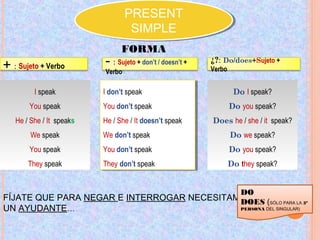
FORMA
I speak
You speak
He / She / It speaks
We speak
You speak
They speak
I don’t speak
You don’t speak
He / She / It doesn’t speak
We don’t speak
You don’t speak
They don’t speak
I don’t speak
You don’t speak
He / She / It doesn’t speak
We don’t speak
You don’t speak
They don’t speak
+ : Sujeto + Verbo
- : Sujeto + don’t / doesn’t +
Verbo
¿?: Do/does+Sujeto +
Verbo
Do I speak?
Do you speak?
Does he / she / it speak?
Do we speak?
Do you speak?
Do they speak?
PRESENT
SIMPLE
PRESENT
SIMPLE
FÍJATE QUE PARA NEGAR E INTERROGAR NECESITAMOS
UN AYUDANTE…
DO
DOES (SÓLO PARA LA 3ª
PERSONA DEL SINGULAR)
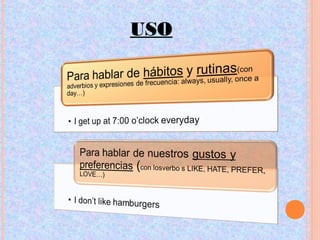
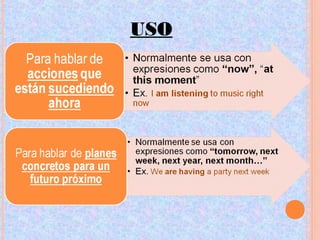
USO
ORTOGRAFÍA 3ª
PERSONA SINGULAR
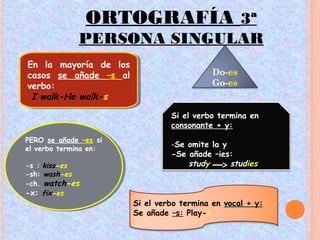
En la mayoría de los
casos se añade –s al
verbo:
I walk-He walk-s
En la mayoría de los
casos se añade –s al
verbo:
I walk-He walk-s
PERO se añade –es si
el verbo termina en:
-s : kiss-es
-sh: wash-es
-ch. watch-es
-x: fix-es
PERO se añade –es si
el verbo termina en:
-s : kiss-es
-sh: wash-es
-ch. watch-es
-x: fix-es
Do-es
Go-es
Si el verbo termina en
consonante + y:
-Se omite la y
-Se añade –ies:
study studies
Si el verbo termina en vocal + yvocal + y:
Se añade –s: Play-s
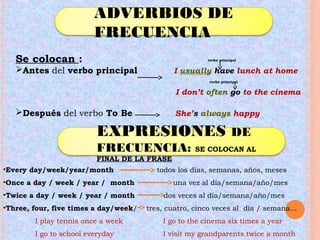
ADVERBIOS DE
FRECUENCIA
Se colocan : verbo principal
Antes del verbo principal I usually have lunch at home
verbo principal
I don’t often go to the cinema
Después del verbo To Be She’s always happy
EXPRESIONES DE
FRECUENCIA: SE COLOCAN AL
FINAL DE LA FRASE
•Every day/week/year/month todos los días, semanas, años, meses
•Once a day / week / year / month una vez al día/semana/año/mes
•Twice a day / week / year / month dos veces al día/semana/año/mes
•Three, four, five times a day/week/ tres, cuatro, cinco veces al día / semana…
I play tennis once a week I go to the cinema six times a year
I go to school everyday I visit my grandparents twice a month
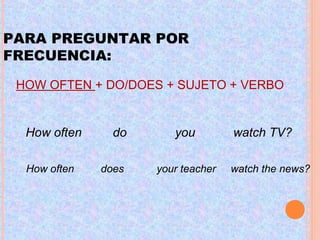
HOW OFTEN + DO/DOES + SUJETO + VERBO
PARA PREGUNTAR POR
FRECUENCIA:
How often do you watch TV?
How often does your teacher watch the news?
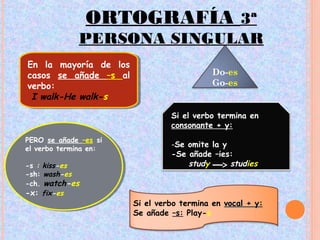
ORTOGRAFÍA 3ª
PERSONA SINGULAR
En la mayoría de los
casos se añade –s al
verbo:
I walk-He walk-s
En la mayoría de los
casos se añade –s al
verbo:
I walk-He walk-s
PERO se añade –es si
el verbo termina en:
-s : kiss-es
-sh: wash-es
-ch. watch-es
-x: fix-es
PERO se añade –es si
el verbo termina en:
-s : kiss-es
-sh: wash-es
-ch. watch-es
-x: fix-es
Do-es
Go-es
Si el verbo termina en
consonante + y:
-Se omite la y
-Se añade –ies:
study studies
Si el verbo termina en vocal + yvocal + y:
Se añade –s: Play-s
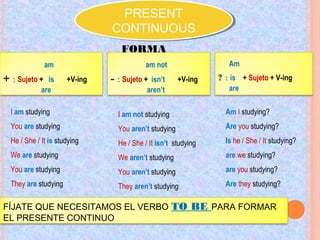
PRESENT
CONTINUOUS
PRESENT
CONTINUOUS
FORMA
am
+ : Sujeto + is +V-ing
are
am not
- : Sujeto + isn’t +V-ing
aren’t
Am
? : is + Sujeto + V-ing
are
I am studying
You are studying
He / She / It is studying
We are studying
You are studying
They are studying
I am not studying
You aren’t studying
He / She / It isn’t studying
We aren’t studying
You aren’t studying
They aren’t studying
Am I studying?
Are you studying?
Is he / She / It studying?
are we studying?
are you studying?
Are they studying?
FÍJATE QUE NECESITAMOS EL VERBO TO BE PARA FORMAR
EL PRESENTE CONTINUO
USO
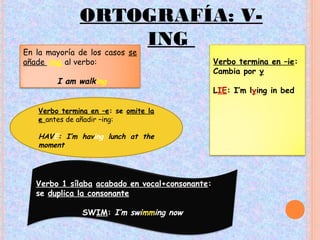
ORTOGRAFÍA: V-
ING
En la mayoría de los casos se
añade –ing al verbo:
I am walking
Verbo termina en –e: se omite la
e antes de añadir –ing:
HAVE: I’m having lunch at the
moment
Verbo 1 sílaba acabado en vocal+consonante:
se duplica la consonante
SWIM: I’m swimming now
Verbo termina en –ie:
Cambia por y
LIE: I’m lying in bed
http://www.isabelperez.com/happy/tenses/exercises/present_6.htmRosie's Family
Now you can practice using present
simple or continuous by clicking on the
following link: ENJOY!!
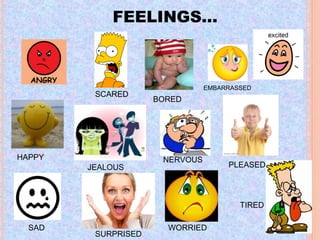
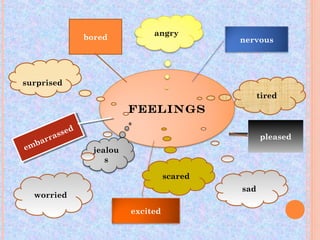
FEELINGS…
SCARED
BORED
EMBARRASSED
HAPPY
JEALOUS
NERVOUS
PLEASED
SAD
SURPRISED
WORRIED
TIRED
FEELINGS
nervous
pleased
bored
angry
excited
embarrassed
embarrassed
jealou
s
sad
scared
surprised
tired
worried

Unit 2

  • 1.
     Frequency adverbs Adverbs and expressions of frequency  Survival skills  Feelings  Present Simple  Present Continuous VOCABULARY GRAMMAR
  • 2.
    FORMA I speak You speak He/ She / It speaks We speak You speak They speak I don’t speak You don’t speak He / She / It doesn’t speak We don’t speak You don’t speak They don’t speak I don’t speak You don’t speak He / She / It doesn’t speak We don’t speak You don’t speak They don’t speak + : Sujeto + Verbo - : Sujeto + don’t / doesn’t + Verbo ¿?: Do/does+Sujeto + Verbo Do I speak? Do you speak? Does he / she / it speak? Do we speak? Do you speak? Do they speak? PRESENT SIMPLE PRESENT SIMPLE FÍJATE QUE PARA NEGAR E INTERROGAR NECESITAMOS UN AYUDANTE… DO DOES (SÓLO PARA LA 3ª PERSONA DEL SINGULAR)
  • 3.
  • 4.
    ORTOGRAFÍA 3ª PERSONA SINGULAR Enla mayoría de los casos se añade –s al verbo: I walk-He walk-s En la mayoría de los casos se añade –s al verbo: I walk-He walk-s PERO se añade –es si el verbo termina en: -s : kiss-es -sh: wash-es -ch. watch-es -x: fix-es PERO se añade –es si el verbo termina en: -s : kiss-es -sh: wash-es -ch. watch-es -x: fix-es Do-es Go-es Si el verbo termina en consonante + y: -Se omite la y -Se añade –ies: study studies Si el verbo termina en vocal + yvocal + y: Se añade –s: Play-s
  • 5.
    ADVERBIOS DE FRECUENCIA Se colocan: verbo principal Antes del verbo principal I usually have lunch at home verbo principal I don’t often go to the cinema Después del verbo To Be She’s always happy EXPRESIONES DE FRECUENCIA: SE COLOCAN AL FINAL DE LA FRASE •Every day/week/year/month todos los días, semanas, años, meses •Once a day / week / year / month una vez al día/semana/año/mes •Twice a day / week / year / month dos veces al día/semana/año/mes •Three, four, five times a day/week/ tres, cuatro, cinco veces al día / semana… I play tennis once a week I go to the cinema six times a year I go to school everyday I visit my grandparents twice a month
  • 6.
    HOW OFTEN +DO/DOES + SUJETO + VERBO PARA PREGUNTAR POR FRECUENCIA: How often do you watch TV? How often does your teacher watch the news?
  • 7.
    ORTOGRAFÍA 3ª PERSONA SINGULAR Enla mayoría de los casos se añade –s al verbo: I walk-He walk-s En la mayoría de los casos se añade –s al verbo: I walk-He walk-s PERO se añade –es si el verbo termina en: -s : kiss-es -sh: wash-es -ch. watch-es -x: fix-es PERO se añade –es si el verbo termina en: -s : kiss-es -sh: wash-es -ch. watch-es -x: fix-es Do-es Go-es Si el verbo termina en consonante + y: -Se omite la y -Se añade –ies: study studies Si el verbo termina en vocal + yvocal + y: Se añade –s: Play-s
  • 8.
    PRESENT CONTINUOUS PRESENT CONTINUOUS FORMA am + : Sujeto+ is +V-ing are am not - : Sujeto + isn’t +V-ing aren’t Am ? : is + Sujeto + V-ing are I am studying You are studying He / She / It is studying We are studying You are studying They are studying I am not studying You aren’t studying He / She / It isn’t studying We aren’t studying You aren’t studying They aren’t studying Am I studying? Are you studying? Is he / She / It studying? are we studying? are you studying? Are they studying? FÍJATE QUE NECESITAMOS EL VERBO TO BE PARA FORMAR EL PRESENTE CONTINUO
  • 9.
  • 10.
    ORTOGRAFÍA: V- ING En lamayoría de los casos se añade –ing al verbo: I am walking Verbo termina en –e: se omite la e antes de añadir –ing: HAVE: I’m having lunch at the moment Verbo 1 sílaba acabado en vocal+consonante: se duplica la consonante SWIM: I’m swimming now Verbo termina en –ie: Cambia por y LIE: I’m lying in bed
  • 11.
    http://www.isabelperez.com/happy/tenses/exercises/present_6.htmRosie's Family Now youcan practice using present simple or continuous by clicking on the following link: ENJOY!!
  • 12.
  • 13.

Editor's Notes

  • #3 PRESENT SIMPLE: FORMA Affirmative : Sujeto + Verbo I speak You speak He / She / It speaks We speak You speak They speak Negative: Sujeto + don’t / doesn’t + Verbo I don’t speak You don’t speak He / She / It doesn’t speak We don’t speak You don’t speak They don’t speak Interrogative: Do/does+Sujeto + Verbo Do I speak? Do you speak? Does he / she / it speak? Do we speak? Do you speak? Do they speak FÍJATE QUE PARA NEGAR E INTERROGAR NECESITAMOS UN AYUDANTE: - DO - DOES (SÓLO PARA LA 3ª PERSONA DEL SINGULAR)
  • #4 USOPara hablar de hábitos y rutinas(con adverbios y expresiones de frecuencia: always, usually, once a day…) I get up at 7:00 o’clock everyday
  • #9 Ver workbook página 93
  • #10 Ver workbook páginas 93 y 103