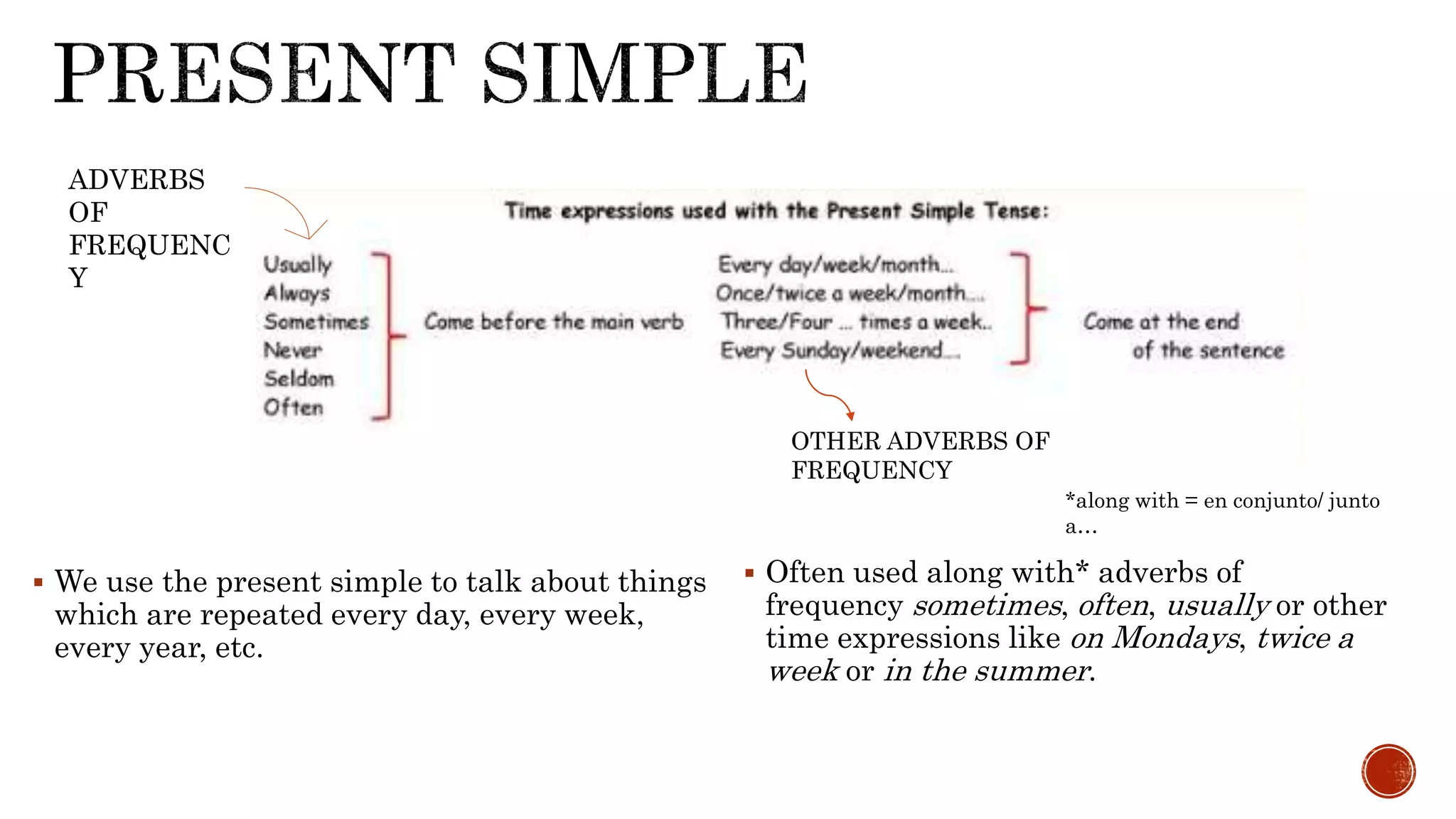
 We use the present simple to talk about things
which are repeated every day, every week,
every year, etc.
 Often used along with* adverbs of
frequency sometimes, often, usually or other
time expressions like on Mondays, twice a
week or in the summer.
*along with = en conjunto/ junto
a…
ADVERBS
OF
FREQUENC
Y
OTHER ADVERBS OF
FREQUENCY
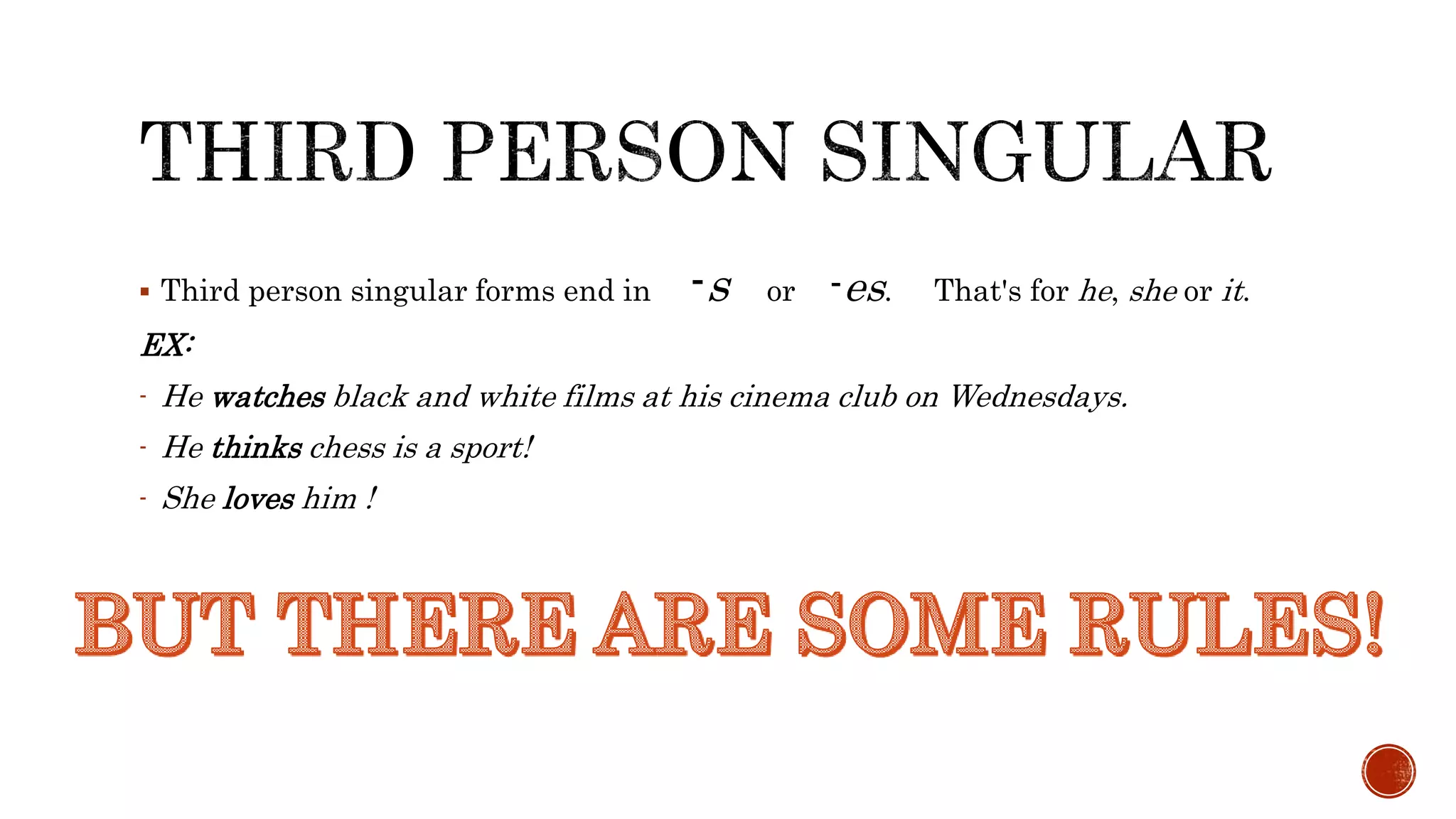
 Third person singular forms end in -s or -es. That's for he, she or it.
EX:
- He watches black and white films at his cinema club on Wednesdays.
- He thinks chess is a sport!
- She loves him !
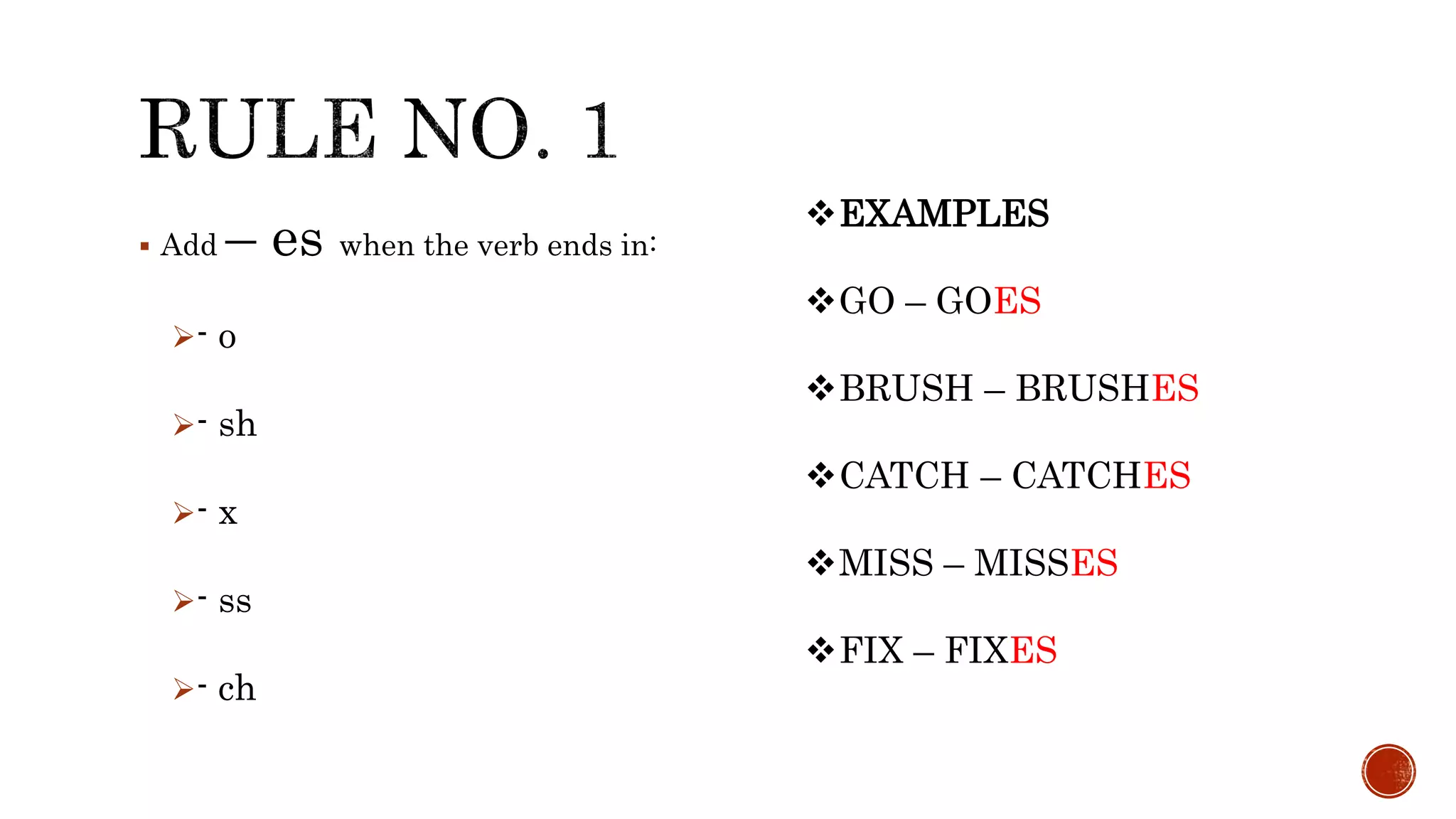
 Add – es when the verb ends in:
- o
- sh
- x
- ss
- ch
EXAMPLES
GO – GOES
BRUSH – BRUSHES
CATCH – CATCHES
MISS – MISSES
FIX – FIXES
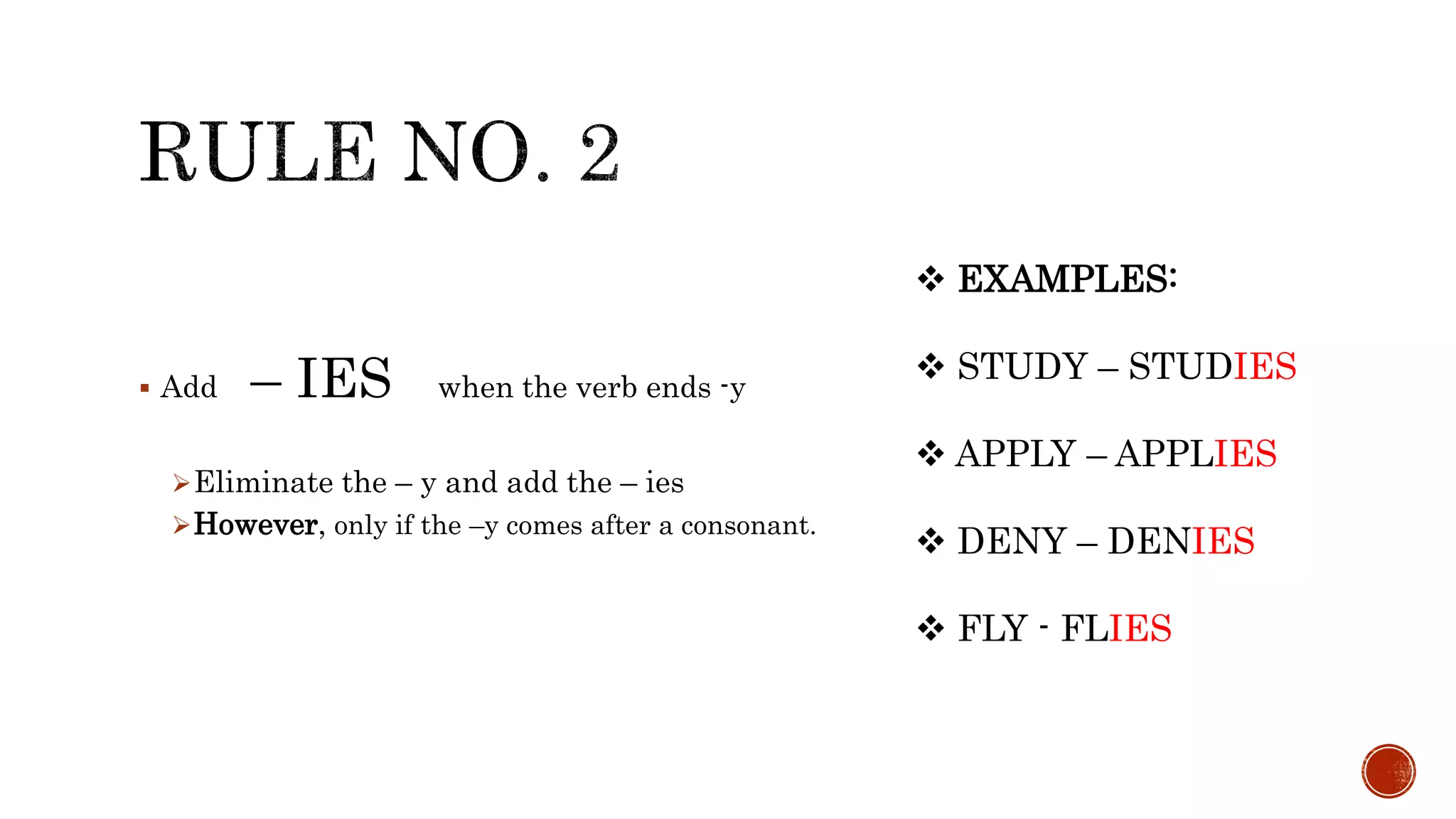
 Add – IES when the verb ends -y
Eliminate the – y and add the – ies
However, only if the –y comes after a consonant.
 EXAMPLES:
 STUDY – STUDIES
 APPLY – APPLIES
 DENY – DENIES
 FLY - FLIES
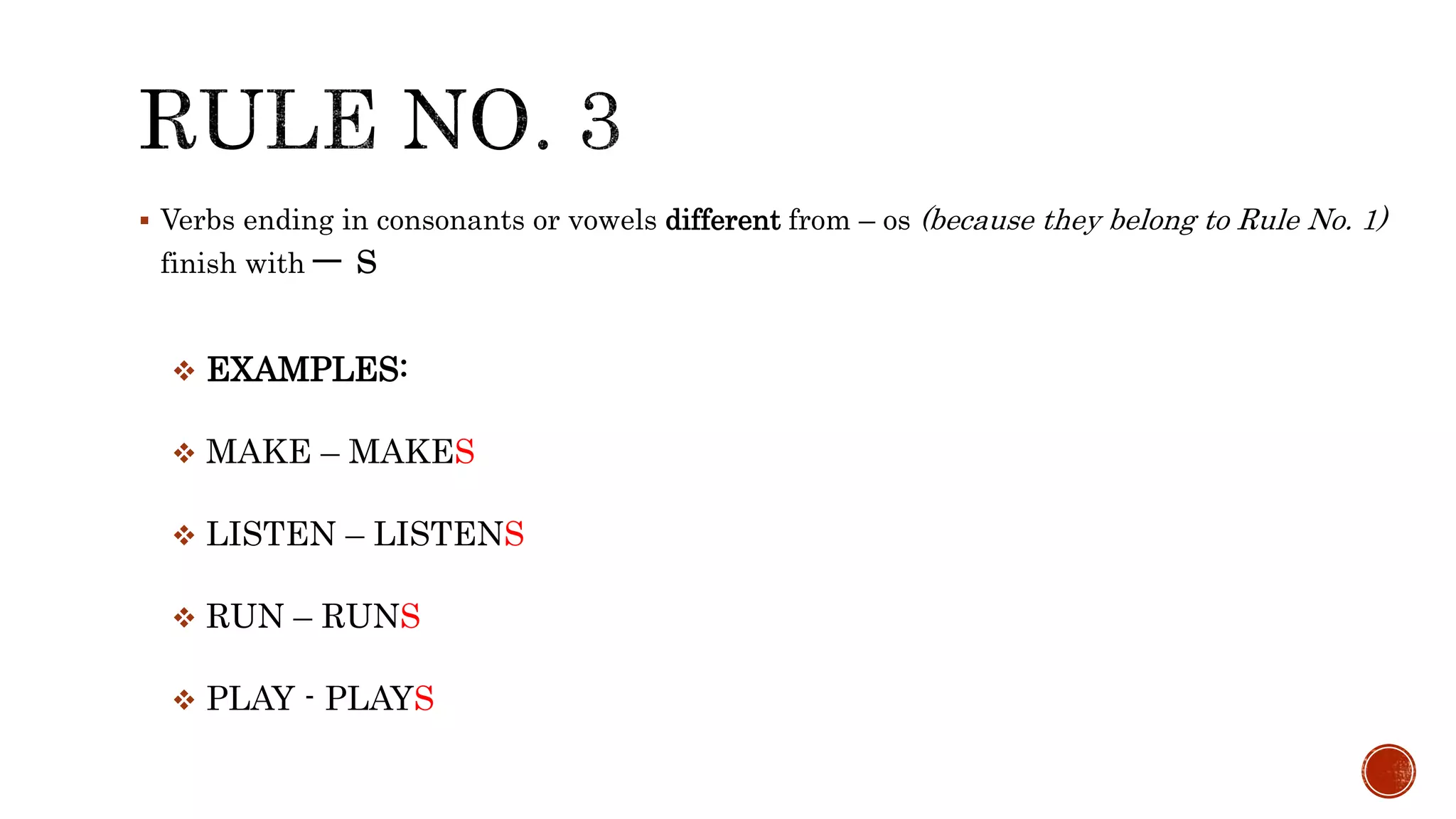
 Verbs ending in consonants or vowels different from – os (because they belong to Rule No. 1)
finish with – s
 EXAMPLES:
 MAKE – MAKES
 LISTEN – LISTENS
 RUN – RUNS
 PLAY - PLAYS
https://en.islcollective.com/video-lessons/51051fdb0939103bd3aeea0058060d1f

present-simple-third-person-rule-pronunciation-exercises-phonics-writing-creative-w_116685.pptx

  • 2.
     We usethe present simple to talk about things which are repeated every day, every week, every year, etc.  Often used along with* adverbs of frequency sometimes, often, usually or other time expressions like on Mondays, twice a week or in the summer. *along with = en conjunto/ junto a… ADVERBS OF FREQUENC Y OTHER ADVERBS OF FREQUENCY
  • 3.
     Third personsingular forms end in -s or -es. That's for he, she or it. EX: - He watches black and white films at his cinema club on Wednesdays. - He thinks chess is a sport! - She loves him !
  • 4.
     Add –es when the verb ends in: - o - sh - x - ss - ch EXAMPLES GO – GOES BRUSH – BRUSHES CATCH – CATCHES MISS – MISSES FIX – FIXES
  • 5.
     Add –IES when the verb ends -y Eliminate the – y and add the – ies However, only if the –y comes after a consonant.  EXAMPLES:  STUDY – STUDIES  APPLY – APPLIES  DENY – DENIES  FLY - FLIES
  • 6.
     Verbs endingin consonants or vowels different from – os (because they belong to Rule No. 1) finish with – s  EXAMPLES:  MAKE – MAKES  LISTEN – LISTENS  RUN – RUNS  PLAY - PLAYS
  • 7.