Ethical Objectives & CSR


         Unit 1.3
Ethical Objectives

 Goals  a company sets that impact
  society in a positive way
 Measurable

  • Example: Reducing pollution
 What are some examples of unethical
 practice?
  • Financial dishonesty
Is being ethical important for
businesses?
 Depends on the evaluation of costs and
  benefits of being ethical BUT…
 Examine the results/impacts of being ethical:

    •   Corporate Image
    •   Customer Loyalty
    •   Cost
    •   Staff motivation
    •   Staff morale
    •   Stakeholders
    •   Profit
Corporate Social Responsibility
 Businessesthat act morally towards their
 stakeholders
  • What is right or wrong?
 Should corporations have a responsibility
 to society?
  • Why?
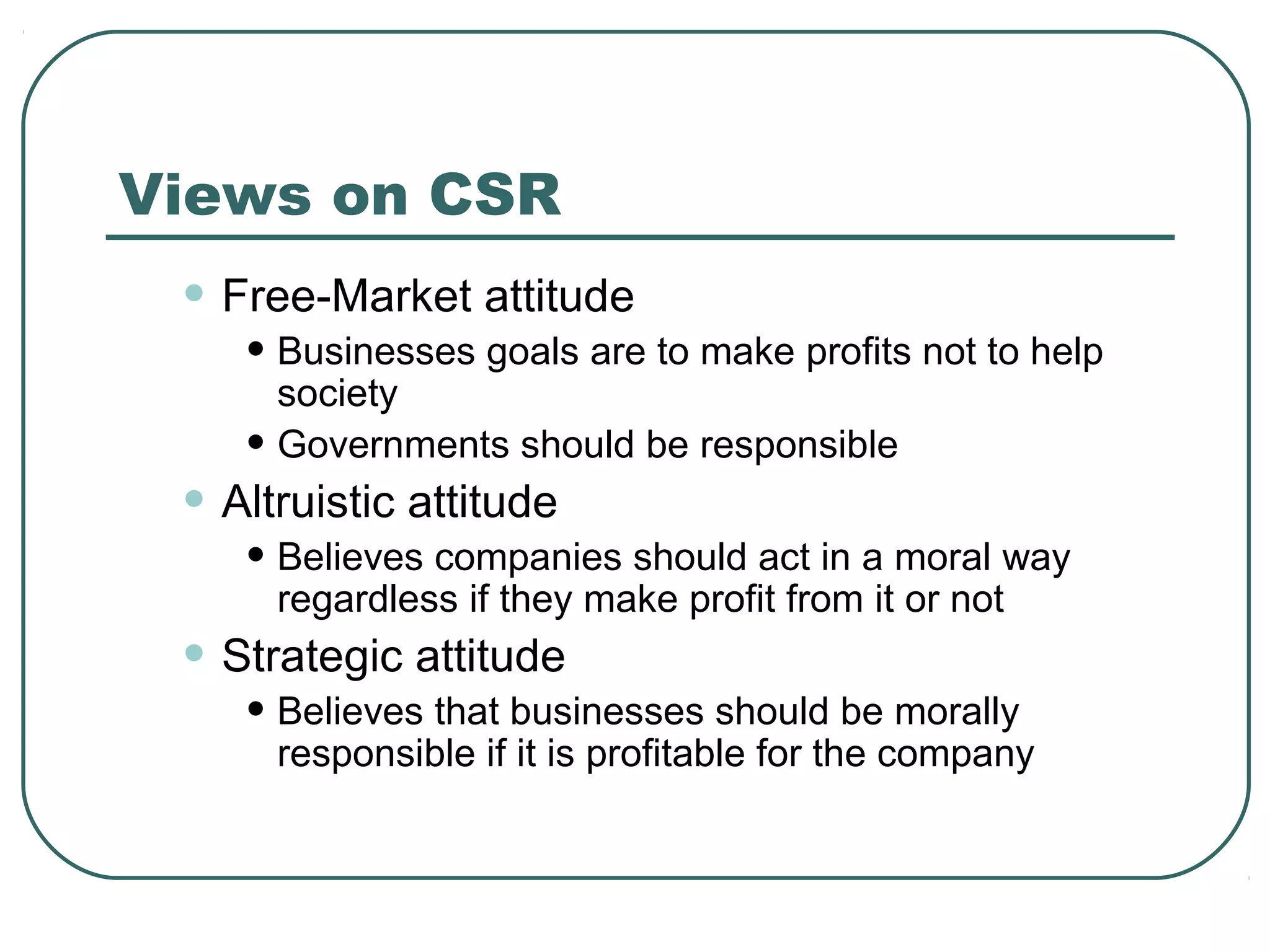
Views on CSR
 • Free-Market attitude
    • Businesses goals are to make profits not to help
      society
    • Governments should be responsible
 • Altruistic attitude
    • Believes companies should act in a moral way
      regardless if they make profit from it or not
 • Strategic attitude
    • Believes that businesses should be morally
      responsible if it is profitable for the company
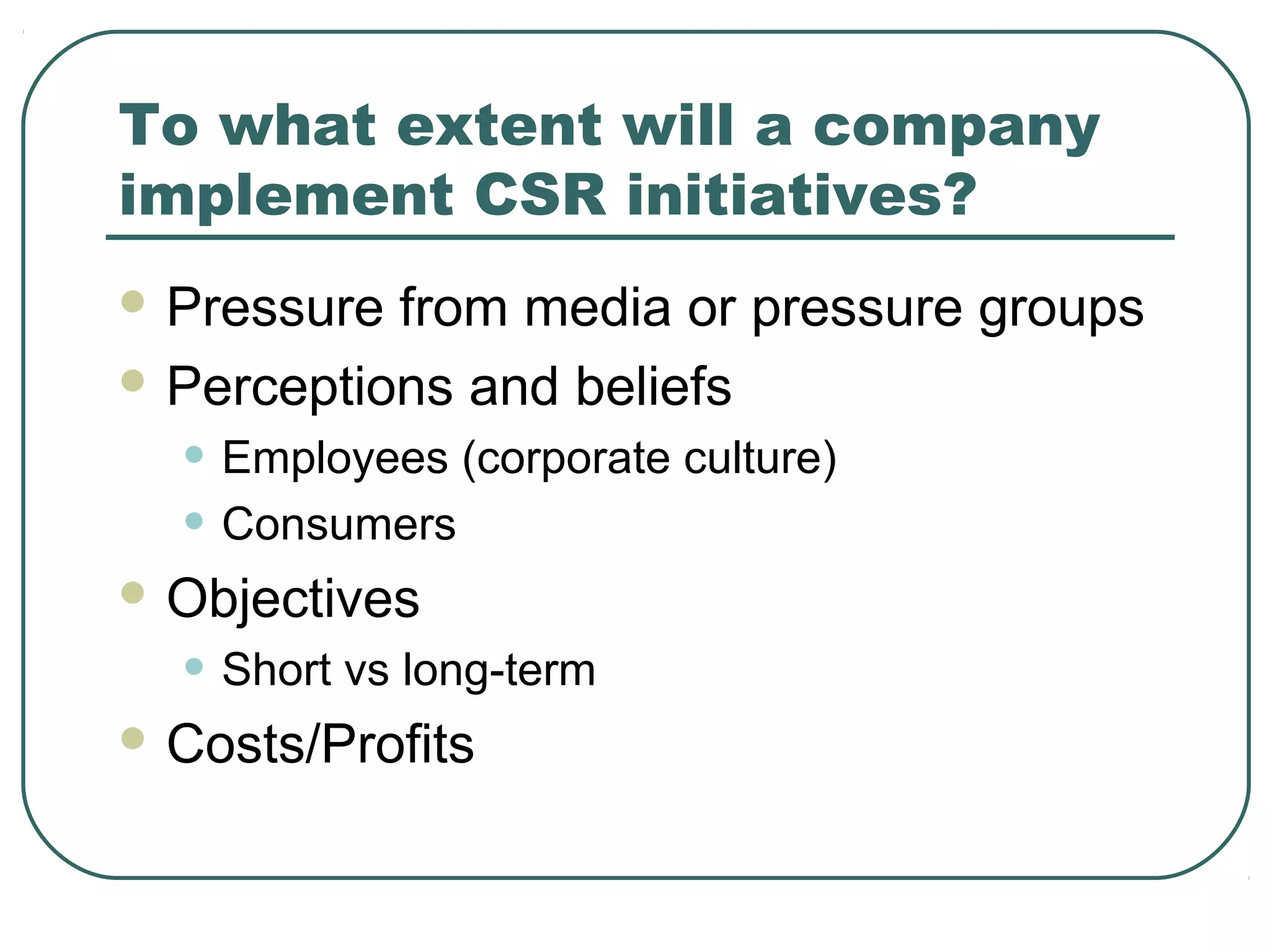
To what extent will a company
implement CSR initiatives?
 Pressure from media or pressure groups
 Perceptions and beliefs

  • Employees (corporate culture)
  • Consumers
 Objectives

  • Short vs long-term
 Costs/Profits
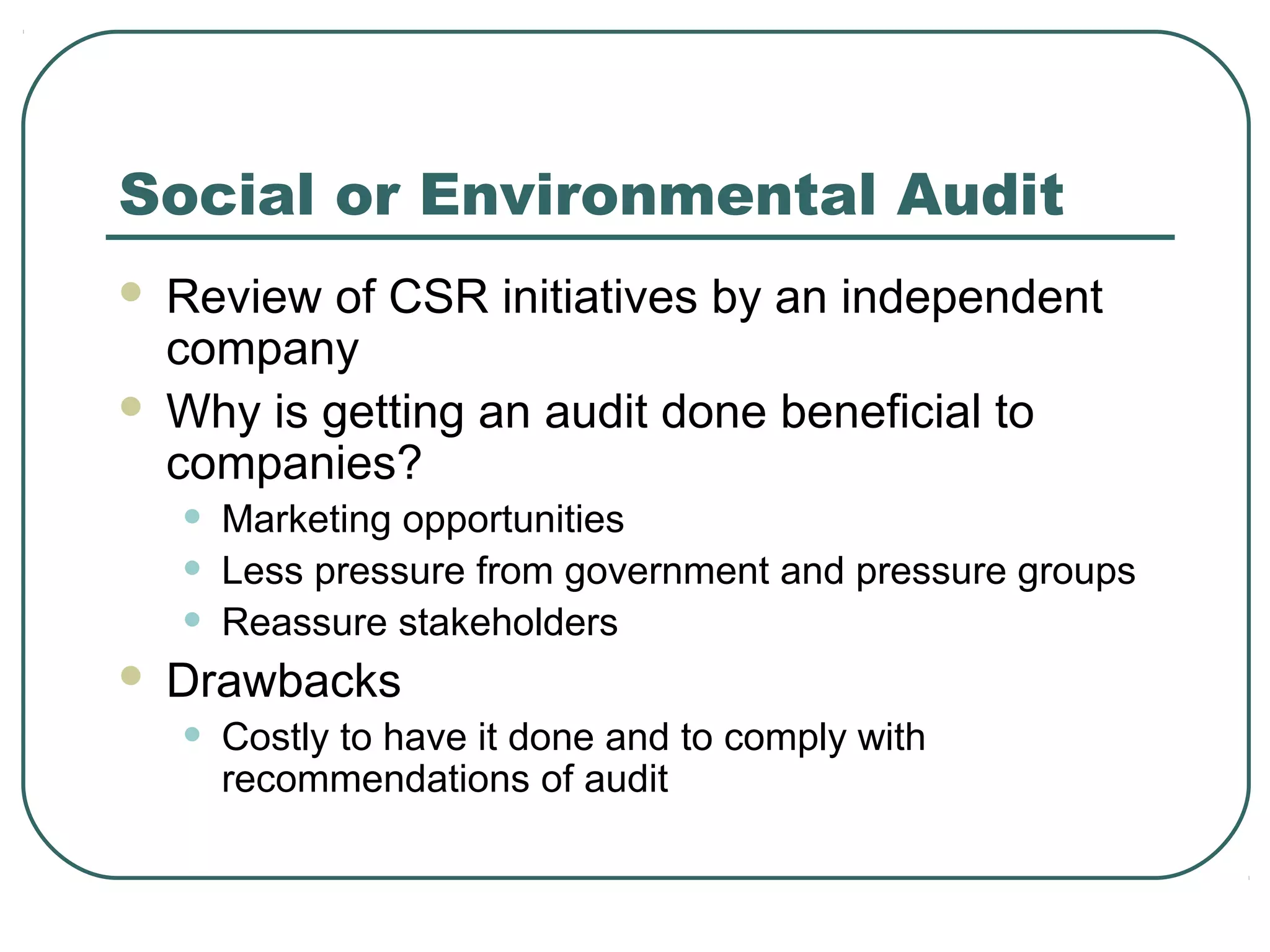
Social or Environmental Audit
 Review of CSR initiatives by an independent
  company
 Why is getting an audit done beneficial to
  companies?
    •   Marketing opportunities
    •   Less pressure from government and pressure groups
    •   Reassure stakeholders
   Drawbacks
    •   Costly to have it done and to comply with
        recommendations of audit

Unit 1.3 ethical objectives & csr

  • 1.
  • 2.
    Ethical Objectives  Goals a company sets that impact society in a positive way  Measurable • Example: Reducing pollution  What are some examples of unethical practice? • Financial dishonesty
  • 3.
    Is being ethicalimportant for businesses?  Depends on the evaluation of costs and benefits of being ethical BUT…  Examine the results/impacts of being ethical: • Corporate Image • Customer Loyalty • Cost • Staff motivation • Staff morale • Stakeholders • Profit
  • 4.
    Corporate Social Responsibility Businessesthat act morally towards their stakeholders • What is right or wrong?  Should corporations have a responsibility to society? • Why?
  • 5.
    Views on CSR • Free-Market attitude • Businesses goals are to make profits not to help society • Governments should be responsible • Altruistic attitude • Believes companies should act in a moral way regardless if they make profit from it or not • Strategic attitude • Believes that businesses should be morally responsible if it is profitable for the company
  • 6.
    To what extentwill a company implement CSR initiatives?  Pressure from media or pressure groups  Perceptions and beliefs • Employees (corporate culture) • Consumers  Objectives • Short vs long-term  Costs/Profits
  • 7.
    Social or EnvironmentalAudit  Review of CSR initiatives by an independent company  Why is getting an audit done beneficial to companies? • Marketing opportunities • Less pressure from government and pressure groups • Reassure stakeholders  Drawbacks • Costly to have it done and to comply with recommendations of audit