NOUNS
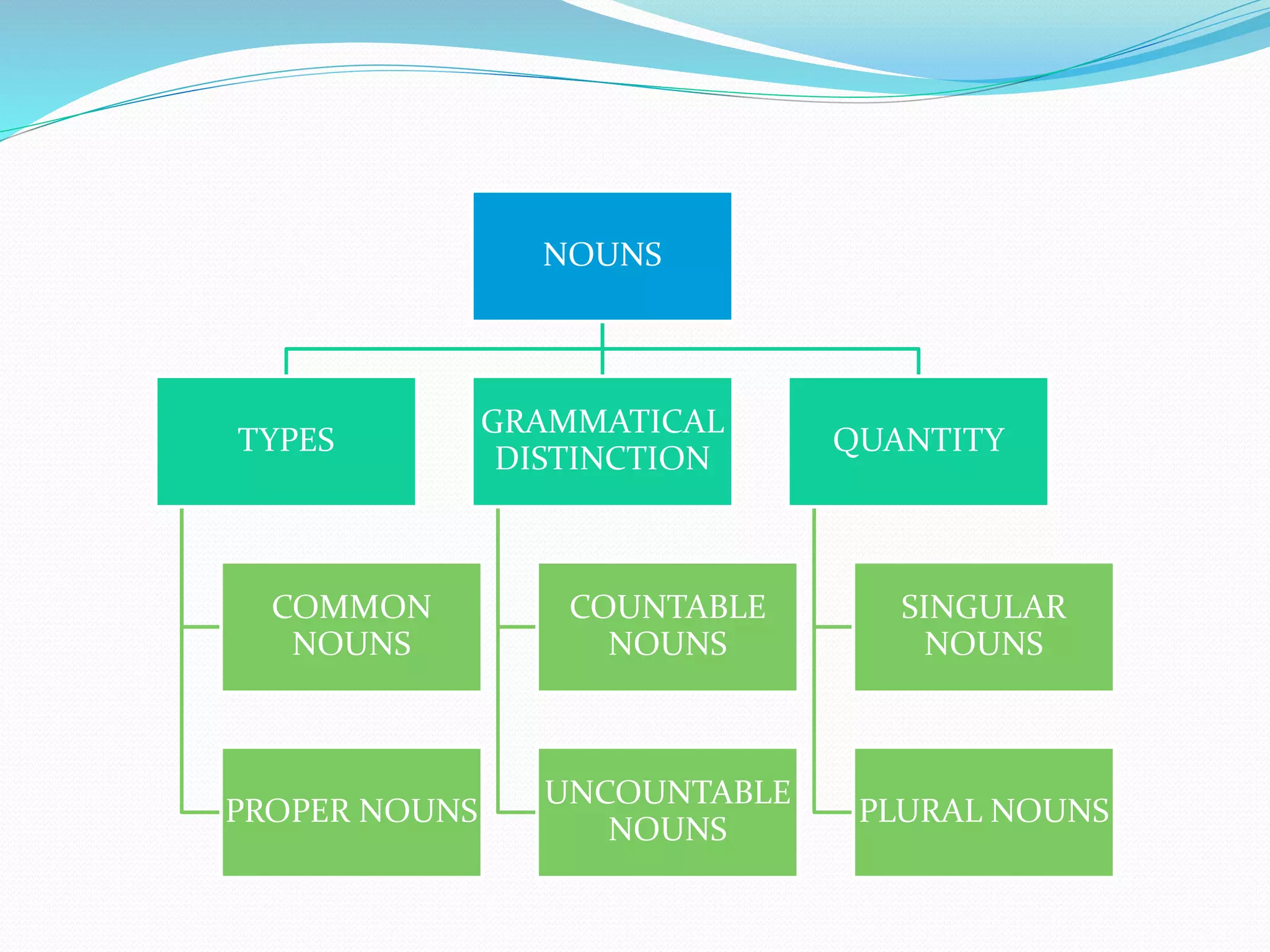
NOUNS
TYPES
COMMON
NOUNS
PROPER NOUNS
GRAMMATICAL
DISTINCTION
COUNTABLE
NOUNS
UNCOUNTABLE
NOUNS
QUANTITY
SINGULAR
NOUNS
PLURAL NOUNS
Find out the nouns from this picture
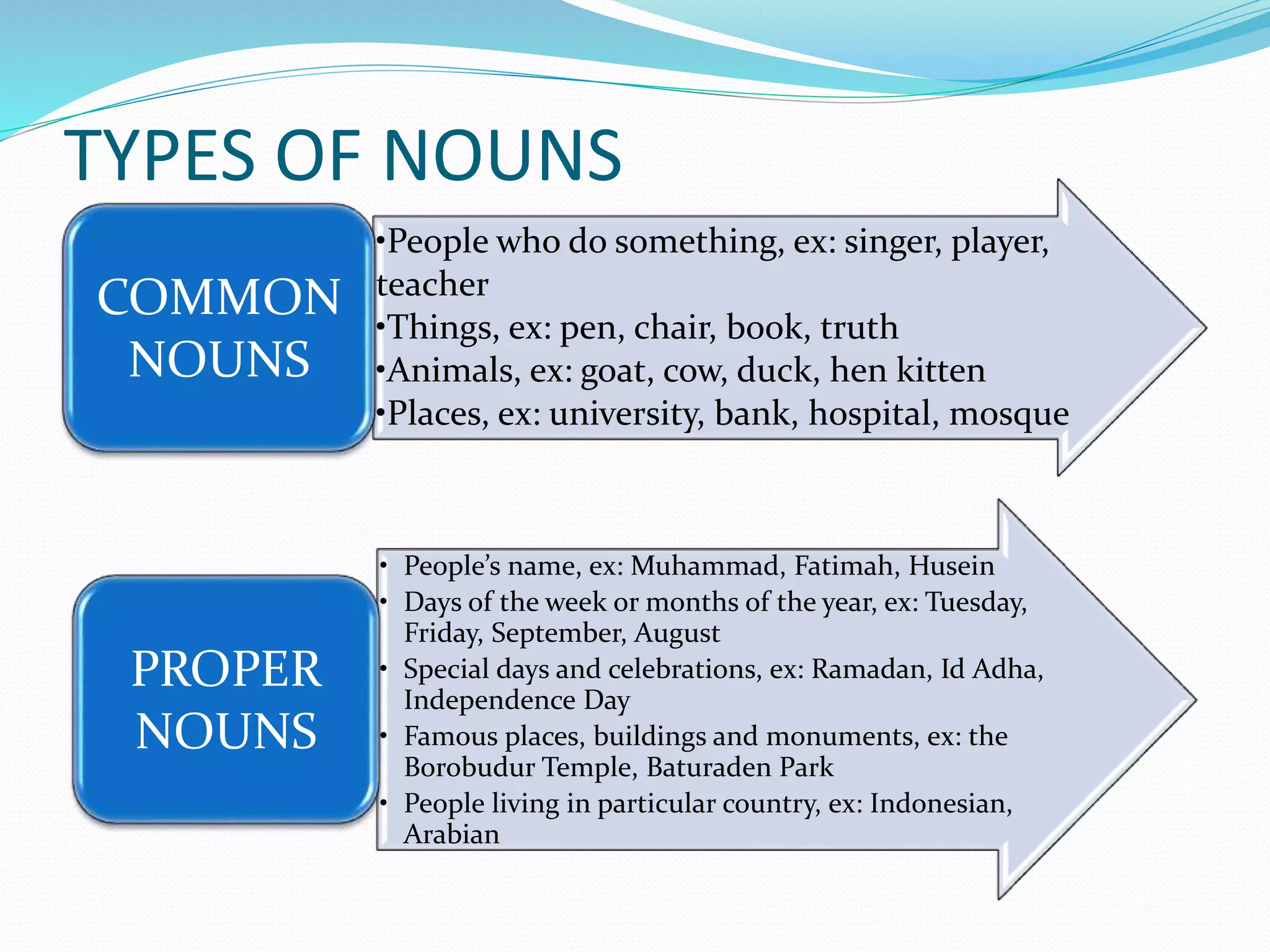
TYPES OF NOUNS
•People who do something, ex: singer, player,
teacher
•Things, ex: pen, chair, book, truth
•Animals, ex: goat, cow, duck, hen kitten
•Places, ex: university, bank, hospital, mosque
COMMON
NOUNS
• People’s name, ex: Muhammad, Fatimah, Husein
• Days of the week or months of the year, ex: Tuesday,
Friday, September, August
• Special days and celebrations, ex: Ramadan, Id Adha,
Independence Day
• Famous places, buildings and monuments, ex: the
Borobudur Temple, Baturaden Park
• People living in particular country, ex: Indonesian,
Arabian
PROPER
NOUNS
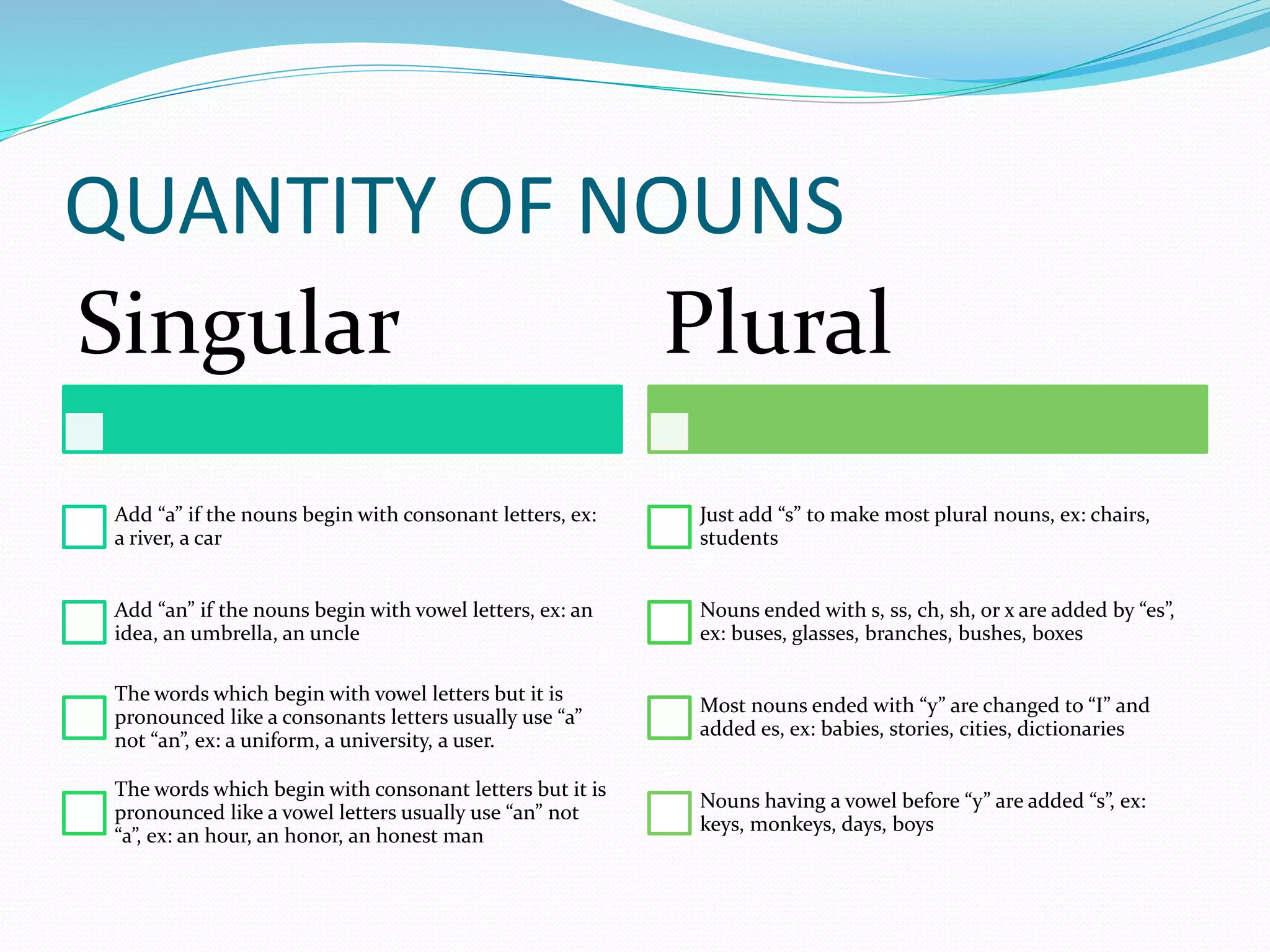
QUANTITY OF NOUNS
Singular
Add “a” if the nouns begin with consonant letters, ex:
a river, a car
Add “an” if the nouns begin with vowel letters, ex: an
idea, an umbrella, an uncle
The words which begin with vowel letters but it is
pronounced like a consonants letters usually use “a”
not “an”, ex: a uniform, a university, a user.
The words which begin with consonant letters but it is
pronounced like a vowel letters usually use “an” not
“a”, ex: an hour, an honor, an honest man
Plural
Just add “s” to make most plural nouns, ex: chairs,
students
Nouns ended with s, ss, ch, sh, or x are added by “es”,
ex: buses, glasses, branches, bushes, boxes
Most nouns ended with “y” are changed to “I” and
added es, ex: babies, stories, cities, dictionaries
Nouns having a vowel before “y” are added “s”, ex:
keys, monkeys, days, boys
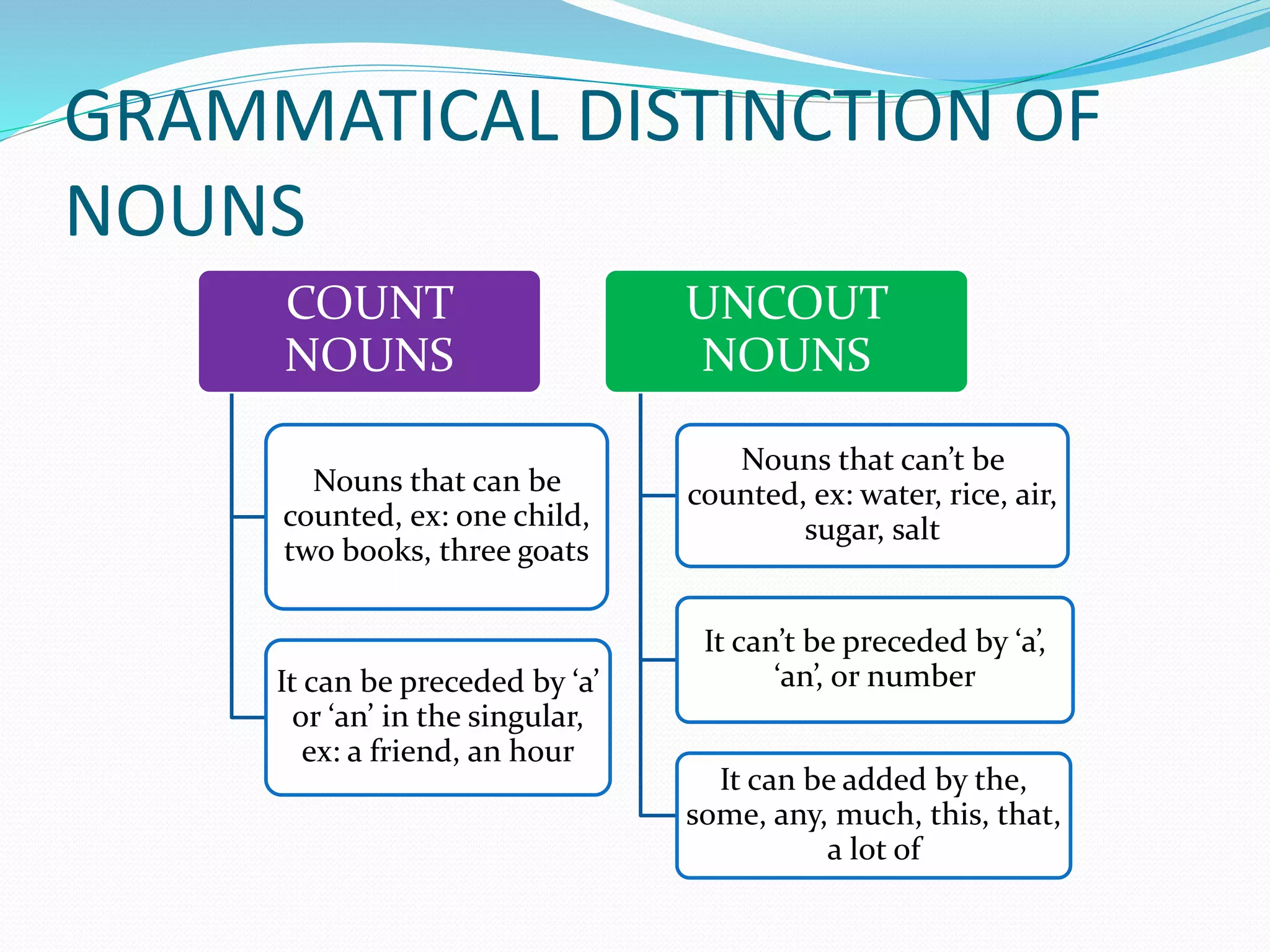
GRAMMATICAL DISTINCTION OF
NOUNS
COUNT
NOUNS
Nouns that can be
counted, ex: one child,
two books, three goats
It can be preceded by ‘a’
or ‘an’ in the singular,
ex: a friend, an hour
UNCOUT
NOUNS
Nouns that can’t be
counted, ex: water, rice, air,
sugar, salt
It can’t be preceded by ‘a’,
‘an’, or number
It can be added by the,
some, any, much, this, that,
a lot of
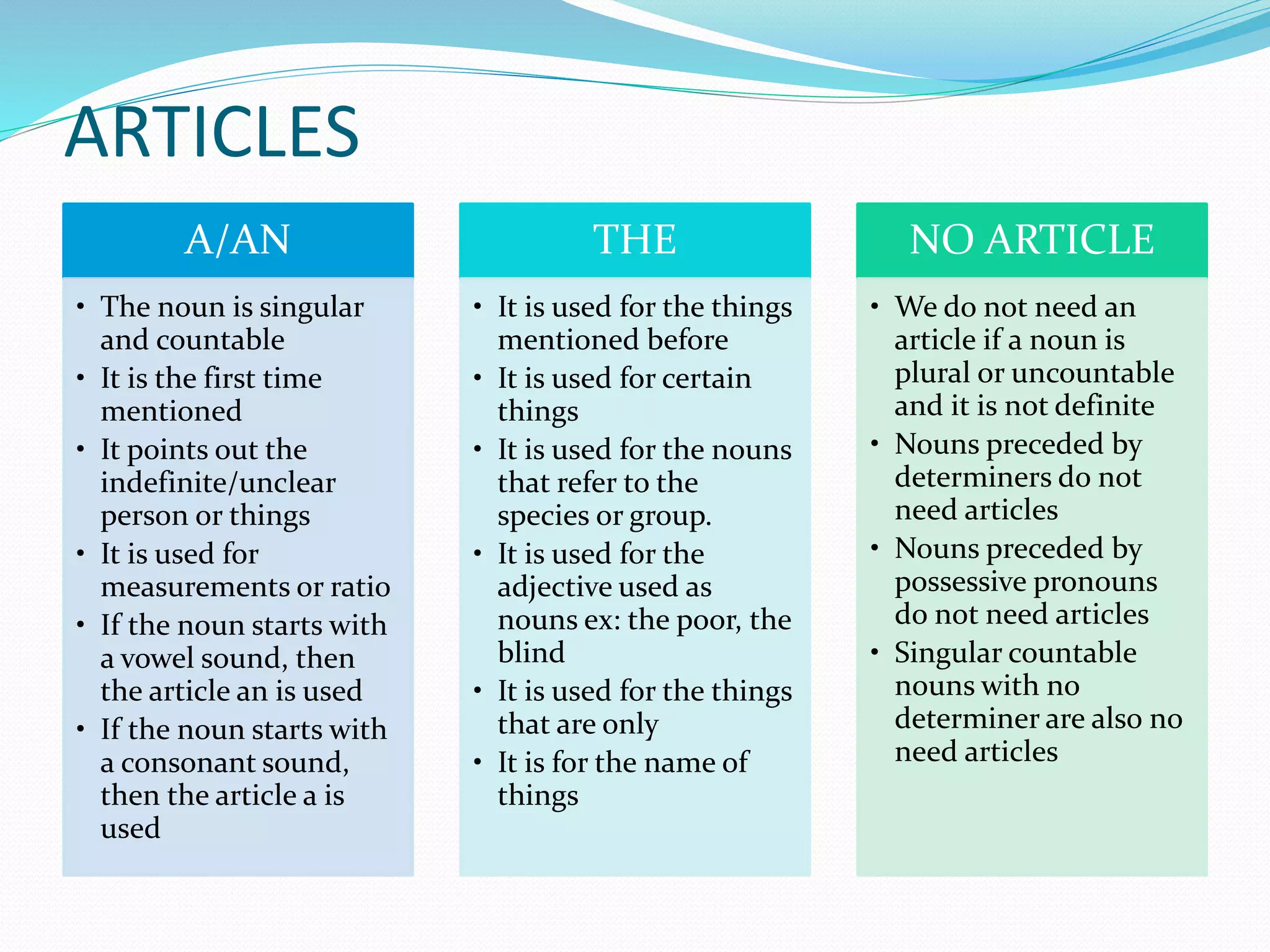
ARTICLES
A/AN
• The noun is singular
and countable
• It is the first time
mentioned
• It points out the
indefinite/unclear
person or things
• It is used for
measurements or ratio
• If the noun starts with
a vowel sound, then
the article an is used
• If the noun starts with
a consonant sound,
then the article a is
used
THE
• It is used for the things
mentioned before
• It is used for certain
things
• It is used for the nouns
that refer to the
species or group.
• It is used for the
adjective used as
nouns ex: the poor, the
blind
• It is used for the things
that are only
• It is for the name of
things
NO ARTICLE
• We do not need an
article if a noun is
plural or uncountable
and it is not definite
• Nouns preceded by
determiners do not
need articles
• Nouns preceded by
possessive pronouns
do not need articles
• Singular countable
nouns with no
determiner are also no
need articles

Unit 1 Nouns

  • 1.
  • 2.
  • 3.
    Find out thenouns from this picture
  • 4.
    TYPES OF NOUNS •Peoplewho do something, ex: singer, player, teacher •Things, ex: pen, chair, book, truth •Animals, ex: goat, cow, duck, hen kitten •Places, ex: university, bank, hospital, mosque COMMON NOUNS • People’s name, ex: Muhammad, Fatimah, Husein • Days of the week or months of the year, ex: Tuesday, Friday, September, August • Special days and celebrations, ex: Ramadan, Id Adha, Independence Day • Famous places, buildings and monuments, ex: the Borobudur Temple, Baturaden Park • People living in particular country, ex: Indonesian, Arabian PROPER NOUNS
  • 5.
    QUANTITY OF NOUNS Singular Add“a” if the nouns begin with consonant letters, ex: a river, a car Add “an” if the nouns begin with vowel letters, ex: an idea, an umbrella, an uncle The words which begin with vowel letters but it is pronounced like a consonants letters usually use “a” not “an”, ex: a uniform, a university, a user. The words which begin with consonant letters but it is pronounced like a vowel letters usually use “an” not “a”, ex: an hour, an honor, an honest man Plural Just add “s” to make most plural nouns, ex: chairs, students Nouns ended with s, ss, ch, sh, or x are added by “es”, ex: buses, glasses, branches, bushes, boxes Most nouns ended with “y” are changed to “I” and added es, ex: babies, stories, cities, dictionaries Nouns having a vowel before “y” are added “s”, ex: keys, monkeys, days, boys
  • 6.
    GRAMMATICAL DISTINCTION OF NOUNS COUNT NOUNS Nounsthat can be counted, ex: one child, two books, three goats It can be preceded by ‘a’ or ‘an’ in the singular, ex: a friend, an hour UNCOUT NOUNS Nouns that can’t be counted, ex: water, rice, air, sugar, salt It can’t be preceded by ‘a’, ‘an’, or number It can be added by the, some, any, much, this, that, a lot of
  • 7.
    ARTICLES A/AN • The nounis singular and countable • It is the first time mentioned • It points out the indefinite/unclear person or things • It is used for measurements or ratio • If the noun starts with a vowel sound, then the article an is used • If the noun starts with a consonant sound, then the article a is used THE • It is used for the things mentioned before • It is used for certain things • It is used for the nouns that refer to the species or group. • It is used for the adjective used as nouns ex: the poor, the blind • It is used for the things that are only • It is for the name of things NO ARTICLE • We do not need an article if a noun is plural or uncountable and it is not definite • Nouns preceded by determiners do not need articles • Nouns preceded by possessive pronouns do not need articles • Singular countable nouns with no determiner are also no need articles