MB109II INTRODUCTION
TO FINANCE
PROF. INDRAJEET KOLE
Syllabus
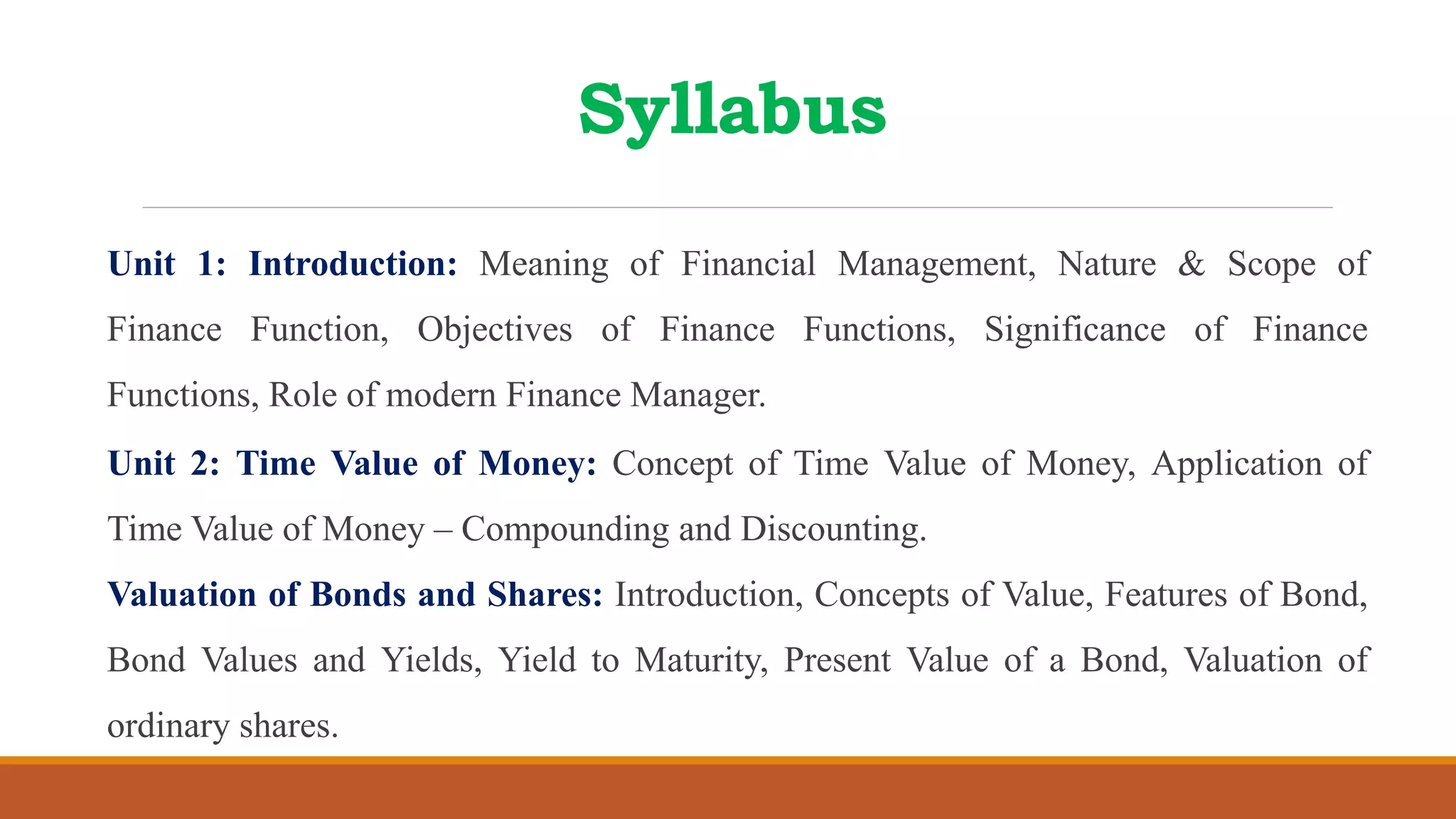
Unit 1: Introduction: Meaning of Financial Management, Nature & Scope of
Finance Function, Objectives of Finance Functions, Significance of Finance
Functions, Role of modern Finance Manager.
Unit 2: Time Value of Money: Concept of Time Value of Money, Application of
Time Value of Money – Compounding and Discounting.
Valuation of Bonds and Shares: Introduction, Concepts of Value, Features of Bond,
Bond Values and Yields, Yield to Maturity, Present Value of a Bond, Valuation of
ordinary shares.
Syllabus
Unit 3: Sources of Long Term Finance: Equity, Preference Shares,
Debentures, Bonds, Term Loan, Hire Purchase, Leasing, Venture Capital,
Crowd Funding, External Commercial Borrowings, ADRs, GDRs, Euro Bonds,
FCCBs.
Unit 4: Raising of Long Term Finance: IPO, Red Herring Prospectus, Book
Building Process, Green Shoe Option, Listing of Securities in Stock Exchange,
Rights Issue, Bonus Issue, Private Placement of shares.
Syllabus
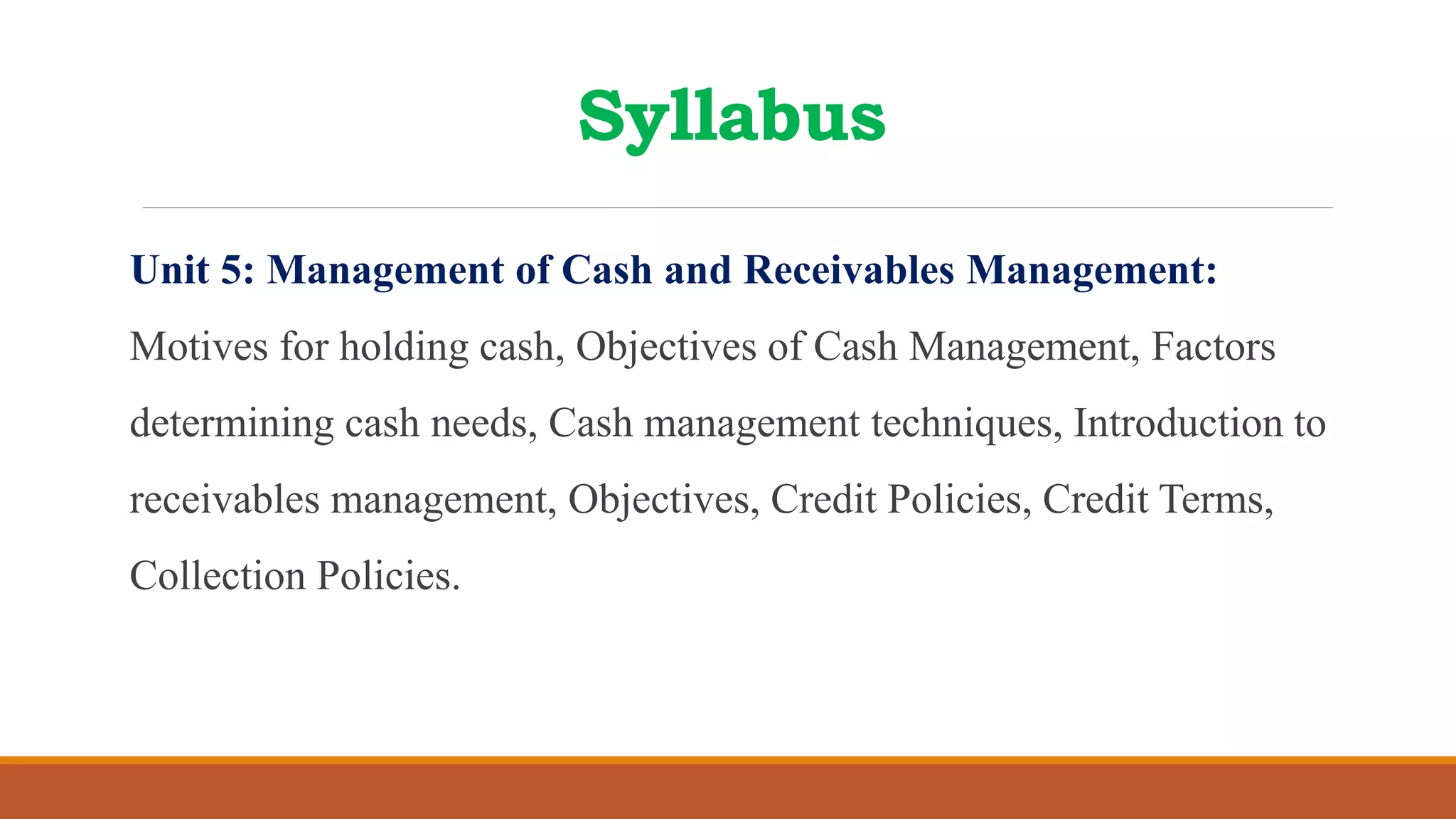
Unit 5: Management of Cash and Receivables Management:
Motives for holding cash, Objectives of Cash Management, Factors
determining cash needs, Cash management techniques, Introduction to
receivables management, Objectives, Credit Policies, Credit Terms,
Collection Policies.
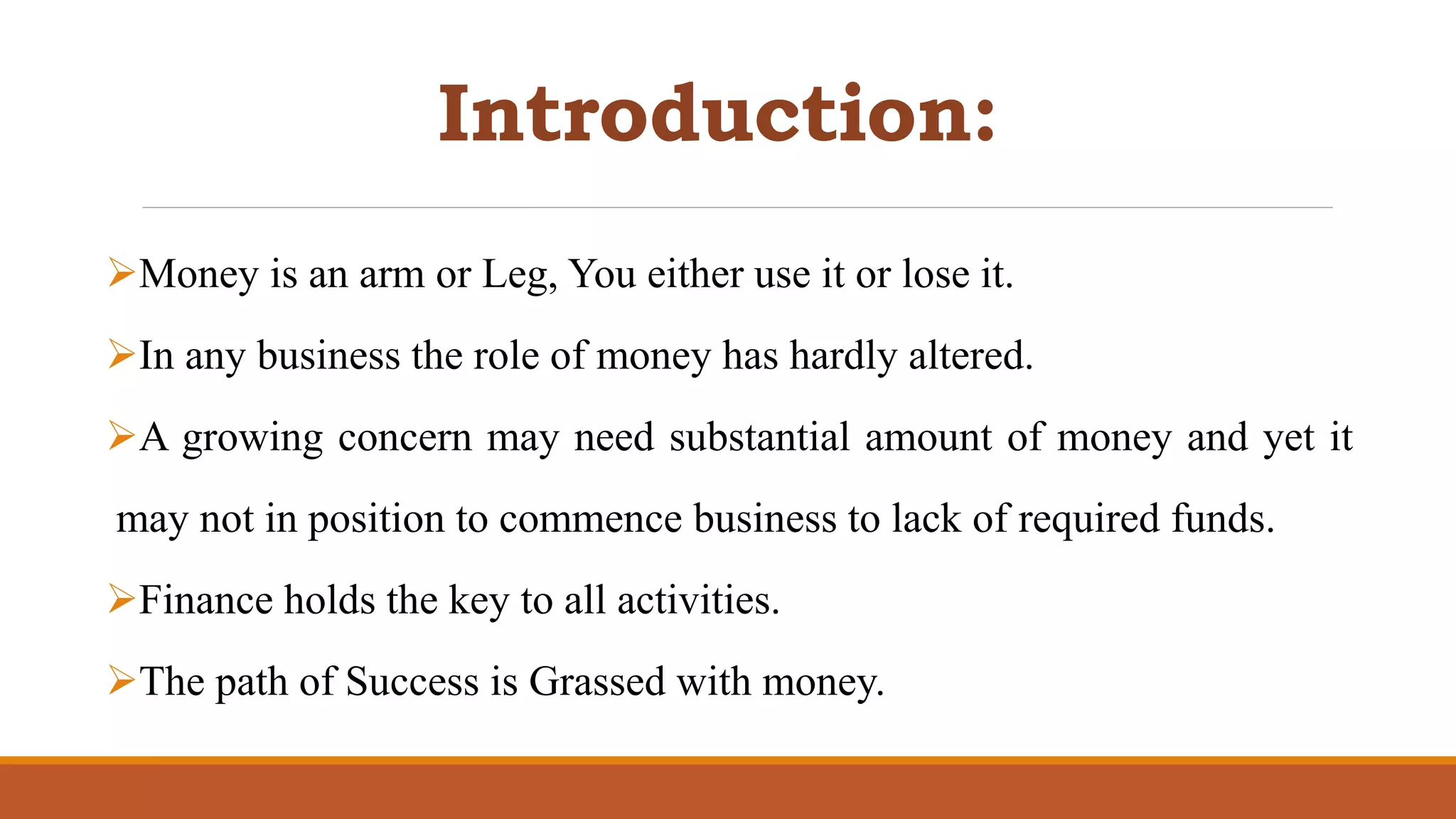
Introduction:
Money is an arm or Leg, You either use it or lose it.
In any business the role of money has hardly altered.
A growing concern may need substantial amount of money and yet it
may not in position to commence business to lack of required funds.
Finance holds the key to all activities.
The path of Success is Grassed with money.
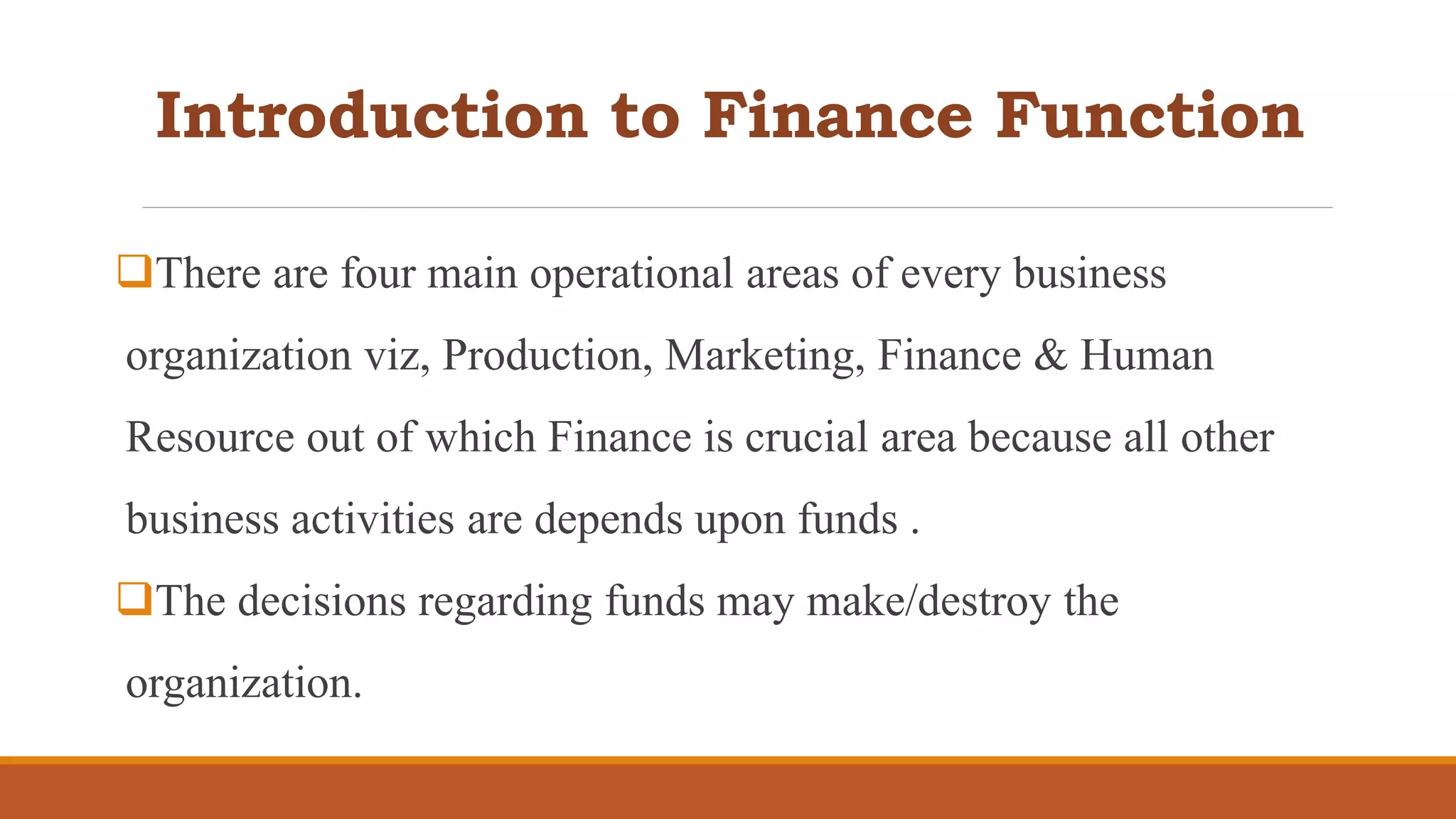
Introduction to Finance Function
There are four main operational areas of every business
organization viz, Production, Marketing, Finance & Human
Resource out of which Finance is crucial area because all other
business activities are depends upon funds .
The decisions regarding funds may make/destroy the
organization.
Definition of Finance Function
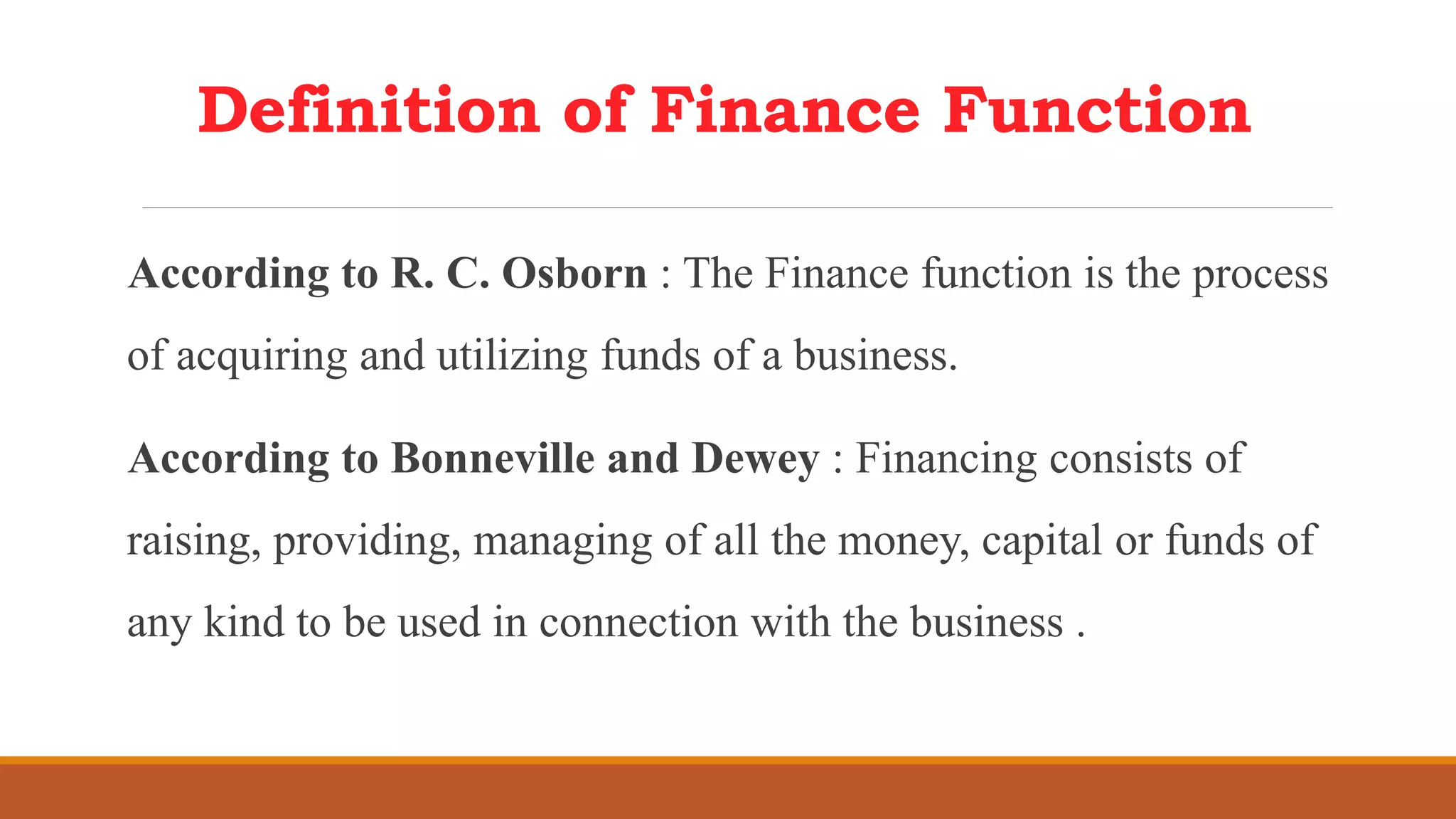
According to R. C. Osborn : The Finance function is the process
of acquiring and utilizing funds of a business.
According to Bonneville and Dewey : Financing consists of
raising, providing, managing of all the money, capital or funds of
any kind to be used in connection with the business .
Scope of Finance
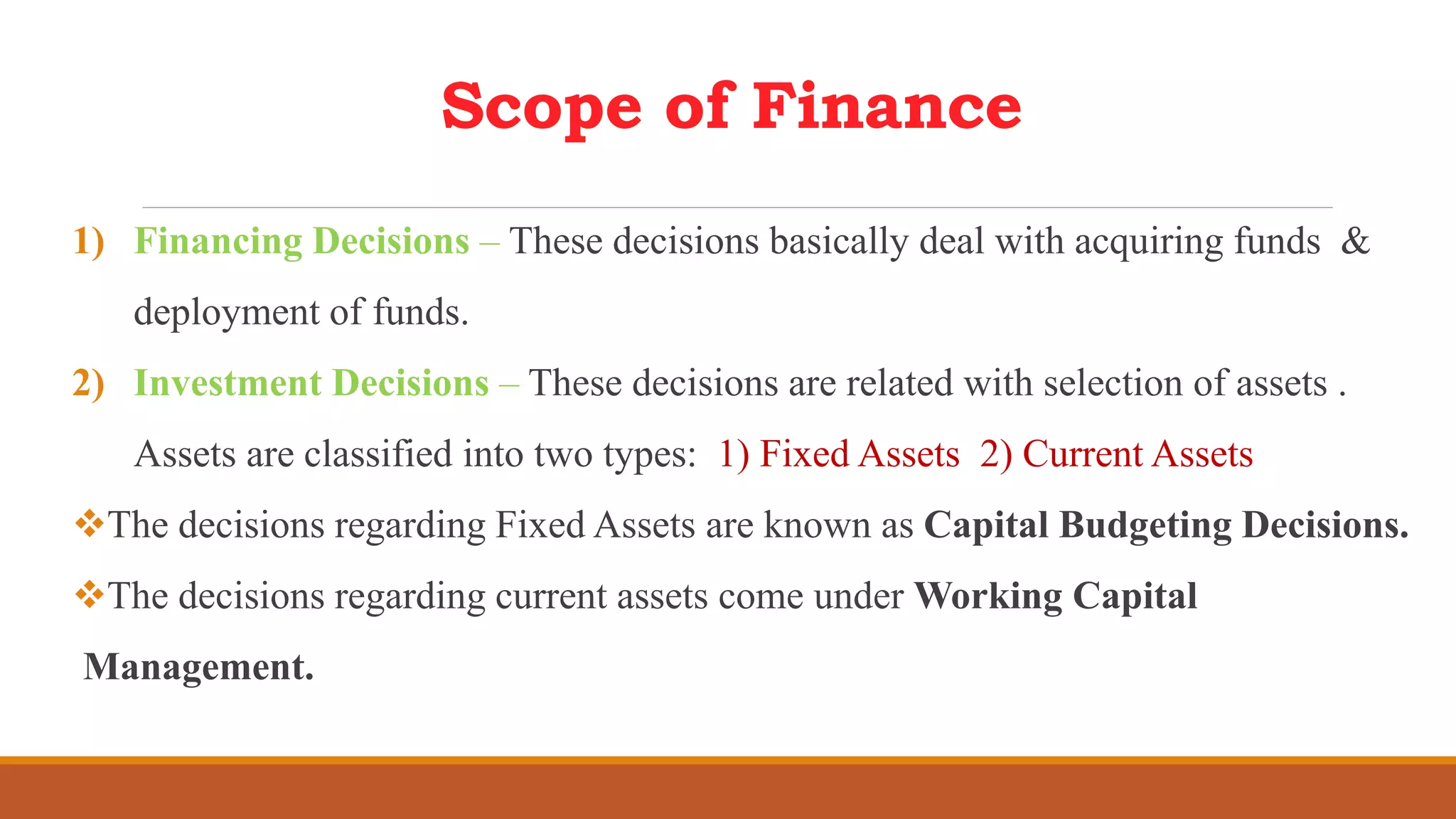
1) Financing Decisions – These decisions basically deal with acquiring funds &
deployment of funds.
2) Investment Decisions – These decisions are related with selection of assets .
Assets are classified into two types: 1) Fixed Assets 2) Current Assets
The decisions regarding Fixed Assets are known as Capital Budgeting Decisions.
The decisions regarding current assets come under Working Capital
Management.
Scope of Finance
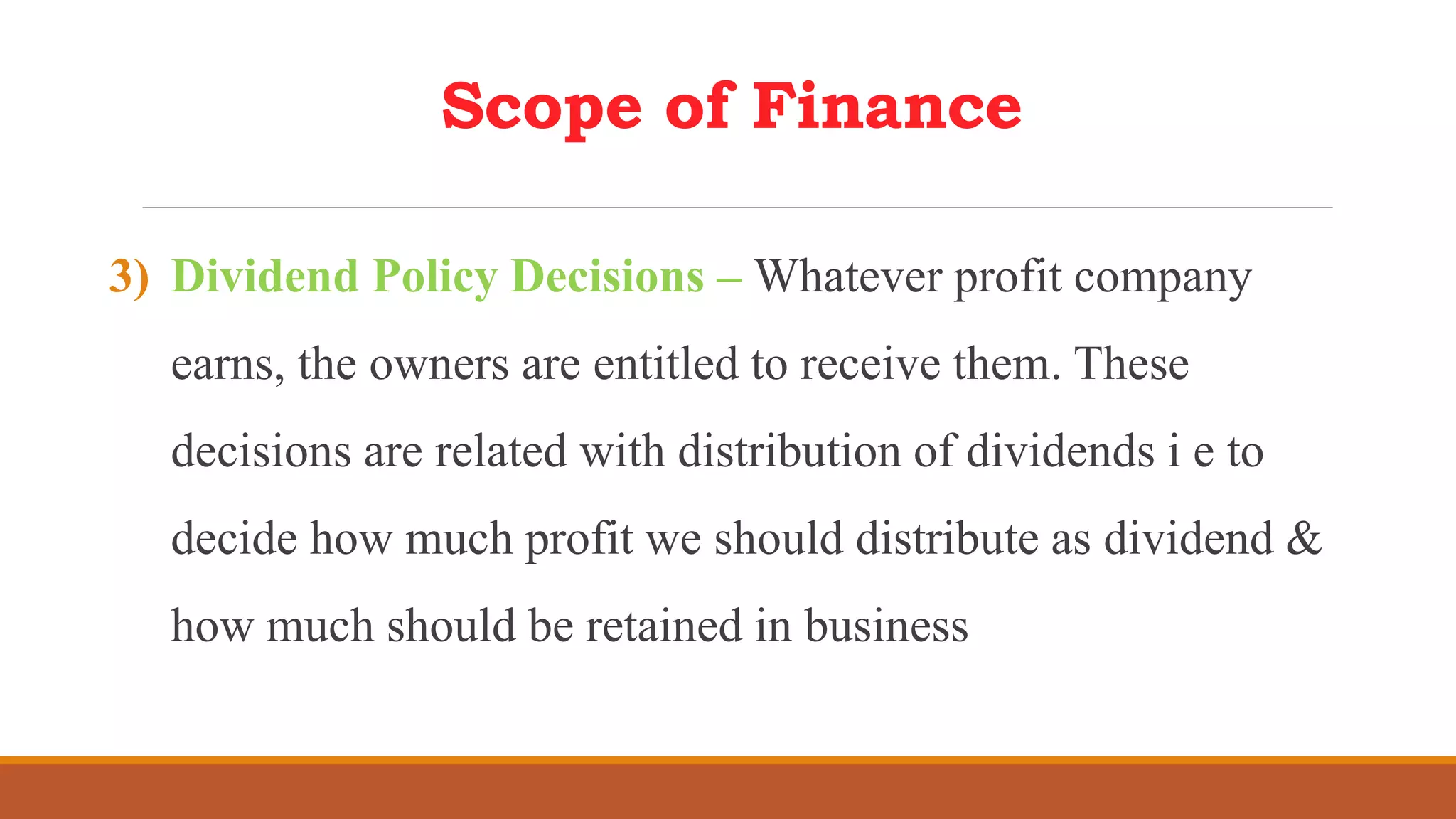
3) Dividend Policy Decisions – Whatever profit company
earns, the owners are entitled to receive them. These
decisions are related with distribution of dividends i e to
decide how much profit we should distribute as dividend &
how much should be retained in business
Functions of Finance Department
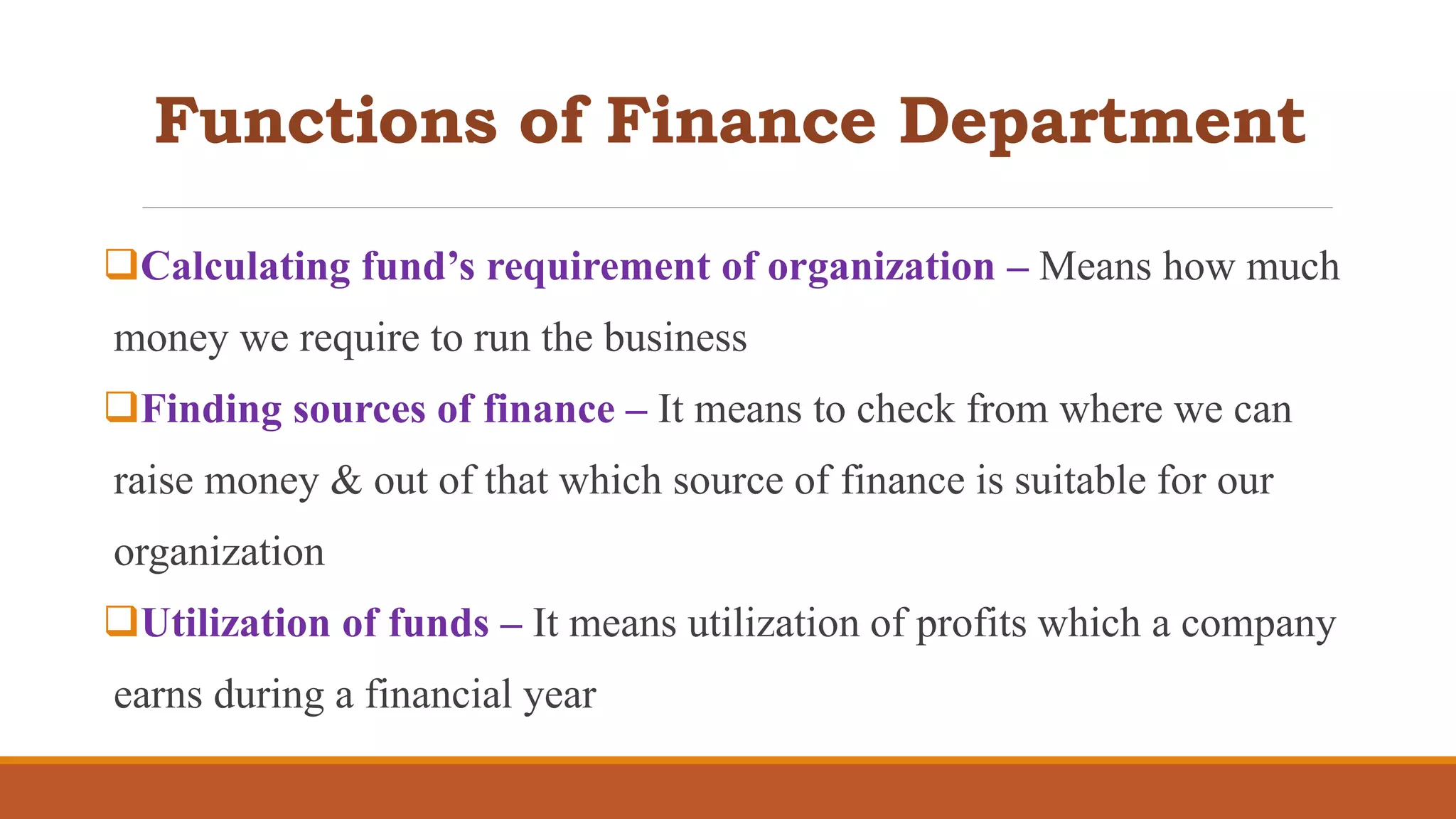
Calculating fund’s requirement of organization – Means how much
money we require to run the business
Finding sources of finance – It means to check from where we can
raise money & out of that which source of finance is suitable for our
organization
Utilization of funds – It means utilization of profits which a company
earns during a financial year
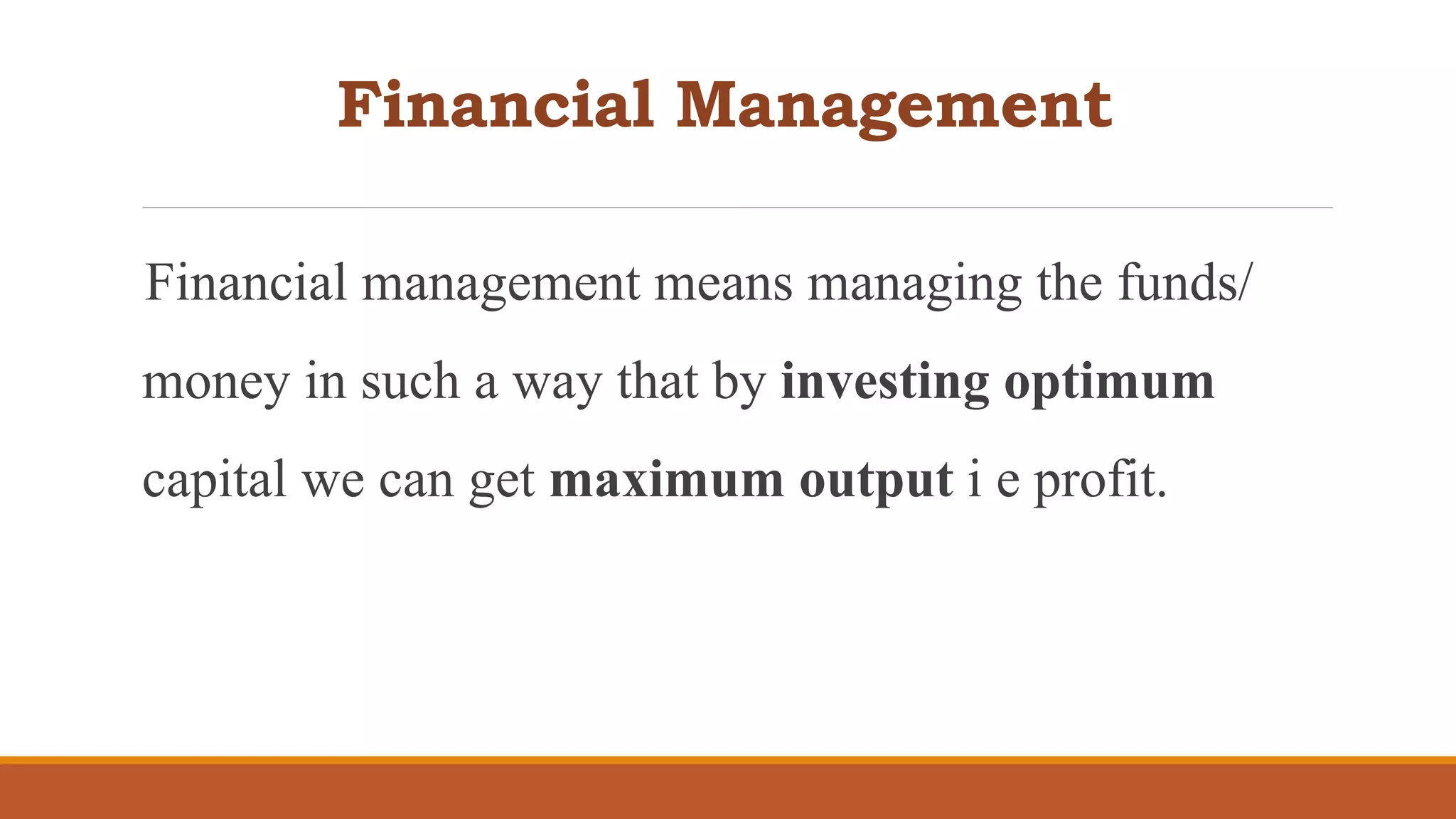
Financial Management
Financial management means managing the funds/
money in such a way that by investing optimum
capital we can get maximum output i e profit.
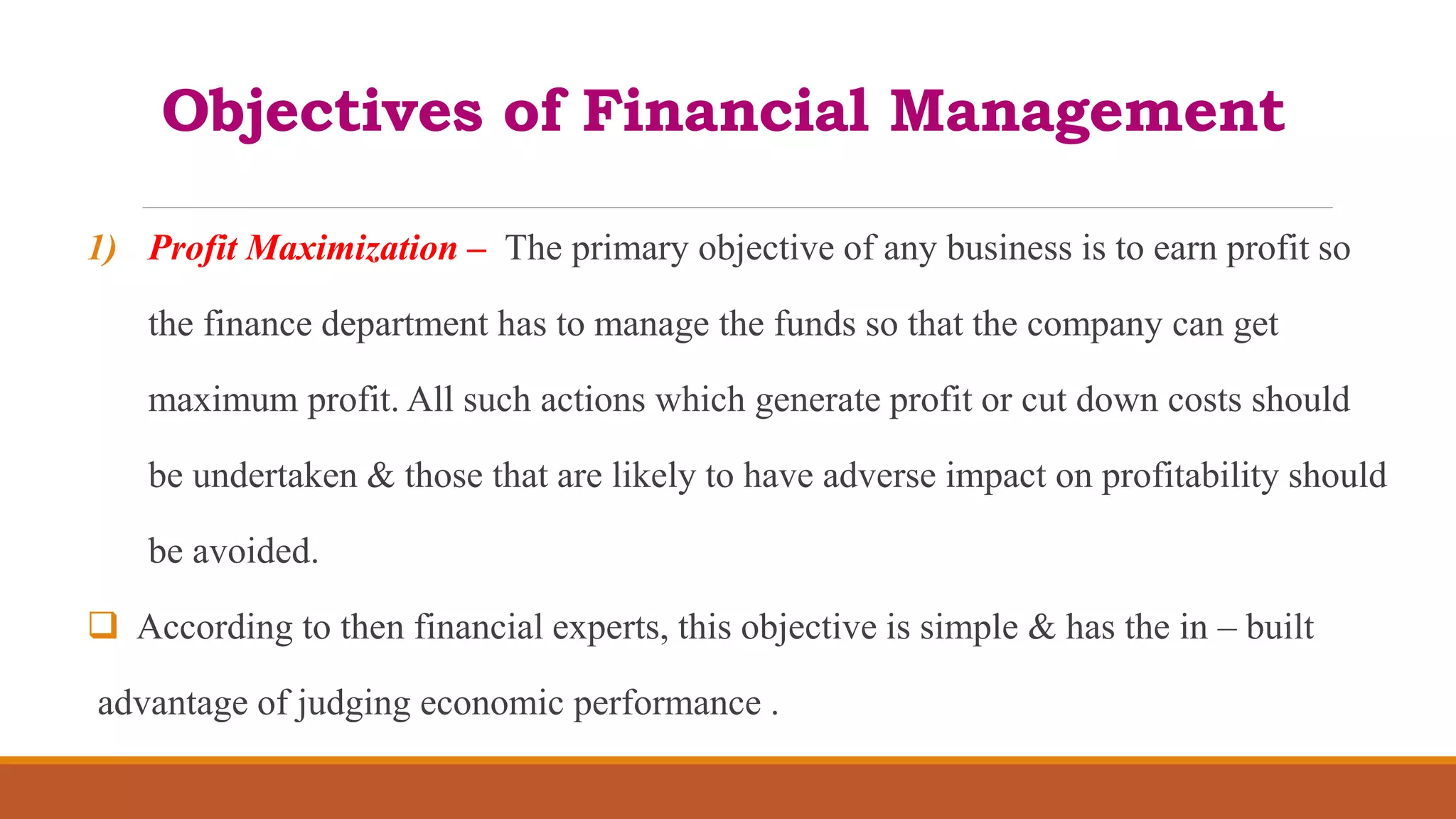
Objectives of Financial Management
1) Profit Maximization – The primary objective of any business is to earn profit so
the finance department has to manage the funds so that the company can get
maximum profit. All such actions which generate profit or cut down costs should
be undertaken & those that are likely to have adverse impact on profitability should
be avoided.
 According to then financial experts, this objective is simple & has the in – built
advantage of judging economic performance .
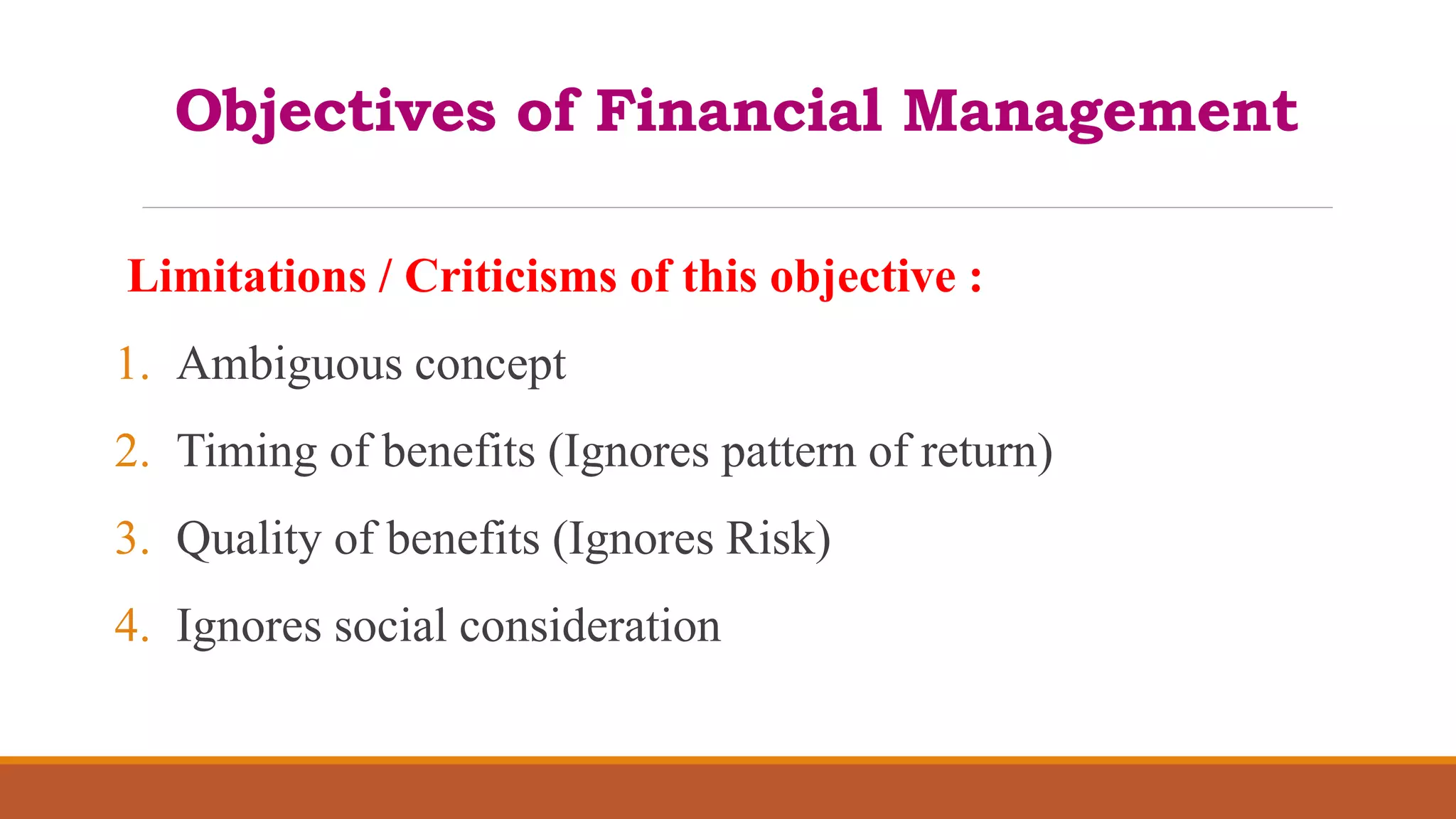
Objectives of Financial Management
Limitations / Criticisms of this objective :
1. Ambiguous concept
2. Timing of benefits (Ignores pattern of return)
3. Quality of benefits (Ignores Risk)
4. Ignores social consideration
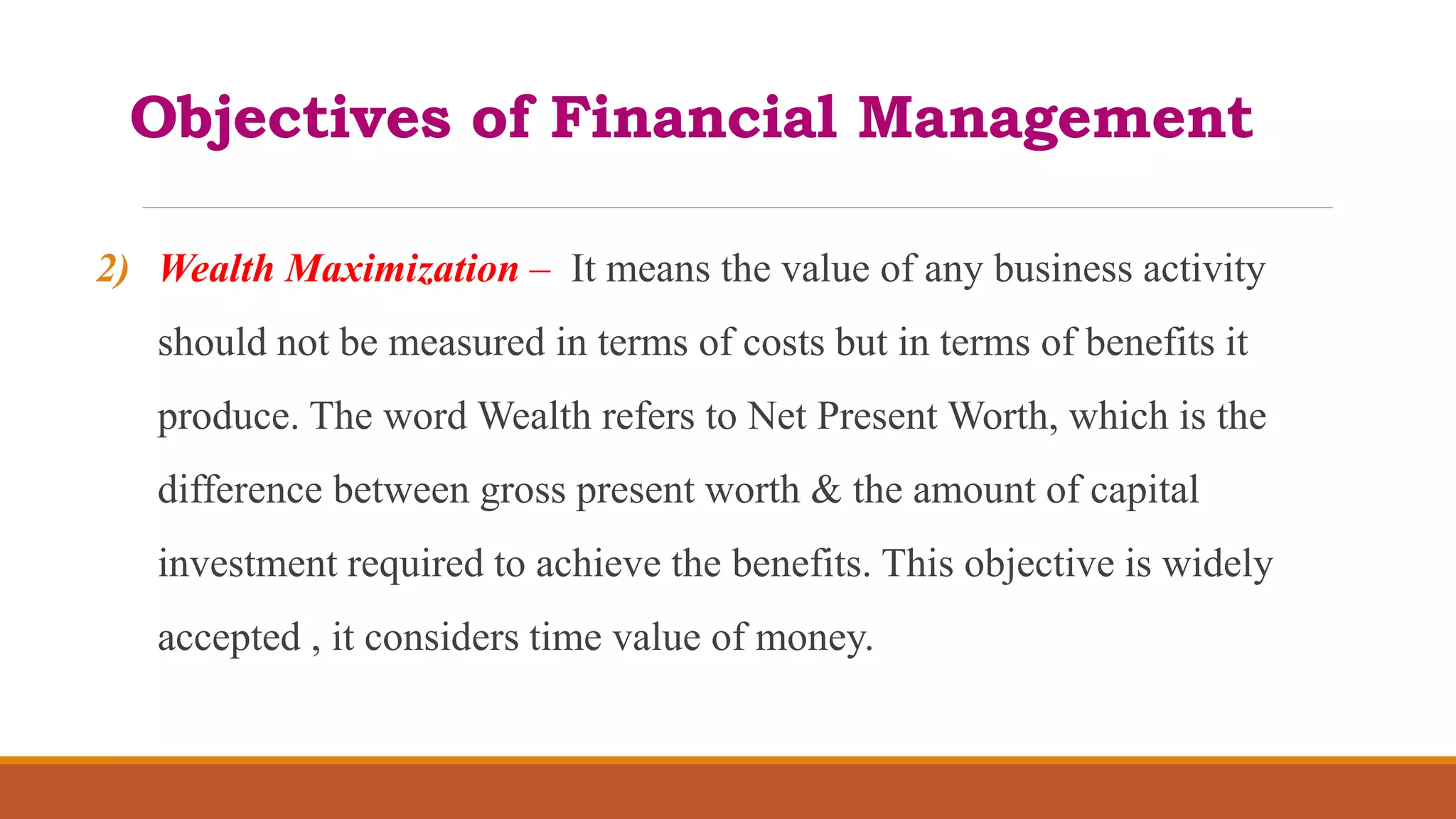
Objectives of Financial Management
2) Wealth Maximization – It means the value of any business activity
should not be measured in terms of costs but in terms of benefits it
produce. The word Wealth refers to Net Present Worth, which is the
difference between gross present worth & the amount of capital
investment required to achieve the benefits. This objective is widely
accepted , it considers time value of money.
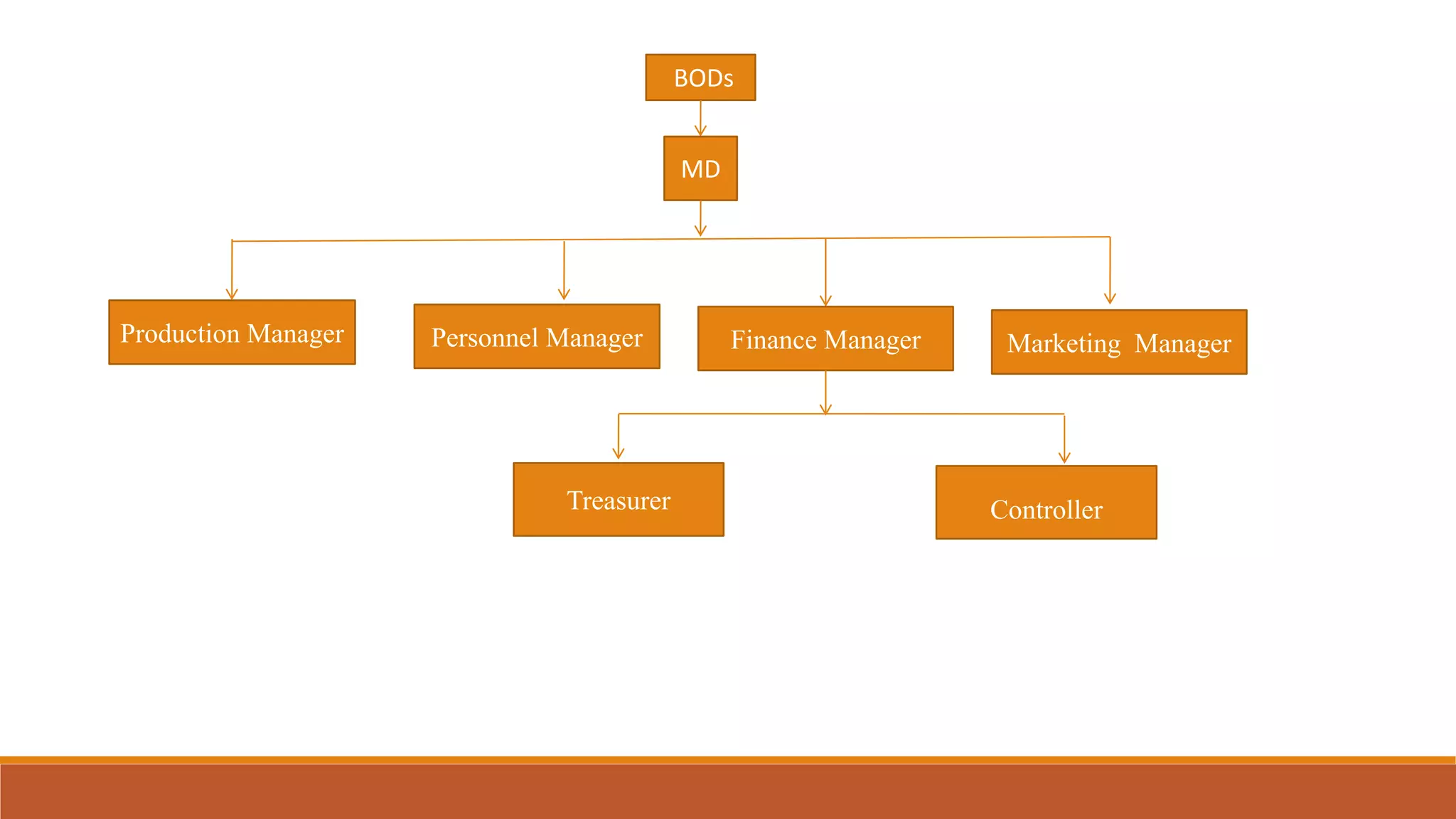
BODs
MD
Production Manager Personnel Manager Finance Manager Marketing Manager
Treasurer Controller
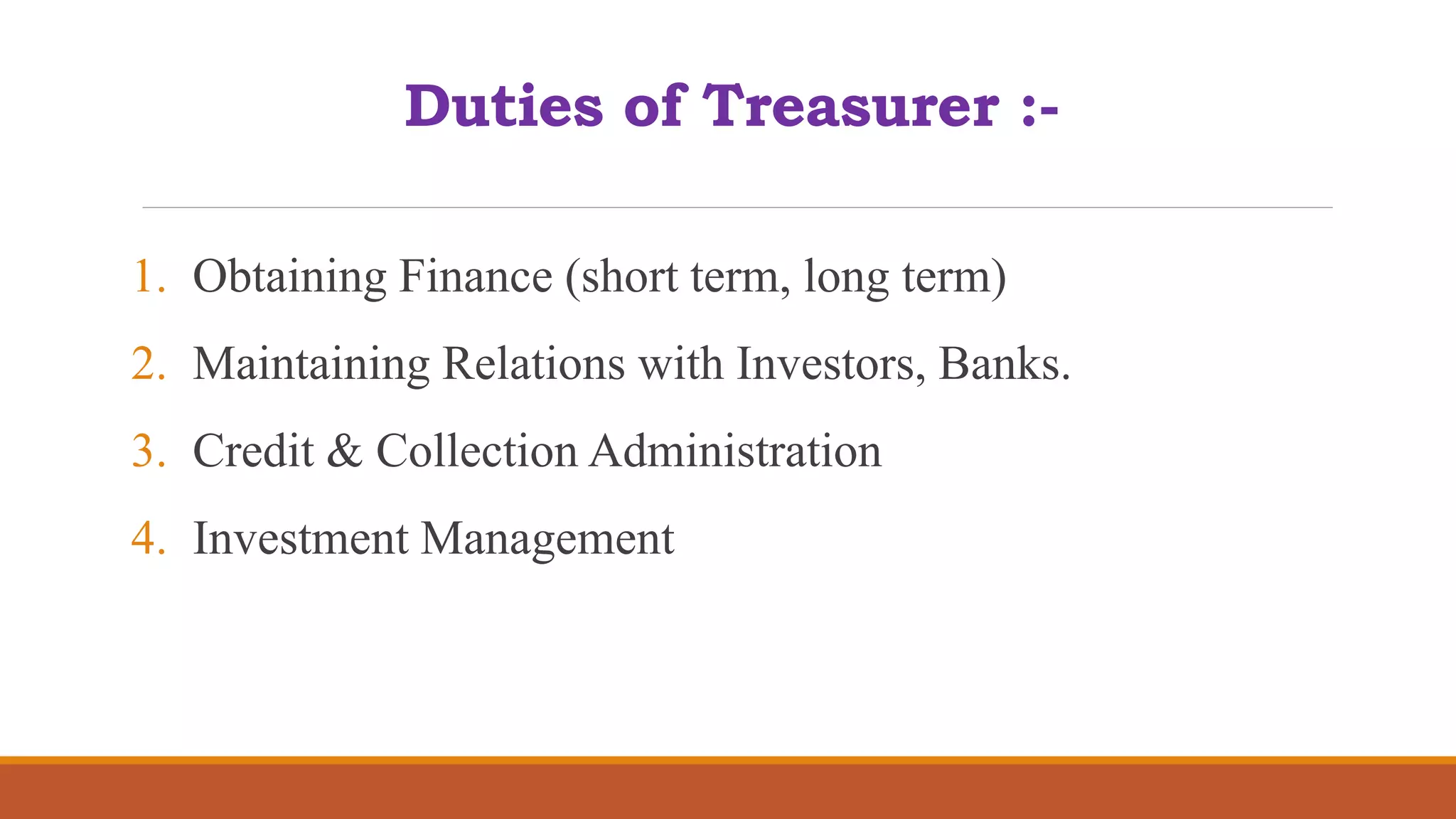
Duties of Treasurer :-
1. Obtaining Finance (short term, long term)
2. Maintaining Relations with Investors, Banks.
3. Credit & Collection Administration
4. Investment Management
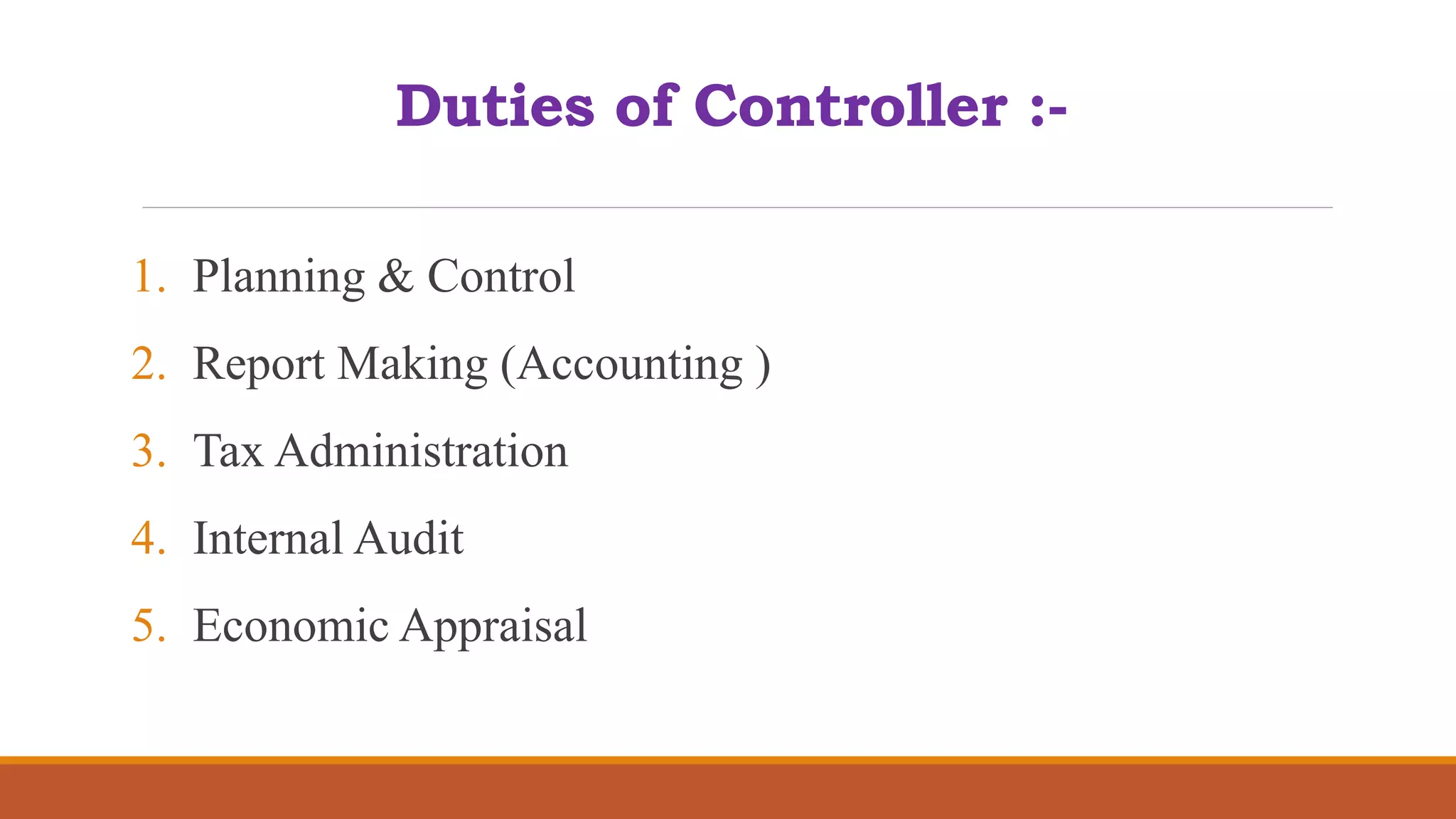
Duties of Controller :-
1. Planning & Control
2. Report Making (Accounting )
3. Tax Administration
4. Internal Audit
5. Economic Appraisal
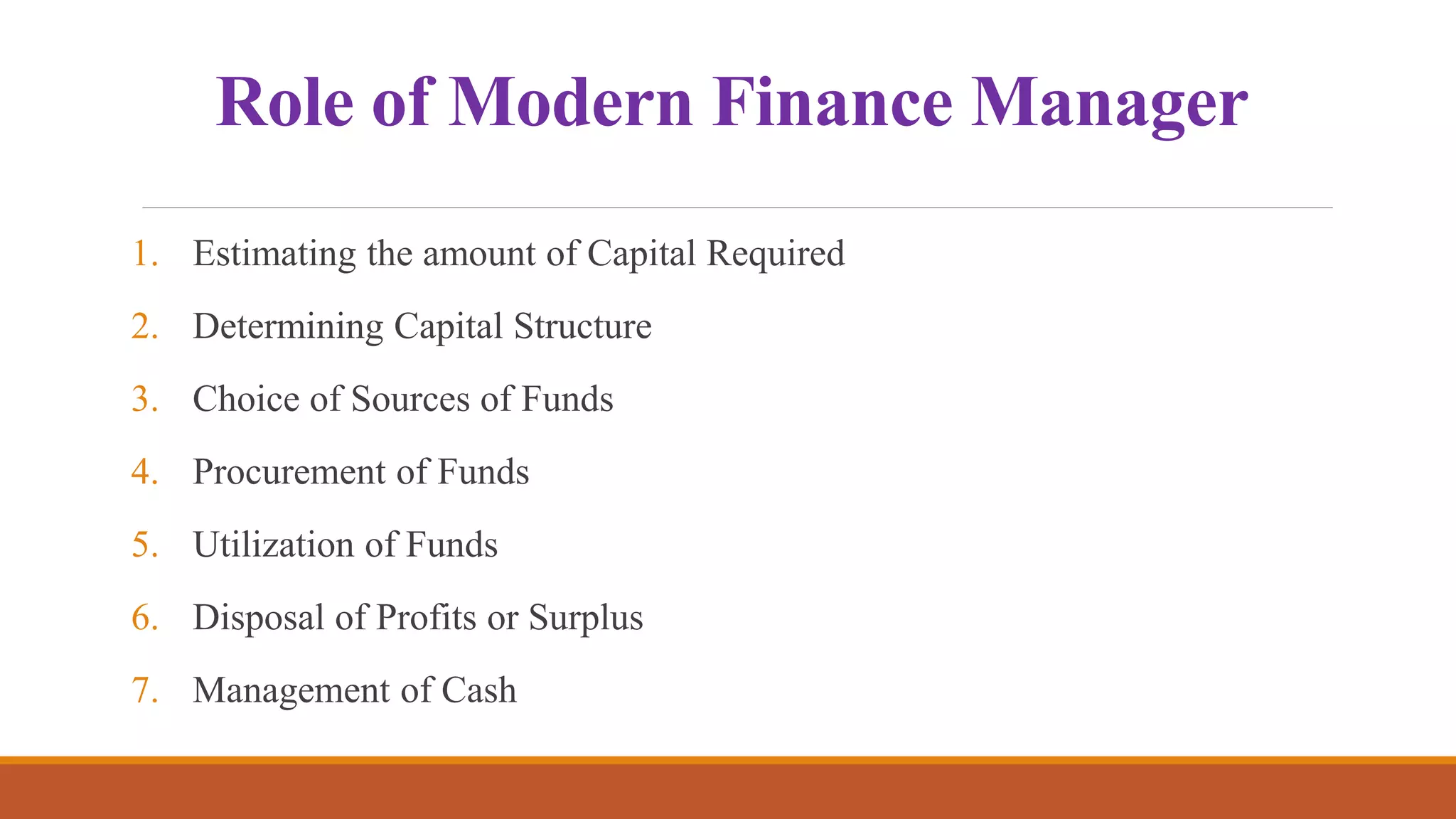
Role of Modern Finance Manager
1. Estimating the amount of Capital Required
2. Determining Capital Structure
3. Choice of Sources of Funds
4. Procurement of Funds
5. Utilization of Funds
6. Disposal of Profits or Surplus
7. Management of Cash
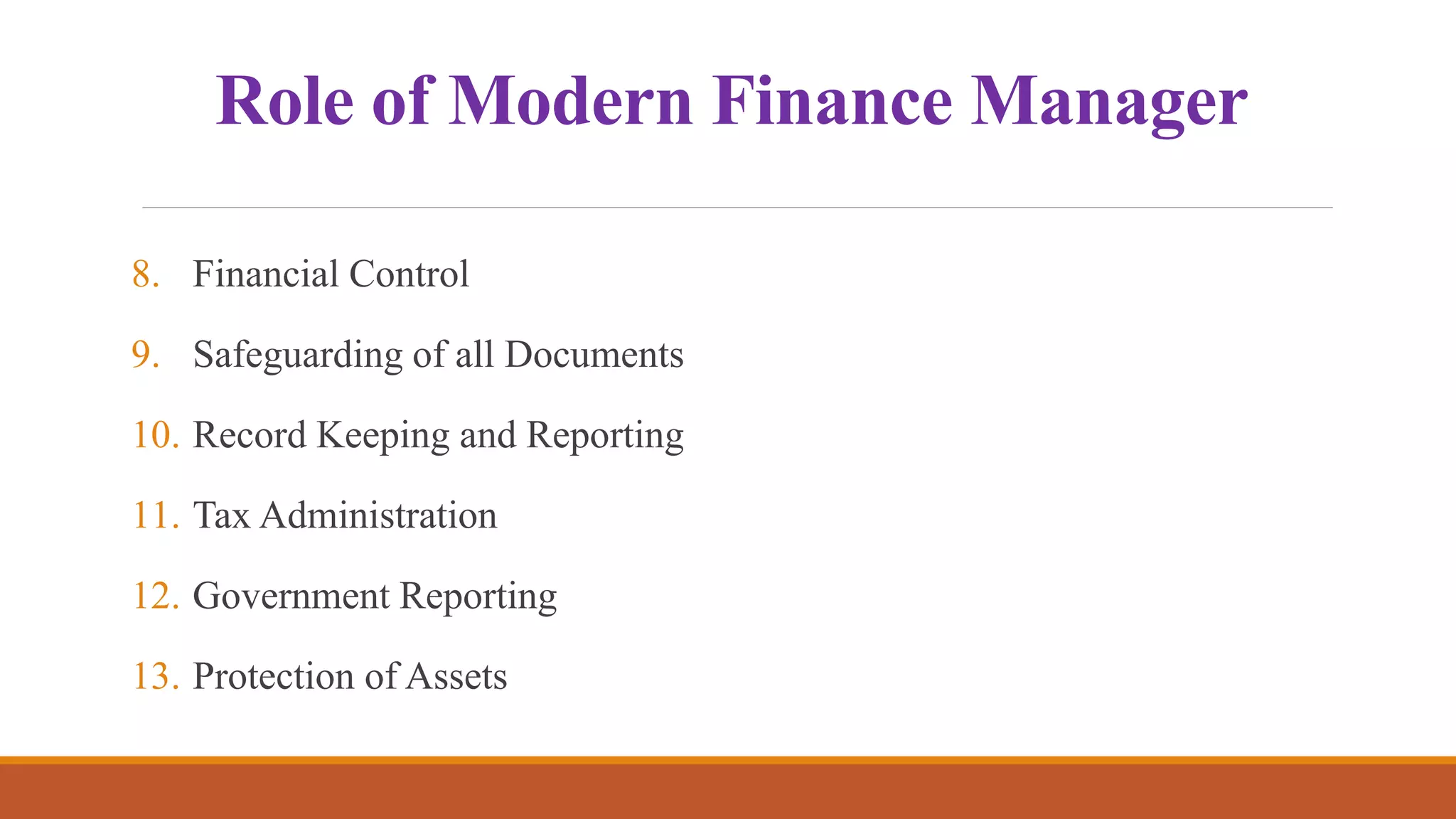
Role of Modern Finance Manager
8. Financial Control
9. Safeguarding of all Documents
10. Record Keeping and Reporting
11. Tax Administration
12. Government Reporting
13. Protection of Assets

Unit 1 Introduction.pptx

  • 1.
  • 2.
    Syllabus Unit 1: Introduction:Meaning of Financial Management, Nature & Scope of Finance Function, Objectives of Finance Functions, Significance of Finance Functions, Role of modern Finance Manager. Unit 2: Time Value of Money: Concept of Time Value of Money, Application of Time Value of Money – Compounding and Discounting. Valuation of Bonds and Shares: Introduction, Concepts of Value, Features of Bond, Bond Values and Yields, Yield to Maturity, Present Value of a Bond, Valuation of ordinary shares.
  • 3.
    Syllabus Unit 3: Sourcesof Long Term Finance: Equity, Preference Shares, Debentures, Bonds, Term Loan, Hire Purchase, Leasing, Venture Capital, Crowd Funding, External Commercial Borrowings, ADRs, GDRs, Euro Bonds, FCCBs. Unit 4: Raising of Long Term Finance: IPO, Red Herring Prospectus, Book Building Process, Green Shoe Option, Listing of Securities in Stock Exchange, Rights Issue, Bonus Issue, Private Placement of shares.
  • 4.
    Syllabus Unit 5: Managementof Cash and Receivables Management: Motives for holding cash, Objectives of Cash Management, Factors determining cash needs, Cash management techniques, Introduction to receivables management, Objectives, Credit Policies, Credit Terms, Collection Policies.
  • 5.
    Introduction: Money is anarm or Leg, You either use it or lose it. In any business the role of money has hardly altered. A growing concern may need substantial amount of money and yet it may not in position to commence business to lack of required funds. Finance holds the key to all activities. The path of Success is Grassed with money.
  • 6.
    Introduction to FinanceFunction There are four main operational areas of every business organization viz, Production, Marketing, Finance & Human Resource out of which Finance is crucial area because all other business activities are depends upon funds . The decisions regarding funds may make/destroy the organization.
  • 7.
    Definition of FinanceFunction According to R. C. Osborn : The Finance function is the process of acquiring and utilizing funds of a business. According to Bonneville and Dewey : Financing consists of raising, providing, managing of all the money, capital or funds of any kind to be used in connection with the business .
  • 8.
    Scope of Finance 1)Financing Decisions – These decisions basically deal with acquiring funds & deployment of funds. 2) Investment Decisions – These decisions are related with selection of assets . Assets are classified into two types: 1) Fixed Assets 2) Current Assets The decisions regarding Fixed Assets are known as Capital Budgeting Decisions. The decisions regarding current assets come under Working Capital Management.
  • 9.
    Scope of Finance 3)Dividend Policy Decisions – Whatever profit company earns, the owners are entitled to receive them. These decisions are related with distribution of dividends i e to decide how much profit we should distribute as dividend & how much should be retained in business
  • 10.
    Functions of FinanceDepartment Calculating fund’s requirement of organization – Means how much money we require to run the business Finding sources of finance – It means to check from where we can raise money & out of that which source of finance is suitable for our organization Utilization of funds – It means utilization of profits which a company earns during a financial year
  • 11.
    Financial Management Financial managementmeans managing the funds/ money in such a way that by investing optimum capital we can get maximum output i e profit.
  • 12.
    Objectives of FinancialManagement 1) Profit Maximization – The primary objective of any business is to earn profit so the finance department has to manage the funds so that the company can get maximum profit. All such actions which generate profit or cut down costs should be undertaken & those that are likely to have adverse impact on profitability should be avoided.  According to then financial experts, this objective is simple & has the in – built advantage of judging economic performance .
  • 13.
    Objectives of FinancialManagement Limitations / Criticisms of this objective : 1. Ambiguous concept 2. Timing of benefits (Ignores pattern of return) 3. Quality of benefits (Ignores Risk) 4. Ignores social consideration
  • 14.
    Objectives of FinancialManagement 2) Wealth Maximization – It means the value of any business activity should not be measured in terms of costs but in terms of benefits it produce. The word Wealth refers to Net Present Worth, which is the difference between gross present worth & the amount of capital investment required to achieve the benefits. This objective is widely accepted , it considers time value of money.
  • 15.
    BODs MD Production Manager PersonnelManager Finance Manager Marketing Manager Treasurer Controller
  • 16.
    Duties of Treasurer:- 1. Obtaining Finance (short term, long term) 2. Maintaining Relations with Investors, Banks. 3. Credit & Collection Administration 4. Investment Management
  • 17.
    Duties of Controller:- 1. Planning & Control 2. Report Making (Accounting ) 3. Tax Administration 4. Internal Audit 5. Economic Appraisal
  • 18.
    Role of ModernFinance Manager 1. Estimating the amount of Capital Required 2. Determining Capital Structure 3. Choice of Sources of Funds 4. Procurement of Funds 5. Utilization of Funds 6. Disposal of Profits or Surplus 7. Management of Cash
  • 19.
    Role of ModernFinance Manager 8. Financial Control 9. Safeguarding of all Documents 10. Record Keeping and Reporting 11. Tax Administration 12. Government Reporting 13. Protection of Assets