INTRODUCTION
As most women know, any women who has not experienced
menopause and engages in sexual intercourse with a man
can in fact become pregnant. As this is commonly the case
when couples either do not use birth control, or incorrectly use
birth control, pregnancy can still occur even if the birth control
is utilized properly.
THE TEST
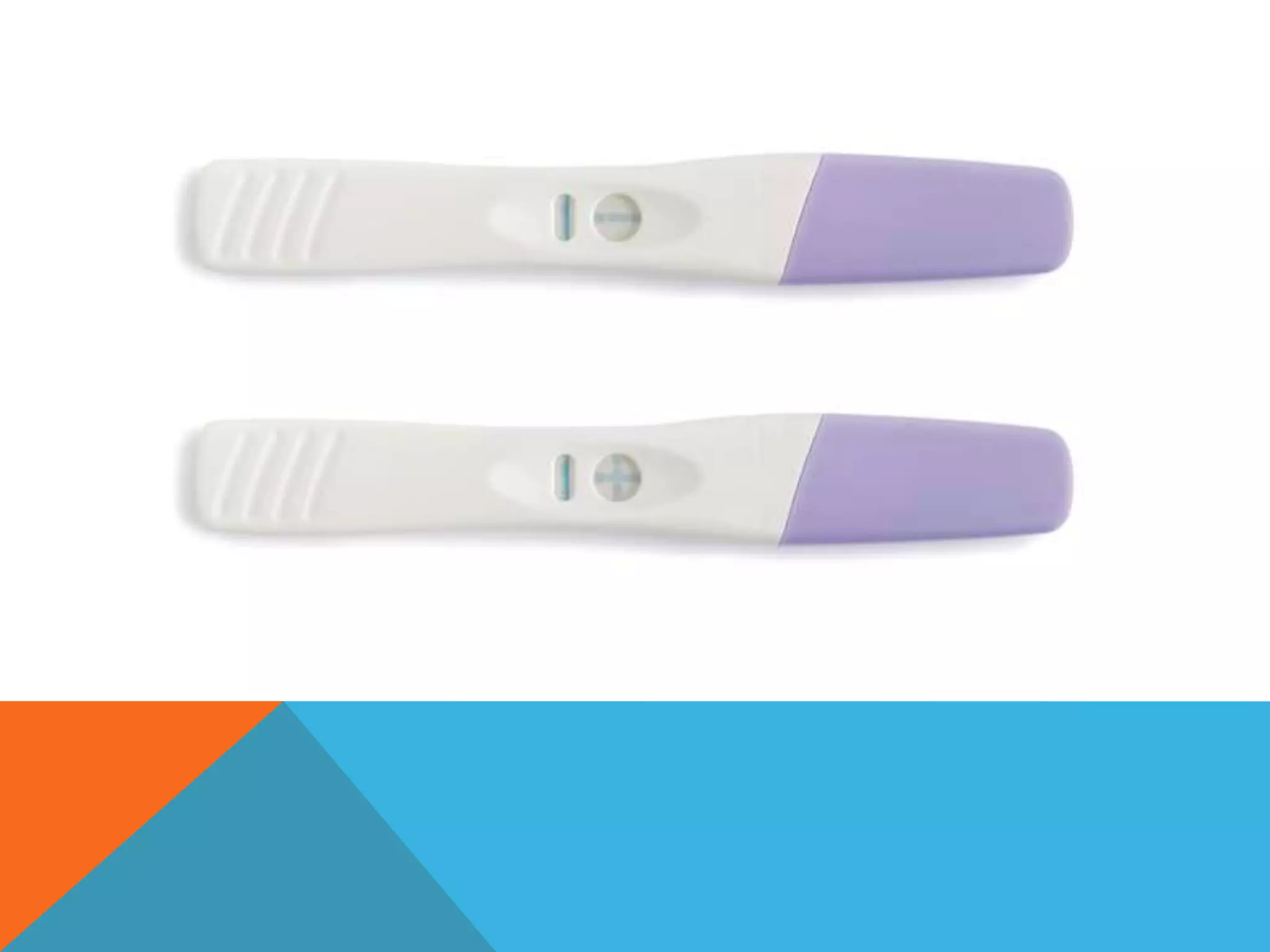
As there are two types of tests a woman can take to
determine whether or not she is pregnant, both are very
accurate.
Home Pregnancy Test- These tests are very accurate and can
be used starting around the time when you would have gotten
your period.
Blood Test- Performed in a doctor’s office, this test determines
whether or not a woman has hCG in her blood, a pregnancyrelated hormone.
DECIDING WHAT TO DO
“Trust yourself;” as individuals decide which option is best for
them, based on their situation. In this stage, you will have to
adjust to the vast range of emotions that will soon follow.
Seeking support through partners, family, close friends, or
support groups can be extremely helpful.
ABORTION
Although trying to get an abortion can be stressful at times, for
some, this is the best option. Depending on age, financial
status, and where you live, this option can sometimes be
difficult. The easiest, safest, and most affordable time to get
an abortion is within the first 12 weeks of pregnancy.
CARRYING TO TERM
If you and your partner, or lack there of, decide to carry to
term, it is vital that you find a credible doctor or midwife who
can determine exactly how far along you are in your
pregnancy.
Although some may still remain skeptical about raising a child
on their own after already making the decision to carry to
term, remember that other options still remain. Such options
include foster care and adoption.
NOW THAT YOU’VE MADE YOUR CHOICE
“Be gentle with yourself.”
Seeking support during this stage can be extremely beneficial.
Often times, women may grieve over the option they chose to
avoid. This however is an extremely common emotion, and
seeking proper support may help reduce such feelings.
WHO HAS ABORTIONS AND WHY?
As age, religion, ethnicity, and financial status all play a major
role in the rate of abortion throughout the United States, the
most common reasons women admit for having an abortion
include “concern for the responsibility of another person,
inability to afford a child, interference with work, school or the
ability to care for dependents, or difficulties with husbands or
partners; and not wanting to be a single parent” (Our Bodies,
Ourselves Pg. 317).
FINDING AN ABORTION PROVIDER
Although 87% of the U.S. countries have no abortion
provider, most abortions are provided by freestanding clinics.

This includes Planned Parenthood and The National Abortion
Federation.
PREPARING FOR YOUR ABORTION
In this stage, it is important to stay relaxed and calm. Although
you may be nervous leading up to your appointment, it is
important to focus on your normal, everyday activities and
keep away from excessive drugs or alcohol. Also, remember
to get a good night’s sleep the night before your appointment.
WHAT TO EXPECT AT THE CLINIC
Health Forms
Checking of vital signs
Repeat of urine pregnancy test

Blood test
Be warned, although some clinics are private, protestors
may be attracted to particular sites. If you are concerned,
call ahead and ask the facility what you can expect.
AFTERCARE
It is normal to experience pain, cramping, and bleeding after a
procedure. However, as time lapses, these symptoms will
lesson.
The facility will periodically check vital signs prior to your release.
Upon release, the facility will provide information relating to any
questions, comments, or concerns regarding the after math of an
abortion.
DISCUSSION QUESTION
Setting the controversy aside, do you feel it is fair to judge an
individual based upon their decision regarding abortion? Why
or why not?

Unexpected Pregnancy and Abortion

  • 2.
    INTRODUCTION As most womenknow, any women who has not experienced menopause and engages in sexual intercourse with a man can in fact become pregnant. As this is commonly the case when couples either do not use birth control, or incorrectly use birth control, pregnancy can still occur even if the birth control is utilized properly.
  • 3.
    THE TEST As thereare two types of tests a woman can take to determine whether or not she is pregnant, both are very accurate. Home Pregnancy Test- These tests are very accurate and can be used starting around the time when you would have gotten your period. Blood Test- Performed in a doctor’s office, this test determines whether or not a woman has hCG in her blood, a pregnancyrelated hormone.
  • 5.
    DECIDING WHAT TODO “Trust yourself;” as individuals decide which option is best for them, based on their situation. In this stage, you will have to adjust to the vast range of emotions that will soon follow. Seeking support through partners, family, close friends, or support groups can be extremely helpful.
  • 6.
    ABORTION Although trying toget an abortion can be stressful at times, for some, this is the best option. Depending on age, financial status, and where you live, this option can sometimes be difficult. The easiest, safest, and most affordable time to get an abortion is within the first 12 weeks of pregnancy.
  • 7.
    CARRYING TO TERM Ifyou and your partner, or lack there of, decide to carry to term, it is vital that you find a credible doctor or midwife who can determine exactly how far along you are in your pregnancy. Although some may still remain skeptical about raising a child on their own after already making the decision to carry to term, remember that other options still remain. Such options include foster care and adoption.
  • 8.
    NOW THAT YOU’VEMADE YOUR CHOICE “Be gentle with yourself.” Seeking support during this stage can be extremely beneficial. Often times, women may grieve over the option they chose to avoid. This however is an extremely common emotion, and seeking proper support may help reduce such feelings.
  • 9.
    WHO HAS ABORTIONSAND WHY? As age, religion, ethnicity, and financial status all play a major role in the rate of abortion throughout the United States, the most common reasons women admit for having an abortion include “concern for the responsibility of another person, inability to afford a child, interference with work, school or the ability to care for dependents, or difficulties with husbands or partners; and not wanting to be a single parent” (Our Bodies, Ourselves Pg. 317).
  • 10.
    FINDING AN ABORTIONPROVIDER Although 87% of the U.S. countries have no abortion provider, most abortions are provided by freestanding clinics. This includes Planned Parenthood and The National Abortion Federation.
  • 11.
    PREPARING FOR YOURABORTION In this stage, it is important to stay relaxed and calm. Although you may be nervous leading up to your appointment, it is important to focus on your normal, everyday activities and keep away from excessive drugs or alcohol. Also, remember to get a good night’s sleep the night before your appointment.
  • 12.
    WHAT TO EXPECTAT THE CLINIC Health Forms Checking of vital signs Repeat of urine pregnancy test Blood test Be warned, although some clinics are private, protestors may be attracted to particular sites. If you are concerned, call ahead and ask the facility what you can expect.
  • 13.
    AFTERCARE It is normalto experience pain, cramping, and bleeding after a procedure. However, as time lapses, these symptoms will lesson. The facility will periodically check vital signs prior to your release. Upon release, the facility will provide information relating to any questions, comments, or concerns regarding the after math of an abortion.
  • 14.
    DISCUSSION QUESTION Setting thecontroversy aside, do you feel it is fair to judge an individual based upon their decision regarding abortion? Why or why not?