VFD Overview
Energy Efficiency Motor
Control Solutions
Introduction
A Variable Frequency Drive (VFD) controls
motor speed and torque by adjusting
frequency and voltage. It plays a crucial role
in optimizing performance and reducing
energy costs in modern industries.
VFD Fundamentals
Definition and Purpose
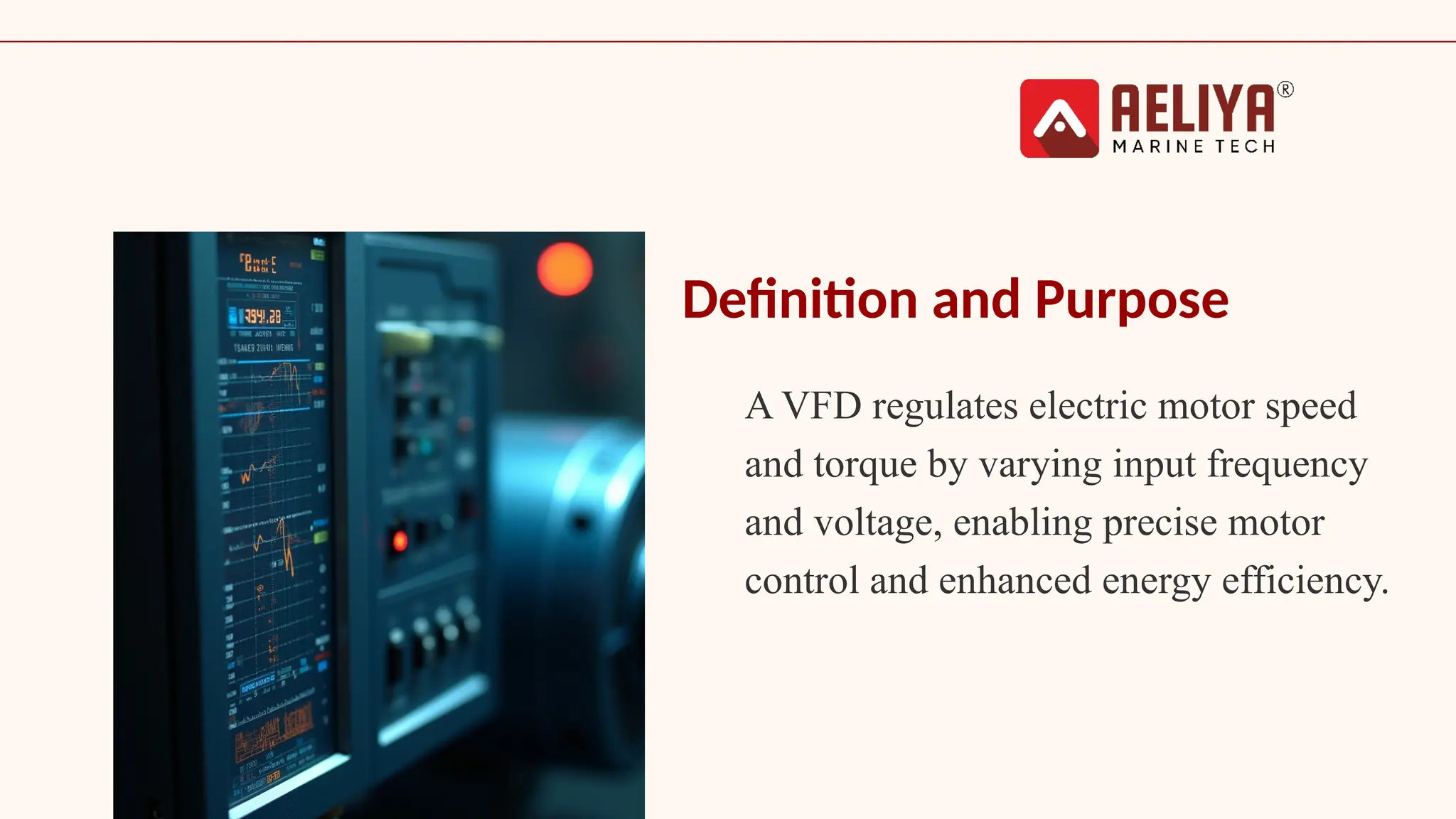
A VFD regulates electric motor speed
and torque by varying input frequency
and voltage, enabling precise motor
control and enhanced energy efficiency.
Working Principle and Components
VFD converts AC input to DC via a rectifier, then inverts it back to
variable-frequency AC output to control motor speed precisely. Key
components include rectifier, DC bus, and inverter.
Key Features and Functions
VFDs offer adjustable motor speed, energy-saving operation, and
protection against overload, overvoltage, and undervoltage. Many
include remote monitoring and control capabilities for advanced system
management.
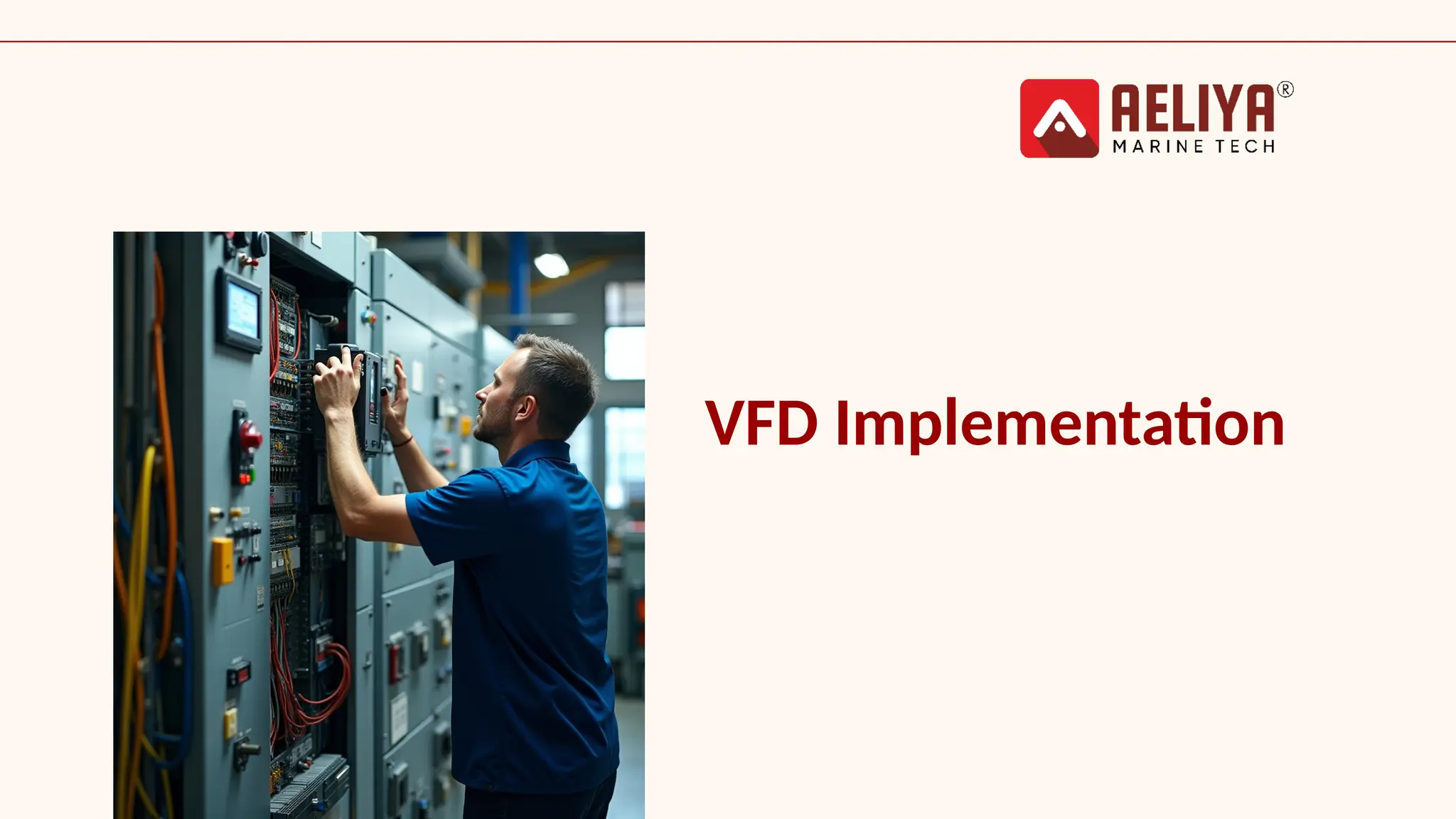
VFD Implementation
Applications Across Industries
VFDs are widely used in HVAC systems, pumps, compressors,
conveyors, elevators, marine, industrial automation, and
manufacturing, providing versatile motor control solutions.
Benefits and Limitations
VFDs deliver up to 60% energy savings, reduce mechanical stress, and
lower maintenance costs. Limitations include higher initial costs,
harmonic distortion, and need for skilled installation.
Selection Criteria and
Future Trends
Selection depends on motor rating,
application type, environment, and
communication protocols. Future trends
include smart VFDs with IoT, AI-based
predictive maintenance, and renewable
energy integration.
Conclusions
VFDs are essential for energy efficiency and motor
control, offering significant operational benefits.
Strategic selection and adoption of future technologies
will enhance industry performance and sustainability.

Understanding Variable Frequency Drives (VFDs)

  • 1.
    VFD Overview Energy EfficiencyMotor Control Solutions
  • 2.
    Introduction A Variable FrequencyDrive (VFD) controls motor speed and torque by adjusting frequency and voltage. It plays a crucial role in optimizing performance and reducing energy costs in modern industries.
  • 3.
  • 4.
    Definition and Purpose AVFD regulates electric motor speed and torque by varying input frequency and voltage, enabling precise motor control and enhanced energy efficiency.
  • 5.
    Working Principle andComponents VFD converts AC input to DC via a rectifier, then inverts it back to variable-frequency AC output to control motor speed precisely. Key components include rectifier, DC bus, and inverter.
  • 6.
    Key Features andFunctions VFDs offer adjustable motor speed, energy-saving operation, and protection against overload, overvoltage, and undervoltage. Many include remote monitoring and control capabilities for advanced system management.
  • 7.
  • 8.
    Applications Across Industries VFDsare widely used in HVAC systems, pumps, compressors, conveyors, elevators, marine, industrial automation, and manufacturing, providing versatile motor control solutions.
  • 9.
    Benefits and Limitations VFDsdeliver up to 60% energy savings, reduce mechanical stress, and lower maintenance costs. Limitations include higher initial costs, harmonic distortion, and need for skilled installation.
  • 10.
    Selection Criteria and FutureTrends Selection depends on motor rating, application type, environment, and communication protocols. Future trends include smart VFDs with IoT, AI-based predictive maintenance, and renewable energy integration.
  • 11.
    Conclusions VFDs are essentialfor energy efficiency and motor control, offering significant operational benefits. Strategic selection and adoption of future technologies will enhance industry performance and sustainability.