HRC’s Corporate Equality Index (CEI), Municipal 
Equality Index (MEI), and Healthcare Equality Index 
(HEI): 
Understanding the Framework for Equality 
Deena Fidas, Director Workplace Equality Program (CEI Author) 
Cathryn Oakley, Legislative Counsel, State and Municipal Advocacy (MEI Author) 
Tari Hanneman, Assoc. Director, Health & Aging Program (HEI Author)
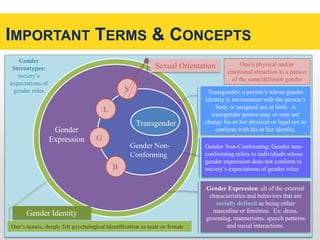
IMPORTANT TERMS & CONCEPTS 
Gender 
Stereotypes: 
society’s 
expectations of 
gender roles 
Gender 
Expression 
Transgender 
Gender Non- 
Conforming 
L 
S 
G 
B 
Gender Identity 
One’s innate, deeply felt psychological identification as male or female 
One’s physical and/or 
emotional attraction to a person 
of the same/different gender 
Transgender: a person’s whose gender 
identity is inconsistent with the person’s 
body or assigned sex at birth. A 
transgender person may or may not 
change his or her physical or legal sex to 
conform with his or her identity. 
Gender Non-Conforming: Gender non-conforming 
refers to individuals whose 
gender expression does not conform to 
society’s expectations of gender roles 
Gender Expression: all of the external 
characteristics and behaviors that are 
socially defined as being either 
masculine or feminine. Ex: dress, 
grooming, mannerisms, speech patterns 
and social interactions. 
Sexual Orientation
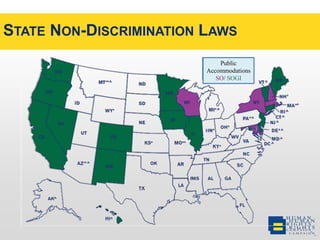
STATE NON-DISCRIMINATION LAWS 
Public 
Housing 
SO/ SOGI 
Employment 
Accommodations 
SOGI 
SO/ SOGI
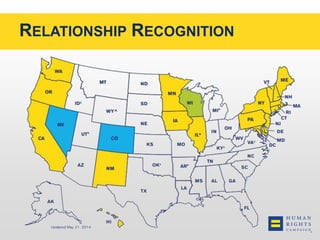
RELATIONSHIP RECOGNITION
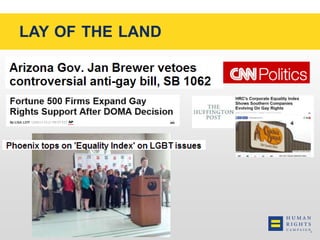
LAY OF THE LAND
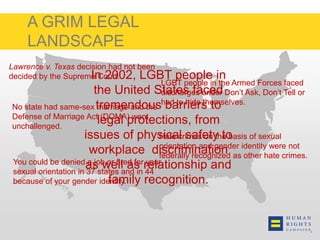
A GRIM LEGAL 
LANDSCAPE 
Lawrence v. Texas decision had not been 
decided by the Supreme Court. 
In 2002, LGBT people in 
the United States faced 
tremendous barriers to 
legal protections, from 
issues of physical safety to 
workplace discrimination 
as well as relationship and 
No state had same-sex marriage and the 
Defense of Marriage Act (DOMA) went 
unchallenged. 
LGBT people in the Armed Forces faced 
discharges under Don’t Ask, Don’t Tell or 
had to hide themselves. 
Hate crimes on the basis of sexual 
orientation and gender identity were not 
federally recognized as other hate crimes. 
You could be denied a job or fired for your 
sexual orientation in 37 states and in 44 
because of your gender identity. 
family recognition.
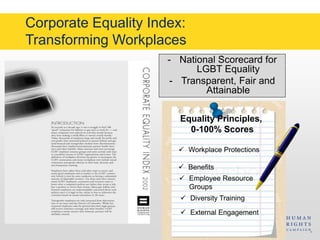
Corporate Equality Index: 
Transforming Workplaces 
- National Scorecard for 
LGBT Equality 
- Transparent, Fair and 
Attainable 
Equality Principles, 
0-100% Scores 
 Workplace Protections 
 Benefits 
 Employee Resource 
Groups 
 Diversity Training 
 External Engagement
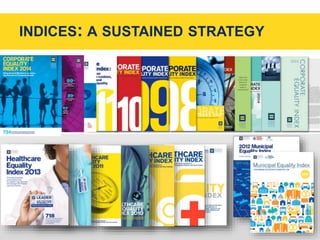
INDICES: A SUSTAINED STRATEGY
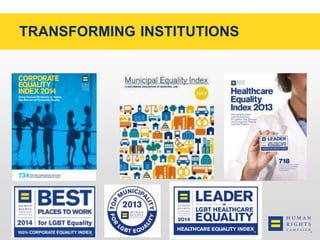
TRANSFORMING INSTITUTIONS
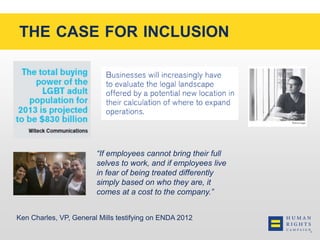
THE CASE FOR INCLUSION 
“If employees cannot bring their full 
selves to work, and if employees live 
in fear of being treated differently 
simply based on who they are, it 
comes at a cost to the company.” 
Ken Charles, VP, General Mills testifying on ENDA 2012
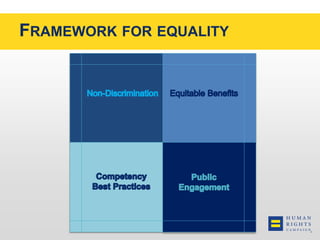
FRAMEWORK FOR EQUALITY
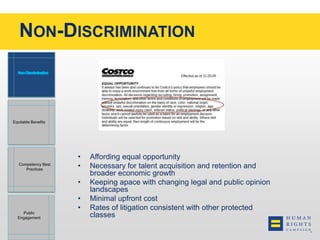
NON-DISCRIMINATION 
• Affording equal opportunity 
• Necessary for talent acquisition and retention and 
broader economic growth 
• Keeping apace with changing legal and public opinion 
landscapes 
• Minimal upfront cost 
• Rates of litigation consistent with other protected 
classes 
Equitable Benefits 
Competency Best 
Practices 
Public 
Engagement
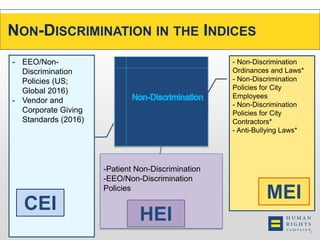
NON-DISCRIMINATION IN THE INDICES 
- Non-Discrimination 
Ordinances and Laws* 
- Non-Discrimination 
Policies for City 
Employees 
- Non-Discrimination 
Policies for City 
Contractors* 
- Anti-Bullying Laws* 
- EEO/Non- 
Discrimination 
Policies (US; 
Global 2016) 
- Vendor and 
Corporate Giving 
Standards (2016) 
MEI 
CEI 
-Patient Non-Discrimination 
-EEO/Non-Discrimination 
Policies 
HEI
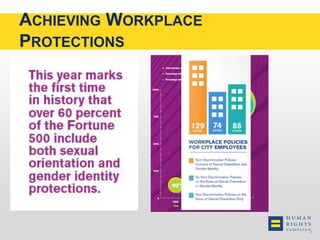
ACHIEVING WORKPLACE 
PROTECTIONS
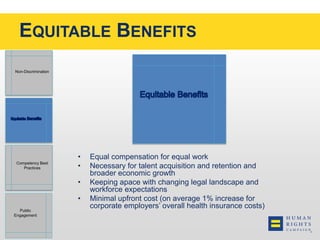
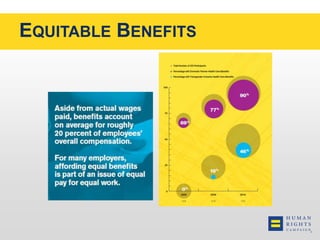
EQUITABLE BENEFITS 
• Equal compensation for equal work 
• Necessary for talent acquisition and retention and 
broader economic growth 
• Keeping apace with changing legal landscape and 
workforce expectations 
• Minimal upfront cost (on average 1% increase for 
corporate employers’ overall health insurance costs) 
Non-Discrimination 
Competency Best 
Practices 
Public 
Engagement
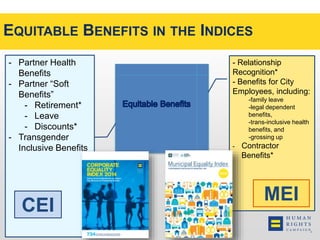
EQUITABLE BENEFITS IN THE INDICES 
- Partner Health 
Benefits 
- Partner “Soft 
Benefits” 
- Retirement* 
- Leave 
- Discounts* 
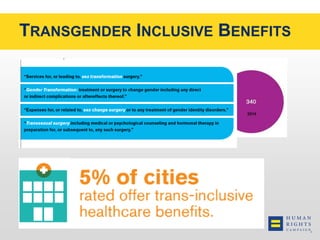
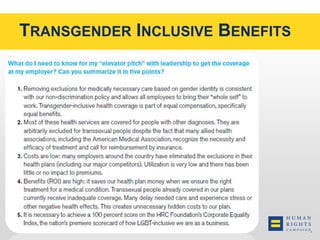
- Transgender 
Inclusive Benefits 
CEI 
- Relationship 
Recognition* 
- Benefits for City 
Employees, including: 
-family leave 
-legal dependent 
benefits, 
-trans-inclusive health 
benefits, and 
-grossing up 
- Contractor 
Benefits* 
MEI
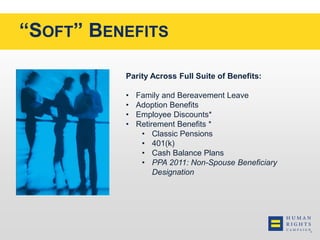
EQUITABLE BENEFITS
“SOFT” BENEFITS 
Parity Across Full Suite of Benefits: 
• Family and Bereavement Leave 
• Adoption Benefits 
• Employee Discounts* 
• Retirement Benefits * 
• Classic Pensions 
• 401(k) 
• Cash Balance Plans 
• PPA 2011: Non-Spouse Beneficiary 
Designation
TRANSGENDER INCLUSIVE BENEFITS
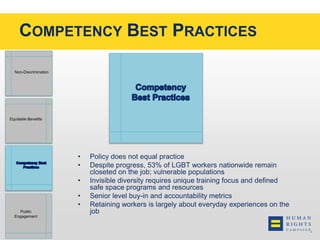
COMPETENCY BEST PRACTICES 
• Policy does not equal practice 
• Despite progress, 53% of LGBT workers nationwide remain 
closeted on the job; vulnerable populations 
• Invisible diversity requires unique training focus and defined 
safe space programs and resources 
• Senior level buy-in and accountability metrics 
• Retaining workers is largely about everyday experiences on the 
job 
Non-Discrimination 
Equitable Benefits 
Public 
Engagement
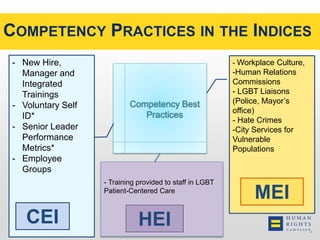
COMPETENCY PRACTICES IN THE INDICES 
Competency Best 
Practices 
- Workplace Culture, 
-Human Relations 
Commissions 
- LGBT Liaisons 
(Police, Mayor’s 
office) 
- Hate Crimes 
-City Services for 
Vulnerable 
Populations 
MEI 
- New Hire, 
Manager and 
Integrated 
Trainings 
- Voluntary Self 
ID* 
- Senior Leader 
Performance 
Metrics* 
- Employee 
Groups 
CEI 
- Training provided to staff in LGBT 
Patient-Centered Care 
HEI
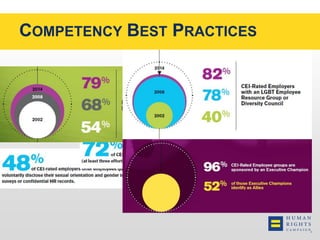
COMPETENCY BEST PRACTICES
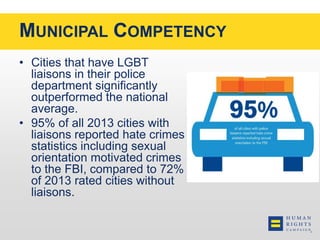
MUNICIPAL COMPETENCY 
• Cities that have LGBT 
liaisons in their police 
department significantly 
outperformed the national 
average. 
• 95% of all 2013 cities with 
liaisons reported hate crimes 
statistics including sexual 
orientation motivated crimes 
to the FBI, compared to 72% 
of 2013 rated cities without 
liaisons.
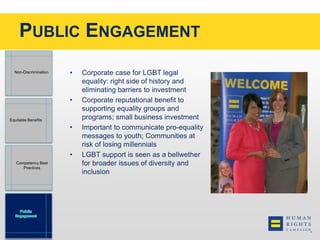
PUBLIC ENGAGEMENT 
• Corporate case for LGBT legal 
equality: right side of history and 
eliminating barriers to investment 
• Corporate reputational benefit to 
supporting equality groups and 
programs; small business investment 
• Important to communicate pro-equality 
messages to youth; Communities at 
risk of losing millennials 
• LGBT support is seen as a bellwether 
for broader issues of diversity and 
inclusion 
Non-Discrimination 
Equitable Benefits 
Competency Best 
Practices
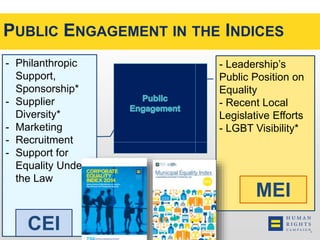
PUBLIC ENGAGEMENT IN THE INDICES 
- Leadership’s 
Public Position on 
Equality 
- Recent Local 
Legislative Efforts 
- LGBT Visibility* 
- Philanthropic 
Support, 
Sponsorship* 
- Supplier 
Diversity* 
- Marketing 
- Recruitment 
- Support for 
Equality Under 
the Law 
MEI 
CEI
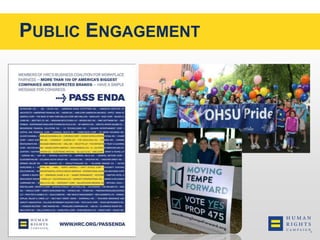
PUBLIC ENGAGEMENT
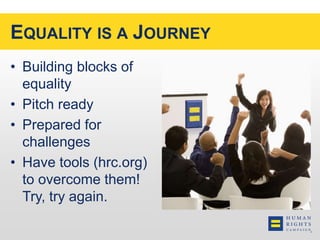
EQUALITY IS A JOURNEY 
• Building blocks of 
equality 
• Pitch ready 
• Prepared for 
challenges 
• Have tools (hrc.org) 
to overcome them! 
Try, try again.
HRC’s Corporate Equality Index (CEI), Municipal 
Equality Index (MEI), and Healthcare Equality Index 
(HEI): 
Understanding the Framework for Equality 
Deena Fidas, Director Workplace Equality Program (CEI Author) 
Cathryn Oakley, Legislative Counsel, State and Municipal Advocacy (MEI Author) 
Tari Hanneman, Assoc. Director, Health & Aging Program (HEI Author)

Understanding the Framework for Equality

  • 1.
    HRC’s Corporate EqualityIndex (CEI), Municipal Equality Index (MEI), and Healthcare Equality Index (HEI): Understanding the Framework for Equality Deena Fidas, Director Workplace Equality Program (CEI Author) Cathryn Oakley, Legislative Counsel, State and Municipal Advocacy (MEI Author) Tari Hanneman, Assoc. Director, Health & Aging Program (HEI Author)
  • 2.
    IMPORTANT TERMS &CONCEPTS Gender Stereotypes: society’s expectations of gender roles Gender Expression Transgender Gender Non- Conforming L S G B Gender Identity One’s innate, deeply felt psychological identification as male or female One’s physical and/or emotional attraction to a person of the same/different gender Transgender: a person’s whose gender identity is inconsistent with the person’s body or assigned sex at birth. A transgender person may or may not change his or her physical or legal sex to conform with his or her identity. Gender Non-Conforming: Gender non-conforming refers to individuals whose gender expression does not conform to society’s expectations of gender roles Gender Expression: all of the external characteristics and behaviors that are socially defined as being either masculine or feminine. Ex: dress, grooming, mannerisms, speech patterns and social interactions. Sexual Orientation
  • 3.
    STATE NON-DISCRIMINATION LAWS Public Housing SO/ SOGI Employment Accommodations SOGI SO/ SOGI
  • 4.
  • 5.
  • 6.
    A GRIM LEGAL LANDSCAPE Lawrence v. Texas decision had not been decided by the Supreme Court. In 2002, LGBT people in the United States faced tremendous barriers to legal protections, from issues of physical safety to workplace discrimination as well as relationship and No state had same-sex marriage and the Defense of Marriage Act (DOMA) went unchallenged. LGBT people in the Armed Forces faced discharges under Don’t Ask, Don’t Tell or had to hide themselves. Hate crimes on the basis of sexual orientation and gender identity were not federally recognized as other hate crimes. You could be denied a job or fired for your sexual orientation in 37 states and in 44 because of your gender identity. family recognition.
  • 7.
    Corporate Equality Index: Transforming Workplaces - National Scorecard for LGBT Equality - Transparent, Fair and Attainable Equality Principles, 0-100% Scores  Workplace Protections  Benefits  Employee Resource Groups  Diversity Training  External Engagement
  • 8.
  • 9.
  • 10.
    THE CASE FORINCLUSION “If employees cannot bring their full selves to work, and if employees live in fear of being treated differently simply based on who they are, it comes at a cost to the company.” Ken Charles, VP, General Mills testifying on ENDA 2012
  • 11.
  • 12.
    NON-DISCRIMINATION • Affordingequal opportunity • Necessary for talent acquisition and retention and broader economic growth • Keeping apace with changing legal and public opinion landscapes • Minimal upfront cost • Rates of litigation consistent with other protected classes Equitable Benefits Competency Best Practices Public Engagement
  • 13.
    NON-DISCRIMINATION IN THEINDICES - Non-Discrimination Ordinances and Laws* - Non-Discrimination Policies for City Employees - Non-Discrimination Policies for City Contractors* - Anti-Bullying Laws* - EEO/Non- Discrimination Policies (US; Global 2016) - Vendor and Corporate Giving Standards (2016) MEI CEI -Patient Non-Discrimination -EEO/Non-Discrimination Policies HEI
  • 14.
  • 15.
    EQUITABLE BENEFITS •Equal compensation for equal work • Necessary for talent acquisition and retention and broader economic growth • Keeping apace with changing legal landscape and workforce expectations • Minimal upfront cost (on average 1% increase for corporate employers’ overall health insurance costs) Non-Discrimination Competency Best Practices Public Engagement
  • 16.
    EQUITABLE BENEFITS INTHE INDICES - Partner Health Benefits - Partner “Soft Benefits” - Retirement* - Leave - Discounts* - Transgender Inclusive Benefits CEI - Relationship Recognition* - Benefits for City Employees, including: -family leave -legal dependent benefits, -trans-inclusive health benefits, and -grossing up - Contractor Benefits* MEI
  • 17.
  • 18.
    “SOFT” BENEFITS ParityAcross Full Suite of Benefits: • Family and Bereavement Leave • Adoption Benefits • Employee Discounts* • Retirement Benefits * • Classic Pensions • 401(k) • Cash Balance Plans • PPA 2011: Non-Spouse Beneficiary Designation
  • 19.
  • 20.
  • 21.
    COMPETENCY BEST PRACTICES • Policy does not equal practice • Despite progress, 53% of LGBT workers nationwide remain closeted on the job; vulnerable populations • Invisible diversity requires unique training focus and defined safe space programs and resources • Senior level buy-in and accountability metrics • Retaining workers is largely about everyday experiences on the job Non-Discrimination Equitable Benefits Public Engagement
  • 22.
    COMPETENCY PRACTICES INTHE INDICES Competency Best Practices - Workplace Culture, -Human Relations Commissions - LGBT Liaisons (Police, Mayor’s office) - Hate Crimes -City Services for Vulnerable Populations MEI - New Hire, Manager and Integrated Trainings - Voluntary Self ID* - Senior Leader Performance Metrics* - Employee Groups CEI - Training provided to staff in LGBT Patient-Centered Care HEI
  • 23.
  • 24.
    MUNICIPAL COMPETENCY •Cities that have LGBT liaisons in their police department significantly outperformed the national average. • 95% of all 2013 cities with liaisons reported hate crimes statistics including sexual orientation motivated crimes to the FBI, compared to 72% of 2013 rated cities without liaisons.
  • 25.
    PUBLIC ENGAGEMENT •Corporate case for LGBT legal equality: right side of history and eliminating barriers to investment • Corporate reputational benefit to supporting equality groups and programs; small business investment • Important to communicate pro-equality messages to youth; Communities at risk of losing millennials • LGBT support is seen as a bellwether for broader issues of diversity and inclusion Non-Discrimination Equitable Benefits Competency Best Practices
  • 26.
    PUBLIC ENGAGEMENT INTHE INDICES - Leadership’s Public Position on Equality - Recent Local Legislative Efforts - LGBT Visibility* - Philanthropic Support, Sponsorship* - Supplier Diversity* - Marketing - Recruitment - Support for Equality Under the Law MEI CEI
  • 27.
  • 28.
    EQUALITY IS AJOURNEY • Building blocks of equality • Pitch ready • Prepared for challenges • Have tools (hrc.org) to overcome them! Try, try again.
  • 29.
    HRC’s Corporate EqualityIndex (CEI), Municipal Equality Index (MEI), and Healthcare Equality Index (HEI): Understanding the Framework for Equality Deena Fidas, Director Workplace Equality Program (CEI Author) Cathryn Oakley, Legislative Counsel, State and Municipal Advocacy (MEI Author) Tari Hanneman, Assoc. Director, Health & Aging Program (HEI Author)

Editor's Notes