1
Ecosystem
Supriya K
513721251012
2
3
Ecosystem
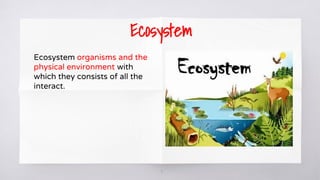
Ecosystem organisms and the
physical environment with
which they consists of all the
interact.
4
Ecosystem Structure
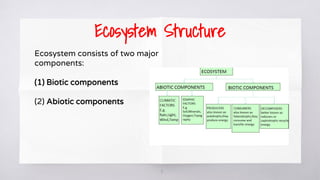
Ecosystem consists of two major
components:
(1) Biotic components
(2) Abiotic components
5
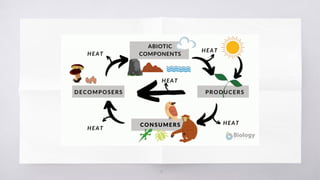
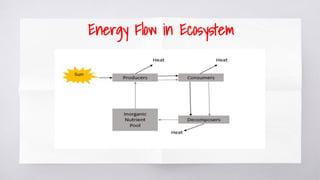
Energy Flow in Ecosystem
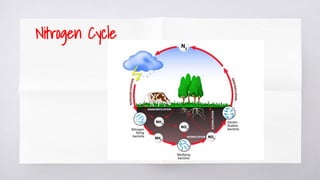
Biogeochemical Cycles
Biogeochemical cycles refer to the flow of chemical
elements and compounds between organisms and the
physical environment.
Chemicals taken in by organisms are passed
through the food chain and come back to the soil, air,
and water through mechanisms such as respiration,
excretion, and decomposition.
oxygen,
carbon,
nitrogen,
phosphorous,
and Sulphur
Major elements such as :
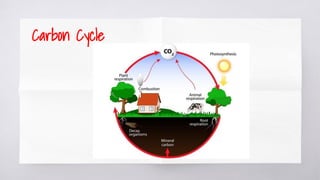
Carbon Cycle
Nitrogen Cycle
11
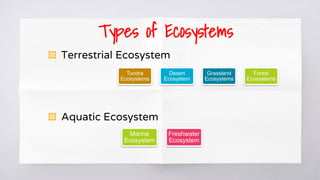
Types of Ecosystems
▧ Terrestrial Ecosystem
▧ Aquatic Ecosystem
Tundra
Ecosystems
Desert
Ecosystem
Grassland
Ecosystems
Forest
Ecosystems
Marine
Ecosystem
Freshwater
Ecosystem
12
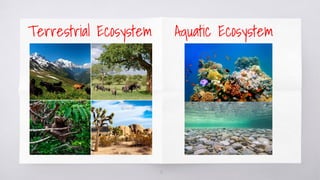
Terrestrial Ecosystem Aquatic Ecosystem
13
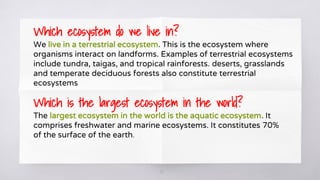
Which ecosystem do we live in?
We live in a terrestrial ecosystem. This is the ecosystem where
organisms interact on landforms. Examples of terrestrial ecosystems
include tundra, taigas, and tropical rainforests. deserts, grasslands
and temperate deciduous forests also constitute terrestrial
ecosystems
Which is the largest ecosystem in the world?
The largest ecosystem in the world is the aquatic ecosystem. It
comprises freshwater and marine ecosystems. It constitutes 70%
of the surface of the earth.
14
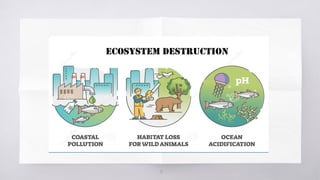
Ecosystem Destruction
Causes the destruction of ecosystem?
Pollution is one of the main causes of ecosystem destruction.
Pollution can deplete resources and drive away local animal
populations. Significant sources of pollution include trash, carbon
emissions, oil spills and pesticides.
Human activities that destroy the ecosystem?
Some human activities that cause damage (either directly or indirectly)
to the environment on a global scale include population growth,
overconsumption, overexploitation, pollution, and deforestation,
15
16
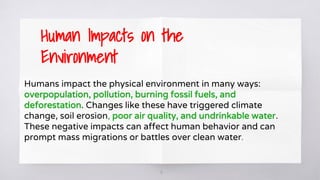
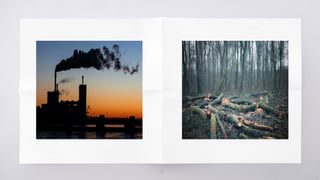
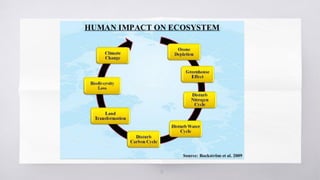
Humans impact the physical environment in many ways:
overpopulation, pollution, burning fossil fuels, and
deforestation. Changes like these have triggered climate
change, soil erosion, poor air quality, and undrinkable water.
These negative impacts can affect human behavior and can
prompt mass migrations or battles over clean water.
Human Impacts on the
Environment
17
18
19
What will be the impact of ecosystem
destruction?
•Increased flooding due to the erosion of soil and lack of trees.
•Climate change causes the sea levels rising due to the melting of the
glaciers.
•More a likelihood that natural disasters such as tsunamis, earthquakes,
droughts will be commonplace.
•Disruption of the food chain when the apex predators become extinct.
20
•Food shortage as the lands become barren and the oceans become
devoid of fish and other marine life
•Loss of biodiversity as a whole species of living things disappear due to
deforestation
•Pollution will eventually become unmanageable and affect the health of
the human population. Rising temperatures may be too much to bear for
every living organism on the planet.
•Water shortage – the supply of fresh drinking water is limited with only
a few water bodies being fit for human consumption.
21
Need it to get the food we eat, the water we drink
and to transform raw materials into our everyday
products. So in order to keep our living
conditions, it’s truly important that we preserve
natural ecosystems.
Why Is Preserving Ecosystems
Important?
22
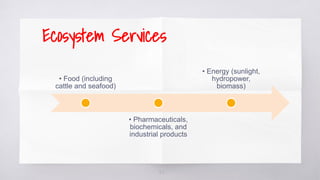
• Food (including
cattle and seafood)
• Pharmaceuticals,
biochemicals, and
industrial products
• Energy (sunlight,
hydropower,
biomass)
Ecosystem Services
23
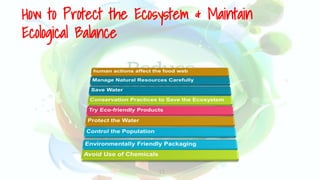
How to Protect the Ecosystem & Maintain
Ecological Balance
Thanks!
Any questions?
24

"Understanding Ecosystems: Balance in Nature"

  • 1.
  • 2.
  • 3.
    3 Ecosystem Ecosystem organisms andthe physical environment with which they consists of all the interact.
  • 4.
    4 Ecosystem Structure Ecosystem consistsof two major components: (1) Biotic components (2) Abiotic components
  • 5.
  • 6.
    Energy Flow inEcosystem
  • 7.
    Biogeochemical Cycles Biogeochemical cyclesrefer to the flow of chemical elements and compounds between organisms and the physical environment. Chemicals taken in by organisms are passed through the food chain and come back to the soil, air, and water through mechanisms such as respiration, excretion, and decomposition.
  • 8.
  • 9.
  • 10.
  • 11.
    11 Types of Ecosystems ▧Terrestrial Ecosystem ▧ Aquatic Ecosystem Tundra Ecosystems Desert Ecosystem Grassland Ecosystems Forest Ecosystems Marine Ecosystem Freshwater Ecosystem
  • 12.
  • 13.
    13 Which ecosystem dowe live in? We live in a terrestrial ecosystem. This is the ecosystem where organisms interact on landforms. Examples of terrestrial ecosystems include tundra, taigas, and tropical rainforests. deserts, grasslands and temperate deciduous forests also constitute terrestrial ecosystems Which is the largest ecosystem in the world? The largest ecosystem in the world is the aquatic ecosystem. It comprises freshwater and marine ecosystems. It constitutes 70% of the surface of the earth.
  • 14.
    14 Ecosystem Destruction Causes thedestruction of ecosystem? Pollution is one of the main causes of ecosystem destruction. Pollution can deplete resources and drive away local animal populations. Significant sources of pollution include trash, carbon emissions, oil spills and pesticides. Human activities that destroy the ecosystem? Some human activities that cause damage (either directly or indirectly) to the environment on a global scale include population growth, overconsumption, overexploitation, pollution, and deforestation,
  • 15.
  • 16.
    16 Humans impact thephysical environment in many ways: overpopulation, pollution, burning fossil fuels, and deforestation. Changes like these have triggered climate change, soil erosion, poor air quality, and undrinkable water. These negative impacts can affect human behavior and can prompt mass migrations or battles over clean water. Human Impacts on the Environment
  • 17.
  • 18.
  • 19.
    19 What will bethe impact of ecosystem destruction? •Increased flooding due to the erosion of soil and lack of trees. •Climate change causes the sea levels rising due to the melting of the glaciers. •More a likelihood that natural disasters such as tsunamis, earthquakes, droughts will be commonplace. •Disruption of the food chain when the apex predators become extinct.
  • 20.
    20 •Food shortage asthe lands become barren and the oceans become devoid of fish and other marine life •Loss of biodiversity as a whole species of living things disappear due to deforestation •Pollution will eventually become unmanageable and affect the health of the human population. Rising temperatures may be too much to bear for every living organism on the planet. •Water shortage – the supply of fresh drinking water is limited with only a few water bodies being fit for human consumption.
  • 21.
    21 Need it toget the food we eat, the water we drink and to transform raw materials into our everyday products. So in order to keep our living conditions, it’s truly important that we preserve natural ecosystems. Why Is Preserving Ecosystems Important?
  • 22.
    22 • Food (including cattleand seafood) • Pharmaceuticals, biochemicals, and industrial products • Energy (sunlight, hydropower, biomass) Ecosystem Services
  • 23.
    23 How to Protectthe Ecosystem & Maintain Ecological Balance
  • 24.