Understanding
Ecosystems
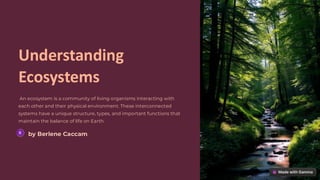
An ecosystem is a community of living organisms interacting with
each other and their physical environment. These interconnected
systems have a unique structure, types, and important functions that
maintain the balance of life on Earth.
by Berlene Caccam
preencoded.png
Levels of Biodiversity
Genetic Diversity
The variety of genes within a single
species, which allows organisms to
adapt to changes.
Species Diversity
The variety of different species
within an ecosystem, from plants to
animals to microorganisms.
Ecosystem Diversity
The variety of different ecosystems,
such as forests, deserts, and
wetlands, each with unique
characteristics.
preencoded.png
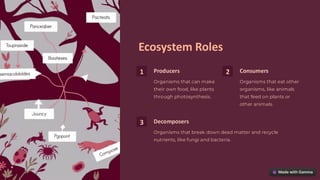
Ecosystem Roles
1 Producers
Organisms that can make
their own food, like plants
through photosynthesis.
2 Consumers
Organisms that eat other
organisms, like animals
that feed on plants or
other animals.
3 Decomposers
Organisms that break down dead matter and recycle
nutrients, like fungi and bacteria.
preencoded.png
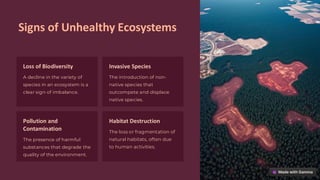
Signs of Unhealthy Ecosystems
Loss of Biodiversity
A decline in the variety of
species in an ecosystem is a
clear sign of imbalance.
Invasive Species
The introduction of non-
native species that
outcompete and displace
native species.
Pollution and
Contamination
The presence of harmful
substances that degrade the
quality of the environment.
Habitat Destruction
The loss or fragmentation of
natural habitats, often due
to human activities.
preencoded.png
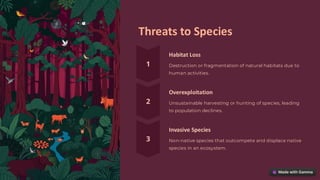
Threats to Species
Habitat Loss
Destruction or fragmentation of natural habitats due to
human activities.
Overexploitation
Unsustainable harvesting or hunting of species, leading
to population declines.
Invasive Species
Non-native species that outcompete and displace native
species in an ecosystem.
preencoded.png
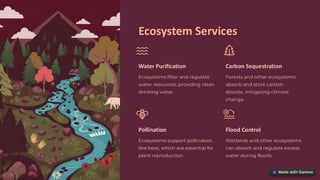
Ecosystem Services
Water Purification
Ecosystems filter and regulate
water resources, providing clean
drinking water.
Carbon Sequestration
Forests and other ecosystems
absorb and store carbon
dioxide, mitigating climate
change.
Pollination
Ecosystems support pollinators
like bees, which are essential for
plant reproduction.
Flood Control
Wetlands and other ecosystems
can absorb and regulate excess
water during floods.
preencoded.png
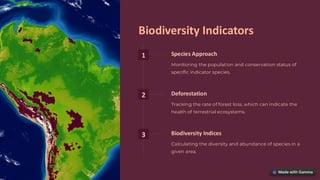
Biodiversity Indicators
1 Species Approach
Monitoring the population and conservation status of
specific indicator species.
2 Deforestation
Tracking the rate of forest loss, which can indicate the
health of terrestrial ecosystems.
3 Biodiversity Indices
Calculating the diversity and abundance of species in a
given area.
preencoded.png
Abiotic and Biotic Components
Abiotic
Non-living components of the
ecosystem, such as air, water, soil,
and sunlight.
Biotic
Living components of the
ecosystem, including plants,
animals, fungi, and
microorganisms.
Interactions
Abiotic and biotic components
interact to create the complex web
of life in an ecosystem.
preencoded.png
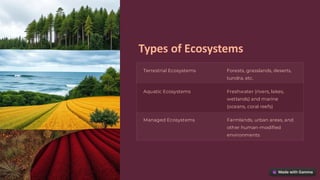
Types of Ecosystems
Terrestrial Ecosystems Forests, grasslands, deserts,
tundra, etc.
Aquatic Ecosystems Freshwater (rivers, lakes,
wetlands) and marine
(oceans, coral reefs)
Managed Ecosystems Farmlands, urban areas, and
other human-modified
environments
preencoded.png
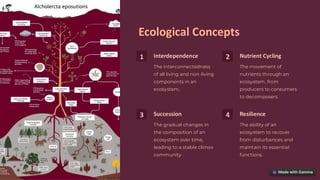
Ecological Concepts
1 Interdependence
The interconnectedness
of all living and non-living
components in an
ecosystem.
2 Nutrient Cycling
The movement of
nutrients through an
ecosystem, from
producers to consumers
to decomposers.
3 Succession
The gradual changes in
the composition of an
ecosystem over time,
leading to a stable climax
community.
4 Resilience
The ability of an
ecosystem to recover
from disturbances and
maintain its essential
functions.
preencoded.png

Environmental Science- Understanding-Ecosystems.pdf

  • 1.
    Understanding Ecosystems An ecosystem isa community of living organisms interacting with each other and their physical environment. These interconnected systems have a unique structure, types, and important functions that maintain the balance of life on Earth. by Berlene Caccam preencoded.png
  • 2.
    Levels of Biodiversity GeneticDiversity The variety of genes within a single species, which allows organisms to adapt to changes. Species Diversity The variety of different species within an ecosystem, from plants to animals to microorganisms. Ecosystem Diversity The variety of different ecosystems, such as forests, deserts, and wetlands, each with unique characteristics. preencoded.png
  • 3.
    Ecosystem Roles 1 Producers Organismsthat can make their own food, like plants through photosynthesis. 2 Consumers Organisms that eat other organisms, like animals that feed on plants or other animals. 3 Decomposers Organisms that break down dead matter and recycle nutrients, like fungi and bacteria. preencoded.png
  • 4.
    Signs of UnhealthyEcosystems Loss of Biodiversity A decline in the variety of species in an ecosystem is a clear sign of imbalance. Invasive Species The introduction of non- native species that outcompete and displace native species. Pollution and Contamination The presence of harmful substances that degrade the quality of the environment. Habitat Destruction The loss or fragmentation of natural habitats, often due to human activities. preencoded.png
  • 5.
    Threats to Species HabitatLoss Destruction or fragmentation of natural habitats due to human activities. Overexploitation Unsustainable harvesting or hunting of species, leading to population declines. Invasive Species Non-native species that outcompete and displace native species in an ecosystem. preencoded.png
  • 6.
    Ecosystem Services Water Purification Ecosystemsfilter and regulate water resources, providing clean drinking water. Carbon Sequestration Forests and other ecosystems absorb and store carbon dioxide, mitigating climate change. Pollination Ecosystems support pollinators like bees, which are essential for plant reproduction. Flood Control Wetlands and other ecosystems can absorb and regulate excess water during floods. preencoded.png
  • 7.
    Biodiversity Indicators 1 SpeciesApproach Monitoring the population and conservation status of specific indicator species. 2 Deforestation Tracking the rate of forest loss, which can indicate the health of terrestrial ecosystems. 3 Biodiversity Indices Calculating the diversity and abundance of species in a given area. preencoded.png
  • 8.
    Abiotic and BioticComponents Abiotic Non-living components of the ecosystem, such as air, water, soil, and sunlight. Biotic Living components of the ecosystem, including plants, animals, fungi, and microorganisms. Interactions Abiotic and biotic components interact to create the complex web of life in an ecosystem. preencoded.png
  • 9.
    Types of Ecosystems TerrestrialEcosystems Forests, grasslands, deserts, tundra, etc. Aquatic Ecosystems Freshwater (rivers, lakes, wetlands) and marine (oceans, coral reefs) Managed Ecosystems Farmlands, urban areas, and other human-modified environments preencoded.png
  • 10.
    Ecological Concepts 1 Interdependence Theinterconnectedness of all living and non-living components in an ecosystem. 2 Nutrient Cycling The movement of nutrients through an ecosystem, from producers to consumers to decomposers. 3 Succession The gradual changes in the composition of an ecosystem over time, leading to a stable climax community. 4 Resilience The ability of an ecosystem to recover from disturbances and maintain its essential functions. preencoded.png