Gestational Diabetes
To Change or Not to Change
Lobna Farag Eltoony
Head of diabetes and Endocrinology Unit
Department Of Internal Medicine
Assuit University
Agenda
Definition
Epidemiology
The fetal and maternal consequences of
GDM and pregestational diabetes.
Preconception care
The evolution of a diagnostic controversy
Screening : Who? Why? When? How?
Management
Diabetes and pregnancy
One of the most challenging aspects of
diabetes practice
Seemingly easy: Practically difficult
Needs a lot of commitment on part of
doctor, patient and family
Success can be achieved if we try
together
Let’s begin by staying awake
for the next 20 minutes
Gestational diabetes
Definition
Carbohydate intolerance of variable
severity first recognised during the
present pregnancy.
This includes women with preexisting but
previously unrecognised diabetes.
Gestational diabetes
Incidence
2-9%
more common in Asian and Indian
women . In developed countries,
increasing trend because of epidemic of
obesity and T2DM.
Epidemiology
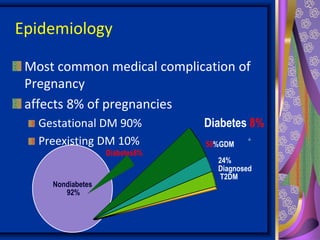
Most common medical complication of
Pregnancy
affects 8% of pregnancies
Gestational DM 90% Diabetes 8%
Preexisting DM 10% 6
Nondiabetes
92%
Diabetes8%
24%
Diagnosed
T2DM
50%GDM
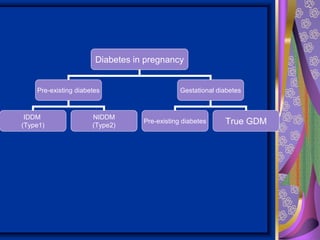
Diabetes in pregnancy
Pre-existing diabetes Gestational diabetes
Pre-existing diabetes
IDDM
(Type1)
NIDDM
(Type2) True GDM
Pregestational Diabetes
In our practice , many women who are
first diagnosed with diabetes mellitus
during pregnancy are classified as having
gestational diabetes even though they
have pre-existing, or pregestational,
diabetes that had gone undiagnosed.
Pregestational vs Gestational
Diabetes
This distinction is crucial because
pregestational diabetes is associated
with more serious consequences for the
fetus than is diabetes in the second and
third trimester of pregnancy.
(A wolf in sheep’s clothing).
Pregestational Diabetes
Women with pregestational diabetes
who become pregnant are at increased
risk of giving birth to a baby with a
serious birth defect, including cardiac,
neurological, and vascular anomalies.
Reece et al 2009 lancet
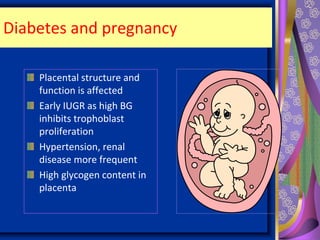
Diabetes and pregnancy
Placental structure and
function is affected
Early IUGR as high BG
inhibits trophoblast
proliferation
Hypertension, renal
disease more frequent
High glycogen content in
placenta
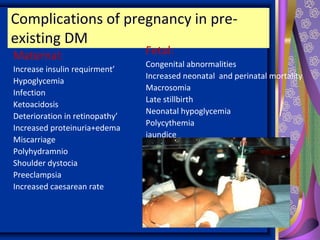
Complications of pregnancy in pre-
existing DM
Maternal:
Increase insulin requirment’
Hypoglycemia
Infection
Ketoacidosis
Deterioration in retinopathy’
Increased proteinuria+edema
Miscarriage
Polyhydramnio
Shoulder dystocia
Preeclampsia
Increased caesarean rate
Fetal:
Congenital abnormalities
Increased neonatal and perinatal mortality
Macrosomia
Late stillbirth
Neonatal hypoglycemia
Polycythemia
jaundice
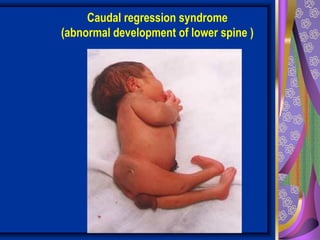
Caudal regression syndrome
(abnormal development of lower spine )
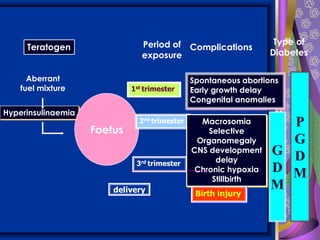
Teratogen Period of
exposure
Complications
Type of
Diabetes
Aberrant
fuel mixture
Hyperinsulinaemia
Foetus
delivery
G
D
M
P
G
D
M
1st trimester
2nd trimester
3rd trimester
Spontaneous abortions
Early growth delay
Congenital anomalies
Macrosomia
Selective
Organomegaly
CNS development
delay
Chronic hypoxia
Stillbirth
Birth injury
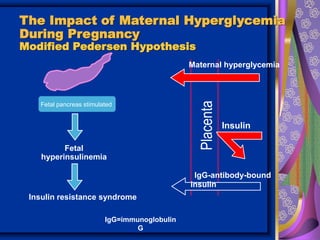
Fetal
hyperinsulinemia
The Impact of Maternal Hyperglycemia
During Pregnancy
Modified Pedersen Hypothesis
Fetus
Fetal pancreas stimulated
IgG=immunoglobulin
G
Mother
Placenta
IgG-antibody-bound
insulin
Insulin
Maternal hyperglycemia
Insulin resistance syndrome
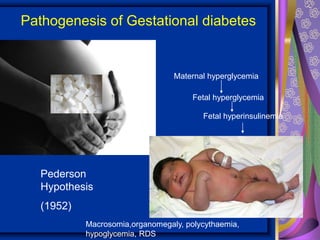
Maternal hyperglycemia
Fetal hyperglycemia
Fetal hyperinsulinemia
Pederson
Hypothesis
(1952)
Macrosomia,organomegaly, polycythaemia,
hypoglycemia, RDS
Pathogenesis of Gestational diabetes
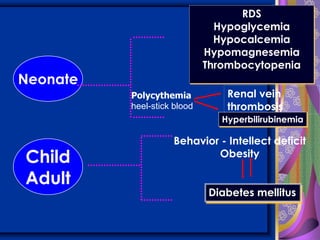
Neonate
Child
Adult
RDS
Hypoglycemia
Hypocalcemia
Hypomagnesemia
Thrombocytopenia
Polycythemia
heel-stick blood
Renal vein
thrombosis
Hyperbilirubinemia
Behavior - Intellect deficit
Obesity
Diabetes mellitus
Growth Abnormalities(1)
Two Extremes Of Growth Abn:
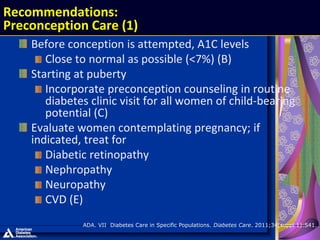
Before conception is attempted, A1C levels
Close to normal as possible (<7%) (B)
Starting at puberty
Incorporate preconception counseling in routine
diabetes clinic visit for all women of child-bearing
potential (C)
Evaluate women contemplating pregnancy; if
indicated, treat for
Diabetic retinopathy
Nephropathy
Neuropathy
CVD (E)
Recommendations:
Preconception Care (1)
ADA. VII. Diabetes Care in Specific Populations. Diabetes Care. 2011;34(suppl 1):S41.
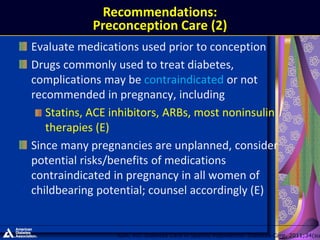
Evaluate medications used prior to conception
Drugs commonly used to treat diabetes,
complications may be contraindicated or not
recommended in pregnancy, including
Statins, ACE inhibitors, ARBs, most noninsulin
therapies (E)
Since many pregnancies are unplanned, consider
potential risks/benefits of medications
contraindicated in pregnancy in all women of
childbearing potential; counsel accordingly (E)
ADA. VII. Diabetes Care in Specific Populations. Diabetes Care. 2011;34(su
Recommendations:
Preconception Care (2)
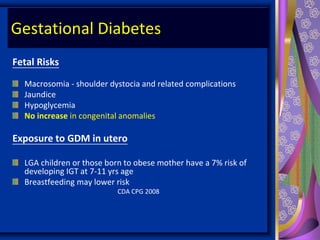
Gestational Diabetes
Fetal Risks
Macrosomia - shoulder dystocia and related complications
Jaundice
Hypoglycemia
No increase in congenital anomalies
Exposure to GDM in utero
LGA children or those born to obese mother have a 7% risk of
developing IGT at 7-11 yrs age
Breastfeeding may lower risk
CDA CPG 2008
 Pre-eclampsia: affects 10-25% of all pregnant women with
GDM
 Infections: high incidence of chorioamnionitis and postpartum
endometritis
 Postpartum bleeding:
 Cesarian section more common due to fetal macrosmia and
cephalo-pelvic disproportion
 Weight gain
 Hypertension
 Miscarriages
Third trimester fetal deaths
 Long term risk of type-2 DM (40-60%) of within10-15 yr.
Effects of GDM on the mother
DETECTION AND DIAGNOSIS OF
GESTATIONAL DIABETES
MELLITUS
Screening Tests for GDM
Best method still
controversial
NO CONSENSUS ON GDM
SCREENING
Why? When? Who? How?
WHY?
•Increased risk of perinatal morbidity : Macrosomia’
Shoulder Dystocia ,Birth injuries and Hypoglycemia
Treatment reduces perinatal morbidity
Increased risk of maternal morbidity :Preeclampsia
Cesearean Section , Pregnancy-induced hypertension and
Type2 diabetes mellitus
Treatment reduces maternal morbidity ,
Landon et al NEJM 2009;
Screen for undiagnosed type 2 diabetes at the
• first prenatal visit in those with risk factors, using
standard diagnostic criteria (B)
In pregnant women not previously known to have
diabetes, screen for GDM at 24-28 weeks gestation,
using a 75-g OGTT
Recommendations:
Detection and Diagnosis of GDM (1)
WHEN?
ADA. III. Detection and Diagnosis of GDM. Diabetes Care 2011;34(suppl 1):S15.
Risks for developing gestational
diabetes
WHO?
Aged 35 or over
Overweight BMI > 25
Positive FH of type 2 diabetes
Previous unexplained stillbirth, foetal malformation
or large baby (>4.5kg)
Persistent fasting glycosuria
More than 3 previous children
polyhydramnios
Diagnosis of PCOS ADA 2011
The evolution of a diagnostic
controversy
How?
1 hr 50 g OGTT.
2 hr 75 g oral OGTT
3 hr 100 g OGTT
Gestational Diabetes (GDM)
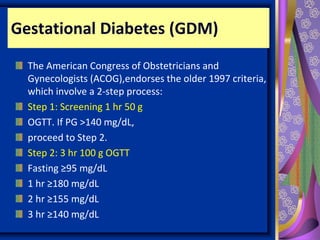
The American Congress of Obstetricians and
Gynecologists (ACOG),endorses the older 1997 criteria,
which involve a 2-step process:
Step 1: Screening 1 hr 50 g
OGTT. If PG >140 mg/dL,
proceed to Step 2.
Step 2: 3 hr 100 g OGTT
Fasting ≥95 mg/dL
1 hr ≥180 mg/dL
2 hr ≥155 mg/dL
3 hr ≥140 mg/dL
To Be or Not To Be , that is the question.
To Change or Not To Change .
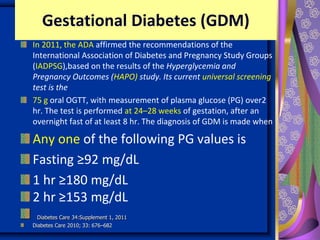
Gestational Diabetes (GDM)
In 2011, the ADA affirmed the recommendations of the
International Association of Diabetes and Pregnancy Study Groups
(IADPSG),based on the results of the Hyperglycemia and Adverse
Pregnancy Outcomes (HAPO) study. Its current universal screening
test is the
75 g oral OGTT, with measurement of plasma glucose (PG) over2
hr. The test is performed at 24–28 weeks of gestation, after an
overnight fast of at least 8 hr. The diagnosis of GDM is made when
Any one of the following PG values is
Fasting ≥92 mg/dL
1 hr ≥180 mg/dL
2 hr ≥153 mg/dL
Diabetes Care 34:Supplement 1, 2011
Diabetes Care 2010; 33: 676–682
 These new criteria will significantly increase the prevalence of
GDM, primarily because only one abnormal value, not two, is
sufficient to make the diagnosis.
The ADA recognizes the anticipated significant increase in the
incidence of GDM to be diagnosed by these criteria and is
sensitive to concerns about the “medicalization”
of pregnancies previously categorized as normal. These
diagnostic criteria changes are being made in the context of
worrisome worldwide increases in obesity and diabetes rates,
with the intent of optimizing gestational outcomes for women
and their babies.
Screening for and Diagnosis of GDM
Although the anticipated benefits include
decreased rates of maternal and offspring
obesity, metabolic syndrome, and diabetes, it
is not yet clear how these benefits can be
achieved in an environment of significantly
restricted health care resources.
In addition, a dramatic increase in the rate of
cesarean deliveries, the benefits of better
diagnosis may be offset by increased cesarean
delivery– related complications and costs.
The evolution of a diagnostic
controversy
Disclosure
None ...
Where guidelines disagreed, I
picked the one I agreed with ☺
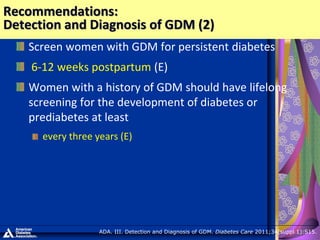
Screen women with GDM for persistent diabetes
6-12 weeks postpartum (E)
Women with a history of GDM should have lifelong
screening for the development of diabetes or
prediabetes at least
every three years (E)
Recommendations:
Detection and Diagnosis of GDM (2)
ADA. III. Detection and Diagnosis of GDM. Diabetes Care 2011;34(suppl 1):S15.
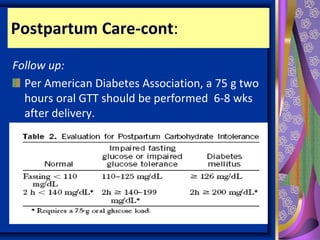
Postpartum Care-cont:
Follow up:
Per American Diabetes Association, a 75 g two
hours oral GTT should be performed 6-8 wks
after delivery.
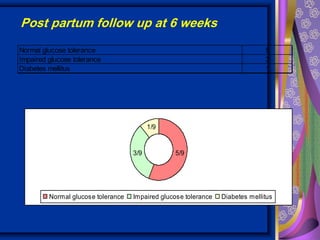
Normal glucose tolerance 5
Impaired glucose tolerance 3
Diabetes mellitus 1
1/9
5/93/9
Normal glucose tolerance Impaired glucose tolerance Diabetes mellitus
Post partum follow up at 6 weeks
Gestational diabetes
Management
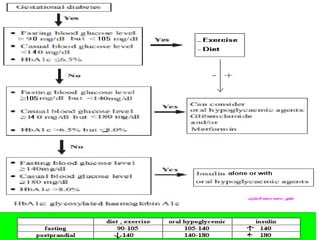
Management similar as preexisting DM
Need for glucose monitoring
Start with Diet control
Commence insulin for poor control
Delivery plan individualised
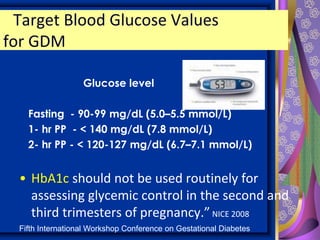
Target Blood Glucose Values
for GDM
Glucose level
Fasting - 90-99 mg/dL (5.0–5.5 mmol/L)
1- hr PP - < 140 mg/dL (7.8 mmol/L)
2- hr PP - < 120-127 mg/dL (6.7–7.1 mmol/L)
• HbA1c should not be used routinely for
assessing glycemic control in the second and
third trimesters of pregnancy.”NICE 2008
Fifth International Workshop Conference on Gestational Diabetes
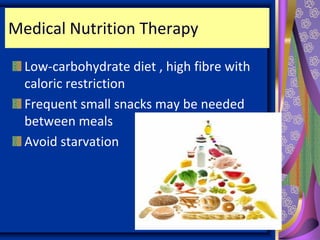
Medical Nutrition Therapy
Low-carbohydrate diet , high fibre with
caloric restriction
Frequent small snacks may be needed
between meals
Avoid starvation
Medical Nutrition Therapy
Monitor urine ketones before breakfast
to detect starvation ketonuria
3 meals and 3 snacks
50-60% complex high fiber
carbohydrates
18-20% protein or at least 75 g
<30% fats
ASGODIP 1996
INSULIN
MEDICATION
ORAL DRUGS
Consider insulin
when ...
Diet and exercise fail to maintain glucose
targets during a period of 1-2 weeks
Ultrasound suggests incipient fetal
macrosomia (AC >70th percentile)
NICE 2008
Insulin remains the agent of choice
“In poorly resourced areas
of the world,
The theoretical disadvantages
of using oral glucose lowering
agents ... far less than the risks of non
treatment.”
IDF 2011
Consider insulin
when ...
Recommended
insulin regimens?
Initiate a basal-bolus regimen if a patient
cannot maintain glucose targets with
diet alone.
NPH insulin (basal) and rapid-acting
insulin at meals
Subcutaneous insulin infusion with an
insulin pump
AACE 2007
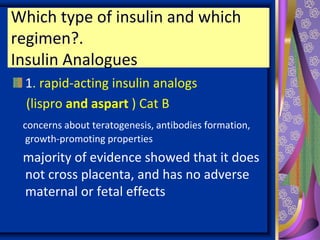
Which type of insulin and which
regimen?.
Insulin Analogues
1. rapid-acting insulin analogs
(lispro and aspart ) Cat B
concerns about teratogenesis, antibodies formation,
growth-promoting properties
majority of evidence showed that it does
not cross placenta, and has no adverse
maternal or fetal effects
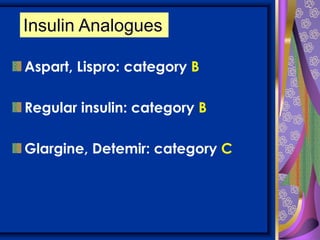
Aspart, Lispro: category B
Regular insulin: category B
Glargine, Detemir: category C
Insulin Analogues
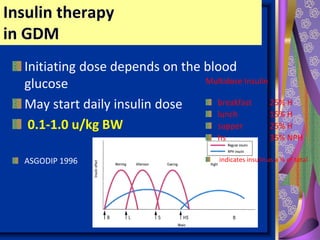
Insulin therapy
in GDM
Initiating dose depends on the blood
glucose
May start daily insulin dose
0.1-1.0 u/kg BW
ASGODIP 1996
Multidose Insulin
breakfast 25% H
lunch 15% H
supper 25% H
hs 35% NPH
indicates insulin as a % of total
daily dose
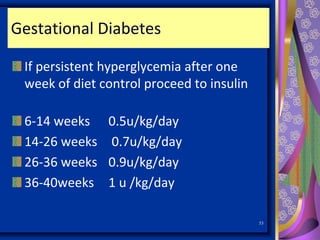
Gestational Diabetes
If persistent hyperglycemia after one
week of diet control proceed to insulin
6-14 weeks 0.5u/kg/day
14-26 weeks 0.7u/kg/day
26-36 weeks 0.9u/kg/day
36-40weeks 1 u /kg/day
53
Oral Hypoglycemic agents
Implicated as teratogeneic in animal
studies esp first generation sulfonyureas
In humans, scattered case reports of
congenital abnormality
Risk of congenital abnormality related to
maternal glycemic control rather than
mode of the anti-DM agents
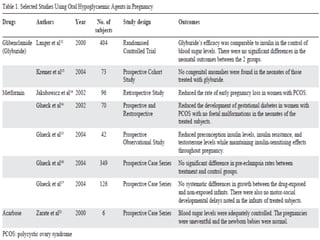
Option of giving metformin or
glibenclamide
“Obtain and document informed
consent.
... tailored to glycemic profile of, and
acceptability to, the individual woman.”
NICE 2008
Alternative to Insulin Therapy
Metformin:
Cat B drug
Commonly used in Polycystic Ovarian Disease (PCOD)
to treat insulin resistance and normalize
reproductive function
Not teratogeneic
Reduce first trimester miscarriage
10X reduce gestational diabetes
Glueck, Fertil Steril 2002
Reece, Curr Opin Endocrinol Diabetes, 2006
Hague, BMJ, 2003
Glueck, Human Reprod, 2004
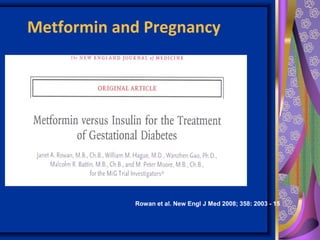
Metformin and Pregnancy
Rowan et al. New Engl J Med 2008; 358: 2003 - 15
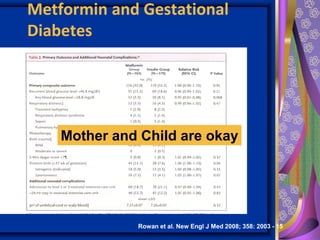
Metformin and Gestational
Diabetes
Rowan et al. New Engl J Med 2008; 358: 2003 - 15
Mother and Child are okay
Metformin for the Treatment of
GDM
In women with gestational diabetes mellitus,
metformin (alone or with supplemental insulin) is
not associated with increased perinatal
complications as compared with insulin
Patients prefer metformin over insulin
Rowan et al, N Engl J Med 2008; 358:19
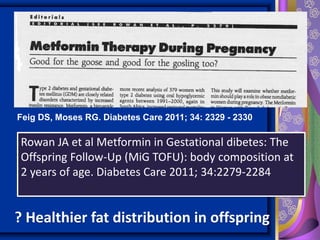
Feig DS, Moses RG. Diabetes Care 2011; 34: 2329 - 2330
Rowan JA et al Metformin in Gestational dibetes: The
Offspring Follow-Up (MiG TOFU): body composition at
2 years of age. Diabetes Care 2011; 34:2279-2284
? Healthier fat distribution in offspring
Alternative to Insulin Therapy
Glyburide:
Category C
Does not cross the placenta
Some physicians are using glyburide in
lieu of insulin given its ease of use.
Both the ACOG and ADA do not endorse
the use of glyburide in the tx of GDM
until additional RCTs support its safety
and effectiveness.
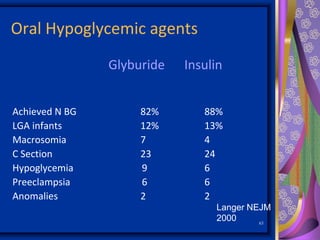
Oral Hypoglycemic agents
Glyburide Insulin
Achieved N BG 82% 88%
LGA infants 12% 13%
Macrosomia 7 4
C Section 23 24
Hypoglycemia 9 6
Preeclampsia 6 6
Anomalies 2 2
63
Langer NEJM
2000
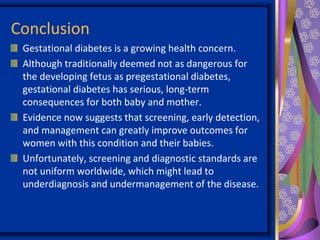
Conclusion
Gestational diabetes is a growing health concern.
Although traditionally deemed not as dangerous for
the developing fetus as pregestational diabetes,
gestational diabetes has serious, long-term
consequences for both baby and mother.
Evidence now suggests that screening, early detection,
and management can greatly improve outcomes for
women with this condition and their babies.
Unfortunately, screening and diagnostic standards are
not uniform worldwide, which might lead to
underdiagnosis and undermanagement of the disease.
Conclusion
1-step diagnostic test also will be much easier
to administer and, thus, the earlier diagnosis
and treatment of GDM will lead to better
outcomes for mothers and their babies.
Although human insulin or human insulin
analogues have been the preferred treatment
for gestational diabetes for some time, oral
antihyperglycaemic agents—such as
glibenclamide and metformin—could be just as
effective for the management of the disease.
To Be or Not To Be , that is the question.
To Change or Not To Change .
Recommendation
It is time for Outpatient Clinic care for
early screening and diagnosis of GDM in
our locality :
To reduce the risk of the preinatal and
maternal morbidity .
To prevent or delay the development of
T2DM for the mother and the fetus in
their later lives .
LOBNA

ueda2013 gestational diabetes-d.lobna

  • 1.
    Gestational Diabetes To Changeor Not to Change Lobna Farag Eltoony Head of diabetes and Endocrinology Unit Department Of Internal Medicine Assuit University
  • 2.
    Agenda Definition Epidemiology The fetal andmaternal consequences of GDM and pregestational diabetes. Preconception care The evolution of a diagnostic controversy Screening : Who? Why? When? How? Management

  • 3.
    Diabetes and pregnancy Oneof the most challenging aspects of diabetes practice Seemingly easy: Practically difficult Needs a lot of commitment on part of doctor, patient and family Success can be achieved if we try together Let’s begin by staying awake for the next 20 minutes
  • 4.
    Gestational diabetes Definition Carbohydate intoleranceof variable severity first recognised during the present pregnancy. This includes women with preexisting but previously unrecognised diabetes.
  • 5.
    Gestational diabetes Incidence 2-9% more commonin Asian and Indian women . In developed countries, increasing trend because of epidemic of obesity and T2DM.
  • 6.
    Epidemiology Most common medicalcomplication of Pregnancy affects 8% of pregnancies Gestational DM 90% Diabetes 8% Preexisting DM 10% 6 Nondiabetes 92% Diabetes8% 24% Diagnosed T2DM 50%GDM
  • 7.
    Diabetes in pregnancy Pre-existingdiabetes Gestational diabetes Pre-existing diabetes IDDM (Type1) NIDDM (Type2) True GDM
  • 8.
    Pregestational Diabetes In ourpractice , many women who are first diagnosed with diabetes mellitus during pregnancy are classified as having gestational diabetes even though they have pre-existing, or pregestational, diabetes that had gone undiagnosed.
  • 9.
    Pregestational vs Gestational Diabetes Thisdistinction is crucial because pregestational diabetes is associated with more serious consequences for the fetus than is diabetes in the second and third trimester of pregnancy. (A wolf in sheep’s clothing).
  • 10.
    Pregestational Diabetes Women withpregestational diabetes who become pregnant are at increased risk of giving birth to a baby with a serious birth defect, including cardiac, neurological, and vascular anomalies. Reece et al 2009 lancet
  • 11.
    Diabetes and pregnancy Placentalstructure and function is affected Early IUGR as high BG inhibits trophoblast proliferation Hypertension, renal disease more frequent High glycogen content in placenta
  • 12.
    Complications of pregnancyin pre- existing DM Maternal: Increase insulin requirment’ Hypoglycemia Infection Ketoacidosis Deterioration in retinopathy’ Increased proteinuria+edema Miscarriage Polyhydramnio Shoulder dystocia Preeclampsia Increased caesarean rate Fetal: Congenital abnormalities Increased neonatal and perinatal mortality Macrosomia Late stillbirth Neonatal hypoglycemia Polycythemia jaundice
  • 13.
    Caudal regression syndrome (abnormaldevelopment of lower spine )
  • 14.
    Teratogen Period of exposure Complications Typeof Diabetes Aberrant fuel mixture Hyperinsulinaemia Foetus delivery G D M P G D M 1st trimester 2nd trimester 3rd trimester Spontaneous abortions Early growth delay Congenital anomalies Macrosomia Selective Organomegaly CNS development delay Chronic hypoxia Stillbirth Birth injury
  • 15.
    Fetal hyperinsulinemia The Impact ofMaternal Hyperglycemia During Pregnancy Modified Pedersen Hypothesis Fetus Fetal pancreas stimulated IgG=immunoglobulin G Mother Placenta IgG-antibody-bound insulin Insulin Maternal hyperglycemia Insulin resistance syndrome
  • 16.
    Maternal hyperglycemia Fetal hyperglycemia Fetalhyperinsulinemia Pederson Hypothesis (1952) Macrosomia,organomegaly, polycythaemia, hypoglycemia, RDS Pathogenesis of Gestational diabetes
  • 17.
  • 18.
  • 19.
    Before conception isattempted, A1C levels Close to normal as possible (<7%) (B) Starting at puberty Incorporate preconception counseling in routine diabetes clinic visit for all women of child-bearing potential (C) Evaluate women contemplating pregnancy; if indicated, treat for Diabetic retinopathy Nephropathy Neuropathy CVD (E) Recommendations: Preconception Care (1) ADA. VII. Diabetes Care in Specific Populations. Diabetes Care. 2011;34(suppl 1):S41.
  • 20.
    Evaluate medications usedprior to conception Drugs commonly used to treat diabetes, complications may be contraindicated or not recommended in pregnancy, including Statins, ACE inhibitors, ARBs, most noninsulin therapies (E) Since many pregnancies are unplanned, consider potential risks/benefits of medications contraindicated in pregnancy in all women of childbearing potential; counsel accordingly (E) ADA. VII. Diabetes Care in Specific Populations. Diabetes Care. 2011;34(su Recommendations: Preconception Care (2)
  • 21.
    Gestational Diabetes Fetal Risks Macrosomia- shoulder dystocia and related complications Jaundice Hypoglycemia No increase in congenital anomalies Exposure to GDM in utero LGA children or those born to obese mother have a 7% risk of developing IGT at 7-11 yrs age Breastfeeding may lower risk CDA CPG 2008
  • 22.
     Pre-eclampsia: affects10-25% of all pregnant women with GDM  Infections: high incidence of chorioamnionitis and postpartum endometritis  Postpartum bleeding:  Cesarian section more common due to fetal macrosmia and cephalo-pelvic disproportion  Weight gain  Hypertension  Miscarriages Third trimester fetal deaths  Long term risk of type-2 DM (40-60%) of within10-15 yr. Effects of GDM on the mother
  • 24.
    DETECTION AND DIAGNOSISOF GESTATIONAL DIABETES MELLITUS
  • 25.
    Screening Tests forGDM Best method still controversial
  • 26.
    NO CONSENSUS ONGDM SCREENING Why? When? Who? How?
  • 27.
    WHY? •Increased risk ofperinatal morbidity : Macrosomia’ Shoulder Dystocia ,Birth injuries and Hypoglycemia Treatment reduces perinatal morbidity Increased risk of maternal morbidity :Preeclampsia Cesearean Section , Pregnancy-induced hypertension and Type2 diabetes mellitus Treatment reduces maternal morbidity , Landon et al NEJM 2009;
  • 28.
    Screen for undiagnosedtype 2 diabetes at the • first prenatal visit in those with risk factors, using standard diagnostic criteria (B) In pregnant women not previously known to have diabetes, screen for GDM at 24-28 weeks gestation, using a 75-g OGTT Recommendations: Detection and Diagnosis of GDM (1) WHEN? ADA. III. Detection and Diagnosis of GDM. Diabetes Care 2011;34(suppl 1):S15.
  • 29.
    Risks for developinggestational diabetes WHO? Aged 35 or over Overweight BMI > 25 Positive FH of type 2 diabetes Previous unexplained stillbirth, foetal malformation or large baby (>4.5kg) Persistent fasting glycosuria More than 3 previous children polyhydramnios Diagnosis of PCOS ADA 2011
  • 30.
    The evolution ofa diagnostic controversy How? 1 hr 50 g OGTT. 2 hr 75 g oral OGTT 3 hr 100 g OGTT
  • 31.
    Gestational Diabetes (GDM) TheAmerican Congress of Obstetricians and Gynecologists (ACOG),endorses the older 1997 criteria, which involve a 2-step process: Step 1: Screening 1 hr 50 g OGTT. If PG >140 mg/dL, proceed to Step 2. Step 2: 3 hr 100 g OGTT Fasting ≥95 mg/dL 1 hr ≥180 mg/dL 2 hr ≥155 mg/dL 3 hr ≥140 mg/dL
  • 32.
    To Be orNot To Be , that is the question. To Change or Not To Change .
  • 33.
    Gestational Diabetes (GDM) In2011, the ADA affirmed the recommendations of the International Association of Diabetes and Pregnancy Study Groups (IADPSG),based on the results of the Hyperglycemia and Adverse Pregnancy Outcomes (HAPO) study. Its current universal screening test is the 75 g oral OGTT, with measurement of plasma glucose (PG) over2 hr. The test is performed at 24–28 weeks of gestation, after an overnight fast of at least 8 hr. The diagnosis of GDM is made when Any one of the following PG values is Fasting ≥92 mg/dL 1 hr ≥180 mg/dL 2 hr ≥153 mg/dL Diabetes Care 34:Supplement 1, 2011 Diabetes Care 2010; 33: 676–682
  • 34.
     These newcriteria will significantly increase the prevalence of GDM, primarily because only one abnormal value, not two, is sufficient to make the diagnosis. The ADA recognizes the anticipated significant increase in the incidence of GDM to be diagnosed by these criteria and is sensitive to concerns about the “medicalization” of pregnancies previously categorized as normal. These diagnostic criteria changes are being made in the context of worrisome worldwide increases in obesity and diabetes rates, with the intent of optimizing gestational outcomes for women and their babies. Screening for and Diagnosis of GDM
  • 35.
    Although the anticipatedbenefits include decreased rates of maternal and offspring obesity, metabolic syndrome, and diabetes, it is not yet clear how these benefits can be achieved in an environment of significantly restricted health care resources. In addition, a dramatic increase in the rate of cesarean deliveries, the benefits of better diagnosis may be offset by increased cesarean delivery– related complications and costs. The evolution of a diagnostic controversy
  • 36.
    Disclosure None ... Where guidelinesdisagreed, I picked the one I agreed with ☺
  • 37.
    Screen women withGDM for persistent diabetes 6-12 weeks postpartum (E) Women with a history of GDM should have lifelong screening for the development of diabetes or prediabetes at least every three years (E) Recommendations: Detection and Diagnosis of GDM (2) ADA. III. Detection and Diagnosis of GDM. Diabetes Care 2011;34(suppl 1):S15.
  • 38.
    Postpartum Care-cont: Follow up: PerAmerican Diabetes Association, a 75 g two hours oral GTT should be performed 6-8 wks after delivery.
  • 39.
    Normal glucose tolerance5 Impaired glucose tolerance 3 Diabetes mellitus 1 1/9 5/93/9 Normal glucose tolerance Impaired glucose tolerance Diabetes mellitus Post partum follow up at 6 weeks
  • 40.
    Gestational diabetes Management Management similaras preexisting DM Need for glucose monitoring Start with Diet control Commence insulin for poor control Delivery plan individualised
  • 41.
    Target Blood GlucoseValues for GDM Glucose level Fasting - 90-99 mg/dL (5.0–5.5 mmol/L) 1- hr PP - < 140 mg/dL (7.8 mmol/L) 2- hr PP - < 120-127 mg/dL (6.7–7.1 mmol/L) • HbA1c should not be used routinely for assessing glycemic control in the second and third trimesters of pregnancy.”NICE 2008 Fifth International Workshop Conference on Gestational Diabetes
  • 42.
    Medical Nutrition Therapy Low-carbohydratediet , high fibre with caloric restriction Frequent small snacks may be needed between meals Avoid starvation
  • 43.
    Medical Nutrition Therapy Monitorurine ketones before breakfast to detect starvation ketonuria 3 meals and 3 snacks 50-60% complex high fiber carbohydrates 18-20% protein or at least 75 g <30% fats ASGODIP 1996
  • 44.
  • 45.
    Consider insulin when ... Dietand exercise fail to maintain glucose targets during a period of 1-2 weeks Ultrasound suggests incipient fetal macrosomia (AC >70th percentile) NICE 2008
  • 46.
    Insulin remains theagent of choice “In poorly resourced areas of the world, The theoretical disadvantages of using oral glucose lowering agents ... far less than the risks of non treatment.” IDF 2011 Consider insulin when ...
  • 47.
    Recommended insulin regimens? Initiate abasal-bolus regimen if a patient cannot maintain glucose targets with diet alone. NPH insulin (basal) and rapid-acting insulin at meals Subcutaneous insulin infusion with an insulin pump AACE 2007
  • 48.
    Which type ofinsulin and which regimen?. Insulin Analogues 1. rapid-acting insulin analogs (lispro and aspart ) Cat B concerns about teratogenesis, antibodies formation, growth-promoting properties majority of evidence showed that it does not cross placenta, and has no adverse maternal or fetal effects
  • 49.
    Aspart, Lispro: categoryB Regular insulin: category B Glargine, Detemir: category C Insulin Analogues
  • 50.
    Insulin therapy in GDM Initiatingdose depends on the blood glucose May start daily insulin dose 0.1-1.0 u/kg BW ASGODIP 1996 Multidose Insulin breakfast 25% H lunch 15% H supper 25% H hs 35% NPH indicates insulin as a % of total daily dose
  • 51.
    Gestational Diabetes If persistenthyperglycemia after one week of diet control proceed to insulin 6-14 weeks 0.5u/kg/day 14-26 weeks 0.7u/kg/day 26-36 weeks 0.9u/kg/day 36-40weeks 1 u /kg/day 53
  • 52.
    Oral Hypoglycemic agents Implicatedas teratogeneic in animal studies esp first generation sulfonyureas In humans, scattered case reports of congenital abnormality Risk of congenital abnormality related to maternal glycemic control rather than mode of the anti-DM agents
  • 53.
    Option of givingmetformin or glibenclamide “Obtain and document informed consent. ... tailored to glycemic profile of, and acceptability to, the individual woman.” NICE 2008
  • 54.
    Alternative to InsulinTherapy Metformin: Cat B drug Commonly used in Polycystic Ovarian Disease (PCOD) to treat insulin resistance and normalize reproductive function Not teratogeneic Reduce first trimester miscarriage 10X reduce gestational diabetes Glueck, Fertil Steril 2002 Reece, Curr Opin Endocrinol Diabetes, 2006 Hague, BMJ, 2003 Glueck, Human Reprod, 2004
  • 55.
    Metformin and Pregnancy Rowanet al. New Engl J Med 2008; 358: 2003 - 15
  • 56.
    Metformin and Gestational Diabetes Rowanet al. New Engl J Med 2008; 358: 2003 - 15 Mother and Child are okay
  • 57.
    Metformin for theTreatment of GDM In women with gestational diabetes mellitus, metformin (alone or with supplemental insulin) is not associated with increased perinatal complications as compared with insulin Patients prefer metformin over insulin Rowan et al, N Engl J Med 2008; 358:19
  • 58.
    Feig DS, MosesRG. Diabetes Care 2011; 34: 2329 - 2330 Rowan JA et al Metformin in Gestational dibetes: The Offspring Follow-Up (MiG TOFU): body composition at 2 years of age. Diabetes Care 2011; 34:2279-2284 ? Healthier fat distribution in offspring
  • 59.
    Alternative to InsulinTherapy Glyburide: Category C Does not cross the placenta Some physicians are using glyburide in lieu of insulin given its ease of use. Both the ACOG and ADA do not endorse the use of glyburide in the tx of GDM until additional RCTs support its safety and effectiveness.
  • 60.
    Oral Hypoglycemic agents GlyburideInsulin Achieved N BG 82% 88% LGA infants 12% 13% Macrosomia 7 4 C Section 23 24 Hypoglycemia 9 6 Preeclampsia 6 6 Anomalies 2 2 63 Langer NEJM 2000
  • 63.
    Conclusion Gestational diabetes isa growing health concern. Although traditionally deemed not as dangerous for the developing fetus as pregestational diabetes, gestational diabetes has serious, long-term consequences for both baby and mother. Evidence now suggests that screening, early detection, and management can greatly improve outcomes for women with this condition and their babies. Unfortunately, screening and diagnostic standards are not uniform worldwide, which might lead to underdiagnosis and undermanagement of the disease.
  • 64.
    Conclusion 1-step diagnostic testalso will be much easier to administer and, thus, the earlier diagnosis and treatment of GDM will lead to better outcomes for mothers and their babies. Although human insulin or human insulin analogues have been the preferred treatment for gestational diabetes for some time, oral antihyperglycaemic agents—such as glibenclamide and metformin—could be just as effective for the management of the disease.
  • 65.
    To Be orNot To Be , that is the question. To Change or Not To Change .
  • 66.
    Recommendation It is timefor Outpatient Clinic care for early screening and diagnosis of GDM in our locality : To reduce the risk of the preinatal and maternal morbidity . To prevent or delay the development of T2DM for the mother and the fetus in their later lives .
  • 68.