TYPES OF
PARAGRAPHS
VIVIANA HERNANDEZ
MARIA ALEJANDRA ARDILA
JORGE ANDRES ORTIZ A
PARAGRAPH
• First of all, we will explain what a paragraph is, it is a group of
sentences connected by a main idea. It must start with the
topic, facts that support the main idea, and a conclusion.
• There are five different types of paragraphs. Descriptive,
narrative, expository, persuasive and comparative.
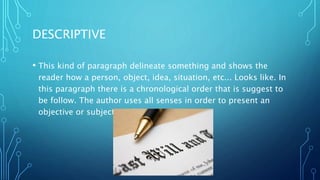
DESCRIPTIVE
• This kind of paragraph delineate something and shows the
reader how a person, object, idea, situation, etc... Looks like. In
this paragraph there is a chronological order that is suggest to
be follow. The author uses all senses in order to present an
objective or subjective idea.
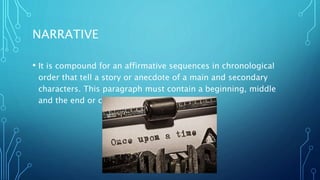
NARRATIVE
• It is compound for an affirmative sequences in chronological
order that tell a story or anecdote of a main and secondary
characters. This paragraph must contain a beginning, middle
and the end or conclusion.
EXPOSITORY
• It's good to write this paragraph to explain or develop more
broadly the subject or topic that is being exposed. Usually it is
extensive and it has specific information that most of the times
requires a deep research.
PERSUASIVE
• This specific paragraph tries to convince the lector or the
person that is looking to buy or do something through a
narrative text or accept a point of view in order to understand
the author's idea. Many teachers uses this kind or paragraph to
make sure the students are focus on the topic that has been
taught because it's useful to support and argument.
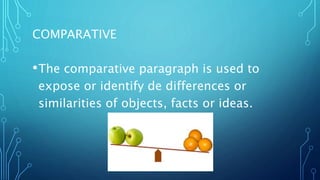
COMPARATIVE
•The comparative paragraph is used to
expose or identify de differences or
similarities of objects, facts or ideas.

Types of paragraphs

  • 1.
    TYPES OF PARAGRAPHS VIVIANA HERNANDEZ MARIAALEJANDRA ARDILA JORGE ANDRES ORTIZ A
  • 2.
    PARAGRAPH • First ofall, we will explain what a paragraph is, it is a group of sentences connected by a main idea. It must start with the topic, facts that support the main idea, and a conclusion. • There are five different types of paragraphs. Descriptive, narrative, expository, persuasive and comparative.
  • 3.
    DESCRIPTIVE • This kindof paragraph delineate something and shows the reader how a person, object, idea, situation, etc... Looks like. In this paragraph there is a chronological order that is suggest to be follow. The author uses all senses in order to present an objective or subjective idea.
  • 4.
    NARRATIVE • It iscompound for an affirmative sequences in chronological order that tell a story or anecdote of a main and secondary characters. This paragraph must contain a beginning, middle and the end or conclusion.
  • 5.
    EXPOSITORY • It's goodto write this paragraph to explain or develop more broadly the subject or topic that is being exposed. Usually it is extensive and it has specific information that most of the times requires a deep research.
  • 6.
    PERSUASIVE • This specificparagraph tries to convince the lector or the person that is looking to buy or do something through a narrative text or accept a point of view in order to understand the author's idea. Many teachers uses this kind or paragraph to make sure the students are focus on the topic that has been taught because it's useful to support and argument.
  • 7.
    COMPARATIVE •The comparative paragraphis used to expose or identify de differences or similarities of objects, facts or ideas.