Types of Network
They are Four of Networks:
1.LAN (local area network)
2.PAN (personal area network)
3.MAN (metropolitan area network)
4.WAN (wide area network)
LAN (local area network)
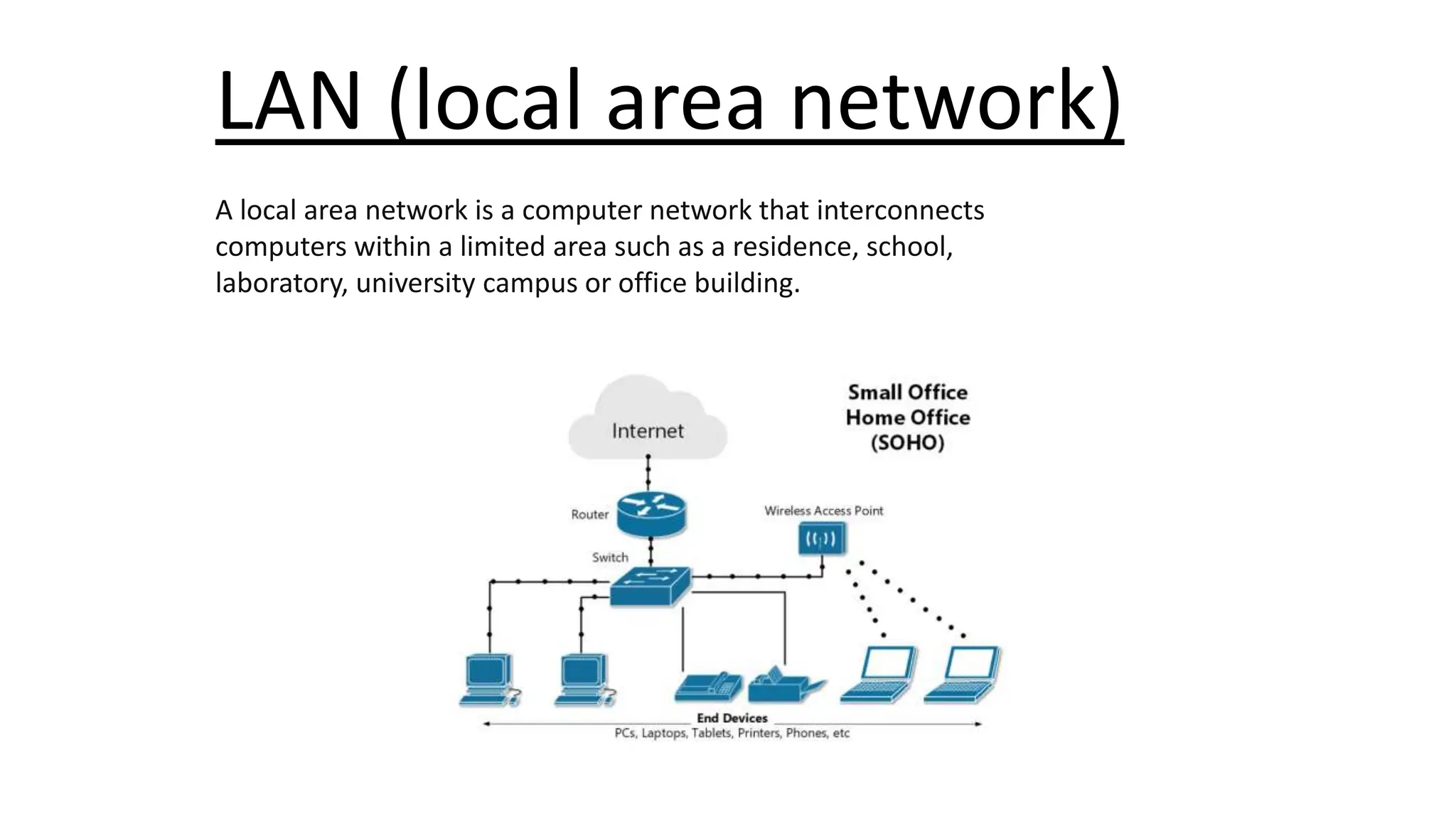
A local area network is a computer network that interconnects
computers within a limited area such as a residence, school,
laboratory, university campus or office building.
PAN (personal area network)
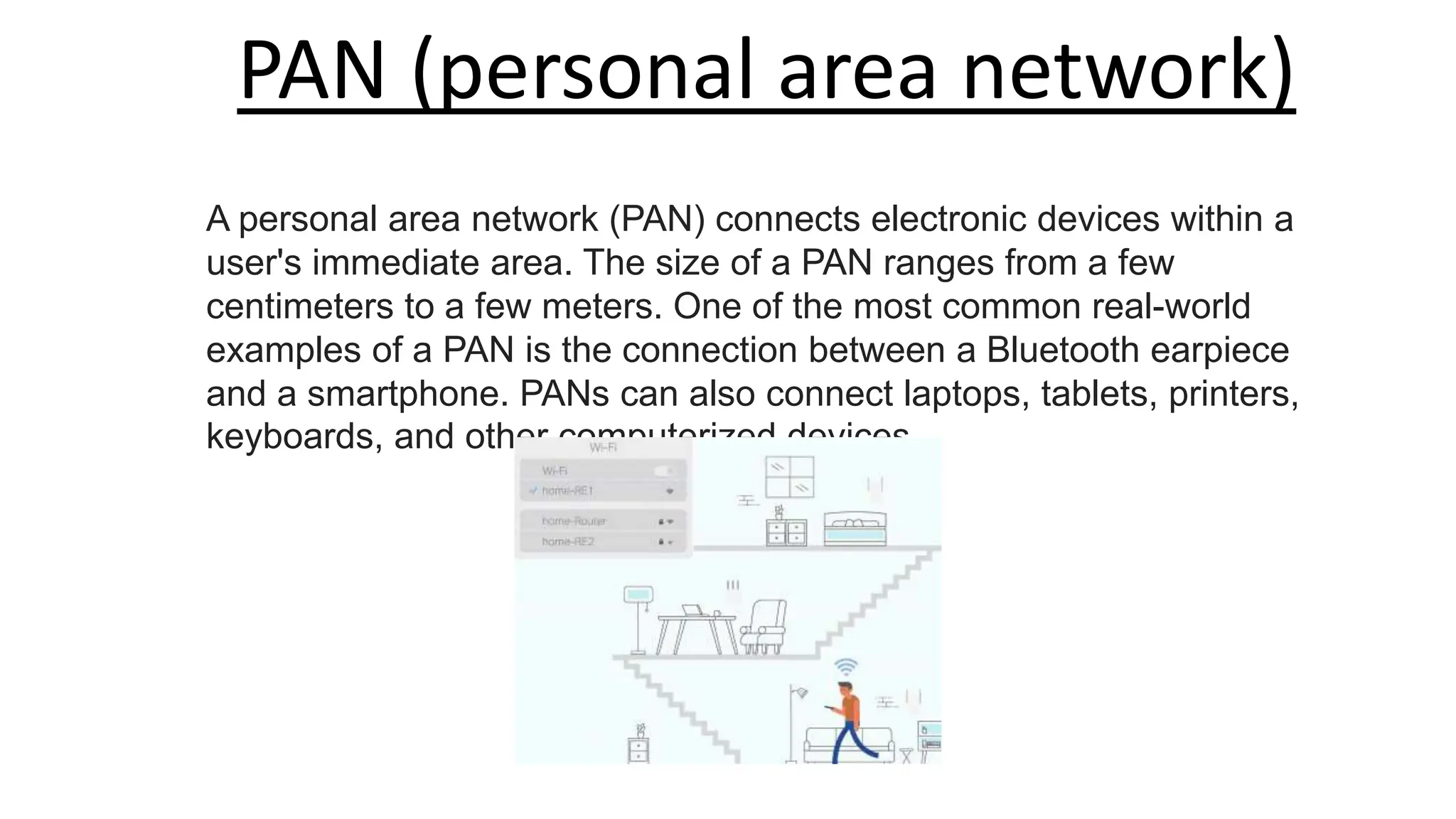
A personal area network (PAN) connects electronic devices within a
user's immediate area. The size of a PAN ranges from a few
centimeters to a few meters. One of the most common real-world
examples of a PAN is the connection between a Bluetooth earpiece
and a smartphone. PANs can also connect laptops, tablets, printers,
keyboards, and other computerized devices.
MAN (metropolitan area network)
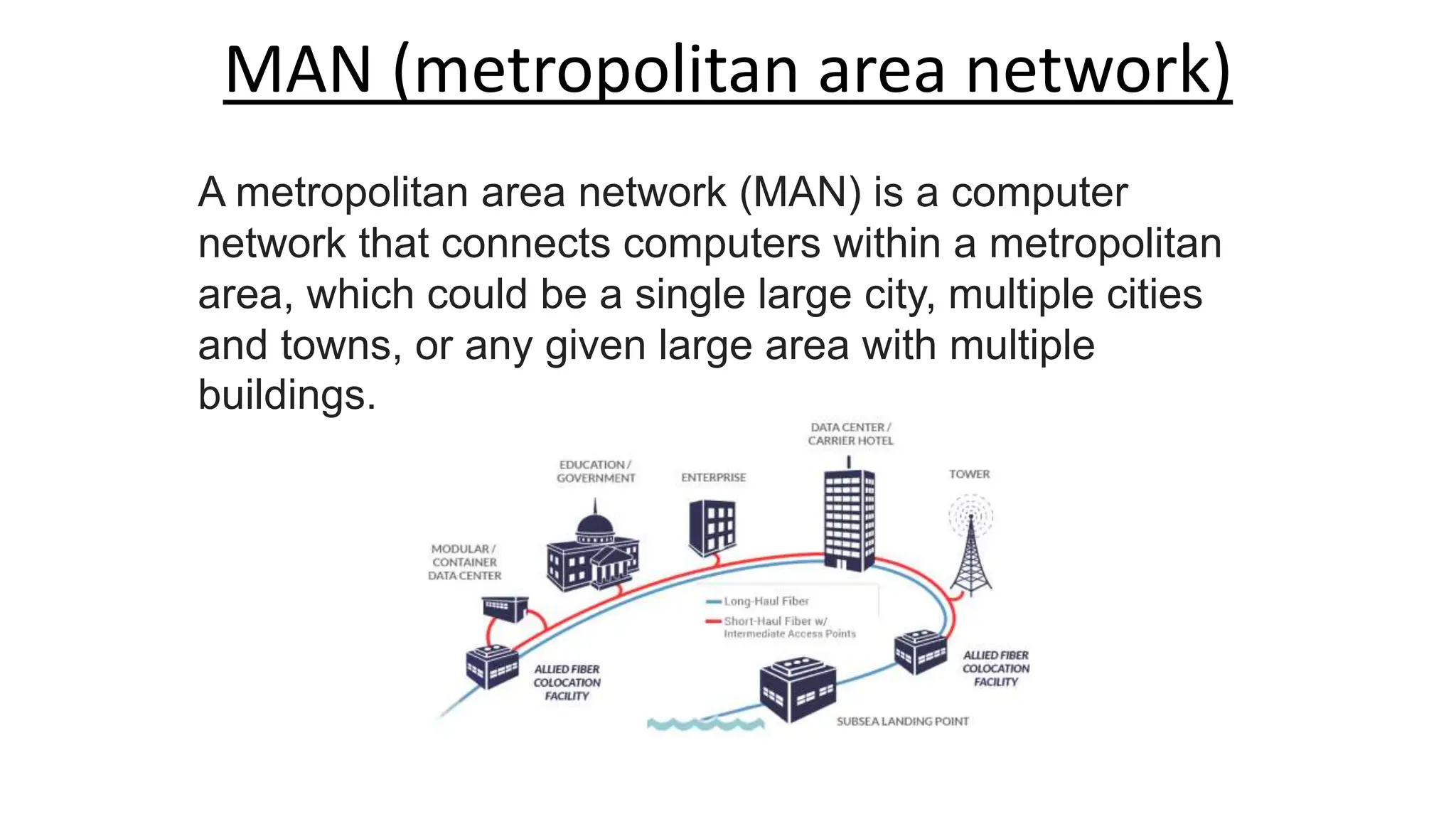
A metropolitan area network (MAN) is a computer
network that connects computers within a metropolitan
area, which could be a single large city, multiple cities
and towns, or any given large area with multiple
buildings.
WAN (wide area network)
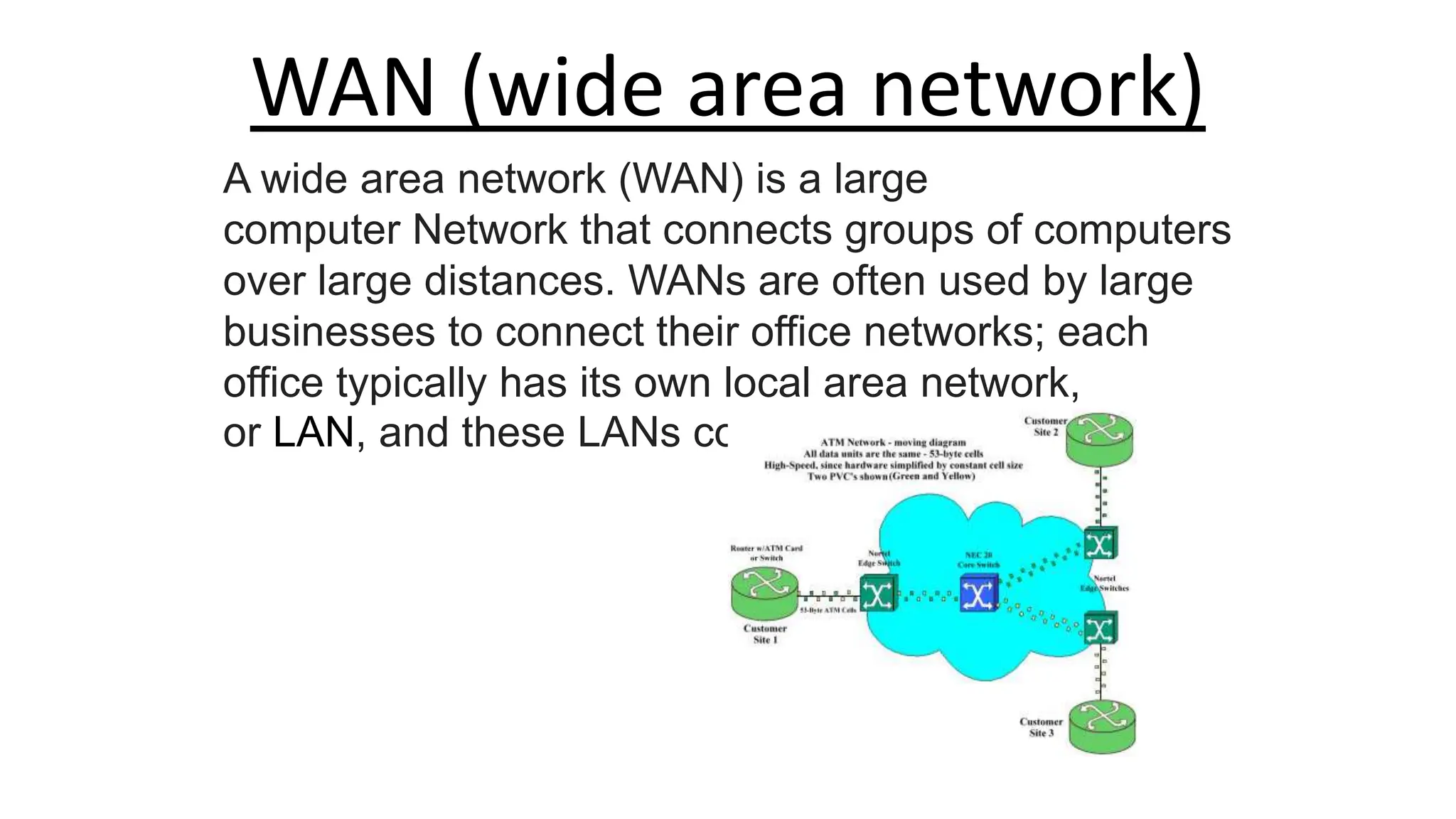
A wide area network (WAN) is a large
computer Network that connects groups of computers
over large distances. WANs are often used by large
businesses to connect their office networks; each
office typically has its own local area network,
or LAN, and these LANs connect via a WAN.
Advantages and Disadvantages of Networking:
Advantages:
• Reduce hardware costs.
• Sharing application.
• Sharing information resources.
• Centralized data management.
• Connecting people.
Disadvantages:
• Loss of autonomy.
• Lack of privacy.
• Security Threats.
• Loss of productivity.
Thank You

Types of network ///////////////////////

  • 1.
  • 2.
    They are Fourof Networks: 1.LAN (local area network) 2.PAN (personal area network) 3.MAN (metropolitan area network) 4.WAN (wide area network)
  • 3.
    LAN (local areanetwork) A local area network is a computer network that interconnects computers within a limited area such as a residence, school, laboratory, university campus or office building.
  • 4.
    PAN (personal areanetwork) A personal area network (PAN) connects electronic devices within a user's immediate area. The size of a PAN ranges from a few centimeters to a few meters. One of the most common real-world examples of a PAN is the connection between a Bluetooth earpiece and a smartphone. PANs can also connect laptops, tablets, printers, keyboards, and other computerized devices.
  • 5.
    MAN (metropolitan areanetwork) A metropolitan area network (MAN) is a computer network that connects computers within a metropolitan area, which could be a single large city, multiple cities and towns, or any given large area with multiple buildings.
  • 6.
    WAN (wide areanetwork) A wide area network (WAN) is a large computer Network that connects groups of computers over large distances. WANs are often used by large businesses to connect their office networks; each office typically has its own local area network, or LAN, and these LANs connect via a WAN.
  • 7.
    Advantages and Disadvantagesof Networking: Advantages: • Reduce hardware costs. • Sharing application. • Sharing information resources. • Centralized data management. • Connecting people. Disadvantages: • Loss of autonomy. • Lack of privacy. • Security Threats. • Loss of productivity.
  • 8.