Downloaded 50 times

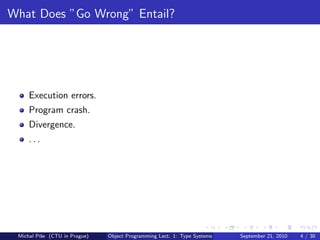
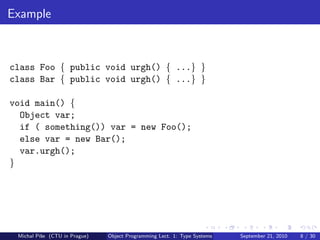
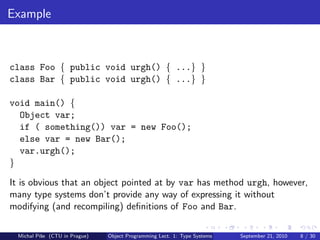
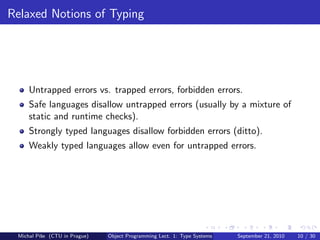


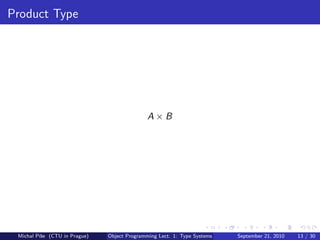

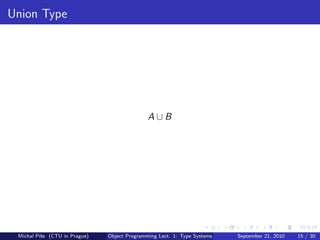
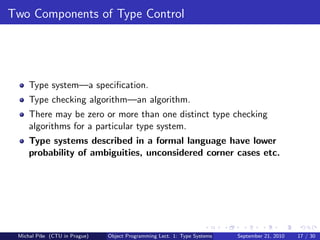
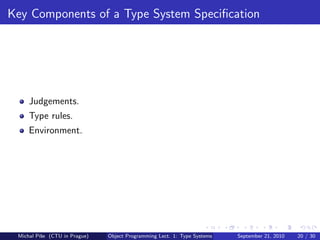
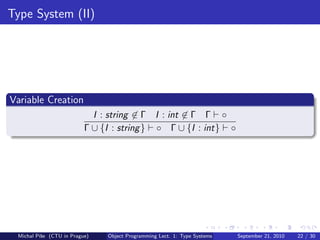
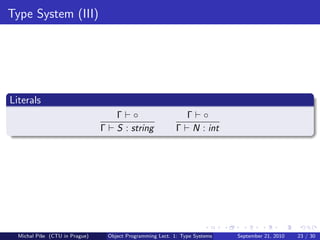
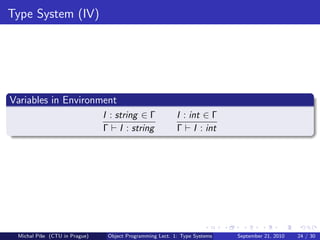
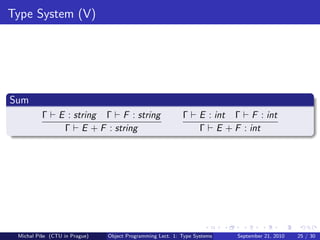
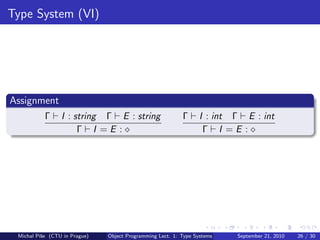
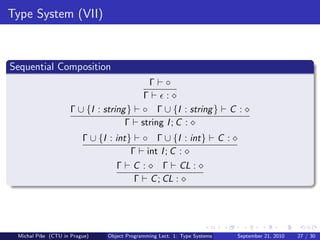
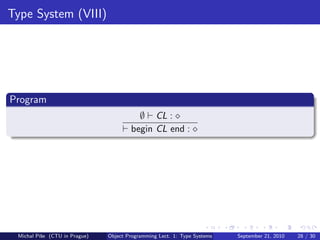

The document discusses type systems and their purposes. It makes three key points: 1. Type systems are designed to prevent programs from having execution errors or going wrong. Well-typed programs are less likely to crash or diverge from their intended behavior. 2. There are two main kinds of typing: static typing checks types at compile-time while dynamic typing checks types at run-time. Both exist because it is impossible to design a type system that rejects all incorrect programs while accepting all correct ones. 3. Type systems can be specified formally using type rules, judgements, and environments to define the valid operations between types. This provides a way to precisely define how a program's types are checked.


