HOW TO ACTIVATE PASSIVE 
EUROPEAN CITIZENSHIP 
Presentation of the Hungarian Team 
3rd Comenius meeting – Izmir, 20-25 October 2013
Our Comenius Team: 
Réka Tatár – Photo Exhibition 
Barnabás Szatmári – Gloomy Sides of 
Hungarian Society 
Anna Molnár – National Strategies 
Norbert Tápai – Volunteering Experiences I. 
Viktória Wolcz - Volunteering Experiences II. 
Teachers: Ágnes Bató and Judit Gera
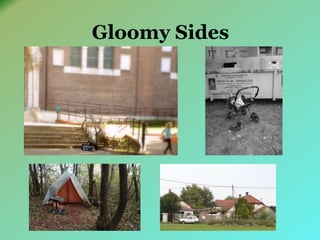
Gloomy Sides
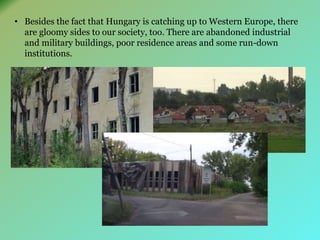
• Besides the fact that Hungary is catching up to Western Europe, there 
are gloomy sides to our society, too. There are abandoned industrial 
and military buildings, poor residence areas and some run-down 
institutions.
• Due to the recent economic crisis and the growing number of 
unemployed people, the problems of discrimination and segregation 
into slums is getting more serious.
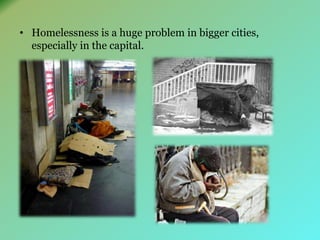
• Homelessness is a huge problem in bigger cities, 
especially in the capital.
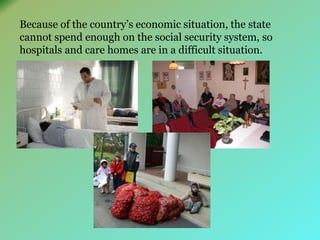
Because of the country’s economic situation, the state 
cannot spend enough on the social security system, so 
hospitals and care homes are in a difficult situation.
In this situation, paying attention to 
- the improvement of the situation of disabled, 
disadvantaged and homeless people, 
- the development of hospitals and nursing homes, 
- the financing of the social safety net, and 
- the handling of household debts 
is a difficult task.
On the everyday level, however, it is possible to do 
something. We can 
- donate clothes and food for charity 
- help giving out food to those in need 
- take care of underprivileged children in schools 
- volunteer at non-profit organizations, hospitals or centers for 
the disabled.
National Strategies 
A) Community service for high school students: 
• Community service is an obligatory activity for Hungarian 
high school students who want to take the state’s school-leaving 
exam. The new law says that after January 2016, they 
can only get their high school diplomas if they have 
completed 50 hours of community service.
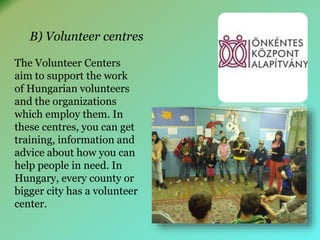
B) Volunteer centres 
The Volunteer Centers 
aim to support the work 
of Hungarian volunteers 
and the organizations 
which employ them. In 
these centres, you can get 
training, information and 
advice about how you can 
help people in need. In 
Hungary, every county or 
bigger city has a volunteer 
center.
Local Strategies 
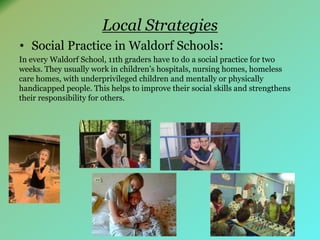
• Social Practice in Waldorf Schools: 
In every Waldorf School, 11th graders have to do a social practice for two 
weeks. They usually work in children’s hospitals, nursing homes, homeless 
care homes, with underprivileged children and mentally or physically 
handicapped people. This helps to improve their social skills and strengthens 
their responsibility for others.
Sunny Side Foundation 
• The aim of the foundation is to support mentally and physically 
disabled people. In addition, they work to show healthy people what it 
is like to live with a handicap.
Center for Mentally and Physically Disabled 
Children 
• Anna and two of her classmates worked here. They had to help the 
children and young adults with eating, learning and they also played 
with them a lot. 
• She wrote: “I started the day in the gym. We did abs training with Pityu, (but this 
time we stopped at 30, because his muscles hurt. It is not good to make him continue, 
because he has Down syndrome, and it’s bad for him.”
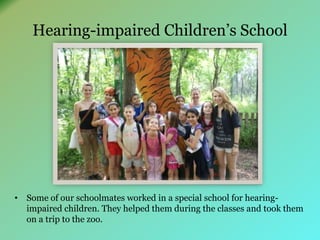
Hearing-impaired Children’s School 
• Some of our schoolmates worked in a special school for hearing-impaired 
children. They helped them during the classes and took them 
on a trip to the zoo.
Hearing-impaired Childrens’ School
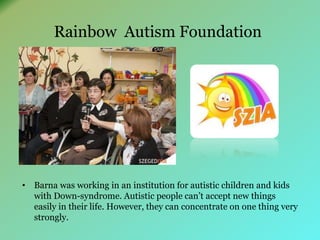
Rainbow Autism Foundation 
• Barna was working in an institution for autistic children and kids 
with Down-syndrome. Autistic people can’t accept new things 
easily in their life. However, they can concentrate on one thing very 
strongly.
Disadvantaged children’s institution 
(Ágota Foundation) 
• Réka worked in a center for underprivileged children, where she helped 
them with their homeworks and played with them.
Disadvantaged Children’s Institution 
(Ágota Foundation) 
• The children are from Roma families or poor or single-parent families. 
The volunteers also organized small parties and other different events 
for them.
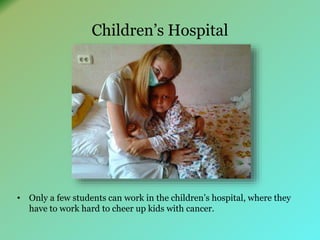
Children’s Hospital 
• Only a few students can work in the children’s hospital, where they 
have to work hard to cheer up kids with cancer.
Red Cross and Homeless Assistance 
Center 
• Some students worked at a homeless assistance center, where 
they gave them bread and tea in the morning. They wrote: “After giving 
out the food, we were working in the garden, and some of the homeless guys came to 
help us - they told us their stories and said nice things to us. :)” 
• Other students worked at the Red Cross, where they had to sort 
clothes and shoes, which later they gave to poor and homeless 
people.
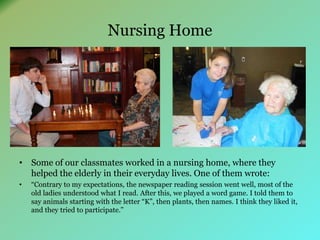
Nursing Home 
• Some of our classmates worked in a nursing home, where they 
helped the elderly in their everyday lives. One of them wrote: 
• “Contrary to my expectations, the newspaper reading session went well, most of the 
old ladies understood what I read. After this, we played a word game. I told them to 
say animals starting with the letter “K”, then plants, then names. I think they liked it, 
and they tried to participate.”
Quotations from student diaries 
• “They say that if you work with mentally disabled people, that will 
help you break down the walls you have built against them. But I 
didn’t think this would happen to me. I guess this helped me develop 
a lot.” (Center for the Mentally Disabled) 
• “Éva, an autistic girl said today: ‘I am as imperfect as you guys.’ I 
think she was right.” (Autism Foundation) 
• “Today I didn’t have to read all the horoscopes, because only 8 ladies 
came to the reading session.” (Nursing Home) 
• “Today I helped Niki with her painting, and it was a nice experience, 
though I was really afraid of her in the beginning. They are so 
strange, but with every day, it’s easier to be here.” (Center for the 
Mentally Disabled)
THANK YOU 
FOR YOUR 
ATTENTION!

Turkish ppt5

  • 1.
    HOW TO ACTIVATEPASSIVE EUROPEAN CITIZENSHIP Presentation of the Hungarian Team 3rd Comenius meeting – Izmir, 20-25 October 2013
  • 2.
    Our Comenius Team: Réka Tatár – Photo Exhibition Barnabás Szatmári – Gloomy Sides of Hungarian Society Anna Molnár – National Strategies Norbert Tápai – Volunteering Experiences I. Viktória Wolcz - Volunteering Experiences II. Teachers: Ágnes Bató and Judit Gera
  • 3.
  • 4.
    • Besides thefact that Hungary is catching up to Western Europe, there are gloomy sides to our society, too. There are abandoned industrial and military buildings, poor residence areas and some run-down institutions.
  • 5.
    • Due tothe recent economic crisis and the growing number of unemployed people, the problems of discrimination and segregation into slums is getting more serious.
  • 6.
    • Homelessness isa huge problem in bigger cities, especially in the capital.
  • 7.
    Because of thecountry’s economic situation, the state cannot spend enough on the social security system, so hospitals and care homes are in a difficult situation.
  • 8.
    In this situation,paying attention to - the improvement of the situation of disabled, disadvantaged and homeless people, - the development of hospitals and nursing homes, - the financing of the social safety net, and - the handling of household debts is a difficult task.
  • 9.
    On the everydaylevel, however, it is possible to do something. We can - donate clothes and food for charity - help giving out food to those in need - take care of underprivileged children in schools - volunteer at non-profit organizations, hospitals or centers for the disabled.
  • 10.
    National Strategies A)Community service for high school students: • Community service is an obligatory activity for Hungarian high school students who want to take the state’s school-leaving exam. The new law says that after January 2016, they can only get their high school diplomas if they have completed 50 hours of community service.
  • 11.
    B) Volunteer centres The Volunteer Centers aim to support the work of Hungarian volunteers and the organizations which employ them. In these centres, you can get training, information and advice about how you can help people in need. In Hungary, every county or bigger city has a volunteer center.
  • 12.
    Local Strategies •Social Practice in Waldorf Schools: In every Waldorf School, 11th graders have to do a social practice for two weeks. They usually work in children’s hospitals, nursing homes, homeless care homes, with underprivileged children and mentally or physically handicapped people. This helps to improve their social skills and strengthens their responsibility for others.
  • 13.
    Sunny Side Foundation • The aim of the foundation is to support mentally and physically disabled people. In addition, they work to show healthy people what it is like to live with a handicap.
  • 14.
    Center for Mentallyand Physically Disabled Children • Anna and two of her classmates worked here. They had to help the children and young adults with eating, learning and they also played with them a lot. • She wrote: “I started the day in the gym. We did abs training with Pityu, (but this time we stopped at 30, because his muscles hurt. It is not good to make him continue, because he has Down syndrome, and it’s bad for him.”
  • 15.
    Hearing-impaired Children’s School • Some of our schoolmates worked in a special school for hearing-impaired children. They helped them during the classes and took them on a trip to the zoo.
  • 16.
  • 17.
    Rainbow Autism Foundation • Barna was working in an institution for autistic children and kids with Down-syndrome. Autistic people can’t accept new things easily in their life. However, they can concentrate on one thing very strongly.
  • 18.
    Disadvantaged children’s institution (Ágota Foundation) • Réka worked in a center for underprivileged children, where she helped them with their homeworks and played with them.
  • 19.
    Disadvantaged Children’s Institution (Ágota Foundation) • The children are from Roma families or poor or single-parent families. The volunteers also organized small parties and other different events for them.
  • 20.
    Children’s Hospital •Only a few students can work in the children’s hospital, where they have to work hard to cheer up kids with cancer.
  • 21.
    Red Cross andHomeless Assistance Center • Some students worked at a homeless assistance center, where they gave them bread and tea in the morning. They wrote: “After giving out the food, we were working in the garden, and some of the homeless guys came to help us - they told us their stories and said nice things to us. :)” • Other students worked at the Red Cross, where they had to sort clothes and shoes, which later they gave to poor and homeless people.
  • 22.
    Nursing Home •Some of our classmates worked in a nursing home, where they helped the elderly in their everyday lives. One of them wrote: • “Contrary to my expectations, the newspaper reading session went well, most of the old ladies understood what I read. After this, we played a word game. I told them to say animals starting with the letter “K”, then plants, then names. I think they liked it, and they tried to participate.”
  • 23.
    Quotations from studentdiaries • “They say that if you work with mentally disabled people, that will help you break down the walls you have built against them. But I didn’t think this would happen to me. I guess this helped me develop a lot.” (Center for the Mentally Disabled) • “Éva, an autistic girl said today: ‘I am as imperfect as you guys.’ I think she was right.” (Autism Foundation) • “Today I didn’t have to read all the horoscopes, because only 8 ladies came to the reading session.” (Nursing Home) • “Today I helped Niki with her painting, and it was a nice experience, though I was really afraid of her in the beginning. They are so strange, but with every day, it’s easier to be here.” (Center for the Mentally Disabled)
  • 24.
    THANK YOU FORYOUR ATTENTION!