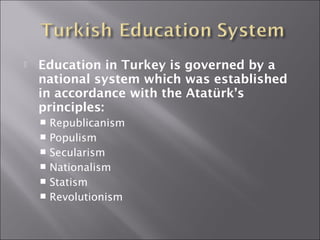
 Education in Turkey is governed by a 
national system which was established 
in accordance with the Atatürk’s 
principles: 
 Republicanism 
 Populism 
 Secularism 
 Nationalism 
 Statism 
 Revolutionism
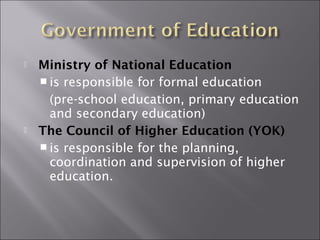
 Ministry of National Education 
 is responsible for formal education 
(pre-school education, primary education 
and secondary education) 
 The Council of Higher Education (YOK) 
 is responsible for the planning, 
coordination and supervision of higher 
education.
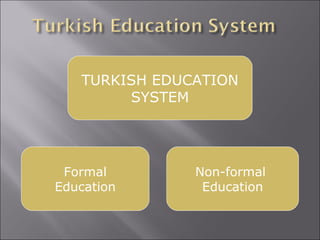
TURKISH EDUCATION 
SYSTEM 
Formal 
Education 
Non-formal 
Education
Formal education is regular education 
provided in formal schools. In Turkish 
National Education System, formal 
education is formed of four parts as: 
• Pre-School 
• Primary 
• Secondary 
• Higher Education
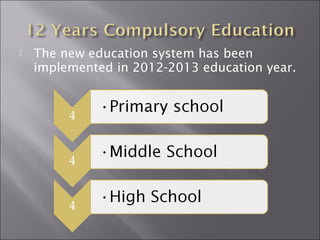
 The new education system has been 
implemented in 2012-2013 education year.
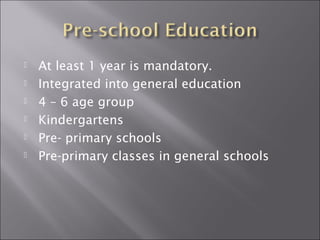
 At least 1 year is mandatory. 
 Integrated into general education 
 4 – 6 age group 
 Kindergartens 
 Pre- primary schools 
 Pre-primary classes in general schools
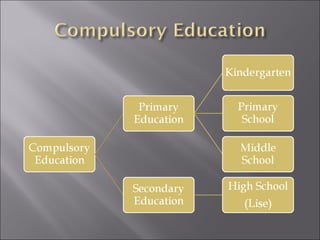
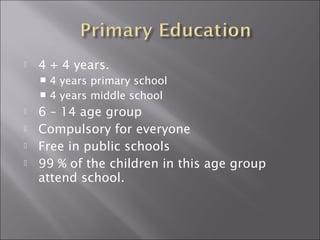
 4 + 4 years. 
 4 years primary school 
 4 years middle school 
 6 – 14 age group 
 Compulsory for everyone 
 Free in public schools 
 99 % of the children in this age group 
attend school.
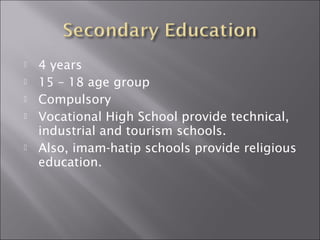
 4 years 
 15 – 18 age group 
 Compulsory 
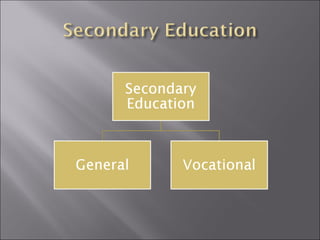
 Vocational High School provide technical, 
industrial and tourism schools. 
 Also, imam-hatip schools provide religious 
education.
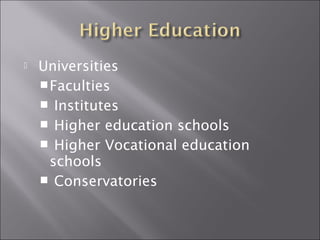
 Universities 
Faculties 
 Institutes 
 Higher education schools 
 Higher Vocational education 
schools 
 Conservatories
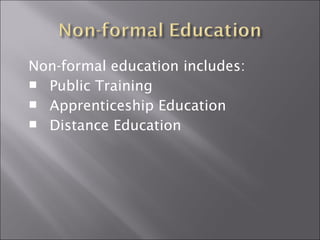
Non-formal education includes: 
 Public Training 
 Apprenticeship Education 
 Distance Education
Zehra Yüksel 
Niğde, Turkey

Turkish educational system

  • 2.
     Education inTurkey is governed by a national system which was established in accordance with the Atatürk’s principles:  Republicanism  Populism  Secularism  Nationalism  Statism  Revolutionism
  • 4.
     Ministry ofNational Education  is responsible for formal education (pre-school education, primary education and secondary education)  The Council of Higher Education (YOK)  is responsible for the planning, coordination and supervision of higher education.
  • 5.
    TURKISH EDUCATION SYSTEM Formal Education Non-formal Education
  • 6.
    Formal education isregular education provided in formal schools. In Turkish National Education System, formal education is formed of four parts as: • Pre-School • Primary • Secondary • Higher Education
  • 8.
     The neweducation system has been implemented in 2012-2013 education year.
  • 9.
     At least1 year is mandatory.  Integrated into general education  4 – 6 age group  Kindergartens  Pre- primary schools  Pre-primary classes in general schools
  • 10.
     4 +4 years.  4 years primary school  4 years middle school  6 – 14 age group  Compulsory for everyone  Free in public schools  99 % of the children in this age group attend school.
  • 12.
     4 years  15 – 18 age group  Compulsory  Vocational High School provide technical, industrial and tourism schools.  Also, imam-hatip schools provide religious education.
  • 13.
     Universities Faculties  Institutes  Higher education schools  Higher Vocational education schools  Conservatories
  • 14.
    Non-formal education includes:  Public Training  Apprenticeship Education  Distance Education
  • 15.

Editor's Notes

  • #7 The first one the formal education and it is composed of four parts
  • #15 Public, apprentship and distance education are the basic means of realizing non-formal education.