Potential Oil Pollution Areas in
Turkish Straits System

Ocg. Cpt. A.Tuğsan İŞİAÇIK ÇOLAK¹- Istanbul Technicial
University Maritime Faculty, Turkey, isiacik@itu.edu.tr
CONTENTS
1.
2.
3.
4.
5.
6.
7.

8.

Marine Pollution
Sources of Marine Pollution
Study Area:Turkish Strait Systems
Marmara Sea Enviromental Problems ‘ Overview’
Oil Pollution Caused by Vessel Operations
Why Ship Makes ILLEGAL Discharge???
Potential Oil Pollution Areas in Turkish Straits
Systems
Conclusion
1.Marine Pollution


The term marine pollution was defined by United
Nations working group called "Group of Experts on
Scientific Aspects of Marine environmental Protection
(GESAMP)". GESAMP defined it as "Pollution means
introduction by man, directly or indirectly of
substances or energy into the marine environment
(including estuaries) resulting in such deleterious
effects as harm to living resources, hazards to human
health, hindrance to marine activities including
fishing, impairment of quality for use of seawater and
reduction of amenities".
2.SOURCES OF MARINE
POLLUTION
Nutrients
Primary Source
Runoff approximately 50% sewage, 50% from forestry,
farming, and other land use. Also airborne nitrogen
oxides from power plants, cars etc.
Effects
Feed algal blooms in coastal waters. Decomposing
algae depletes water of oxygen, killing other marine life.
Can spur algal blooms (red tides), releasing toxins that
can kill fish and poison people. (Ref:1)
…


Sediments
Primary Source
Erosion from mining, forestry, farming, and other landuse; coastal dredging and mining
Effects
Cloud water; impede photosynthesis below surface
waters. Clog gills of fish. Smother and bury coastal
ecosystems. Carry toxins and excess nutrients. (Ref:1)
Pathogens


Sewage, livestock.

Effects


Contaminate coastal swiming areas and seafood,
spreading cholera, typhoid and other diseases.

(Ref:1)
Alien Species
Several thousand per day transported in ballast water;
also spread through canals linking bodies of water and
fishery enhancement projects.
Effects
Outcompete native species and reduce biological
diversity. Introduce new marine diceases. Associated
with increased incidence of red tides and other algal
blooms. Problem in major ports.

Persistent Toxins (PCBs, Heavy metals, DDT
etc.)Industrial discharge; wastewater discharge from
cities; pesticides from farms, forests, home use etc.;
seepage from landfills.
Effects
 poison or cause disease in coastal marine life, especially
near major cities or industry. Contaminate seafood. Fatsoluble toxins that bio-accumulate in predators can
cause disease and reproductive failure.



Oil
46% from cars, heavy machinery, industry, other landbased sources; 32% from oil tanker operations and other
shipping; 13% from accidents at sea; also offshore oil
drilling and natural seepage.

Effects
Low level contamination can kill larvae and cause
disease in marine life. Oil slicks kill marine life, especially
in coastal habitats. Tar balls from coagulated oil litter
beaches and coastal habitat.
Plastics
Fishing nets; cargo and cruise ships; beach litter; wastes
from plastics industry and landfills.
Effects
Discard fishing gear continues to catch fish. Other plastic
debris entangles marine life or is mistaken for food.
Plastics litter beaches and coasts and may persist for
200 to 400 years.

Radioactive substances
 Discarded nuclear submarine and military
waste; atmospheric fallout; also industrial
wastes.

Effects
 Hot

spots of radio activity. Can enter food
chain and cause disease in marine life.
Concentrate in top predators and shellfish,
which are eaten by people.
Thermal
 Cooling water from power plants and
industrial sites
 Kill off corals and other temperature sensitive
sedentary species. Displace other marine life.
Noise
 Supertankers, other large vessels and
machinery
 Can be heard thousands of kilometers away
under water. May stress and disrupt marine
life. (Ref:1)
3.STUDY AREA

TURKISH STRAITS SYTEM
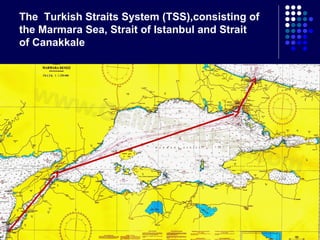
The Turkish Straits System (TSS),consisting of
the Marmara Sea, Strait of Istanbul and Strait
of Canakkale
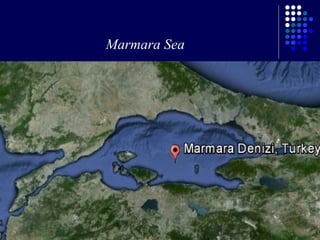
Marmara Sea
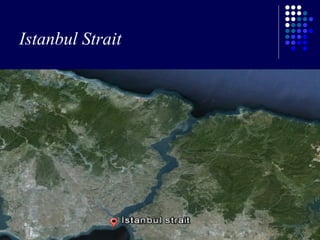
Istanbul Strait
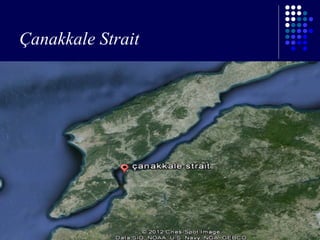
Çanakkale Strait
The Turkish Straits, which consist of the Strait of Istanbul
(Bosporus), the Strait of Çanakkale (the Dardanelles)
and the Sea of Marmara, have for centuries been one of
the world’s most strategic waterways due to their
extreme narrowness, winding contours and densely
populated shores. As the Black Sea's sole maritime link
to the Mediterranean and the open ocean beyond, they
are a vital passageway not just for trade but for the
projection of military and political power. (Ref.2)
4.Regional Environmental Problems for
the Marmara Sea


It has been estimated that on a global scale, up to 70% of pollution
in the seas originate from land-based sources <m. The marine
environment of the Marmara Sea has become increasingly
vulnerable; whose oceanographic features do not help much its selfpurification capacity. This inland sea is a semi-enclosed water body
of 11111 km with an average depth of 260m. Domestic pollution
load is generated mainly by the Istanbul Metropolis and its
surroundings where 1/5 of Turkey's population live [3]. Furthermore
large industrial facilities amounting to 60 % of the total, located on
the bays and coastal areas constitute the most significant portion of
local land-based input into the Marmara Sea.(Ref:3)
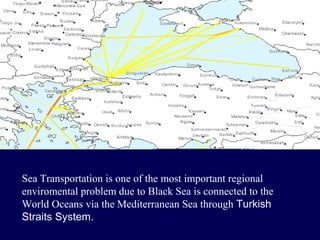
Sea Transportation is one of the most important regional
enviromental problem due to Black Sea is connected to the
World Oceans via the Mediterranean Sea through Turkish
Straits System.


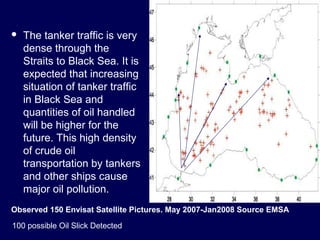
The tanker traffic is very
dense through the
Straits to Black Sea. It is
expected that increasing
situation of tanker traffic
in Black Sea and
quantities of oil handled
will be higher for the
future. This high density
of crude oil
transportation by tankers
and other ships cause
major oil pollution.

Observed 150 Envisat Satellite Pictures. May 2007-Jan2008 Source EMSA
100 possible Oil Slick Detected
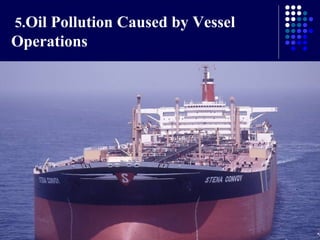
5.Oil Pollution Caused by Vessel

Operations
Examples for Ship transportation that
causes sea pollution








Oil Pollution
Discharging Bilge Water and Sludge
Ballast Water Exchange Operations Alien Species
transported in ballast water
Litters from Ships
Anti- Fouling Paints
Discharge of Sewage (Ref:4)
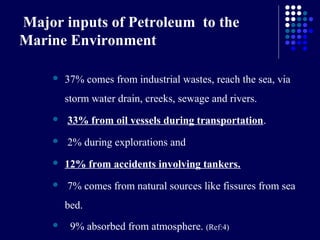
Major inputs of Petroleum to the
Marine Environment


37% comes from industrial wastes, reach the sea, via
storm water drain, creeks, sewage and rivers.



33% from oil vessels during transportation.



2% during explorations and




12% from accidents involving tankers.
7% comes from natural sources like fissures from sea
bed.



9% absorbed from atmosphere. (Ref:4)
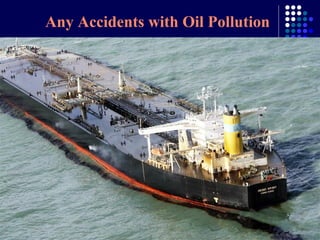
Oil Pollution can be
Operationally or
Accidentally
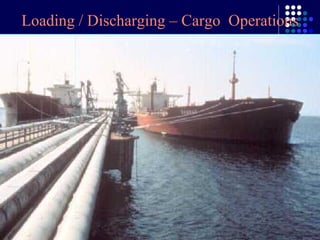
Loading / Discharging – Cargo Operations
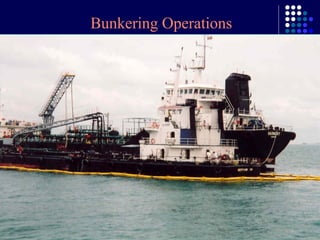
Bunkering Operations
Any Accidents with Oil Pollution
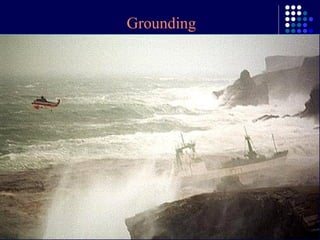
Grounding
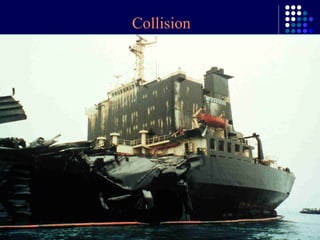
Collision
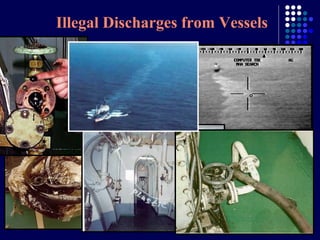
Illegal Discharges from Vessels
6. Why Ship Makes ILLEGAL
Discharge???


Ship generates oily waste products due to usage of
consuming heavy fuel oil, marine oil and lubricating oil for
all types power driven vessels. On the other hand routine
tanker operations cause oily waste water.



Three categories of oily waste generally accumulate
onboard especially on large vessels


Bilge water



Sludge



Oil cargo residue
Bilge Waste


Machinery spaces on large commercial vessels contain a
wide array of complex engineering systems to propel and
power the vessel. Not only purification also supporting
systems; saltwater service, bilge and ballast, cooling
systems, fire fighting and sewage generate oily waste
products and leakage.
Sludge Waste



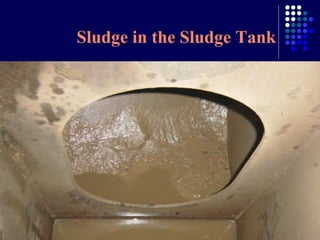
In order to prevent damage to engine systems and improve
combustion, the fuel should be purified. After purifying
the residues ( both the sludge and fluid contaminates )
drain to a sludge tank. Purifying method is also used for
main and auxiliary engine lubricating oil.
Sludge in the Sludge Tank
Oil Cargo Residue Waste
Tankers (product, chemical and crude) carry oil in bulk
and generate oil cargo waste residues. Tankers have
various tanks and may carry many different cargos at the
same time. After each change of cargo type, cargo tanks
should be cleaned.


Steam cleaning



Butterworth machine

These systems use water for cleaning cargo tanks and they
produce oily waste water after cleaning tank operation
The Reason of Illegal Discharges are



To load more cargo
Too much cost to discharge bilge water-sludge
and slop to the shore facilities
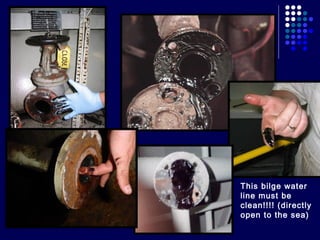
This bilge water
line must be
clean!!!! (directly
open to the sea)
7. Potential Oil Pollution Areas in
Turkish Straits Systems
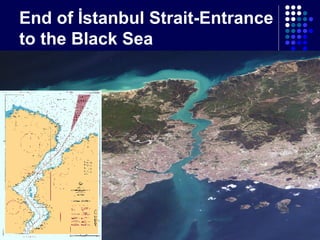
End of İstanbul Strait-Entrance
to the Black Sea
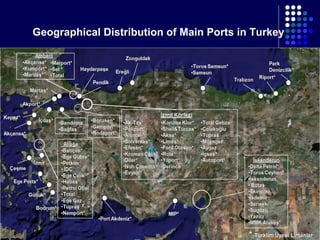
Geographical Distribution of Main Ports in Turkey

42
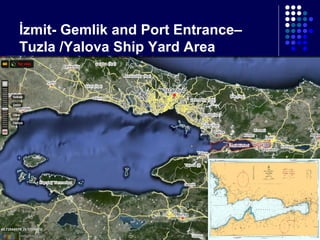
İzmit- Gemlik and Port Entrance–
Tuzla /Yalova Ship Yard Area
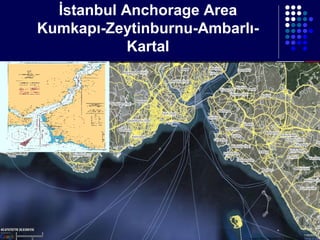
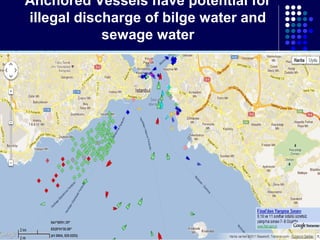
İstanbul Anchorage Area
Kumkapı-Zeytinburnu-AmbarlıKartal
Anchored Vessels have potential for
illegal discharge of bilge water and
sewage water
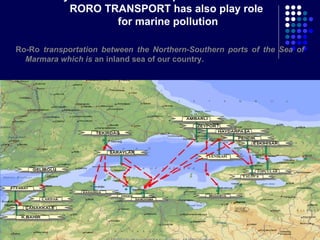
RORO TRANSPORT has also play role
for marine pollution
Ro-Ro transportation between the Northern-Southern ports of the Sea of
Marmara which is an inland sea of our country.

46
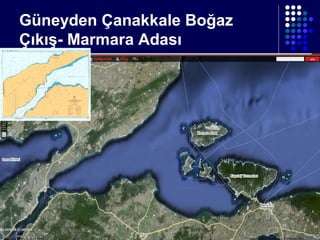
Güneyden Çanakkale Boğaz
Çıkış- Marmara Adası
8. Conclusion
(Ref1) Sources and Effects of Marine Pollution, Compiled by WorldWatch Institute.
(Ref.2) RISK ANALYSIS OF TRANSIT VESSEL TRAFFIC IN THE STRAIT OF
ISTANBUL 1Özgecan S. Ulusçu , Birnur Özbaş,Tayfur Altıok ,İlhan Or
(Ref:3) Land Based And Shıp Orıgınated Pollutıon In The Turkısh Straıts System
Selmin B. * Zeki S. , Demir V. and Dogan E.
Lal, G., (2010), Disaster Management and Security ppt.
TEŞEKKÜRLER

Potential Pollution Areas at Turkish Strait Systems

  • 1.
    Potential Oil PollutionAreas in Turkish Straits System Ocg. Cpt. A.Tuğsan İŞİAÇIK ÇOLAK¹- Istanbul Technicial University Maritime Faculty, Turkey, isiacik@itu.edu.tr
  • 2.
    CONTENTS 1. 2. 3. 4. 5. 6. 7. 8. Marine Pollution Sources ofMarine Pollution Study Area:Turkish Strait Systems Marmara Sea Enviromental Problems ‘ Overview’ Oil Pollution Caused by Vessel Operations Why Ship Makes ILLEGAL Discharge??? Potential Oil Pollution Areas in Turkish Straits Systems Conclusion
  • 3.
    1.Marine Pollution  The termmarine pollution was defined by United Nations working group called "Group of Experts on Scientific Aspects of Marine environmental Protection (GESAMP)". GESAMP defined it as "Pollution means introduction by man, directly or indirectly of substances or energy into the marine environment (including estuaries) resulting in such deleterious effects as harm to living resources, hazards to human health, hindrance to marine activities including fishing, impairment of quality for use of seawater and reduction of amenities".
  • 4.
    2.SOURCES OF MARINE POLLUTION Nutrients PrimarySource Runoff approximately 50% sewage, 50% from forestry, farming, and other land use. Also airborne nitrogen oxides from power plants, cars etc. Effects Feed algal blooms in coastal waters. Decomposing algae depletes water of oxygen, killing other marine life. Can spur algal blooms (red tides), releasing toxins that can kill fish and poison people. (Ref:1)
  • 5.
    …  Sediments Primary Source Erosion frommining, forestry, farming, and other landuse; coastal dredging and mining Effects Cloud water; impede photosynthesis below surface waters. Clog gills of fish. Smother and bury coastal ecosystems. Carry toxins and excess nutrients. (Ref:1)
  • 6.
    Pathogens  Sewage, livestock. Effects  Contaminate coastalswiming areas and seafood, spreading cholera, typhoid and other diseases. (Ref:1)
  • 7.
    Alien Species Several thousandper day transported in ballast water; also spread through canals linking bodies of water and fishery enhancement projects. Effects Outcompete native species and reduce biological diversity. Introduce new marine diceases. Associated with increased incidence of red tides and other algal blooms. Problem in major ports. 
  • 8.
    Persistent Toxins (PCBs,Heavy metals, DDT etc.)Industrial discharge; wastewater discharge from cities; pesticides from farms, forests, home use etc.; seepage from landfills. Effects  poison or cause disease in coastal marine life, especially near major cities or industry. Contaminate seafood. Fatsoluble toxins that bio-accumulate in predators can cause disease and reproductive failure. 
  • 9.
     Oil 46% from cars,heavy machinery, industry, other landbased sources; 32% from oil tanker operations and other shipping; 13% from accidents at sea; also offshore oil drilling and natural seepage. Effects Low level contamination can kill larvae and cause disease in marine life. Oil slicks kill marine life, especially in coastal habitats. Tar balls from coagulated oil litter beaches and coastal habitat.
  • 10.
    Plastics Fishing nets; cargoand cruise ships; beach litter; wastes from plastics industry and landfills. Effects Discard fishing gear continues to catch fish. Other plastic debris entangles marine life or is mistaken for food. Plastics litter beaches and coasts and may persist for 200 to 400 years. 
  • 11.
    Radioactive substances  Discardednuclear submarine and military waste; atmospheric fallout; also industrial wastes. Effects  Hot spots of radio activity. Can enter food chain and cause disease in marine life. Concentrate in top predators and shellfish, which are eaten by people.
  • 12.
    Thermal  Cooling waterfrom power plants and industrial sites  Kill off corals and other temperature sensitive sedentary species. Displace other marine life.
  • 13.
    Noise  Supertankers, otherlarge vessels and machinery  Can be heard thousands of kilometers away under water. May stress and disrupt marine life. (Ref:1)
  • 14.
  • 15.
    The Turkish StraitsSystem (TSS),consisting of the Marmara Sea, Strait of Istanbul and Strait of Canakkale
  • 16.
  • 17.
  • 18.
  • 19.
    The Turkish Straits,which consist of the Strait of Istanbul (Bosporus), the Strait of Çanakkale (the Dardanelles) and the Sea of Marmara, have for centuries been one of the world’s most strategic waterways due to their extreme narrowness, winding contours and densely populated shores. As the Black Sea's sole maritime link to the Mediterranean and the open ocean beyond, they are a vital passageway not just for trade but for the projection of military and political power. (Ref.2)
  • 20.
    4.Regional Environmental Problemsfor the Marmara Sea  It has been estimated that on a global scale, up to 70% of pollution in the seas originate from land-based sources <m. The marine environment of the Marmara Sea has become increasingly vulnerable; whose oceanographic features do not help much its selfpurification capacity. This inland sea is a semi-enclosed water body of 11111 km with an average depth of 260m. Domestic pollution load is generated mainly by the Istanbul Metropolis and its surroundings where 1/5 of Turkey's population live [3]. Furthermore large industrial facilities amounting to 60 % of the total, located on the bays and coastal areas constitute the most significant portion of local land-based input into the Marmara Sea.(Ref:3)
  • 21.
    Sea Transportation isone of the most important regional enviromental problem due to Black Sea is connected to the World Oceans via the Mediterranean Sea through Turkish Straits System.
  • 22.
     The tanker trafficis very dense through the Straits to Black Sea. It is expected that increasing situation of tanker traffic in Black Sea and quantities of oil handled will be higher for the future. This high density of crude oil transportation by tankers and other ships cause major oil pollution. Observed 150 Envisat Satellite Pictures. May 2007-Jan2008 Source EMSA 100 possible Oil Slick Detected
  • 23.
    5.Oil Pollution Causedby Vessel Operations
  • 24.
    Examples for Shiptransportation that causes sea pollution       Oil Pollution Discharging Bilge Water and Sludge Ballast Water Exchange Operations Alien Species transported in ballast water Litters from Ships Anti- Fouling Paints Discharge of Sewage (Ref:4)
  • 25.
    Major inputs ofPetroleum to the Marine Environment  37% comes from industrial wastes, reach the sea, via storm water drain, creeks, sewage and rivers.  33% from oil vessels during transportation.  2% during explorations and   12% from accidents involving tankers. 7% comes from natural sources like fissures from sea bed.  9% absorbed from atmosphere. (Ref:4)
  • 26.
    Oil Pollution canbe Operationally or Accidentally
  • 27.
    Loading / Discharging– Cargo Operations
  • 28.
  • 29.
    Any Accidents withOil Pollution
  • 30.
  • 31.
  • 32.
  • 33.
    6. Why ShipMakes ILLEGAL Discharge???  Ship generates oily waste products due to usage of consuming heavy fuel oil, marine oil and lubricating oil for all types power driven vessels. On the other hand routine tanker operations cause oily waste water.  Three categories of oily waste generally accumulate onboard especially on large vessels  Bilge water  Sludge  Oil cargo residue
  • 34.
    Bilge Waste  Machinery spaceson large commercial vessels contain a wide array of complex engineering systems to propel and power the vessel. Not only purification also supporting systems; saltwater service, bilge and ballast, cooling systems, fire fighting and sewage generate oily waste products and leakage.
  • 35.
    Sludge Waste  In orderto prevent damage to engine systems and improve combustion, the fuel should be purified. After purifying the residues ( both the sludge and fluid contaminates ) drain to a sludge tank. Purifying method is also used for main and auxiliary engine lubricating oil.
  • 36.
    Sludge in theSludge Tank
  • 37.
    Oil Cargo ResidueWaste Tankers (product, chemical and crude) carry oil in bulk and generate oil cargo waste residues. Tankers have various tanks and may carry many different cargos at the same time. After each change of cargo type, cargo tanks should be cleaned.  Steam cleaning  Butterworth machine These systems use water for cleaning cargo tanks and they produce oily waste water after cleaning tank operation
  • 38.
    The Reason ofIllegal Discharges are   To load more cargo Too much cost to discharge bilge water-sludge and slop to the shore facilities
  • 39.
    This bilge water linemust be clean!!!! (directly open to the sea)
  • 40.
    7. Potential OilPollution Areas in Turkish Straits Systems
  • 41.
    End of İstanbulStrait-Entrance to the Black Sea
  • 42.
    Geographical Distribution ofMain Ports in Turkey 42
  • 43.
    İzmit- Gemlik andPort Entrance– Tuzla /Yalova Ship Yard Area
  • 44.
  • 45.
    Anchored Vessels havepotential for illegal discharge of bilge water and sewage water
  • 46.
    RORO TRANSPORT hasalso play role for marine pollution Ro-Ro transportation between the Northern-Southern ports of the Sea of Marmara which is an inland sea of our country. 46
  • 47.
  • 48.
  • 49.
    (Ref1) Sources andEffects of Marine Pollution, Compiled by WorldWatch Institute. (Ref.2) RISK ANALYSIS OF TRANSIT VESSEL TRAFFIC IN THE STRAIT OF ISTANBUL 1Özgecan S. Ulusçu , Birnur Özbaş,Tayfur Altıok ,İlhan Or (Ref:3) Land Based And Shıp Orıgınated Pollutıon In The Turkısh Straıts System Selmin B. * Zeki S. , Demir V. and Dogan E. Lal, G., (2010), Disaster Management and Security ppt.
  • 50.

Editor's Notes

  • #36 Compared with bilge waste, fuel oil sludge is generally less varied and the quantities are more predictable, provided the quality of the fuel oil remains constant. As a general rule of thumb, approximately 1-2% of the heavy fuel oil burned in a vessel’s main engine and generators ends up as sludge. (Interpol, 2007)
  • #48 Boğaz çıkışından sonra karaya en uzak olan mesafeler