INTRODUCTION,SYMPTOMS,SIGNS,
MANAGEMENT AND COMPLICATIONS
OF OSSEOUS BONE TUMORS.
DR. MEERAVALI SHAIK
2ND YR PG
ASRAM , ELURU,AP.
INTRODUCTION
 Bone tumors may be chondrogenic, osteogenic, fibrogenic,
vascular, myelogenic and other mesenchymal derivatives.
 Bone tumors forming osteoid matrix are known as osseous
bone tumors.
 They are divided into Benign & Malignant.
BENIGN MALIGNANT
1. OSTEOID OSTEOMA.
2. OSTEOBLASTOMA.
A. BENIGN,
B. AGGRESSIVE.
3. OSTEOMA.
4. BONE ISLAND
(ENOSTOSIS).
1. OSTEOSARCOMA (O.S).
A. INTRAMEDULARY O.S
(CONVENTIONAL,TELANGIECTATIC
& WELL DIFFERENTIATED)
B. INTRACORTICAL O.S
C. SURFACE O.S
(PERI;PRA;&HIGHGRADE)
D. SECONDARY O.S
E. EXTRA SKELETAL O.S.
F. O.S ASSO; WITH SYNDROMES.
OSSEOUS BONE TUMORS
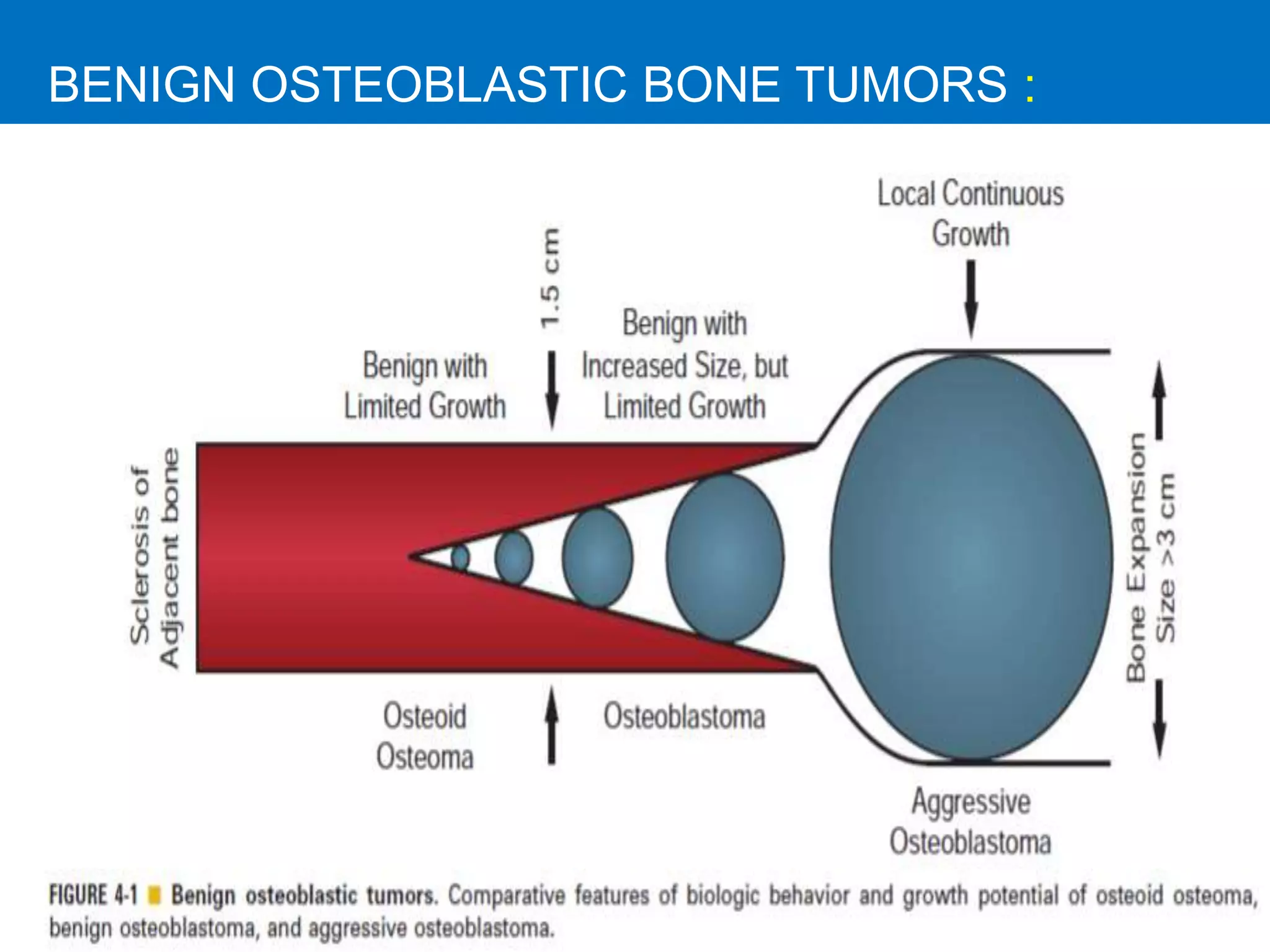
BENIGN OSTEOBLASTIC BONE TUMORS :
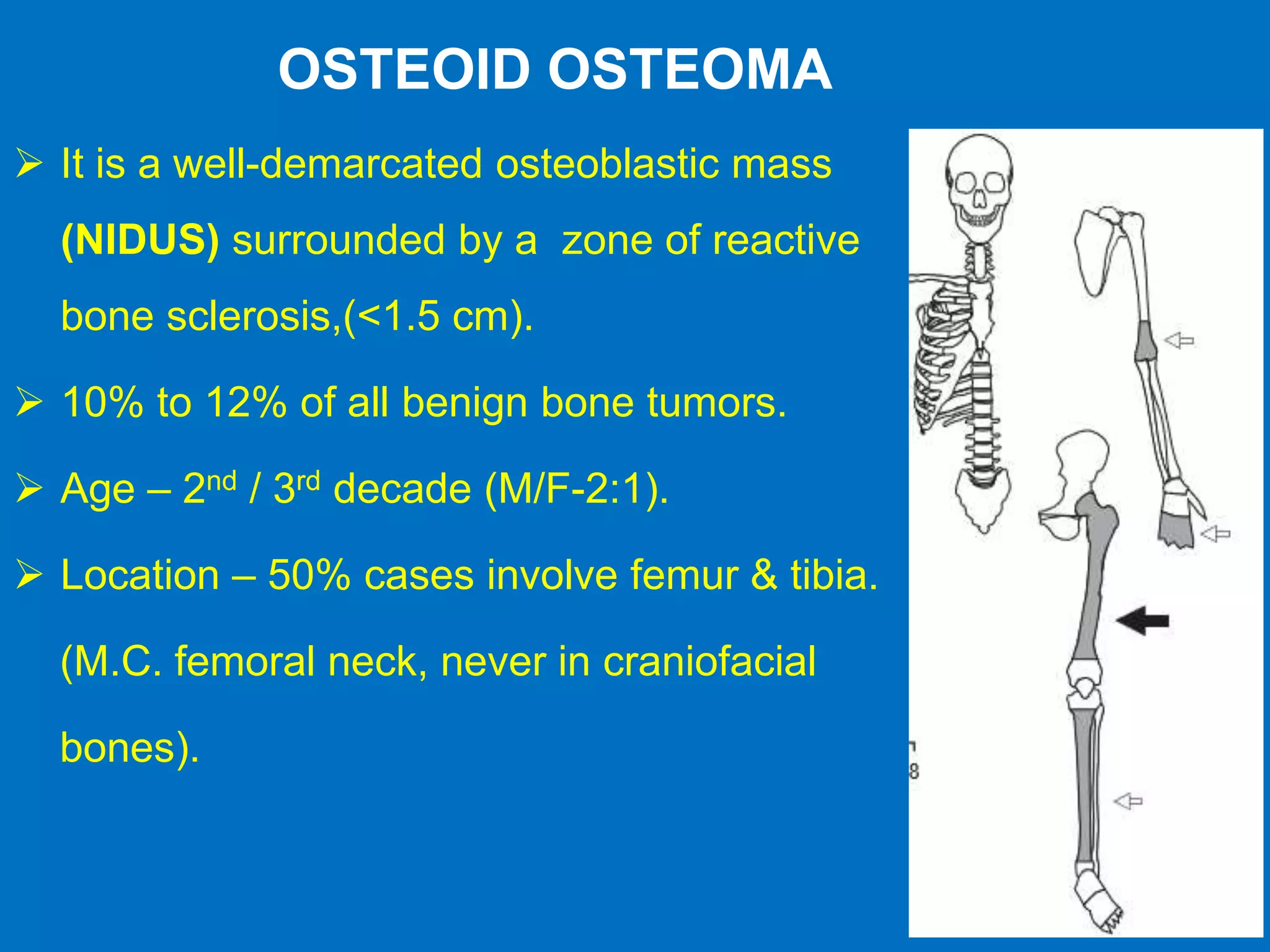
OSTEOID OSTEOMA
 It is a well-demarcated osteoblastic mass
(NIDUS) surrounded by a zone of reactive
bone sclerosis,(<1.5 cm).
 10% to 12% of all benign bone tumors.
 Age – 2nd / 3rd decade (M/F-2:1).
 Location – 50% cases involve femur & tibia.
(M.C. femoral neck, never in craniofacial
bones).
 Pain is worst at night and relieved by aspirin or NSAIDS.
 Swelling , stiffness if joints involved.
 Painful Scoliosis, if vertebra is involved.
 Significant length discrepancy in young patients with open
growth plates may produce.
 PG-E2, PROSTACYCLIN & COX-2.
CLINICAL FEATURES:
DIAGNOSIS:
Radiograph :- A well-demarcated
lytic lesion (nidus) surrounded by a
distinct zone of sclerosis.
CT :- Shows cortically based nidus
surrounded by sclerosis more clearly.
MRI:- Demonstrate extensive
surrounding edema.
Bone scan:- Increased uptake on
Tc99 bone scans.
Microscopy:-
 Immature bony trabeculae that are rimmed by prominent
osteoblasts.
 It is similar to osteoblastoma with the exception that
osteoblastomas are larger.
 No nuclear atypia or aggressive features.
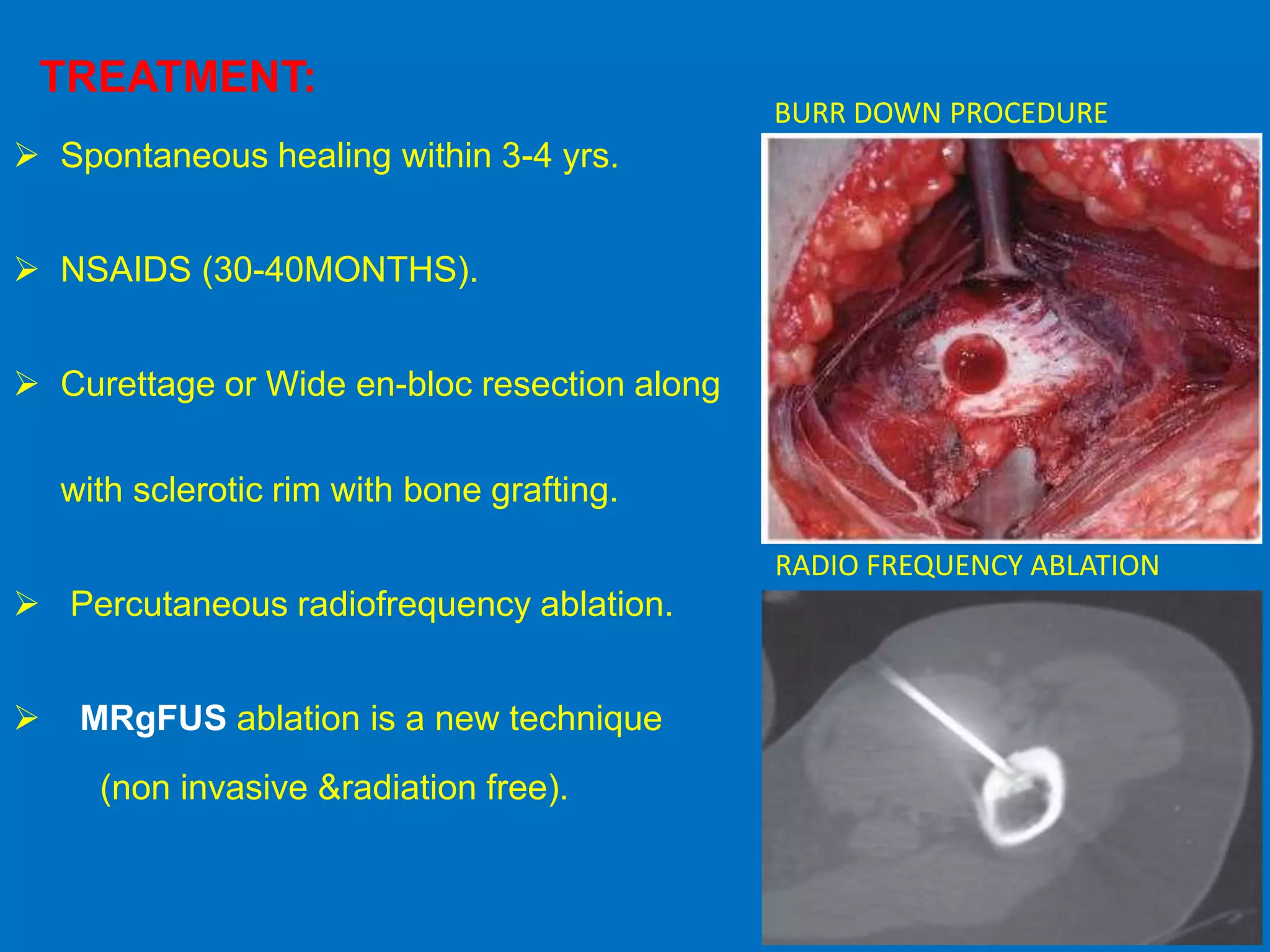
TREATMENT:
 Spontaneous healing within 3-4 yrs.
 NSAIDS (30-40MONTHS).
 Curettage or Wide en-bloc resection along
with sclerotic rim with bone grafting.
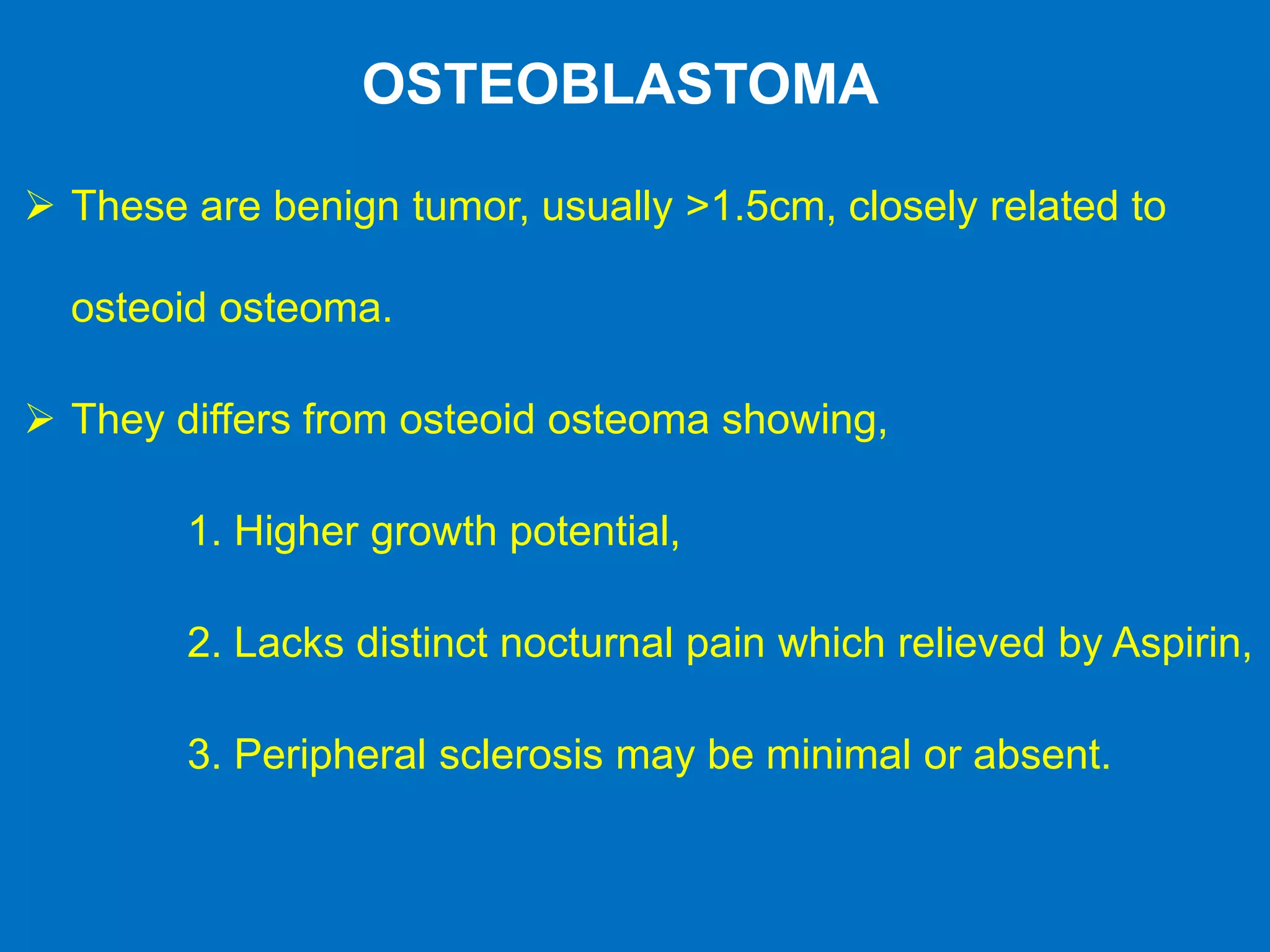
 Percutaneous radiofrequency ablation.
 MRgFUS ablation is a new technique
(non invasive &radiation free).
BURR DOWN PROCEDURE
RADIO FREQUENCY ABLATION
OSTEOBLASTOMA
 These are benign tumor, usually >1.5cm, closely related to
osteoid osteoma.
 They differs from osteoid osteoma showing,
1. Higher growth potential,
2. Lacks distinct nocturnal pain which relieved by Aspirin,
3. Peripheral sclerosis may be minimal or absent.
 Age: 5-45 yrs (2nd & 3rd decade).
 M:F is 2:1.
 Incidence : <1% of all primary bone tumor.
 M.C location -Axial skeleton(>40%).
 2nd M.C - jaw bone craniofacial bones
 Osteoblastomas:-
1. Benign osteoblastomas(1.5-4cm),
2. Aggressive osteoblastomas(>4cm).
[CEMENTOBLASTOMA]
 Dull, aching, nocturnal pain not relieved by aspirin.
 Posterior elements of spine are M.C. involved.
 In spine-neurologic deficit & painful scoliosis.
 If Thoracic spine involved- cord compression is M.C.
 Slow growing tumor Symptoms may be present for 1 to 2 years
before the diagnosis is made.
CLINICAL FEATURES:
DIAGNOSIS:
Radiography:-
 More often, features are similar to
osteoid osteoma.
 Shows a round or oval, well-
demarcated metaphyseal lytic
defect surrounded by a zone of
reactive sclerosis. PEDICLE
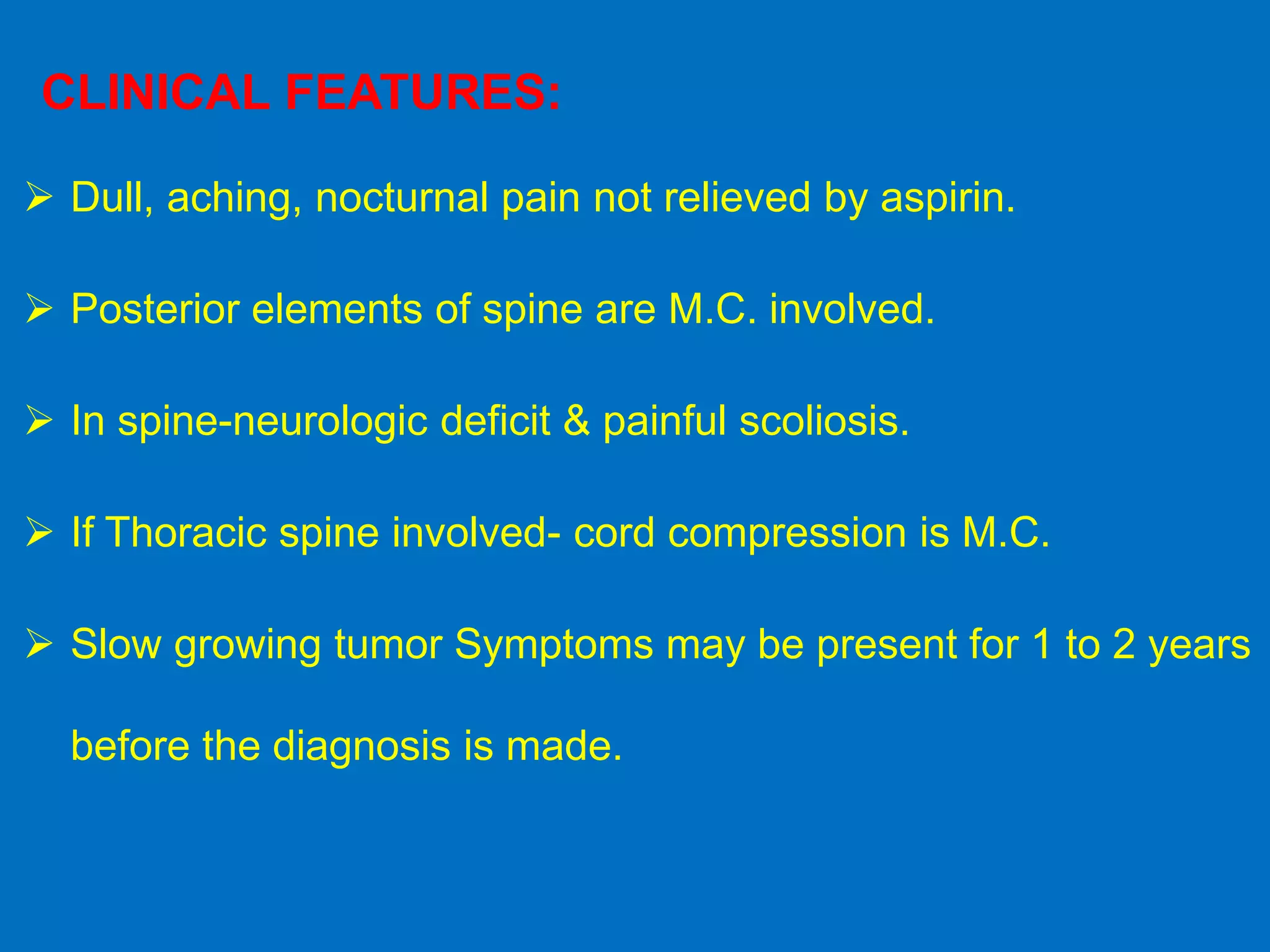
CT:- Helps in better localization of
lesion.
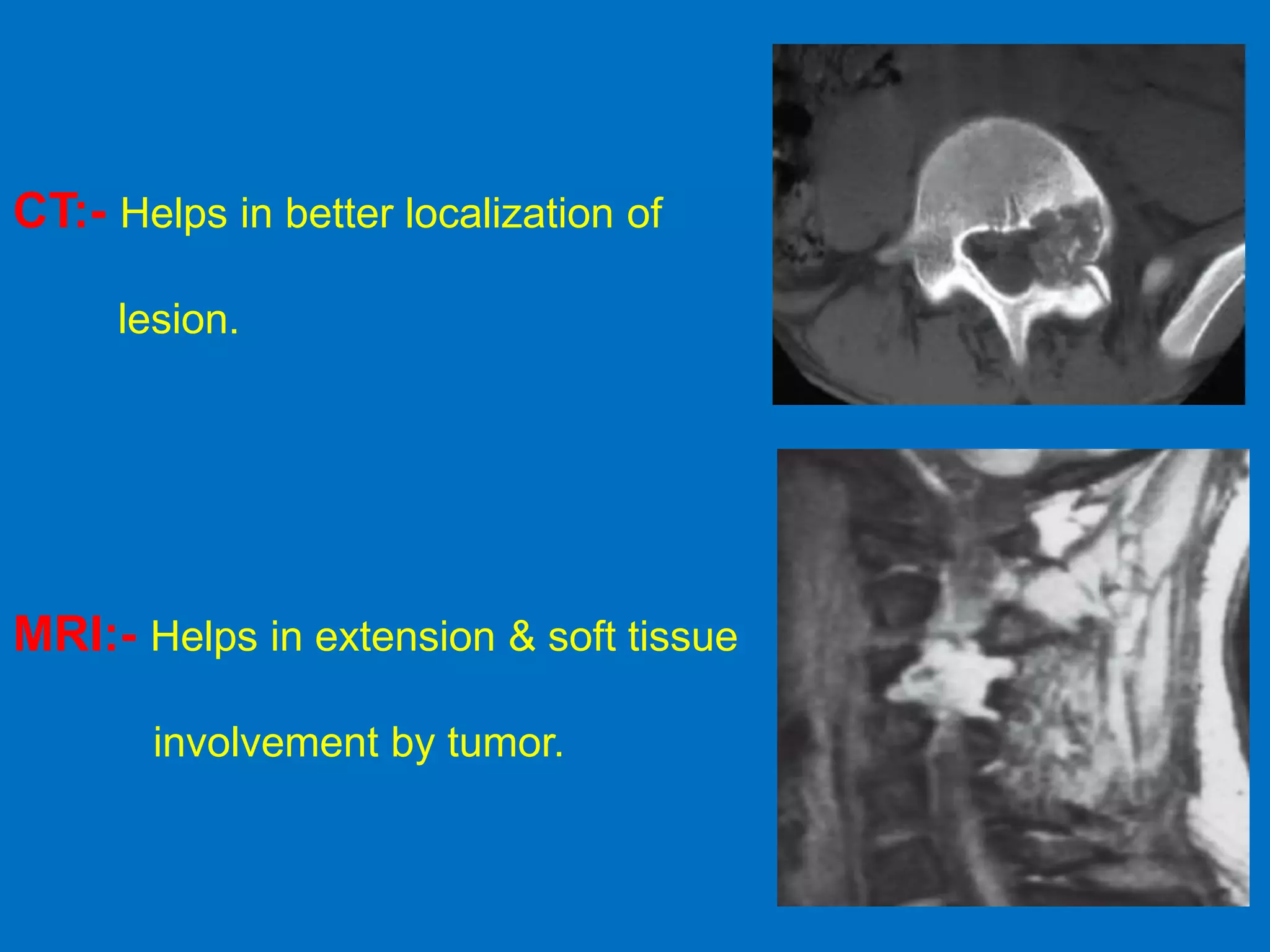
MRI:- Helps in extension & soft tissue
involvement by tumor.
Microscopy:-
 Tumor is composed of woven bone spicules which are
arranged haphazardly.
 Prominent rimming osteoblasts and multinucleated
osteoclast-like giant cells are present.
 Rich vascularity.
 Osteoblast may have mitosis but not atypical.
 Secondary ABC like changes may be seen.
TREATMENT:
 Extended curettage.
 Wide resection, +/- bone grafting.
 In spine , instrumentation may be required for stability.
 Adjuvant radiation can be tried in spinal lesions.
 Sarcomatous degeneration is seen if treated previously with
radiation.
 These are benign, slow-growing, dysplastic, sclerotic bony
lesions. They are divided into :
(1) Calvarial and mandibular ivory exostoses.
(2) Sino-orbital osteomas.
(3) Surface (juxta-cortical) osteomas of long bones.
(4) Enostoses or Bone islands.
 Age group - Adolescents
OSTEOMAS
CINICOPATHOLOGICAL VARIENTS OF OSTEOMAS:
CLINICAL FEATURES:
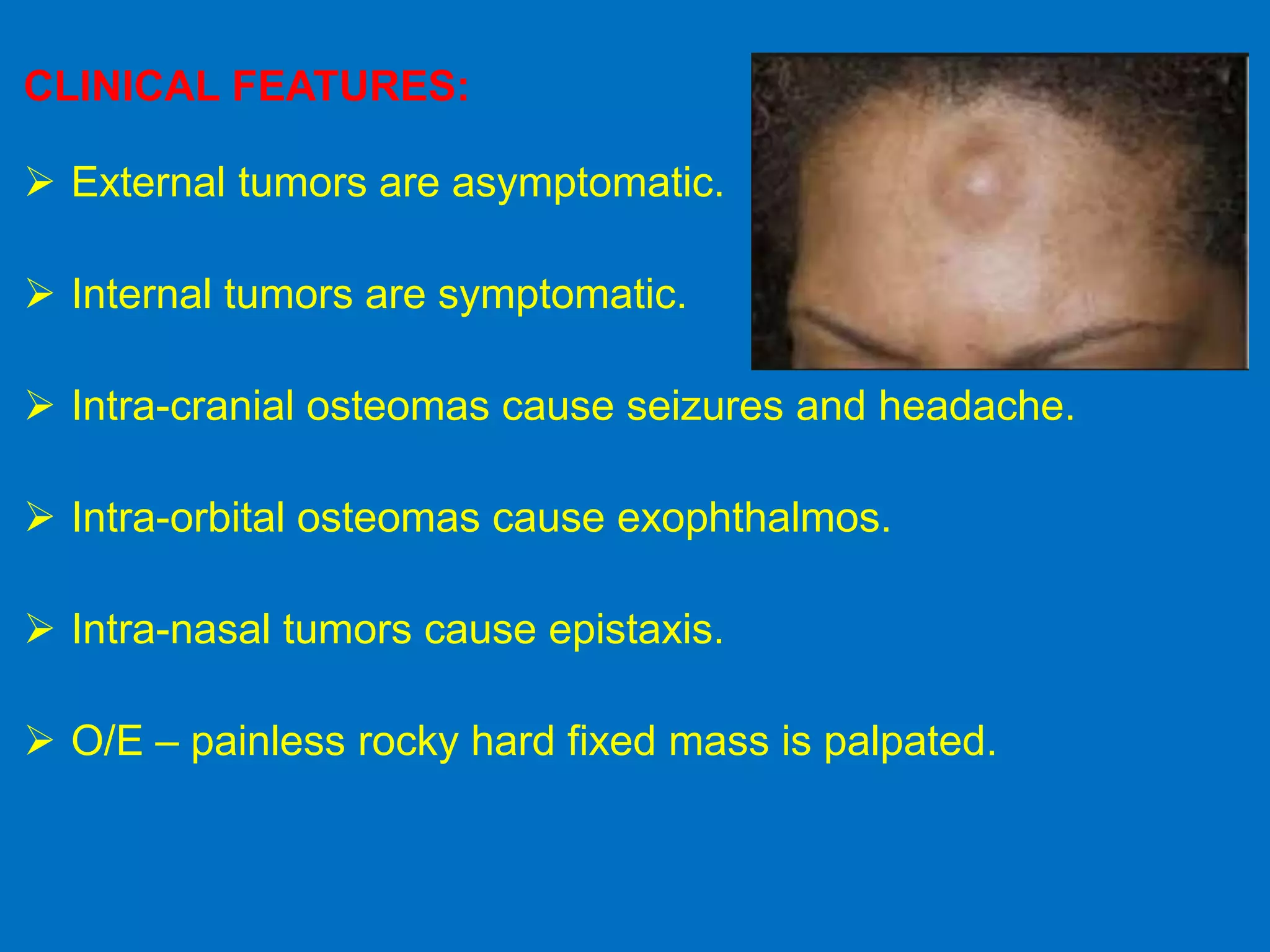
 External tumors are asymptomatic.
 Internal tumors are symptomatic.
 Intra-cranial osteomas cause seizures and headache.
 Intra-orbital osteomas cause exophthalmos.
 Intra-nasal tumors cause epistaxis.
 O/E – painless rocky hard fixed mass is palpated.
IVORY EXOSTOSIS
(PAROSTEAL
OSTEOMA) OF SKULL
SINOORBITAL OSTEOMA SURFACE OSTEOMA
OF FIBULA
(No cartilage cap)
DIAGNOSIS
Radiography:-
Microscopy:-
 Shows dense compact bone with prominent haversian
systems covered by a fibrous tissue capsule continuous with
periosteum.
TREATMENT:
 Once the osteoma reaches a certain size, it remains stationary.
 It does not undergo malignant change.
 Excision is indicated for diagnostic or cosmetic or symptomatic
cases.
BONE ISLAND (ENOSTOSIS)
 Dense foci of compact bone within cancellous bone.
 Measure from 0.1 to 2.0 cm.
 Any bone can be involved ,(M.C. Pelvis & Femur).
 OSTEOPOIKILOSIS (Spotted Bone Disease ) multiple bony
islands through out the skeleton.
 C/F:- Asymptomatic usually and found incidentally.
DIAGNOSIS:
Radiograph :-
 They are dense ovoid, with the long axis parallel to the
cortex of the affected bone.
 The characteristic feature :Presence of radiating spicules or
pseudopodia at the periphery.
Bone scan :- Mildly increased uptake.
CT :- Dense bone with
thickened trabeculae that
merge with surrounding bone.
MRI :- Well defined dark lesions on
both T1 & T2 images.
Histology:- Thickened trabeculae
that merge with normal bone.
No sclerotic rim.
TREATMENT:-
 Observation.
 If patient experiences pain or if lesion grows,
biopsy is indicated to rule out aggressive lesions (sclerosing
osteosarcoma, blastic metastasis or sclerotic myeloma).
 Defined as a malignant tumor of bone in which malignant
mesenchymal tumor cells produce osteoid or immature bone.
 M.C non hematological primary malignancy of bone(20%).
 2nd M.C. primary malignant bone tumor.
OSTEOSARCOMA
 Bimodal distribution (M.C.2nd decade &>50yrs).
 The sex ratio1.3 : 1 to 1.6 : 1 (M>F).
 50%cases are located in the knee region.
 The distal femoral>proximal tibia>proximal
humerus.
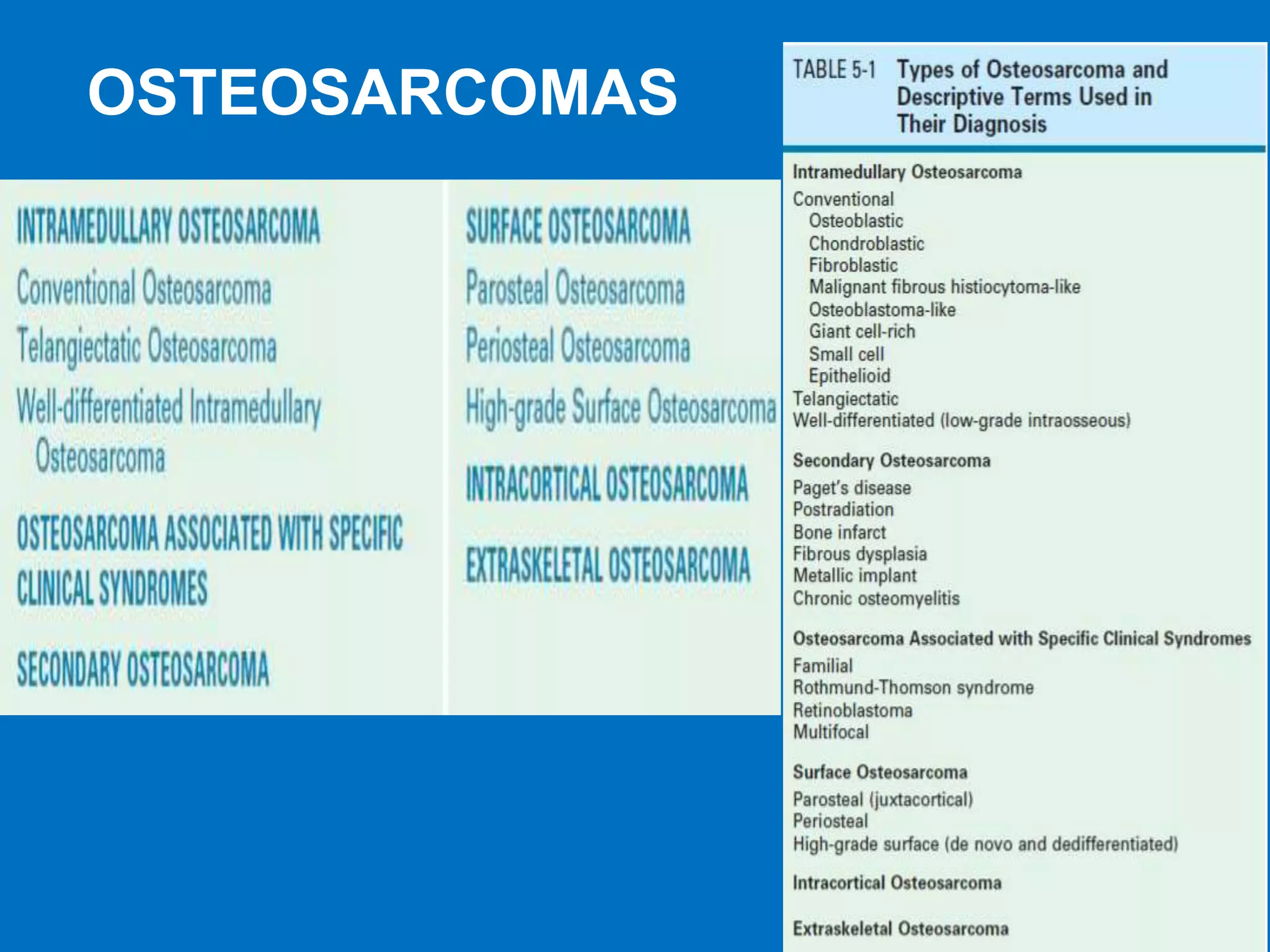
OSTEOSARCOMAS
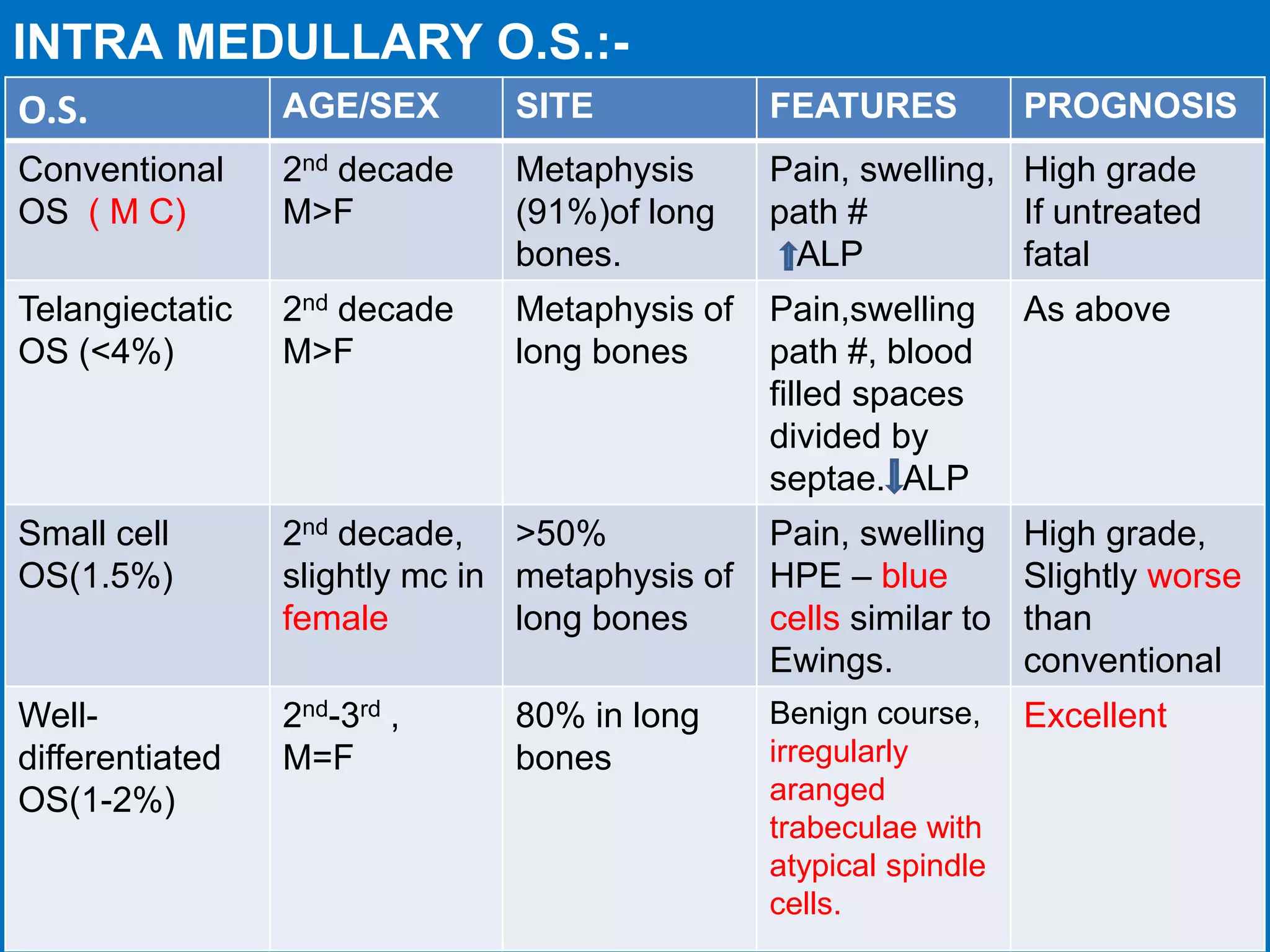
O.S. AGE/SEX SITE FEATURES PROGNOSIS
Conventional
OS ( M C)
2nd decade
M>F
Metaphysis
(91%)of long
bones.
Pain, swelling,
path #
ALP
High grade
If untreated
fatal
Telangiectatic
OS (<4%)
2nd decade
M>F
Metaphysis of
long bones
Pain,swelling
path #, blood
filled spaces
divided by
septae. ALP
As above
Small cell
OS(1.5%)
2nd decade,
slightly mc in
female
>50%
metaphysis of
long bones
Pain, swelling
HPE – blue
cells similar to
Ewings.
High grade,
Slightly worse
than
conventional
Well-
differentiated
OS(1-2%)
2nd-3rd ,
M=F
80% in long
bones
Benign course,
irregularly
aranged
trabeculae with
atypical spindle
cells.
Excellent
INTRA MEDULLARY O.S.:-
AGE/SEX SITE C/F PROGNOSIS
Periosteal
OS,<2%
2nd decade
M>F
Dia-meta
region of long
bones.
tibia>femur
Painless
swelling
initially, later
pain. spindle
cells radiating
b/w lobules of
cartilage
Intermediate
grade,
Excellent.
Parosteal OS.
(3%)
3rd &4th
decade,
F>M.
Long bones Lobulated
ossified mass in
posterior aspect
of distal femur.
Excellent.
High grade
surface OS
(least
common)
2nd decade
M>F
Long bones Mass &/or pain
highly invasive,
associated with
medullary
involvement
Depend upon
response to
chemotherapy
SURFACE OSTEOSARCOMAS:-
AGE/SEX SITE C/F PROGNOSIS
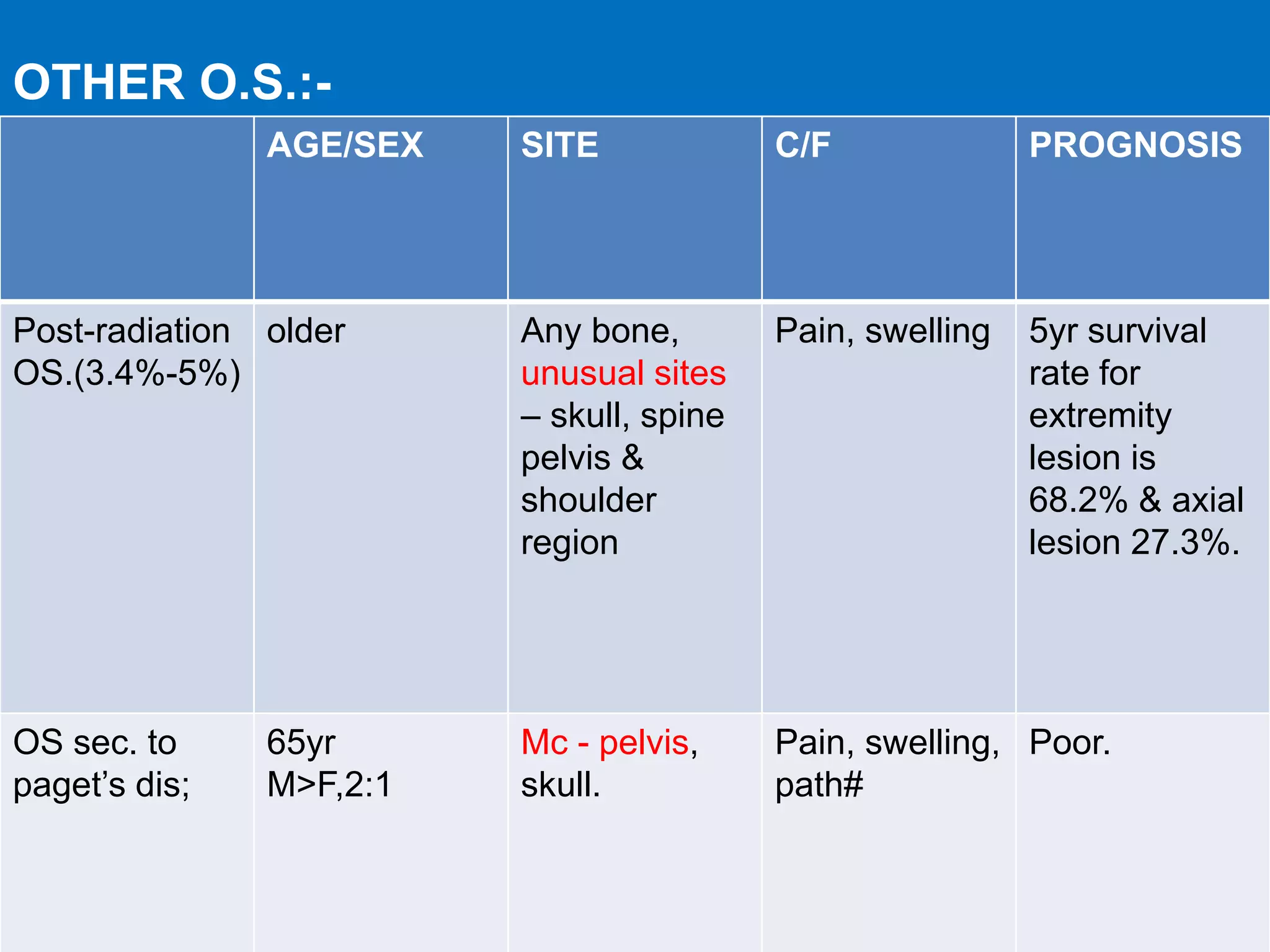
Post-radiation
OS.(3.4%-5%)
older Any bone,
unusual sites
– skull, spine
pelvis &
shoulder
region
Pain, swelling 5yr survival
rate for
extremity
lesion is
68.2% & axial
lesion 27.3%.
OS sec. to
paget’s dis;
65yr
M>F,2:1
Mc - pelvis,
skull.
Pain, swelling,
path#
Poor.
OTHER O.S.:-
DIAGNOSIS:
 Radiographically, lesions
can be predominantly lytic or
sclerotic, but usually mixed
features.
 Associated cortical destruction
with soft tissue extension
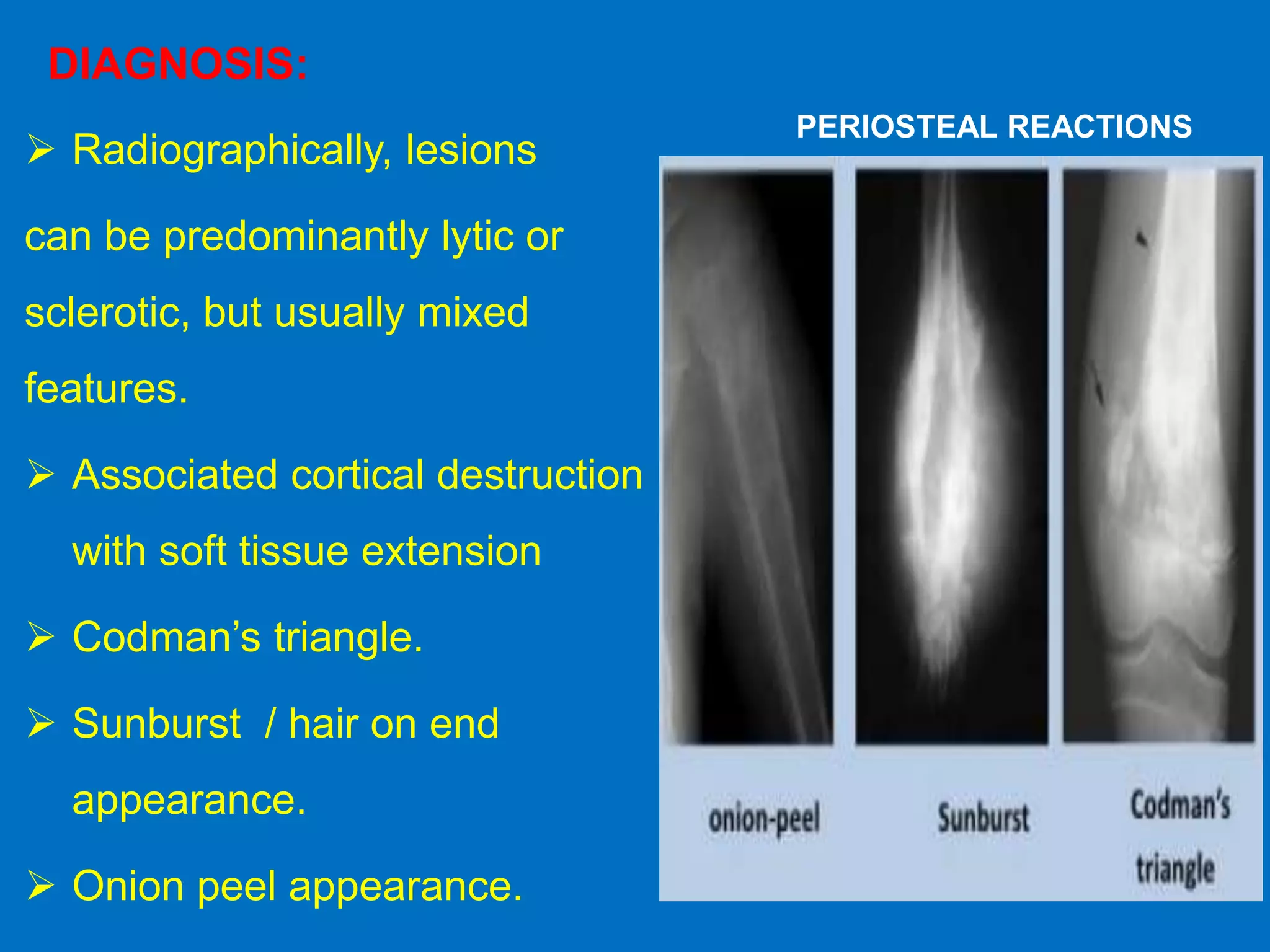
 Codman’s triangle.
 Sunburst / hair on end
appearance.
 Onion peel appearance.
PERIOSTEAL REACTIONS
MRI:-
 Soft tissue extension.
 Intramedullary spread.
 Neurovascular involvement.
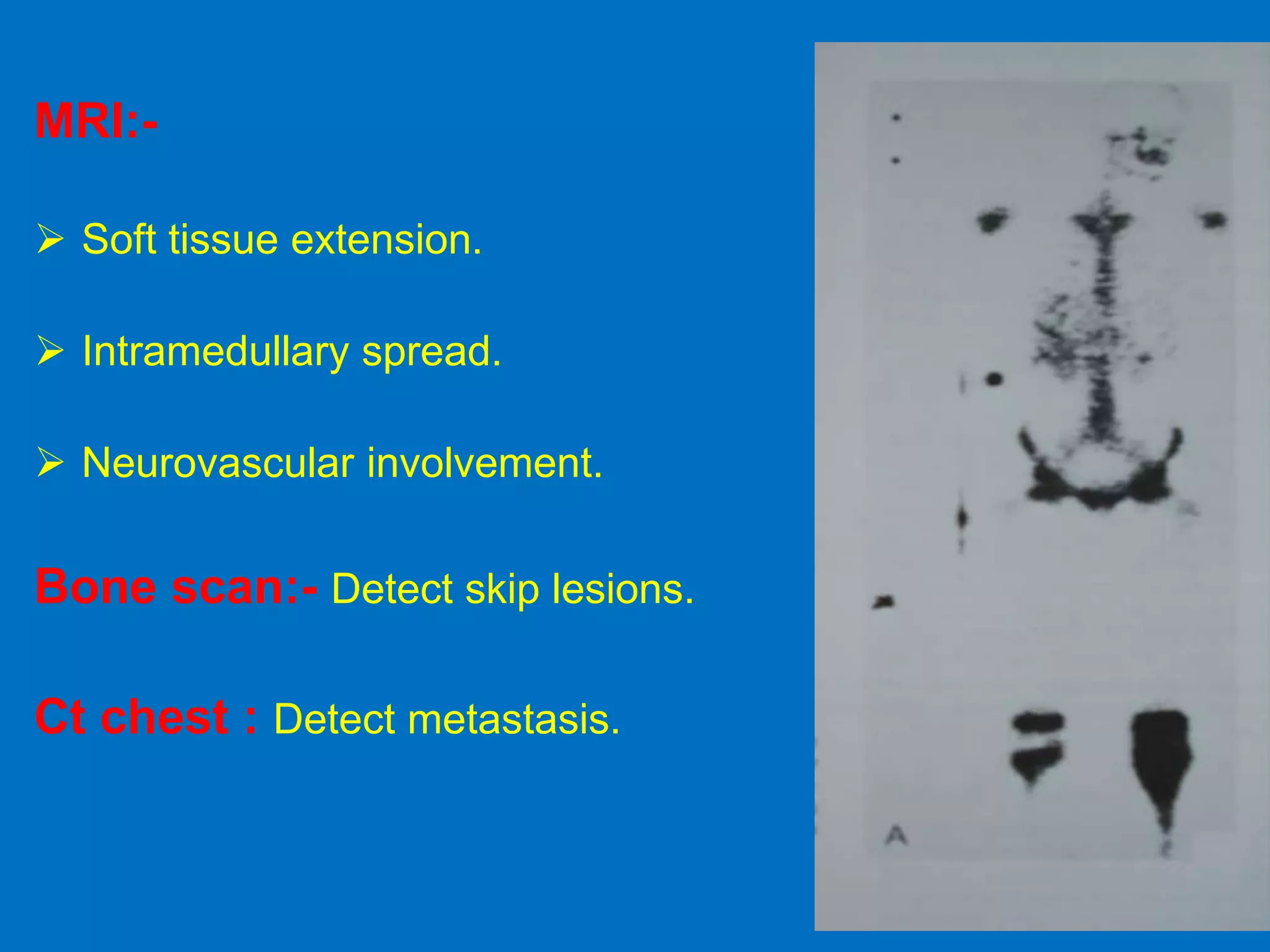
Bone scan:- Detect skip lesions.
Ct chest : Detect metastasis.
ENNEKING STAGING:
TREATMENT:
HIGH GRADE LESIONS:-
Neoadjuvant chemotherapy (x 2-3months)
Limb-sparing surgery
Adjuvant chemotherapy (x 6-12 months)
LOW GRADE LESIONS:-
Can be treated with wide resection / amputation with or
without chemotherapy.
CHEMOTHERAPY :-
Given as single drug or multiple drug regimen in two forms.
 Neo adjuvant chemotherapy:
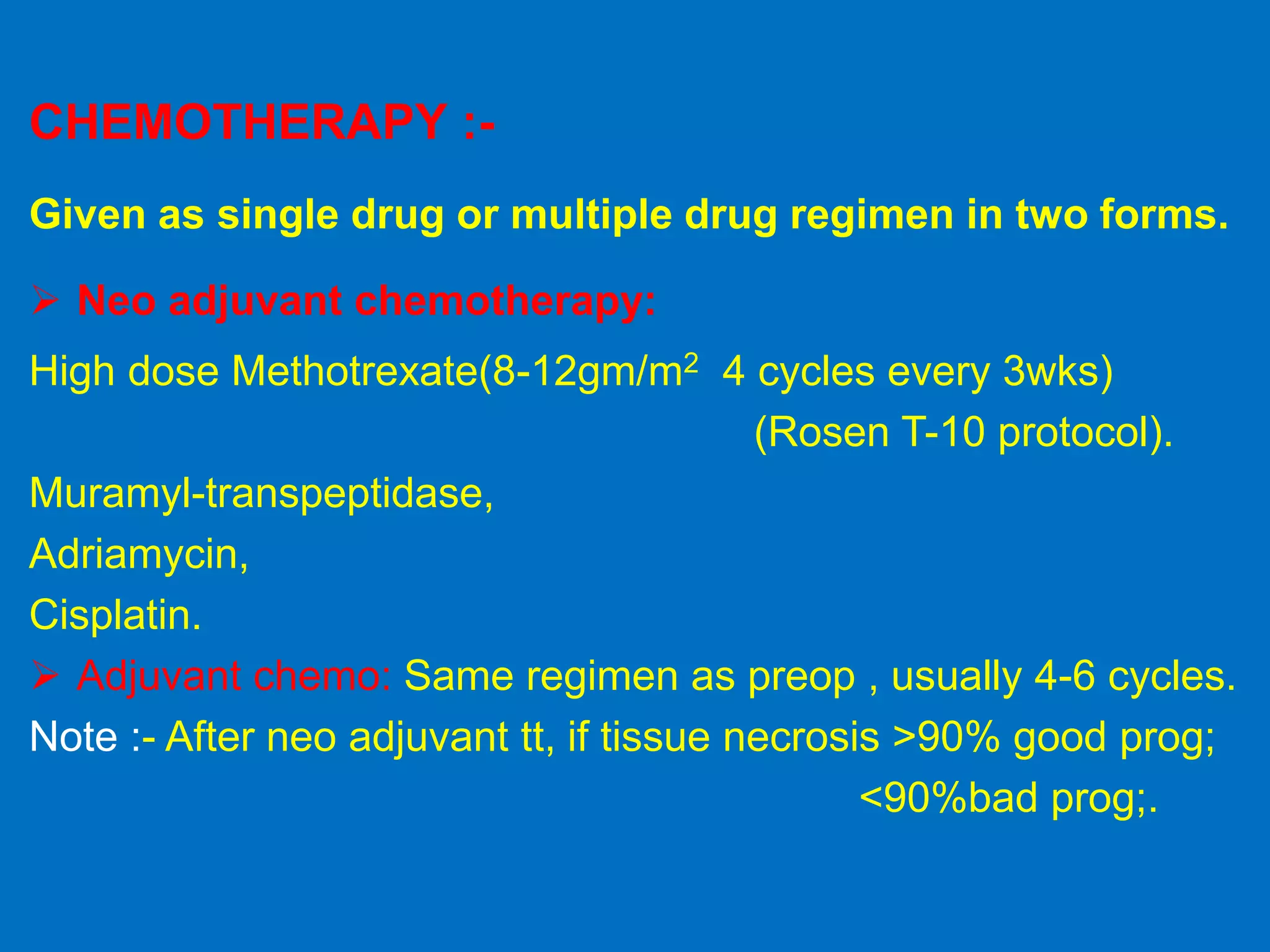
High dose Methotrexate(8-12gm/m2 4 cycles every 3wks)
(Rosen T-10 protocol).
Muramyl-transpeptidase,
Adriamycin,
Cisplatin.
 Adjuvant chemo: Same regimen as preop , usually 4-6 cycles.
Note :- After neo adjuvant tt, if tissue necrosis >90% good prog;
<90%bad prog;.
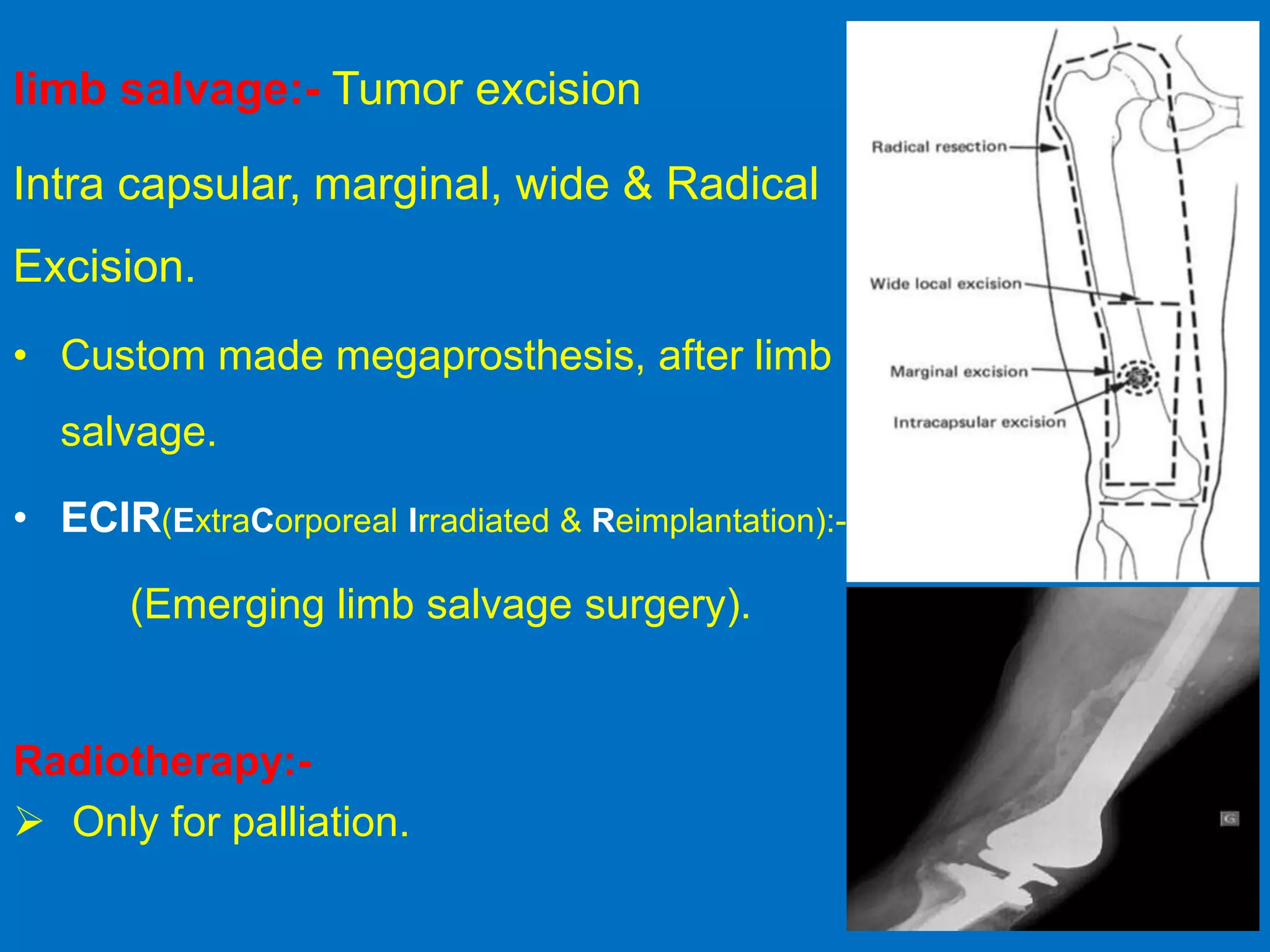
limb salvage:- Tumor excision
Intra capsular, marginal, wide & Radical
Excision.
• Custom made megaprosthesis, after limb
salvage.
• ECIR(ExtraCorporeal Irradiated & Reimplantation):-
(Emerging limb salvage surgery).
Radiotherapy:-
 Only for palliation.
PROGNOSIS:
 Depends upon
Extent of disease at the time of diagnosis:-
Patients with pulmonary metastases and skip
metastases have poor prognosis.
Grade of the lesion:-
High grade – poor prognosis .
Low grade – good prognosis .
Size:- Large tumor- worse prognosis.
Skeletal location :- More proximal tumors have worse
prognosis since they are larger at the time of diagnosis.
REFERENCES :
1. DORFMAN & CZERNIAK’S BONE TUMORS 2ND EDI;
2. CAMPBELL’S 13TH EDI;
3. APLEY’S 9TH EDI;
4. PUBMED;
THANK YOU…

Tumors of osseous origin

  • 1.
    INTRODUCTION,SYMPTOMS,SIGNS, MANAGEMENT AND COMPLICATIONS OFOSSEOUS BONE TUMORS. DR. MEERAVALI SHAIK 2ND YR PG ASRAM , ELURU,AP.
  • 2.
    INTRODUCTION  Bone tumorsmay be chondrogenic, osteogenic, fibrogenic, vascular, myelogenic and other mesenchymal derivatives.  Bone tumors forming osteoid matrix are known as osseous bone tumors.  They are divided into Benign & Malignant.
  • 3.
    BENIGN MALIGNANT 1. OSTEOIDOSTEOMA. 2. OSTEOBLASTOMA. A. BENIGN, B. AGGRESSIVE. 3. OSTEOMA. 4. BONE ISLAND (ENOSTOSIS). 1. OSTEOSARCOMA (O.S). A. INTRAMEDULARY O.S (CONVENTIONAL,TELANGIECTATIC & WELL DIFFERENTIATED) B. INTRACORTICAL O.S C. SURFACE O.S (PERI;PRA;&HIGHGRADE) D. SECONDARY O.S E. EXTRA SKELETAL O.S. F. O.S ASSO; WITH SYNDROMES. OSSEOUS BONE TUMORS
  • 4.
  • 5.
    OSTEOID OSTEOMA  Itis a well-demarcated osteoblastic mass (NIDUS) surrounded by a zone of reactive bone sclerosis,(<1.5 cm).  10% to 12% of all benign bone tumors.  Age – 2nd / 3rd decade (M/F-2:1).  Location – 50% cases involve femur & tibia. (M.C. femoral neck, never in craniofacial bones).
  • 6.
     Pain isworst at night and relieved by aspirin or NSAIDS.  Swelling , stiffness if joints involved.  Painful Scoliosis, if vertebra is involved.  Significant length discrepancy in young patients with open growth plates may produce.  PG-E2, PROSTACYCLIN & COX-2. CLINICAL FEATURES:
  • 7.
    DIAGNOSIS: Radiograph :- Awell-demarcated lytic lesion (nidus) surrounded by a distinct zone of sclerosis. CT :- Shows cortically based nidus surrounded by sclerosis more clearly. MRI:- Demonstrate extensive surrounding edema. Bone scan:- Increased uptake on Tc99 bone scans.
  • 8.
    Microscopy:-  Immature bonytrabeculae that are rimmed by prominent osteoblasts.  It is similar to osteoblastoma with the exception that osteoblastomas are larger.  No nuclear atypia or aggressive features.
  • 9.
    TREATMENT:  Spontaneous healingwithin 3-4 yrs.  NSAIDS (30-40MONTHS).  Curettage or Wide en-bloc resection along with sclerotic rim with bone grafting.  Percutaneous radiofrequency ablation.  MRgFUS ablation is a new technique (non invasive &radiation free). BURR DOWN PROCEDURE RADIO FREQUENCY ABLATION
  • 10.
    OSTEOBLASTOMA  These arebenign tumor, usually >1.5cm, closely related to osteoid osteoma.  They differs from osteoid osteoma showing, 1. Higher growth potential, 2. Lacks distinct nocturnal pain which relieved by Aspirin, 3. Peripheral sclerosis may be minimal or absent.
  • 11.
     Age: 5-45yrs (2nd & 3rd decade).  M:F is 2:1.  Incidence : <1% of all primary bone tumor.  M.C location -Axial skeleton(>40%).  2nd M.C - jaw bone craniofacial bones  Osteoblastomas:- 1. Benign osteoblastomas(1.5-4cm), 2. Aggressive osteoblastomas(>4cm). [CEMENTOBLASTOMA]
  • 12.
     Dull, aching,nocturnal pain not relieved by aspirin.  Posterior elements of spine are M.C. involved.  In spine-neurologic deficit & painful scoliosis.  If Thoracic spine involved- cord compression is M.C.  Slow growing tumor Symptoms may be present for 1 to 2 years before the diagnosis is made. CLINICAL FEATURES:
  • 13.
    DIAGNOSIS: Radiography:-  More often,features are similar to osteoid osteoma.  Shows a round or oval, well- demarcated metaphyseal lytic defect surrounded by a zone of reactive sclerosis. PEDICLE
  • 14.
    CT:- Helps inbetter localization of lesion. MRI:- Helps in extension & soft tissue involvement by tumor.
  • 15.
    Microscopy:-  Tumor iscomposed of woven bone spicules which are arranged haphazardly.  Prominent rimming osteoblasts and multinucleated osteoclast-like giant cells are present.  Rich vascularity.  Osteoblast may have mitosis but not atypical.  Secondary ABC like changes may be seen.
  • 16.
    TREATMENT:  Extended curettage. Wide resection, +/- bone grafting.  In spine , instrumentation may be required for stability.  Adjuvant radiation can be tried in spinal lesions.  Sarcomatous degeneration is seen if treated previously with radiation.
  • 17.
     These arebenign, slow-growing, dysplastic, sclerotic bony lesions. They are divided into : (1) Calvarial and mandibular ivory exostoses. (2) Sino-orbital osteomas. (3) Surface (juxta-cortical) osteomas of long bones. (4) Enostoses or Bone islands.  Age group - Adolescents OSTEOMAS
  • 18.
  • 19.
    CLINICAL FEATURES:  Externaltumors are asymptomatic.  Internal tumors are symptomatic.  Intra-cranial osteomas cause seizures and headache.  Intra-orbital osteomas cause exophthalmos.  Intra-nasal tumors cause epistaxis.  O/E – painless rocky hard fixed mass is palpated.
  • 20.
    IVORY EXOSTOSIS (PAROSTEAL OSTEOMA) OFSKULL SINOORBITAL OSTEOMA SURFACE OSTEOMA OF FIBULA (No cartilage cap) DIAGNOSIS Radiography:-
  • 21.
    Microscopy:-  Shows densecompact bone with prominent haversian systems covered by a fibrous tissue capsule continuous with periosteum.
  • 22.
    TREATMENT:  Once theosteoma reaches a certain size, it remains stationary.  It does not undergo malignant change.  Excision is indicated for diagnostic or cosmetic or symptomatic cases.
  • 23.
    BONE ISLAND (ENOSTOSIS) Dense foci of compact bone within cancellous bone.  Measure from 0.1 to 2.0 cm.  Any bone can be involved ,(M.C. Pelvis & Femur).  OSTEOPOIKILOSIS (Spotted Bone Disease ) multiple bony islands through out the skeleton.  C/F:- Asymptomatic usually and found incidentally.
  • 24.
    DIAGNOSIS: Radiograph :-  Theyare dense ovoid, with the long axis parallel to the cortex of the affected bone.  The characteristic feature :Presence of radiating spicules or pseudopodia at the periphery. Bone scan :- Mildly increased uptake.
  • 25.
    CT :- Densebone with thickened trabeculae that merge with surrounding bone. MRI :- Well defined dark lesions on both T1 & T2 images. Histology:- Thickened trabeculae that merge with normal bone. No sclerotic rim.
  • 26.
    TREATMENT:-  Observation.  Ifpatient experiences pain or if lesion grows, biopsy is indicated to rule out aggressive lesions (sclerosing osteosarcoma, blastic metastasis or sclerotic myeloma).
  • 27.
     Defined asa malignant tumor of bone in which malignant mesenchymal tumor cells produce osteoid or immature bone.  M.C non hematological primary malignancy of bone(20%).  2nd M.C. primary malignant bone tumor. OSTEOSARCOMA
  • 28.
     Bimodal distribution(M.C.2nd decade &>50yrs).  The sex ratio1.3 : 1 to 1.6 : 1 (M>F).  50%cases are located in the knee region.  The distal femoral>proximal tibia>proximal humerus.
  • 29.
  • 30.
    O.S. AGE/SEX SITEFEATURES PROGNOSIS Conventional OS ( M C) 2nd decade M>F Metaphysis (91%)of long bones. Pain, swelling, path # ALP High grade If untreated fatal Telangiectatic OS (<4%) 2nd decade M>F Metaphysis of long bones Pain,swelling path #, blood filled spaces divided by septae. ALP As above Small cell OS(1.5%) 2nd decade, slightly mc in female >50% metaphysis of long bones Pain, swelling HPE – blue cells similar to Ewings. High grade, Slightly worse than conventional Well- differentiated OS(1-2%) 2nd-3rd , M=F 80% in long bones Benign course, irregularly aranged trabeculae with atypical spindle cells. Excellent INTRA MEDULLARY O.S.:-
  • 31.
    AGE/SEX SITE C/FPROGNOSIS Periosteal OS,<2% 2nd decade M>F Dia-meta region of long bones. tibia>femur Painless swelling initially, later pain. spindle cells radiating b/w lobules of cartilage Intermediate grade, Excellent. Parosteal OS. (3%) 3rd &4th decade, F>M. Long bones Lobulated ossified mass in posterior aspect of distal femur. Excellent. High grade surface OS (least common) 2nd decade M>F Long bones Mass &/or pain highly invasive, associated with medullary involvement Depend upon response to chemotherapy SURFACE OSTEOSARCOMAS:-
  • 33.
    AGE/SEX SITE C/FPROGNOSIS Post-radiation OS.(3.4%-5%) older Any bone, unusual sites – skull, spine pelvis & shoulder region Pain, swelling 5yr survival rate for extremity lesion is 68.2% & axial lesion 27.3%. OS sec. to paget’s dis; 65yr M>F,2:1 Mc - pelvis, skull. Pain, swelling, path# Poor. OTHER O.S.:-
  • 34.
    DIAGNOSIS:  Radiographically, lesions canbe predominantly lytic or sclerotic, but usually mixed features.  Associated cortical destruction with soft tissue extension  Codman’s triangle.  Sunburst / hair on end appearance.  Onion peel appearance. PERIOSTEAL REACTIONS
  • 35.
    MRI:-  Soft tissueextension.  Intramedullary spread.  Neurovascular involvement. Bone scan:- Detect skip lesions. Ct chest : Detect metastasis.
  • 36.
  • 38.
    TREATMENT: HIGH GRADE LESIONS:- Neoadjuvantchemotherapy (x 2-3months) Limb-sparing surgery Adjuvant chemotherapy (x 6-12 months) LOW GRADE LESIONS:- Can be treated with wide resection / amputation with or without chemotherapy.
  • 39.
    CHEMOTHERAPY :- Given assingle drug or multiple drug regimen in two forms.  Neo adjuvant chemotherapy: High dose Methotrexate(8-12gm/m2 4 cycles every 3wks) (Rosen T-10 protocol). Muramyl-transpeptidase, Adriamycin, Cisplatin.  Adjuvant chemo: Same regimen as preop , usually 4-6 cycles. Note :- After neo adjuvant tt, if tissue necrosis >90% good prog; <90%bad prog;.
  • 40.
    limb salvage:- Tumorexcision Intra capsular, marginal, wide & Radical Excision. • Custom made megaprosthesis, after limb salvage. • ECIR(ExtraCorporeal Irradiated & Reimplantation):- (Emerging limb salvage surgery). Radiotherapy:-  Only for palliation.
  • 41.
    PROGNOSIS:  Depends upon Extentof disease at the time of diagnosis:- Patients with pulmonary metastases and skip metastases have poor prognosis. Grade of the lesion:- High grade – poor prognosis . Low grade – good prognosis . Size:- Large tumor- worse prognosis. Skeletal location :- More proximal tumors have worse prognosis since they are larger at the time of diagnosis.
  • 42.
    REFERENCES : 1. DORFMAN& CZERNIAK’S BONE TUMORS 2ND EDI; 2. CAMPBELL’S 13TH EDI; 3. APLEY’S 9TH EDI; 4. PUBMED;
  • 43.