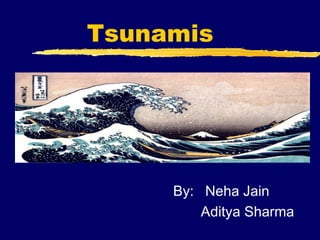
Tsunamis


     By: Neha Jain
         Aditya Sharma
What is a tsunami ?

A tsunami is a very long ocean wave
generated by sudden displacement of the
sea floor or of the oceanic mass


The displacement of an equivalent volume
of water generates the tsunami
Terminology

The term “tsunami” is a Japanese word
meaning “harbour wave”

It was so named because the wave is
harmless until it enters a harbour

It is frequently called a “tidal wave”, but it
has nothing to do with tides
Hazards and risks of tsunamis

 Tsunamis can hit with little or no warning


 The most prone areas are those
 associated with earthquakes and
 volcanoes .
Structure of a wave

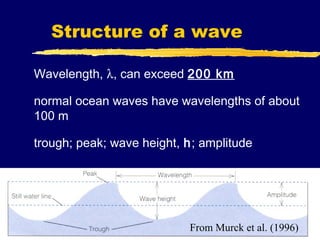
Wavelength, λ, can exceed 200 km

normal ocean waves have wavelengths of about
100 m

trough; peak; wave height, h; amplitude


                           From Murck et al. (1996)
Velocities in deep water

Tsunamis travel very quickly relative to
normal ocean waves

This is particularly the case in open water,
where velocities increase with water depth

Velocities can reach 1,000 km/hr in
open ocean (normal ocean wave: ~90
km/hr)
Shallow water

In shallow water, the tsunami waves pile
up

As a result, velocities and wavelengths
decrease...

…but at the same time, amplitudes can
increase enormously...
Causes of tsunamis - all involve
displacement of water

  Earthquakes

  Volcanic activity

  Landslides

  Meteorite impacts
Tsunami hazards

Extensive flooding

Action of wave on coastal structures, both
natural and built

The incredible force of the waves can
remobilize huge objects

The event may create drawdown
Effects of tsunami drawdown

Release of dissolved gases (CH4, CO2, H2S)
previously contained in shallow sediments

Potential ignition of gases by their rapid
expulsion

As a result, a wave of noxious and burning
gases may engulf people BEFORE the wall of
water arrives
Mitigation efforts
Warning times


Every ~750 km of travel distance is equal
to about 1 hour of warning time

So, as discussed above, there is very little
warning time for tsunami generated by
local sources, compared to those from
distant sources
Response to tsunami

Requires good emergency planning and
preparation…

…an educated and trained public …

…which has access to information…

…so the dissemination of this info needs
to be efficient and reliable
Personal mitigation


Run (don’t walk) to higher ground

Tell your family and friends

Never go to the beach to watch tsunamis

Tsunamis

  • 1.
    Tsunamis By: Neha Jain Aditya Sharma
  • 2.
    What is atsunami ? A tsunami is a very long ocean wave generated by sudden displacement of the sea floor or of the oceanic mass The displacement of an equivalent volume of water generates the tsunami
  • 3.
    Terminology The term “tsunami”is a Japanese word meaning “harbour wave” It was so named because the wave is harmless until it enters a harbour It is frequently called a “tidal wave”, but it has nothing to do with tides
  • 4.
    Hazards and risksof tsunamis Tsunamis can hit with little or no warning The most prone areas are those associated with earthquakes and volcanoes .
  • 5.
    Structure of awave Wavelength, λ, can exceed 200 km normal ocean waves have wavelengths of about 100 m trough; peak; wave height, h; amplitude From Murck et al. (1996)
  • 6.
    Velocities in deepwater Tsunamis travel very quickly relative to normal ocean waves This is particularly the case in open water, where velocities increase with water depth Velocities can reach 1,000 km/hr in open ocean (normal ocean wave: ~90 km/hr)
  • 7.
    Shallow water In shallowwater, the tsunami waves pile up As a result, velocities and wavelengths decrease... …but at the same time, amplitudes can increase enormously...
  • 8.
    Causes of tsunamis- all involve displacement of water Earthquakes Volcanic activity Landslides Meteorite impacts
  • 9.
    Tsunami hazards Extensive flooding Actionof wave on coastal structures, both natural and built The incredible force of the waves can remobilize huge objects The event may create drawdown
  • 10.
    Effects of tsunamidrawdown Release of dissolved gases (CH4, CO2, H2S) previously contained in shallow sediments Potential ignition of gases by their rapid expulsion As a result, a wave of noxious and burning gases may engulf people BEFORE the wall of water arrives
  • 11.
  • 12.
    Warning times Every ~750km of travel distance is equal to about 1 hour of warning time So, as discussed above, there is very little warning time for tsunami generated by local sources, compared to those from distant sources
  • 13.
    Response to tsunami Requiresgood emergency planning and preparation… …an educated and trained public … …which has access to information… …so the dissemination of this info needs to be efficient and reliable
  • 14.
    Personal mitigation Run (don’twalk) to higher ground Tell your family and friends Never go to the beach to watch tsunamis