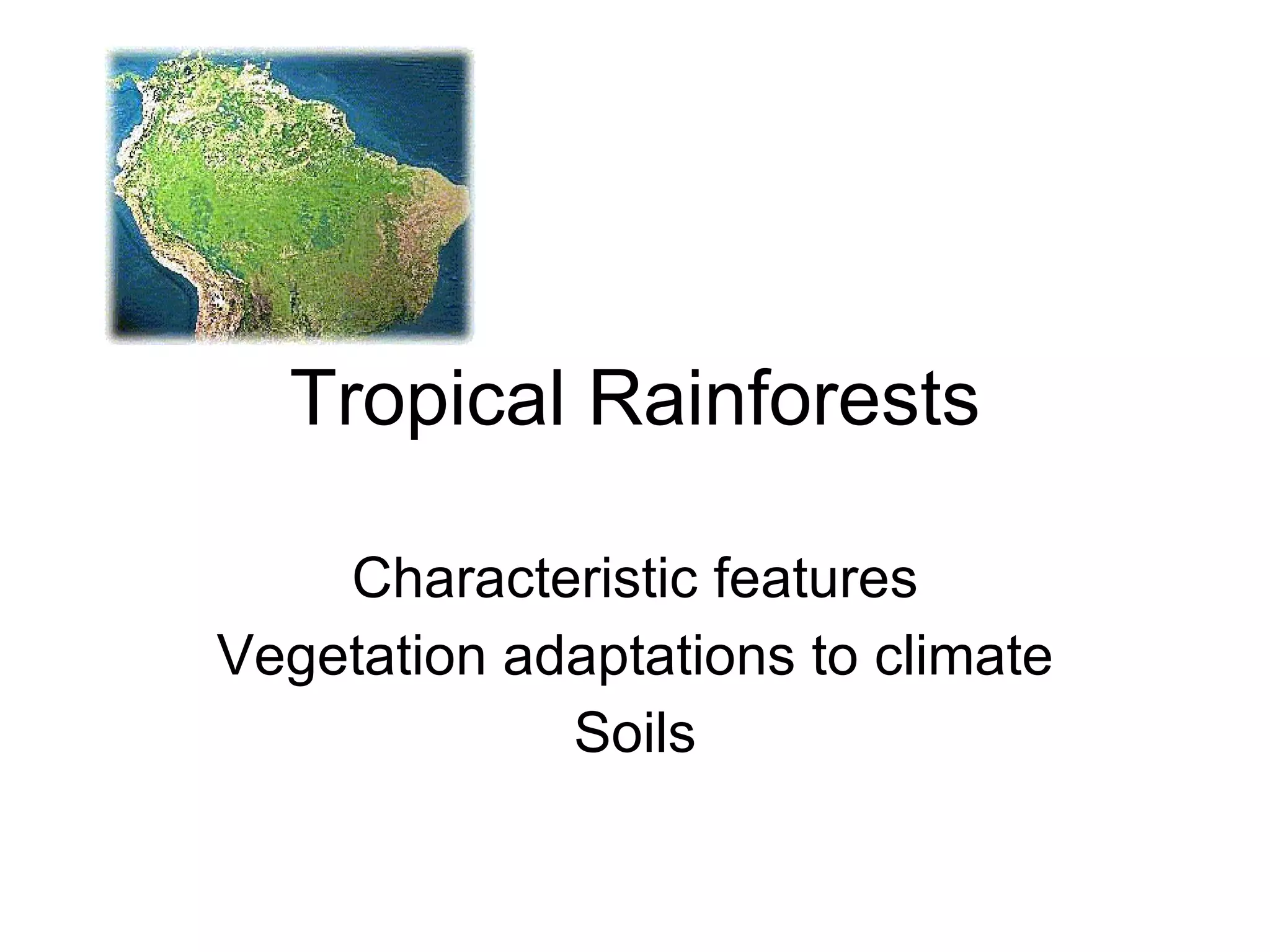
Tropical Rainforests Characteristic features Vegetation adaptations to climate Soils
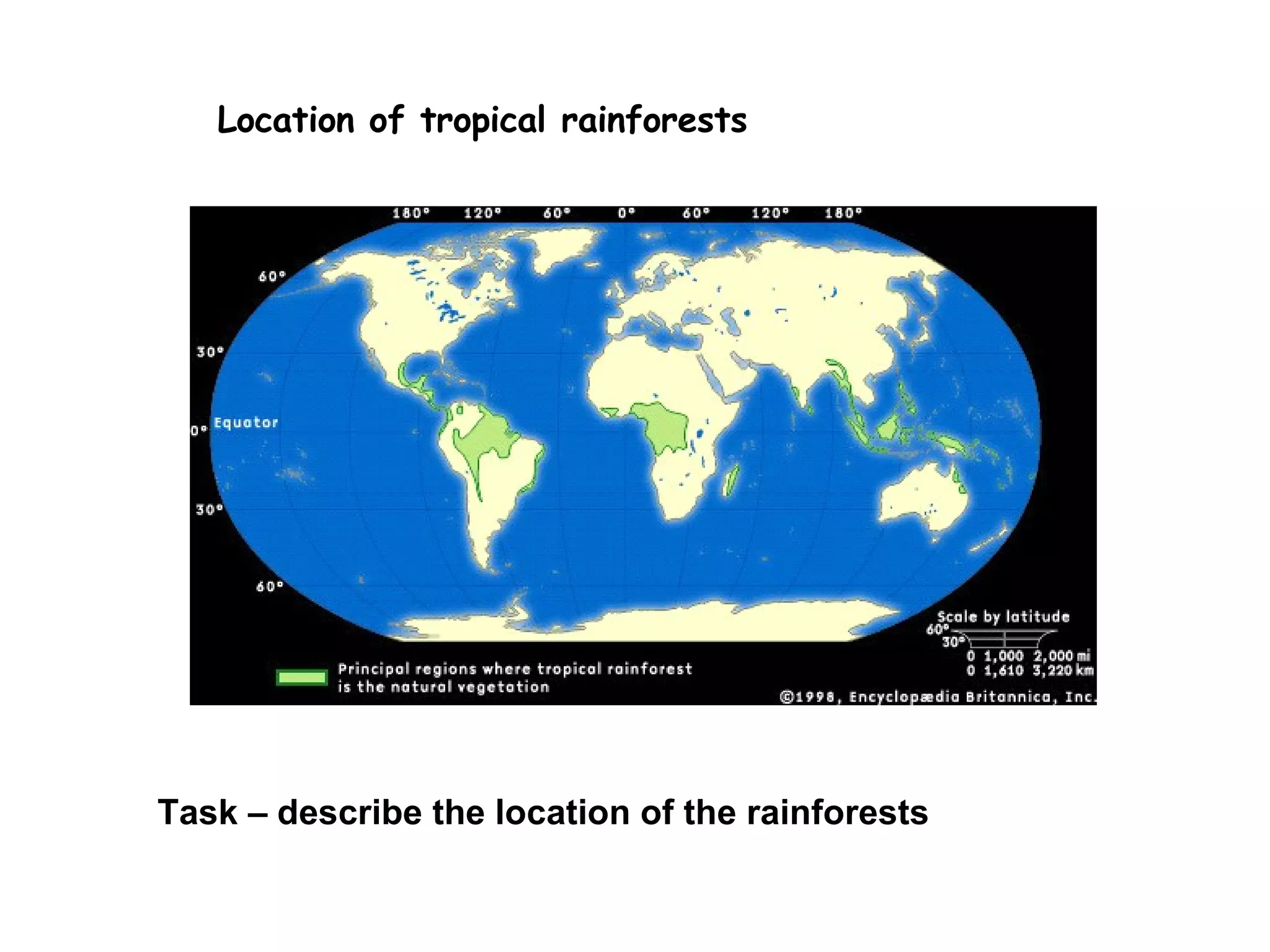
Location of tropical rainforests Task – describe the location of the rainforests
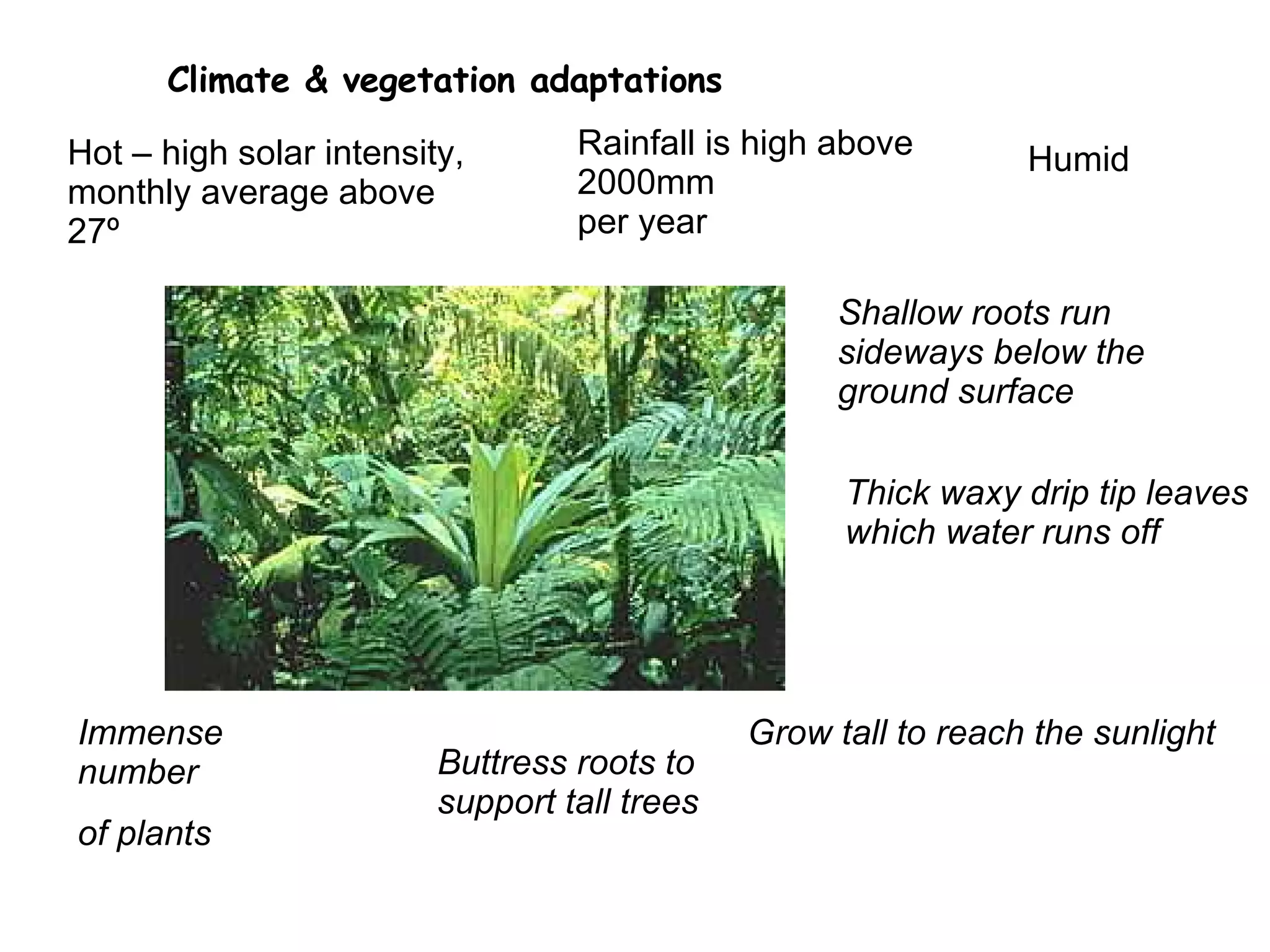
Thick waxy drip tip leaves  which water runs off Buttress roots to  support tall trees Grow tall to reach the sunlight Hot – high solar intensity, monthly average above 27 º Rainfall is high above 2000mm  per year Climate & vegetation adaptations Immense number  of plants Shallow roots run sideways below the ground surface Humid
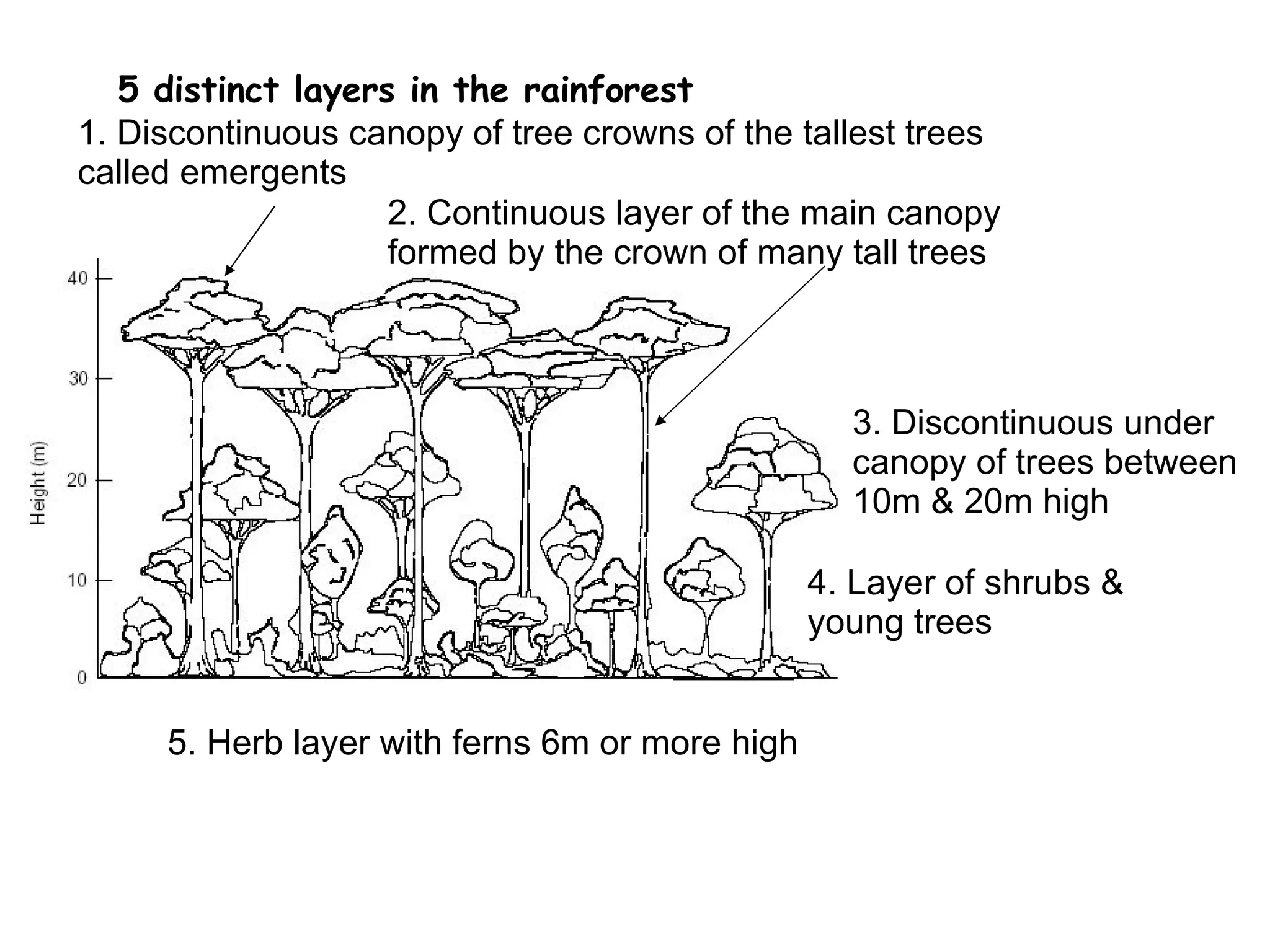
5. Herb layer with ferns 6m or more high 1. Discontinuous canopy of tree crowns of the tallest trees called emergents 2. Continuous layer of the main canopy formed by the crown of many tall trees 5 distinct layers in the rainforest 3. Discontinuous under canopy of trees between 10m & 20m high 4. Layer of shrubs & young trees
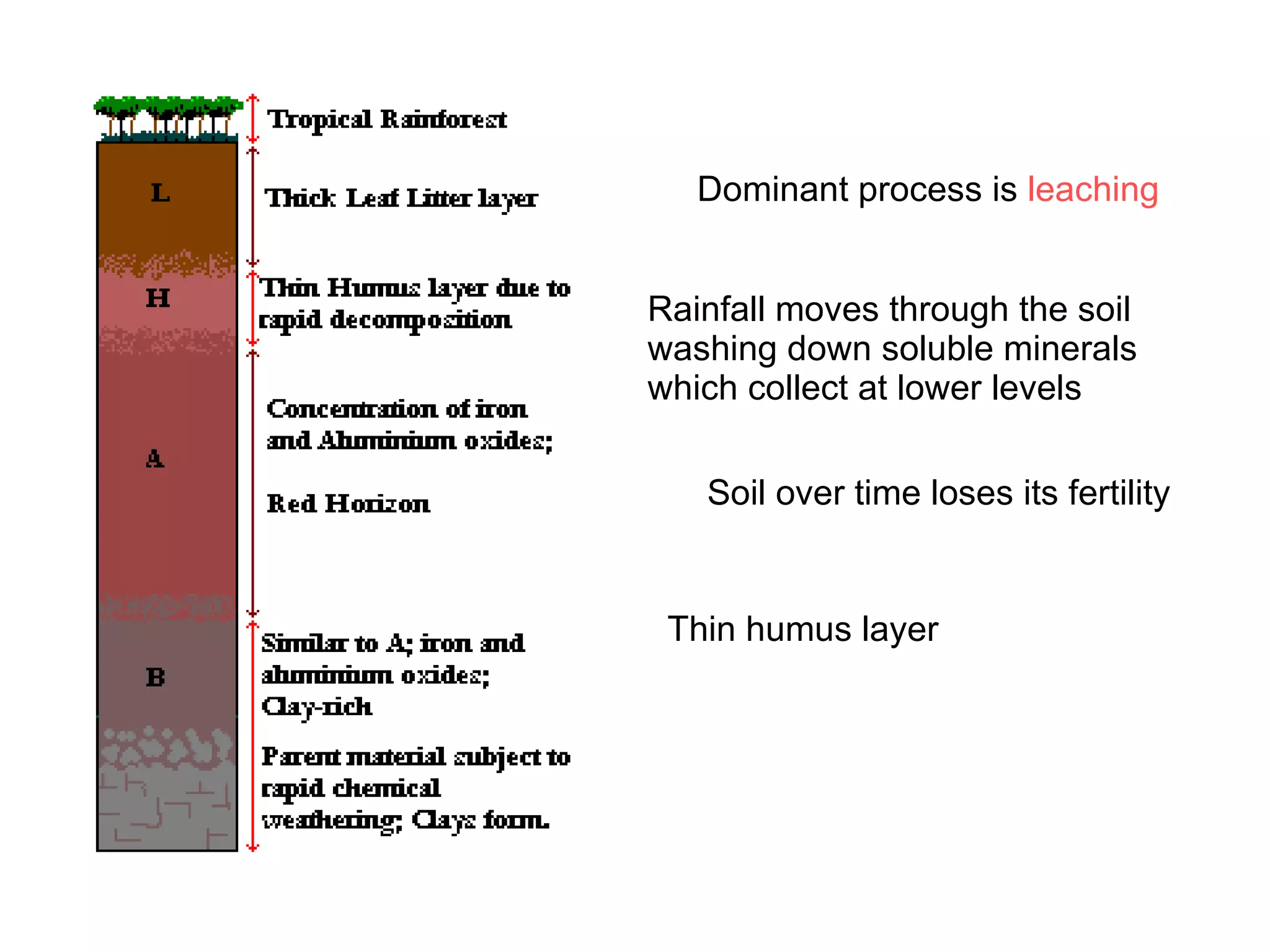
Dominant process is  leaching Rainfall moves through the soil washing down soluble minerals which collect at lower levels Soil over time loses its fertility Thin humus layer
Deforestation Logging for export to MEDCs  – trees should be replanted so the industry can keep selling long term  Population is increasing  – settlement & road building is needed Forest cleared to set up  cattle ranches  which quickly make the soil useless Mineral extraction  helps Brazil pay foreign debts HEP development  has meant large areas of land have been flooded
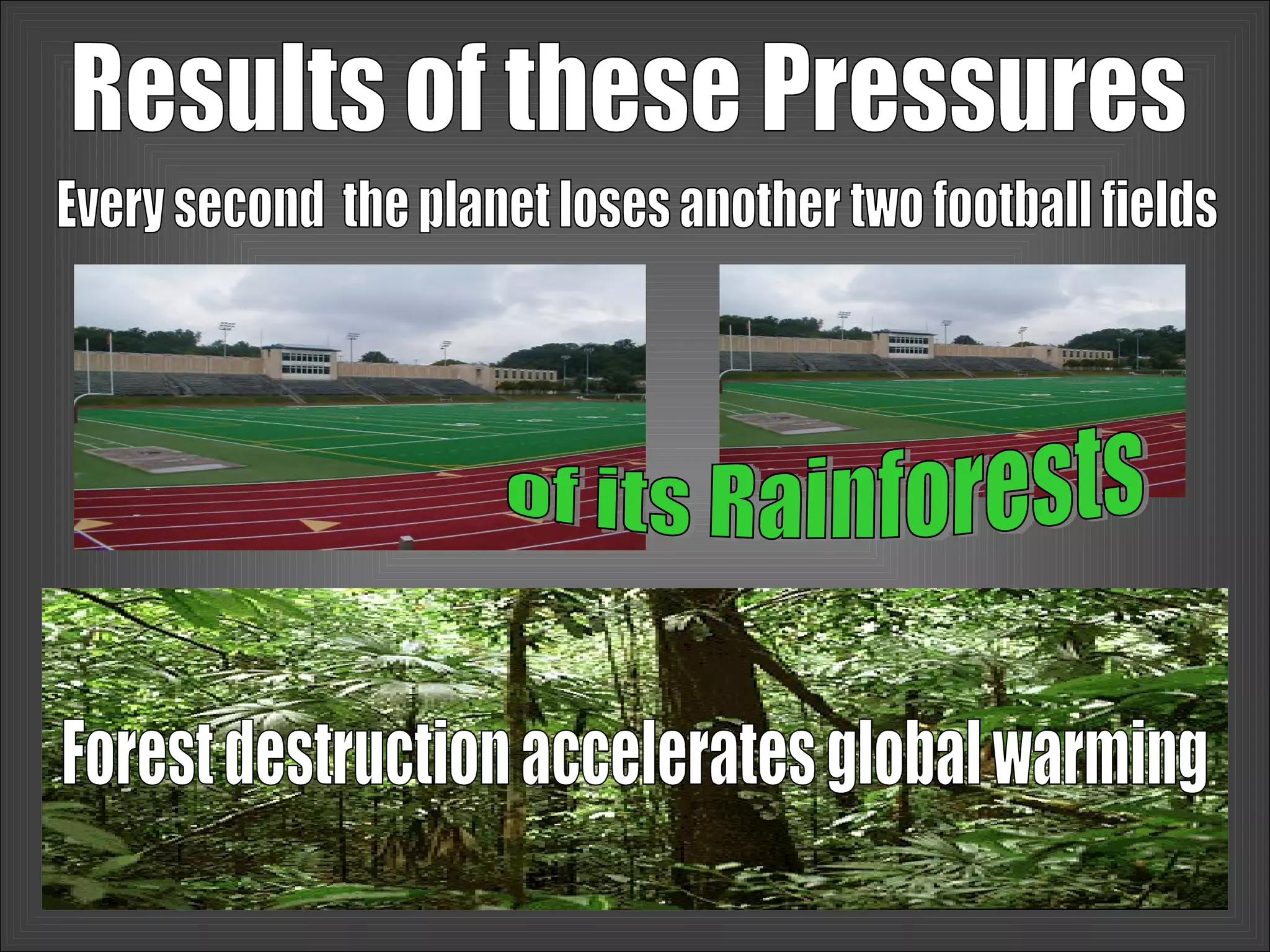
Results of these Pressures Every second  the planet loses another two football fields of its Rainforests Forest destruction accelerates global warming
How Rainforest Destruction effects all of us... 1)   By cutting down trees, the world loses 1/3 of its oxygen supply, and ¼ of its fresh water supply, which is stored in the Amazon Basin. 2)  Less trees = less water vapour (through transpiration) = less rain = rainforests start to turn into deserts = the species either learn to adapt or die out trying. 3)  Burning trees also = releasing excess CO2 = the greenhouse effects = global warming = adverse climate changes worldwide.

Tropical Rainforests Intro

  • 1.
    Tropical Rainforests Characteristicfeatures Vegetation adaptations to climate Soils
  • 2.
    Location of tropicalrainforests Task – describe the location of the rainforests
  • 3.
    Thick waxy driptip leaves which water runs off Buttress roots to support tall trees Grow tall to reach the sunlight Hot – high solar intensity, monthly average above 27 º Rainfall is high above 2000mm per year Climate & vegetation adaptations Immense number of plants Shallow roots run sideways below the ground surface Humid
  • 4.
    5. Herb layerwith ferns 6m or more high 1. Discontinuous canopy of tree crowns of the tallest trees called emergents 2. Continuous layer of the main canopy formed by the crown of many tall trees 5 distinct layers in the rainforest 3. Discontinuous under canopy of trees between 10m & 20m high 4. Layer of shrubs & young trees
  • 5.
    Dominant process is leaching Rainfall moves through the soil washing down soluble minerals which collect at lower levels Soil over time loses its fertility Thin humus layer
  • 6.
    Deforestation Logging forexport to MEDCs – trees should be replanted so the industry can keep selling long term Population is increasing – settlement & road building is needed Forest cleared to set up cattle ranches which quickly make the soil useless Mineral extraction helps Brazil pay foreign debts HEP development has meant large areas of land have been flooded
  • 7.
    Results of thesePressures Every second the planet loses another two football fields of its Rainforests Forest destruction accelerates global warming
  • 8.
    How Rainforest Destructioneffects all of us... 1) By cutting down trees, the world loses 1/3 of its oxygen supply, and ¼ of its fresh water supply, which is stored in the Amazon Basin. 2) Less trees = less water vapour (through transpiration) = less rain = rainforests start to turn into deserts = the species either learn to adapt or die out trying. 3) Burning trees also = releasing excess CO2 = the greenhouse effects = global warming = adverse climate changes worldwide.