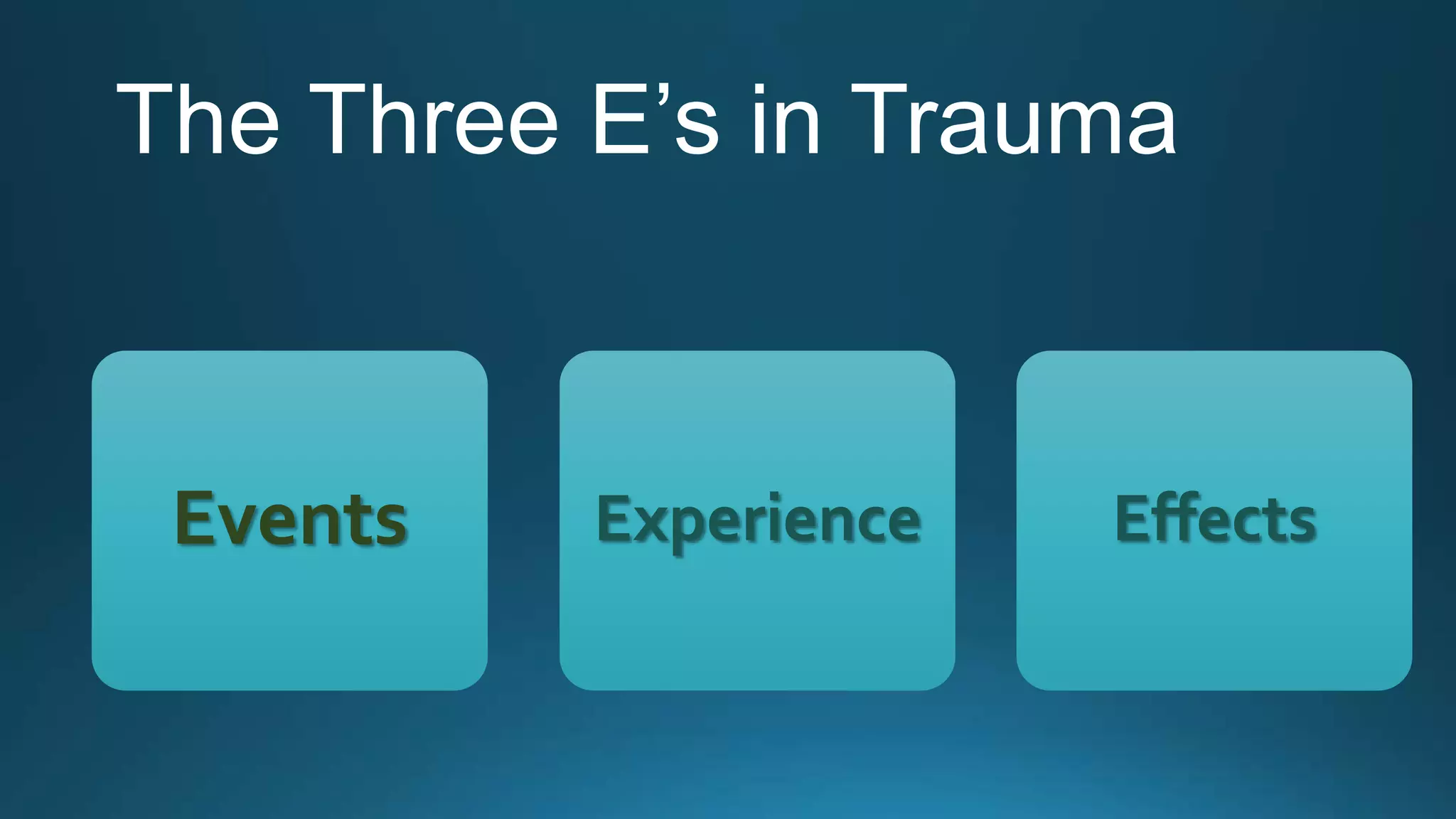
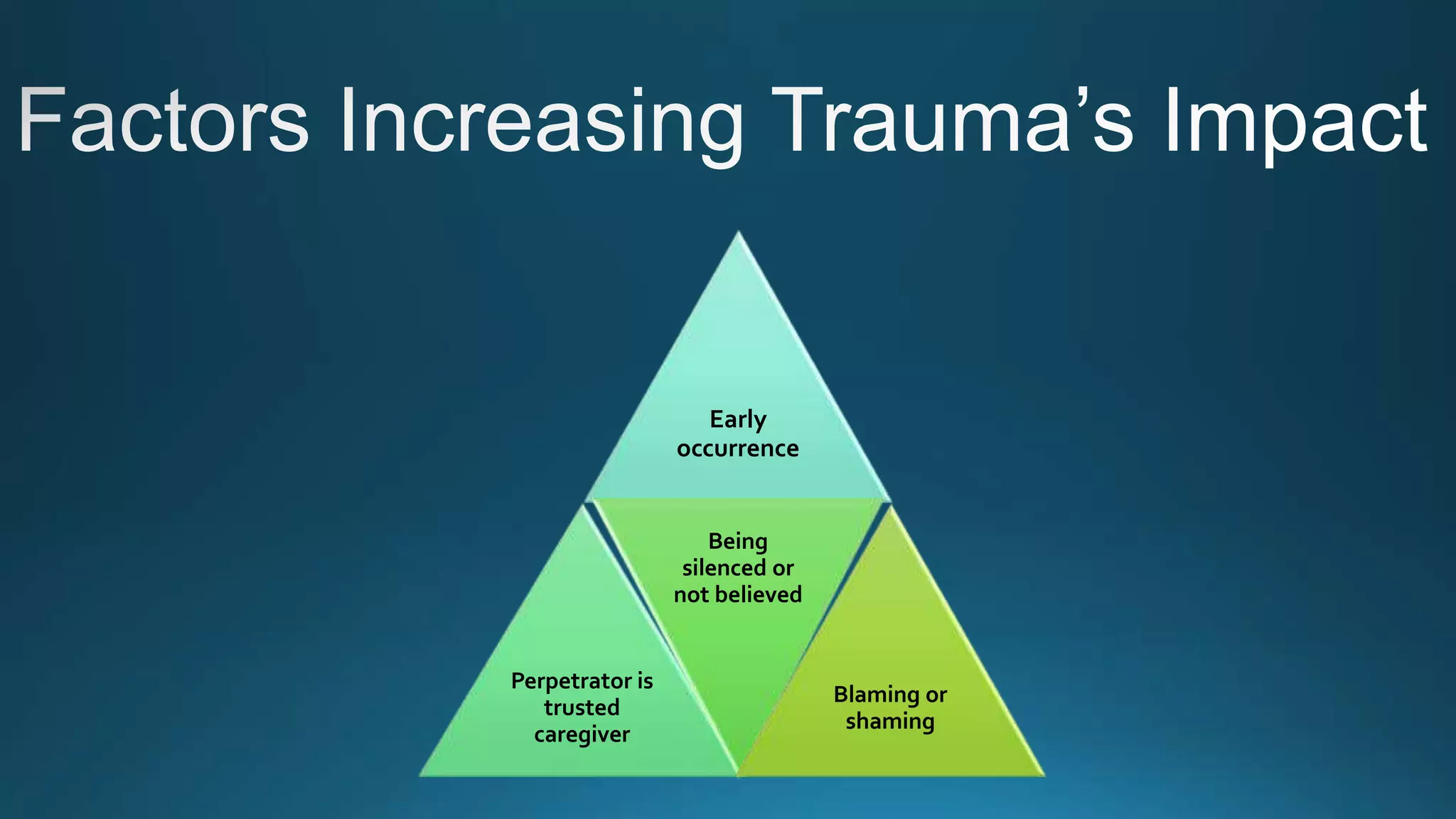
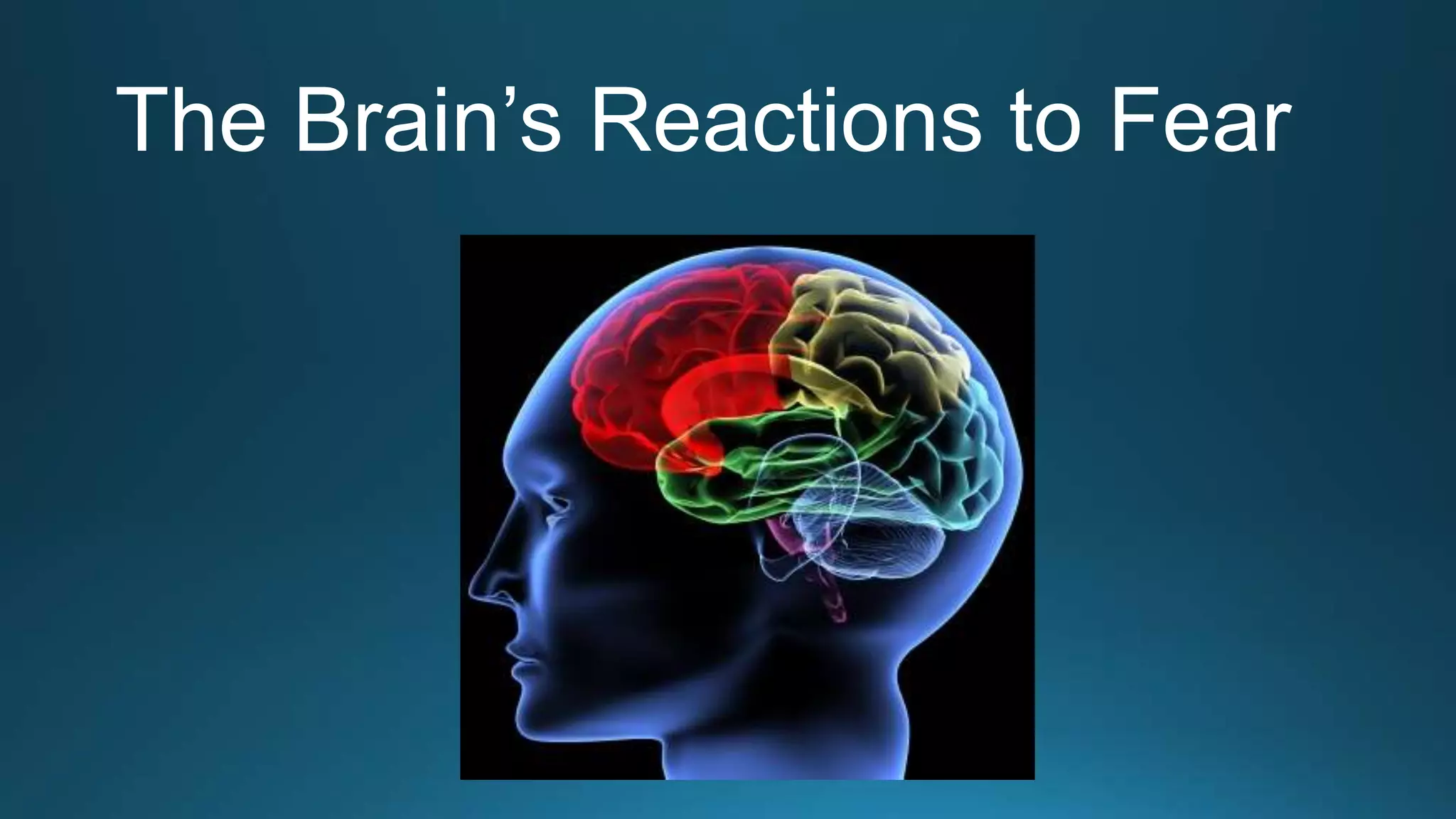
This document discusses trauma and its impact on recovery. It defines trauma as an unexpected threat to one's well-being that causes feelings of helplessness, terror, and isolation. Potential traumatic events include abuse, violence, loss, accidents, medical issues, poverty, racism, and family substance abuse. Trauma affects people physically, socially, emotionally, and spiritually. The brain responds to trauma through fight, flight or freeze responses. Trauma is stored in "capsules" that can be triggered by reminders, shocking new events, or stress. Common trauma responses include flashbacks, nightmares, hypervigilance, numbness, and relationship issues. Trauma-informed care focuses on safety, trust, peer support