11
What isWhat is
Transportation??Transportation??
 Transportation is the movement ofTransportation is the movement of
people and goods over time andpeople and goods over time and
space...space...
 Transportation should be…Transportation should be…
- Safe- Safe
- Environmentally Friendly- Environmentally Friendly
22
Source:
http://inventorspot.com/what_is_the_future_of_transportation
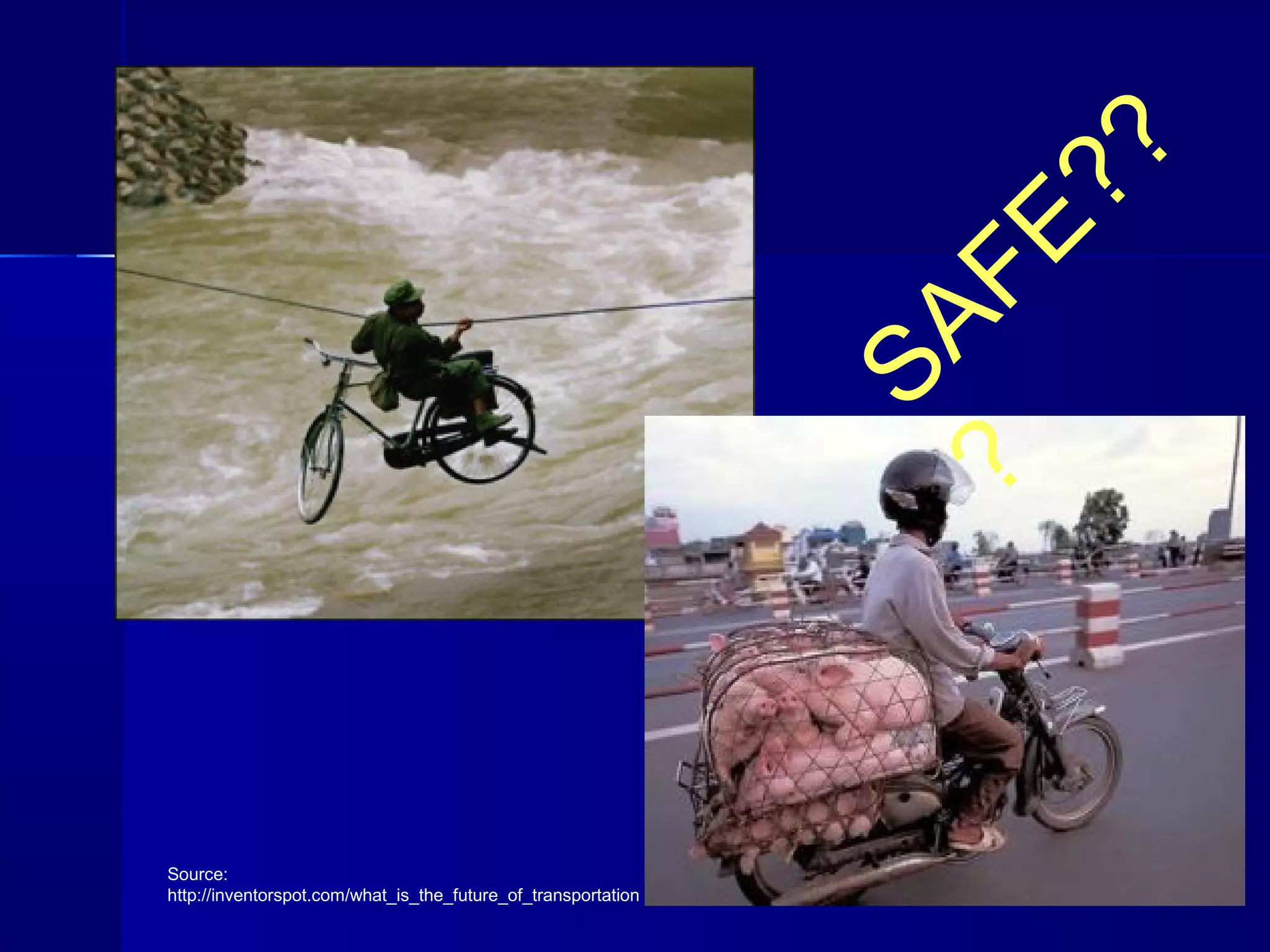
SAFE??
?
33Source:
http://inventorspot.com/what_is_the_future_of_transportation
SAFE??
?
44
ENVIRONMENTAL
LY FRIENDLY ????
Emissions from VehiclesEmissions from Vehicles
Emission
s
55
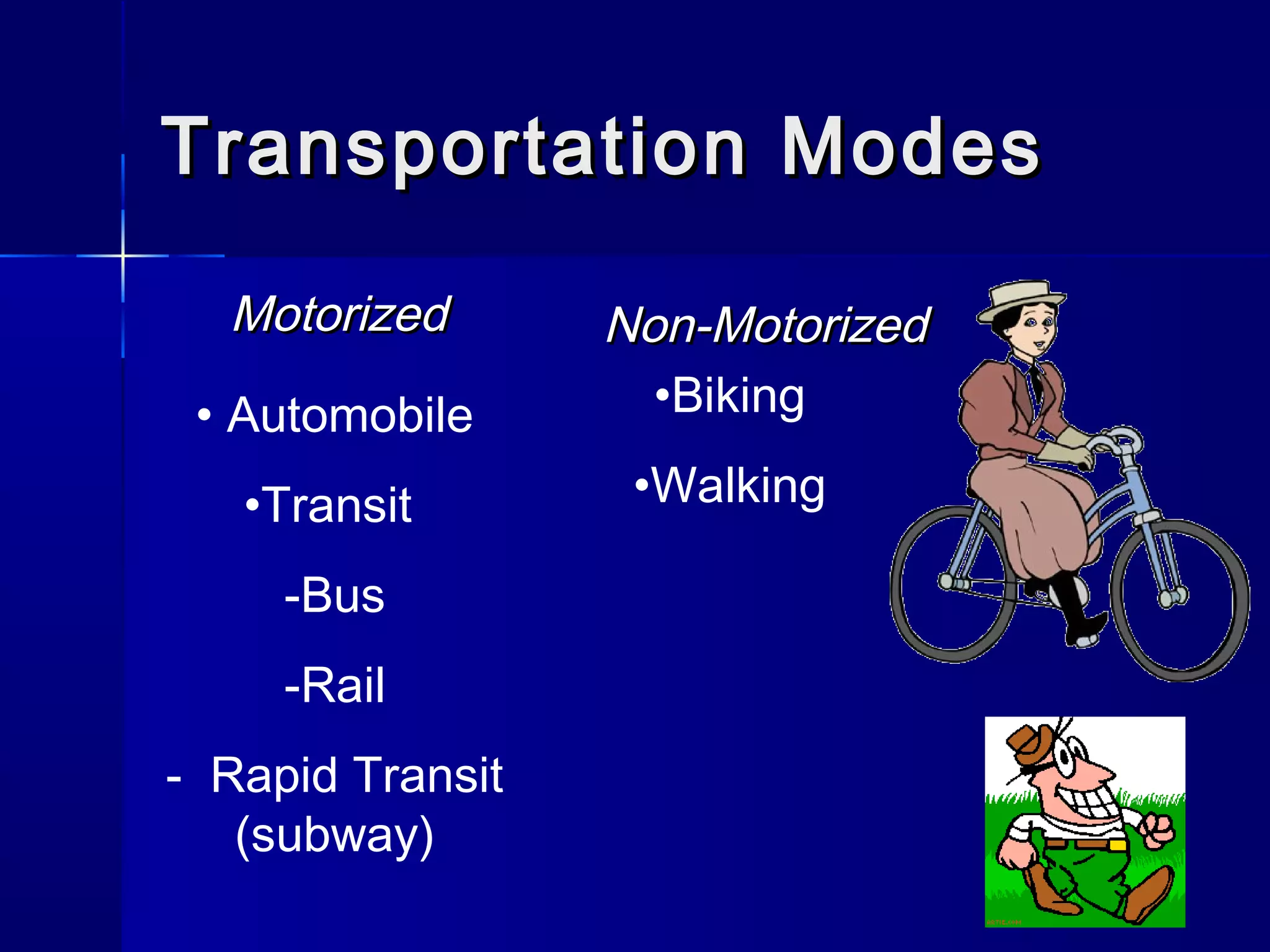
Transportation ModesTransportation Modes
MotorizedMotorized Non-MotorizedNon-Motorized
• Automobile
•Transit
-Bus
-Rail
- Rapid Transit
(subway)
•Biking
•Walking
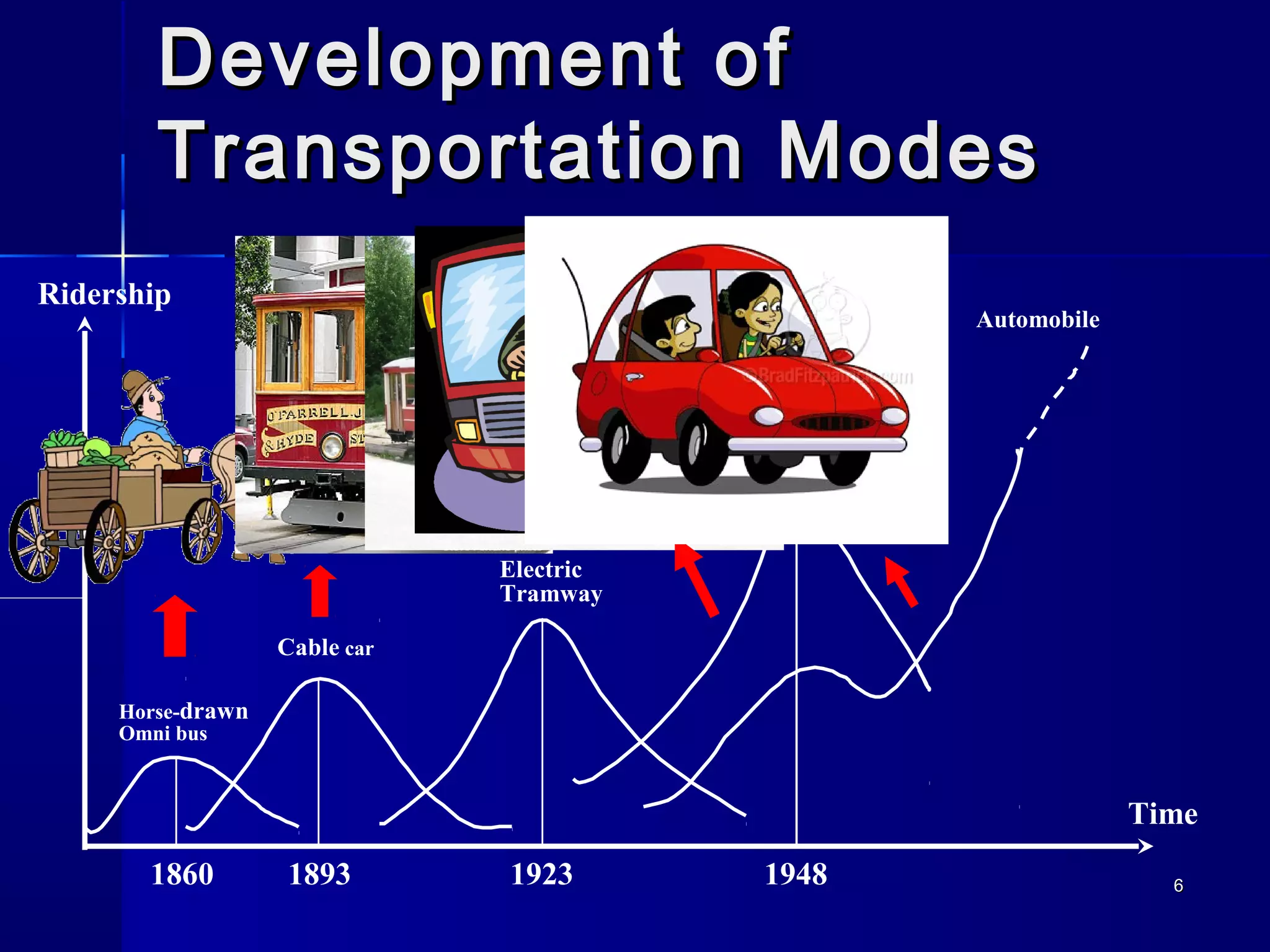
661860 1893 1923 1948
Time
Ridership
Horse-drawn
Omni bus
Cable car
Electric
Tramway
Bus
Automobile
Development ofDevelopment of
Transportation ModesTransportation Modes
77
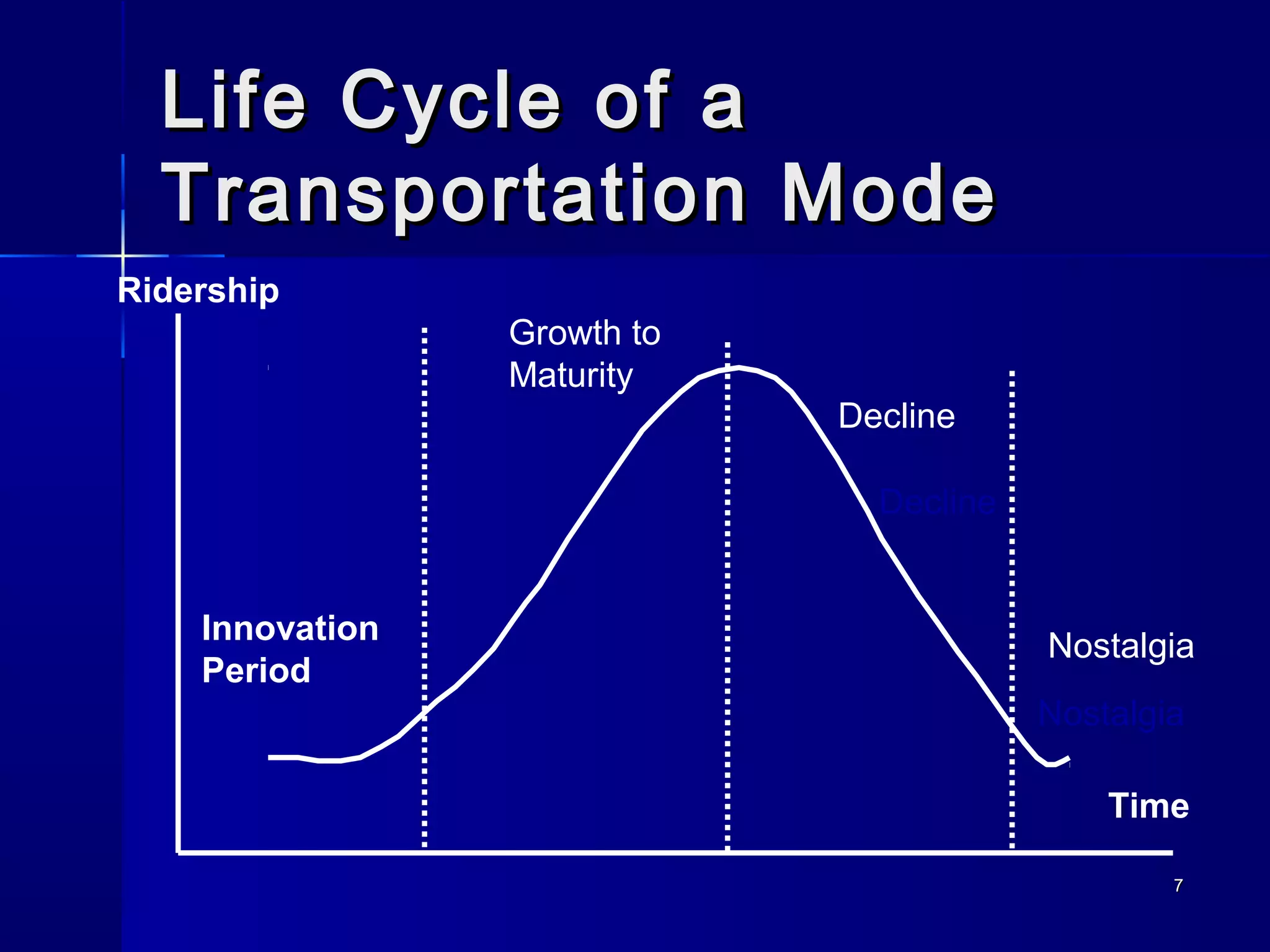
Life Cycle of aLife Cycle of a
Transportation ModeTransportation Mode
Innovation
Period
Growth to
Maturity
Decline
Nostalgia
Ridership
Decline
Nostalgia
Time
88
History of TransportationHistory of Transportation
99
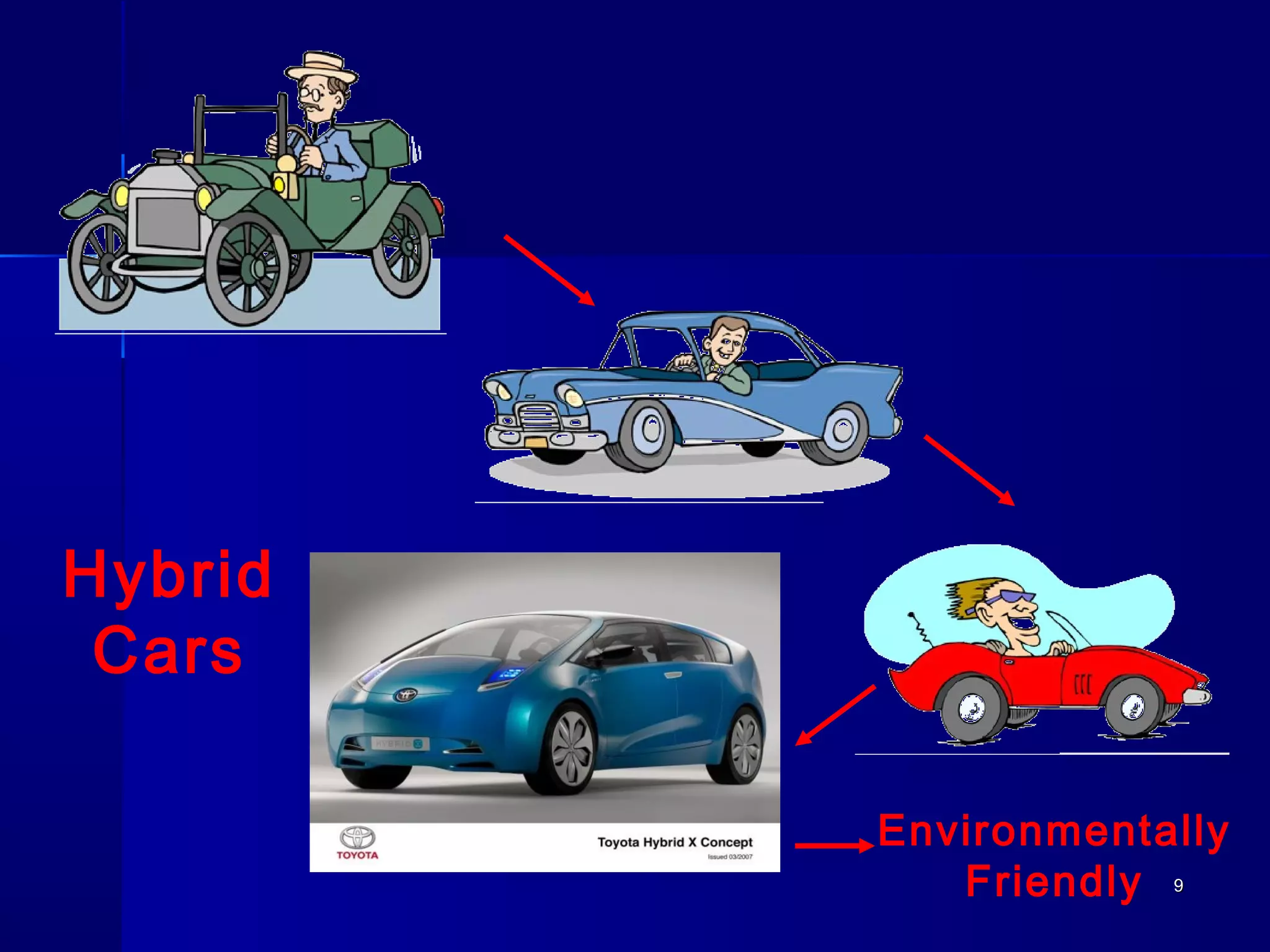
Hybrid
Cars
Environmentally
Friendly
1010
Hybrid CarsHybrid Cars
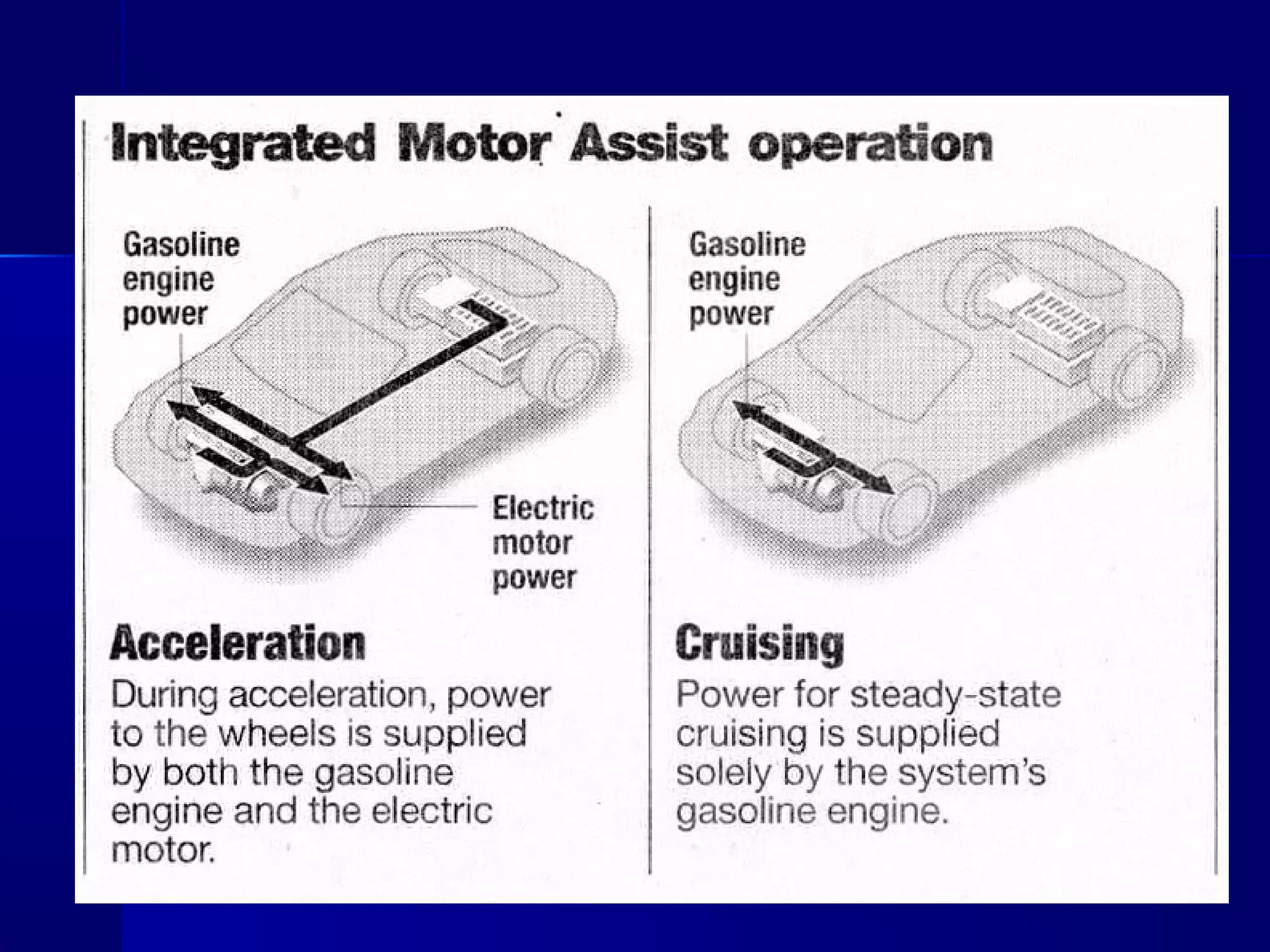
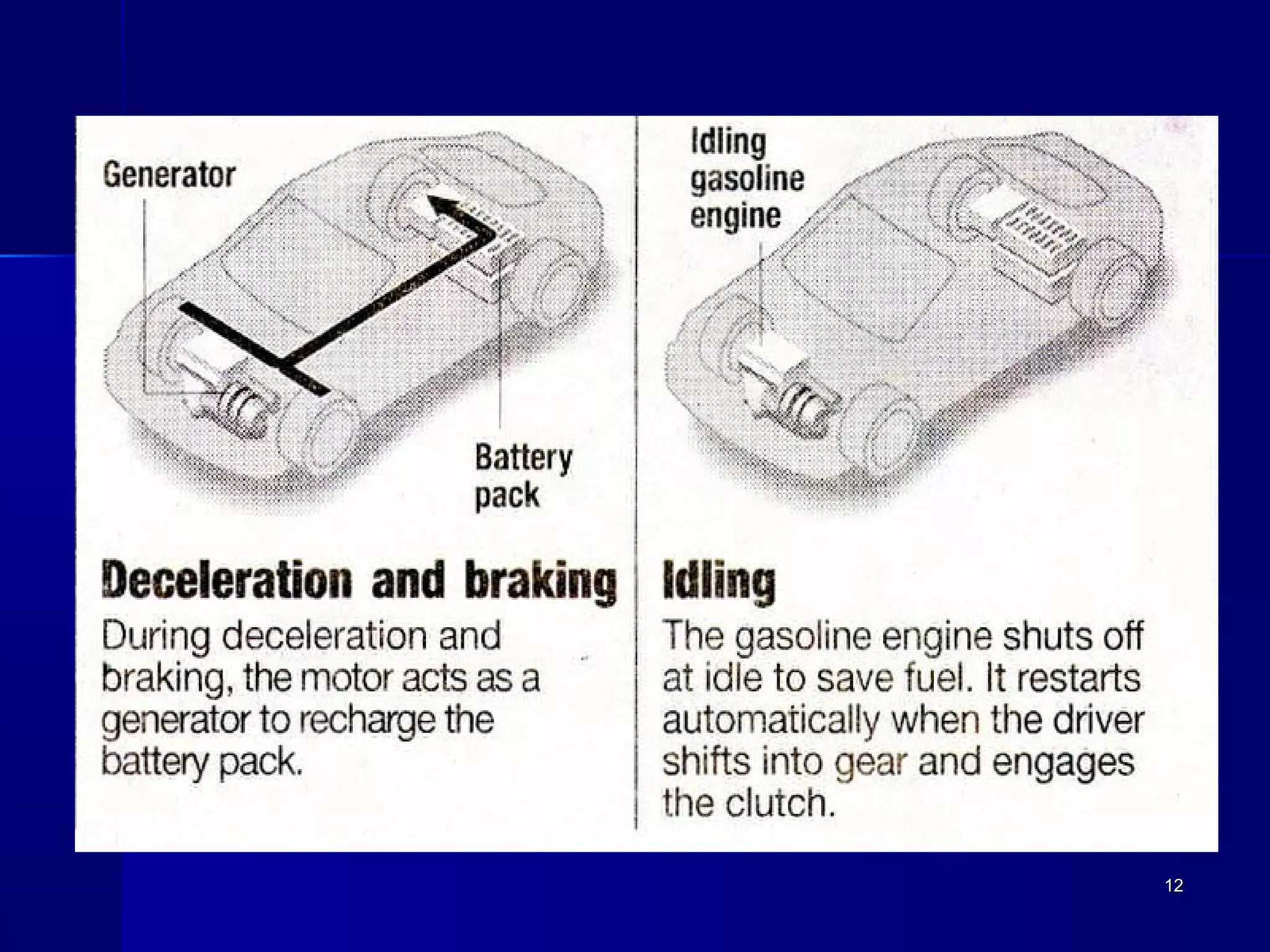
Gasoline power + Electric power
1111
1212
1313
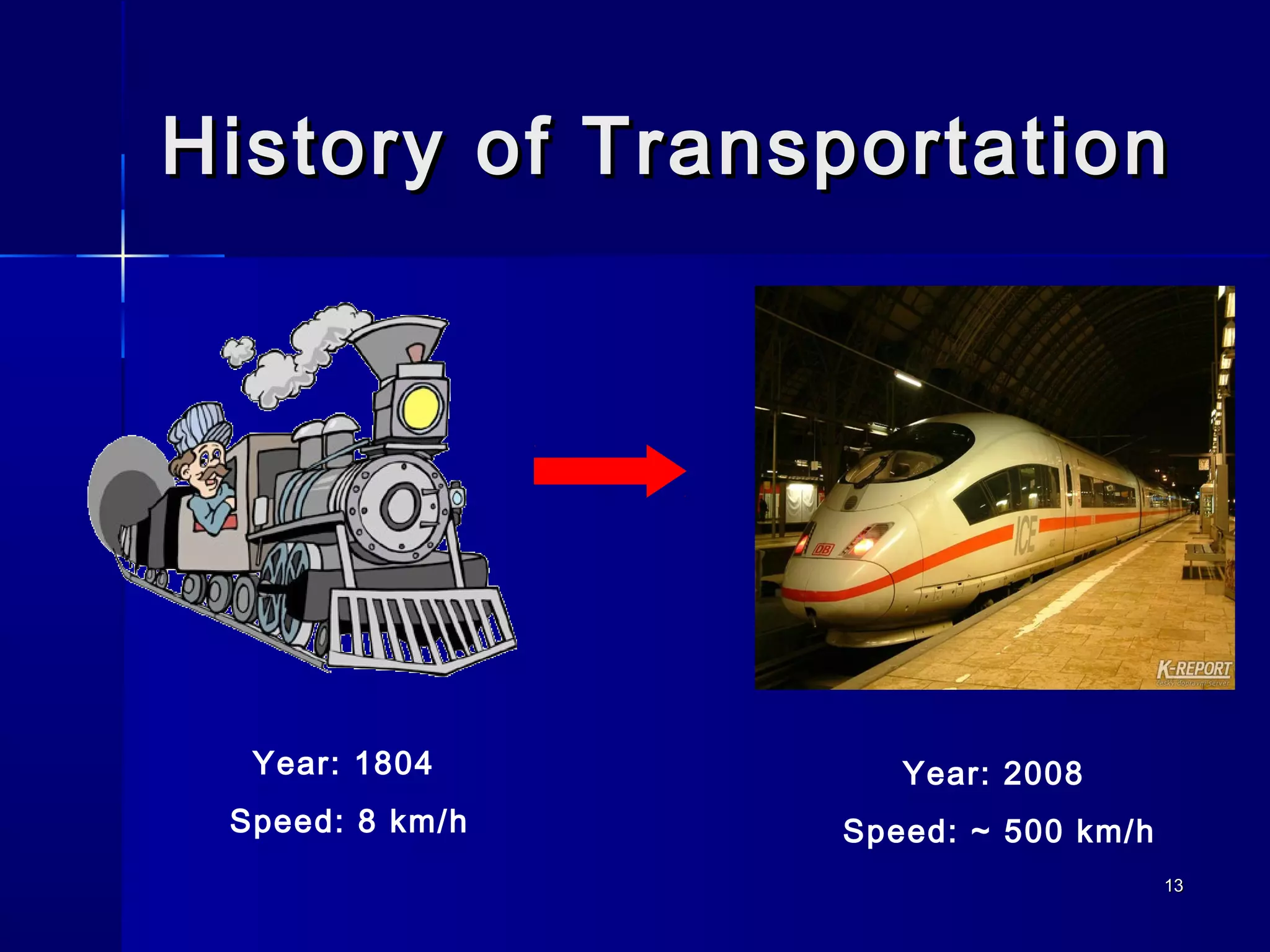
History of TransportationHistory of Transportation
Year: 1804
Speed: 8 km/h
Year: 2008
Speed: ~ 500 km/h
1414
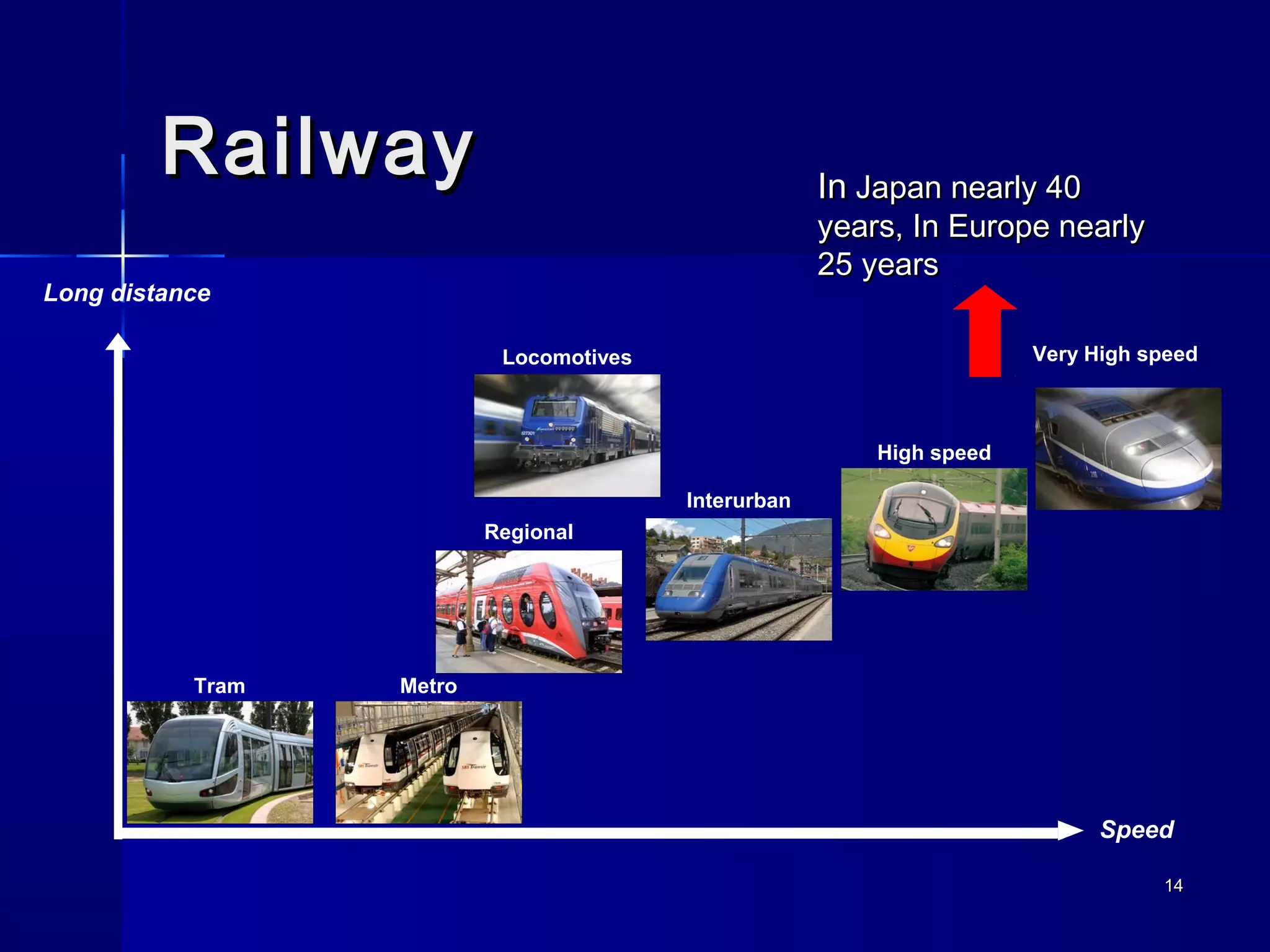
RailwayRailway
Tram Metro
Regional
Locomotives
Interurban
High speed
Long distance
Speed
Very High speed
InIn Japan nearly 40Japan nearly 40
years, In Europe nearlyyears, In Europe nearly
25 years25 years
1515
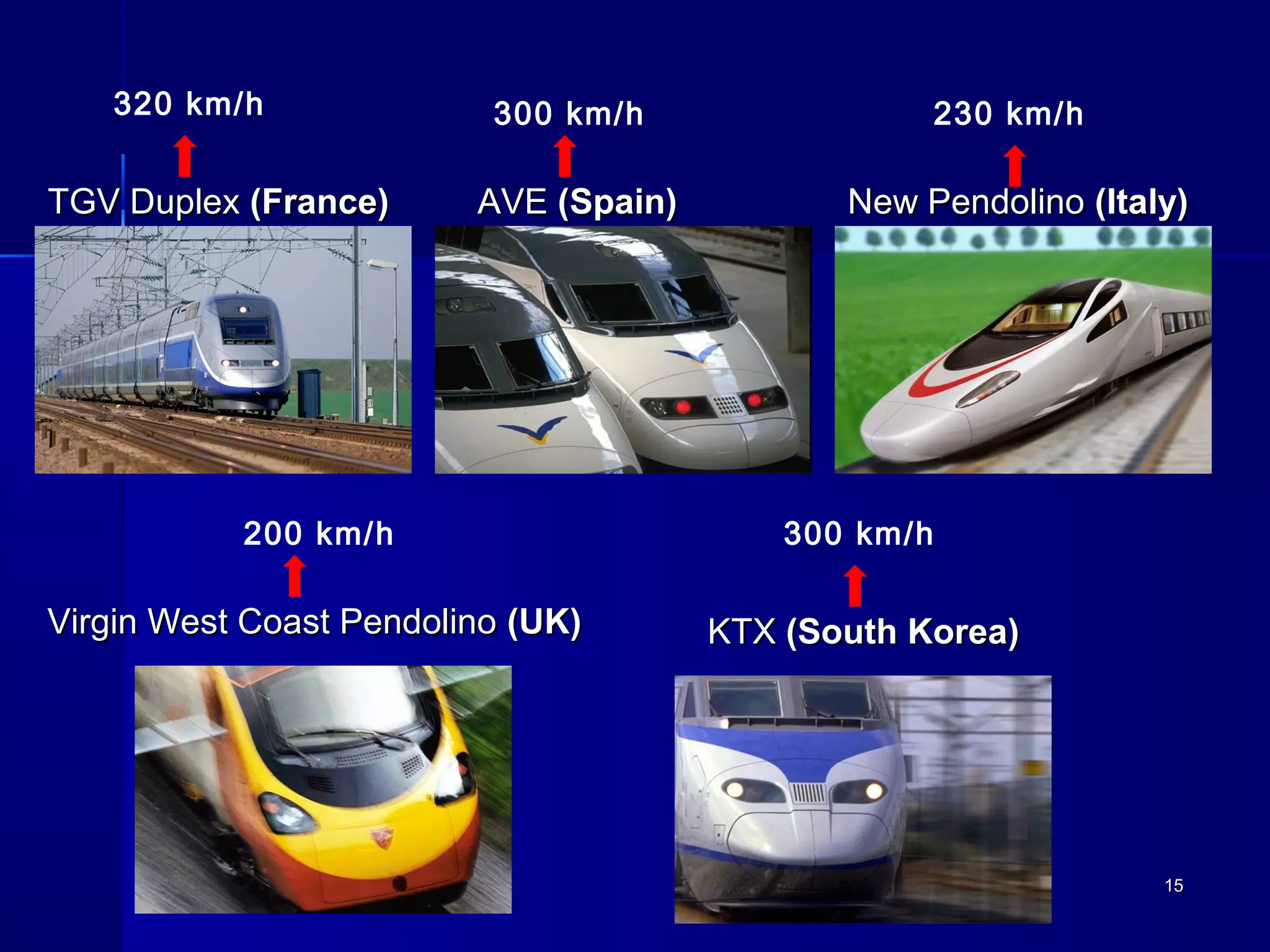
Virgin West Coast PendolinoVirgin West Coast Pendolino (UK)(UK)
TGV DuplexTGV Duplex (France)(France)
KTXKTX (South Korea)(South Korea)
AVEAVE (Spain)(Spain) New PendolinoNew Pendolino (Italy)(Italy)
320 km/h 300 km/h 230 km/h
200 km/h 300 km/h
1616
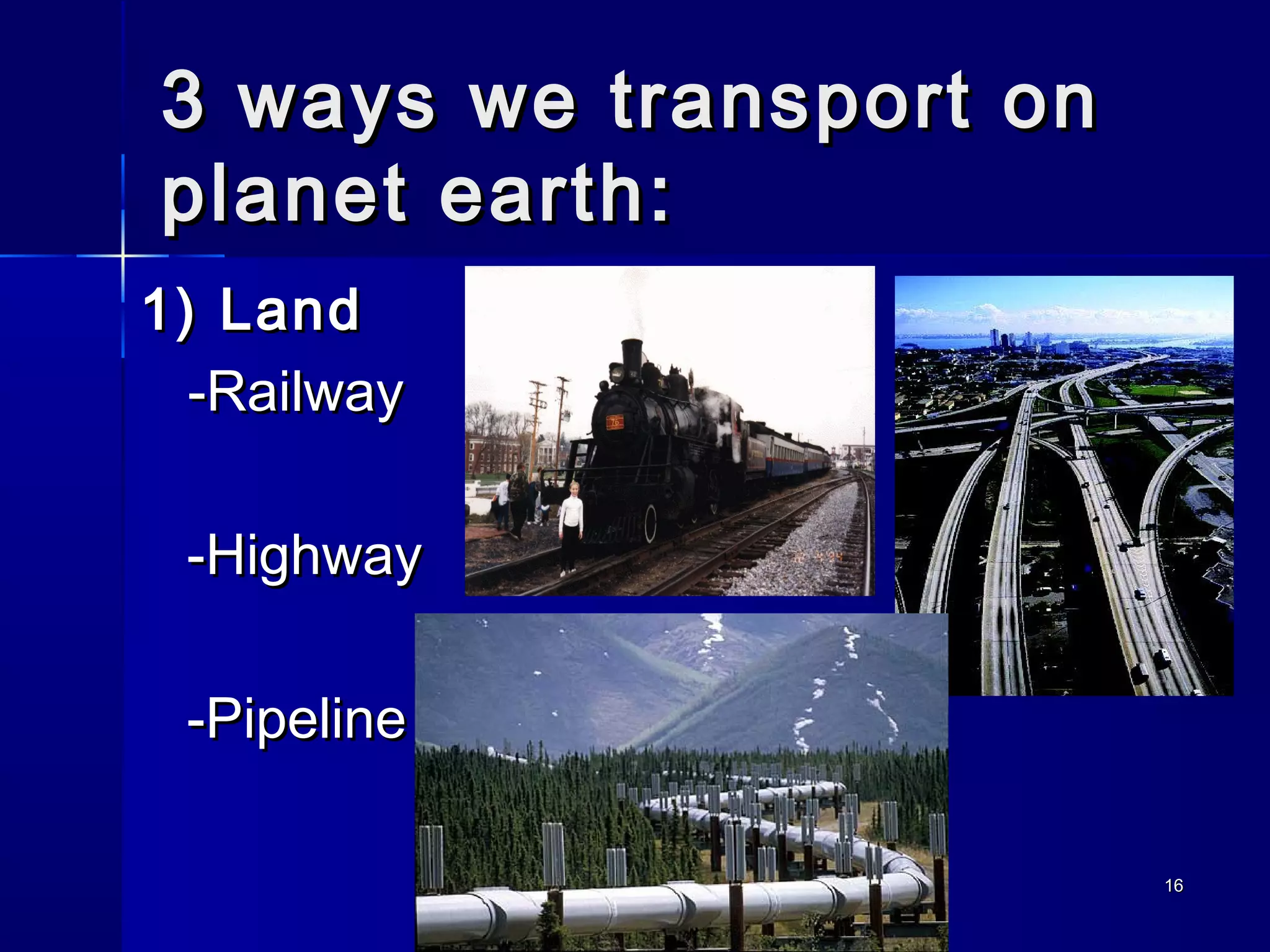
3 ways we transport on3 ways we transport on
planet earth:planet earth:
1)1) LandLand
-Railway-Railway
-Highway-Highway
-Pipeline-Pipeline
1717
2) Sea2) Sea
3) Air3) Air
1818
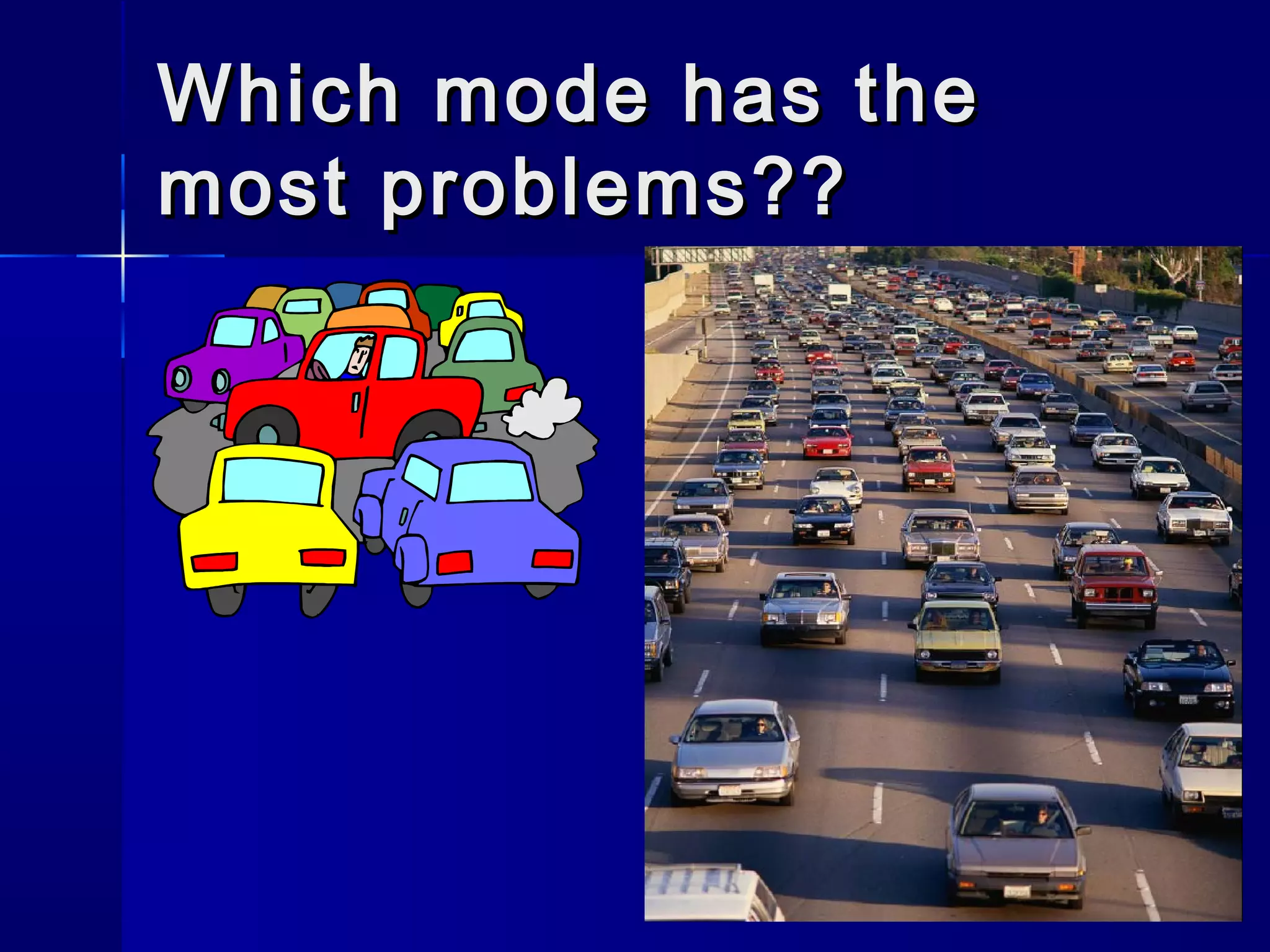
Which mode has theWhich mode has the
most problems??most problems??
1919
Why people like cars?Why people like cars?
 We like the carsWe like the cars
 It often (but not always) is the fastest mode,
depending on levels of congestion, time of
day and the available alternatives
 Privacy
 Automobiles suggest that you are at a
higher level of society
 People simply enjoy the sensation of driving
2020
Importance ofImportance of
TransportationTransportation
 Necessary for economic growth, but notNecessary for economic growth, but not
sufficientsufficient
-- The speed, cost, and capabilities ofThe speed, cost, and capabilities of
available transportation have a significantavailable transportation have a significant
economic impact on an areaeconomic impact on an area
-- Countries with better/advancedCountries with better/advanced
transportation networks and services aretransportation networks and services are
leaders in industry and commerceleaders in industry and commerce
USA, Japan, Germany, ...USA, Japan, Germany, ...
2121
Components of theComponents of the
Transportation SystemTransportation System
 InfrastructureInfrastructure (supply(supply))::
-Physical facilities:-Physical facilities: highways,highways, railroadsrailroads,, portsports
--Transfer pointsTransfer points:: parking areas, drivewaysparking areas, driveways
-S-Supporting elementsupporting elements:: signals, signs, safetysignals, signs, safety
hardware, etc.hardware, etc.
 Vehicles (Vehicles (demanddemand)):: PPlaneslanes, t, trainsrains, a, autosutos,,
bbusesuses, s, shipships, t, trucksrucks
 Operators/usersOperators/users:: Drivers, pilots, freight,Drivers, pilots, freight,
passengerspassengers
2222
What is TransportationWhat is Transportation
EngineeringEngineering
 The engineering profession isThe engineering profession is
involved in all aspects ofinvolved in all aspects of
-Aeronautical (aircraft)-Aeronautical (aircraft)
-Chemical (fuel)-Chemical (fuel)
-Mechanical (vehicles)-Mechanical (vehicles)
-Electrical (communications, control system)-Electrical (communications, control system)
-Civil (development of facilities and manage-Civil (development of facilities and manage
demand)demand)
2323
TransportationTransportation
EngineeringEngineering
 One of the specialty areas ofOne of the specialty areas of
civil engineeringcivil engineering
- Development of facilities for the- Development of facilities for the
movement of goods and peoplemovement of goods and people
- Planning, design, operation and- Planning, design, operation and
maintenancemaintenance
 People orientedPeople oriented
2424
 Multi-disciplinaryMulti-disciplinary
-Economic-Economic
-Environmental-Environmental
-Planning-Planning
-Statistics-Statistics
-Law-Law
-Psychology & human factors-Psychology & human factors
-Public administration-Public administration
 Problems ==> solutionsProblems ==> solutions
2525
Areas of TransportationAreas of Transportation
EngineeringEngineering
 Transportation PlanningTransportation Planning
 TrafficTraffic Operations (signs, signals,..)Operations (signs, signals,..)
 RoadwayRoadway GeometricGeometric DesignDesign
 Pavement EngineeringPavement Engineering
 Railway EngineeringRailway Engineering
 Design and Planning of AirportsDesign and Planning of Airports
2626
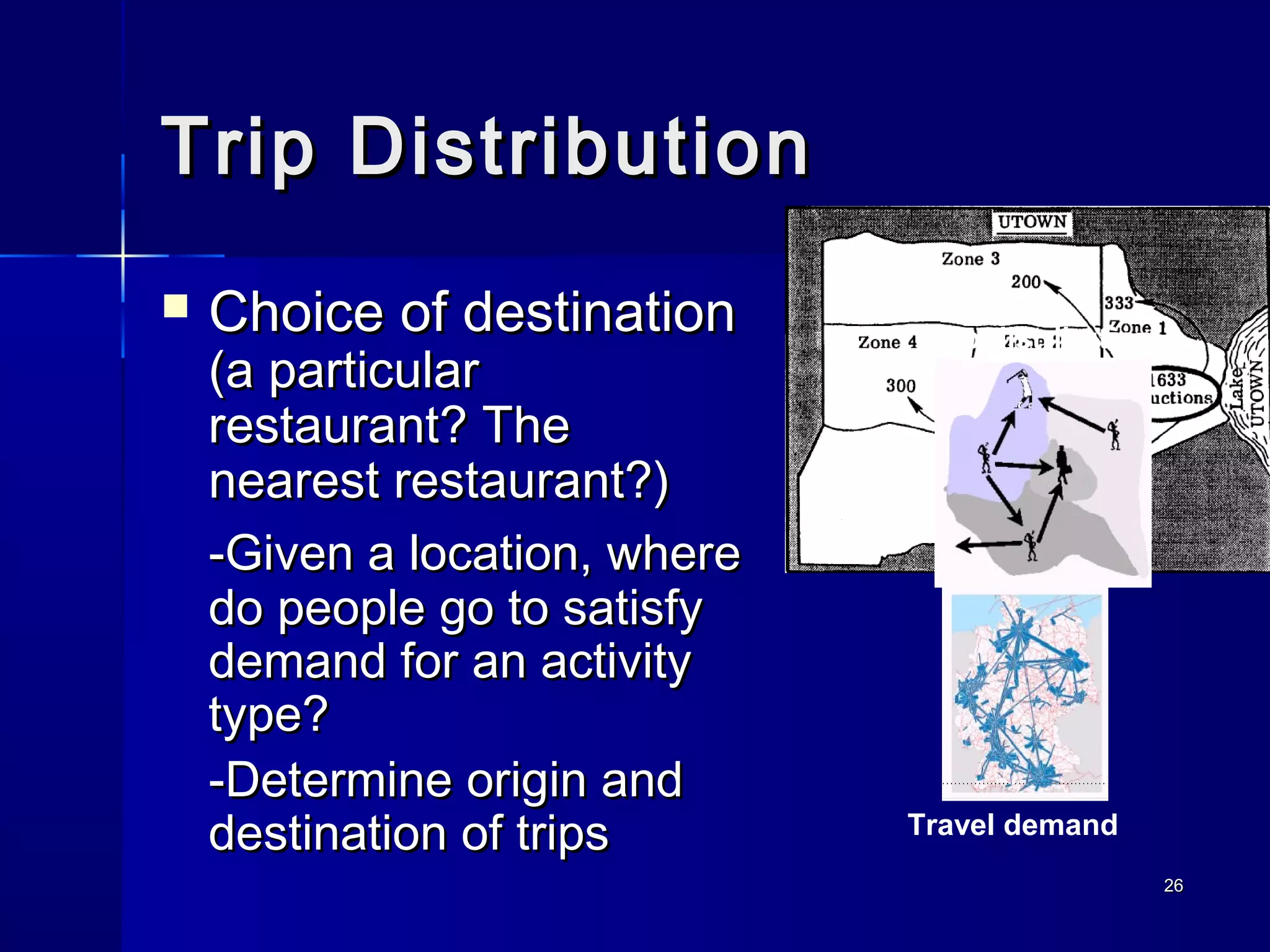
Trip DistributionTrip Distribution
 Choice of destinationChoice of destination
(a particular(a particular
restaurant? Therestaurant? The
nearest restaurant?)nearest restaurant?)
-Given a location, where-Given a location, where
do people go to satisfydo people go to satisfy
demand for an activitydemand for an activity
type?type?
-Determine origin and-Determine origin and
destination of tripsdestination of trips
Trip distribution
Travel demand
2727
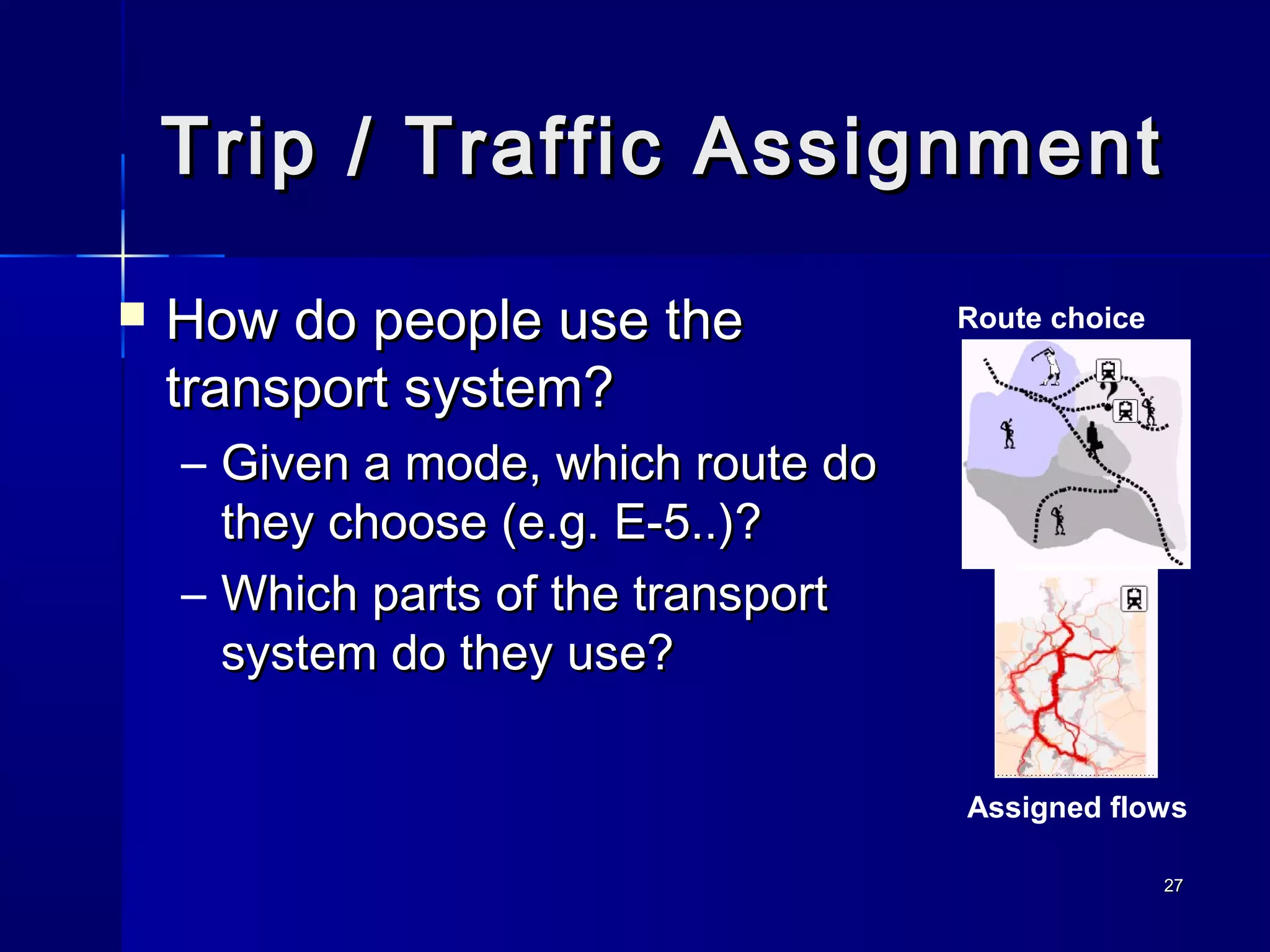
Trip / Traffic AssignmentTrip / Traffic Assignment
 How do people use theHow do people use the
transport system?transport system?
– Given a mode, which route doGiven a mode, which route do
they choose (e.g. E-5..)?they choose (e.g. E-5..)?
– Which parts of the transportWhich parts of the transport
system do they use?system do they use?
Route choice
Assigned flows
2828
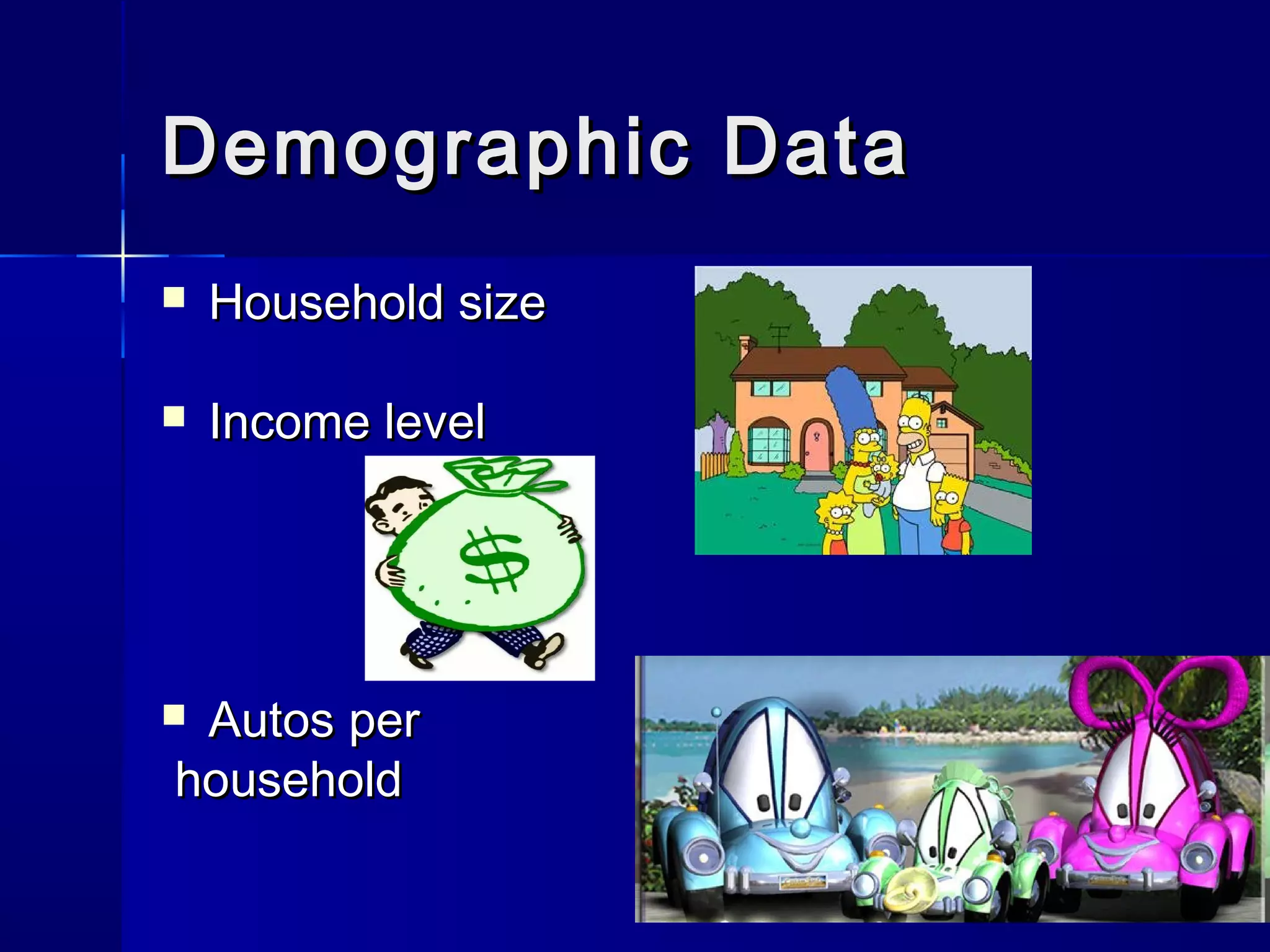
Demographic DataDemographic Data
 Household sizeHousehold size
 Income levelIncome level
 Autos perAutos per
householdhousehold
2929
Network DataNetwork Data
 Highway networkHighway network
 Transit networkTransit network
3030
Level of Service (LOS)Level of Service (LOS)
 Chief measure of “quality of service”Chief measure of “quality of service”
– Describes operational conditions within aDescribes operational conditions within a
traffic streamtraffic stream
– Does not include safetyDoes not include safety
– Different measures for different facilitiesDifferent measures for different facilities
– 6 measures A through F6 measures A through F
3131
LOS CLOS C
 Flow at or near FFSFlow at or near FFS
 Freedom toFreedom to
maneuver ismaneuver is
noticeably restrictednoticeably restricted
 Lane changes moreLane changes more
difficultdifficult
 Queues may formQueues may form
behind significantbehind significant
blockageblockage
3232
LOS DLOS D
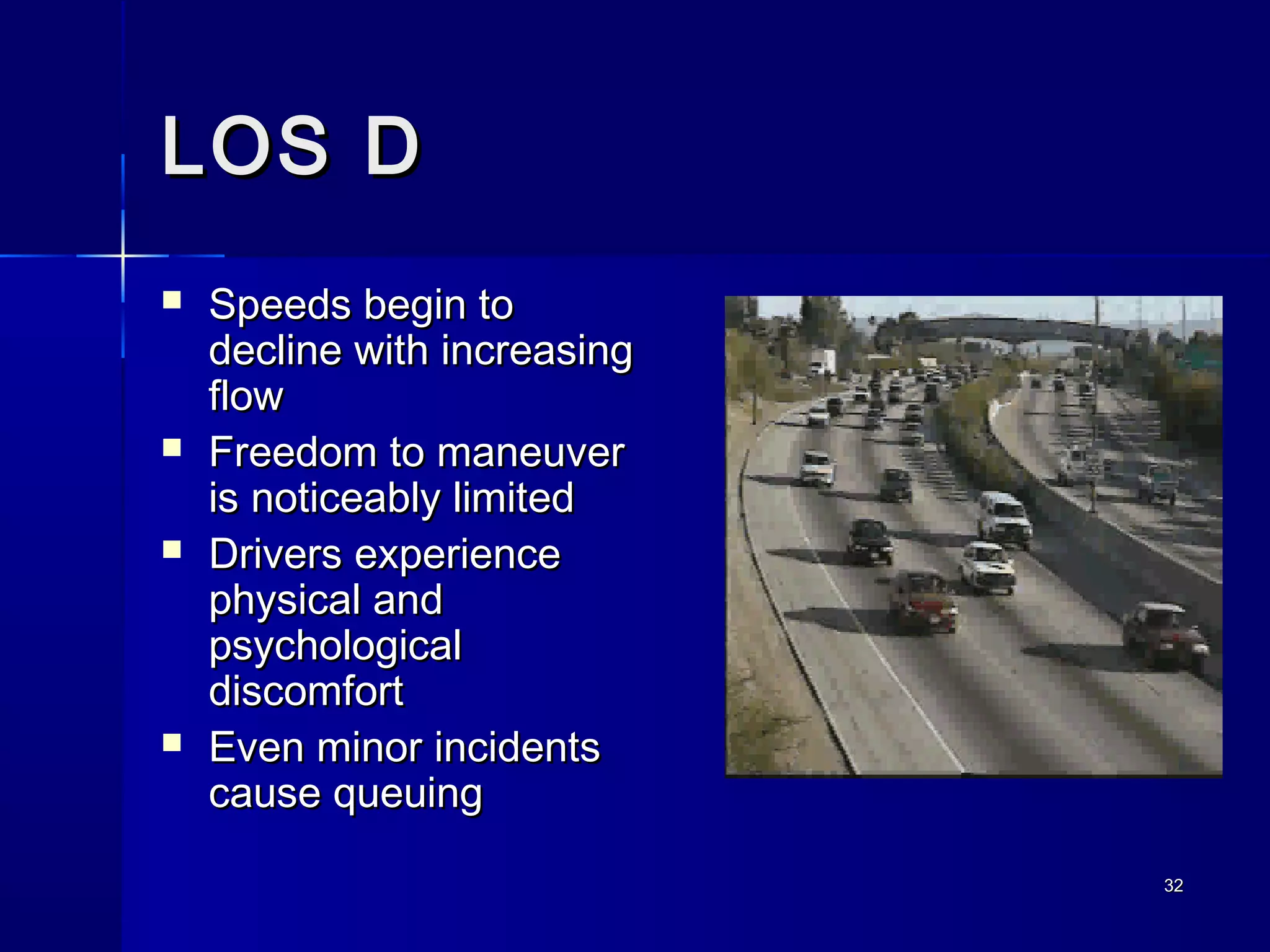
 Speeds begin toSpeeds begin to
decline with increasingdecline with increasing
flowflow
 Freedom to maneuverFreedom to maneuver
is noticeably limitedis noticeably limited
 Drivers experienceDrivers experience
physical andphysical and
psychologicalpsychological
discomfortdiscomfort
 Even minor incidentsEven minor incidents
cause queuingcause queuing
3333
LOS FLOS F
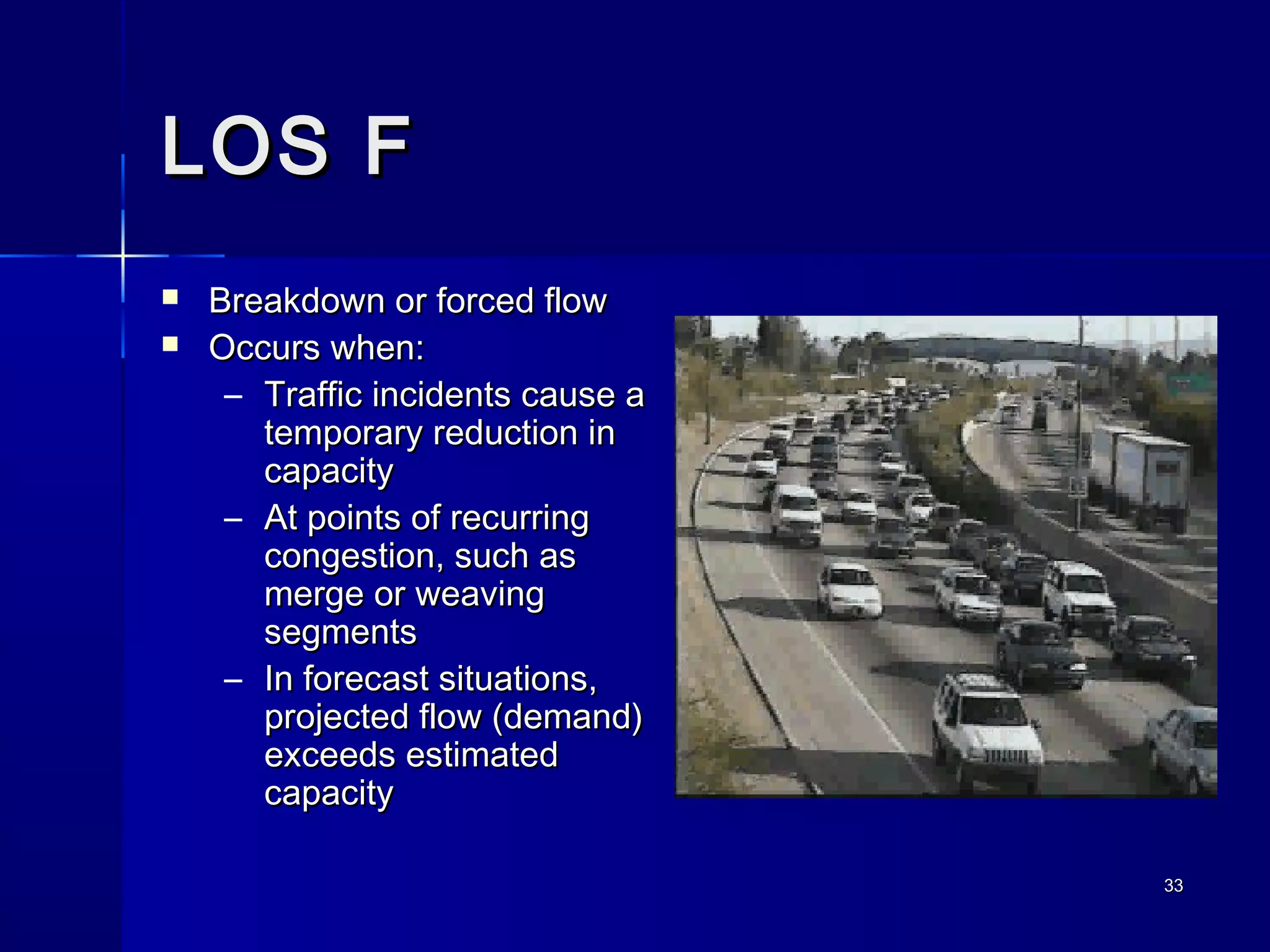
 Breakdown or forced flowBreakdown or forced flow
 Occurs when:Occurs when:
– Traffic incidents cause aTraffic incidents cause a
temporary reduction intemporary reduction in
capacitycapacity
– At points of recurringAt points of recurring
congestion, such ascongestion, such as
merge or weavingmerge or weaving
segmentssegments
– In forecast situations,In forecast situations,
projected flow (demand)projected flow (demand)
exceeds estimatedexceeds estimated
capacitycapacity
3434
Design DecisionDesign Decision
What can we change in a design to provide anWhat can we change in a design to provide an
acceptable LOS?acceptable LOS?
 Lateral clearanceLateral clearance ::Distance to fixed objectsDistance to fixed objects
AssumesAssumes
– >= 6 feet (1.8 m) from right edge of travel lanes>= 6 feet (1.8 m) from right edge of travel lanes
to obstructionto obstruction
– >= 6 feet (1.8 m) from left edge of travel lane to>= 6 feet (1.8 m) from left edge of travel lane to
object in medianobject in median
 Lane widthLane width
 Number of lanesNumber of lanes
3535
Highway DesignHighway Design
 Problem Statement
 Objective and Constraints
 Horizontal Alignment
 Vertical Alignment
 Mass Diagram
 Final Report - Blueprint for
construction

Transportation

  • 1.
    11 What isWhat is Transportation??Transportation?? Transportation is the movement ofTransportation is the movement of people and goods over time andpeople and goods over time and space...space...  Transportation should be…Transportation should be… - Safe- Safe - Environmentally Friendly- Environmentally Friendly
  • 2.
  • 3.
  • 4.
    44 ENVIRONMENTAL LY FRIENDLY ???? Emissionsfrom VehiclesEmissions from Vehicles Emission s
  • 5.
    55 Transportation ModesTransportation Modes MotorizedMotorizedNon-MotorizedNon-Motorized • Automobile •Transit -Bus -Rail - Rapid Transit (subway) •Biking •Walking
  • 6.
    661860 1893 19231948 Time Ridership Horse-drawn Omni bus Cable car Electric Tramway Bus Automobile Development ofDevelopment of Transportation ModesTransportation Modes
  • 7.
    77 Life Cycle ofaLife Cycle of a Transportation ModeTransportation Mode Innovation Period Growth to Maturity Decline Nostalgia Ridership Decline Nostalgia Time
  • 8.
  • 9.
  • 10.
  • 11.
  • 12.
  • 13.
    1313 History of TransportationHistoryof Transportation Year: 1804 Speed: 8 km/h Year: 2008 Speed: ~ 500 km/h
  • 14.
    1414 RailwayRailway Tram Metro Regional Locomotives Interurban High speed Longdistance Speed Very High speed InIn Japan nearly 40Japan nearly 40 years, In Europe nearlyyears, In Europe nearly 25 years25 years
  • 15.
    1515 Virgin West CoastPendolinoVirgin West Coast Pendolino (UK)(UK) TGV DuplexTGV Duplex (France)(France) KTXKTX (South Korea)(South Korea) AVEAVE (Spain)(Spain) New PendolinoNew Pendolino (Italy)(Italy) 320 km/h 300 km/h 230 km/h 200 km/h 300 km/h
  • 16.
    1616 3 ways wetransport on3 ways we transport on planet earth:planet earth: 1)1) LandLand -Railway-Railway -Highway-Highway -Pipeline-Pipeline
  • 17.
  • 18.
    1818 Which mode hastheWhich mode has the most problems??most problems??
  • 19.
    1919 Why people likecars?Why people like cars?  We like the carsWe like the cars  It often (but not always) is the fastest mode, depending on levels of congestion, time of day and the available alternatives  Privacy  Automobiles suggest that you are at a higher level of society  People simply enjoy the sensation of driving
  • 20.
    2020 Importance ofImportance of TransportationTransportation Necessary for economic growth, but notNecessary for economic growth, but not sufficientsufficient -- The speed, cost, and capabilities ofThe speed, cost, and capabilities of available transportation have a significantavailable transportation have a significant economic impact on an areaeconomic impact on an area -- Countries with better/advancedCountries with better/advanced transportation networks and services aretransportation networks and services are leaders in industry and commerceleaders in industry and commerce USA, Japan, Germany, ...USA, Japan, Germany, ...
  • 21.
    2121 Components of theComponentsof the Transportation SystemTransportation System  InfrastructureInfrastructure (supply(supply)):: -Physical facilities:-Physical facilities: highways,highways, railroadsrailroads,, portsports --Transfer pointsTransfer points:: parking areas, drivewaysparking areas, driveways -S-Supporting elementsupporting elements:: signals, signs, safetysignals, signs, safety hardware, etc.hardware, etc.  Vehicles (Vehicles (demanddemand)):: PPlaneslanes, t, trainsrains, a, autosutos,, bbusesuses, s, shipships, t, trucksrucks  Operators/usersOperators/users:: Drivers, pilots, freight,Drivers, pilots, freight, passengerspassengers
  • 22.
    2222 What is TransportationWhatis Transportation EngineeringEngineering  The engineering profession isThe engineering profession is involved in all aspects ofinvolved in all aspects of -Aeronautical (aircraft)-Aeronautical (aircraft) -Chemical (fuel)-Chemical (fuel) -Mechanical (vehicles)-Mechanical (vehicles) -Electrical (communications, control system)-Electrical (communications, control system) -Civil (development of facilities and manage-Civil (development of facilities and manage demand)demand)
  • 23.
    2323 TransportationTransportation EngineeringEngineering  One ofthe specialty areas ofOne of the specialty areas of civil engineeringcivil engineering - Development of facilities for the- Development of facilities for the movement of goods and peoplemovement of goods and people - Planning, design, operation and- Planning, design, operation and maintenancemaintenance  People orientedPeople oriented
  • 24.
    2424  Multi-disciplinaryMulti-disciplinary -Economic-Economic -Environmental-Environmental -Planning-Planning -Statistics-Statistics -Law-Law -Psychology &human factors-Psychology & human factors -Public administration-Public administration  Problems ==> solutionsProblems ==> solutions
  • 25.
    2525 Areas of TransportationAreasof Transportation EngineeringEngineering  Transportation PlanningTransportation Planning  TrafficTraffic Operations (signs, signals,..)Operations (signs, signals,..)  RoadwayRoadway GeometricGeometric DesignDesign  Pavement EngineeringPavement Engineering  Railway EngineeringRailway Engineering  Design and Planning of AirportsDesign and Planning of Airports
  • 26.
    2626 Trip DistributionTrip Distribution Choice of destinationChoice of destination (a particular(a particular restaurant? Therestaurant? The nearest restaurant?)nearest restaurant?) -Given a location, where-Given a location, where do people go to satisfydo people go to satisfy demand for an activitydemand for an activity type?type? -Determine origin and-Determine origin and destination of tripsdestination of trips Trip distribution Travel demand
  • 27.
    2727 Trip / TrafficAssignmentTrip / Traffic Assignment  How do people use theHow do people use the transport system?transport system? – Given a mode, which route doGiven a mode, which route do they choose (e.g. E-5..)?they choose (e.g. E-5..)? – Which parts of the transportWhich parts of the transport system do they use?system do they use? Route choice Assigned flows
  • 28.
    2828 Demographic DataDemographic Data Household sizeHousehold size  Income levelIncome level  Autos perAutos per householdhousehold
  • 29.
    2929 Network DataNetwork Data Highway networkHighway network  Transit networkTransit network
  • 30.
    3030 Level of Service(LOS)Level of Service (LOS)  Chief measure of “quality of service”Chief measure of “quality of service” – Describes operational conditions within aDescribes operational conditions within a traffic streamtraffic stream – Does not include safetyDoes not include safety – Different measures for different facilitiesDifferent measures for different facilities – 6 measures A through F6 measures A through F
  • 31.
    3131 LOS CLOS C Flow at or near FFSFlow at or near FFS  Freedom toFreedom to maneuver ismaneuver is noticeably restrictednoticeably restricted  Lane changes moreLane changes more difficultdifficult  Queues may formQueues may form behind significantbehind significant blockageblockage
  • 32.
    3232 LOS DLOS D Speeds begin toSpeeds begin to decline with increasingdecline with increasing flowflow  Freedom to maneuverFreedom to maneuver is noticeably limitedis noticeably limited  Drivers experienceDrivers experience physical andphysical and psychologicalpsychological discomfortdiscomfort  Even minor incidentsEven minor incidents cause queuingcause queuing
  • 33.
    3333 LOS FLOS F Breakdown or forced flowBreakdown or forced flow  Occurs when:Occurs when: – Traffic incidents cause aTraffic incidents cause a temporary reduction intemporary reduction in capacitycapacity – At points of recurringAt points of recurring congestion, such ascongestion, such as merge or weavingmerge or weaving segmentssegments – In forecast situations,In forecast situations, projected flow (demand)projected flow (demand) exceeds estimatedexceeds estimated capacitycapacity
  • 34.
    3434 Design DecisionDesign Decision Whatcan we change in a design to provide anWhat can we change in a design to provide an acceptable LOS?acceptable LOS?  Lateral clearanceLateral clearance ::Distance to fixed objectsDistance to fixed objects AssumesAssumes – >= 6 feet (1.8 m) from right edge of travel lanes>= 6 feet (1.8 m) from right edge of travel lanes to obstructionto obstruction – >= 6 feet (1.8 m) from left edge of travel lane to>= 6 feet (1.8 m) from left edge of travel lane to object in medianobject in median  Lane widthLane width  Number of lanesNumber of lanes
  • 35.
    3535 Highway DesignHighway Design Problem Statement  Objective and Constraints  Horizontal Alignment  Vertical Alignment  Mass Diagram  Final Report - Blueprint for construction