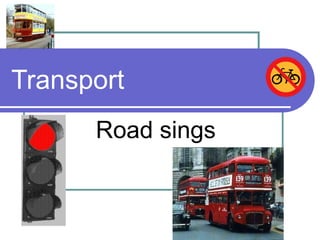
Transport
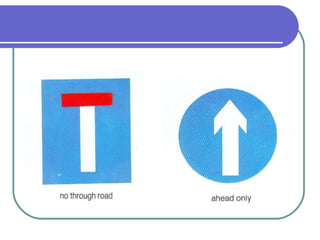
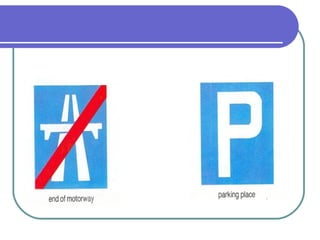
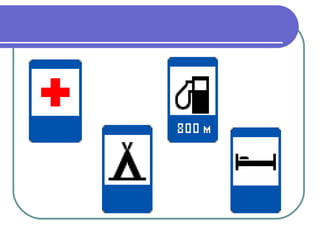
      Road sings
Transport

[U] a system or
method for carrying
passengers or goods
from one place to
another
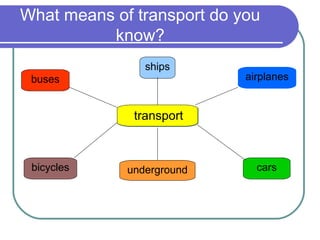
What means of transport do you
          know?
                ships
 buses                      airplanes


              transport


 bicycles    underground      cars
Buses

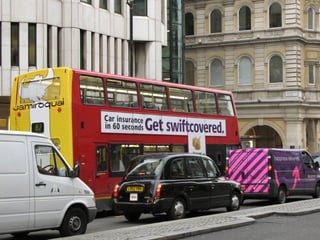
Double-decker – a bus with two
passenger decks, especially a red bus of
this type in London

Coach – a comfortable bus for carrying
passengers over long distances
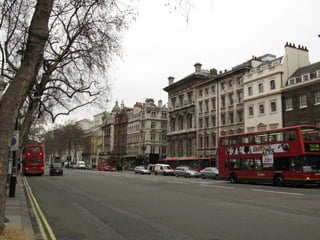
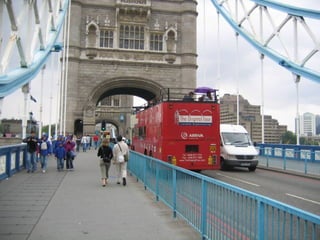
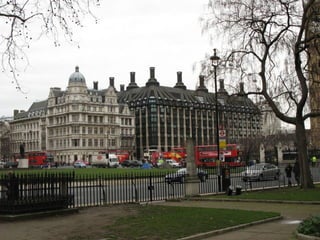
What is the best way to see
            London?
One  of the best ways of seeing
 London is to take a seat on the top
 deck of one of its famous double-
 decker buses. The traffic may be
 slow on occasions, but it offers a
 wonderful opportunity for leisurely
 sightseeing. Many bus routes pass
 by London’s most famous sights
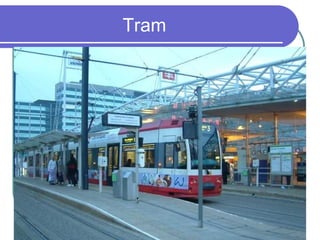
Tram

also  tramcar || usually
 streetcar, trolley AmE – a
 sort of bus used in cities that
 is driven by electricity and
 runs along metal tracks set
 in the road
Railways

Railways were pioneered in Britain: the
  Stockton and Darlington Railway, opened in
  1825, was the first public passenger railway
  in the world to be worked by steam power.
  The main railway companies in Great Britain
  were nationalised in 1948, coming under the
  control of the British railways Board
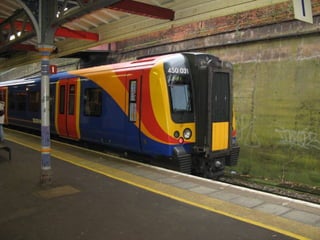
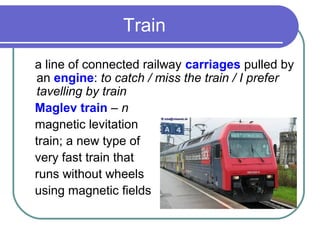
Train
a line of connected railway carriages pulled by
an engine: to catch / miss the train / I prefer
tavelling by train
Maglev train – n
magnetic levitation
train; a new type of
very fast train that
runs without wheels
using magnetic fields
Ship
a large boat for carrying people or goods
on the sea
Passenger Liner – a large passenger
ship especially one of several owned by
a company
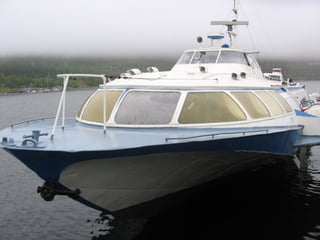
Hydrofoil – a large motorboat fitted with
an apparatus which raises it out of the
water when it moves high speed
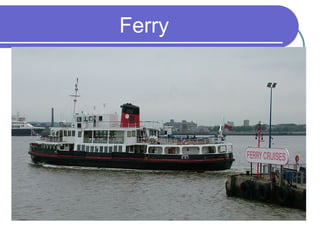
Ferry

a boat that carries
people or goods
across a river or a
narrow area of water
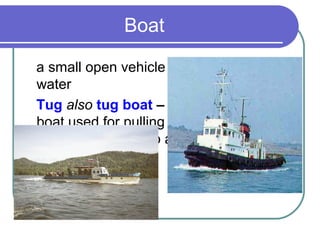
Boat

a small open vehicle for travelling across
water
Tug also tug boat – a small powerful
boat used for pulling and / or guiding
ships into a port, up a river etc
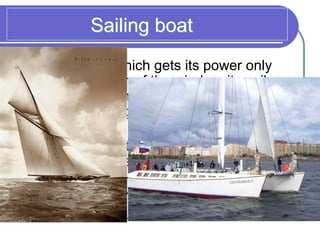
Sailing boat
a large ship which gets its power only
from the action of the wind on its sails,
having either no motor or only a small
one for helping it in making certain
movements
Yacht – a light sailing boat, especially
one used for racing
Dinghy – a small open sailing boat used
especially for racing
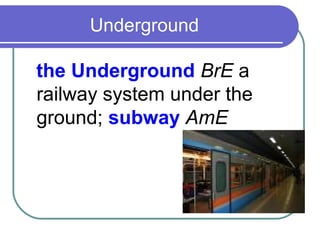
Underground

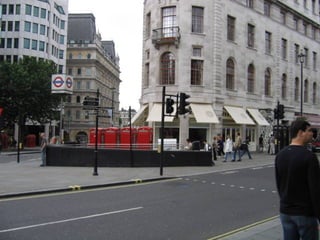
the Underground BrE a
railway system under the
ground; subway AmE
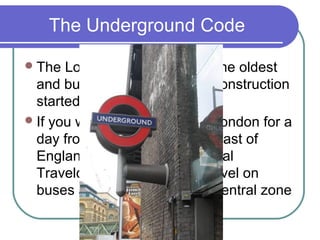
The Underground Code

 The  London underground is the oldest
  and busiest in the world. Its construction
  started in 1860
 If you would like to come to London for a
  day from a town in the southeast of
  England, you can buy a special
  Travelcard which includes travel on
  buses and the ‘tubes’ in the central zone
Subway

BrE || underpass AmE a
path under a road or
railway by which it can be
safely crossed
Do you know who invented the
          aeroplane?
 The  Wright brothers invented, built, and flew
  the first airplane on 7 December, 1903, at Kitty
  Hawk, North Carolina.
 They reported their flight in a letter to
  government officials in Washington,D.C., but
  such an achievement was considered
  impossible. Therefore, their letter was ignored.
  It was not until 1908 that the Wright brothers
  gained worldwide fame
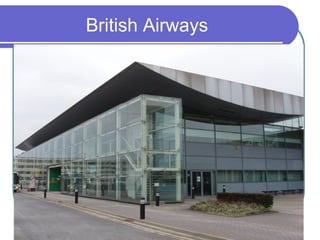
British Airways
 Would    you like to travel to Britain by air?
  Then you will arrive in the southeast, for this is
  where the main passenger ports and airports
  are situated. Heathrow airport is the biggest
  airport in the UK and the world’s busiest
  airport. It is about 20 miles east of London
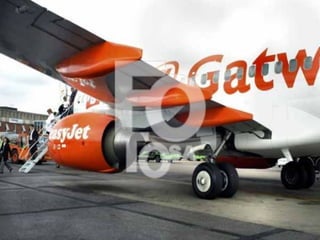
 While Gatwick, the second major airport is
  about 30 miles to the south
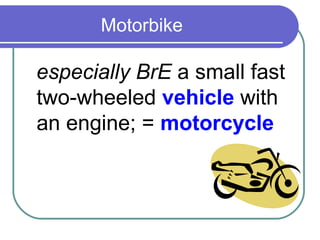
Motorbike

especially BrE a small fast
two-wheeled vehicle with
an engine; = motorcycle
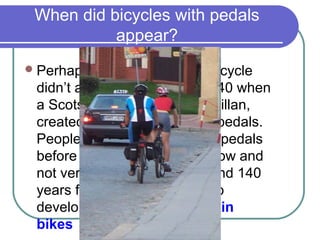
When did bicycles with pedals
           appear?
 Perhaps unexpectedly, the bicycle
 didn’t appear until around 1840 when
 a Scotsman, Kirkpatrick McMillan,
 created the first one to have pedals.
 People rode bicycles without pedals
 before then. But they were slow and
 not very popular. It took around 140
 years for McMillan’s design to
 develop into modern mountain
 bikes
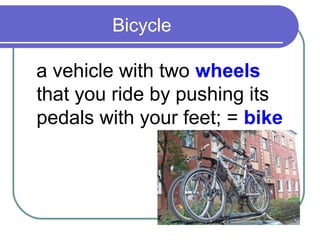
Bicycle

a vehicle with two wheels
that you ride by pushing its
pedals with your feet; = bike
Car

 also motorcar BrE || automobile AmE
  a road vehicle with usually four wheels
  which is driven by a motor and used as
  a means of travel for a small number of
  people
 Lorry – a large motor vehicle for
  carrying heavy goods;
Van

a road vehicle, usually larger
than a car but smaller than a
truck, having an enclosed box-
shaped body and used for
carrying goods and sometimes
people: a delivery van /a police
van / a van driver
When did the first taxis appear?
  The  London black taxi is the first taxi in the
   world. Black cabs are over 300 years old.
   Once they were horse-driven carriages. In
   their present form they appeared after the First
   World War.
  It was in 1694 when the Parliament passed
   the act which gave the right to carry
   passengers to 250 hired carriages
  The traditional colour of the London taxi is still
   black, though in recent years red, blue and
   yellow vehicles have appeared
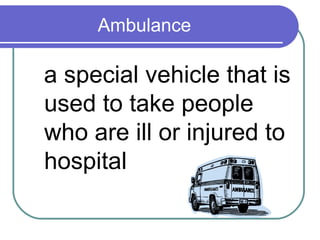
Ambulance

a special vehicle that is
used to take people
who are ill or injured to
hospital
What is it?
This is a system of trains in tunnels in a large city
   underground
This is a bus that runs between towns and cities
    coach
This boat is used for pulling ships
    tug
This vehicle is smaller than a truck and has metal sides
    van
This vehicle carries sick or wounded people
    ambulance
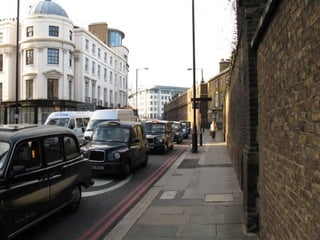
Traffic

a movement of people or vehicles
 along roads or streets, of ships in
 the sea, planes in the sky etc.
Traffic jam – a situation in which
 there is so much traffic on the road
 that it moves only very slowly (or not
 at all)
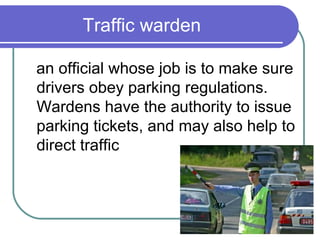
Traffic warden

an official whose job is to make sure
drivers obey parking regulations.
Wardens have the authority to issue
parking tickets, and may also help to
direct traffic
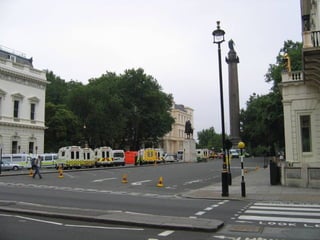
Traffic cone

a cone-shaped marker used on a road
especially for showing where repairs are
being done
Belisha beacon also beacon a flashing
orange flight on a striped globe that marks a
street crossing place (a zebra crossing) for
walkers. Named after Leslie Hore-Belisha,
minister of transport in the 1930s, when such
sings were introduced
Traffic lights

also traffic signals n [usually
pl] coloured lights used for
controlling and directing
traffic, especially where one
road crosses another
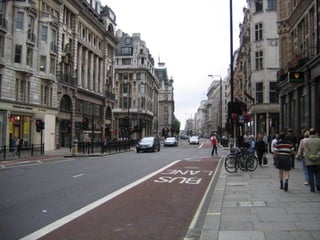
Bus lane

n a part of a wide road, marked for the
use of buses only: We shouldn’t drive
up here – it’s the bus lane

Bus stop – a fixed place at the side of a
road where buses stop for passengers:
waiting at the bus stop
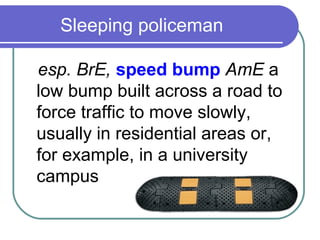
Sleeping policeman

esp. BrE, speed bump AmE a
low bump built across a road to
force traffic to move slowly,
usually in residential areas or,
for example, in a university
campus
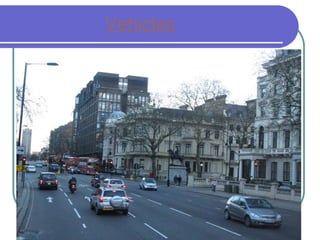
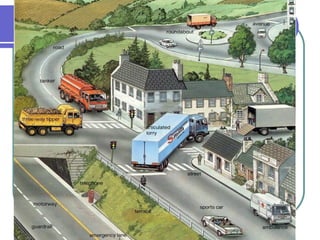
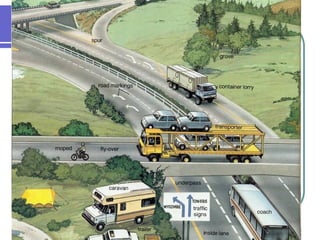
Vehicles

Decide   which
answer A, B, C or D
best fits each space
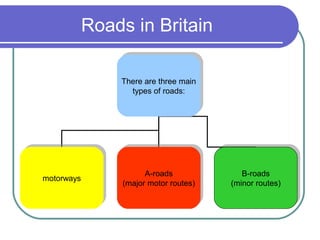
Roads in Britain

             There are three main
            There are three main
                types of roads:
               types of roads:


                    A-roads
                   A-roads               B-roads
                                        B-roads
motorways
motorways     (major motor routes)
             (major motor routes)     (minor routes)
                                     (minor routes)
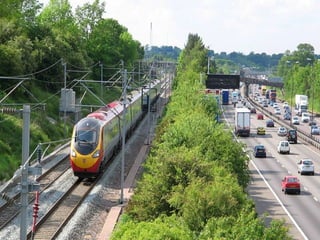
Motorway

a very wide road built for fast
 long-distance travel
Highway – AmE a broad main
 road used especially by traffic
 going in both directions, and
 often leading from one town to
 another
Roads
The  names of A-roads begin with
 the letter A and then have a
 number, such as the A1 and the A
 414
B-road – in Britain, a less important
 country road (often shown in yellow
 on maps) with the letter B before its
 number
Travel by road
 In  Britain you must drive on the left and
  overtake on the right. There is an
  automatic priority for cars approaching
  junctions from the left. At roundabouts,
  traffic on the roundabout coming from
  the right has priority over traffic joining
  it. The wearing of seat belts for both
  front and rear seat occupants is
  compulsory
The Highway Code

 The official list of rules
 for drivers on the road.
People are tested on their
    knowledge of the
Highway Code as part of
    their driving test
Minimum ages are:
16 for riders of mopeds, drivers of small tractors,
  and disabled people receiving a mobility
  allowance;
17 for drivers of cars and other passenger
  vehicles with nine or fewer seats, motorcycles
  and goods vehicles not over 3.5 tonnes
  permissible maximum weight;
18 for goods vehicles weighing over 3.5, but not
  over 7.5 tonnes;
21 for passenger vehicles with more than nine
  seats and goods vehicles over 7.5 tonnes
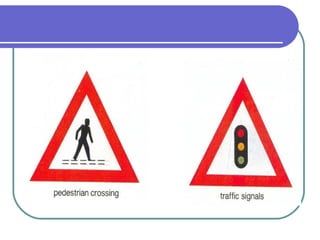
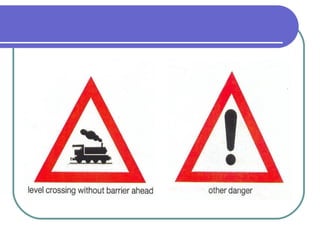
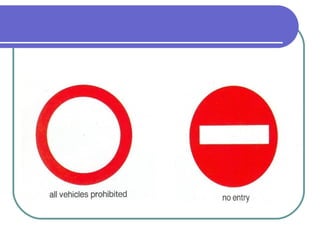
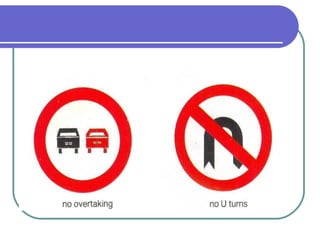
Traffic Signs

Do  you know your Highway Code?
Can you read the signs on the
 road?
Why is it essential to have an
 International Highway Code?
How does the Highway Code
 promote travel and tourism?
Do you know these traffic signs?

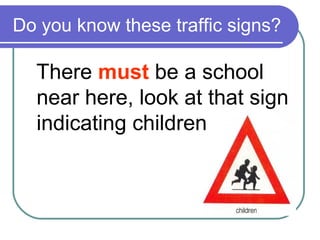
  There must be a school
  near here, look at that sign
  indicating children
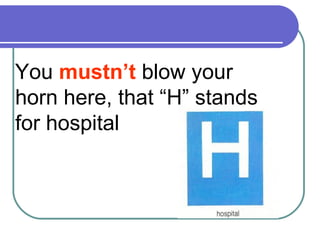
You mustn’t blow your
horn here, that “H” stands
for hospital
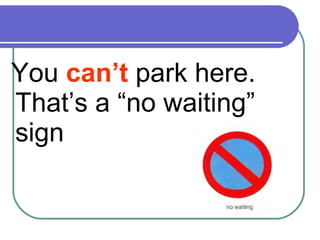
You can’t park here.
That’s a “no waiting”
sign
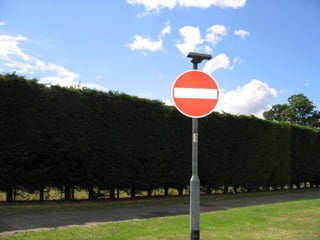
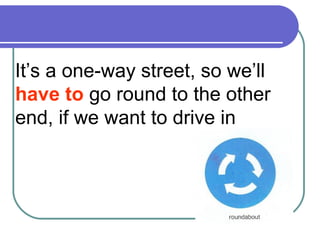
It’s a one-way street, so we’ll
have to go round to the other
end, if we want to drive in
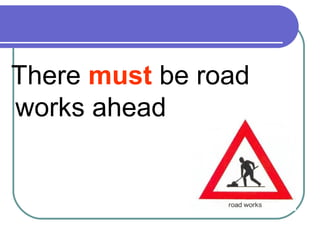
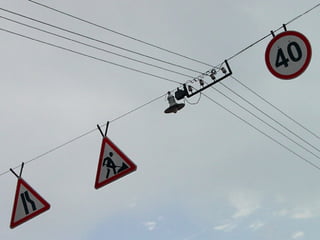
There must be road
works ahead
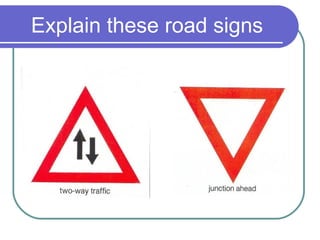
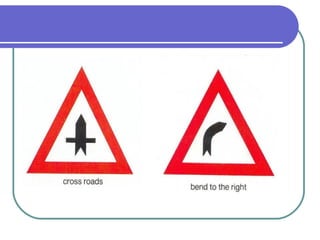
Explain these road signs
Quiz
Choose    the correct
answer for each sign.
You can get one point
for the right choice in
each of the items below

Transport

  • 1.
    Transport Road sings
  • 2.
    Transport [U] a systemor method for carrying passengers or goods from one place to another
  • 3.
    What means oftransport do you know? ships buses airplanes transport bicycles underground cars
  • 4.
    Buses Double-decker – abus with two passenger decks, especially a red bus of this type in London Coach – a comfortable bus for carrying passengers over long distances
  • 5.
    What is thebest way to see London? One of the best ways of seeing London is to take a seat on the top deck of one of its famous double- decker buses. The traffic may be slow on occasions, but it offers a wonderful opportunity for leisurely sightseeing. Many bus routes pass by London’s most famous sights
  • 6.
    Tram also tramcar|| usually streetcar, trolley AmE – a sort of bus used in cities that is driven by electricity and runs along metal tracks set in the road
  • 7.
    Railways Railways were pioneeredin Britain: the Stockton and Darlington Railway, opened in 1825, was the first public passenger railway in the world to be worked by steam power. The main railway companies in Great Britain were nationalised in 1948, coming under the control of the British railways Board
  • 8.
    Train a line ofconnected railway carriages pulled by an engine: to catch / miss the train / I prefer tavelling by train Maglev train – n magnetic levitation train; a new type of very fast train that runs without wheels using magnetic fields
  • 9.
    Ship a large boatfor carrying people or goods on the sea Passenger Liner – a large passenger ship especially one of several owned by a company Hydrofoil – a large motorboat fitted with an apparatus which raises it out of the water when it moves high speed
  • 10.
    Ferry a boat thatcarries people or goods across a river or a narrow area of water
  • 11.
    Boat a small openvehicle for travelling across water Tug also tug boat – a small powerful boat used for pulling and / or guiding ships into a port, up a river etc
  • 12.
    Sailing boat a largeship which gets its power only from the action of the wind on its sails, having either no motor or only a small one for helping it in making certain movements Yacht – a light sailing boat, especially one used for racing Dinghy – a small open sailing boat used especially for racing
  • 13.
    Underground the Underground BrEa railway system under the ground; subway AmE
  • 14.
    The Underground Code The London underground is the oldest and busiest in the world. Its construction started in 1860  If you would like to come to London for a day from a town in the southeast of England, you can buy a special Travelcard which includes travel on buses and the ‘tubes’ in the central zone
  • 15.
    Subway BrE || underpassAmE a path under a road or railway by which it can be safely crossed
  • 16.
    Do you knowwho invented the aeroplane?  The Wright brothers invented, built, and flew the first airplane on 7 December, 1903, at Kitty Hawk, North Carolina.  They reported their flight in a letter to government officials in Washington,D.C., but such an achievement was considered impossible. Therefore, their letter was ignored. It was not until 1908 that the Wright brothers gained worldwide fame
  • 17.
    British Airways  Would you like to travel to Britain by air? Then you will arrive in the southeast, for this is where the main passenger ports and airports are situated. Heathrow airport is the biggest airport in the UK and the world’s busiest airport. It is about 20 miles east of London  While Gatwick, the second major airport is about 30 miles to the south
  • 18.
    Motorbike especially BrE asmall fast two-wheeled vehicle with an engine; = motorcycle
  • 19.
    When did bicycleswith pedals appear?  Perhaps unexpectedly, the bicycle didn’t appear until around 1840 when a Scotsman, Kirkpatrick McMillan, created the first one to have pedals. People rode bicycles without pedals before then. But they were slow and not very popular. It took around 140 years for McMillan’s design to develop into modern mountain bikes
  • 20.
    Bicycle a vehicle withtwo wheels that you ride by pushing its pedals with your feet; = bike
  • 21.
    Car  also motorcarBrE || automobile AmE a road vehicle with usually four wheels which is driven by a motor and used as a means of travel for a small number of people  Lorry – a large motor vehicle for carrying heavy goods;
  • 22.
    Van a road vehicle,usually larger than a car but smaller than a truck, having an enclosed box- shaped body and used for carrying goods and sometimes people: a delivery van /a police van / a van driver
  • 23.
    When did thefirst taxis appear?  The London black taxi is the first taxi in the world. Black cabs are over 300 years old. Once they were horse-driven carriages. In their present form they appeared after the First World War.  It was in 1694 when the Parliament passed the act which gave the right to carry passengers to 250 hired carriages  The traditional colour of the London taxi is still black, though in recent years red, blue and yellow vehicles have appeared
  • 24.
    Ambulance a special vehiclethat is used to take people who are ill or injured to hospital
  • 25.
    What is it? Thisis a system of trains in tunnels in a large city underground This is a bus that runs between towns and cities coach This boat is used for pulling ships tug This vehicle is smaller than a truck and has metal sides van This vehicle carries sick or wounded people ambulance
  • 26.
    Traffic a movement ofpeople or vehicles along roads or streets, of ships in the sea, planes in the sky etc. Traffic jam – a situation in which there is so much traffic on the road that it moves only very slowly (or not at all)
  • 27.
    Traffic warden an officialwhose job is to make sure drivers obey parking regulations. Wardens have the authority to issue parking tickets, and may also help to direct traffic
  • 28.
    Traffic cone a cone-shapedmarker used on a road especially for showing where repairs are being done Belisha beacon also beacon a flashing orange flight on a striped globe that marks a street crossing place (a zebra crossing) for walkers. Named after Leslie Hore-Belisha, minister of transport in the 1930s, when such sings were introduced
  • 29.
    Traffic lights also trafficsignals n [usually pl] coloured lights used for controlling and directing traffic, especially where one road crosses another
  • 30.
    Bus lane n apart of a wide road, marked for the use of buses only: We shouldn’t drive up here – it’s the bus lane Bus stop – a fixed place at the side of a road where buses stop for passengers: waiting at the bus stop
  • 31.
    Sleeping policeman esp. BrE,speed bump AmE a low bump built across a road to force traffic to move slowly, usually in residential areas or, for example, in a university campus
  • 32.
    Vehicles Decide which answer A, B, C or D best fits each space
  • 33.
    Roads in Britain There are three main There are three main types of roads: types of roads: A-roads A-roads B-roads B-roads motorways motorways (major motor routes) (major motor routes) (minor routes) (minor routes)
  • 34.
    Motorway a very wideroad built for fast long-distance travel Highway – AmE a broad main road used especially by traffic going in both directions, and often leading from one town to another
  • 35.
    Roads The namesof A-roads begin with the letter A and then have a number, such as the A1 and the A 414 B-road – in Britain, a less important country road (often shown in yellow on maps) with the letter B before its number
  • 36.
    Travel by road In Britain you must drive on the left and overtake on the right. There is an automatic priority for cars approaching junctions from the left. At roundabouts, traffic on the roundabout coming from the right has priority over traffic joining it. The wearing of seat belts for both front and rear seat occupants is compulsory
  • 37.
    The Highway Code The official list of rules for drivers on the road. People are tested on their knowledge of the Highway Code as part of their driving test
  • 38.
    Minimum ages are: 16for riders of mopeds, drivers of small tractors, and disabled people receiving a mobility allowance; 17 for drivers of cars and other passenger vehicles with nine or fewer seats, motorcycles and goods vehicles not over 3.5 tonnes permissible maximum weight; 18 for goods vehicles weighing over 3.5, but not over 7.5 tonnes; 21 for passenger vehicles with more than nine seats and goods vehicles over 7.5 tonnes
  • 39.
    Traffic Signs Do you know your Highway Code? Can you read the signs on the road? Why is it essential to have an International Highway Code? How does the Highway Code promote travel and tourism?
  • 40.
    Do you knowthese traffic signs? There must be a school near here, look at that sign indicating children
  • 41.
    You mustn’t blowyour horn here, that “H” stands for hospital
  • 42.
    You can’t parkhere. That’s a “no waiting” sign
  • 43.
    It’s a one-waystreet, so we’ll have to go round to the other end, if we want to drive in
  • 44.
    There must beroad works ahead
  • 45.
  • 54.
    Quiz Choose the correct answer for each sign. You can get one point for the right choice in each of the items below