Trait observation and
discovery network for potato
Hannele Lindqvist-Kreuze
RTB Annual Meeting
December 8, 2015
Background problem
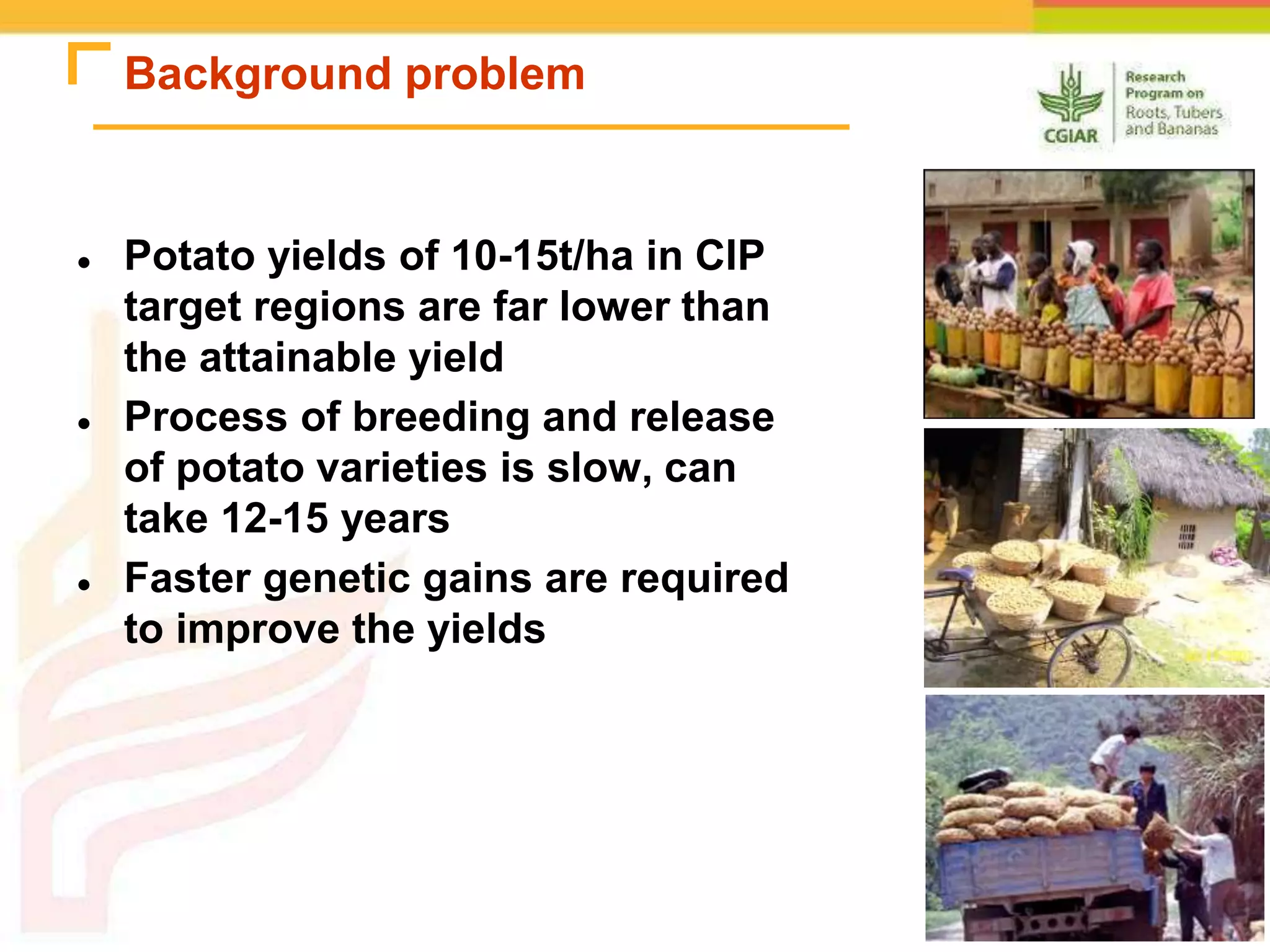
● Potato yields of 10-15t/ha in CIP
target regions are far lower than
the attainable yield
● Process of breeding and release
of potato varieties is slow, can
take 12-15 years
● Faster genetic gains are required
to improve the yields
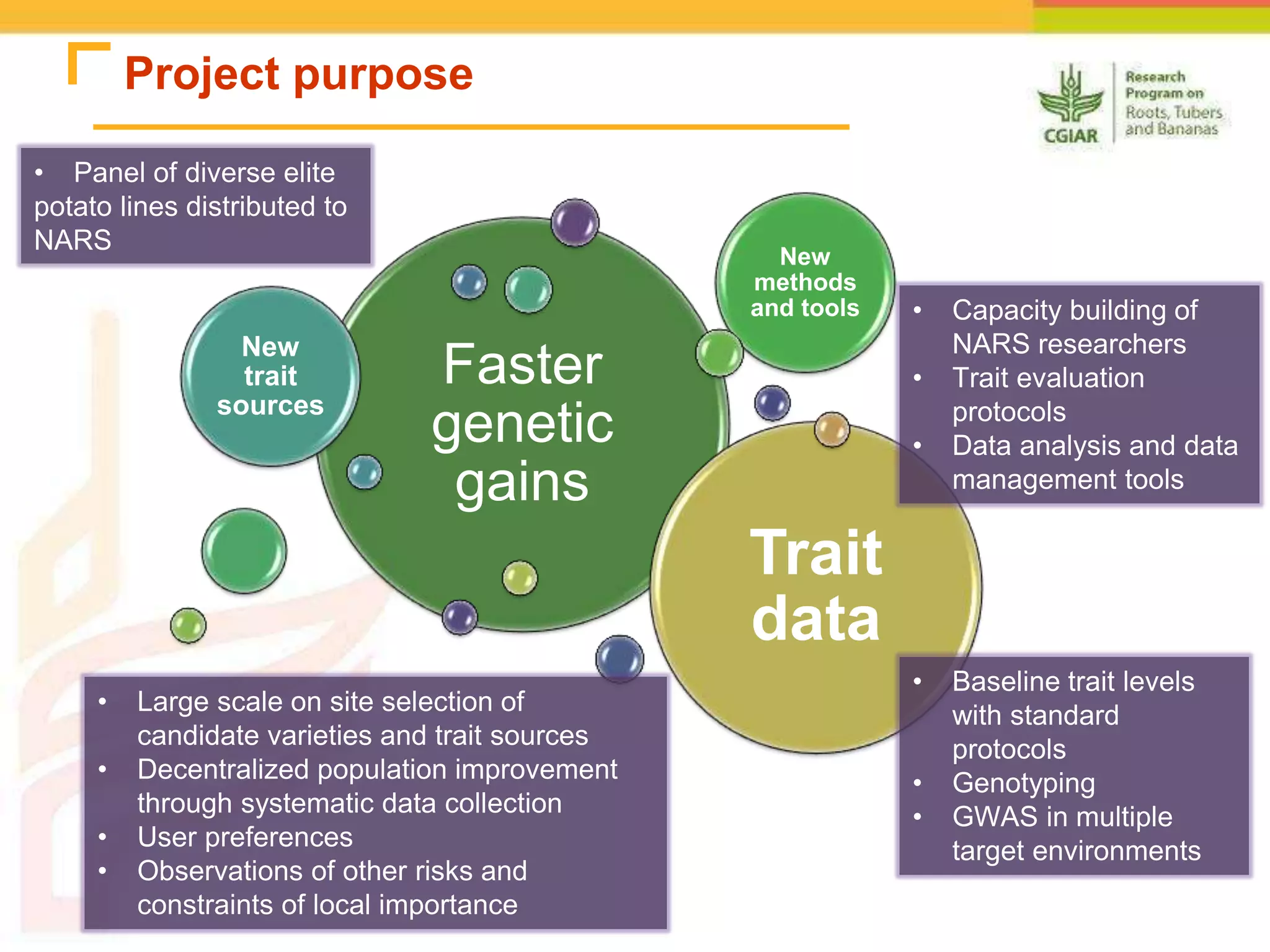
• Panel of diverse elite
potato lines distributed to
NARS
Project purpose
Faster
genetic
gains
New
trait
sources
New
methods
and tools
Trait
data
• Capacity building of
NARS researchers
• Trait evaluation
protocols
• Data analysis and data
management tools
• Large scale on site selection of
candidate varieties and trait sources
• Decentralized population improvement
through systematic data collection
• User preferences
• Observations of other risks and
constraints of local importance
• Baseline trait levels
with standard
protocols
• Genotyping
• GWAS in multiple
target environments
Project Partners
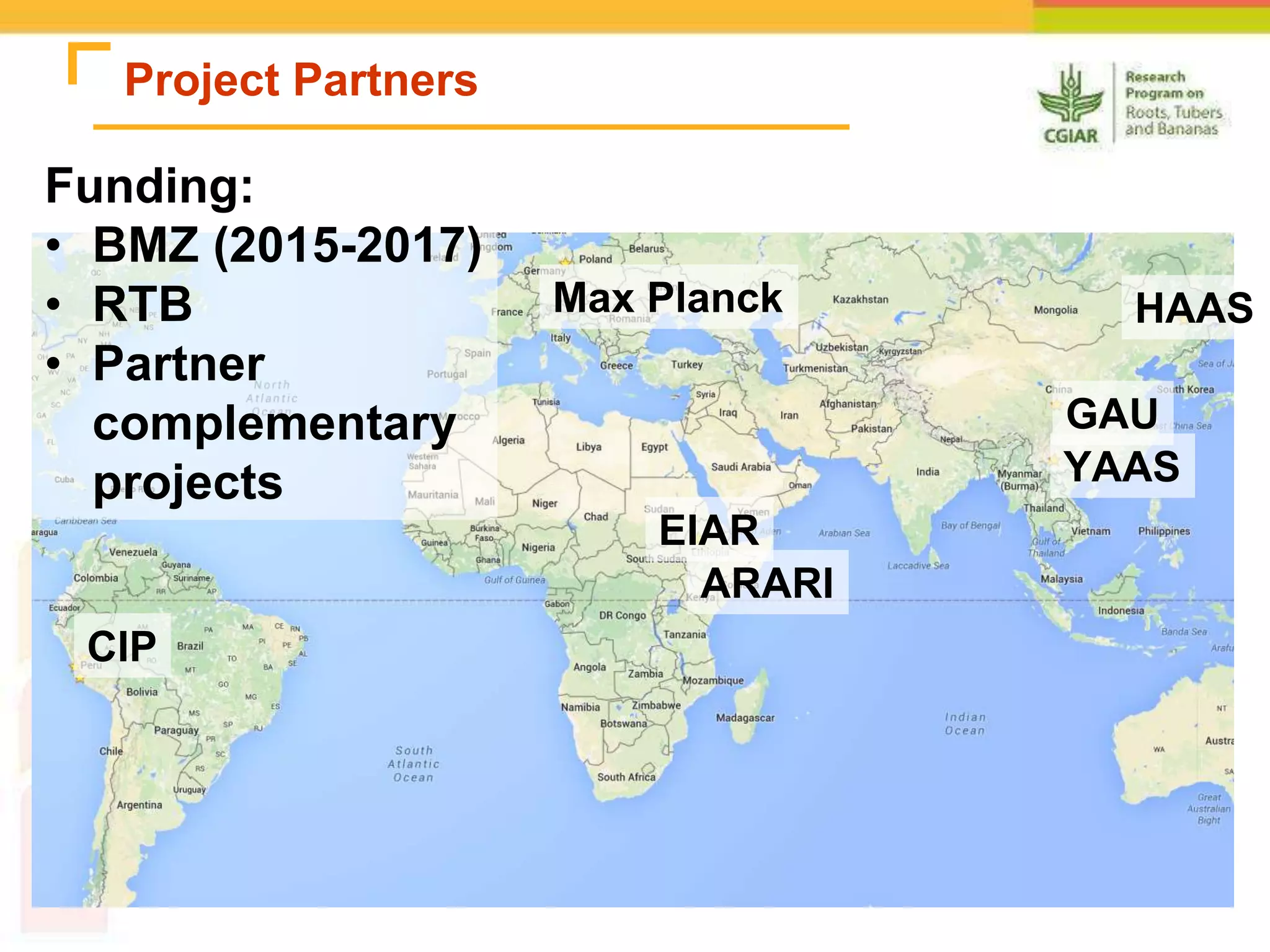
CIP
Max Planck
EIAR
ARARI
YAAS
HAAS
GAU
Funding:
• BMZ (2015-2017)
• RTB
• Partner
complementary
projects
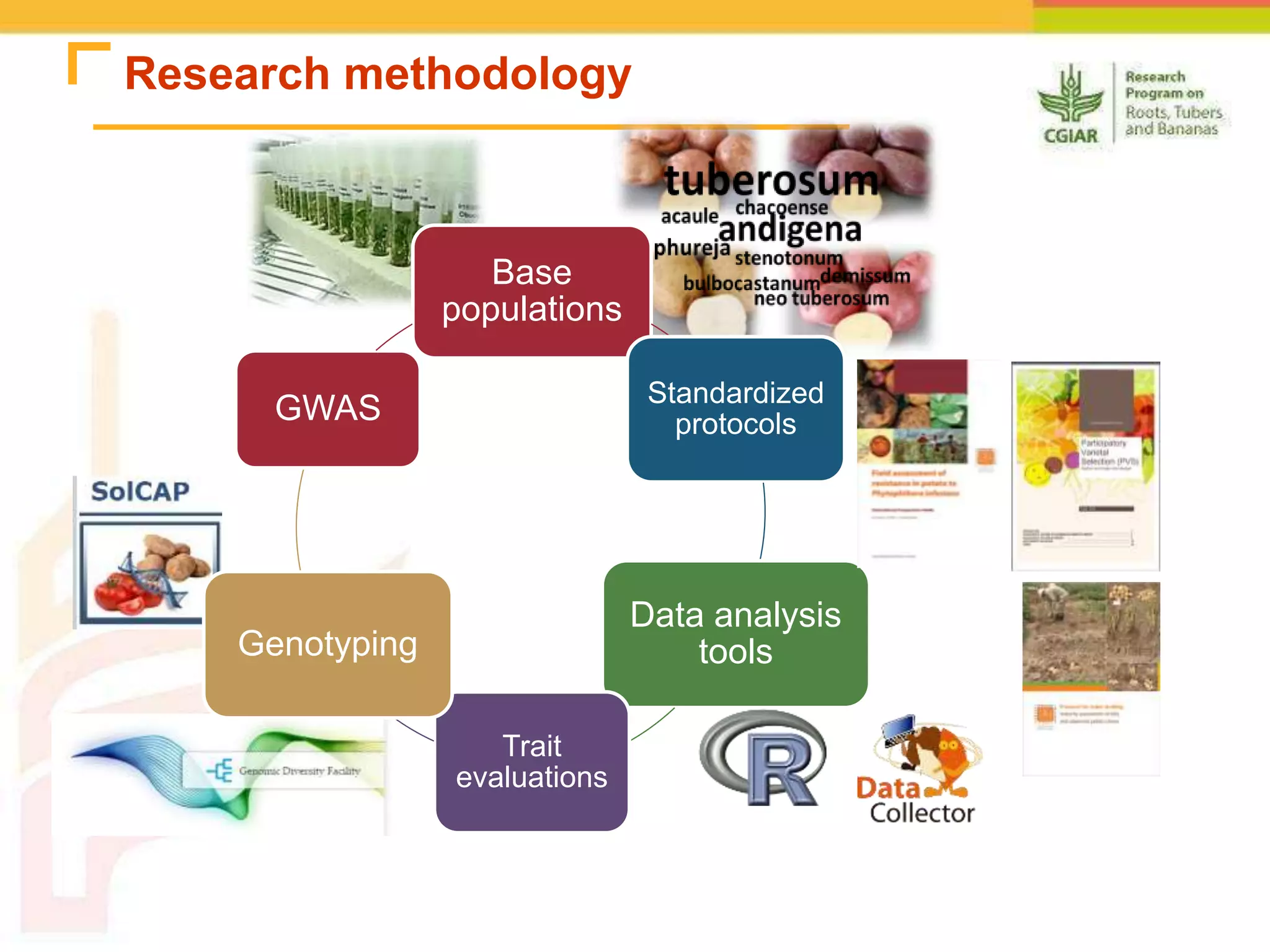
Research methodology
Base
populations
Standardized
protocols
Data analysis
tools
Trait
evaluations
Genotyping
GWAS
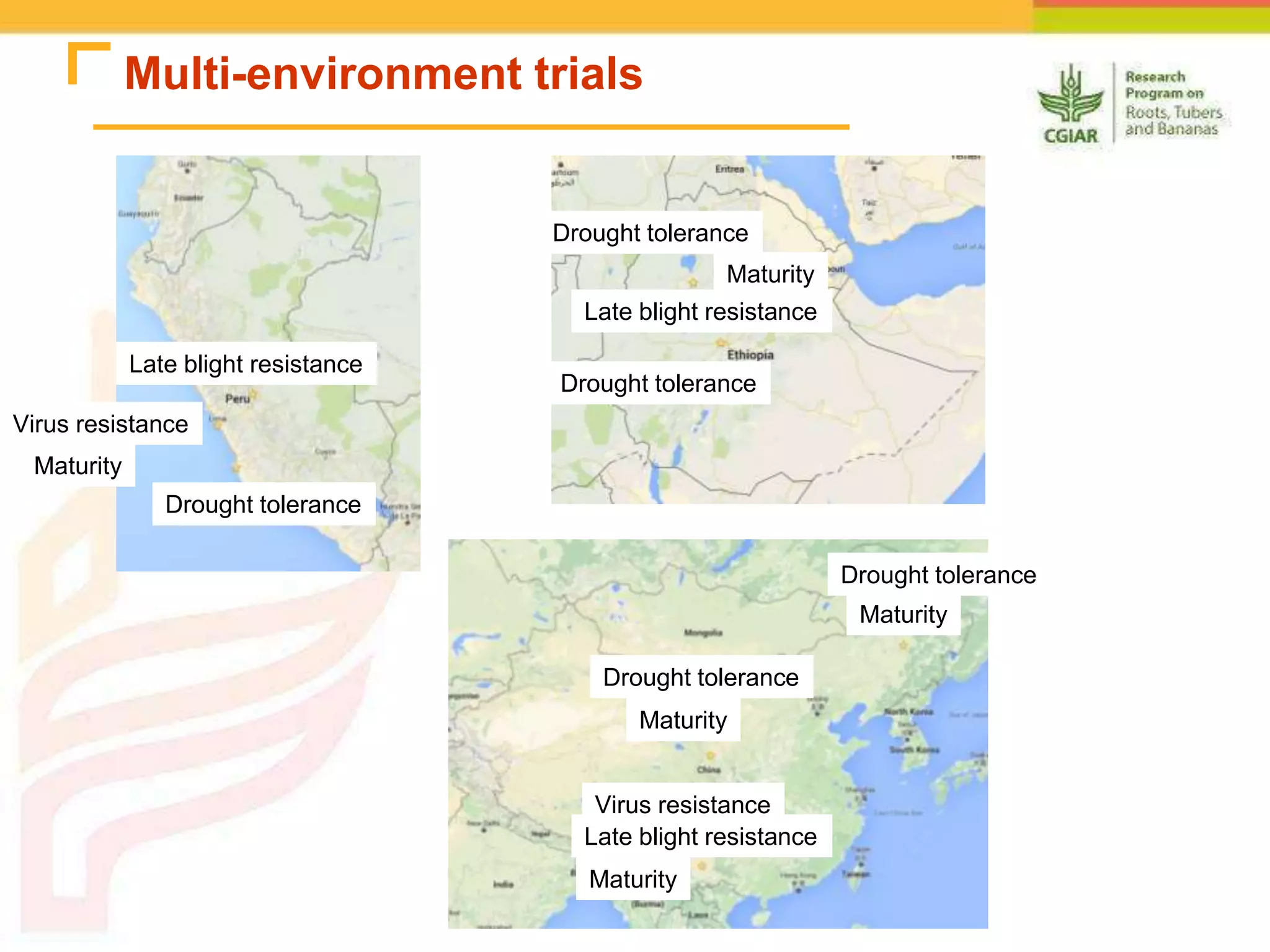
Multi-environment trials
Late blight resistance
Virus resistance
Virus resistance
Maturity
Maturity
Maturity
Maturity
Maturity
Drought tolerance
Drought tolerance
Drought tolerance
Drought tolerance
Drought tolerance
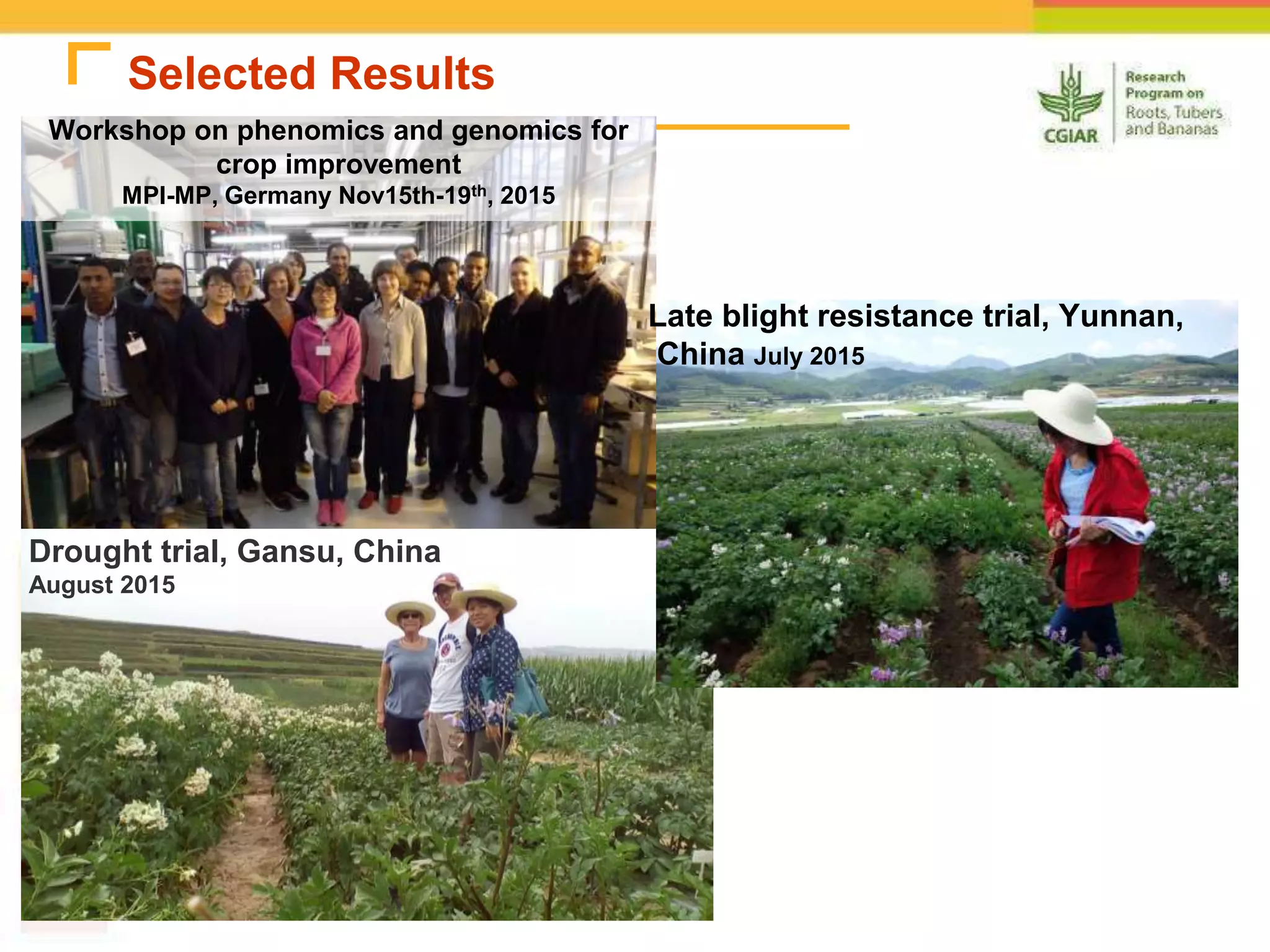
Workshop on phenomics and genomics for
crop improvement
MPI-MP, Germany Nov15th-19th, 2015
Selected Results
Drought trial, Gansu, China
August 2015
Late blight resistance trial, Yunnan,
China July 2015
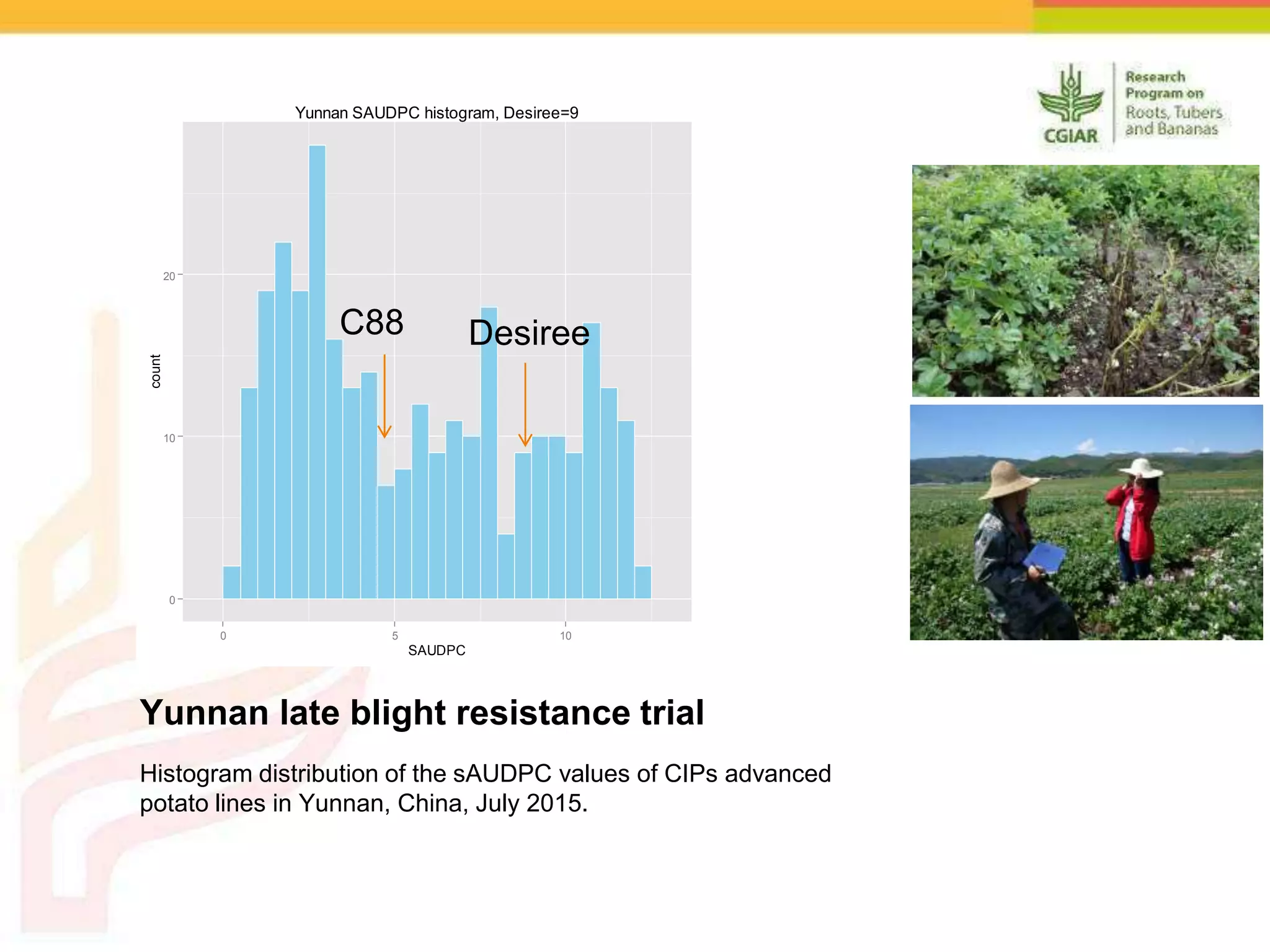
Yunnan late blight resistance trial
Histogram distribution of the sAUDPC values of CIPs advanced
potato lines in Yunnan, China, July 2015.
0
10
20
0 5 10
SAUDPC
count
Yunnan SAUDPC histogram, Desiree=9
C88 Desiree
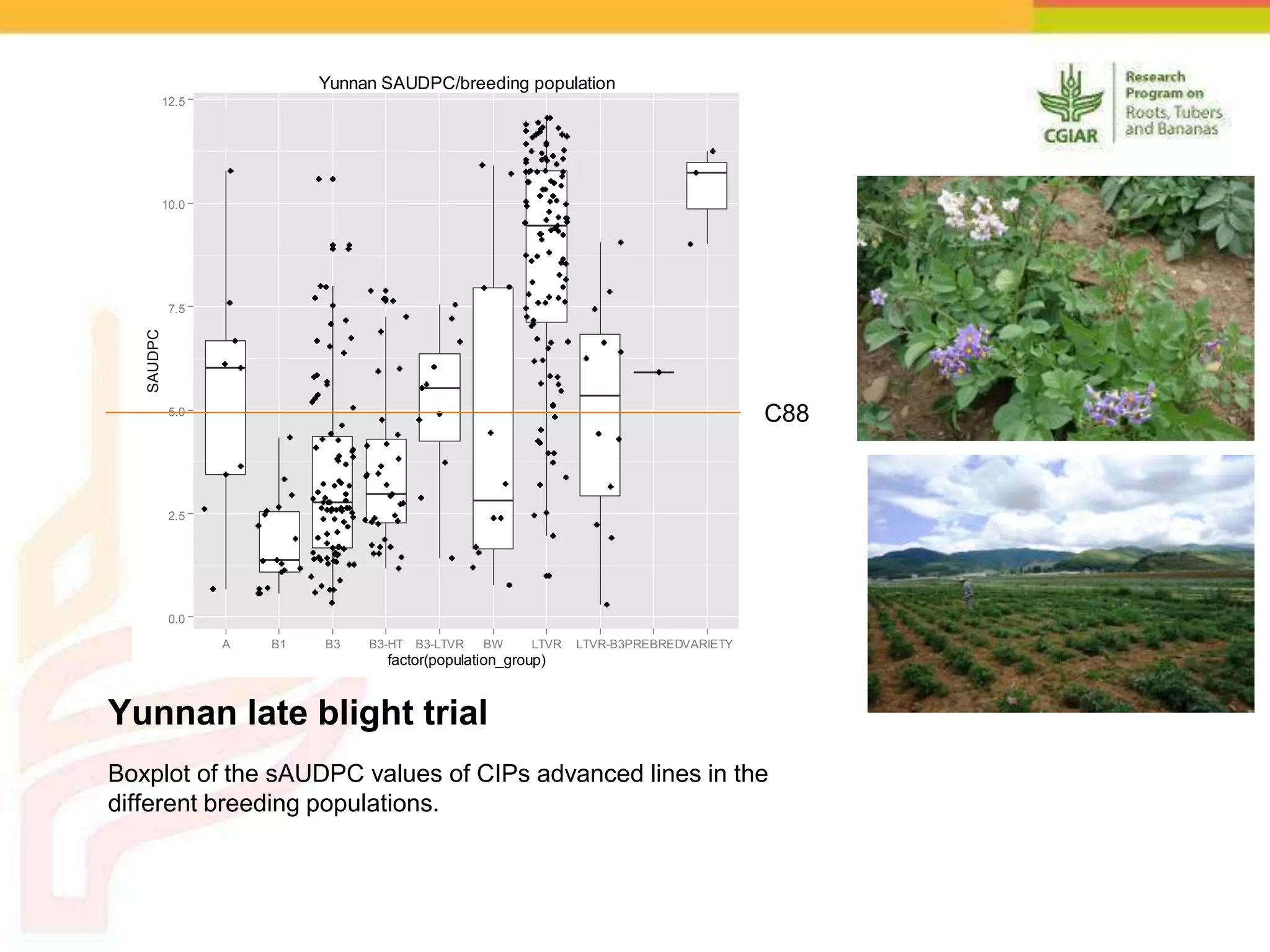
Yunnan late blight trial
Boxplot of the sAUDPC values of CIPs advanced lines in the
different breeding populations.
0.0
2.5
5.0
7.5
10.0
12.5
A B1 B3 B3-HT B3-LTVR BW LTVR LTVR-B3PREBREDVARIETY
factor(population_group)
SAUDPC
Yunnan SAUDPC/breeding population
C88
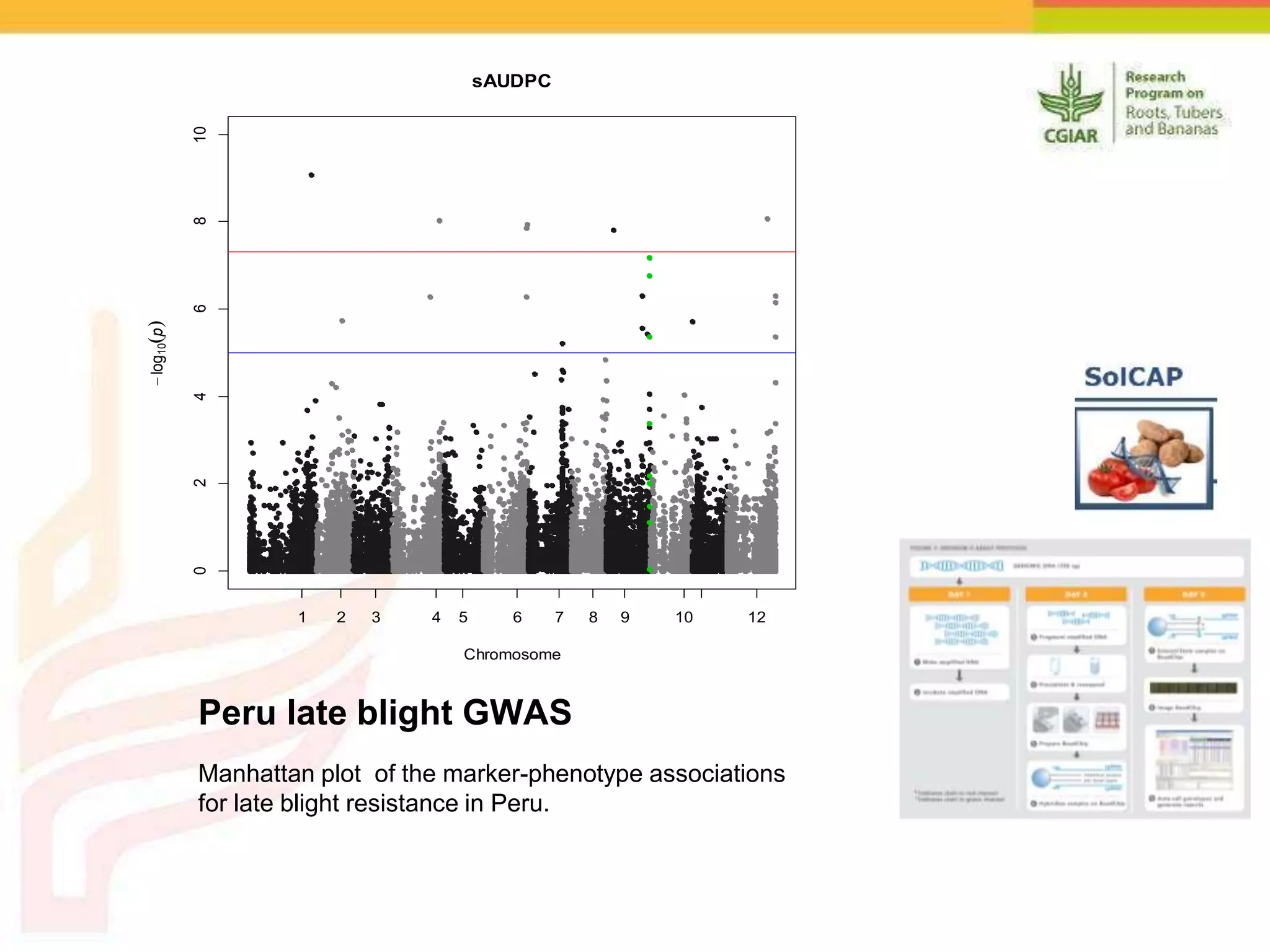
Peru late blight GWAS
Manhattan plot of the marker-phenotype associations
for late blight resistance in Peru.
0246810
sAUDPC
Chromosome
log10p
1 2 3 4 5 6 7 8 9 10 12
Gender and variety preference
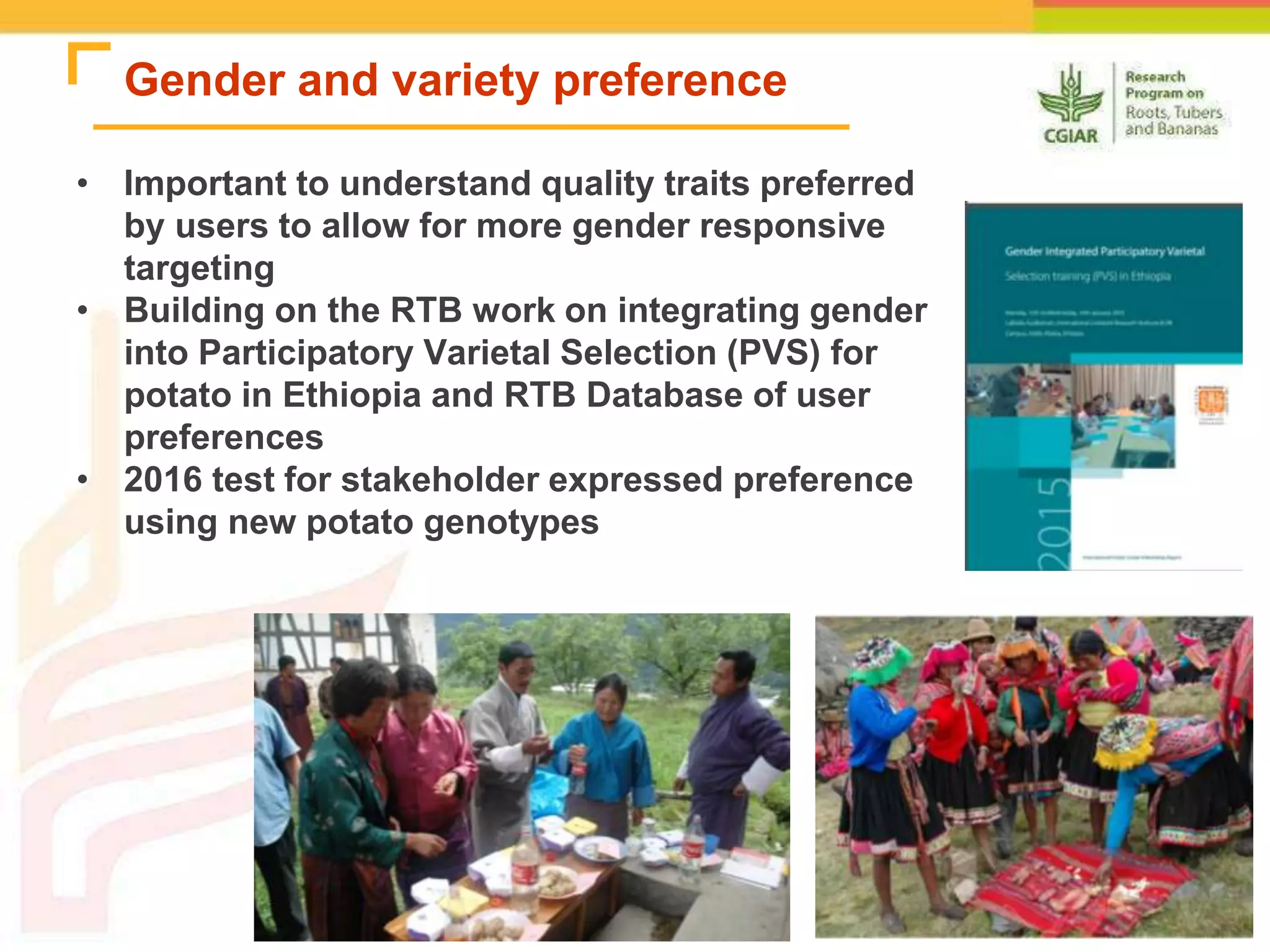
• Important to understand quality traits preferred
by users to allow for more gender responsive
targeting
• Building on the RTB work on integrating gender
into Participatory Varietal Selection (PVS) for
potato in Ethiopia and RTB Database of user
preferences
• 2016 test for stakeholder expressed preference
using new potato genotypes
Linkages to flagships
FP 1: DISCOVERY: ENHANCED GENETIC RESOURCES
Breeding platform
Next generation breeding
FP 2: PRODUCTIVE VARIETIES AND QUALITY SEED
Potato varieties for Asia
Potato quality seed
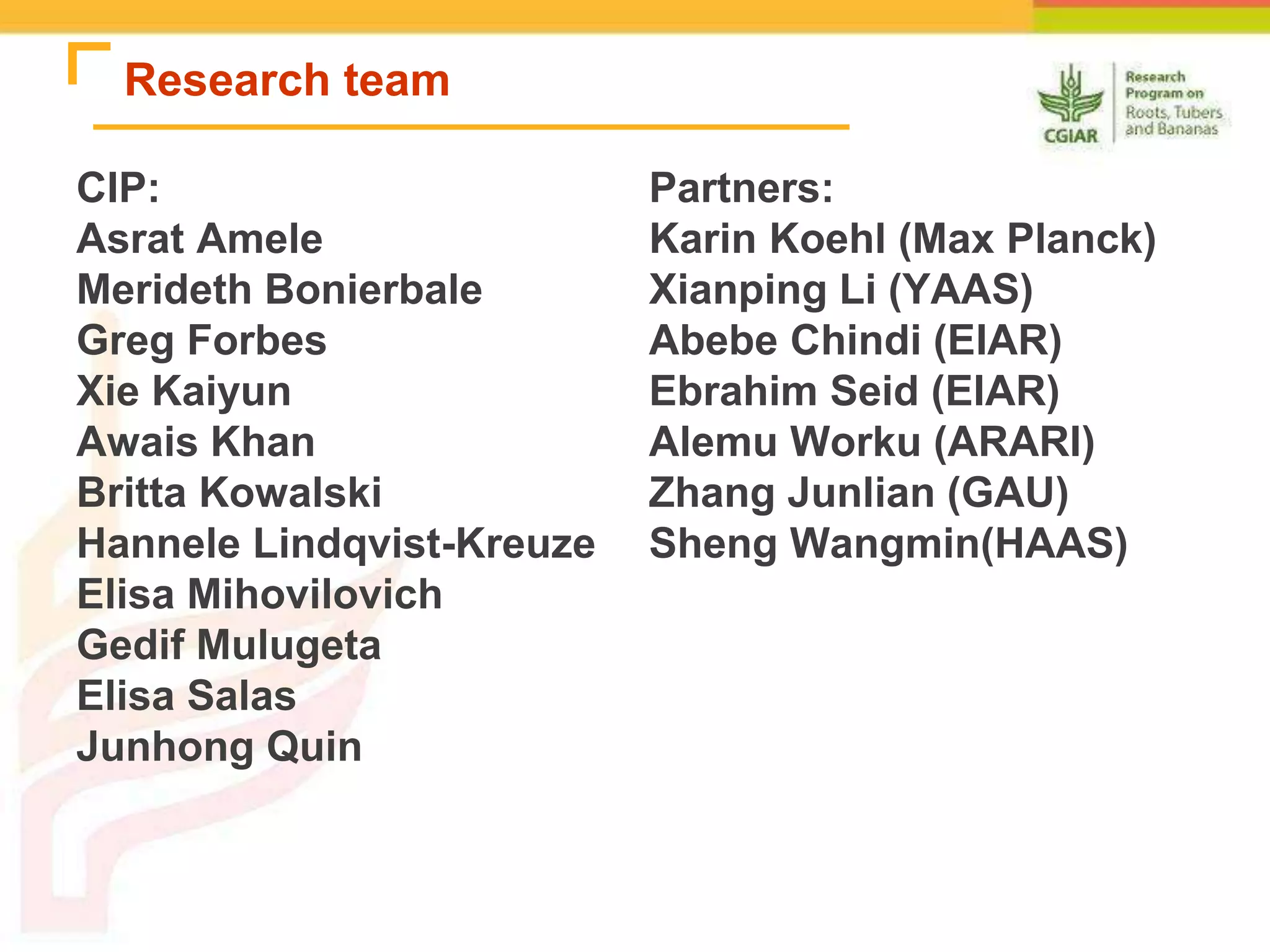
Research team
CIP:
Asrat Amele
Merideth Bonierbale
Greg Forbes
Xie Kaiyun
Awais Khan
Britta Kowalski
Hannele Lindqvist-Kreuze
Elisa Mihovilovich
Gedif Mulugeta
Elisa Salas
Junhong Quin
Partners:
Karin Koehl (Max Planck)
Xianping Li (YAAS)
Abebe Chindi (EIAR)
Ebrahim Seid (EIAR)
Alemu Worku (ARARI)
Zhang Junlian (GAU)
Sheng Wangmin(HAAS)

Trait observation and discovery network for potato

  • 1.
    Trait observation and discoverynetwork for potato Hannele Lindqvist-Kreuze RTB Annual Meeting December 8, 2015
  • 2.
    Background problem ● Potatoyields of 10-15t/ha in CIP target regions are far lower than the attainable yield ● Process of breeding and release of potato varieties is slow, can take 12-15 years ● Faster genetic gains are required to improve the yields
  • 3.
    • Panel ofdiverse elite potato lines distributed to NARS Project purpose Faster genetic gains New trait sources New methods and tools Trait data • Capacity building of NARS researchers • Trait evaluation protocols • Data analysis and data management tools • Large scale on site selection of candidate varieties and trait sources • Decentralized population improvement through systematic data collection • User preferences • Observations of other risks and constraints of local importance • Baseline trait levels with standard protocols • Genotyping • GWAS in multiple target environments
  • 4.
    Project Partners CIP Max Planck EIAR ARARI YAAS HAAS GAU Funding: •BMZ (2015-2017) • RTB • Partner complementary projects
  • 5.
  • 6.
    Multi-environment trials Late blightresistance Late blight resistance Late blight resistance Virus resistance Virus resistance Maturity Maturity Maturity Maturity Maturity Drought tolerance Drought tolerance Drought tolerance Drought tolerance Drought tolerance
  • 7.
    Workshop on phenomicsand genomics for crop improvement MPI-MP, Germany Nov15th-19th, 2015 Selected Results Drought trial, Gansu, China August 2015 Late blight resistance trial, Yunnan, China July 2015
  • 8.
    Yunnan late blightresistance trial Histogram distribution of the sAUDPC values of CIPs advanced potato lines in Yunnan, China, July 2015. 0 10 20 0 5 10 SAUDPC count Yunnan SAUDPC histogram, Desiree=9 C88 Desiree
  • 9.
    Yunnan late blighttrial Boxplot of the sAUDPC values of CIPs advanced lines in the different breeding populations. 0.0 2.5 5.0 7.5 10.0 12.5 A B1 B3 B3-HT B3-LTVR BW LTVR LTVR-B3PREBREDVARIETY factor(population_group) SAUDPC Yunnan SAUDPC/breeding population C88
  • 10.
    Peru late blightGWAS Manhattan plot of the marker-phenotype associations for late blight resistance in Peru. 0246810 sAUDPC Chromosome log10p 1 2 3 4 5 6 7 8 9 10 12
  • 11.
    Gender and varietypreference • Important to understand quality traits preferred by users to allow for more gender responsive targeting • Building on the RTB work on integrating gender into Participatory Varietal Selection (PVS) for potato in Ethiopia and RTB Database of user preferences • 2016 test for stakeholder expressed preference using new potato genotypes
  • 12.
    Linkages to flagships FP1: DISCOVERY: ENHANCED GENETIC RESOURCES Breeding platform Next generation breeding FP 2: PRODUCTIVE VARIETIES AND QUALITY SEED Potato varieties for Asia Potato quality seed
  • 13.
    Research team CIP: Asrat Amele MeridethBonierbale Greg Forbes Xie Kaiyun Awais Khan Britta Kowalski Hannele Lindqvist-Kreuze Elisa Mihovilovich Gedif Mulugeta Elisa Salas Junhong Quin Partners: Karin Koehl (Max Planck) Xianping Li (YAAS) Abebe Chindi (EIAR) Ebrahim Seid (EIAR) Alemu Worku (ARARI) Zhang Junlian (GAU) Sheng Wangmin(HAAS)