What is a biofilm? 
A biofilm is a collective group of microorganisms in which cells stick to each other on the surface, 
working together whose sole purpose is to study the medications used to treat them and find a way to 
adapt to them, making biofilms up to 4000-times more resistant than the same bacteria in the 
planktonic state. 
Responsible for approximately 80% of all chronic bacterial infections and costs the U.S. health care 
system over $200 billion per year 
What is becSCREEN? 
becSCREEN is an antimicrobial susceptibility test that provides insight to 
bacterial vulnerability based on the minimum biofilm eradication concentration 
(MBEC) results for chronic bacterial infections.
Collecting a Sample 
For surface infections: swab the infected area and store in the recommended charcoal based tube. 
Once swab is placed in tube, package similarly to a serum sample. Make sure to include your 
submission paperwork. 
For urinary infections: Collect a mid-stream urine sample to avoid contamination, In other words, 
allow the animal to begin urinating, and after a few seconds start collecting. Once you have the 
sample, take a swab and swirl it in the urine briefly. Place the swab directly in the tube and ship via 
fedex 2nd day.
Why Use becSCREEN? 
becSCREEN™ Antimicrobial Susceptibility test provides insight to bacterial vulnerability 
above and beyond current MIC (minimum inhibitory concentration) testing. 
Cutting edge technology can determine which antibiotics are going to treat the infection; 
once and for all. 
Promotes quicker, lasting recovery; resulting in improved quality of life for pets. 
Reduces antibiotic usage as a result of choosing the correct antibiotics 
and minimum necessary dosage the first time. 
Tests for single and combination antibiotics.
Questions?

Training presentation

  • 2.
    What is abiofilm? A biofilm is a collective group of microorganisms in which cells stick to each other on the surface, working together whose sole purpose is to study the medications used to treat them and find a way to adapt to them, making biofilms up to 4000-times more resistant than the same bacteria in the planktonic state. Responsible for approximately 80% of all chronic bacterial infections and costs the U.S. health care system over $200 billion per year What is becSCREEN? becSCREEN is an antimicrobial susceptibility test that provides insight to bacterial vulnerability based on the minimum biofilm eradication concentration (MBEC) results for chronic bacterial infections.
  • 3.
    Collecting a Sample For surface infections: swab the infected area and store in the recommended charcoal based tube. Once swab is placed in tube, package similarly to a serum sample. Make sure to include your submission paperwork. For urinary infections: Collect a mid-stream urine sample to avoid contamination, In other words, allow the animal to begin urinating, and after a few seconds start collecting. Once you have the sample, take a swab and swirl it in the urine briefly. Place the swab directly in the tube and ship via fedex 2nd day.
  • 4.
    Why Use becSCREEN? becSCREEN™ Antimicrobial Susceptibility test provides insight to bacterial vulnerability above and beyond current MIC (minimum inhibitory concentration) testing. Cutting edge technology can determine which antibiotics are going to treat the infection; once and for all. Promotes quicker, lasting recovery; resulting in improved quality of life for pets. Reduces antibiotic usage as a result of choosing the correct antibiotics and minimum necessary dosage the first time. Tests for single and combination antibiotics.
  • 8.

Editor's Notes

  • #2 First test ever to be able to test AB susceptibility for colonized bacteria (biofilms) How many of you heard term biofilm before? Seen listerine commercial? Biofilms up to 1000xs more resistant to AB than in its free floating state (slime layer on outside) A traditional MIC test only tests this free floating bacteria, why success rates are so low-this test so important Before talk about how works; type of infections prone to biofilms in Vet Med
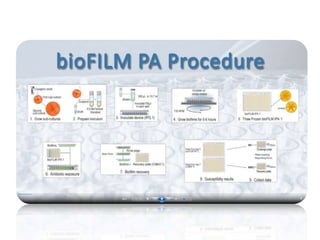
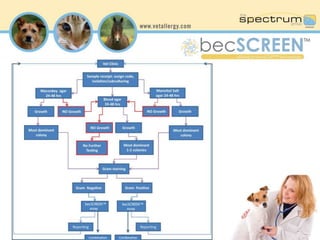
  • #7 Do this by: Identify genus & philum of bacteria—same as MIC Gram negative gram positive Growing bacteria in biofilms Subjecting BF to antibiotics at various concentrations Report findings: --100% resistant --Pseudomonas panel (combo panel) --2nd strain (both gram neg and gram pos present) If no growth only charged $30; MIC panel: $50 Cost ranges from $175 to $325 depending on situation but most cases will only require 1 MBEC panel
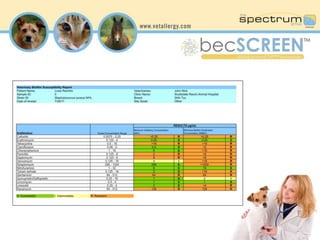
  • #8 Once test has been run: Results are reported as follows And In conjunction with MIC results: Use MBEC (biofilm results) for treatment recommendations: Green – susceptible Red – resistant Yellow – susceptible but only at the highest therapeutic concentrations.
  • #9  General Practitioner All testing and treatment are in their office. No need to send the animal to a specialist. Test for more allergens (incl food) Provide lower cost option to derm referral to client base Provide you list of approved foods (highlight ones in stock) More comforting to the pet and owner. - already trust you No need for sedation. No need to shave the animal. Blood draw not painful No Steroid withdrawl period The animal can be weaned slowly off of its medication with no harmful effects. Veterinary dermatologists use serum-based testing when: The animal cannot be taken off of steroids. There is not enough healthy skin left for intradermal testing.