GROUP # 06
– Habib Ur Rehman UW-14-CE-BSC-001
– Shafiq Ur rehman UW-14-CE-BSC-008
– M.Hamza Tariq UW-14-CE-BSC-015
– M.Ali UW-14-CE-BSC-016
– Abbas Khan UW-14-CE-BSC-017
– Muhib Ullah UW-14-CE-BSC-040
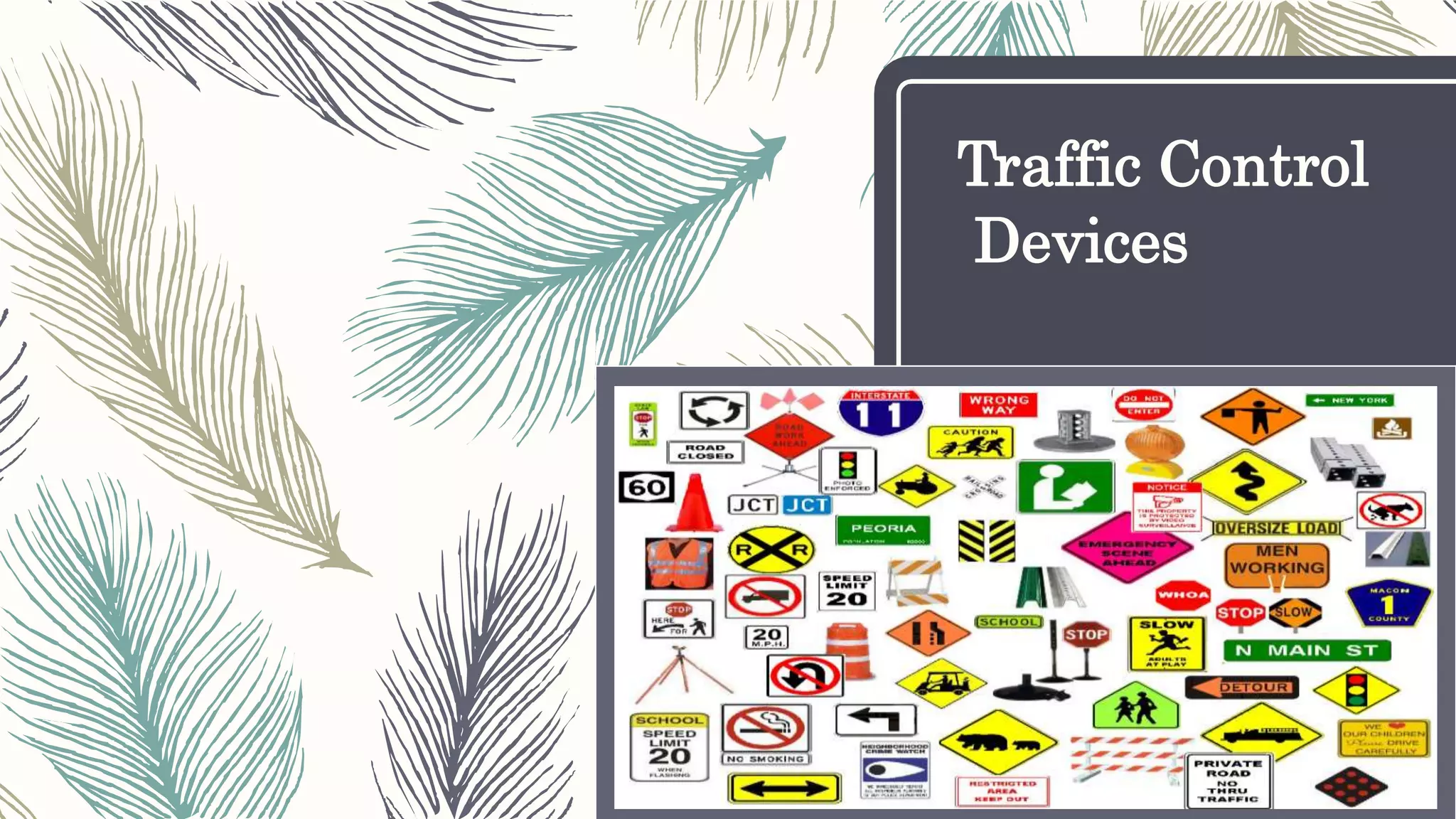
Traffic Control
Devices
INTRODUCTION:
 Traffic control devices are markers, signs and signal
devices used to inform, guide and control traffic,
including pedestrians, motor vehicle drivers and
bicyclists. These devices are usually placed adjacent, over
or along the highways, roads, traffic facilities and other
public areas that require traffic control.
TYPES OF TRAFFIC CONTROL
DEVICES:
SIGNS SIGNALS
MARKINGS ISLANDS
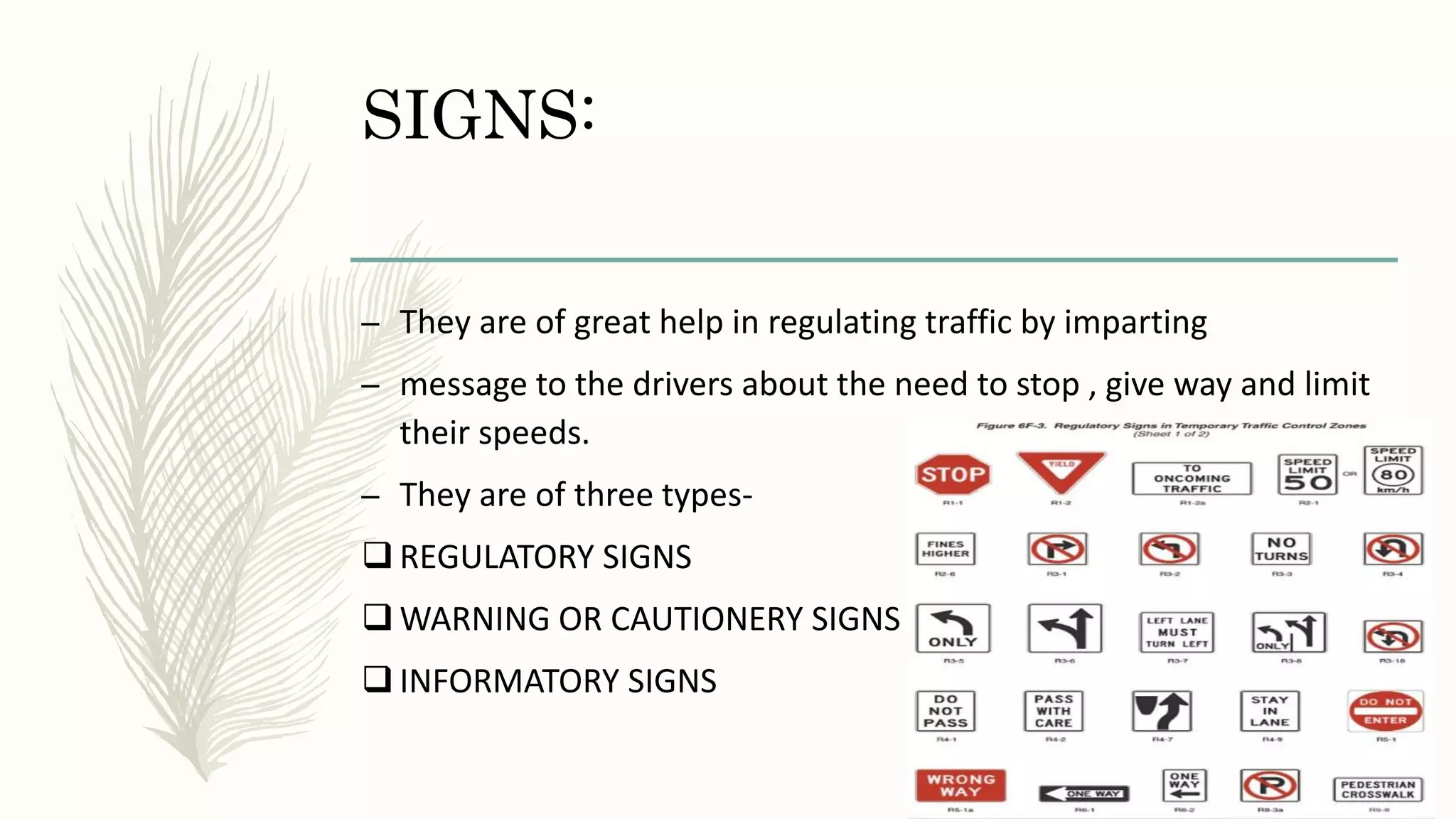
SIGNS:
– They are of great help in regulating traffic by imparting
– message to the drivers about the need to stop , give way and limit
their speeds.
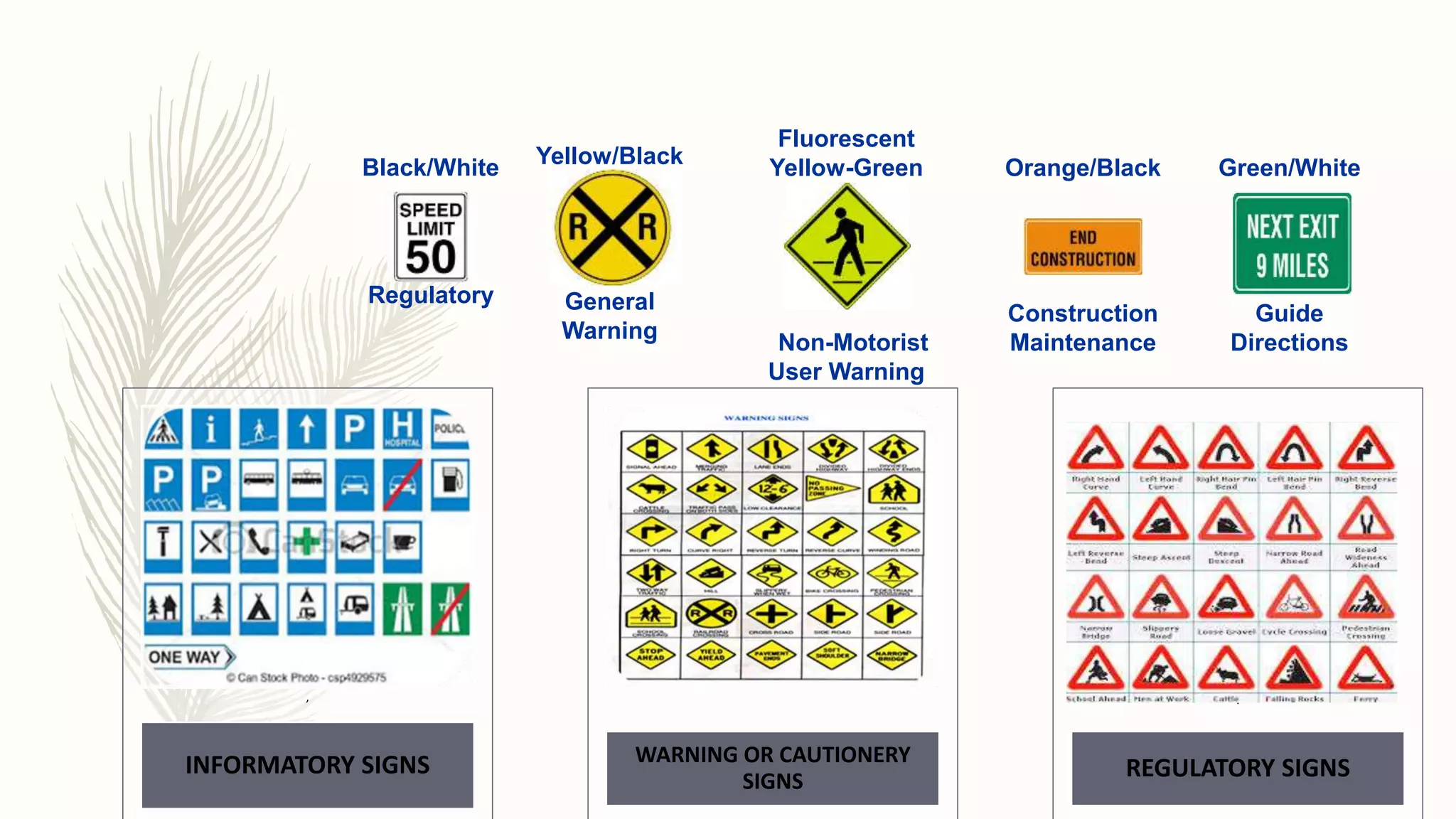
– They are of three types-
 REGULATORY SIGNS
 WARNING OR CAUTIONERY SIGNS
 INFORMATORY SIGNS
Black/White
Regulatory
Yellow/Black
General
Warning
Fluorescent
Yellow-Green
Non-Motorist
User Warning
Green/White
Guide
Directions
Orange/Black
Construction
Maintenance
INFORMATORY SIGNS
,
WARNING OR CAUTIONERY
SIGNS
REGULATORY SIGNS
.
Signals:
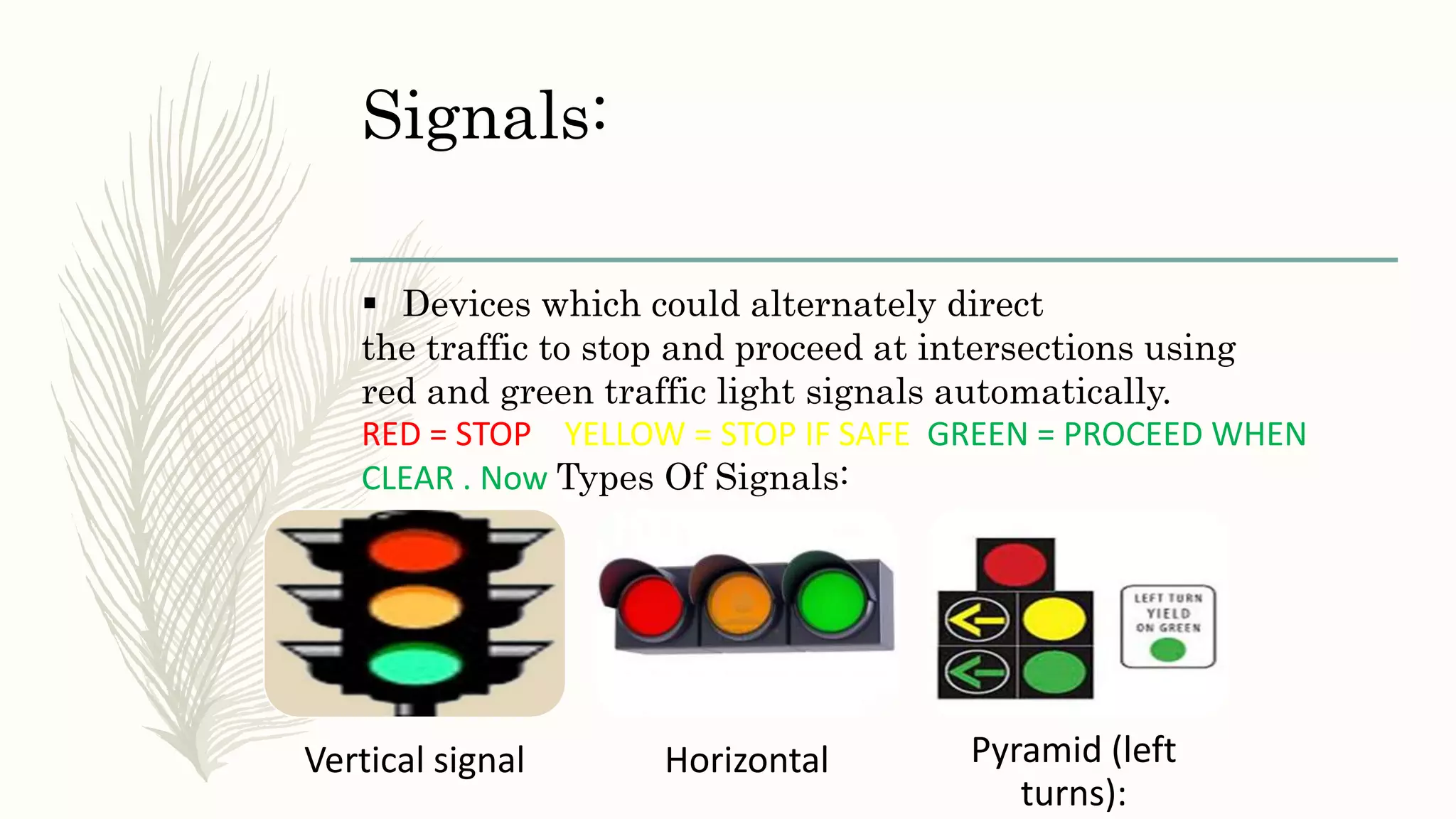
Vertical signal Horizontal Pyramid (left
turns):
 Devices which could alternately direct
the traffic to stop and proceed at intersections using
red and green traffic light signals automatically.
RED = STOP YELLOW = STOP IF SAFE GREEN = PROCEED WHEN
CLEAR . Now Types Of Signals:
Road Marking :
SOLID = NO DASHED = PASSING
DOUBLE MARKING
– GO BY THE MARK
CLOSEST TO YOU
PAVEMENT ARROWS –
HAVE TO PROCEED IN
THE DIRECTION OF THE
ARROW
 Road marking are made of lines , pattern , words ,symbol or ref
lection on the pavement , kerb , sides of islands or on the fixed
objects within or near the roadway.
 WHITE STOP LINES- shows where to stop at stop signs or traffic
signals
 YELLOW EDGE LINES- separate the shoulder from the travel lane
and show the edge of the highway
Pavement Markings:
Two lane rural ONE Way
TWO Way
Multi-lane
Multi-lane
Understand how they
work!
Passing
No Passing
Left Turn Only
 Kerb Marking-
These may indicate certain regulation like parking regulations.
Also the marking on the kerb and edges of islands with alternate
black and white line increases the visibility from the a long
distance.
 Object Marking-
Physical obstruction on or near the road hazardous and hence
should be properly marked.
 Reflect Unit Marking-
Ref lector markers are used as hazard markers and guide markers
for safe driving during
night. Hazards markers ref letting yellow light should be visible
from a long distance of about 150 m.
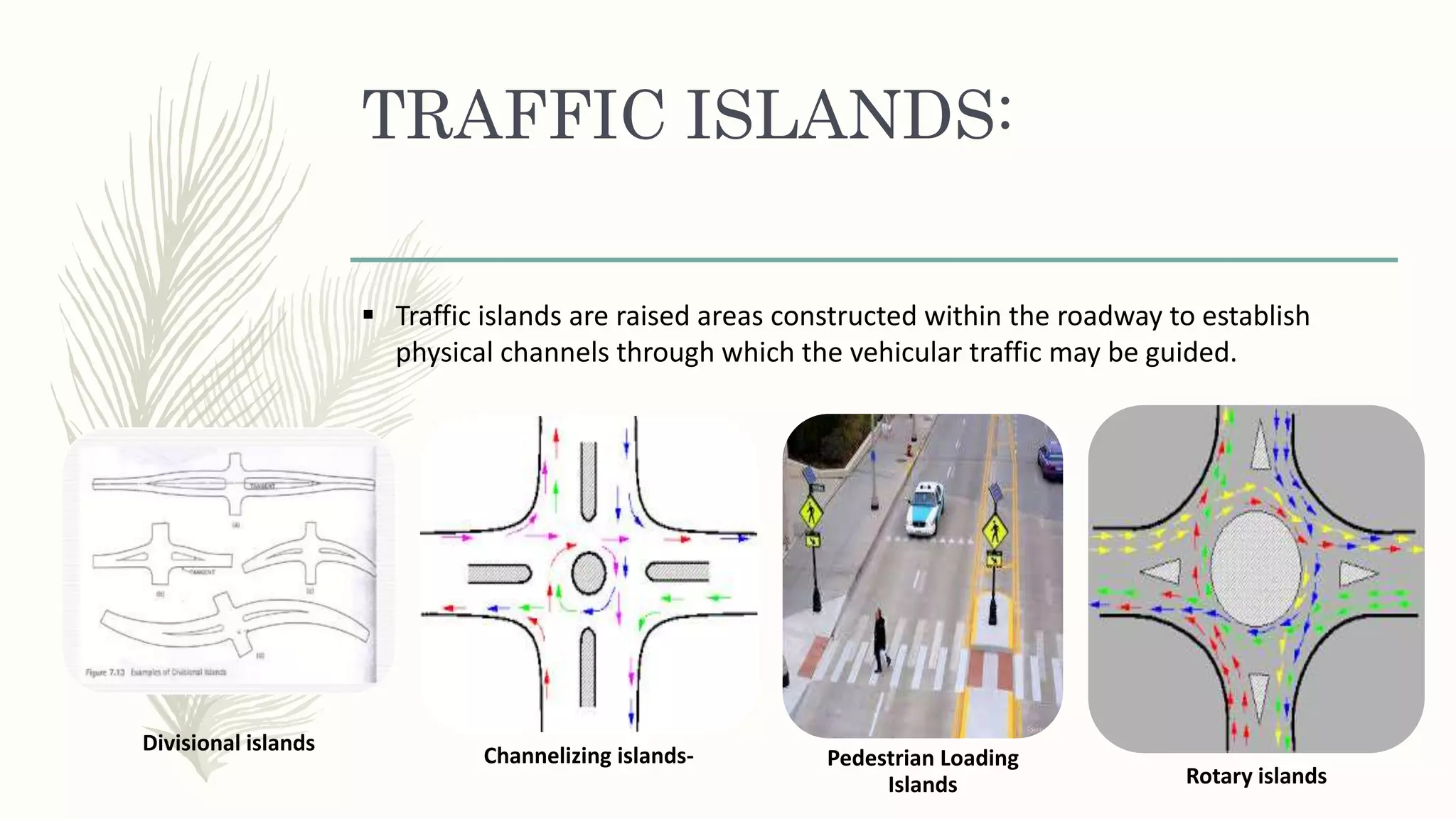
TRAFFIC ISLANDS:
 Traffic islands are raised areas constructed within the roadway to establish
physical channels through which the vehicular traffic may be guided.
Divisional islands
Channelizing islands- Pedestrian Loading
Islands Rotary islands
Traffic_control_devices.pptx

Traffic_control_devices.pptx

  • 1.
    GROUP # 06 –Habib Ur Rehman UW-14-CE-BSC-001 – Shafiq Ur rehman UW-14-CE-BSC-008 – M.Hamza Tariq UW-14-CE-BSC-015 – M.Ali UW-14-CE-BSC-016 – Abbas Khan UW-14-CE-BSC-017 – Muhib Ullah UW-14-CE-BSC-040
  • 2.
  • 3.
    INTRODUCTION:  Traffic controldevices are markers, signs and signal devices used to inform, guide and control traffic, including pedestrians, motor vehicle drivers and bicyclists. These devices are usually placed adjacent, over or along the highways, roads, traffic facilities and other public areas that require traffic control.
  • 4.
    TYPES OF TRAFFICCONTROL DEVICES: SIGNS SIGNALS MARKINGS ISLANDS
  • 5.
    SIGNS: – They areof great help in regulating traffic by imparting – message to the drivers about the need to stop , give way and limit their speeds. – They are of three types-  REGULATORY SIGNS  WARNING OR CAUTIONERY SIGNS  INFORMATORY SIGNS
  • 6.
  • 7.
    Signals: Vertical signal HorizontalPyramid (left turns):  Devices which could alternately direct the traffic to stop and proceed at intersections using red and green traffic light signals automatically. RED = STOP YELLOW = STOP IF SAFE GREEN = PROCEED WHEN CLEAR . Now Types Of Signals:
  • 8.
    Road Marking : SOLID= NO DASHED = PASSING DOUBLE MARKING – GO BY THE MARK CLOSEST TO YOU PAVEMENT ARROWS – HAVE TO PROCEED IN THE DIRECTION OF THE ARROW  Road marking are made of lines , pattern , words ,symbol or ref lection on the pavement , kerb , sides of islands or on the fixed objects within or near the roadway.  WHITE STOP LINES- shows where to stop at stop signs or traffic signals  YELLOW EDGE LINES- separate the shoulder from the travel lane and show the edge of the highway
  • 9.
    Pavement Markings: Two lanerural ONE Way TWO Way Multi-lane Multi-lane Understand how they work! Passing No Passing Left Turn Only
  • 10.
     Kerb Marking- Thesemay indicate certain regulation like parking regulations. Also the marking on the kerb and edges of islands with alternate black and white line increases the visibility from the a long distance.  Object Marking- Physical obstruction on or near the road hazardous and hence should be properly marked.  Reflect Unit Marking- Ref lector markers are used as hazard markers and guide markers for safe driving during night. Hazards markers ref letting yellow light should be visible from a long distance of about 150 m.
  • 11.
    TRAFFIC ISLANDS:  Trafficislands are raised areas constructed within the roadway to establish physical channels through which the vehicular traffic may be guided. Divisional islands Channelizing islands- Pedestrian Loading Islands Rotary islands