TRAFFIC RULES AND REGULATIONS
PREPARED BY
HITENDRA PENDAM
TEJAS B MANE
HEMANT J NEWARE
GUIDED BY
MRS C. KORE MAM
DEPT. OF CIVIL ENGINEERING
GOVERNMENT POLYTECHNIC, GONDIA
CONTENT
 INTRODUCTION
 IMPORTANCE OF TRAFFIC RULES AND REGULATION
 NECESSITY OF TRAFFIC RULES IN INDIA
 SOME IMPORTANT TRAFFIC SIGNALS
 ADVANTAGES OF RULES AND REGULATIONS
 DISADVANTAGES OF RULES AND REGULATIONS
 CONCLUSION
 REFFERENCES
INTRODUCTION
 Traffic rule and regulation is the term related to the method used to regulate traffic rules on the
road to reduce the chance of fatal accident or serious injury.
 while rules of the road are both the laws and the informal rules that may have developed over
time to facilitate the orderly and timely flow of traffic.
 Rules of the road and driving are the general practices and procedures that road users are
required to follow.
 These rules usually apply to all road users, though they are of special importance to motorists
and cyclists.
 There are various rules that apply to parking as well including maintaining a safe distance
between cars, prevention f obstruction to other vehicles, no parking on footpaths etc.
IMPORTANCE OF TRAFFIC RULES AND REGULATION
 The rule is very important for safety of both the vehicular traffic and the pedestrian.
 most of the time accidents happen because of lack of traffic rules and regulations awareness.
 It is vital to know the traffic rules and regulations in India to ensure the safety of all.
 According to the World Health Organization (WHO), India is on the top in the list of
nations with highest number of accidents
 it is very important to increase the level of awareness about the traffic rules among all citizens.
SOME IMPORTANT TRAFFIC SIGNALS
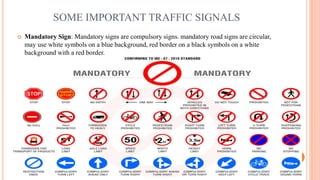
 Mandatory Sign: Mandatory signs are compulsory signs. mandatory road signs are circular,
may use white symbols on a blue background, red border on a black symbols on a white
background with a red border.
.
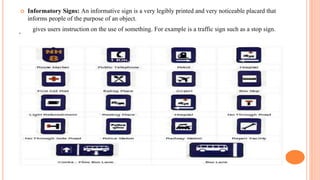
 Informatory Signs: An informative sign is a very legibly printed and very noticeable placard that
informs people of the purpose of an object.
gives users instruction on the use of something. For example is a traffic sign such as a stop sign.
.
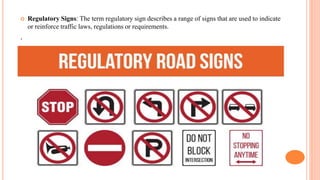
 Regulatory Signs: The term regulatory sign describes a range of signs that are used to indicate
or reinforce traffic laws, regulations or requirements.
.
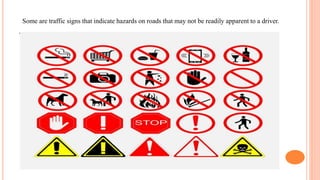
Some are traffic signs that indicate hazards on roads that may not be readily apparent to a driver.
ADVANTAGES OF RULES AND REGULATIONS
 Traffic Rules regulates the heavy traffic at intersections to allow other vehicles or pedestrians
to cross it.
 It helps in providing a continuous movement of traffic at a certain speed.
 It helps in reducing the frequency of various types of accidents or crashes, most especially the
right-angle collision.
 It increases the traffic handling capacity of a certain intersection.
DISADVANTAGES OF RULES AND REGULATIONS
 There is an increase in the use of less-adequate streets to avoid the traffic signals.
 There are some drivers that disobey the signals and rules.
 There is an increase in traffic congestion, fuel consumption, and air pollution.
 There is an excessive delay because of the time allocated in the traffic rules.
CONCLUSION
 Traffic laws are designed to protect you and other drivers on the road. If we do not follow
them, we are putting innocent bystanders and drivers at risk.
 To maximize the road safety effects, traffic law enforcement should first prevent violations
that are proven to be related with the number of crashes.
 To the extent that new technologies facilitate voluntary speed control.
REFERENCES
◦ www.Wikipedia.com
◦ www.scribed.com
◦ www.youtube.com

Traffic rules and regulation

  • 1.
    TRAFFIC RULES ANDREGULATIONS PREPARED BY HITENDRA PENDAM TEJAS B MANE HEMANT J NEWARE GUIDED BY MRS C. KORE MAM DEPT. OF CIVIL ENGINEERING GOVERNMENT POLYTECHNIC, GONDIA
  • 2.
    CONTENT  INTRODUCTION  IMPORTANCEOF TRAFFIC RULES AND REGULATION  NECESSITY OF TRAFFIC RULES IN INDIA  SOME IMPORTANT TRAFFIC SIGNALS  ADVANTAGES OF RULES AND REGULATIONS  DISADVANTAGES OF RULES AND REGULATIONS  CONCLUSION  REFFERENCES
  • 3.
    INTRODUCTION  Traffic ruleand regulation is the term related to the method used to regulate traffic rules on the road to reduce the chance of fatal accident or serious injury.  while rules of the road are both the laws and the informal rules that may have developed over time to facilitate the orderly and timely flow of traffic.  Rules of the road and driving are the general practices and procedures that road users are required to follow.  These rules usually apply to all road users, though they are of special importance to motorists and cyclists.  There are various rules that apply to parking as well including maintaining a safe distance between cars, prevention f obstruction to other vehicles, no parking on footpaths etc.
  • 4.
    IMPORTANCE OF TRAFFICRULES AND REGULATION  The rule is very important for safety of both the vehicular traffic and the pedestrian.  most of the time accidents happen because of lack of traffic rules and regulations awareness.  It is vital to know the traffic rules and regulations in India to ensure the safety of all.  According to the World Health Organization (WHO), India is on the top in the list of nations with highest number of accidents  it is very important to increase the level of awareness about the traffic rules among all citizens.
  • 5.
    SOME IMPORTANT TRAFFICSIGNALS  Mandatory Sign: Mandatory signs are compulsory signs. mandatory road signs are circular, may use white symbols on a blue background, red border on a black symbols on a white background with a red border.
  • 6.
    .  Informatory Signs:An informative sign is a very legibly printed and very noticeable placard that informs people of the purpose of an object. gives users instruction on the use of something. For example is a traffic sign such as a stop sign.
  • 7.
    .  Regulatory Signs:The term regulatory sign describes a range of signs that are used to indicate or reinforce traffic laws, regulations or requirements.
  • 8.
    . Some are trafficsigns that indicate hazards on roads that may not be readily apparent to a driver.
  • 9.
    ADVANTAGES OF RULESAND REGULATIONS  Traffic Rules regulates the heavy traffic at intersections to allow other vehicles or pedestrians to cross it.  It helps in providing a continuous movement of traffic at a certain speed.  It helps in reducing the frequency of various types of accidents or crashes, most especially the right-angle collision.  It increases the traffic handling capacity of a certain intersection.
  • 10.
    DISADVANTAGES OF RULESAND REGULATIONS  There is an increase in the use of less-adequate streets to avoid the traffic signals.  There are some drivers that disobey the signals and rules.  There is an increase in traffic congestion, fuel consumption, and air pollution.  There is an excessive delay because of the time allocated in the traffic rules.
  • 11.
    CONCLUSION  Traffic lawsare designed to protect you and other drivers on the road. If we do not follow them, we are putting innocent bystanders and drivers at risk.  To maximize the road safety effects, traffic law enforcement should first prevent violations that are proven to be related with the number of crashes.  To the extent that new technologies facilitate voluntary speed control.
  • 12.