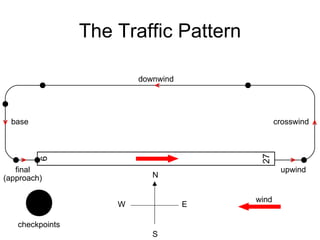
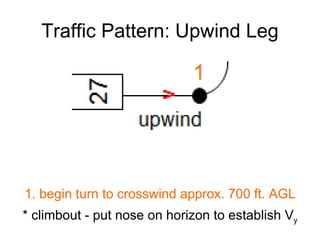
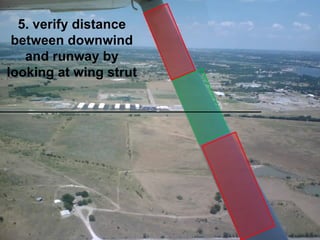
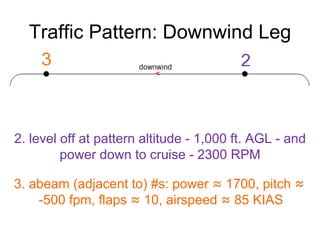
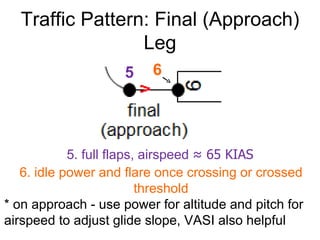
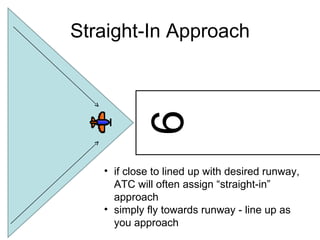
1. The document discusses the standard traffic pattern used at most airports, which consists of upwind, crosswind, downwind, base, and final legs. It provides instructions for aircraft speed, altitude, and flap settings on each leg.
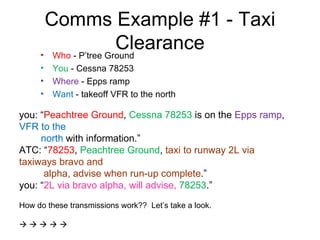
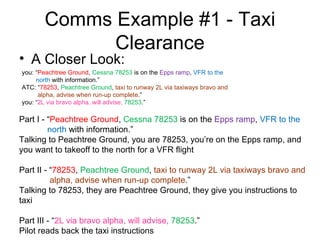
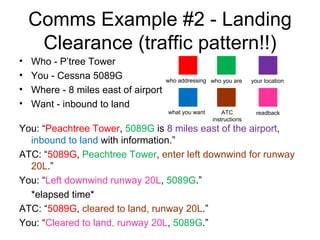
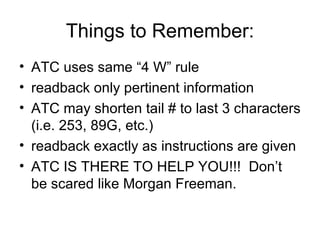
2. It also covers radio communication procedures between pilots and air traffic control (ATC). Effective communication includes using standard phraseology and the phonetic alphabet. Transmissions follow a standard format including who is being addressed, the caller's identity, location, and request.
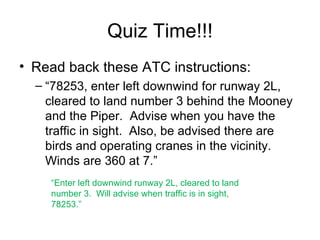
3. Pilots must read back all instructions from ATC to confirm understanding. Examples demonstrate proper radio technique and the traffic pattern.









![Questions? You can always email any questions you have to: [email_address]](https://image.slidesharecdn.com/trafficpatterncommunication-110114225519-phpapp02/85/Traffic-Pattern-and-Communication-Groups-B-C-D-30-320.jpg)


![Seminar Report on Airport Authority of India [AAI]](https://cdn.slidesharecdn.com/ss_thumbnails/fullreport-160404161443-thumbnail.jpg?width=640&height=640&fit=bounds)


