Download to read offline
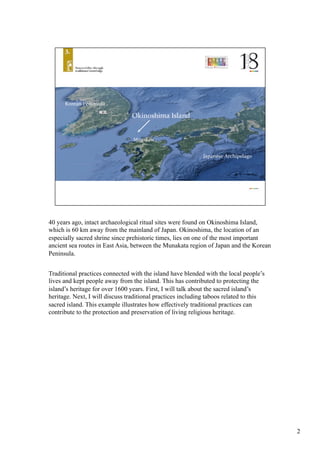
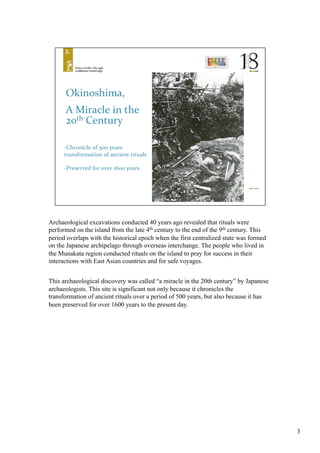
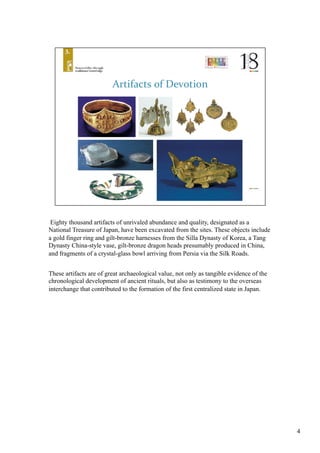
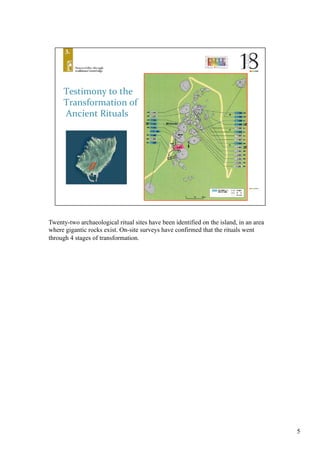
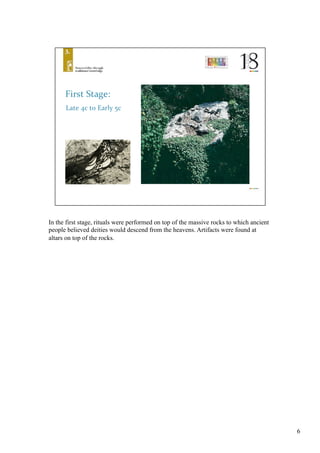
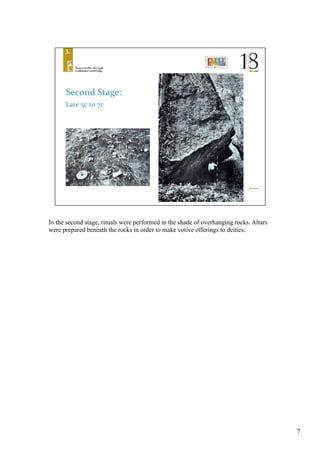
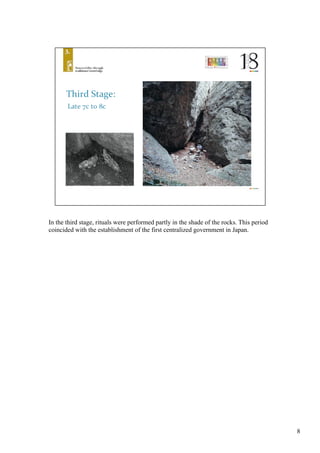

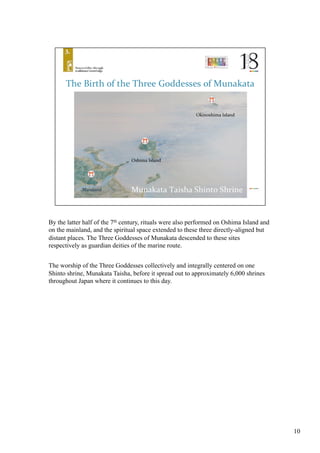
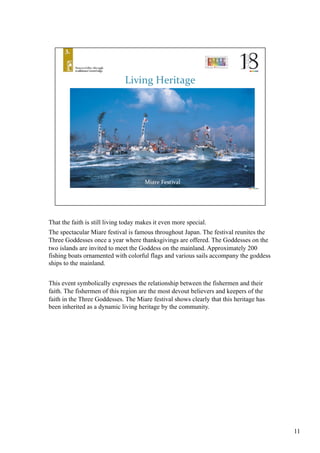
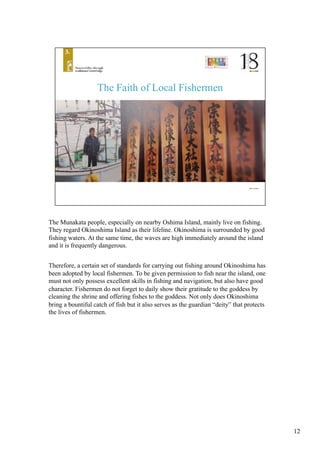
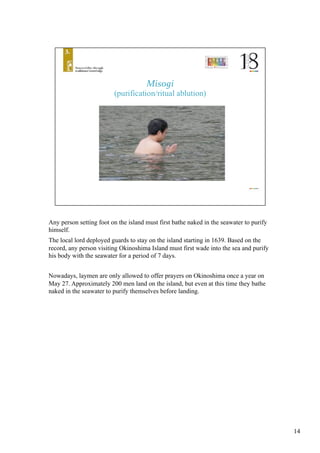
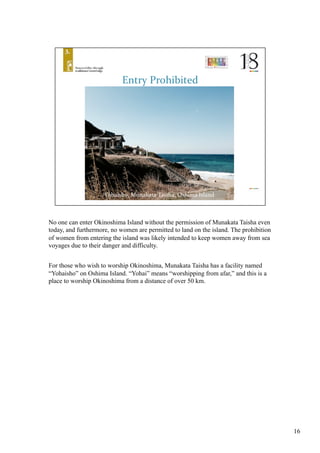
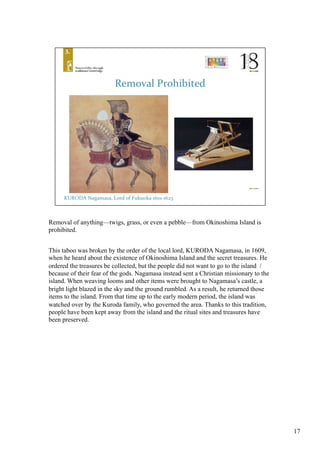
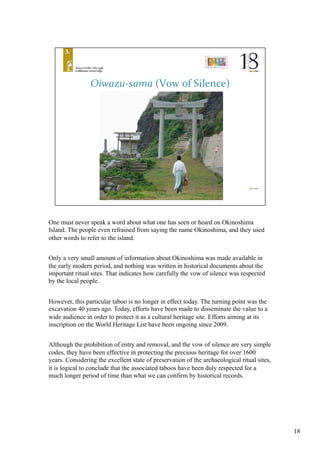
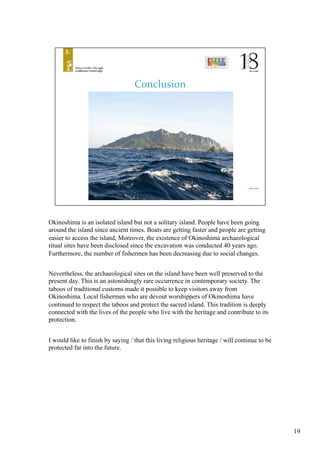

Traditional practices of the local people in Japan have effectively preserved an archaeological ritual site on Okinoshima Island for over 1600 years. The island contained 22 ritual sites dating back to the 4th-9th centuries that were used for rituals important to early maritime trade. Strict taboos like requiring purification in the sea before landing and prohibitions on removing anything from the island helped maintain the sacred nature of the site and kept people away, thus preserving the archaeological resources. These traditional practices blended with daily life and show how cultural heritage can be protected through living traditions.


