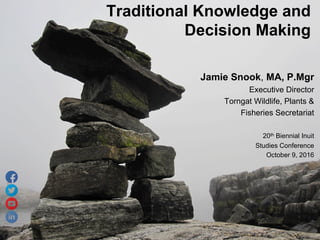
Jamie Snook, MA, P.Mgr
Executive Director
Torngat Wildlife, Plants &
Fisheries Secretariat
20th Biennial Inuit
Studies Conference
October 9, 2016
Traditional Knowledge and
Decision Making
Who is the Torngat
Wildlife, Plants and
Fisheries Secretariat?
Canada’s first tripartite-funded
land claim co-management
boards
Knowledge Co-Production
Transdisciplinary Knowledge
Influence in recommendations
and decision-making
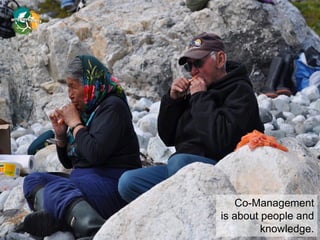
Co-Management
is about people and
knowledge.
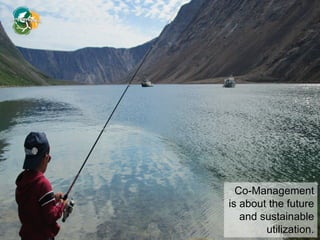
Co-Management
is about the future
and sustainable
utilization.
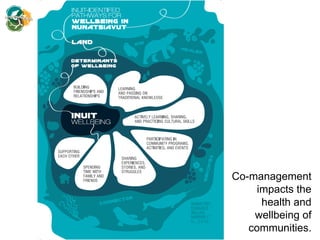
Co-management
impacts the
health and
wellbeing of
communities.
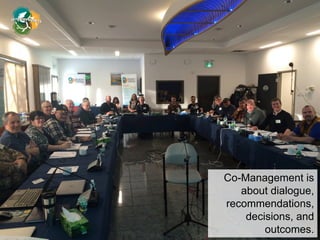
Co-Management is
about dialogue,
recommendations,
decisions, and
outcomes.
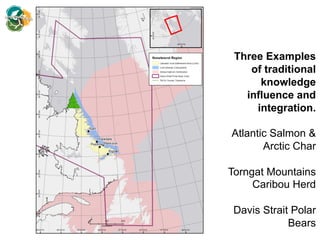
Three Examples
of traditional
knowledge
influence and
integration.
Atlantic Salmon &
Arctic Char
Torngat Mountains
Caribou Herd
Davis Strait Polar
Bears
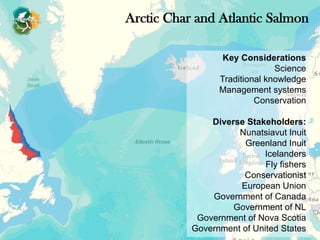
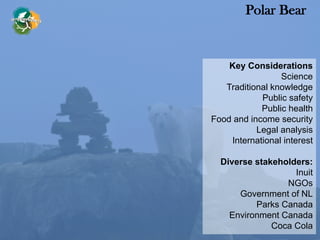
Key Considerations
Science
Traditional knowledge
Management systems
Conservation
Diverse Stakeholders:
Nunatsiavut Inuit
Greenland Inuit
Icelanders
Fly fishers
Conservationist
European Union
Government of Canada
Government of NL
Government of Nova Scotia
Government of United States
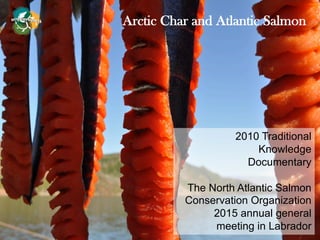
Arctic Char and Atlantic Salmon
2010 Traditional
Knowledge
Documentary
The North Atlantic Salmon
Conservation Organization
2015 annual general
meeting in Labrador
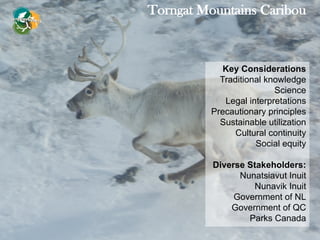
Key Considerations
Traditional knowledge
Science
Legal interpretations
Precautionary principles
Sustainable utilization
Cultural continuity
Social equity
Diverse Stakeholders:
Nunatsiavut Inuit
Nunavik Inuit
Government of NL
Government of QC
Parks Canada
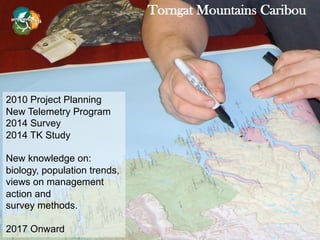
Torngat Mountains Caribou
2010 Project Planning
New Telemetry Program
2014 Survey
2014 TK Study
New knowledge on:
biology, population trends,
views on management
action and
survey methods.
2017 Onward
Key Considerations
Science
Traditional knowledge
Public safety
Public health
Food and income security
Legal analysis
International interest
Diverse stakeholders:
Inuit
NGOs
Government of NL
Parks Canada
Environment Canada
Coca Cola
Polar Bear
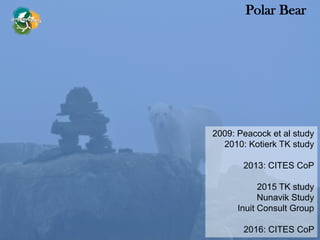
Polar Bear
2009: Peacock et al study
2010: Kotierk TK study
2013: CITES CoP
2015 TK study
Nunavik Study
Inuit Consult Group
2016: CITES CoP
• Knowledge can be co-produced.
• Accept all available knowledge to facilitate the best
possible dialogue and decisions.
• Policy analysis should be neutral and competent
and include all the key considerations.
• Traditional knowledge is influential and contributes
to better decisions.
Summary
Torngat Wildlife, Plants and Fisheries Secretariat Colleagues
Torngat Joint Fisheries Board
Torngat Wildlife and Plants Co-management Board
Nunatsiavut Government
Department of Lands and Natural Resources
Department of Nunatsiavut Affairs
Government of Canada
Department of Fisheries and Oceans
Department of Environment and Climate Change
Department of Indigenous and Northern Affairs Canada
Parks Canada
Government of Newfoundland and Labrador
Department of Environment and Climate Change
Department of Labrador and Aboriginal Affairs
Department of Fisheries, Forestry and Agrifoods
Communities of Happy Valley-Goose Bay, North West River, Nain, Hopedale, Postville, Makkovik, Rigolet
Questions and
Acknowledgements

Traditional Knowledge and Decision Making

  • 1.
    Jamie Snook, MA,P.Mgr Executive Director Torngat Wildlife, Plants & Fisheries Secretariat 20th Biennial Inuit Studies Conference October 9, 2016 Traditional Knowledge and Decision Making
  • 2.
    Who is theTorngat Wildlife, Plants and Fisheries Secretariat? Canada’s first tripartite-funded land claim co-management boards Knowledge Co-Production Transdisciplinary Knowledge Influence in recommendations and decision-making
  • 3.
  • 4.
    Co-Management is about thefuture and sustainable utilization.
  • 5.
  • 6.
  • 7.
    Three Examples of traditional knowledge influenceand integration. Atlantic Salmon & Arctic Char Torngat Mountains Caribou Herd Davis Strait Polar Bears
  • 8.
    Key Considerations Science Traditional knowledge Managementsystems Conservation Diverse Stakeholders: Nunatsiavut Inuit Greenland Inuit Icelanders Fly fishers Conservationist European Union Government of Canada Government of NL Government of Nova Scotia Government of United States Arctic Char and Atlantic Salmon
  • 9.
    Arctic Char andAtlantic Salmon
  • 10.
    Arctic Char andAtlantic Salmon 2010 Traditional Knowledge Documentary The North Atlantic Salmon Conservation Organization 2015 annual general meeting in Labrador
  • 11.
    Key Considerations Traditional knowledge Science Legalinterpretations Precautionary principles Sustainable utilization Cultural continuity Social equity Diverse Stakeholders: Nunatsiavut Inuit Nunavik Inuit Government of NL Government of QC Parks Canada Torngat Mountains Caribou
  • 12.
    Torngat Mountains Caribou 2010Project Planning New Telemetry Program 2014 Survey 2014 TK Study New knowledge on: biology, population trends, views on management action and survey methods. 2017 Onward
  • 13.
    Key Considerations Science Traditional knowledge Publicsafety Public health Food and income security Legal analysis International interest Diverse stakeholders: Inuit NGOs Government of NL Parks Canada Environment Canada Coca Cola Polar Bear
  • 14.
    Polar Bear 2009: Peacocket al study 2010: Kotierk TK study 2013: CITES CoP 2015 TK study Nunavik Study Inuit Consult Group 2016: CITES CoP
  • 15.
    • Knowledge canbe co-produced. • Accept all available knowledge to facilitate the best possible dialogue and decisions. • Policy analysis should be neutral and competent and include all the key considerations. • Traditional knowledge is influential and contributes to better decisions. Summary
  • 16.
    Torngat Wildlife, Plantsand Fisheries Secretariat Colleagues Torngat Joint Fisheries Board Torngat Wildlife and Plants Co-management Board Nunatsiavut Government Department of Lands and Natural Resources Department of Nunatsiavut Affairs Government of Canada Department of Fisheries and Oceans Department of Environment and Climate Change Department of Indigenous and Northern Affairs Canada Parks Canada Government of Newfoundland and Labrador Department of Environment and Climate Change Department of Labrador and Aboriginal Affairs Department of Fisheries, Forestry and Agrifoods Communities of Happy Valley-Goose Bay, North West River, Nain, Hopedale, Postville, Makkovik, Rigolet Questions and Acknowledgements