MANTA RAYS, COMMUNITIES AND
TOURISM:
YAP´s MANTA SANCTUARY
AS A PARTNERSHIP EXPERIMENT
José Truda Palazzo, Jr.
Divers for Sharks
• Small and unique Ecotourism market
• Combination of Culture and Nature
• Sharing of political power between traditional system and Western democratic
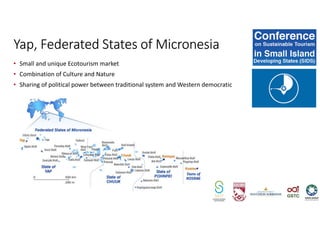
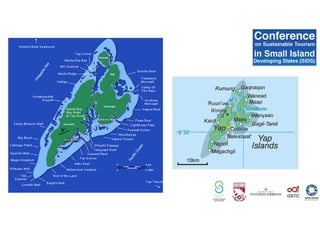
Yap, Federated States of Micronesia
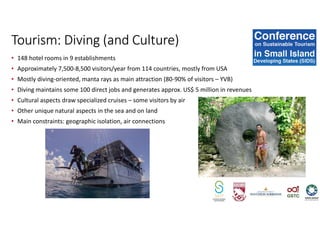
• 148 hotel rooms in 9 establishments
• Approximately 7,500-8,500 visitors/year from 114 countries, mostly from USA
• Mostly diving-oriented, manta rays as main attraction (80-90% of visitors – YVB)
• Diving maintains some 100 direct jobs and generates approx. US$ 5 million in revenues
• Cultural aspects draw specialized cruises – some visitors by air
• Other unique natural aspects in the sea and on land
• Main constraints: geographic isolation, air connections
Tourism: Diving (and Culture)
0
200
400
600
800
1000
1200
1400
1600
1800
2000
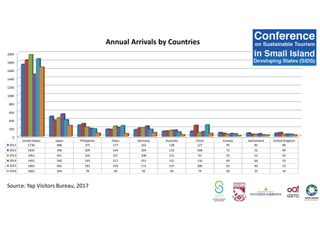
United States Japan Philippines Palau Germany Australia China Canada Switzerland United Kingdom
2011 1730 486 275 177 165 128 127 95 85 80
2012 1835 396 309 169 204 132 268 72 52 94
2013 1961 451 226 251 208 151 93 55 52 54
2014 1491 540 193 217 251 151 116 69 66 55
2015 1864 402 181 259 172 107 280 63 40 53
2016 1665 264 78 69 92 40 74 20 35 34
Annual Arrivals by Countries
Source: Yap Visitors Bureau, 2017
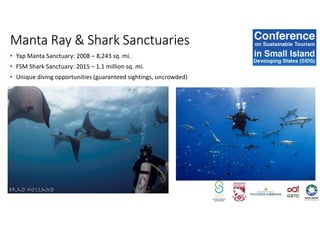
• Yap Manta Sanctuary: 2008 – 8,243 sq. mi.
• FSM Shark Sanctuary: 2015 – 1.1 million sq. mi.
• Unique diving opportunities (guaranteed sightings, uncrowded)
Manta Ray & Shark Sanctuaries
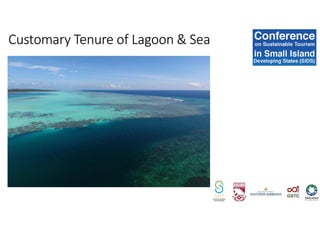
Customary Tenure of Lagoon & Sea
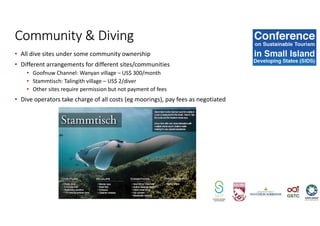
• All dive sites under some community ownership
• Different arrangements for different sites/communities
• Goofnuw Channel: Wanyan village – US$ 300/month
• Stammtisch: Talingith village – US$ 2/diver
• Other sites require permission but not payment of fees
• Dive operators take charge of all costs (eg moorings), pay fees as negotiated
Community & Diving
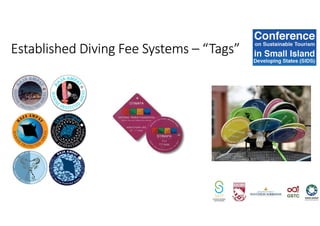
Established Diving Fee Systems – “Tags”
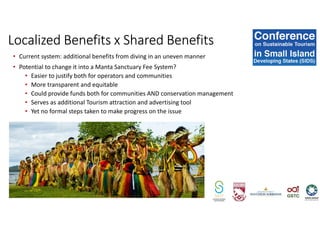
• Current system: additional benefits from diving in an uneven manner
• Potential to change it into a Manta Sanctuary Fee System?
• Easier to justify both for operators and communities
• More transparent and equitable
• Could provide funds both for communities AND conservation management
• Serves as additional Tourism attraction and advertising tool
• Yet no formal steps taken to make progress on the issue
Localized Benefits x Shared Benefits
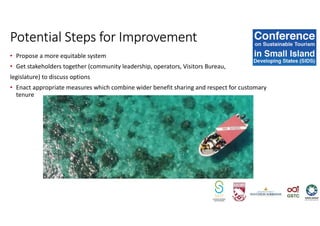
• Propose a more equitable system
• Get stakeholders together (community leadership, operators, Visitors Bureau,
legislature) to discuss options
• Enact appropriate measures which combine wider benefit sharing and respect for customary
tenure
Potential Steps for Improvement
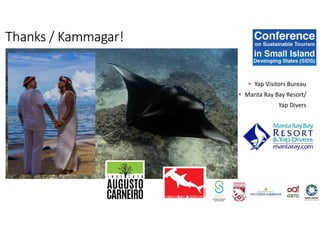
• Yap Visitors Bureau
• Manta Ray Bay Resort/
Yap Divers
Thanks / Kammagar!

Session2 02 Jose Truda Palazzo

  • 1.
    MANTA RAYS, COMMUNITIESAND TOURISM: YAP´s MANTA SANCTUARY AS A PARTNERSHIP EXPERIMENT José Truda Palazzo, Jr. Divers for Sharks
  • 2.
    • Small andunique Ecotourism market • Combination of Culture and Nature • Sharing of political power between traditional system and Western democratic Yap, Federated States of Micronesia
  • 4.
    • 148 hotelrooms in 9 establishments • Approximately 7,500-8,500 visitors/year from 114 countries, mostly from USA • Mostly diving-oriented, manta rays as main attraction (80-90% of visitors – YVB) • Diving maintains some 100 direct jobs and generates approx. US$ 5 million in revenues • Cultural aspects draw specialized cruises – some visitors by air • Other unique natural aspects in the sea and on land • Main constraints: geographic isolation, air connections Tourism: Diving (and Culture)
  • 5.
    0 200 400 600 800 1000 1200 1400 1600 1800 2000 United States JapanPhilippines Palau Germany Australia China Canada Switzerland United Kingdom 2011 1730 486 275 177 165 128 127 95 85 80 2012 1835 396 309 169 204 132 268 72 52 94 2013 1961 451 226 251 208 151 93 55 52 54 2014 1491 540 193 217 251 151 116 69 66 55 2015 1864 402 181 259 172 107 280 63 40 53 2016 1665 264 78 69 92 40 74 20 35 34 Annual Arrivals by Countries Source: Yap Visitors Bureau, 2017
  • 6.
    • Yap MantaSanctuary: 2008 – 8,243 sq. mi. • FSM Shark Sanctuary: 2015 – 1.1 million sq. mi. • Unique diving opportunities (guaranteed sightings, uncrowded) Manta Ray & Shark Sanctuaries
  • 7.
    Customary Tenure ofLagoon & Sea
  • 8.
    • All divesites under some community ownership • Different arrangements for different sites/communities • Goofnuw Channel: Wanyan village – US$ 300/month • Stammtisch: Talingith village – US$ 2/diver • Other sites require permission but not payment of fees • Dive operators take charge of all costs (eg moorings), pay fees as negotiated Community & Diving
  • 9.
    Established Diving FeeSystems – “Tags”
  • 10.
    • Current system:additional benefits from diving in an uneven manner • Potential to change it into a Manta Sanctuary Fee System? • Easier to justify both for operators and communities • More transparent and equitable • Could provide funds both for communities AND conservation management • Serves as additional Tourism attraction and advertising tool • Yet no formal steps taken to make progress on the issue Localized Benefits x Shared Benefits
  • 11.
    • Propose amore equitable system • Get stakeholders together (community leadership, operators, Visitors Bureau, legislature) to discuss options • Enact appropriate measures which combine wider benefit sharing and respect for customary tenure Potential Steps for Improvement
  • 12.
    • Yap VisitorsBureau • Manta Ray Bay Resort/ Yap Divers Thanks / Kammagar!