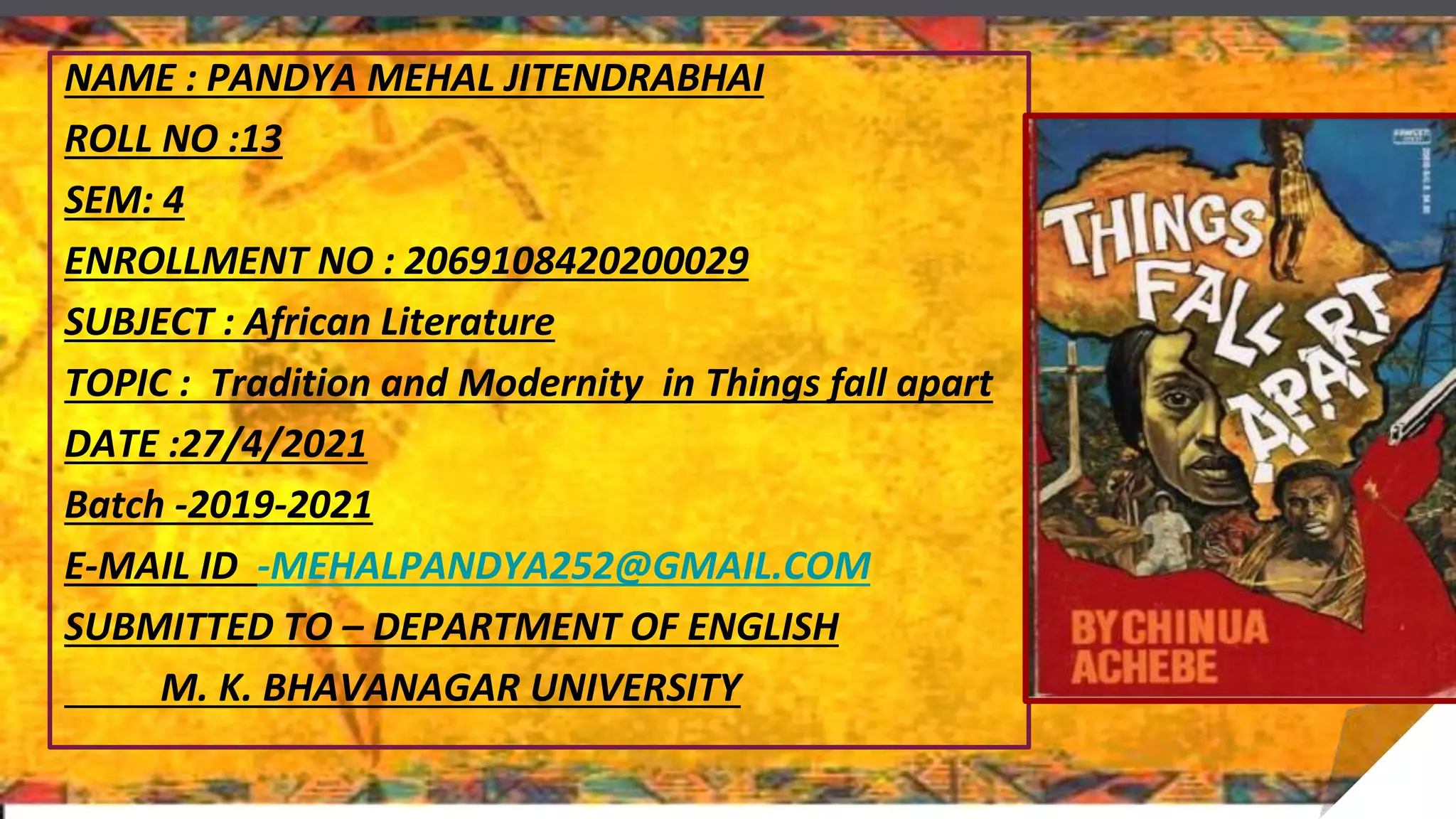
NAME : PANDYA MEHAL JITENDRABHAI
ROLL NO :13
SEM: 4
ENROLLMENT NO : 2069108420200029
SUBJECT : African Literature
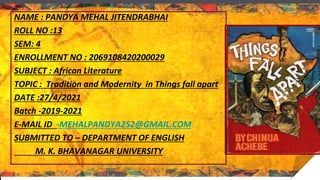
TOPIC : Tradition and Modernity in Things fall apart
DATE :27/4/2021
Batch -2019-2021
E-MAIL ID -MEHALPANDYA252@GMAIL.COM
SUBMITTED TO – DEPARTMENT OF ENGLISH
M. K. BHAVANAGAR UNIVERSITY
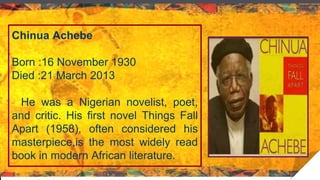
Chinua Achebe
Born :16 November 1930
Died :21 March 2013
He was a Nigerian novelist, poet,
and critic. His first novel Things Fall
Apart (1958), often considered his
masterpiece,is the most widely read
book in modern African literature.
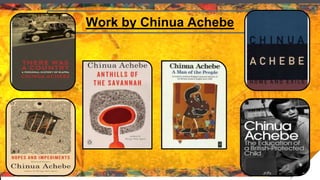
Work by Chinua Achebe
Tradition in Achebe’s Things Fall Apart
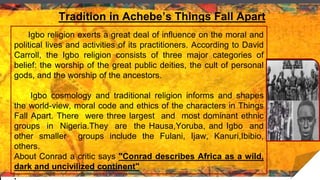
Igbo religion exerts a great deal of influence on the moral and
political lives and activities of its practitioners. According to David
Carroll, the Igbo religion consists of three major categories of
belief: the worship of the great public deities, the cult of personal
gods, and the worship of the ancestors.
Igbo cosmology and traditional religion informs and shapes
the world-view, moral code and ethics of the characters in Things
Fall Apart. There were three largest and most dominant ethnic
groups in Nigeria.They are the Hausa,Yoruba, and Igbo and
other smaller groups include the Fulani, Ijaw, Kanuri,Ibibio,
others.
About Conrad a critic says "Conrad describes Africa as a wild,
dark and uncivilized continent"
.
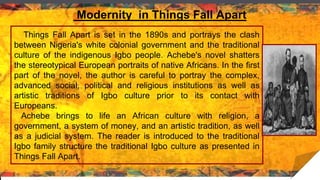
Things Fall Apart is set in the 1890s and portrays the clash
between Nigeria's white colonial government and the traditional
culture of the indigenous Igbo people. Achebe's novel shatters
the stereotypical European portraits of native Africans. In the first
part of the novel, the author is careful to portray the complex,
advanced social, political and religious institutions as well as
artistic traditions of Igbo culture prior to its contact with
Europeans.
Achebe brings to life an African culture with religion, a
government, a system of money, and an artistic tradition, as well
as a judicial system. The reader is introduced to the traditional
Igbo family structure the traditional Igbo culture as presented in
Things Fall Apart.
Modernity in Things Fall Apart
Con…
Achebe argues that the white man has destroyed Igbo culture out of
ignorance of the people’s way of life and the white man’s inability to
speak the people’s language.
These novel concerned with the traditional Igbo life as it clashed with
colonial powers in the form of missionaries and colonial government.Chinua
Achebe evokes with world religions and traditional African cultures, there
is archeological evidence that societies have been living in Nigeria for more
than twenty five hundred years. The borders of modern not created until the
British consolidated their colonial power over the area in 1914.As Simon
Gikandi argues, however, what this account of Achebe tended to miss
was the ways in which his project was always, at the same time, entirely
concerned with the idea of an Africa emerging into modernity.
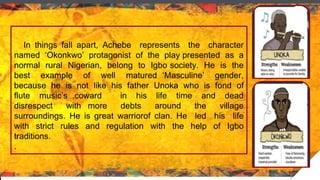
In things fall apart, Achebe represents the character
named ‘Okonkwo’ protagonist of the play presented as a
normal rural Nigerian, belong to Igbo society. He is the
best example of well matured ‘Masculine’ gender,
because he is not like his father Unoka who is fond of
flute music’s ,coward in his life time and dead
disrespect with more debts around the village
surroundings. He is great warriorof clan. He led his life
with strict rules and regulation with the help of Igbo
traditions.
.
This play sets in the 1890s and it portrays the class between
Nigeria and white colonial government; and the traditional culture of
the indigenous Igbo people. As a result of this theme, the six
missionaries travel to Mbanta. British colonization, Christian
missionaries are nothing but the initial stage of industrial revolution
in Nigeria.
Mr. Kiaga the missionaries leader; Mr. Brown, Speaks to the
villagers. He tells that God is false and worshipping more than one god
is idolatrous. But villagers believe in their god and it’s not only one
but many because it is followed by them for several years. So that
villagers don’t understand how the holy Trinity can be accepted as
on one god. Their aim is to convert the residents into Christian
religion.
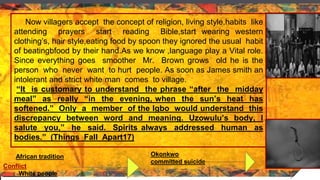
Now villagers accept the concept of religion, living style,habits like
attending prayers start reading Bible,start wearing western
clothing’s, hair style,eating food by spoon they ignored the usual habit
of beatingbfood by their hand.As we know ,language play a Vital role.
Since everything goes smoother Mr. Brown grows old he is the
person who never want to hurt people. As soon as James smith an
intolerant and strict white man comes to village.
“It is customary to understand the phrase “after the midday
meal” as really “in the evening, when the sun’s heat has
softened.” Only a member of the Igbo would understand this
discrepancy between word and meaning. Uzowulu’s body, I
salute you,” he said. Spirits always addressed human as
bodies.” (Things Fall Apart17)
African tradition
Conflict
White people
Okonkwo
committed suicide
Conclusion
We come to conclusions that, Through this novel we can say that
Things Fall Apart by Chinua Achebe is a play about the
traditional and modern conflict within the society. In the fictional
clan Umfobia, people were living their lives with different traditions,
believe in many gods, festivals. Things fall apart when the Britishers
came their. We see this clear picture of changes in the clan with
entry of Okonkwo. Major conflict we found after that. We can say that
this novel is about the things fall apart between frist parts beginning
and second’s parts end.
Work citation
Achebe, Chinua (1958), Things Fall Apart, London, Heinemann.
Boehmer,Elleke “Chinua Achebe, a Father of Modern African Literature.” PMLA, vol. 129, no. 2, 2014, pp.
237–240., www.jstor.org/stable/24769450.
Morrison, Jago. “Tradition and Modernity in Chinua Achebe's African Trilogy.” Research in African
Literatures, vol. 49, no. 4, 2018, pp. 14–26. JSTOR, www.jstor.org/stable/10.2979/reseafrilite.49.4.03.
Nwachukwu-Agbada, J. O. J. “Tradition and Innovation in the Igbo Novels of Tony Ubesie.” Research in
African Literatures, vol. 28, no. 1, 1997, pp. 124–133. JSTOR, www.jstor.org/stable/3819923.
Osei-Nyame, Kwadwo. “Chinua Achebe Writing Culture: Representations of Gender and Tradition in
‘Things Fall Apart.’” Research in African Literatures, vol. 30, no. 2, 1999, pp. 148–164. JSTOR,
www.jstor.org/stable/3820564.
Tradition and modernity in things fall apart

Tradition and modernity in things fall apart

  • 1.
    NAME : PANDYAMEHAL JITENDRABHAI ROLL NO :13 SEM: 4 ENROLLMENT NO : 2069108420200029 SUBJECT : African Literature TOPIC : Tradition and Modernity in Things fall apart DATE :27/4/2021 Batch -2019-2021 E-MAIL ID -MEHALPANDYA252@GMAIL.COM SUBMITTED TO – DEPARTMENT OF ENGLISH M. K. BHAVANAGAR UNIVERSITY
  • 2.
    Chinua Achebe Born :16November 1930 Died :21 March 2013 He was a Nigerian novelist, poet, and critic. His first novel Things Fall Apart (1958), often considered his masterpiece,is the most widely read book in modern African literature.
  • 3.
  • 4.
    Tradition in Achebe’sThings Fall Apart Igbo religion exerts a great deal of influence on the moral and political lives and activities of its practitioners. According to David Carroll, the Igbo religion consists of three major categories of belief: the worship of the great public deities, the cult of personal gods, and the worship of the ancestors. Igbo cosmology and traditional religion informs and shapes the world-view, moral code and ethics of the characters in Things Fall Apart. There were three largest and most dominant ethnic groups in Nigeria.They are the Hausa,Yoruba, and Igbo and other smaller groups include the Fulani, Ijaw, Kanuri,Ibibio, others. About Conrad a critic says "Conrad describes Africa as a wild, dark and uncivilized continent" .
  • 5.
    Things Fall Apartis set in the 1890s and portrays the clash between Nigeria's white colonial government and the traditional culture of the indigenous Igbo people. Achebe's novel shatters the stereotypical European portraits of native Africans. In the first part of the novel, the author is careful to portray the complex, advanced social, political and religious institutions as well as artistic traditions of Igbo culture prior to its contact with Europeans. Achebe brings to life an African culture with religion, a government, a system of money, and an artistic tradition, as well as a judicial system. The reader is introduced to the traditional Igbo family structure the traditional Igbo culture as presented in Things Fall Apart. Modernity in Things Fall Apart
  • 6.
    Con… Achebe argues thatthe white man has destroyed Igbo culture out of ignorance of the people’s way of life and the white man’s inability to speak the people’s language. These novel concerned with the traditional Igbo life as it clashed with colonial powers in the form of missionaries and colonial government.Chinua Achebe evokes with world religions and traditional African cultures, there is archeological evidence that societies have been living in Nigeria for more than twenty five hundred years. The borders of modern not created until the British consolidated their colonial power over the area in 1914.As Simon Gikandi argues, however, what this account of Achebe tended to miss was the ways in which his project was always, at the same time, entirely concerned with the idea of an Africa emerging into modernity.
  • 7.
    In things fallapart, Achebe represents the character named ‘Okonkwo’ protagonist of the play presented as a normal rural Nigerian, belong to Igbo society. He is the best example of well matured ‘Masculine’ gender, because he is not like his father Unoka who is fond of flute music’s ,coward in his life time and dead disrespect with more debts around the village surroundings. He is great warriorof clan. He led his life with strict rules and regulation with the help of Igbo traditions. .
  • 8.
    This play setsin the 1890s and it portrays the class between Nigeria and white colonial government; and the traditional culture of the indigenous Igbo people. As a result of this theme, the six missionaries travel to Mbanta. British colonization, Christian missionaries are nothing but the initial stage of industrial revolution in Nigeria. Mr. Kiaga the missionaries leader; Mr. Brown, Speaks to the villagers. He tells that God is false and worshipping more than one god is idolatrous. But villagers believe in their god and it’s not only one but many because it is followed by them for several years. So that villagers don’t understand how the holy Trinity can be accepted as on one god. Their aim is to convert the residents into Christian religion.
  • 9.
    Now villagers acceptthe concept of religion, living style,habits like attending prayers start reading Bible,start wearing western clothing’s, hair style,eating food by spoon they ignored the usual habit of beatingbfood by their hand.As we know ,language play a Vital role. Since everything goes smoother Mr. Brown grows old he is the person who never want to hurt people. As soon as James smith an intolerant and strict white man comes to village. “It is customary to understand the phrase “after the midday meal” as really “in the evening, when the sun’s heat has softened.” Only a member of the Igbo would understand this discrepancy between word and meaning. Uzowulu’s body, I salute you,” he said. Spirits always addressed human as bodies.” (Things Fall Apart17) African tradition Conflict White people Okonkwo committed suicide
  • 10.
    Conclusion We come toconclusions that, Through this novel we can say that Things Fall Apart by Chinua Achebe is a play about the traditional and modern conflict within the society. In the fictional clan Umfobia, people were living their lives with different traditions, believe in many gods, festivals. Things fall apart when the Britishers came their. We see this clear picture of changes in the clan with entry of Okonkwo. Major conflict we found after that. We can say that this novel is about the things fall apart between frist parts beginning and second’s parts end.
  • 11.
    Work citation Achebe, Chinua(1958), Things Fall Apart, London, Heinemann. Boehmer,Elleke “Chinua Achebe, a Father of Modern African Literature.” PMLA, vol. 129, no. 2, 2014, pp. 237–240., www.jstor.org/stable/24769450. Morrison, Jago. “Tradition and Modernity in Chinua Achebe's African Trilogy.” Research in African Literatures, vol. 49, no. 4, 2018, pp. 14–26. JSTOR, www.jstor.org/stable/10.2979/reseafrilite.49.4.03. Nwachukwu-Agbada, J. O. J. “Tradition and Innovation in the Igbo Novels of Tony Ubesie.” Research in African Literatures, vol. 28, no. 1, 1997, pp. 124–133. JSTOR, www.jstor.org/stable/3819923. Osei-Nyame, Kwadwo. “Chinua Achebe Writing Culture: Representations of Gender and Tradition in ‘Things Fall Apart.’” Research in African Literatures, vol. 30, no. 2, 1999, pp. 148–164. JSTOR, www.jstor.org/stable/3820564.