TOM JENKINS
From a child Jenkins has always had an interest in sports. However, Jenkins felt that he lacked
the talent to make it professional in sports so instead went down the path of being a
photographer of sport. This is because Jenkins enjoyed photography in school and felt he could
get the best of both of his interests and be a sports photographer. Jenkins studied photography
in South Wales. When he left in 1989 he freelanced for different companies before getting
regular work for the Guardian. Jenkins has worked for them ever since and also added the
Observer in to his work. Jenkins best moments have been covering the World Cups and the
Olympic games.
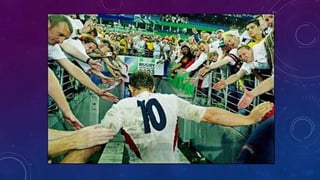
The main focus of this photograph is the player in the middle. This has been done by using the
rule of thirds, which positions the player in the centre/middle of the photograph. The reason for
this is because the purpose of the image is to focus on the player. A deep focus is used to not
only capture the rugby player but to also include the fans and the emotions of them. The deep
focus allows the audience to see clearly their emotions and it looks as though they are
congratulating the player and are all in a happy mood. This mood is further emphasised by the
use of high key lighting from the stadium lights which lights the stadium up so you can see the
player and the fans. The positioning of the fans suggests that they all want to get close to the
player and thank him which conveys a mood of admiration and gratitude because the player
might have played well. A fast shutting speed is used here, this is so the athlete and the fans in
the crowd are captured within the photograph and no motion blur is captured. The angle is
slightly lower in the image to help capture both the player and the fans in the crowd. With the
lower angle being used it helps Jenkins show what the purpose of the image is.
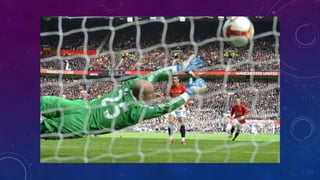
The main focus in this image are the two players who are involved in the goal, Wayne Rooney
and Cristiano Ronaldo. The rule of thirds captures Ronaldo directly in focus in the middle of the
photograph because he is the goal scorer. This immediately draws the attention of the audience
to the key player involved in the goal. A shallow focus is used to not only show who the main
focus in the photograph should be on but also to highlight and emphasise their importance
within the image. A low angle is used to capture the key players involved and to also capture the
scoreboard and the crowd just before the ball goes into the back of the net. The picture is taken
at this specific time for the subject positioning showing the attackers watching the ball to see
whether it goes into the goal and the keeper trying to keep the shot out of the net but the ball
being just out of reach. Jenkins wouldn’t have been able to alter the positioning of the players
because this is taken during a live match so he captured this picture at this specific time. He
used a fast shutter speed to capture the players and the ball moving and no motion blur is
shown as it captures what the photographer wanted.
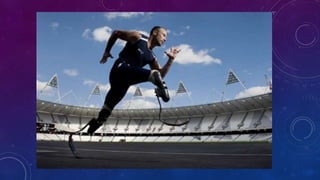
The main focus of this image is the Paralympian athlete. The shallow focus again directs the
audiences attention to the athlete and highlights his importance in the photograph. We know
that this is a shallow focus because the stadium in the background is out of focus and because it
is less important. The low angle makes the athlete seem more powerful and superior by making
him seem larger than in real life and taller which makes him seem like a more dominant figure.
This is because Jenkins wants the audience to know how powerful the athletes are. The rule of
thirds is used because the athlete is directly in the centre and down the middle of the image as
he is the main focus. Also, a fast shutter speed is used because it captures the athlete sprinting
and does not create a motion blur. The blue skies and bright stadium gives you the impression
the athlete is happy and proud and it creates a positive atmosphere. This is because the
Paralympic games are due to come around the time the photograph is taken and this is a
positive event to look forward to.

Tom Jenkins

  • 1.
  • 2.
    From a childJenkins has always had an interest in sports. However, Jenkins felt that he lacked the talent to make it professional in sports so instead went down the path of being a photographer of sport. This is because Jenkins enjoyed photography in school and felt he could get the best of both of his interests and be a sports photographer. Jenkins studied photography in South Wales. When he left in 1989 he freelanced for different companies before getting regular work for the Guardian. Jenkins has worked for them ever since and also added the Observer in to his work. Jenkins best moments have been covering the World Cups and the Olympic games.
  • 4.
    The main focusof this photograph is the player in the middle. This has been done by using the rule of thirds, which positions the player in the centre/middle of the photograph. The reason for this is because the purpose of the image is to focus on the player. A deep focus is used to not only capture the rugby player but to also include the fans and the emotions of them. The deep focus allows the audience to see clearly their emotions and it looks as though they are congratulating the player and are all in a happy mood. This mood is further emphasised by the use of high key lighting from the stadium lights which lights the stadium up so you can see the player and the fans. The positioning of the fans suggests that they all want to get close to the player and thank him which conveys a mood of admiration and gratitude because the player might have played well. A fast shutting speed is used here, this is so the athlete and the fans in the crowd are captured within the photograph and no motion blur is captured. The angle is slightly lower in the image to help capture both the player and the fans in the crowd. With the lower angle being used it helps Jenkins show what the purpose of the image is.
  • 6.
    The main focusin this image are the two players who are involved in the goal, Wayne Rooney and Cristiano Ronaldo. The rule of thirds captures Ronaldo directly in focus in the middle of the photograph because he is the goal scorer. This immediately draws the attention of the audience to the key player involved in the goal. A shallow focus is used to not only show who the main focus in the photograph should be on but also to highlight and emphasise their importance within the image. A low angle is used to capture the key players involved and to also capture the scoreboard and the crowd just before the ball goes into the back of the net. The picture is taken at this specific time for the subject positioning showing the attackers watching the ball to see whether it goes into the goal and the keeper trying to keep the shot out of the net but the ball being just out of reach. Jenkins wouldn’t have been able to alter the positioning of the players because this is taken during a live match so he captured this picture at this specific time. He used a fast shutter speed to capture the players and the ball moving and no motion blur is shown as it captures what the photographer wanted.
  • 8.
    The main focusof this image is the Paralympian athlete. The shallow focus again directs the audiences attention to the athlete and highlights his importance in the photograph. We know that this is a shallow focus because the stadium in the background is out of focus and because it is less important. The low angle makes the athlete seem more powerful and superior by making him seem larger than in real life and taller which makes him seem like a more dominant figure. This is because Jenkins wants the audience to know how powerful the athletes are. The rule of thirds is used because the athlete is directly in the centre and down the middle of the image as he is the main focus. Also, a fast shutter speed is used because it captures the athlete sprinting and does not create a motion blur. The blue skies and bright stadium gives you the impression the athlete is happy and proud and it creates a positive atmosphere. This is because the Paralympic games are due to come around the time the photograph is taken and this is a positive event to look forward to.