Architecture Content Framework
Module 19
Introduction
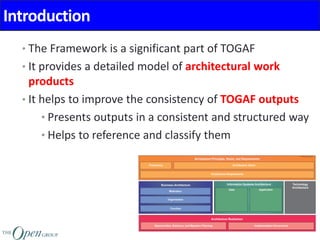
• The Framework is a significant part of TOGAF
• It provides a detailed model of architectural work
products
• It helps to improve the consistency of TOGAF outputs
• Presents outputs in a consistent and structured way
• Helps to reference and classify them
Benefits of the Architecture Content Framework
• It provides a comprehensive checklist of architecture
outputs
• It promotes better integration of work products if
adopted across an enterprise
• It provides a detailed open standard for how
architectures should be described
Overview
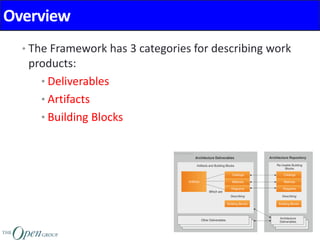
• The Framework has 3 categories for describing work
products:
• Deliverables
• Artifacts
• Building Blocks
Deliverables, Artifacts and Building Blocks
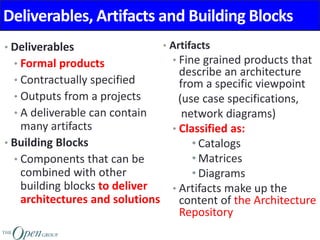
• Deliverables
• Formal products
• Contractually specified
• Outputs from a projects
• A deliverable can contain
many artifacts
• Building Blocks
• Components that can be
combined with other
building blocks to deliver
architectures and solutions
• Artifacts
• Fine grained products that
describe an architecture
from a specific viewpoint
(use case specifications,
network diagrams)
• Classified as:
• Catalogs
• Matrices
• Diagrams
• Artifacts make up the
content of the Architecture
Repository
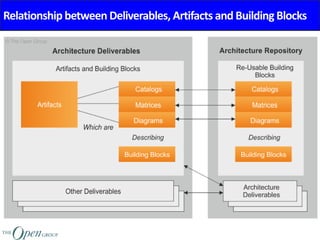
Relationship between Deliverables, Artifacts and Building Blocks
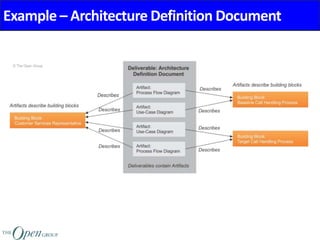
Example – Architecture Definition Document
Architectural Artifacts
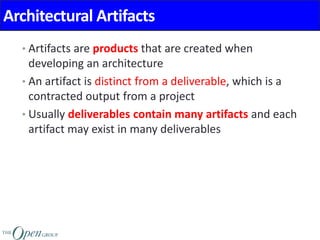
• Artifacts are products that are created when
developing an architecture
• An artifact is distinct from a deliverable, which is a
contracted output from a project
• Usually deliverables contain many artifacts and each
artifact may exist in many deliverables
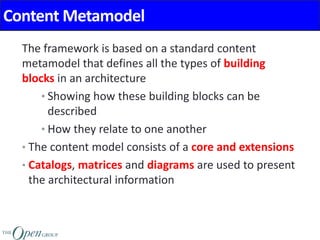
Content Metamodel
The framework is based on a standard content
metamodel that defines all the types of building
blocks in an architecture
• Showing how these building blocks can be
described
• How they relate to one another
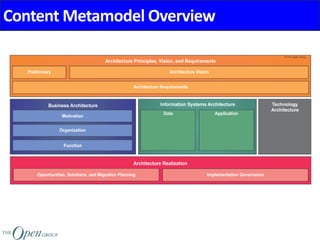
• The content model consists of a core and extensions
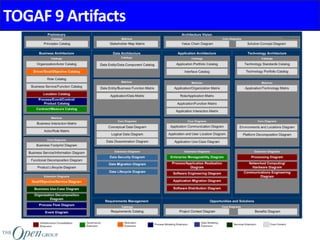
• Catalogs, matrices and diagrams are used to present
the architectural information
Content Metamodel Overview
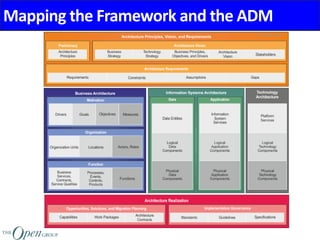
Mapping the Framework and the ADM
TOGAF 9 Artifacts
Content Framework and the TOGAF ADM
• At each stage the ADM takes information as inputs and
creates outputs.
• The content framework provides a structure for the ADM
that defines inputs and outputs in detail
• The ADM describes what needs to be done
• The content framework describes what it should look like in
the end.

TOGAF Classroom Series - M19 architecture content framework

  • 1.
  • 2.
    Introduction • The Frameworkis a significant part of TOGAF • It provides a detailed model of architectural work products • It helps to improve the consistency of TOGAF outputs • Presents outputs in a consistent and structured way • Helps to reference and classify them
  • 3.
    Benefits of theArchitecture Content Framework • It provides a comprehensive checklist of architecture outputs • It promotes better integration of work products if adopted across an enterprise • It provides a detailed open standard for how architectures should be described
  • 4.
    Overview • The Frameworkhas 3 categories for describing work products: • Deliverables • Artifacts • Building Blocks
  • 5.
    Deliverables, Artifacts andBuilding Blocks • Deliverables • Formal products • Contractually specified • Outputs from a projects • A deliverable can contain many artifacts • Building Blocks • Components that can be combined with other building blocks to deliver architectures and solutions • Artifacts • Fine grained products that describe an architecture from a specific viewpoint (use case specifications, network diagrams) • Classified as: • Catalogs • Matrices • Diagrams • Artifacts make up the content of the Architecture Repository
  • 6.
    Relationship between Deliverables,Artifacts and Building Blocks
  • 7.
    Example – ArchitectureDefinition Document
  • 8.
    Architectural Artifacts • Artifactsare products that are created when developing an architecture • An artifact is distinct from a deliverable, which is a contracted output from a project • Usually deliverables contain many artifacts and each artifact may exist in many deliverables
  • 9.
    Content Metamodel The frameworkis based on a standard content metamodel that defines all the types of building blocks in an architecture • Showing how these building blocks can be described • How they relate to one another • The content model consists of a core and extensions • Catalogs, matrices and diagrams are used to present the architectural information
  • 10.
  • 11.
  • 12.
  • 13.
    Content Framework andthe TOGAF ADM • At each stage the ADM takes information as inputs and creates outputs. • The content framework provides a structure for the ADM that defines inputs and outputs in detail • The ADM describes what needs to be done • The content framework describes what it should look like in the end.