I am æm I’m - aɪm
you are a: You’re - jɔː
he, she, it is ɪz
he’s she’s it’s
hiz ʃiz ɪts
we
are a:
We’re - wɪə
you you’re - jɔː
they They’re - ðeə
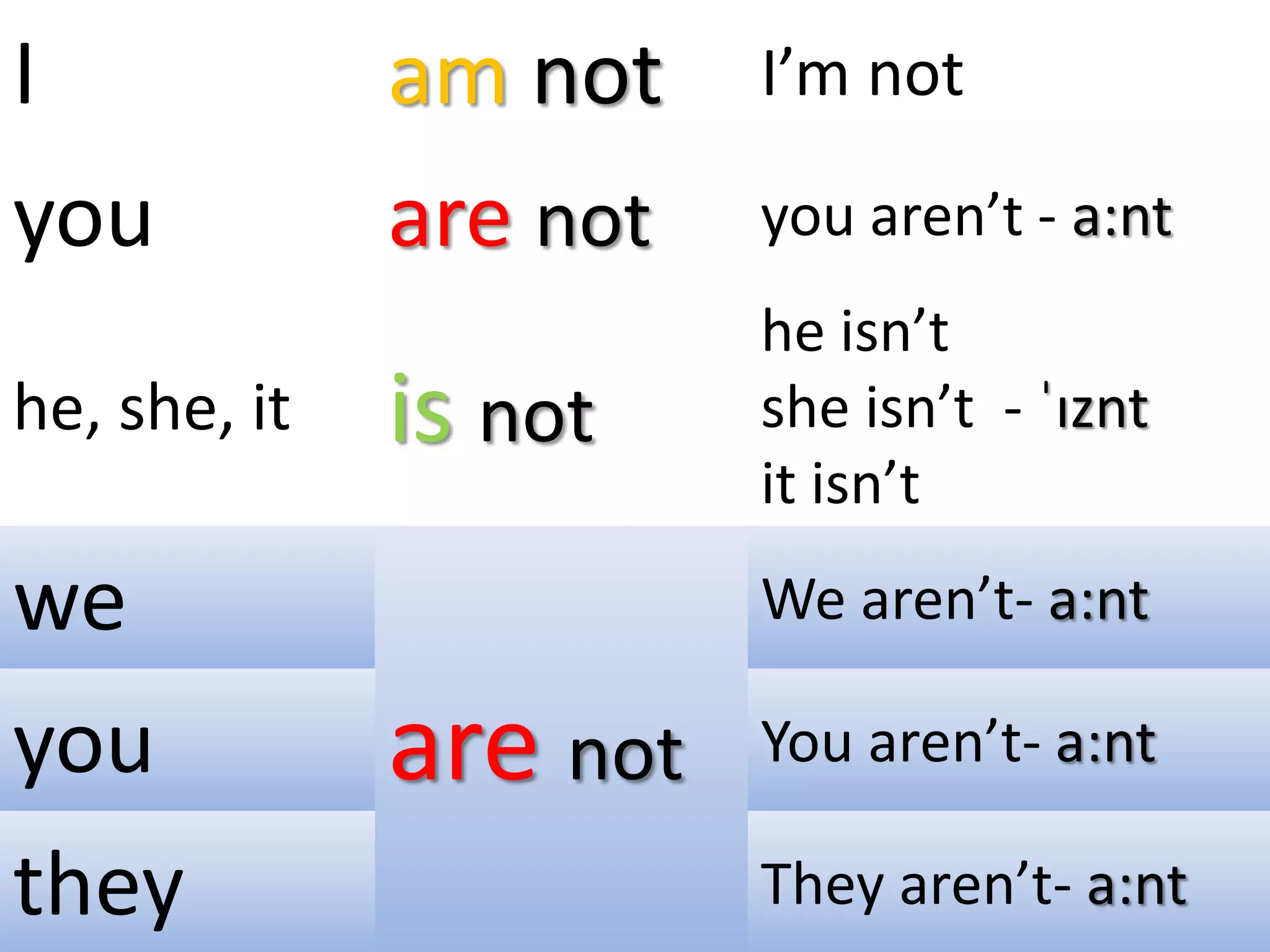
I am not I’m not
you are not you aren’t - a:nt
he, she, it is not
he isn’t
she isn’t - ˈɪznt
it isn’t
we
are not
We aren’t- a:nt
you You aren’t- a:nt
they They aren’t- a:nt
Verb “be” Subject (Rest of the
sentence)
?
is she single ?
are they students ?
is this Your book ?
Question
word
Verb “be” Subject (Rest of the
sentence)
?
Why is she single ?
where are they ?
How
much
is This book , please ?
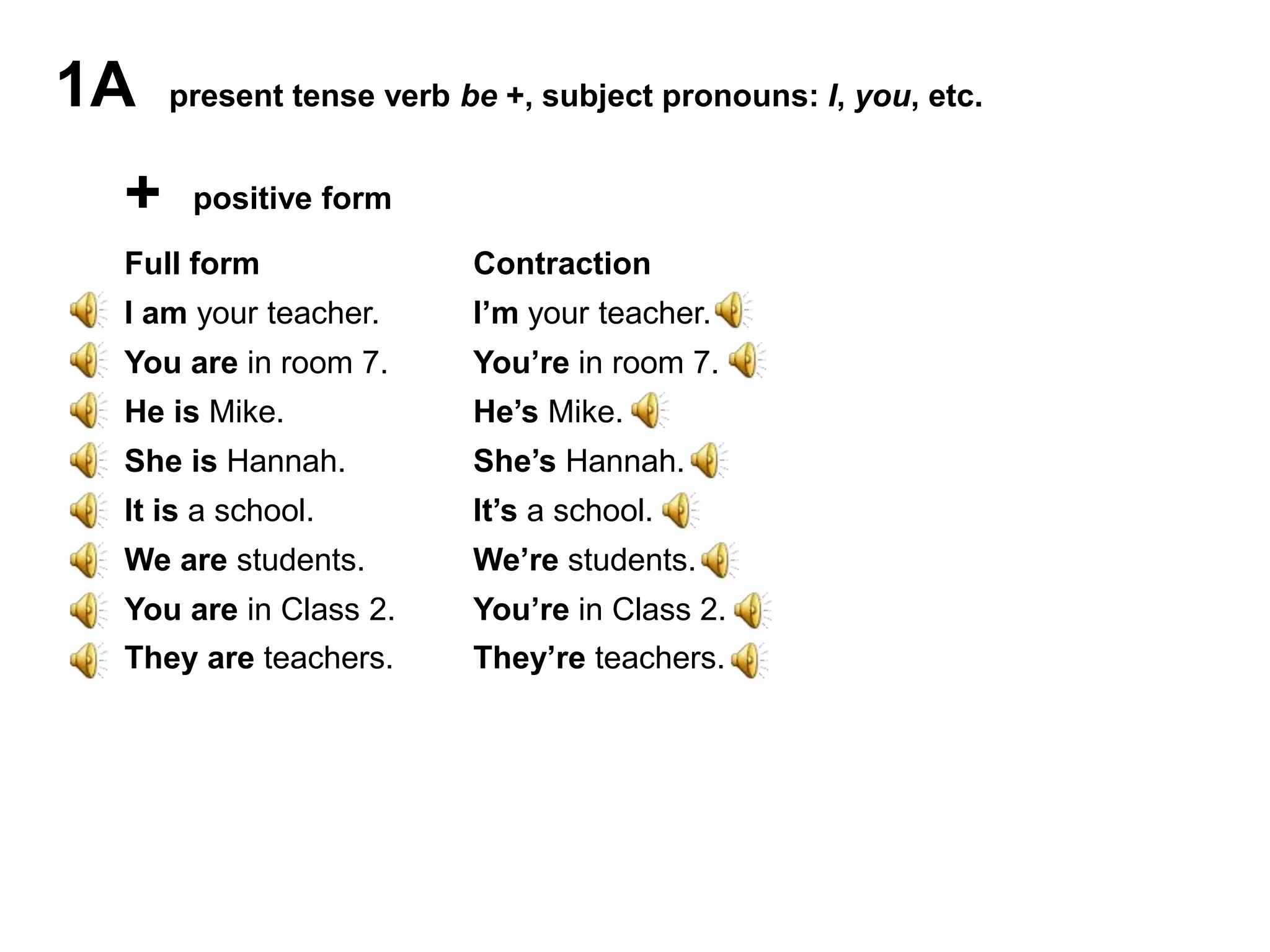
1A present tense verb be +, subject pronouns: I, you, etc.
Full form Contraction
+ positive form
They are teachers. They’re teachers.
I am your teacher. I’m your teacher.
You are in room 7. You’re in room 7.
He is Mike. He’s Mike.
She is Hannah. She’s Hannah.
It is a school. It’s a school.
You are in Class 2. You’re in Class 2.
We are students. We’re students.
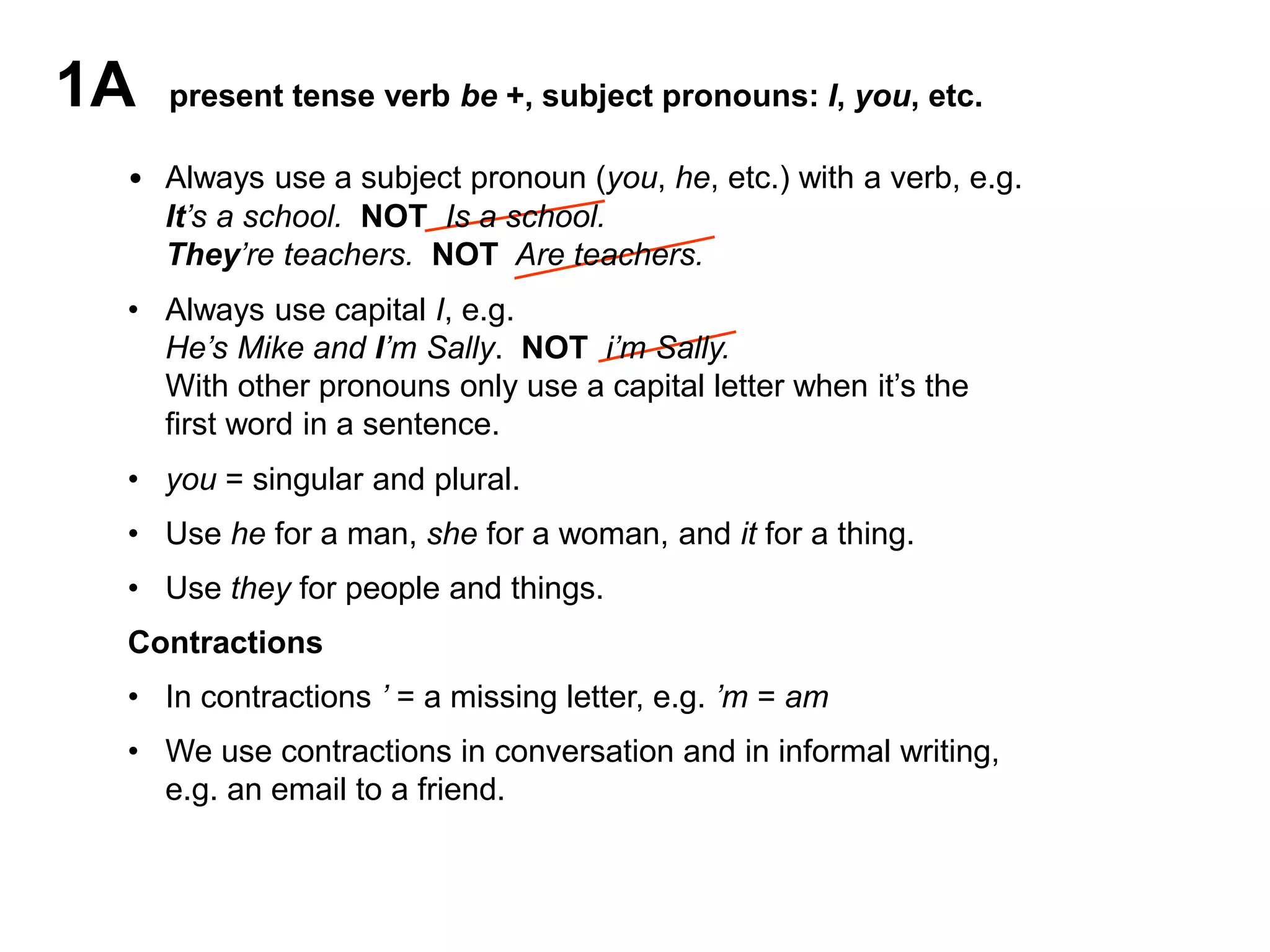
1A present tense verb be +, subject pronouns: I, you, etc.
• We use contractions in conversation and in informal writing,
e.g. an email to a friend.
• Always use a subject pronoun (you, he, etc.) with a verb, e.g.
It’s a school. NOT Is a school.
They’re teachers. NOT Are teachers.
• Always use capital I, e.g.
He’s Mike and I’m Sally. NOT i’m Sally.
With other pronouns only use a capital letter when it’s the
first word in a sentence.
• you = singular and plural.
• Use he for a man, she for a woman, and it for a thing.
• Use they for people and things.
Contractions
• In contractions ’ = a missing letter, e.g. ’m = am
1B present tense verb be – and ?
Is she Russian? No, she isn’t.
They are not They aren’t
• You can also contract are not and is not like this:
You’re not Italian. She’s not Spanish.
negative form
I’m not American. She isn’t from London.
They aren’t Spanish. Are you Polish? Yes, I am.
Full form Contraction
I am not I’m not
You are not You aren’t Italian.
He / She / It is not He / She / It isn’t Spanish.
We are not We aren’t British.
You are not You aren’t
• Put not after the verb be to make negatives.
–
1B present tense verb be – and ?
Are they they are. they aren’t.
? question form positive short answer negative short answer
• Don’t use contractions in positive short answers.
Are you Russian? Yes, I am. NOT Yes, I’m.
Am I I am. I’m not.
Are you German? you are. you aren’t.
Is he / she / it Russian? Yes, he / she / it is. No, he / she / it isn’t.
Are we Polish? we are. we aren’t.
Are you you are. you aren’t.
• In questions, put am, are, is before I, you, he, etc.
Are you German? NOT You are German?
Where are you from? NOT Where you are from?
–

To Be - positive, negative, questions

  • 1.
    I am æmI’m - aɪm you are a: You’re - jɔː he, she, it is ɪz he’s she’s it’s hiz ʃiz ɪts we are a: We’re - wɪə you you’re - jɔː they They’re - ðeə
  • 2.
    I am notI’m not you are not you aren’t - a:nt he, she, it is not he isn’t she isn’t - ˈɪznt it isn’t we are not We aren’t- a:nt you You aren’t- a:nt they They aren’t- a:nt
  • 3.
    Verb “be” Subject(Rest of the sentence) ? is she single ? are they students ? is this Your book ? Question word Verb “be” Subject (Rest of the sentence) ? Why is she single ? where are they ? How much is This book , please ?
  • 4.
    1A present tenseverb be +, subject pronouns: I, you, etc. Full form Contraction + positive form They are teachers. They’re teachers. I am your teacher. I’m your teacher. You are in room 7. You’re in room 7. He is Mike. He’s Mike. She is Hannah. She’s Hannah. It is a school. It’s a school. You are in Class 2. You’re in Class 2. We are students. We’re students.
  • 5.
    1A present tenseverb be +, subject pronouns: I, you, etc. • We use contractions in conversation and in informal writing, e.g. an email to a friend. • Always use a subject pronoun (you, he, etc.) with a verb, e.g. It’s a school. NOT Is a school. They’re teachers. NOT Are teachers. • Always use capital I, e.g. He’s Mike and I’m Sally. NOT i’m Sally. With other pronouns only use a capital letter when it’s the first word in a sentence. • you = singular and plural. • Use he for a man, she for a woman, and it for a thing. • Use they for people and things. Contractions • In contractions ’ = a missing letter, e.g. ’m = am
  • 6.
    1B present tenseverb be – and ? Is she Russian? No, she isn’t. They are not They aren’t • You can also contract are not and is not like this: You’re not Italian. She’s not Spanish. negative form I’m not American. She isn’t from London. They aren’t Spanish. Are you Polish? Yes, I am. Full form Contraction I am not I’m not You are not You aren’t Italian. He / She / It is not He / She / It isn’t Spanish. We are not We aren’t British. You are not You aren’t • Put not after the verb be to make negatives. –
  • 7.
    1B present tenseverb be – and ? Are they they are. they aren’t. ? question form positive short answer negative short answer • Don’t use contractions in positive short answers. Are you Russian? Yes, I am. NOT Yes, I’m. Am I I am. I’m not. Are you German? you are. you aren’t. Is he / she / it Russian? Yes, he / she / it is. No, he / she / it isn’t. Are we Polish? we are. we aren’t. Are you you are. you aren’t. • In questions, put am, are, is before I, you, he, etc. Are you German? NOT You are German? Where are you from? NOT Where you are from? –