Participant Centered facilitate group
discussion (FGD):
Talk, Listen, and Connect (TLC)
Sinki Ho
WIC Head Nutritionist
Wyckoff Heights Medical Center
Your thoughts on FGD
• What does an effective group mean to you?
• What are your concern and challenge?
From traditional to new approach in WIC
• Provide fact-based information vs. emotion-
based
• Remain professional like a teacher vs. group
discussions to connect participants
• Distribute handouts to use images to connect
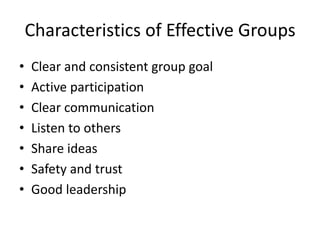
Characteristics of Effective Groups
• Clear and consistent group goal
• Active participation
• Clear communication
• Listen to others
• Share ideas
• Safety and trust
• Good leadership
Purpose of FGD
• Provide an opportunity for participants to
learn in a pleasant, informal atmosphere
• Encourage participants to educate each other
by discussing their knowledge of a topic and
sharing real-life experience
• Built self-esteem
• Enable participants to give and receive
support about their concern and make desired
behavior change
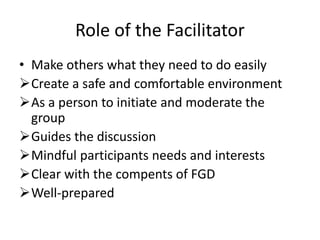
Role of the Facilitator
• Make others what they need to do easily
Create a safe and comfortable environment
As a person to initiate and moderate the
group
Guides the discussion
Mindful participants needs and interests
Clear with the compents of FGD
Well-prepared
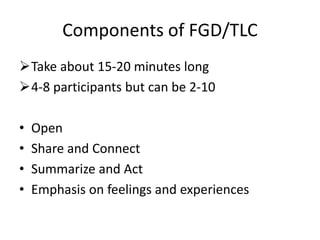
Components of FGD/TLC
Take about 15-20 minutes long
4-8 participants but can be 2-10
• Open
• Share and Connect
• Summarize and Act
• Emphasis on feelings and experiences
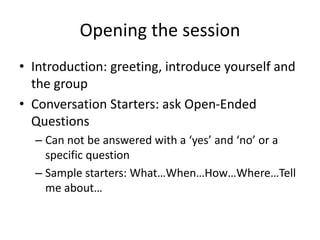
Opening the session
• Introduction: greeting, introduce yourself and
the group
• Conversation Starters: ask Open-Ended
Questions
– Can not be answered with a ‘yes’ and ‘no’ or a
specific question
– Sample starters: What…When…How…Where…Tell
me about…
Share and Connect
Affirmation: validate speaker’s effort, experience,
and strength -> encourage sharing
- ‘Thank you for sharing. Good job! Keep it up!’
Generalizing: normalize speaker’s experience,
feeling and perception -> help challenging
questions or statements, encourage sharing
- ‘A lot of participants…’
Paraphrasing: use your own words to restate
message -> check understanding, validate the
participant
- ‘Do you mean…? What I heard from you…?’
Summarizing
• Bring ideas together
• Facilitator can highlight ideas and points made
in the group
• Repeat relevant information
• Get back on focus
Act
• Ask participants for something they are taking
away from the group
– What may you try this week/month?
– What is one new thing you heard or learnt today?
Group behaviors
• Emotion triggers behavior change
• We want them to change their challenging
behaviors but not the person
• We encourage a positive experience for
participants
Preparation
• Topic
• Introduction
• Conversation starter
• Statement of ACT
Any Question?
Thank You for your listening and
participation!

TLC Presentation_Sinki Ho_2.24.17

  • 1.
    Participant Centered facilitategroup discussion (FGD): Talk, Listen, and Connect (TLC) Sinki Ho WIC Head Nutritionist Wyckoff Heights Medical Center
  • 2.
    Your thoughts onFGD • What does an effective group mean to you? • What are your concern and challenge?
  • 3.
    From traditional tonew approach in WIC • Provide fact-based information vs. emotion- based • Remain professional like a teacher vs. group discussions to connect participants • Distribute handouts to use images to connect
  • 4.
    Characteristics of EffectiveGroups • Clear and consistent group goal • Active participation • Clear communication • Listen to others • Share ideas • Safety and trust • Good leadership
  • 5.
    Purpose of FGD •Provide an opportunity for participants to learn in a pleasant, informal atmosphere • Encourage participants to educate each other by discussing their knowledge of a topic and sharing real-life experience • Built self-esteem • Enable participants to give and receive support about their concern and make desired behavior change
  • 6.
    Role of theFacilitator • Make others what they need to do easily Create a safe and comfortable environment As a person to initiate and moderate the group Guides the discussion Mindful participants needs and interests Clear with the compents of FGD Well-prepared
  • 7.
    Components of FGD/TLC Takeabout 15-20 minutes long 4-8 participants but can be 2-10 • Open • Share and Connect • Summarize and Act • Emphasis on feelings and experiences
  • 8.
    Opening the session •Introduction: greeting, introduce yourself and the group • Conversation Starters: ask Open-Ended Questions – Can not be answered with a ‘yes’ and ‘no’ or a specific question – Sample starters: What…When…How…Where…Tell me about…
  • 9.
    Share and Connect Affirmation:validate speaker’s effort, experience, and strength -> encourage sharing - ‘Thank you for sharing. Good job! Keep it up!’ Generalizing: normalize speaker’s experience, feeling and perception -> help challenging questions or statements, encourage sharing - ‘A lot of participants…’ Paraphrasing: use your own words to restate message -> check understanding, validate the participant - ‘Do you mean…? What I heard from you…?’
  • 10.
    Summarizing • Bring ideastogether • Facilitator can highlight ideas and points made in the group • Repeat relevant information • Get back on focus
  • 11.
    Act • Ask participantsfor something they are taking away from the group – What may you try this week/month? – What is one new thing you heard or learnt today?
  • 12.
    Group behaviors • Emotiontriggers behavior change • We want them to change their challenging behaviors but not the person • We encourage a positive experience for participants
  • 13.
    Preparation • Topic • Introduction •Conversation starter • Statement of ACT
  • 14.
  • 15.
    Thank You foryour listening and participation!