TENS
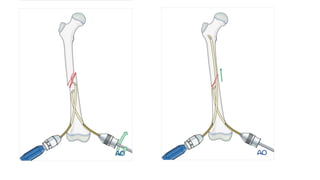
ESIN-retrograde
*Shaft fractures of the middle and proximal third in children
*From 4 up to 12–13 years of age (depending on body size/weight)
ESIN - anterograde- D/3rd
*Symmetrical bracing action two elastic nails inserted into metaphysis
Principle - flexural, axial, rotational and translation stability
3 point contact construct
Technique
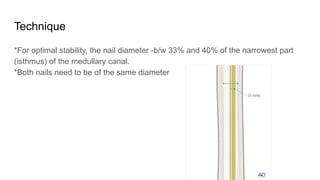
*For optimal stability, the nail diameter -b/w 33% and 40% of the narrowest part
(isthmus) of the medullary canal.
*Both nails need to be of the same diameter
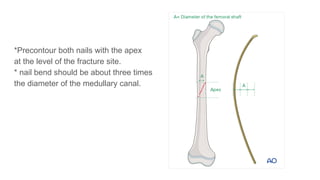
*Precontour both nails with the apex
at the level of the fracture site.
* nail bend should be about three times
the diameter of the medullary canal.
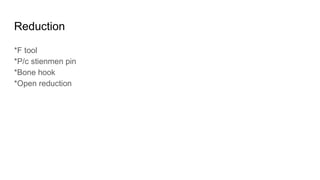
Reduction
*F tool
*P/c stienmen pin
*Bone hook
*Open reduction
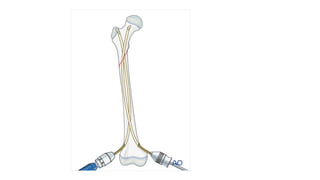
Final seating
* level of the lesser trochanter.
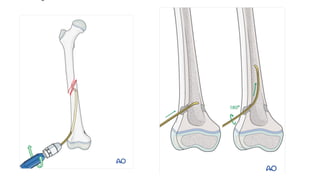
*Impact the nail started on the lateral side towards the greater trochanter.
*Optimally the nail tips are at the same level.
*Align the nail tips so that they diverge.
*Proximal 3rd-advance the medial nail into the femoral neck and the lateral nail
into the greater trochanter.
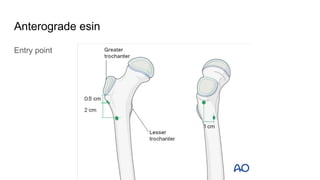
Anterograde esin
Entry point
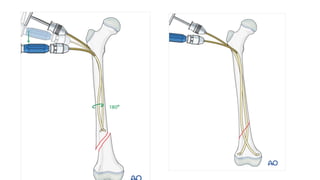
S shaped inferior nail
*Once it has good contact with the opposite cortex, with the tip having advanced
about two-thirds distally in the medullary canal.
1.Rotate the nail 180°.
2.Bend the proximal portion of the nail, which is outside the bone, in the opposite
direction to the previous bend.
3.Apply a constant bending force whilst inserting the nail.
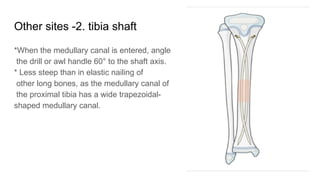
Other sites -2. tibia shaft
*When the medullary canal is entered, angle
the drill or awl handle 60° to the shaft axis.
* Less steep than in elastic nailing of
other long bones, as the medullary canal of
the proximal tibia has a wide trapezoidal-
shaped medullary canal.
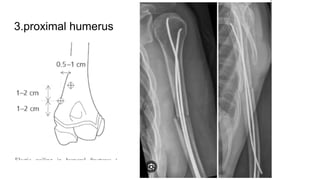
3.proximal humerus
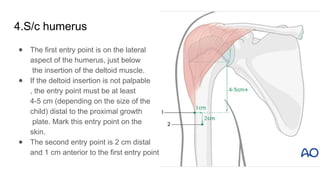
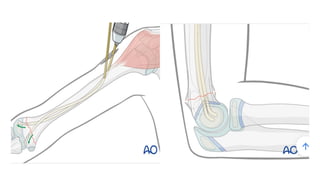
4.S/c humerus
● The first entry point is on the lateral
aspect of the humerus, just below
the insertion of the deltoid muscle.
● If the deltoid insertion is not palpable
, the entry point must be at least
4-5 cm (depending on the size of the
child) distal to the proximal growth
plate. Mark this entry point on the
skin.
● The second entry point is 2 cm distal
and 1 cm anterior to the first entry point oin
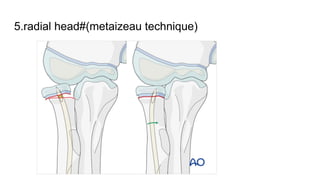
5.radial head#(metaizeau technique)
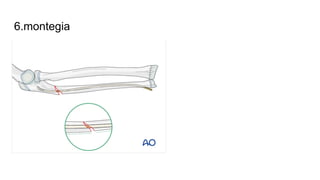
6.montegia
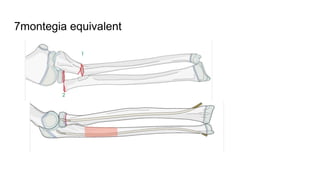
7montegia equivalent
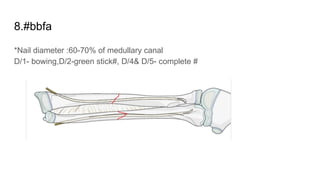
8.#bbfa
*Nail diameter :60-70% of medullary canal
D/1- bowing,D/2-green stick#, D/4& D/5- complete #
Thank you

Titanium elastic nail system -all about.pptx

  • 1.
  • 2.
    ESIN-retrograde *Shaft fractures ofthe middle and proximal third in children *From 4 up to 12–13 years of age (depending on body size/weight) ESIN - anterograde- D/3rd *Symmetrical bracing action two elastic nails inserted into metaphysis Principle - flexural, axial, rotational and translation stability 3 point contact construct
  • 3.
    Technique *For optimal stability,the nail diameter -b/w 33% and 40% of the narrowest part (isthmus) of the medullary canal. *Both nails need to be of the same diameter
  • 4.
    *Precontour both nailswith the apex at the level of the fracture site. * nail bend should be about three times the diameter of the medullary canal.
  • 7.
    Reduction *F tool *P/c stienmenpin *Bone hook *Open reduction
  • 8.
    Final seating * levelof the lesser trochanter. *Impact the nail started on the lateral side towards the greater trochanter. *Optimally the nail tips are at the same level. *Align the nail tips so that they diverge. *Proximal 3rd-advance the medial nail into the femoral neck and the lateral nail into the greater trochanter.
  • 10.
  • 11.
    S shaped inferiornail *Once it has good contact with the opposite cortex, with the tip having advanced about two-thirds distally in the medullary canal. 1.Rotate the nail 180°. 2.Bend the proximal portion of the nail, which is outside the bone, in the opposite direction to the previous bend. 3.Apply a constant bending force whilst inserting the nail.
  • 13.
    Other sites -2.tibia shaft *When the medullary canal is entered, angle the drill or awl handle 60° to the shaft axis. * Less steep than in elastic nailing of other long bones, as the medullary canal of the proximal tibia has a wide trapezoidal- shaped medullary canal.
  • 14.
  • 15.
    4.S/c humerus ● Thefirst entry point is on the lateral aspect of the humerus, just below the insertion of the deltoid muscle. ● If the deltoid insertion is not palpable , the entry point must be at least 4-5 cm (depending on the size of the child) distal to the proximal growth plate. Mark this entry point on the skin. ● The second entry point is 2 cm distal and 1 cm anterior to the first entry point oin
  • 17.
  • 18.
  • 19.
  • 20.
    8.#bbfa *Nail diameter :60-70%of medullary canal D/1- bowing,D/2-green stick#, D/4& D/5- complete #
  • 22.