Tissues –
Groups of cells
similar in
          Tissu
           es –
          grou

structure and
          ps of
          cells
          simil

function  ar in
          struc
           ture
           and
          funct
            ion
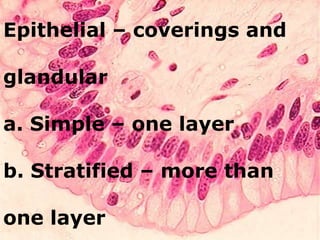
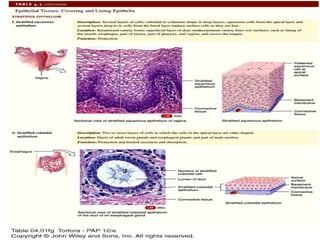
Epithelial – coverings and

glandular

a. Simple – one layer

b. Stratified – more than

one layer
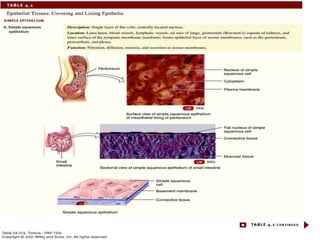
04_table_01a
04_table_01fg
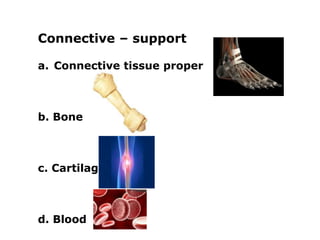
Connective – support

a. Connective tissue proper


b. Bone


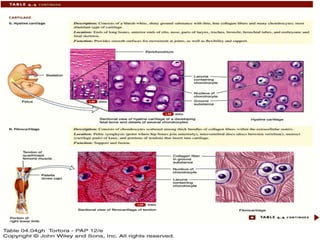
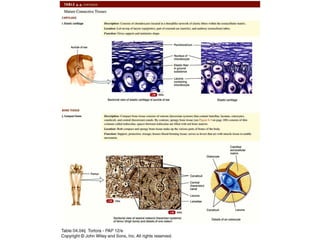
c. Cartilage


d. Blood
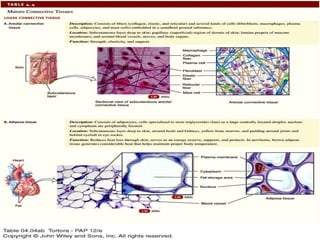
04_table_04ab
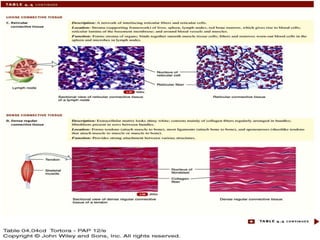
04_table_04cd
04_table_04gh
04_table_04ij
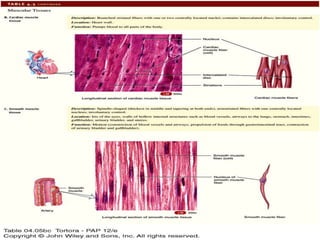
Muscle – movement

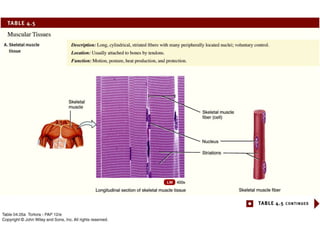
a. Skeletal

b. Cardiac

c. Smooth
04_table_05a
04_table_05bc
Nervous System :
Communication
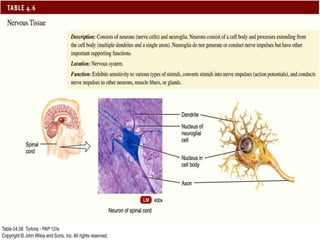
    Nervous – communication
Organ
Systems
Organ Systems:


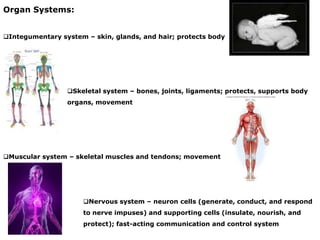
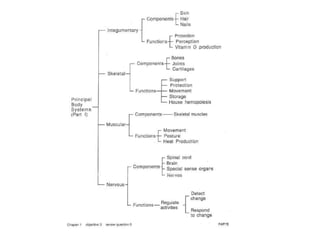
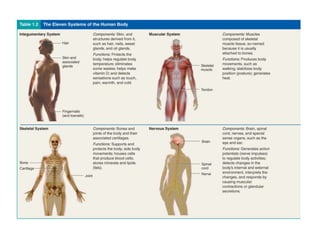
Integumentary system – skin, glands, and hair; protects body


                 Skeletal system – bones, joints, ligaments; protects, supports body
                 organs, movement


Muscular system – skeletal muscles and tendons; movement


                      Nervous system – neuron cells (generate, conduct, and respond
                      to nerve impuses) and supporting cells (insulate, nourish, and
                      protect); fast-acting communication and control system
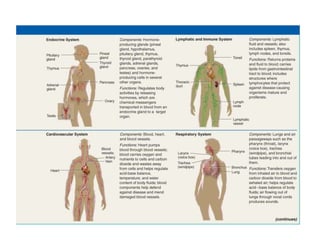
Endocrine system – various glands and tissue
scattered through out body; secrete hormones to
maintain homeostasis


Cardiovascular system – heart, blood vessels, and blood; transports
oxygen, nutrients, and waste


Lymphatic/immune system – lymphatic vessels and organs; defense to fight
infection


Respiratory system – larynx, trachea, bronchi, and lungs; supplies
oxygen, removes carbon dioxide
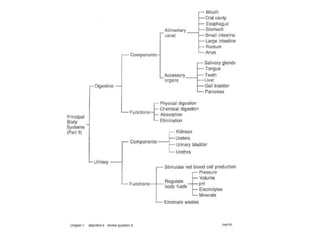
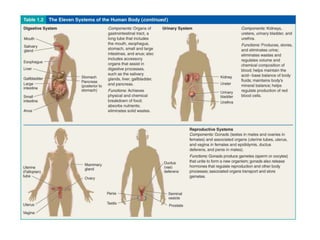
Digestive system – mouth, esophagus, stomach, and
intestine; breaks down food and absorbs nutrients


Urinary system – kidneys, bladder, ureter, and urethra;
eliminates wastes regulates water, electrolyte, and acid base
homeostasis


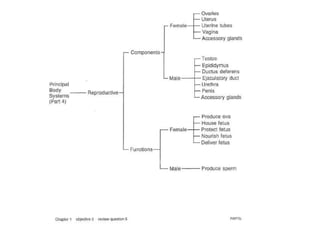
Reproductive systems –
testes, ovaries, ducts, penis, vagina, uterus; produce eggs
and sperm and hormones; in females supports and
nourishes the embryo and fetus
Tissues, organs, and organ systems

Tissues, organs, and organ systems

  • 1.
    Tissues – Groups ofcells similar in Tissu es – grou structure and ps of cells simil function ar in struc ture and funct ion
  • 2.
    Epithelial – coveringsand glandular a. Simple – one layer b. Stratified – more than one layer
  • 3.
  • 4.
  • 5.
    Connective – support a.Connective tissue proper b. Bone c. Cartilage d. Blood
  • 6.
  • 7.
  • 8.
  • 9.
  • 10.
    Muscle – movement a.Skeletal b. Cardiac c. Smooth
  • 11.
  • 12.
  • 13.
    Nervous System : Communication Nervous – communication
  • 15.
  • 16.
    Organ Systems: Integumentary system– skin, glands, and hair; protects body Skeletal system – bones, joints, ligaments; protects, supports body organs, movement Muscular system – skeletal muscles and tendons; movement Nervous system – neuron cells (generate, conduct, and respond to nerve impuses) and supporting cells (insulate, nourish, and protect); fast-acting communication and control system
  • 17.
    Endocrine system –various glands and tissue scattered through out body; secrete hormones to maintain homeostasis Cardiovascular system – heart, blood vessels, and blood; transports oxygen, nutrients, and waste Lymphatic/immune system – lymphatic vessels and organs; defense to fight infection Respiratory system – larynx, trachea, bronchi, and lungs; supplies oxygen, removes carbon dioxide
  • 18.
    Digestive system –mouth, esophagus, stomach, and intestine; breaks down food and absorbs nutrients Urinary system – kidneys, bladder, ureter, and urethra; eliminates wastes regulates water, electrolyte, and acid base homeostasis Reproductive systems – testes, ovaries, ducts, penis, vagina, uterus; produce eggs and sperm and hormones; in females supports and nourishes the embryo and fetus