
‘Tis Better to be
Effective Than Efficient
Kent J. McDonald
@beyondreqs
www.kbp.media/effective-over-efficient
Better.
Faster.
Cheaper.
IT has spent 30 years
teaching our business
partners how to be
bad customers.
We need to fix this.
- Jeffrey Davidson
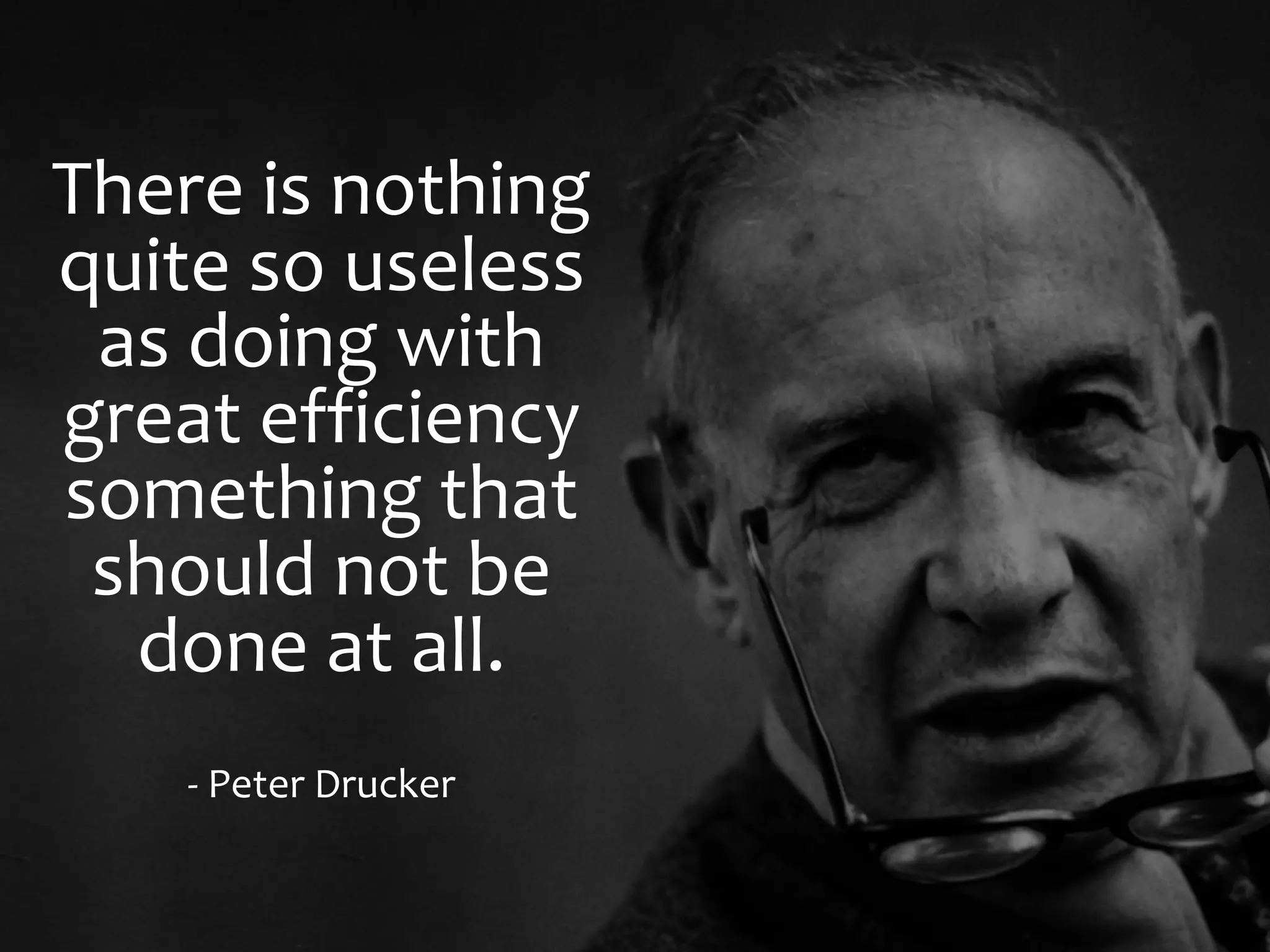
There is nothing
quite so useless
as doing with
great efficiency
something that
should not be
done at all.
- Peter Drucker
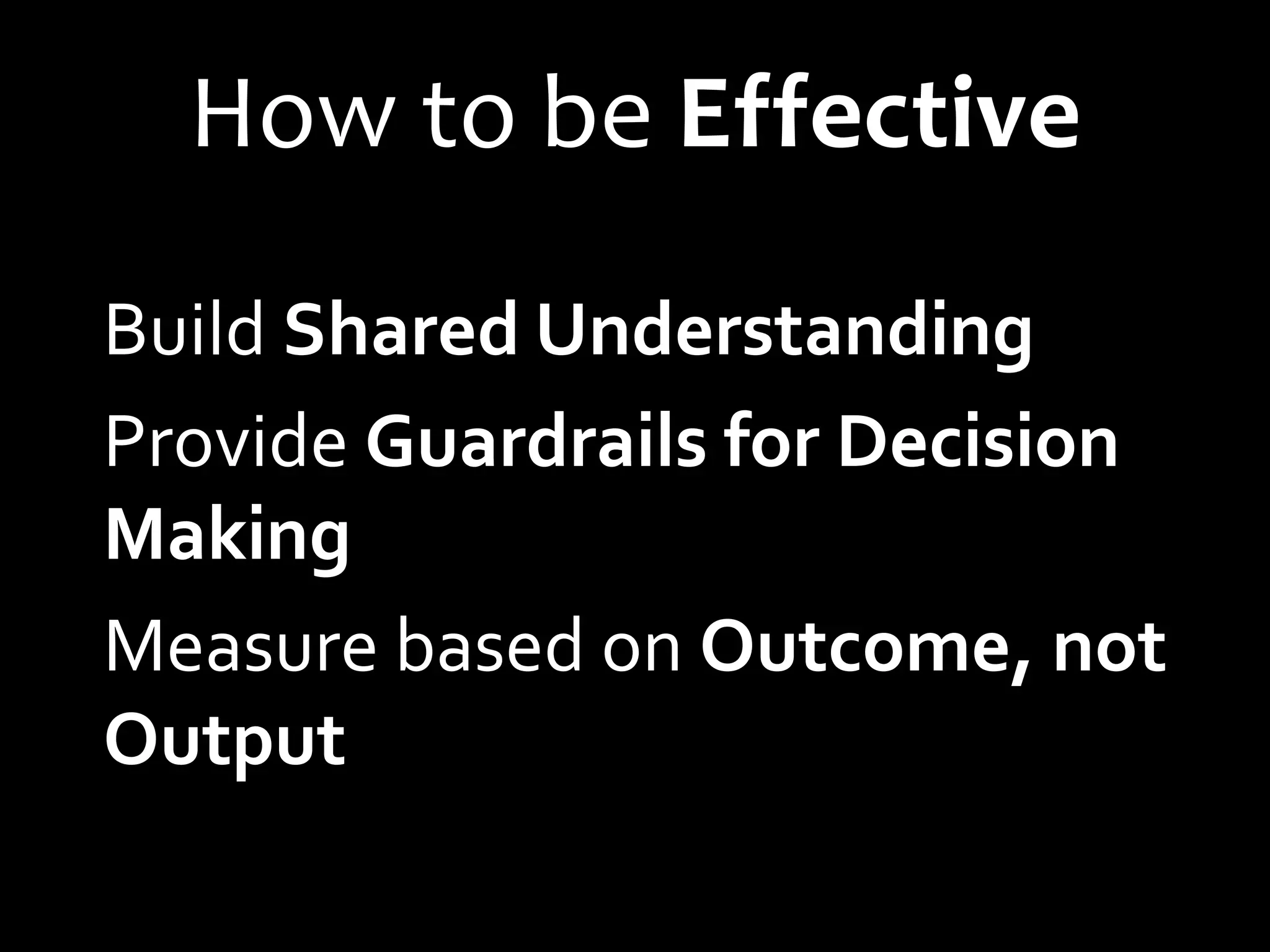
How to be Effective
Build Shared Understanding
Provide Guardrails for Decision
Making
Measure based on Outcome, not
Output
Build
Shared Understanding
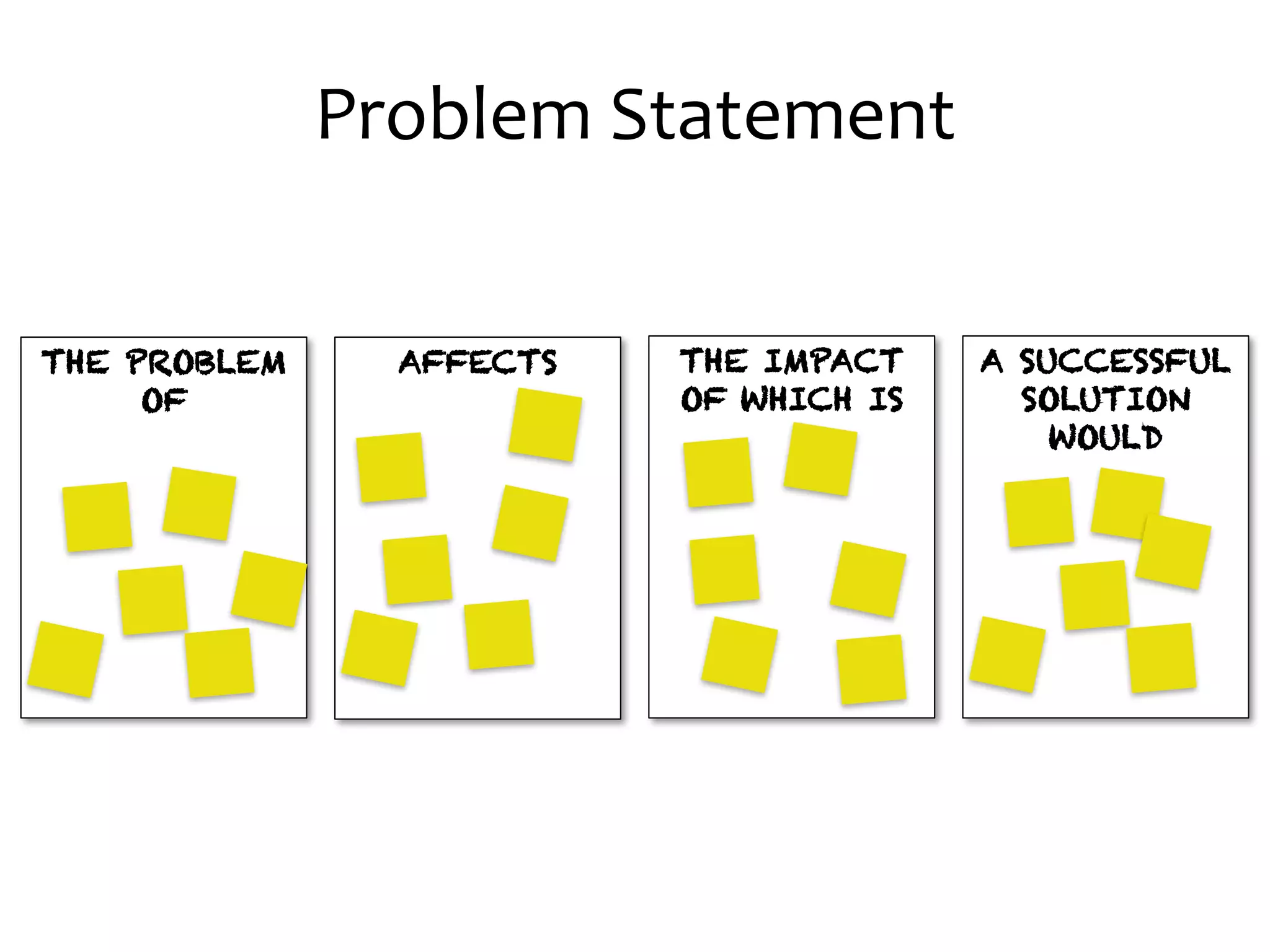
Problem Statement
THE PROBLEM
OF
AFFECTS THE IMPACT
OF WHICH IS
A SUCCESSFUL
SOLUTION
WOULD
Provide Guardrails for
Decision Making
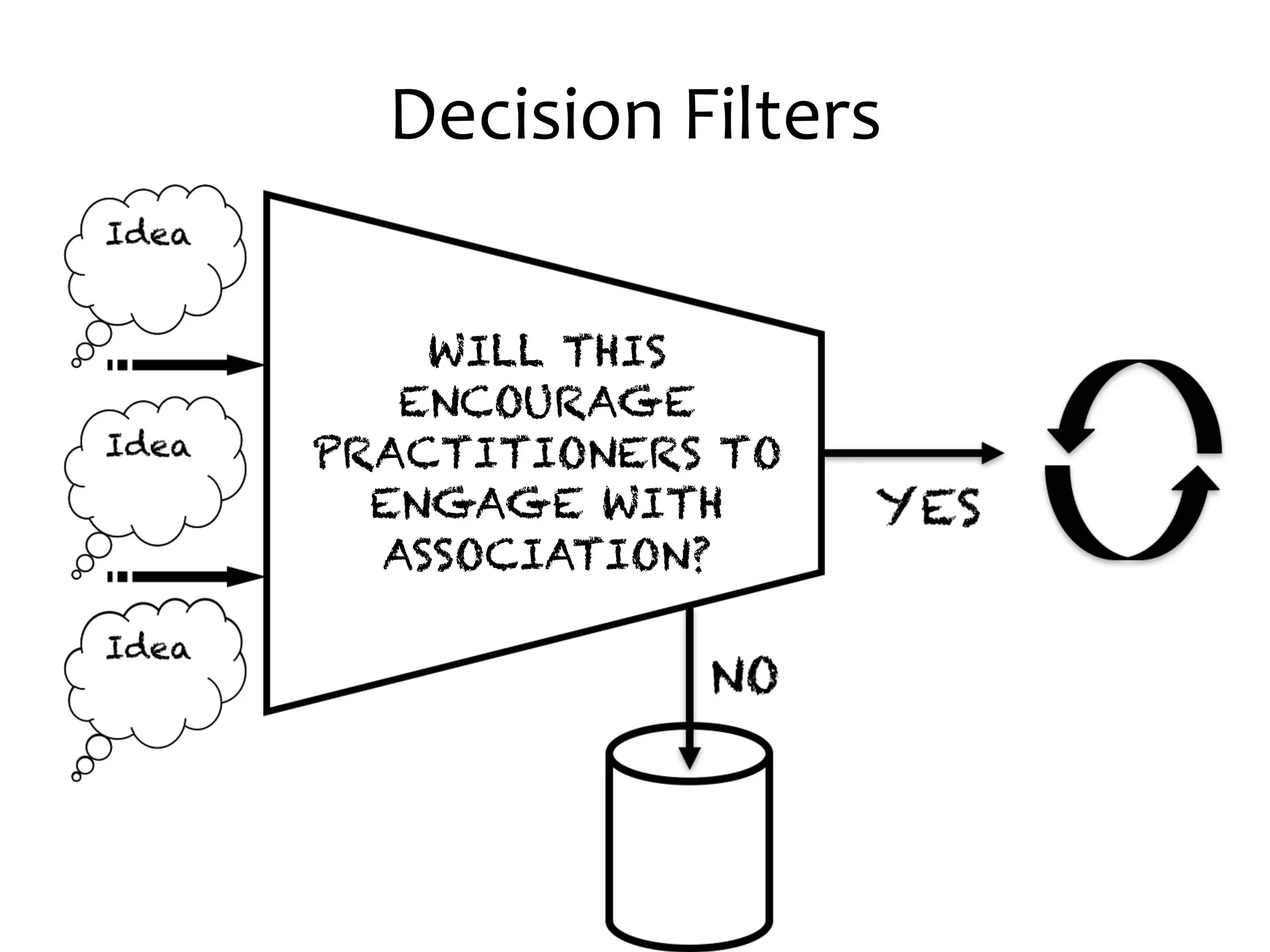
Decision Filters
WILL THIS
ENCOURAGE
PRACTITIONERS TO
ENGAGE WITH
ASSOCIATION?
Measure based on
Outcome, not Output
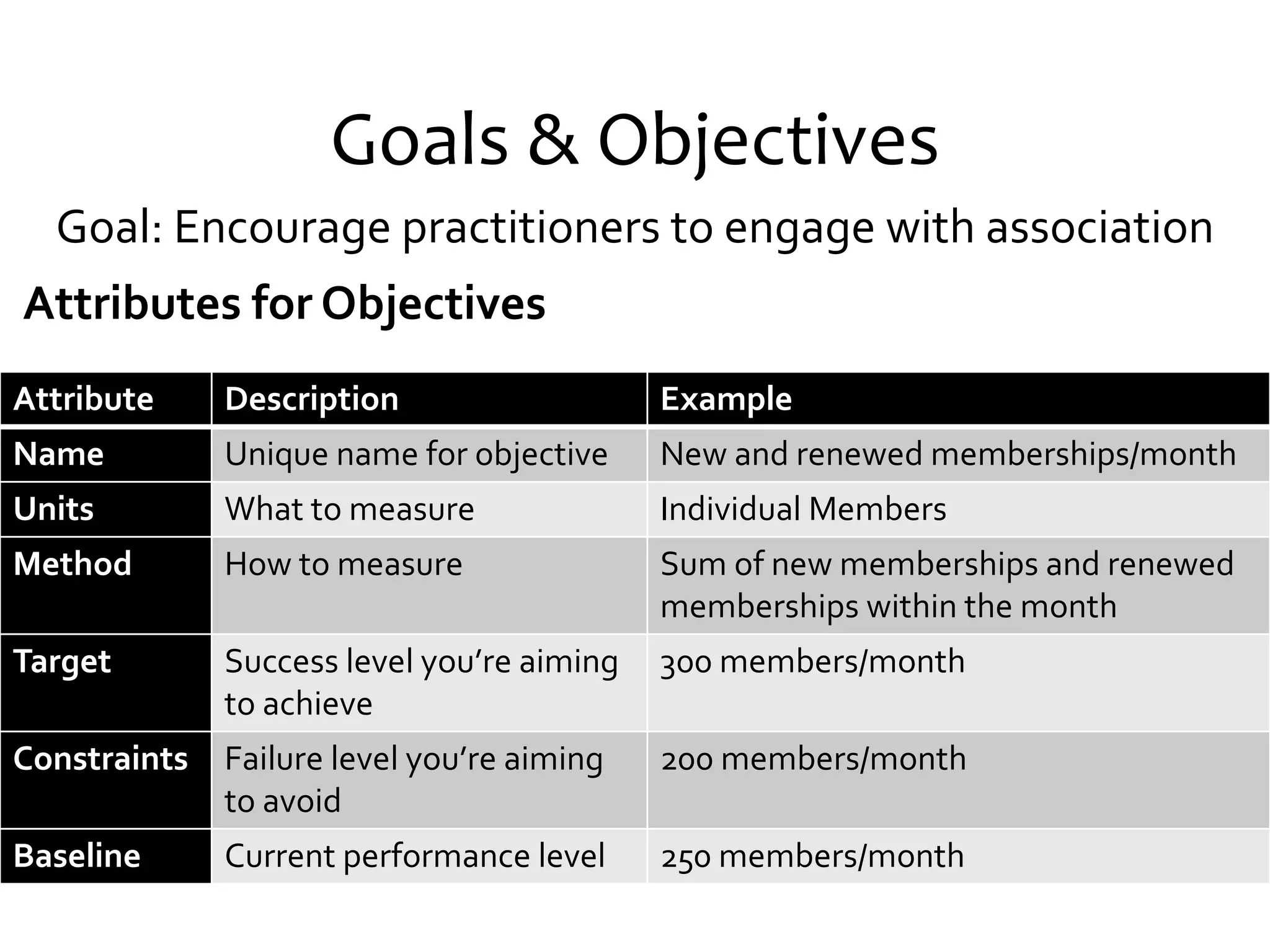
Goals & Objectives
Attribute Description Example
Name Unique name for objective New and renewed memberships/month
Units What to measure Individual Members
Method How to measure Sum of new memberships and renewed
memberships within the month
Target Success level you’re aiming
to achieve
300 members/month
Constraints Failure level you’re aiming
to avoid
200 members/month
Baseline Current performance level 250 members/month
Attributes for Objectives
Goal: Encourage practitioners to engage with association
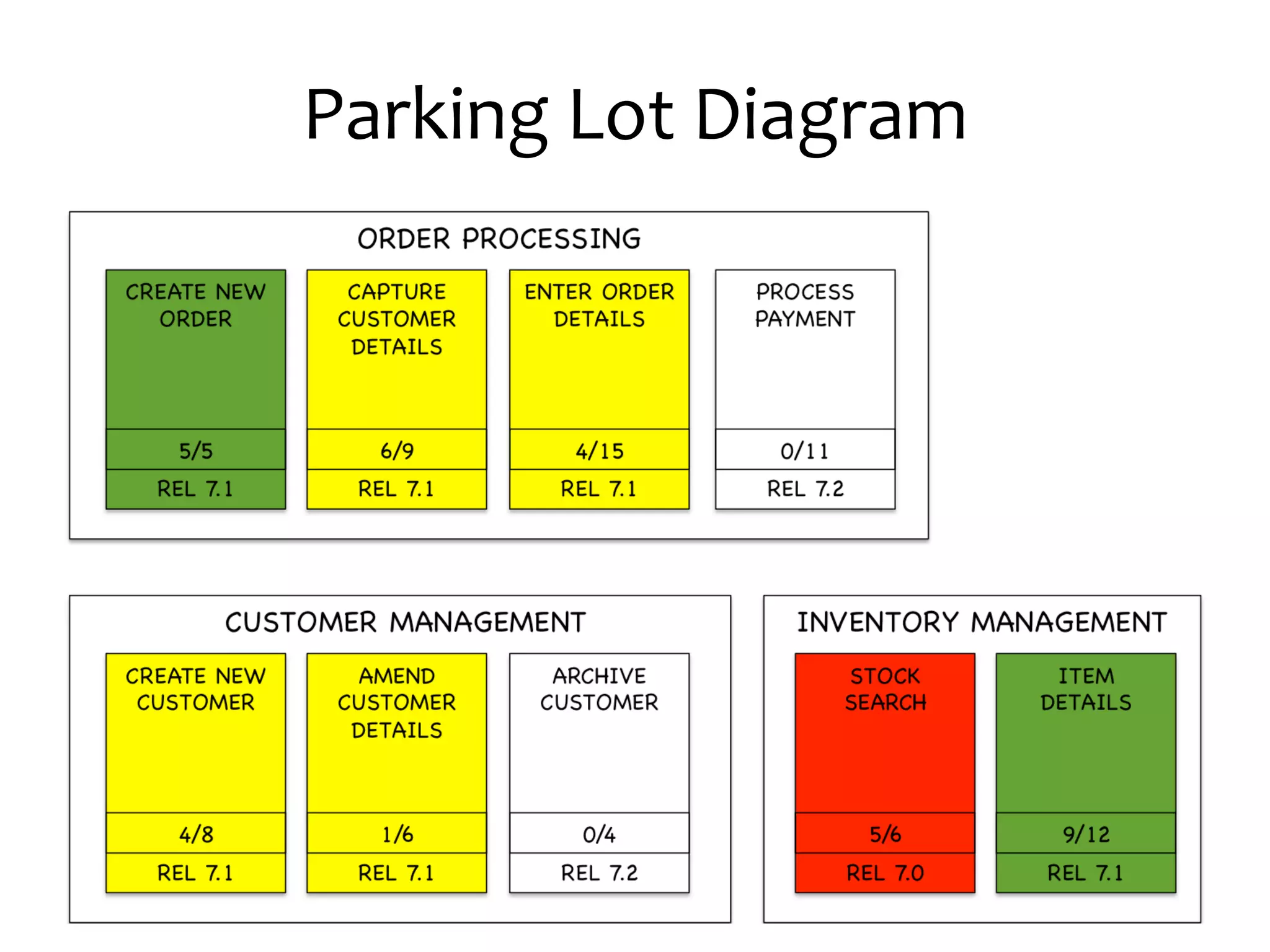
Parking Lot Diagram
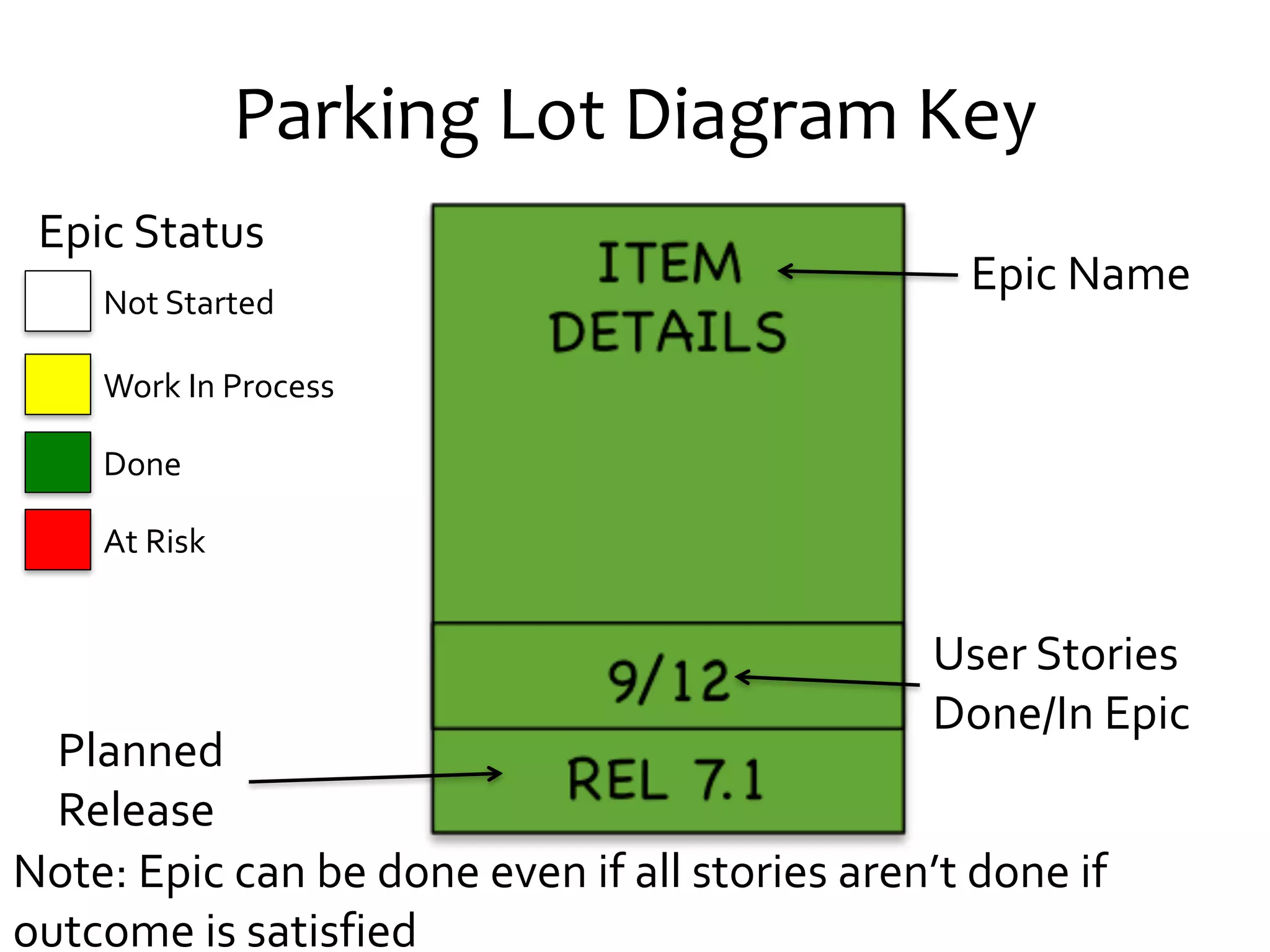
Parking Lot Diagram Key
Epic Name
User Stories
Done/In Epic
Planned
Release
Epic Status
Not Started
Work In Process
Done
At Risk
Note: Epic can be done even if all stories aren’t done if
outcome is satisfied
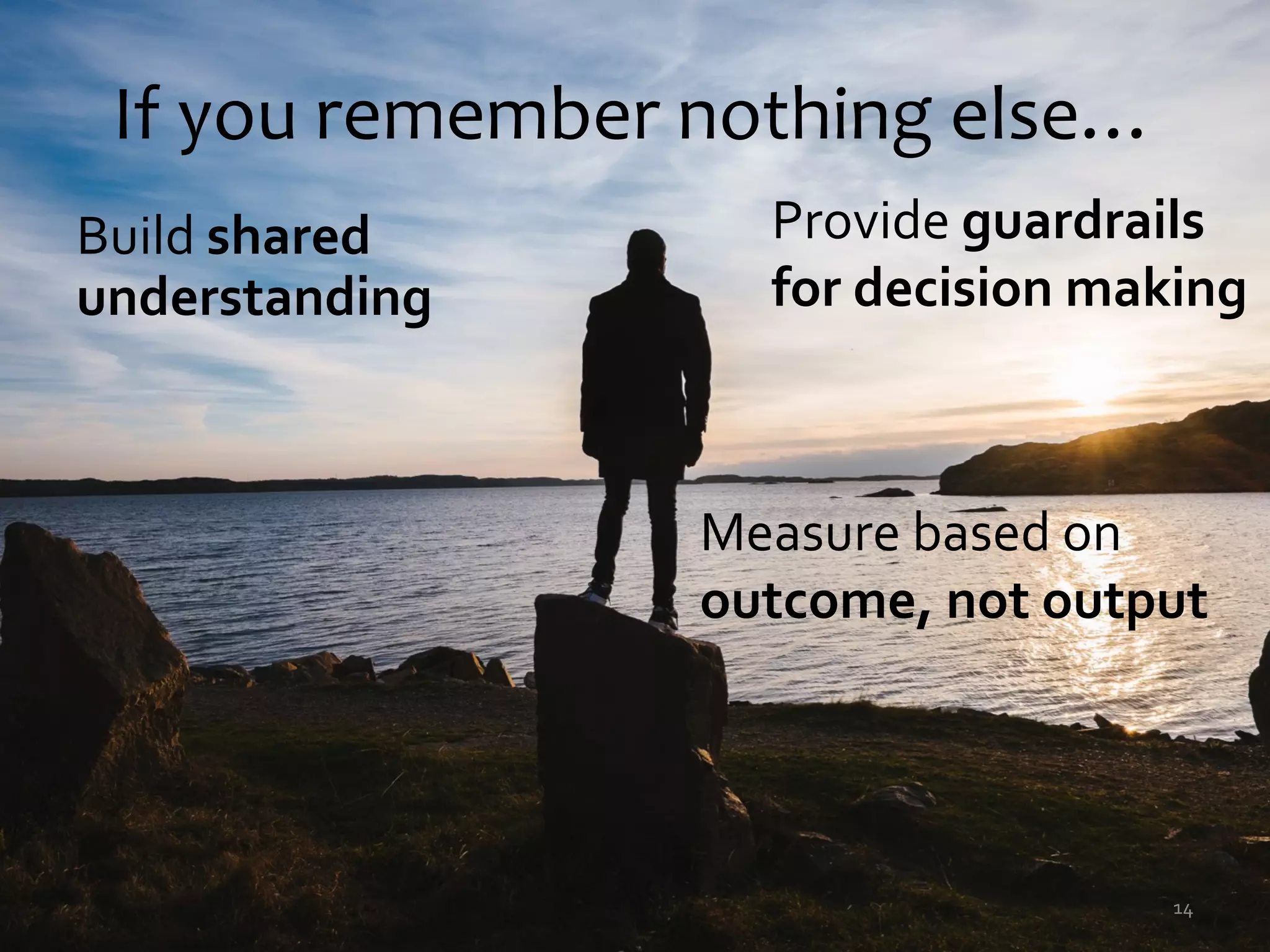
If you remember nothing else…
Provide guardrails
for decision making
14
Measure based on
outcome, not output
Build shared
understanding
Photo Credits
Slide Photo
Build Shared Understanding https://unsplash.com/@providence
Guardrails for Distributed Decision Making https://unsplash.com/@leliejens
Measure based on Outcome, not Output https://unsplash.com/@camadams
If you remember nothing else https://unsplash.com/@dnmgns
Photo Credits https://unsplash.com/@chancema
Kent McDonald
kent@kbp.media
@beyondreqs
Materials:
www.kbp.media/effective-over-efficient

Tis better to be effective than efficient

Editor's Notes

  • #2 Better. Faster. Cheaper. Many IT organizations are constantly seeking the "best" practices that will deliver those characteristics, and the fact that they continue to search indicates they haven’t found them yet. It could be they are looking in the wrong place. Most efforts around achieving better, faster, cheaper center around becoming ultra efficient. Effectiveness may just be the better target. Join Kent McDonald to explore the difference between efficiency and effectiveness and learn three simple, yet powerful, techniques that he has found can help teams be more effective. You’ll learn how to: Build a shared understanding of the problem you are trying to solve Establish clear guard rails for distributed decision making Measure progress based on outcome, not output Along the way he’ll share stories about how he has used these techniques and help you figure out when these techniques may work in your situation. You may be able to get faster and cheaper with efficiency, but in order to get better outcomes, you need to be effective. Come to this session to learn how.
  • #7 Photo Credit: https://unsplash.com/@providence
  • #8 The problem of – Describe the problem Affects – Who are the stakeholders affected by the problem The impact of which is – What is the impact of the problem A successful solution would – Critical benefits or key capabilities that the solution however implemented must have to be successful
  • #9 Photo credit: https://unsplash.com/@leliejens
  • #10  What Simple questions used to guide decision making. Quick way to communicate goals to everyone involved When Ensure strategic alignment Align key product features Align key project objectives Align release goals Align Iteration goals Determine design approach
  • #11 Photo Credit: https://unsplash.com/@camadams
  • #12 Vision statement that these goals were pulled from: We want to create a compelling website that facilitates the growth of the global agile community by: Providing practical resources that are easy to find, understand & share Facilitating community members to meet virtually or face-to-face Encouraging practitioners to engage with the Agile Alliance & others. Context: Membership website Goal: Providing practical resources that are easy to find, understand & share Improvement in user’s ability to search Goal: Encouraging practitioners to engage with association & others New newsletter subscriptions/month New/renewed memberships/month
  • #13 References: http://leadinganswers.typepad.com/leading_answers/2007/02/summarizing_pro.html http://leadinganswers.typepad.com/leading_answers/2009/12/parking-lot-diagrams-revisited-using-area-to-show-effort.html Can use the story map to also demonstrate how progress could be tracked using it. Typically want to use when you have several Epics in different parts of the solution that you want to track when they are ready. Provides context around which items are finished and puts things in perspective with a closer relationship to outcome (not entirely) If you color code epics based on subjective judgment of whether it is ready does get you closer to outcome.
  • #14 Coloring of Epic can also be done as a relation to when the Epic was to be done (ie Release Date) The progress bar can be based on # of stories, Story Points or % complete, although percent complete drives some bad behavior. If this is what you are using, I use 0% not Started 50% in progress 100% complete.
  • #15 Photo Credit: https://unsplash.com/@dnmgns