Download to read offline
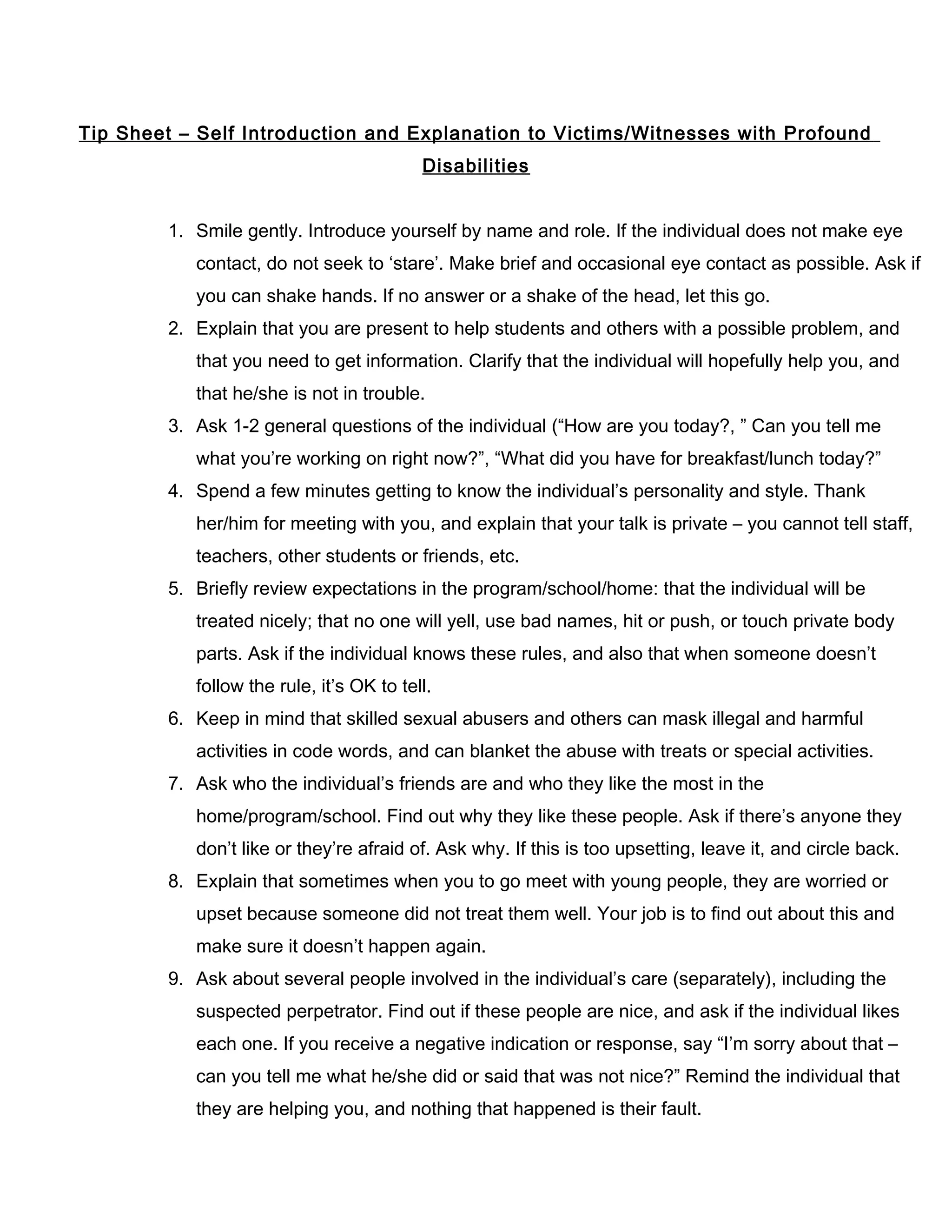
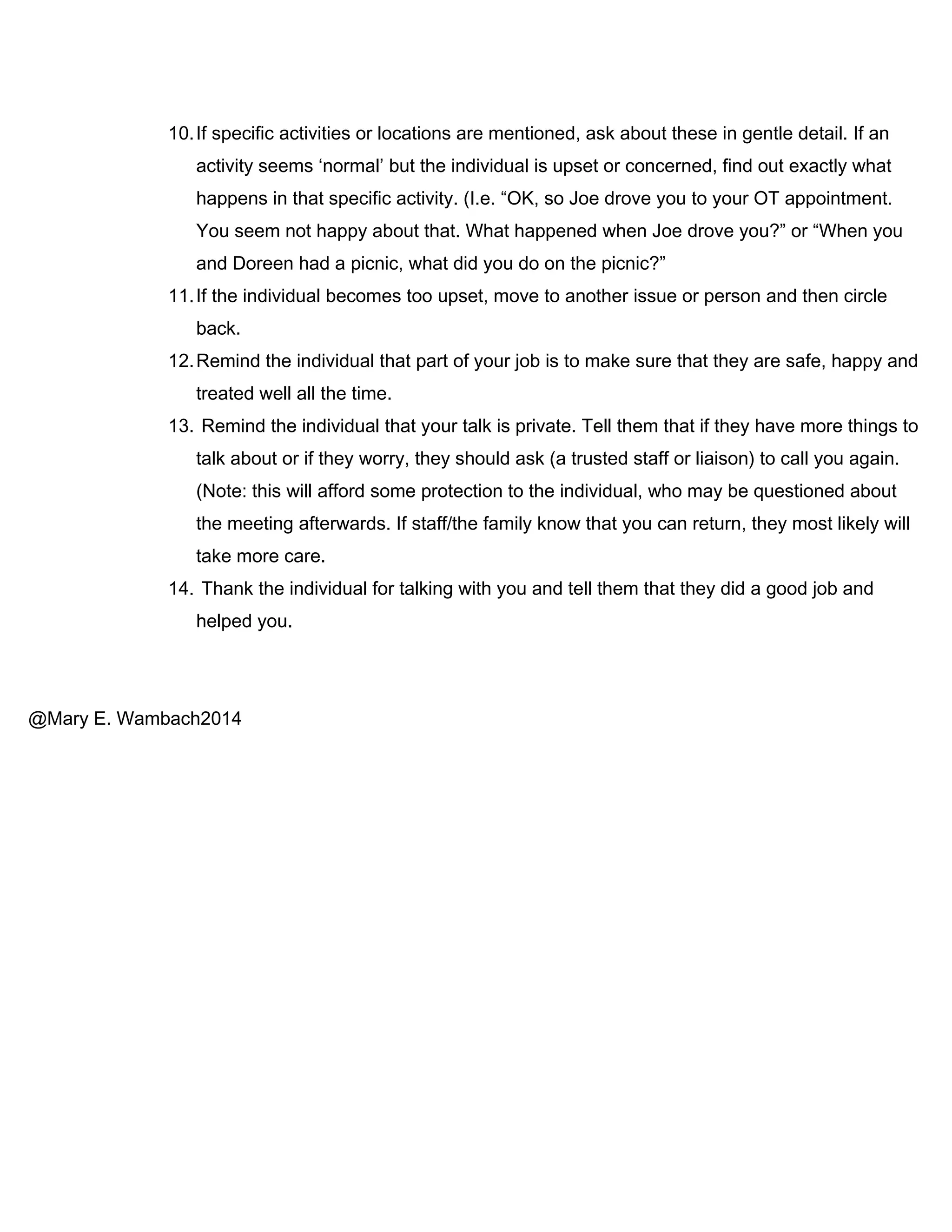

1. The document provides guidance for introducing oneself and explaining one's role when interviewing victims or witnesses with profound disabilities. It recommends smiling, making brief eye contact, asking to shake hands, and explaining the purpose of the meeting in a reassuring manner. 2. It suggests asking basic questions to get to know the individual and establish rapport before discussing expectations about appropriate behavior and potential problems. 3. The guidance advises inquiring sensitively about friends, activities, and any people the individual likes or dislikes and why, to identify potential abuse or misconduct while avoiding upsetting the individual. It stresses making the individual feel they are helping and nothing is their fault.


