The digital time
Using the Visnos Clock for fun
practice
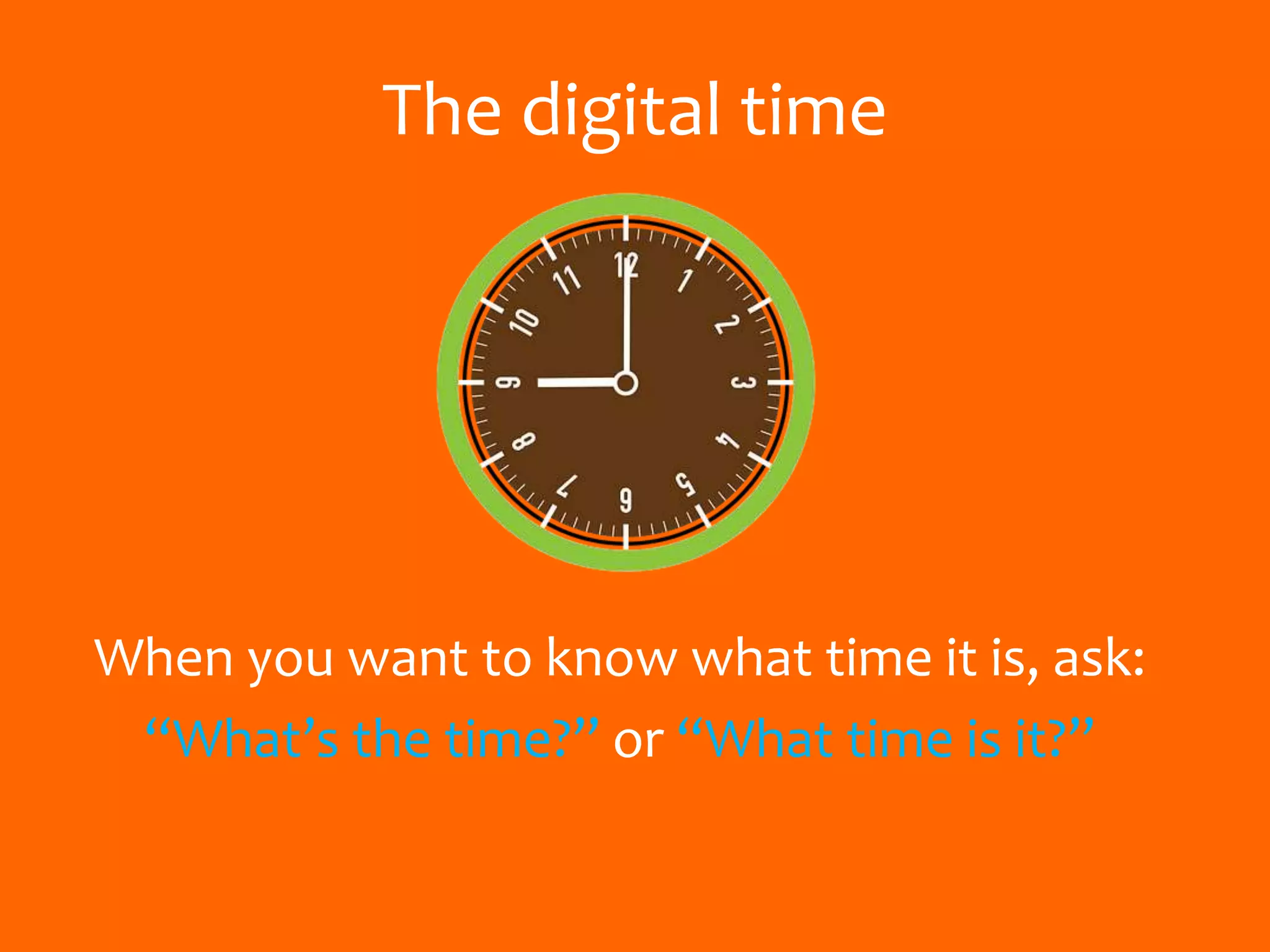
The digital time
When you want to know what time it is, ask:
“What’s the time?” or “What time is it?”
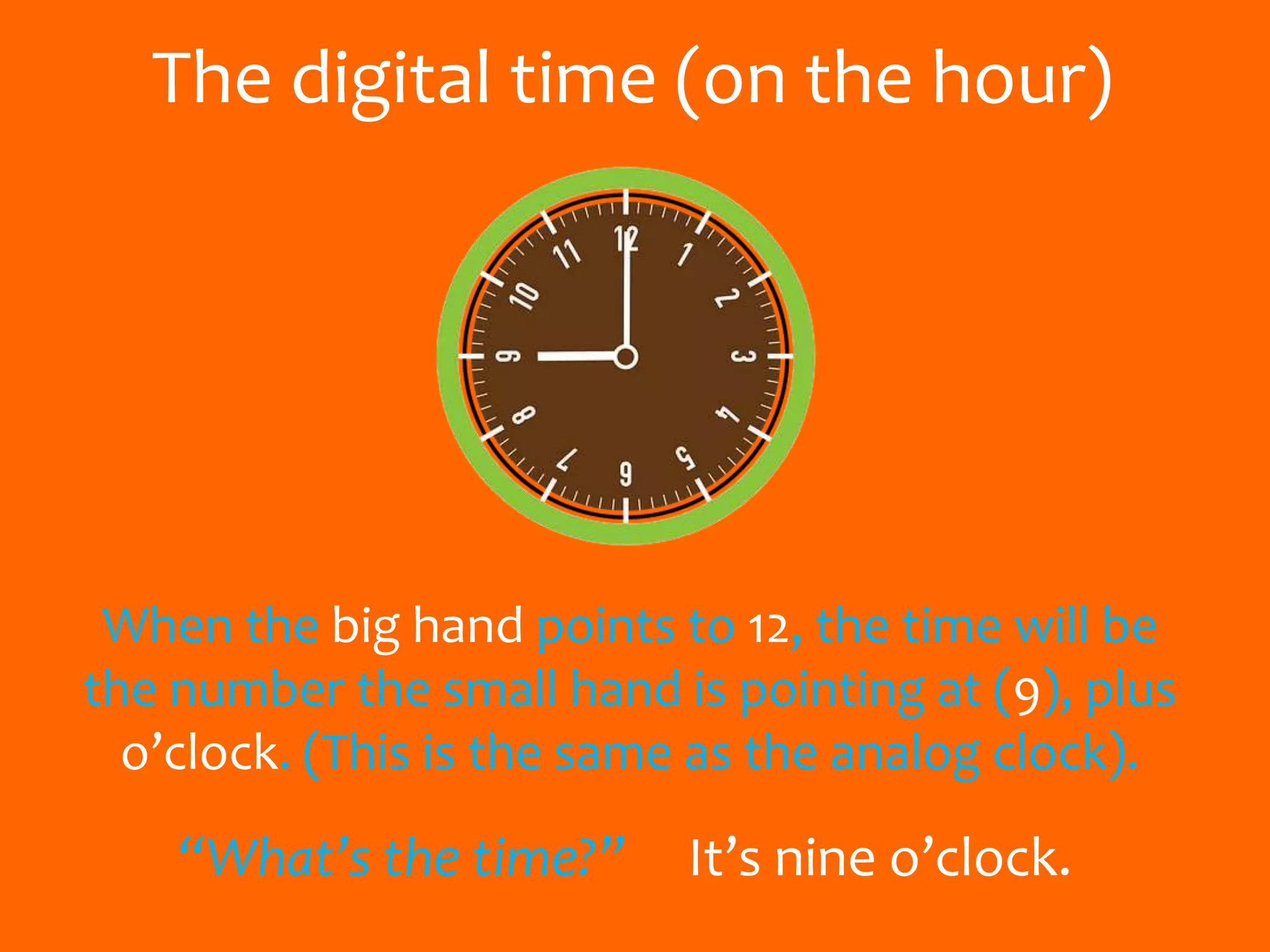
The digital time (on the hour)
When the big hand points to 12, the time will be
the number the small hand is pointing at (9), plus
o’clock. (This is the same as the analog clock).
“What’s the time?” It’s nine o’clock.
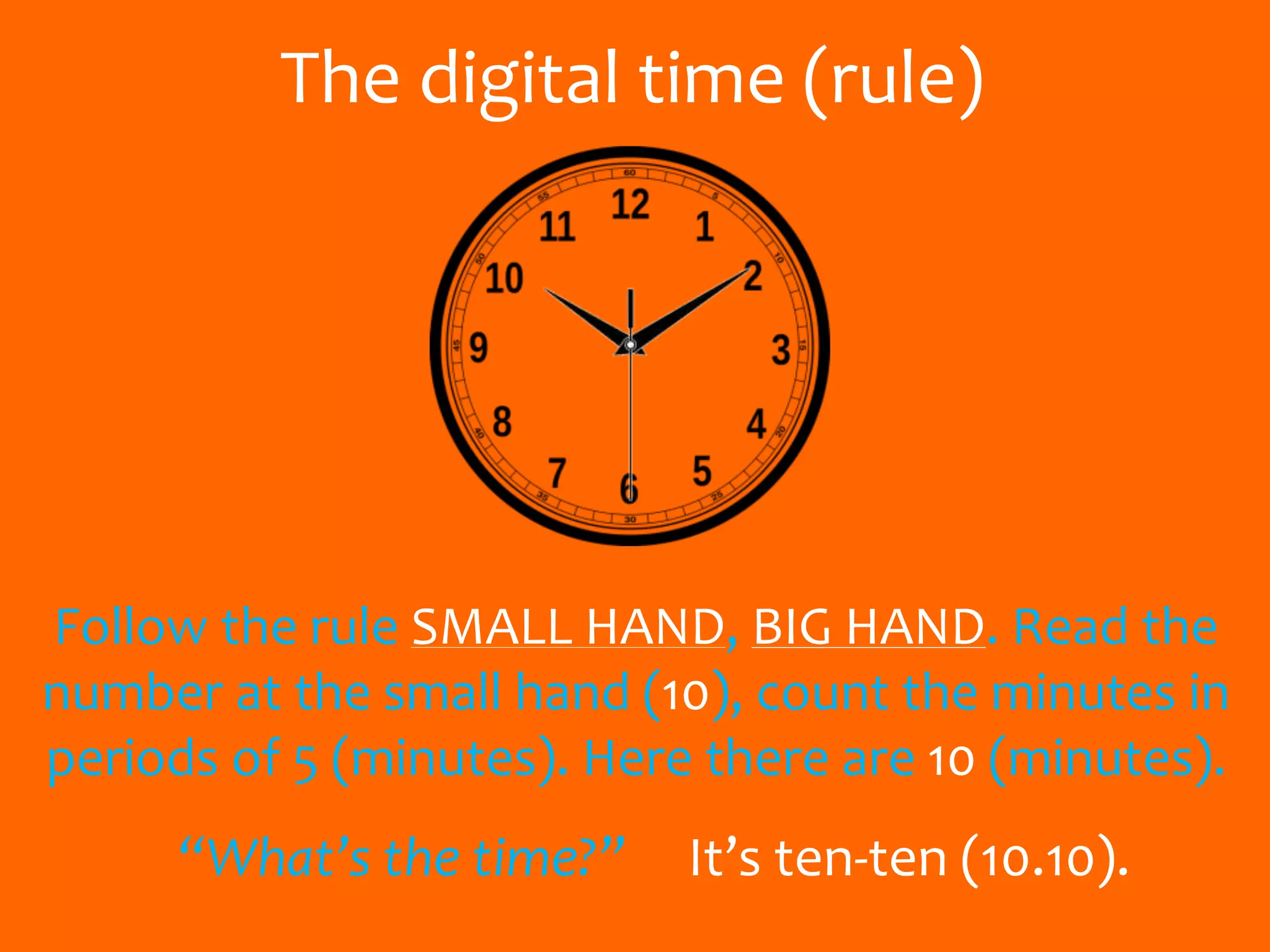
The digital time (rule)
Follow the rule SMALL HAND, BIG HAND. Read the
number at the small hand (10), count the minutes in
periods of 5 (minutes). Here there are 10 (minutes).
“What’s the time?” It’s ten-ten (10.10).
The digital time (example)
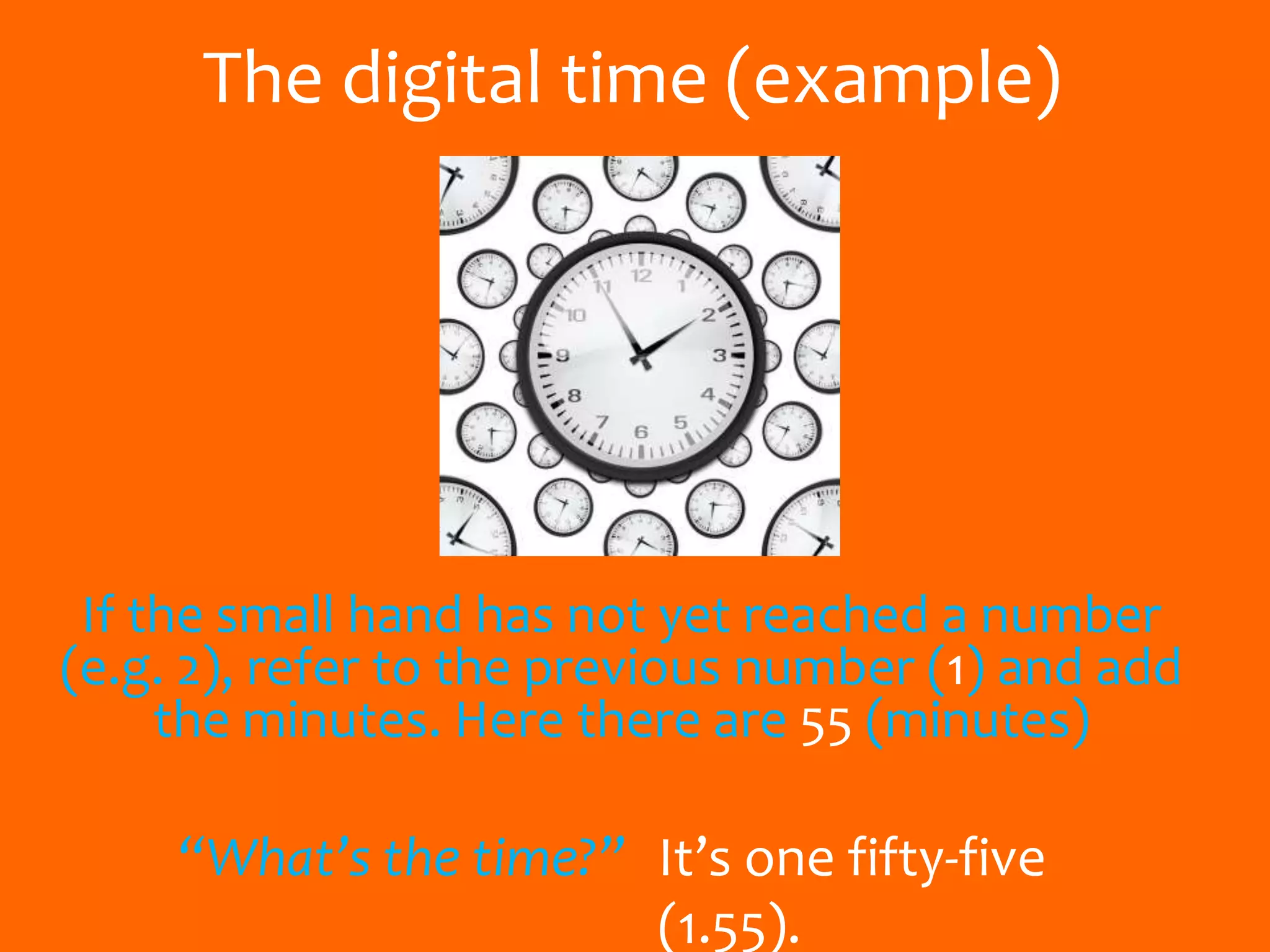
If the small hand has not yet reached a number
(e.g. 2), refer to the previous number (1) and add
the minutes. Here there are 55 (minutes)
“What’s the time?” It’s one fifty-five
(1.55).
The digital time (example)
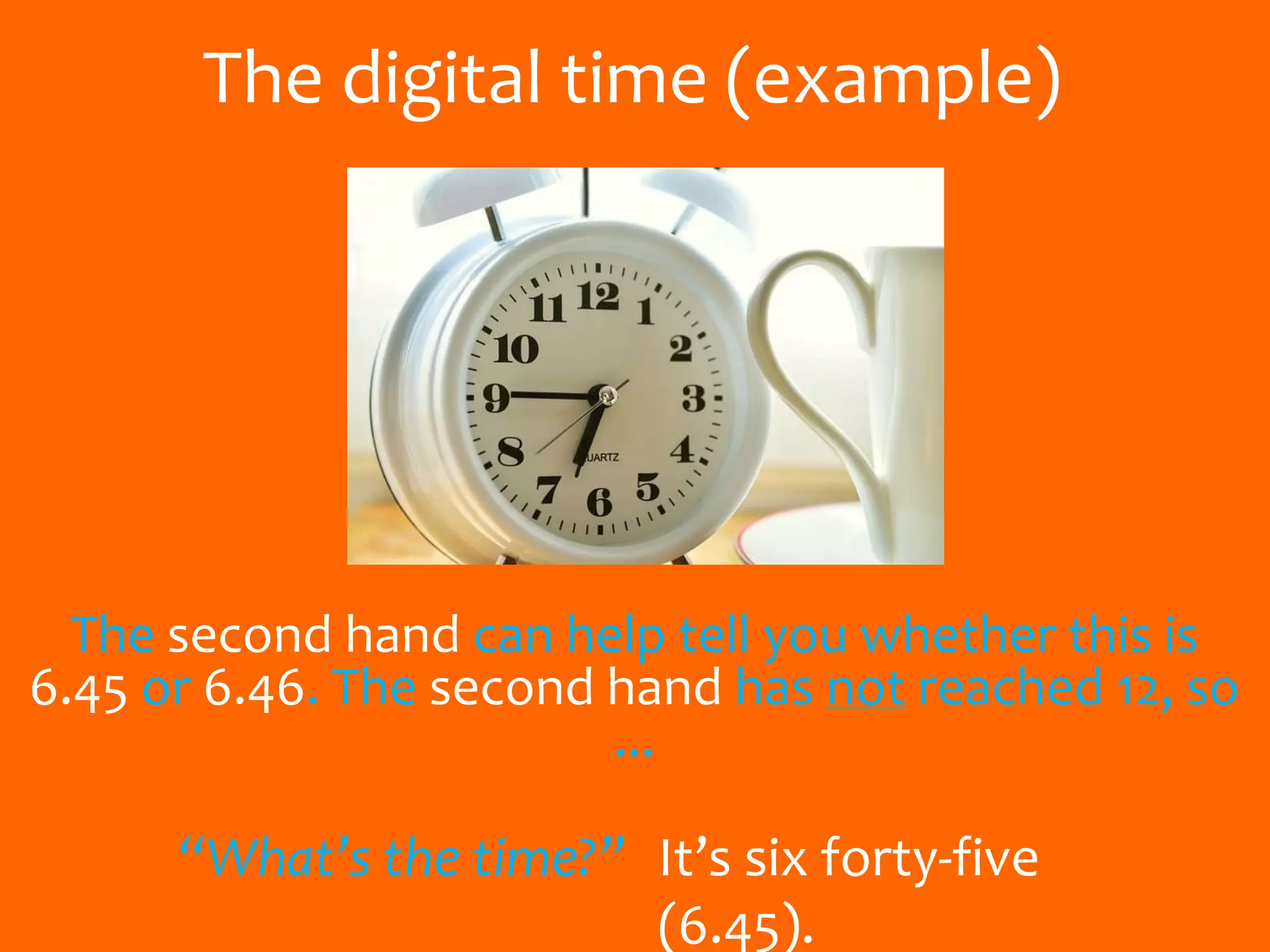
The second hand can help tell you whether this is
6.45 or 6.46. The second hand has not reached 12, so
...
“What’s the time?” It’s six forty-five
(6.45).
The digital time (example)
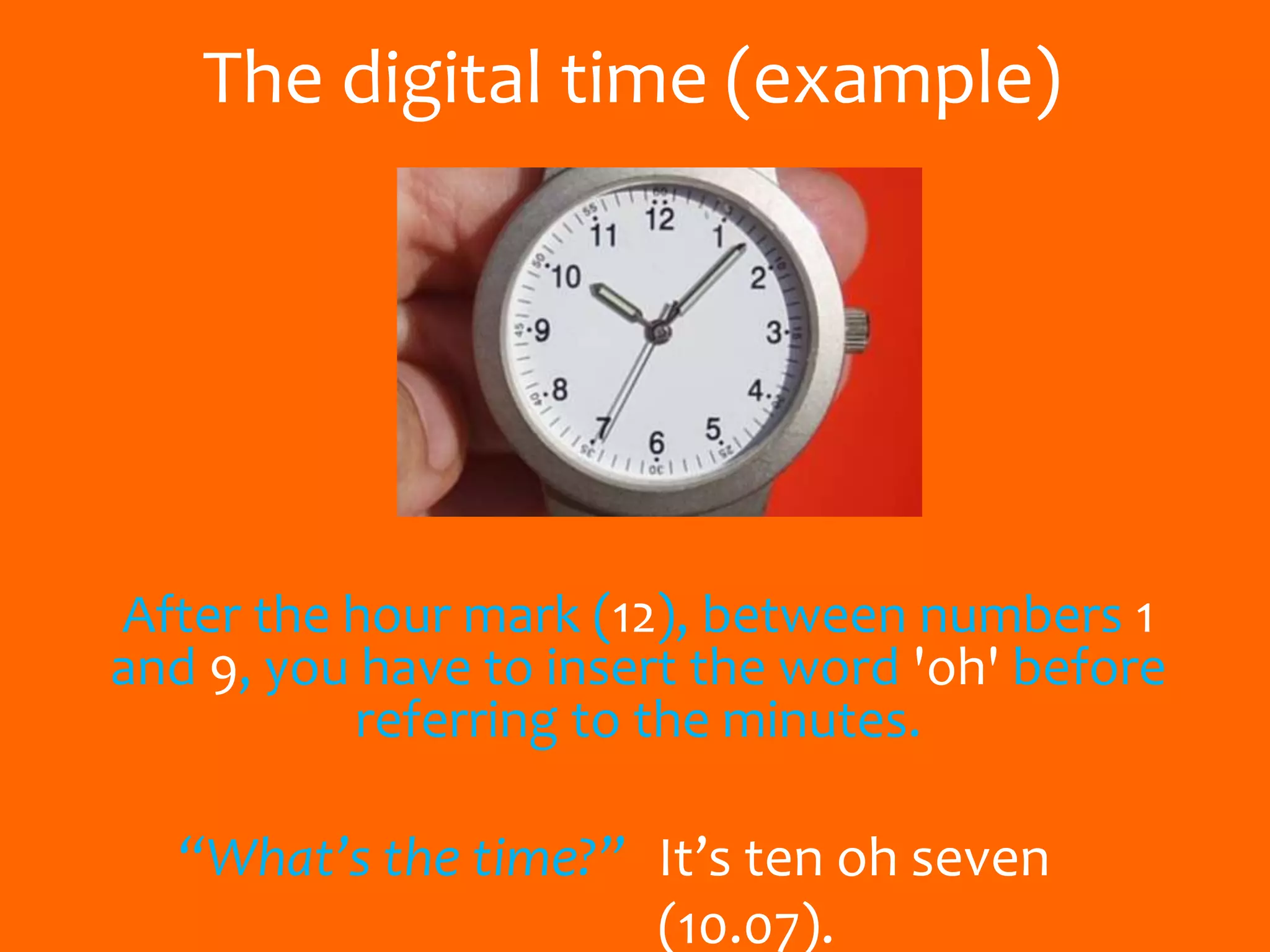
After the hour mark (12), between numbers 1
and 9, you have to insert the word 'oh' before
referring to the minutes.
“What’s the time?” It’s ten oh seven
(10.07).
Using the Visnos Clock
www.visnos.com/demos/clock
I always give students four or five
examples clocks, put them into teams
and then begin a game! In a small
class individual students can compete
against each other
Using the Visnos Clock
www.visnos.com/demos/clock
You can have students raise hands to
answer (don't shout out your answer)
or use a buzzer or bell if you have
them in your classroom.
ENJOY!

TIME - The Digital Time - Teaching and Use of the Visme Clock (Game)

  • 1.
    The digital time Usingthe Visnos Clock for fun practice
  • 2.
    The digital time Whenyou want to know what time it is, ask: “What’s the time?” or “What time is it?”
  • 3.
    The digital time(on the hour) When the big hand points to 12, the time will be the number the small hand is pointing at (9), plus o’clock. (This is the same as the analog clock). “What’s the time?” It’s nine o’clock.
  • 4.
    The digital time(rule) Follow the rule SMALL HAND, BIG HAND. Read the number at the small hand (10), count the minutes in periods of 5 (minutes). Here there are 10 (minutes). “What’s the time?” It’s ten-ten (10.10).
  • 5.
    The digital time(example) If the small hand has not yet reached a number (e.g. 2), refer to the previous number (1) and add the minutes. Here there are 55 (minutes) “What’s the time?” It’s one fifty-five (1.55).
  • 6.
    The digital time(example) The second hand can help tell you whether this is 6.45 or 6.46. The second hand has not reached 12, so ... “What’s the time?” It’s six forty-five (6.45).
  • 7.
    The digital time(example) After the hour mark (12), between numbers 1 and 9, you have to insert the word 'oh' before referring to the minutes. “What’s the time?” It’s ten oh seven (10.07).
  • 8.
    Using the VisnosClock www.visnos.com/demos/clock I always give students four or five examples clocks, put them into teams and then begin a game! In a small class individual students can compete against each other
  • 9.
    Using the VisnosClock www.visnos.com/demos/clock You can have students raise hands to answer (don't shout out your answer) or use a buzzer or bell if you have them in your classroom. ENJOY!