Time Saving Tips
For Teachers
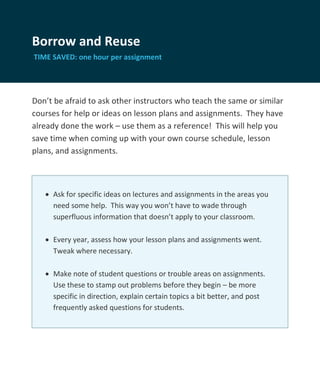
Borrow and Reuse
TIME SAVED: one hour per assignment


Don’t be afraid to ask other instructors who teach the same or similar
courses for help or ideas on lesson plans and assignments. They have
already done the work – use them as a reference! This will help you
save time when coming up with your own course schedule, lesson
plans, and assignments.


    Ask for specific ideas on lectures and assignments in the areas you
     need some help. This way you won’t have to wade through
     superfluous information that doesn’t apply to your classroom.

    Every year, assess how your lesson plans and assignments went.
     Tweak where necessary.

    Make note of student questions or trouble areas on assignments.
     Use these to stamp out problems before they begin – be more
     specific in direction, explain certain topics a bit better, and post
     frequently asked questions for students.
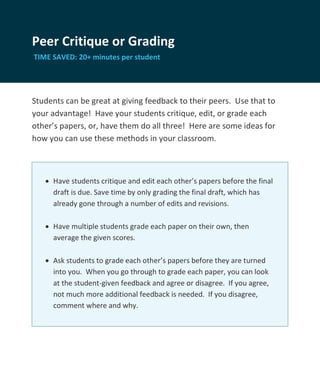
Peer Critique or Grading
TIME SAVED: 20+ minutes per student


Students can be great at giving feedback to their peers. Use that to
your advantage! Have your students critique, edit, or grade each
other’s papers, or, have them do all three! Here are some ideas for
how you can use these methods in your classroom.


    Have students critique and edit each other’s papers before the final
     draft is due. Save time by only grading the final draft, which has
     already gone through a number of edits and revisions.

    Have multiple students grade each paper on their own, then
     average the given scores.

    Ask students to grade each other’s papers before they are turned
     into you. When you go through to grade each paper, you can look
     at the student-given feedback and agree or disagree. If you agree,
     not much more additional feedback is needed. If you disagree,
     comment where and why.
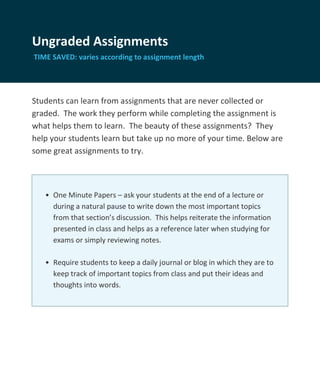
Ungraded Assignments
TIME SAVED: varies according to assignment length


Students can learn from assignments that are never collected or
graded. The work they perform while completing the assignment is
what helps them to learn. The beauty of these assignments? They
help your students learn but take up no more of your time. Below are
some great assignments to try.


   • One Minute Papers – ask your students at the end of a lecture or
     during a natural pause to write down the most important topics
     from that section’s discussion. This helps reiterate the information
     presented in class and helps as a reference later when studying for
     exams or simply reviewing notes.

   • Require students to keep a daily journal or blog in which they are to
     keep track of important topics from class and put their ideas and
     thoughts into words.
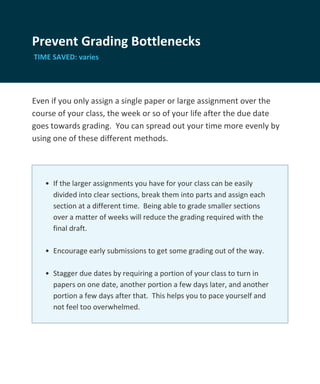
Prevent Grading Bottlenecks
TIME SAVED: varies


Even if you only assign a single paper or large assignment over the
course of your class, the week or so of your life after the due date
goes towards grading. You can spread out your time more evenly by
using one of these different methods.


   • If the larger assignments you have for your class can be easily
     divided into clear sections, break them into parts and assign each
     section at a different time. Being able to grade smaller sections
     over a matter of weeks will reduce the grading required with the
     final draft.

   • Encourage early submissions to get some grading out of the way.

   • Stagger due dates by requiring a portion of your class to turn in
     papers on one date, another portion a few days later, and another
     portion a few days after that. This helps you to pace yourself and
     not feel too overwhelmed.
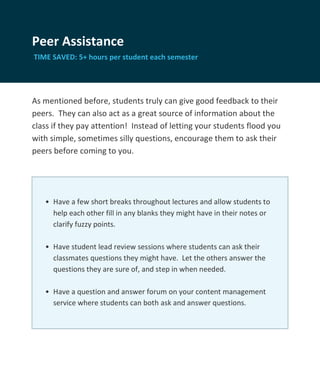
Peer Assistance
TIME SAVED: 5+ hours per student each semester


As mentioned before, students truly can give good feedback to their
peers. They can also act as a great source of information about the
class if they pay attention! Instead of letting your students flood you
with simple, sometimes silly questions, encourage them to ask their
peers before coming to you.


   • Have a few short breaks throughout lectures and allow students to
     help each other fill in any blanks they might have in their notes or
     clarify fuzzy points.

   • Have student lead review sessions where students can ask their
     classmates questions they might have. Let the others answer the
     questions they are sure of, and step in when needed.

   • Have a question and answer forum on your content management
     service where students can both ask and answer questions.
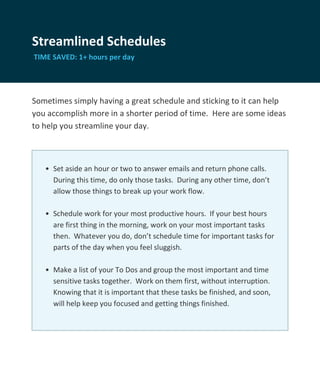
Streamlined Schedules
TIME SAVED: 1+ hours per day


Sometimes simply having a great schedule and sticking to it can help
you accomplish more in a shorter period of time. Here are some ideas
to help you streamline your day.


   • Set aside an hour or two to answer emails and return phone calls.
     During this time, do only those tasks. During any other time, don’t
     allow those things to break up your work flow.

   • Schedule work for your most productive hours. If your best hours
     are first thing in the morning, work on your most important tasks
     then. Whatever you do, don’t schedule time for important tasks for
     parts of the day when you feel sluggish.

   • Make a list of your To Dos and group the most important and time
     sensitive tasks together. Work on them first, without interruption.
     Knowing that it is important that these tasks be finished, and soon,
     will help keep you focused and getting things finished.
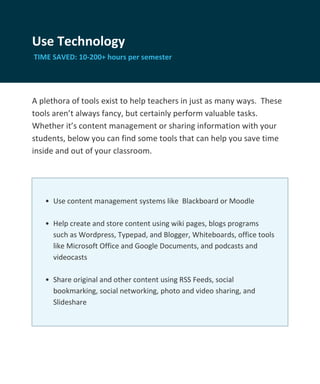
Use Technology
TIME SAVED: 10-200+ hours per semester


A plethora of tools exist to help teachers in just as many ways. These
tools aren’t always fancy, but certainly perform valuable tasks.
Whether it’s content management or sharing information with your
students, below you can find some tools that can help you save time
inside and out of your classroom.


   • Use content management systems like Blackboard or Moodle

   • Help create and store content using wiki pages, blogs programs
     such as Wordpress, Typepad, and Blogger, Whiteboards, office tools
     like Microsoft Office and Google Documents, and podcasts and
     videocasts

   • Share original and other content using RSS Feeds, social
     bookmarking, social networking, photo and video sharing, and
     Slideshare
Time Saving Tips for Teachers
Copyright © 2009 by Idea Works


Working out of Columbia, MO since 1981, Idea
Works develops intelligent software used by
researchers, academics and educators around the
world. We’re passionate about improving student
learning and increasing professor productivity.
Our writing feedback program, SAGrader, helps
you provide personalized feedback to your
students without sacrificing your valuable time.

You can learn more about SAGrader at:
www.SAGrader.com

Time saving tips for college instructors

  • 1.
  • 2.
    Borrow and Reuse TIMESAVED: one hour per assignment Don’t be afraid to ask other instructors who teach the same or similar courses for help or ideas on lesson plans and assignments. They have already done the work – use them as a reference! This will help you save time when coming up with your own course schedule, lesson plans, and assignments.  Ask for specific ideas on lectures and assignments in the areas you need some help. This way you won’t have to wade through superfluous information that doesn’t apply to your classroom.  Every year, assess how your lesson plans and assignments went. Tweak where necessary.  Make note of student questions or trouble areas on assignments. Use these to stamp out problems before they begin – be more specific in direction, explain certain topics a bit better, and post frequently asked questions for students.
  • 3.
    Peer Critique orGrading TIME SAVED: 20+ minutes per student Students can be great at giving feedback to their peers. Use that to your advantage! Have your students critique, edit, or grade each other’s papers, or, have them do all three! Here are some ideas for how you can use these methods in your classroom.  Have students critique and edit each other’s papers before the final draft is due. Save time by only grading the final draft, which has already gone through a number of edits and revisions.  Have multiple students grade each paper on their own, then average the given scores.  Ask students to grade each other’s papers before they are turned into you. When you go through to grade each paper, you can look at the student-given feedback and agree or disagree. If you agree, not much more additional feedback is needed. If you disagree, comment where and why.
  • 4.
    Ungraded Assignments TIME SAVED:varies according to assignment length Students can learn from assignments that are never collected or graded. The work they perform while completing the assignment is what helps them to learn. The beauty of these assignments? They help your students learn but take up no more of your time. Below are some great assignments to try. • One Minute Papers – ask your students at the end of a lecture or during a natural pause to write down the most important topics from that section’s discussion. This helps reiterate the information presented in class and helps as a reference later when studying for exams or simply reviewing notes. • Require students to keep a daily journal or blog in which they are to keep track of important topics from class and put their ideas and thoughts into words.
  • 5.
    Prevent Grading Bottlenecks TIMESAVED: varies Even if you only assign a single paper or large assignment over the course of your class, the week or so of your life after the due date goes towards grading. You can spread out your time more evenly by using one of these different methods. • If the larger assignments you have for your class can be easily divided into clear sections, break them into parts and assign each section at a different time. Being able to grade smaller sections over a matter of weeks will reduce the grading required with the final draft. • Encourage early submissions to get some grading out of the way. • Stagger due dates by requiring a portion of your class to turn in papers on one date, another portion a few days later, and another portion a few days after that. This helps you to pace yourself and not feel too overwhelmed.
  • 6.
    Peer Assistance TIME SAVED:5+ hours per student each semester As mentioned before, students truly can give good feedback to their peers. They can also act as a great source of information about the class if they pay attention! Instead of letting your students flood you with simple, sometimes silly questions, encourage them to ask their peers before coming to you. • Have a few short breaks throughout lectures and allow students to help each other fill in any blanks they might have in their notes or clarify fuzzy points. • Have student lead review sessions where students can ask their classmates questions they might have. Let the others answer the questions they are sure of, and step in when needed. • Have a question and answer forum on your content management service where students can both ask and answer questions.
  • 7.
    Streamlined Schedules TIME SAVED:1+ hours per day Sometimes simply having a great schedule and sticking to it can help you accomplish more in a shorter period of time. Here are some ideas to help you streamline your day. • Set aside an hour or two to answer emails and return phone calls. During this time, do only those tasks. During any other time, don’t allow those things to break up your work flow. • Schedule work for your most productive hours. If your best hours are first thing in the morning, work on your most important tasks then. Whatever you do, don’t schedule time for important tasks for parts of the day when you feel sluggish. • Make a list of your To Dos and group the most important and time sensitive tasks together. Work on them first, without interruption. Knowing that it is important that these tasks be finished, and soon, will help keep you focused and getting things finished.
  • 8.
    Use Technology TIME SAVED:10-200+ hours per semester A plethora of tools exist to help teachers in just as many ways. These tools aren’t always fancy, but certainly perform valuable tasks. Whether it’s content management or sharing information with your students, below you can find some tools that can help you save time inside and out of your classroom. • Use content management systems like Blackboard or Moodle • Help create and store content using wiki pages, blogs programs such as Wordpress, Typepad, and Blogger, Whiteboards, office tools like Microsoft Office and Google Documents, and podcasts and videocasts • Share original and other content using RSS Feeds, social bookmarking, social networking, photo and video sharing, and Slideshare
  • 9.
    Time Saving Tipsfor Teachers Copyright © 2009 by Idea Works Working out of Columbia, MO since 1981, Idea Works develops intelligent software used by researchers, academics and educators around the world. We’re passionate about improving student learning and increasing professor productivity. Our writing feedback program, SAGrader, helps you provide personalized feedback to your students without sacrificing your valuable time. You can learn more about SAGrader at: www.SAGrader.com