SpecificCeramicsLimited
About the company
• Specific Ceramics Ltd is engaged in the business of
manufacturing quality floor glazed and unglazed
vitrified tiles by the brand name Durato.
• Specific began with a view to manufacture tiles that
blend design with technological expertise and with
the purpose of customizing cost-effective solutions
for the specific requirements of architects, interior
designers, builders, and individual end customer.
• We are proud that the Company’s collaboration is
with global trends. This is what inspires innovation,
generates research, and propels and regulates our
quality standards.
The Plant
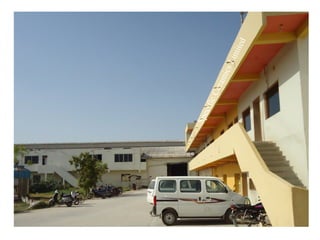
• Specific’s plant is located at Karoli, in Kalol
Taluk of Gandhinagar District & 15 km away
from Ahmedabad. It is one of the fastest
growing and well equipped industrial
complexes in Gujarat having complete
infrastructure with global IT and telephone
networks.
Technology & Knowhow
• The company is staffed with highly qualified
Research scientist, ceramic engineers and
technicians, with well over 20 to 25 years
proven track record in the manufacture of
ceramic bodies, glazes, pigments and frits.
• They are well versed with new advances in
ceramic technology, modern applications and
the latest innovations and developments in
raw materials and machinery.
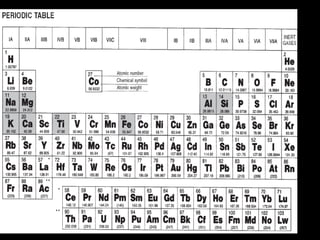
Choice of raw material
At Specific Ceramics ltd -
Raw materials are selected on the basis of
 Material cost,
 Market factors,
 Vendor services,
 Technical processing considerations,
 The ultimate performance requirements and
 Market price of the finished goods.
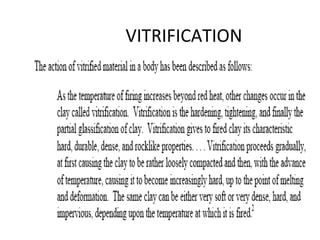
VITRIFICATION
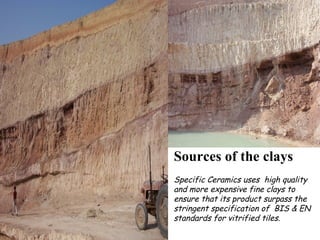
Sources of the clays
Specific Ceramics uses high quality
and more expensive fine clays to
ensure that its product surpass the
stringent specification of BIS & EN
standards for vitrified tiles.
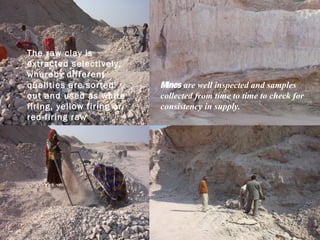
Mines are well inspected and samples
collected from time to time to check for
consistency in supply.
The raw clay is
extracted selectively,
whereby different
qualities are sorted
out and used as white
firing, yellow firing or
red-firing raw
materials.
Clay Mineralogy
•Below is an introduction to clay mineralogy.
• Clay minerals are an important group of minerals because they are
among the most common products of chemical weathering, and thus
are the main constituents of the fine-grained sedimentary rocks
called mud rocks (including mudstones, claystones, and shale's).
• In fact clay minerals make up about 40% of the minerals in
sedimentary rocks.
•In addition, clay minerals are the main constituent of soils.
•Understanding of clay minerals is also important from an
engineering point of view, as some minerals expand significantly
when exposed to water.
•Clay minerals are used extensively in the ceramics industry and are
thus important economic minerals.
•Based on their structures and chemical compositions, the clay
minerals can be divided in to four main classes:
(Some Clay Scientists refer to 2 or 3 classes for clays: Chlorite is
sometimes referred to as a 2:1 layer not a 2:1:1 and Illites/Micas are
sometimes grouped with Smectites)
•Kandites 1:1 layered clays eg) Kaolinite
•Smectites 2:1 layered clays eg) Montmirrilonite
•Illites/Micas 2:1 layered clays eg) Muscovite
•Chlorites 2:1:1 layered clays eg) Clinochlore
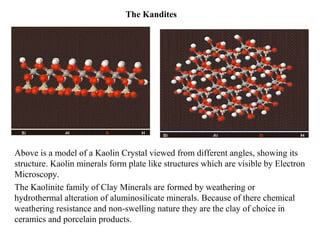
The Kandites
Above is a model of a Kaolin Crystal viewed from different angles, showing its
structure. Kaolin minerals form plate like structures which are visible by Electron
Microscopy.
The Kaolinite family of Clay Minerals are formed by weathering or
hydrothermal alteration of aluminosilicate minerals. Because of there chemical
weathering resistance and non-swelling nature they are the clay of choice in
ceramics and porcelain products.
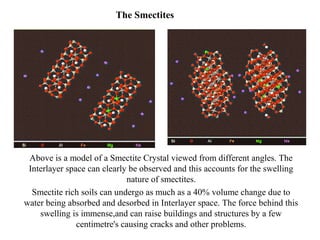
The Smectites
Above is a model of a Smectite Crystal viewed from different angles. The
Interlayer space can clearly be observed and this accounts for the swelling
nature of smectites.
Smectite rich soils can undergo as much as a 40% volume change due to
water being absorbed and desorbed in Interlayer space. The force behind this
swelling is immense,and can raise buildings and structures by a few
centimetre's causing cracks and other problems.
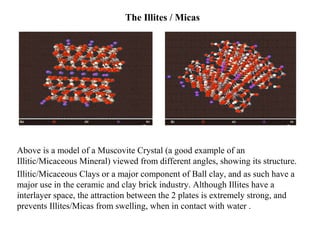
The Illites / Micas
Above is a model of a Muscovite Crystal (a good example of an
Illitic/Micaceous Mineral) viewed from different angles, showing its structure.
Illitic/Micaceous Clays or a major component of Ball clay, and as such have a
major use in the ceramic and clay brick industry. Although Illites have a
interlayer space, the attraction between the 2 plates is extremely strong, and
prevents Illites/Micas from swelling, when in contact with water .
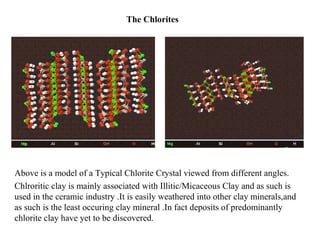
The Chlorites
Above is a model of a Typical Chlorite Crystal viewed from different angles.
Chlroritic clay is mainly associated with Illitic/Micaceous Clay and as such is
used in the ceramic industry .It is easily weathered into other clay minerals,and
as such is the least occuring clay mineral .In fact deposits of predominantly
chlorite clay have yet to be discovered.
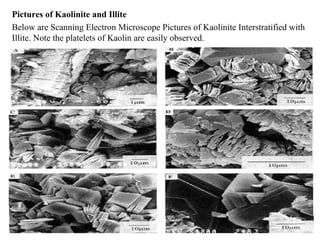
Pictures of Kaolinite and Illite
Below are Scanning Electron Microscope Pictures of Kaolinite Interstratified with
Illite. Note the platelets of Kaolin are easily observed.
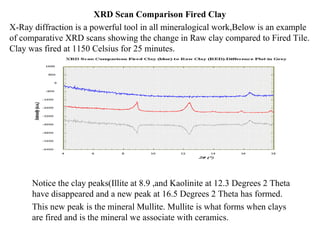
XRD Scan Comparison Fired Clay
X-Ray diffraction is a powerful tool in all mineralogical work,Below is an example
of comparative XRD scans showing the change in Raw clay compared to Fired Tile.
Clay was fired at 1150 Celsius for 25 minutes.
Notice the clay peaks(Illite at 8.9 ,and Kaolinite at 12.3 Degrees 2 Theta
have disappeared and a new peak at 16.5 Degrees 2 Theta has formed.
This new peak is the mineral Mullite. Mullite is what forms when clays
are fired and is the mineral we associate with ceramics.
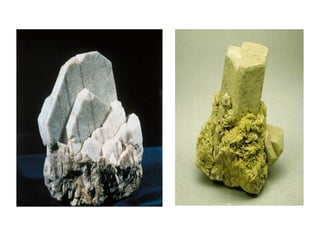
Feldspar :
• Feldspars are alumino-silicate minerals found in nearly all igneous rocks.
• They have very similar chemical compositions, e.g.
• Potash feldspar or orthoclase K2O.Al2O3.6SiO2
• Soda feldspar or albite Na2O.Al2O3.6SiO2
• Lime feldspar or anorthite CaO.Al2O3.2SiO2
• Feldspars are used as a flux in the firing of ceramic body.
• When a body is fired, the feldspar melts at a lower temperature than clay or
silica, due to the presence of Na+, K+ or Ca2+ ions, and forms a molten
glass which causes solid particles of clay to cling together.
• when the glass solidifies it gives strength and hardness to the body.
• The molten glass also reacts with the silica and clay particles.
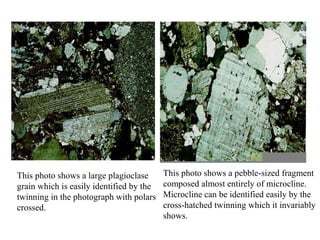
This photo shows a large plagioclase
grain which is easily identified by the
twinning in the photograph with polars
crossed.
This photo shows a pebble-sized fragment
composed almost entirely of microcline.
Microcline can be identified easily by the
cross-hatched twinning which it invariably
shows.
Product Introduction
• Durato is a compacted vitrified product of mixtures
of clay, quartz and feldspar.
• Durato’s microstructures are grain and bond type
with large particles of filler (usually quartz) held
together by a finer matrix, which is almost fully
dense.
• Because of the complex interplay between raw
materials, processing routes and approaches, and the
kinetics of the firing process, Durato formulations
represent some of the most complicate ceramic
systems
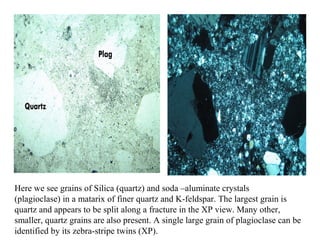
Here we see grains of Silica (quartz) and soda –aluminate crystals
(plagioclase) in a matarix of finer quartz and K-feldspar. The largest grain is
quartz and appears to be split along a fracture in the XP view. Many other,
smaller, quartz grains are also present. A single large grain of plagioclase can be
identified by its zebra-stripe twins (XP).
Technical Performance
• The required technical performance of durato tiles is
associated with their dimensional parameters,
mechanical strength, water absorption, chemical
stability and wear resistance. These are largely
dependent on microstructural characteristics such as
porosity.
• The final microstructural features of the durato tiles
are developed during processing and consolidated in
the firing stage, in which physical and chemical
reactions occur among the different constituents.
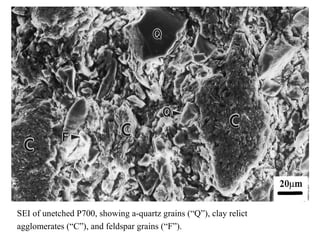
SEI of unetched P700, showing a-quartz grains (“Q”), clay relict
agglomerates (“C”), and feldspar grains (“F”).
CERAMIC TILE MANUFACTURING PROCESS
The ceramic tile manufacturing process consists of a
series of successive stages.
1.Raw materials preparation
2. Pressing and drying of the green body
3. Firing, with or without glazing
4. Additional treatments
5. Sorting and packing
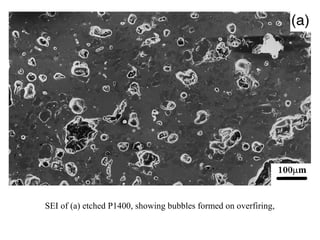
SEI of (a) etched P1400, showing bubbles formed on overfiring,
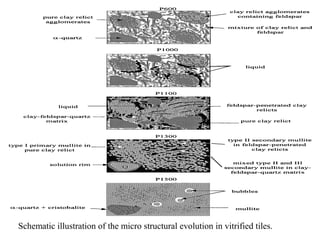
Schematic illustration of the micro structural evolution in vitrified tiles.
Some doubts
and
clarifications
about vitrified tiles
and
ceramic tiles
What are the differences between ceramic tiles and vetrified tiles? What are
the advantages of vetrified tiles over ceramic tiles?
• Ceramic tile has become the general term given to most tiles that are
made from clay products.
• Ceramics include porcelain and 'gres' tiles too. Ok, the difference.
• It has to do with how hard and dense the body (bisque) is after firing.
• Regular ceramic can be pretty soft and absorbant.
• Gres is dense and frost resistant or frost proof, and porcelain is very
dense and frost proof.
• Ceramic and gres is glazed, porcelain is often unglazed, and the same
color thru out. Many porcelain tiles however are 'porcelenato' which
have a glaze for easier maintenance.
• Vitrified tiles are 'glass-like'. Vitro means glass in Italian. So vitrified
tiles are hard and frost proof. Although only a small amount of tiles
are used outdoors in cold weather service, people buy them cause
they are stronger than regular soft cheap ceramic.
What is a vitrified Tiles?
• Vitrified Tiles consists of a spray dried body of
selected clays, kaolinitic minerals, quartz and
feldspar, shaped by dry pressing to form a ceramic
material that is then fired at temperatures up to 1250
degrees centigrade.
• A key element of vitrified tiles is its extremely low
level of water absorption which is below 0.5%.
• As a result of new innovative processes new vitrified
tiles bears a striking resemblance to natural stones
such as marble and granite.
Where can vitrified tiles be used?
Vitrified is ideal for :
• interior and exterior floors and walls
• Facades of buildings.
• It is available in natural, smooth, polished
and structured finishes.
• Vitrified tiles is an ideal material for use in
the creation of dynamic water jet designs .
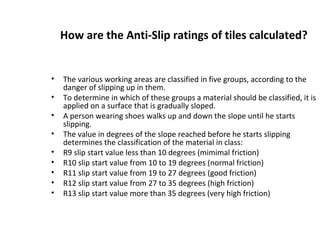
How are the Anti-Slip ratings of tiles calculated?
• The various working areas are classified in five groups, according to the
danger of slipping up in them.
• To determine in which of these groups a material should be classified, it is
applied on a surface that is gradually sloped.
• A person wearing shoes walks up and down the slope until he starts
slipping.
• The value in degrees of the slope reached before he starts slipping
determines the classification of the material in class:
• R9 slip start value less than 10 degrees (mimimal friction)
• R10 slip start value from 10 to 19 degrees (normal friction)
• R11 slip start value from 19 to 27 degrees (good friction)
• R12 slip start value from 27 to 35 degrees (high friction)
• R13 slip start value more than 35 degrees (very high friction)
Is it risky to choose tiles based on photos in a catalogue
rather than on tile samples?
• We have all seen how photographs reproduced in printed publications such as catalogues provide an image
of an object (in our case a tile) which is faithful but not identical to the original, detailed but not necessarily
complete.
• In other words, if we place a tile alongside a photograph and observe closely, we will see that the printed
colour, although very similar, is perceptibly different.
• Even more importantly, the surface may have a gloss finish or texture that is not effectively conveyed by the
printed reproduction.
• For this reason, it is advisable to use a catalogue to make a preliminary selection of several tiles, then use
samples of the tiles to make the final decision.
• Another important point concerns the fact that the batch of tiles you receive will have a given colour tone
as specified on the box.
• It is important to check that all the tiles in the batch you have purchased have the same colour tone.
• In their warehouses the manufacturer or dealer will have batches of tiles of the same type that you have
chosen but with slightly di fferent colour tones.
• These differences in tone are an inevitable result of the technological characteristics of the production
process.
• This has no adverse consequences for the user provided a batch of tiles with the same tone is used for a
specific installation.
• It doesn't matter if the tone of the batch is not identical to that of the sample used for choosing the tiles as
the differences in tone are so small that they are visible only when two tiles are placed alongside each
other.
Grading
• In the United States there are five grades assigned to floor tiles, whether they
are imported or produced in this country. The grades are in Roman numerals,
with grade I being the lowest and V the highest. I know of no one who makes
grade I tiles however, so let's start with II.
• Grade II tiles can be used in residential applications where light traffic is
expected. Bathroom floors, for example, do not receive very heavy traffic.
• Grade III tiles are adequate for any residential use, including kitchen and
entry floors, which receive considerable traffic. These tiles might also be
used in light-traffic commercial applications -- perhaps beauty parlors and
other businesses where there is nota heavy and continuous volume of foot
traffic..
• Grade IV tiles are rated commercial, although they are also commonly used in
homes. These tiles will hold up in just about any application, including
grocery stores, bank lobbies, etc.
• Grade V tiles are used in industrial settings, where they are expected to
receive heavy abuse and exposure to various chemicals. Not many grade V
tiles would be used in the home. They usually look too commercial.
• Tile grades are never stamped on packaging, so you are at the mercy of the
person selling you the tile.
What are the technical characteristics of vitrified
tiles?
Vitrified is resistant to :
• wear
• deep abrasion
• and frost.
• It is a practically non-absorbent material with great
flexural strength.
• Quality durato will remain constant over time.
STAGES OF TILE
MANUFACTURE
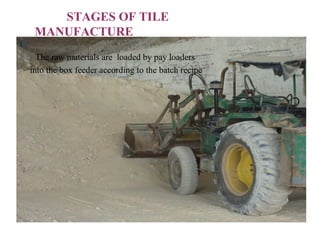
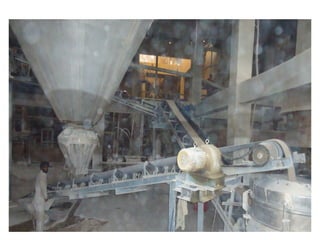
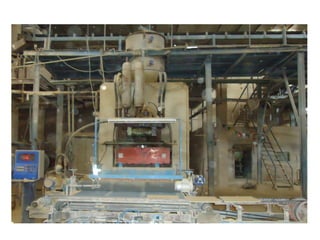
The raw materials are loaded by pay loaders
into the box feeder according to the batch recipe
STAGES OF TILE MANUFACTURE
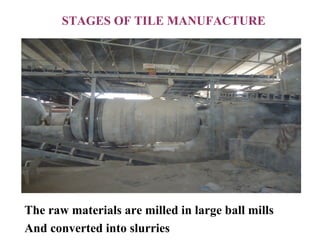
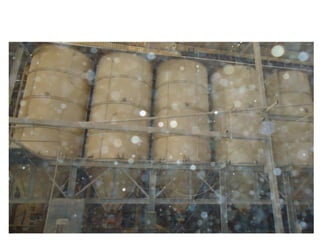
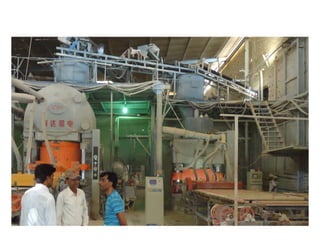
The raw materials are milled in large ball mills
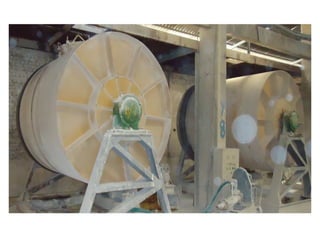
And converted into slurries
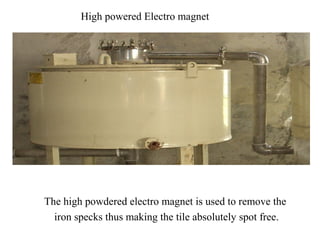
High powered Electro magnet
The high powdered electro magnet is used to remove the
iron specks thus making the tile absolutely spot free.
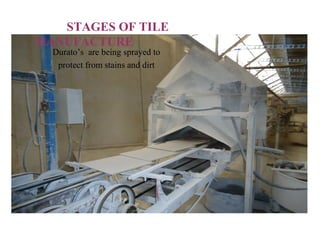
Durato’s are being sprayed to
protect from stains and dirt
STAGES OF TILE
MANUFACTURE
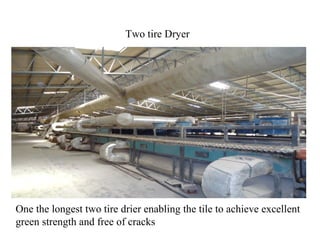
One the longest two tire drier enabling the tile to achieve excellent
green strength and free of cracks
of
Two tire Dryer
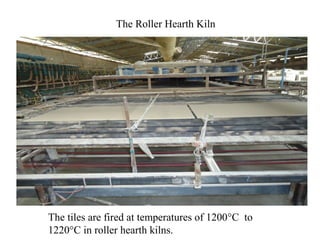
The tiles are fired at temperatures of 1200°C to
1220°C in roller hearth kilns.
The Roller Hearth Kiln
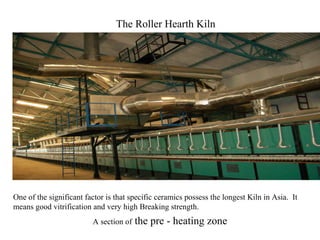
One of the significant factor is that specific ceramics possess the longest Kiln in Asia. It
means good vitrification and very high Breaking strength.
A section of the pre - heating zone
The Roller Hearth Kiln
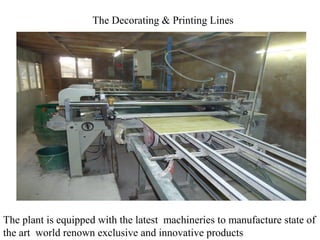
The plant is equipped with the latest machineries to manufacture state of
the art world renown exclusive and innovative products
The Decorating & Printing Lines
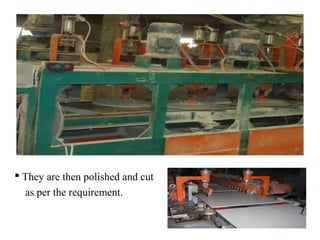
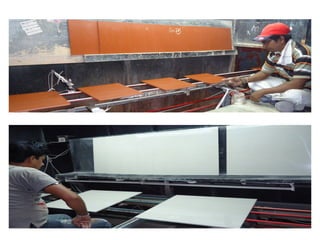
 They are then polished and cut
as per the requirement.
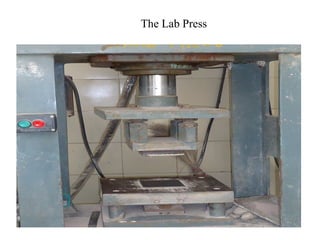
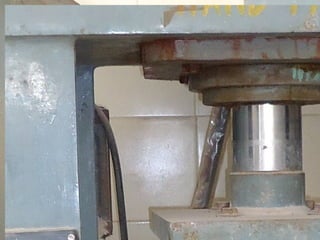
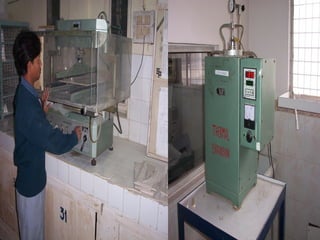
The Lab Press
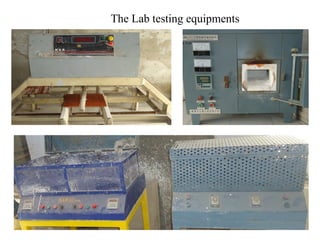
The Lab testing equipments
IS 13711: 1993 Ceramic tiles – sampling and basis of Acceptance
IS 13712: 1993 ceramic tiles- Definitions, Classifications, Characteristics and Marking
IS 13756:1993 Dust pressed ceramic tiles with low water absorption of E≤3% (Group B I) – Specification
IS 13755: 1993 Dust pressed ceramic tiles with water absorption of 3 % < E ≤ 6 % (Group B IIa) – Specification
IS 13754: 1993 Dust pressed ceramic tiles with water absorption of 6% < E ≤ 10% (Group BIIb) – specification
IS 13753: 1993 Dust pressed ceramic tiles with water absorption of E > 10%(Group B III) – specification
IS 13630 (Part 1): 1993 Ceramic tiles – methods of test – Determination of dimensions and surface quality
IS 13630 (Part 2): 1993 Ceramic tiles – methods of test – Determination of water absorption
IS 13630 (Part 3): 1993 Ceramic tiles – methods of test – Determination of moisture expansion using boiling water –
Unglazed tiles
IS 13630 (Part 4): 1993 Ceramic tiles – methods of test – Determination of linear thermal expansion
IS 13630 (Part 5): 1993 Ceramic tiles – methods of test – Determination of resistance to thermal shock
Indian Standards
WHAT IS "WATER ABSORPTION"?
•
The "water absorption" is the quantity of water
which a tile can absorb under particular conditions.
Porcelain tiles have the lowest water absorption of
any type of ceramic tile.
Some characteristic which depend on the porosity of
the material are the following: abrasion resistance,
which increase as water absorption decreases; frost
and chemical resistance.
WHAT IS "FLEXURAL RESISTANCE"?
 The "flexural resistance" is a parameter
characteristic of the material and
corresponds to the maximum stress per
unit area that a specimen can withstand
without breaking when it is subjected to an
increasing load.
WHAT IS "ABRASIVE HARDNESS"?
• The "abrasive hardness" is the resistance of the
surface itself to wear caused by the movement of
bodies, surfaces or materials in contact with the tile.
• Among these actions even cleaning and maintenance
of the tile surface could be sources of abrasion due to
the movement of bodies on the tile surface.
• Abrasive hardness is one of the most important
characteristic considering the durability of the tile.
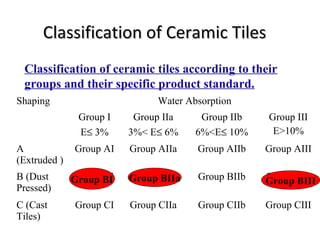
Classification of Ceramic TilesClassification of Ceramic Tiles
Classification of ceramic tiles according to their
groups and their specific product standard.
Shaping Water Absorption
Group I
E≤ 3%
Group IIa
3%< E≤ 6%
Group IIb
6%<E≤ 10%
Group III
E>10%
A
(Extruded )
Group AI Group AIIa Group AIIb Group AIII
B (Dust
Pressed)
Group BI Group BIIa Group BIIb Group BIII
C (Cast
Tiles)
Group CI Group CIIa Group CIIb Group CIII
Group BI Group BIIa Group BIII
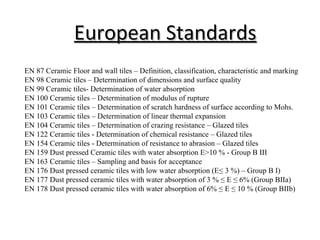
European StandardsEuropean Standards
EN 87 Ceramic Floor and wall tiles – Definition, classification, characteristic and marking
EN 98 Ceramic tiles – Determination of dimensions and surface quality
EN 99 Ceramic tiles- Determination of water absorption
EN 100 Ceramic tiles – Determination of modulus of rupture
EN 101 Ceramic tiles – Determination of scratch hardness of surface according to Mohs.
EN 103 Ceramic tiles – Determination of linear thermal expansion
EN 104 Ceramic tiles – Determination of crazing resistance – Glazed tiles
EN 122 Ceramic tiles - Determination of chemical resistance – Glazed tiles
EN 154 Ceramic tiles - Determination of resistance to abrasion – Glazed tiles
EN 159 Dust pressed Ceramic tiles with water absorption E>10 % - Group B III
EN 163 Ceramic tiles – Sampling and basis for acceptance
EN 176 Dust pressed ceramic tiles with low water absorption (E≤ 3 %) – Group B I)
EN 177 Dust pressed ceramic tiles with water absorption of 3 % ≤ E ≤ 6% (Group BIIa)
EN 178 Dust pressed ceramic tiles with water absorption of 6% ≤ E ≤ 10 % (Group BIIb)
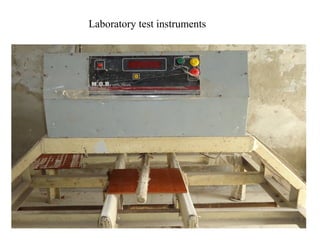
Laboratory test instruments
Nano co at vitrifie d tile s are co ate d with a spe cialnano
g laz e substance which g ive s the m brilliance , sm o o thne ss
and a ple asant lo o k.
Nano co at vitrifie d tile s are subje cte d to spe cialdrying and
firing pro ce sse s that ne ce ssitate a te m pe rature o f 1 220 °C.
Nano co at vitrifie d tile s are the re fo re ae sthe tically striking ,
fo rm ing an im ag e o f functio nality and naturalne ss that is
typicalo f g ranite and m arble .
The ir le ve lo f re sistance to abrasio n is such as to
g uarante e alm o st unlim ite d durability.
Nano Ceramic Coatings
 Scratch & Abrasion Resistant
 Water Repellent
 Dust Repellent
 UV Protection
 Anti-sticking
 Anti-Bacterial
 Anti-Corrosive
Benefits and Advantages
 Easy Clean
 Abrasion Resistant
Durato vitrified Tiles are :
1. Clay composite based that are denser and more compact.
2. Water absorption lower (less than or equal to 0.05% )
3. Firing temp higher at 1200 to 1500 deg c.
4. More compact and have higher mechanical strength.
5. Surface are polished or semi-polished.
6. Nano coated.
Subfloor preparation for Durato Tiles:
To accomplish satisfactory installation, the sub floor
must be
Structurally sound, rigid, smooth and flat.
Free of waxy/oily films, curing compounds.
FLOOR LAYOUT FOR Durato TILES :
The room is squared off, measured and chalk lines are snapped.
Once in place, lay loose tiles across the floor in both directions to
balance the room so that the cut –tiles are of the same size on
each wall.
PREPARING DURATO TILES FOR LAYING:
Slight tone variation can be prevented from being a problem by
mixing the tiles from several cartons before installing. This aids
blending of shades.
SPREADING THE THIN-SET:
Using the chalk lines as a guide, apply the thin-set on one
section at a time. Spread one coat using the flat side on the
trowel and then immediately come back with a second coat,
using the notched side of the trowel.
LAYING TILES:
The tiles are then placed one at a time on the thin-set using
twisting and pressing motion, while allowing suitable spacing
for the grout.
TAMPING:
Using a rubber mallet tamp the tiles to assure good contact with
the thin-set.
GROUTING DURATO TILES:
Preferably done the following day, the grout is applied over a
small section at a time and is spread with a sponge or a squeeze.
Rub the grout firmly over the surface to push the grout into the
joints. Remove off the excess with a clean damp sponge after
approximately ten minutes.
Clean and sweep your tiles regularly.
To remove stubborn spots, scrub with a paste of
bicarbonate of soda and water.
Use just a few drops of soap-less detergent. Don’t use
abrasive cleaners.
Vacuuming is a great way to clean tiles. Vinegar mixed with
warm water is a proven and natural cleaning agent.
If you ever need to use a stronger cleaner make sure it is
neutral I.e. non- acidic and non-alkaline.
For solid areas you can use an all-purpose household cleaner
or a cleaner made specifically for ceramic tiles.
Remove soot from kitchen tiles with a mixture of lemon juice
and salt, then wash.
Before cleaning bathroom tiles, run the shower on
hot for five minutes to steam the dirt loose. For
stubborn stains, apply a paste of scouring powder
and water and let sit for five minutes.
 Scrub with a nylon scrub pad, rinse and wipe dry.
To keep the grout joints on tile counter tops clean
longer, wash with a solution of 1-2 tablespoons
chlorine bleach in one quart of water. Dry thorou-
ghly, then apply an acrylic sealer or three coats of
lemon oil. Let dry for one hour between coats.
Remove mildew and make tiles sparkle by sponging
with a solution of ammonia and water.
Do not use soap on the tiles because it leaves a film which
dulls the surface.
Do not use steel wool pads or similar abrasive cleaning pads.
Loose particles of steel can cause rust stains in grout.
Do not use acid based cleaners. They can affect the colour of
the grout and can cause tiles to dull. You should not use pure
vinegar which is an acid.
Do not wear spiked shoes if you have high gloss floors.
Use good mats at doorways to keep out sand, which may
scratch tiles.
Use buffers under any furniture which may damage the
surface of the tiles.
BIS Standard test
Chemical Resistance Tests
Chemical Strength Time Temp Time Temp
Acetic Acid 10% 16 hrs 100 Deg
C itric Acid 10% 16 hrs. 100 Deg C
Detergent ---- 48 hrs 60 Deg C
Hydrochloric Acid 50% 48 hrs 25 – 35 Deg C
Sodium Hydroxide 5% ½ hrs 60 Deg C
Sodium Stearate 0.15% 48 hrs 60 Deg C
Sulphuric Acid 3% 16 hrs 100 Deg C
BIS standard stain chemical test
According to BIS standard stain chemical tests were performed
on the tiles.
The following stain chemical tests were done:
1. 0.5% Methyl Blue Soln.
2. 10% Sodium Hypochlorite
3. 3% Hydrogen Peroxide
4. Amyl Acetate
5. Carbon Tetrachloride
6. Iodine with ethanol
No stain observed on the nano coated vitrified tiles.
17/01/2010
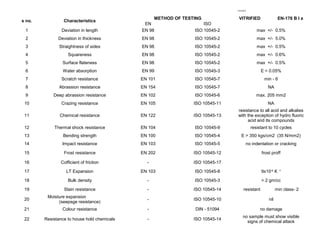
s no. Characteristics
METHOD OF TESTING VITRIFIED EN-176 B I a
EN ISO
1 Deviation in length EN 98 ISO 10545-2 max +/- 0.5%
2 Deviation in thickness EN 98 ISO 10545-2 max +/- 5.0%
3 Straightness of sides EN 98 ISO 10545-2 max +/- 0.5%
4 Squareness EN 98 ISO 10545-2 max +/- 0.6%
5 Surface flateness EN 98 ISO 10545-2 max +/- 0.5%
6 Water absorption EN 99 ISO 10545-3 E < 0.05%
7 Scratch resistance EN 101 ISO 10545-7 min - 6
8 Abrassion resistance EN 154 ISO 10545-7 NA
9 Deep abrassion resistance EN 102 ISO 10545-6 max. 205 mm2
10 Crazing resistance EN 105 ISO 10545-11 NA
11 Chemical resistance EN 122 ISO 10545-13
resistance to all acid and alkalies
with the exception of hydro fluoric
acid and its compounds
12 Thermal shock resistance EN 104 ISO 10545-9 resistant to 10 cycles
13 Bending strength EN 100 ISO 10545-4 E > 350 kgs/cm2 (35 N/mm2)
14 Impact resistance EN 103 ISO 10545-5 no indentation or cracking
15 Frost resistance EN 202 ISO 10545-12 frost proff
16 Cofficient of friction - ISO 10545-17
17 LT Expansion EN 103 ISO 10545-8 9x10⁻⁶
K -1
18 Bulk density - ISO 10545-3 > 2 gm/cc
19 Stain resistance - ISO 10545-14 resistant min class- 2
20
Moisture expansion
(seepsge resistance)
- ISO 10545-10 nil
21 Colour resistance - DIN - 51094 no damage
22 Resistance to house hold chemicals - ISO 10545-14
no sample must show visible
signs of chemical attack
Tiles presentations
Tiles presentations

Tiles presentations

  • 2.
  • 3.
    About the company •Specific Ceramics Ltd is engaged in the business of manufacturing quality floor glazed and unglazed vitrified tiles by the brand name Durato. • Specific began with a view to manufacture tiles that blend design with technological expertise and with the purpose of customizing cost-effective solutions for the specific requirements of architects, interior designers, builders, and individual end customer. • We are proud that the Company’s collaboration is with global trends. This is what inspires innovation, generates research, and propels and regulates our quality standards.
  • 4.
    The Plant • Specific’splant is located at Karoli, in Kalol Taluk of Gandhinagar District & 15 km away from Ahmedabad. It is one of the fastest growing and well equipped industrial complexes in Gujarat having complete infrastructure with global IT and telephone networks.
  • 5.
    Technology & Knowhow •The company is staffed with highly qualified Research scientist, ceramic engineers and technicians, with well over 20 to 25 years proven track record in the manufacture of ceramic bodies, glazes, pigments and frits. • They are well versed with new advances in ceramic technology, modern applications and the latest innovations and developments in raw materials and machinery.
  • 6.
    Choice of rawmaterial At Specific Ceramics ltd - Raw materials are selected on the basis of  Material cost,  Market factors,  Vendor services,  Technical processing considerations,  The ultimate performance requirements and  Market price of the finished goods.
  • 11.
  • 12.
    Sources of theclays Specific Ceramics uses high quality and more expensive fine clays to ensure that its product surpass the stringent specification of BIS & EN standards for vitrified tiles.
  • 13.
    Mines are wellinspected and samples collected from time to time to check for consistency in supply. The raw clay is extracted selectively, whereby different qualities are sorted out and used as white firing, yellow firing or red-firing raw materials.
  • 14.
    Clay Mineralogy •Below isan introduction to clay mineralogy. • Clay minerals are an important group of minerals because they are among the most common products of chemical weathering, and thus are the main constituents of the fine-grained sedimentary rocks called mud rocks (including mudstones, claystones, and shale's). • In fact clay minerals make up about 40% of the minerals in sedimentary rocks. •In addition, clay minerals are the main constituent of soils. •Understanding of clay minerals is also important from an engineering point of view, as some minerals expand significantly when exposed to water.
  • 15.
    •Clay minerals areused extensively in the ceramics industry and are thus important economic minerals. •Based on their structures and chemical compositions, the clay minerals can be divided in to four main classes: (Some Clay Scientists refer to 2 or 3 classes for clays: Chlorite is sometimes referred to as a 2:1 layer not a 2:1:1 and Illites/Micas are sometimes grouped with Smectites) •Kandites 1:1 layered clays eg) Kaolinite •Smectites 2:1 layered clays eg) Montmirrilonite •Illites/Micas 2:1 layered clays eg) Muscovite •Chlorites 2:1:1 layered clays eg) Clinochlore
  • 16.
    The Kandites Above isa model of a Kaolin Crystal viewed from different angles, showing its structure. Kaolin minerals form plate like structures which are visible by Electron Microscopy. The Kaolinite family of Clay Minerals are formed by weathering or hydrothermal alteration of aluminosilicate minerals. Because of there chemical weathering resistance and non-swelling nature they are the clay of choice in ceramics and porcelain products.
  • 17.
    The Smectites Above isa model of a Smectite Crystal viewed from different angles. The Interlayer space can clearly be observed and this accounts for the swelling nature of smectites. Smectite rich soils can undergo as much as a 40% volume change due to water being absorbed and desorbed in Interlayer space. The force behind this swelling is immense,and can raise buildings and structures by a few centimetre's causing cracks and other problems.
  • 18.
    The Illites /Micas Above is a model of a Muscovite Crystal (a good example of an Illitic/Micaceous Mineral) viewed from different angles, showing its structure. Illitic/Micaceous Clays or a major component of Ball clay, and as such have a major use in the ceramic and clay brick industry. Although Illites have a interlayer space, the attraction between the 2 plates is extremely strong, and prevents Illites/Micas from swelling, when in contact with water .
  • 19.
    The Chlorites Above isa model of a Typical Chlorite Crystal viewed from different angles. Chlroritic clay is mainly associated with Illitic/Micaceous Clay and as such is used in the ceramic industry .It is easily weathered into other clay minerals,and as such is the least occuring clay mineral .In fact deposits of predominantly chlorite clay have yet to be discovered.
  • 20.
    Pictures of Kaoliniteand Illite Below are Scanning Electron Microscope Pictures of Kaolinite Interstratified with Illite. Note the platelets of Kaolin are easily observed.
  • 21.
    XRD Scan ComparisonFired Clay X-Ray diffraction is a powerful tool in all mineralogical work,Below is an example of comparative XRD scans showing the change in Raw clay compared to Fired Tile. Clay was fired at 1150 Celsius for 25 minutes. Notice the clay peaks(Illite at 8.9 ,and Kaolinite at 12.3 Degrees 2 Theta have disappeared and a new peak at 16.5 Degrees 2 Theta has formed. This new peak is the mineral Mullite. Mullite is what forms when clays are fired and is the mineral we associate with ceramics.
  • 22.
    Feldspar : • Feldsparsare alumino-silicate minerals found in nearly all igneous rocks. • They have very similar chemical compositions, e.g. • Potash feldspar or orthoclase K2O.Al2O3.6SiO2 • Soda feldspar or albite Na2O.Al2O3.6SiO2 • Lime feldspar or anorthite CaO.Al2O3.2SiO2 • Feldspars are used as a flux in the firing of ceramic body. • When a body is fired, the feldspar melts at a lower temperature than clay or silica, due to the presence of Na+, K+ or Ca2+ ions, and forms a molten glass which causes solid particles of clay to cling together. • when the glass solidifies it gives strength and hardness to the body. • The molten glass also reacts with the silica and clay particles.
  • 24.
    This photo showsa large plagioclase grain which is easily identified by the twinning in the photograph with polars crossed. This photo shows a pebble-sized fragment composed almost entirely of microcline. Microcline can be identified easily by the cross-hatched twinning which it invariably shows.
  • 25.
    Product Introduction • Duratois a compacted vitrified product of mixtures of clay, quartz and feldspar. • Durato’s microstructures are grain and bond type with large particles of filler (usually quartz) held together by a finer matrix, which is almost fully dense. • Because of the complex interplay between raw materials, processing routes and approaches, and the kinetics of the firing process, Durato formulations represent some of the most complicate ceramic systems
  • 26.
    Here we seegrains of Silica (quartz) and soda –aluminate crystals (plagioclase) in a matarix of finer quartz and K-feldspar. The largest grain is quartz and appears to be split along a fracture in the XP view. Many other, smaller, quartz grains are also present. A single large grain of plagioclase can be identified by its zebra-stripe twins (XP).
  • 27.
    Technical Performance • Therequired technical performance of durato tiles is associated with their dimensional parameters, mechanical strength, water absorption, chemical stability and wear resistance. These are largely dependent on microstructural characteristics such as porosity. • The final microstructural features of the durato tiles are developed during processing and consolidated in the firing stage, in which physical and chemical reactions occur among the different constituents.
  • 28.
    SEI of unetchedP700, showing a-quartz grains (“Q”), clay relict agglomerates (“C”), and feldspar grains (“F”).
  • 29.
    CERAMIC TILE MANUFACTURINGPROCESS The ceramic tile manufacturing process consists of a series of successive stages. 1.Raw materials preparation 2. Pressing and drying of the green body 3. Firing, with or without glazing 4. Additional treatments 5. Sorting and packing
  • 30.
    SEI of (a)etched P1400, showing bubbles formed on overfiring,
  • 31.
    Schematic illustration ofthe micro structural evolution in vitrified tiles.
  • 32.
  • 33.
    What are thedifferences between ceramic tiles and vetrified tiles? What are the advantages of vetrified tiles over ceramic tiles? • Ceramic tile has become the general term given to most tiles that are made from clay products. • Ceramics include porcelain and 'gres' tiles too. Ok, the difference. • It has to do with how hard and dense the body (bisque) is after firing. • Regular ceramic can be pretty soft and absorbant. • Gres is dense and frost resistant or frost proof, and porcelain is very dense and frost proof. • Ceramic and gres is glazed, porcelain is often unglazed, and the same color thru out. Many porcelain tiles however are 'porcelenato' which have a glaze for easier maintenance. • Vitrified tiles are 'glass-like'. Vitro means glass in Italian. So vitrified tiles are hard and frost proof. Although only a small amount of tiles are used outdoors in cold weather service, people buy them cause they are stronger than regular soft cheap ceramic.
  • 34.
    What is avitrified Tiles? • Vitrified Tiles consists of a spray dried body of selected clays, kaolinitic minerals, quartz and feldspar, shaped by dry pressing to form a ceramic material that is then fired at temperatures up to 1250 degrees centigrade. • A key element of vitrified tiles is its extremely low level of water absorption which is below 0.5%. • As a result of new innovative processes new vitrified tiles bears a striking resemblance to natural stones such as marble and granite.
  • 35.
    Where can vitrifiedtiles be used? Vitrified is ideal for : • interior and exterior floors and walls • Facades of buildings. • It is available in natural, smooth, polished and structured finishes. • Vitrified tiles is an ideal material for use in the creation of dynamic water jet designs .
  • 36.
    How are theAnti-Slip ratings of tiles calculated? • The various working areas are classified in five groups, according to the danger of slipping up in them. • To determine in which of these groups a material should be classified, it is applied on a surface that is gradually sloped. • A person wearing shoes walks up and down the slope until he starts slipping. • The value in degrees of the slope reached before he starts slipping determines the classification of the material in class: • R9 slip start value less than 10 degrees (mimimal friction) • R10 slip start value from 10 to 19 degrees (normal friction) • R11 slip start value from 19 to 27 degrees (good friction) • R12 slip start value from 27 to 35 degrees (high friction) • R13 slip start value more than 35 degrees (very high friction)
  • 37.
    Is it riskyto choose tiles based on photos in a catalogue rather than on tile samples? • We have all seen how photographs reproduced in printed publications such as catalogues provide an image of an object (in our case a tile) which is faithful but not identical to the original, detailed but not necessarily complete. • In other words, if we place a tile alongside a photograph and observe closely, we will see that the printed colour, although very similar, is perceptibly different. • Even more importantly, the surface may have a gloss finish or texture that is not effectively conveyed by the printed reproduction. • For this reason, it is advisable to use a catalogue to make a preliminary selection of several tiles, then use samples of the tiles to make the final decision. • Another important point concerns the fact that the batch of tiles you receive will have a given colour tone as specified on the box. • It is important to check that all the tiles in the batch you have purchased have the same colour tone. • In their warehouses the manufacturer or dealer will have batches of tiles of the same type that you have chosen but with slightly di fferent colour tones. • These differences in tone are an inevitable result of the technological characteristics of the production process. • This has no adverse consequences for the user provided a batch of tiles with the same tone is used for a specific installation. • It doesn't matter if the tone of the batch is not identical to that of the sample used for choosing the tiles as the differences in tone are so small that they are visible only when two tiles are placed alongside each other.
  • 38.
    Grading • In theUnited States there are five grades assigned to floor tiles, whether they are imported or produced in this country. The grades are in Roman numerals, with grade I being the lowest and V the highest. I know of no one who makes grade I tiles however, so let's start with II. • Grade II tiles can be used in residential applications where light traffic is expected. Bathroom floors, for example, do not receive very heavy traffic. • Grade III tiles are adequate for any residential use, including kitchen and entry floors, which receive considerable traffic. These tiles might also be used in light-traffic commercial applications -- perhaps beauty parlors and other businesses where there is nota heavy and continuous volume of foot traffic.. • Grade IV tiles are rated commercial, although they are also commonly used in homes. These tiles will hold up in just about any application, including grocery stores, bank lobbies, etc. • Grade V tiles are used in industrial settings, where they are expected to receive heavy abuse and exposure to various chemicals. Not many grade V tiles would be used in the home. They usually look too commercial. • Tile grades are never stamped on packaging, so you are at the mercy of the person selling you the tile.
  • 39.
    What are thetechnical characteristics of vitrified tiles? Vitrified is resistant to : • wear • deep abrasion • and frost. • It is a practically non-absorbent material with great flexural strength. • Quality durato will remain constant over time.
  • 40.
    STAGES OF TILE MANUFACTURE Theraw materials are loaded by pay loaders into the box feeder according to the batch recipe
  • 42.
    STAGES OF TILEMANUFACTURE The raw materials are milled in large ball mills And converted into slurries
  • 43.
    High powered Electromagnet The high powdered electro magnet is used to remove the iron specks thus making the tile absolutely spot free.
  • 49.
    Durato’s are beingsprayed to protect from stains and dirt STAGES OF TILE MANUFACTURE
  • 50.
    One the longesttwo tire drier enabling the tile to achieve excellent green strength and free of cracks of Two tire Dryer
  • 51.
    The tiles arefired at temperatures of 1200°C to 1220°C in roller hearth kilns. The Roller Hearth Kiln
  • 52.
    One of thesignificant factor is that specific ceramics possess the longest Kiln in Asia. It means good vitrification and very high Breaking strength. A section of the pre - heating zone The Roller Hearth Kiln
  • 54.
    The plant isequipped with the latest machineries to manufacture state of the art world renown exclusive and innovative products The Decorating & Printing Lines
  • 55.
     They arethen polished and cut as per the requirement.
  • 57.
  • 58.
    The Lab testingequipments
  • 59.
    IS 13711: 1993Ceramic tiles – sampling and basis of Acceptance IS 13712: 1993 ceramic tiles- Definitions, Classifications, Characteristics and Marking IS 13756:1993 Dust pressed ceramic tiles with low water absorption of E≤3% (Group B I) – Specification IS 13755: 1993 Dust pressed ceramic tiles with water absorption of 3 % < E ≤ 6 % (Group B IIa) – Specification IS 13754: 1993 Dust pressed ceramic tiles with water absorption of 6% < E ≤ 10% (Group BIIb) – specification IS 13753: 1993 Dust pressed ceramic tiles with water absorption of E > 10%(Group B III) – specification IS 13630 (Part 1): 1993 Ceramic tiles – methods of test – Determination of dimensions and surface quality IS 13630 (Part 2): 1993 Ceramic tiles – methods of test – Determination of water absorption IS 13630 (Part 3): 1993 Ceramic tiles – methods of test – Determination of moisture expansion using boiling water – Unglazed tiles IS 13630 (Part 4): 1993 Ceramic tiles – methods of test – Determination of linear thermal expansion IS 13630 (Part 5): 1993 Ceramic tiles – methods of test – Determination of resistance to thermal shock Indian Standards
  • 60.
    WHAT IS "WATERABSORPTION"? • The "water absorption" is the quantity of water which a tile can absorb under particular conditions. Porcelain tiles have the lowest water absorption of any type of ceramic tile. Some characteristic which depend on the porosity of the material are the following: abrasion resistance, which increase as water absorption decreases; frost and chemical resistance.
  • 61.
    WHAT IS "FLEXURALRESISTANCE"?  The "flexural resistance" is a parameter characteristic of the material and corresponds to the maximum stress per unit area that a specimen can withstand without breaking when it is subjected to an increasing load.
  • 62.
    WHAT IS "ABRASIVEHARDNESS"? • The "abrasive hardness" is the resistance of the surface itself to wear caused by the movement of bodies, surfaces or materials in contact with the tile. • Among these actions even cleaning and maintenance of the tile surface could be sources of abrasion due to the movement of bodies on the tile surface. • Abrasive hardness is one of the most important characteristic considering the durability of the tile.
  • 63.
    Classification of CeramicTilesClassification of Ceramic Tiles Classification of ceramic tiles according to their groups and their specific product standard. Shaping Water Absorption Group I E≤ 3% Group IIa 3%< E≤ 6% Group IIb 6%<E≤ 10% Group III E>10% A (Extruded ) Group AI Group AIIa Group AIIb Group AIII B (Dust Pressed) Group BI Group BIIa Group BIIb Group BIII C (Cast Tiles) Group CI Group CIIa Group CIIb Group CIII Group BI Group BIIa Group BIII
  • 64.
    European StandardsEuropean Standards EN87 Ceramic Floor and wall tiles – Definition, classification, characteristic and marking EN 98 Ceramic tiles – Determination of dimensions and surface quality EN 99 Ceramic tiles- Determination of water absorption EN 100 Ceramic tiles – Determination of modulus of rupture EN 101 Ceramic tiles – Determination of scratch hardness of surface according to Mohs. EN 103 Ceramic tiles – Determination of linear thermal expansion EN 104 Ceramic tiles – Determination of crazing resistance – Glazed tiles EN 122 Ceramic tiles - Determination of chemical resistance – Glazed tiles EN 154 Ceramic tiles - Determination of resistance to abrasion – Glazed tiles EN 159 Dust pressed Ceramic tiles with water absorption E>10 % - Group B III EN 163 Ceramic tiles – Sampling and basis for acceptance EN 176 Dust pressed ceramic tiles with low water absorption (E≤ 3 %) – Group B I) EN 177 Dust pressed ceramic tiles with water absorption of 3 % ≤ E ≤ 6% (Group BIIa) EN 178 Dust pressed ceramic tiles with water absorption of 6% ≤ E ≤ 10 % (Group BIIb)
  • 65.
  • 68.
    Nano co atvitrifie d tile s are co ate d with a spe cialnano g laz e substance which g ive s the m brilliance , sm o o thne ss and a ple asant lo o k. Nano co at vitrifie d tile s are subje cte d to spe cialdrying and firing pro ce sse s that ne ce ssitate a te m pe rature o f 1 220 °C. Nano co at vitrifie d tile s are the re fo re ae sthe tically striking , fo rm ing an im ag e o f functio nality and naturalne ss that is typicalo f g ranite and m arble . The ir le ve lo f re sistance to abrasio n is such as to g uarante e alm o st unlim ite d durability.
  • 69.
    Nano Ceramic Coatings Scratch & Abrasion Resistant  Water Repellent  Dust Repellent  UV Protection  Anti-sticking  Anti-Bacterial  Anti-Corrosive Benefits and Advantages  Easy Clean  Abrasion Resistant
  • 70.
    Durato vitrified Tilesare : 1. Clay composite based that are denser and more compact. 2. Water absorption lower (less than or equal to 0.05% ) 3. Firing temp higher at 1200 to 1500 deg c. 4. More compact and have higher mechanical strength. 5. Surface are polished or semi-polished. 6. Nano coated.
  • 71.
    Subfloor preparation forDurato Tiles: To accomplish satisfactory installation, the sub floor must be Structurally sound, rigid, smooth and flat. Free of waxy/oily films, curing compounds. FLOOR LAYOUT FOR Durato TILES : The room is squared off, measured and chalk lines are snapped. Once in place, lay loose tiles across the floor in both directions to balance the room so that the cut –tiles are of the same size on each wall.
  • 72.
    PREPARING DURATO TILESFOR LAYING: Slight tone variation can be prevented from being a problem by mixing the tiles from several cartons before installing. This aids blending of shades. SPREADING THE THIN-SET: Using the chalk lines as a guide, apply the thin-set on one section at a time. Spread one coat using the flat side on the trowel and then immediately come back with a second coat, using the notched side of the trowel. LAYING TILES: The tiles are then placed one at a time on the thin-set using twisting and pressing motion, while allowing suitable spacing for the grout.
  • 73.
    TAMPING: Using a rubbermallet tamp the tiles to assure good contact with the thin-set. GROUTING DURATO TILES: Preferably done the following day, the grout is applied over a small section at a time and is spread with a sponge or a squeeze. Rub the grout firmly over the surface to push the grout into the joints. Remove off the excess with a clean damp sponge after approximately ten minutes.
  • 74.
    Clean and sweepyour tiles regularly. To remove stubborn spots, scrub with a paste of bicarbonate of soda and water. Use just a few drops of soap-less detergent. Don’t use abrasive cleaners. Vacuuming is a great way to clean tiles. Vinegar mixed with warm water is a proven and natural cleaning agent. If you ever need to use a stronger cleaner make sure it is neutral I.e. non- acidic and non-alkaline. For solid areas you can use an all-purpose household cleaner or a cleaner made specifically for ceramic tiles. Remove soot from kitchen tiles with a mixture of lemon juice and salt, then wash.
  • 75.
    Before cleaning bathroomtiles, run the shower on hot for five minutes to steam the dirt loose. For stubborn stains, apply a paste of scouring powder and water and let sit for five minutes.  Scrub with a nylon scrub pad, rinse and wipe dry. To keep the grout joints on tile counter tops clean longer, wash with a solution of 1-2 tablespoons chlorine bleach in one quart of water. Dry thorou- ghly, then apply an acrylic sealer or three coats of lemon oil. Let dry for one hour between coats. Remove mildew and make tiles sparkle by sponging with a solution of ammonia and water.
  • 76.
    Do not usesoap on the tiles because it leaves a film which dulls the surface. Do not use steel wool pads or similar abrasive cleaning pads. Loose particles of steel can cause rust stains in grout. Do not use acid based cleaners. They can affect the colour of the grout and can cause tiles to dull. You should not use pure vinegar which is an acid. Do not wear spiked shoes if you have high gloss floors. Use good mats at doorways to keep out sand, which may scratch tiles. Use buffers under any furniture which may damage the surface of the tiles.
  • 77.
    BIS Standard test ChemicalResistance Tests Chemical Strength Time Temp Time Temp Acetic Acid 10% 16 hrs 100 Deg C itric Acid 10% 16 hrs. 100 Deg C Detergent ---- 48 hrs 60 Deg C Hydrochloric Acid 50% 48 hrs 25 – 35 Deg C Sodium Hydroxide 5% ½ hrs 60 Deg C Sodium Stearate 0.15% 48 hrs 60 Deg C Sulphuric Acid 3% 16 hrs 100 Deg C
  • 78.
    BIS standard stainchemical test According to BIS standard stain chemical tests were performed on the tiles. The following stain chemical tests were done: 1. 0.5% Methyl Blue Soln. 2. 10% Sodium Hypochlorite 3. 3% Hydrogen Peroxide 4. Amyl Acetate 5. Carbon Tetrachloride 6. Iodine with ethanol No stain observed on the nano coated vitrified tiles.
  • 79.
    17/01/2010 s no. Characteristics METHODOF TESTING VITRIFIED EN-176 B I a EN ISO 1 Deviation in length EN 98 ISO 10545-2 max +/- 0.5% 2 Deviation in thickness EN 98 ISO 10545-2 max +/- 5.0% 3 Straightness of sides EN 98 ISO 10545-2 max +/- 0.5% 4 Squareness EN 98 ISO 10545-2 max +/- 0.6% 5 Surface flateness EN 98 ISO 10545-2 max +/- 0.5% 6 Water absorption EN 99 ISO 10545-3 E < 0.05% 7 Scratch resistance EN 101 ISO 10545-7 min - 6 8 Abrassion resistance EN 154 ISO 10545-7 NA 9 Deep abrassion resistance EN 102 ISO 10545-6 max. 205 mm2 10 Crazing resistance EN 105 ISO 10545-11 NA 11 Chemical resistance EN 122 ISO 10545-13 resistance to all acid and alkalies with the exception of hydro fluoric acid and its compounds 12 Thermal shock resistance EN 104 ISO 10545-9 resistant to 10 cycles 13 Bending strength EN 100 ISO 10545-4 E > 350 kgs/cm2 (35 N/mm2) 14 Impact resistance EN 103 ISO 10545-5 no indentation or cracking 15 Frost resistance EN 202 ISO 10545-12 frost proff 16 Cofficient of friction - ISO 10545-17 17 LT Expansion EN 103 ISO 10545-8 9x10⁻⁶ K -1 18 Bulk density - ISO 10545-3 > 2 gm/cc 19 Stain resistance - ISO 10545-14 resistant min class- 2 20 Moisture expansion (seepsge resistance) - ISO 10545-10 nil 21 Colour resistance - DIN - 51094 no damage 22 Resistance to house hold chemicals - ISO 10545-14 no sample must show visible signs of chemical attack