Clean Rinse 
Process 
• A tri-compartment trailer 
connects its hose to the 
vessel’s carbon fill line 
• The tank is pressurized to 15 
psi by the truck’s blower 
• A hose from the vessel 
discharge valve is 
connected to the truck 
• The discharge valve is 
opened, causing the spent 
media slurries out as a 
single plug into the truck 
• The process is repeated five 
times ensuring a clean tank 
Those pushing their company’s 
design specifications onto the 
municipal adsorption vessel 
marketplace are promoting the superiority 
myth of the of “Cone-Bottom” underdrain. 
They claim that any liquid phase vessel 
underdrain design besides theirs can 
hamper the removal of spent media during 
the carbon changeout process, leaving 
some spent carbon in the bottom of unit. 
The truth is, when utilizing the proper 
techniques, a vessel with a header/lateral 
underdrain can be easily emptied of spent 
carbon, ensuring a fresh media fill and 
a more efficient distribution of the mass 
transfer zone throughout the carbon bed. 
Also, a vessel built with a header/lateral 
design is more cost effective than one with 
a cone bottom. 
Not only is it easy to debunk the myth that 
the Cone-Bottom design is best, a case 
can be made that it actually degrades the 
efficiency of the bed’s mass transfer zone. 
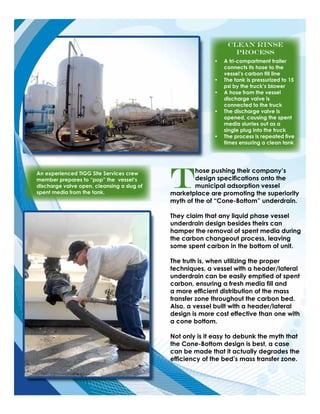
An experienced TIGG Site Services crew 
member prepares to “pop” the vessel’s 
discharge valve open, cleansing a slug of 
spent media from the tank.
TIGG 
Funneling the carbon into a conical-shaped pocket at the bottom of the vessel 
disrupts the even progress of the mass transfer zone as it descends through the 
bed. It constricts the zone into a small area, thereby promoting early contaminant 
breakthrough. 
The conical vessel internal design specs place an inverted cone waffled with aeration 
holes at the bottom of the vessel. This funnels the media bed into an underdrain that 
allows the spent carbon to flush from the vessel without leaving clumps of spent 
media in the corners at the bottom of the tank. However, plastic nozzles fitted to each 
aeration hole often break off and come loose. This causes carbon packed into the 
cone to spill into a catch basket that resembles an inverted witch’s hat. These nozzle 
fittings can only be repaired during changeout procedures when the entire vessel is 
emptied of media. 
The promoters of this design claim any vessel without the conical underdrain leaves 
spent carbon in the bottom of the tank, causing the contamination of fresh media 
and turning it into a “septic-bed.” However, according to Anthony Mazzoni, TIGG 
Corporation vice president and industry expert, simple pressurization of the vessel 
during a media changeout can deliver a clean rinse of the spent carbon, leaving the 
tank septic-free and ready for fresh media. 
“The key to the TIGG Technique is a tri-compartment bulk trailer with a blower unit,” 
Mazzoni said. “The experienced site services crew attaches one hose to the carbon 
fill line of a liquid-filled vessel and another to the discharge valve. Then, using the 
blower on the truck, the vessel is pressurized to 15 psi.” 
Once the discharge valve is popped opened on the pressurized tank, the spent bed 
slurries out in a single slug into an empty compartment on the bulk trailer. To ensure 
complete vetting, the TIGG Technique is performed a total of five times.
Once spent carbon is cleansed 
from the vessel, fresh media is 
loaded into the clean interior of 
the header/lateral designed unit without 
the fear of rouge traces of spent carbon to 
corrupt the bed. The entire process takes 
as little as four hours to empty and then 
refresh the media in a dual-vessel 40,000 
pound adsorption system. 
“There are additional advantages to 
the header/lateral underdrain design,” 
Mazzoni said. “Because of the void 
between the cone and the bottom of the 
tank head, the interior of the Cone-Bottom 
vessels is difficult to sandblast and coat.” 
He explained that the Cone-Bottom 
design restricts accessibility when lining 
the interior of the bottom head of the 
tank, only allowing for what’s called a 
“maintenance coat.” This inferior lining 
can promote pinholes and eventually 
lead to rust and corrosion. However, the 
header/lateral underdrain design does 
not restrict the interior coating process, 
allowing for a full coating of a high-solids 
epoxy which is then spark-tested and 
proven pinhole free. 
“Not only is the header/lateral underdrain 
design more cost effective than the Cone- 
Bottom, thanks to the TIGG Technique of 
spent media changeouts these vessels 
are easily refreshed with clean carbon beds,” Mazzoni said. 
“Plus, the design boasts a better carbon bed distribution, 
which means an even mass transfer zone.” 
When you put all this together with the superior interior 
coating and competitive pricing it is easy to pop the 
phony myth of the Cone-Bottom and appreciate 
the quality and competence of a tank with a 
header/lateral underdrain. 
Contact a TIGG Rep Today 
800-925-0011 • sales@TIGG.com 
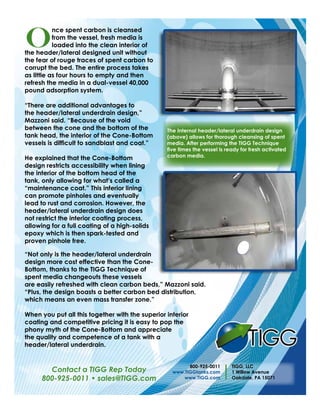
The Internal header/lateral underdrain design 
(above) allows for thorough cleansing of spent 
media. After performing the TIGG Technique 
five times the vessel is ready for fresh activated 
carbon media. 
800-925-0011 
www.TIGGtanks.com 
www.TIGG.com 
TIGG, LLC 
1 Willow Avenue 
Oakdale, PA 15071

Debunking the Superiority Myth of the Cone-Bottom Underdrain Adsorber Design

  • 2.
    Clean Rinse Process • A tri-compartment trailer connects its hose to the vessel’s carbon fill line • The tank is pressurized to 15 psi by the truck’s blower • A hose from the vessel discharge valve is connected to the truck • The discharge valve is opened, causing the spent media slurries out as a single plug into the truck • The process is repeated five times ensuring a clean tank Those pushing their company’s design specifications onto the municipal adsorption vessel marketplace are promoting the superiority myth of the of “Cone-Bottom” underdrain. They claim that any liquid phase vessel underdrain design besides theirs can hamper the removal of spent media during the carbon changeout process, leaving some spent carbon in the bottom of unit. The truth is, when utilizing the proper techniques, a vessel with a header/lateral underdrain can be easily emptied of spent carbon, ensuring a fresh media fill and a more efficient distribution of the mass transfer zone throughout the carbon bed. Also, a vessel built with a header/lateral design is more cost effective than one with a cone bottom. Not only is it easy to debunk the myth that the Cone-Bottom design is best, a case can be made that it actually degrades the efficiency of the bed’s mass transfer zone. An experienced TIGG Site Services crew member prepares to “pop” the vessel’s discharge valve open, cleansing a slug of spent media from the tank.
  • 3.
    TIGG Funneling thecarbon into a conical-shaped pocket at the bottom of the vessel disrupts the even progress of the mass transfer zone as it descends through the bed. It constricts the zone into a small area, thereby promoting early contaminant breakthrough. The conical vessel internal design specs place an inverted cone waffled with aeration holes at the bottom of the vessel. This funnels the media bed into an underdrain that allows the spent carbon to flush from the vessel without leaving clumps of spent media in the corners at the bottom of the tank. However, plastic nozzles fitted to each aeration hole often break off and come loose. This causes carbon packed into the cone to spill into a catch basket that resembles an inverted witch’s hat. These nozzle fittings can only be repaired during changeout procedures when the entire vessel is emptied of media. The promoters of this design claim any vessel without the conical underdrain leaves spent carbon in the bottom of the tank, causing the contamination of fresh media and turning it into a “septic-bed.” However, according to Anthony Mazzoni, TIGG Corporation vice president and industry expert, simple pressurization of the vessel during a media changeout can deliver a clean rinse of the spent carbon, leaving the tank septic-free and ready for fresh media. “The key to the TIGG Technique is a tri-compartment bulk trailer with a blower unit,” Mazzoni said. “The experienced site services crew attaches one hose to the carbon fill line of a liquid-filled vessel and another to the discharge valve. Then, using the blower on the truck, the vessel is pressurized to 15 psi.” Once the discharge valve is popped opened on the pressurized tank, the spent bed slurries out in a single slug into an empty compartment on the bulk trailer. To ensure complete vetting, the TIGG Technique is performed a total of five times.
  • 4.
    Once spent carbonis cleansed from the vessel, fresh media is loaded into the clean interior of the header/lateral designed unit without the fear of rouge traces of spent carbon to corrupt the bed. The entire process takes as little as four hours to empty and then refresh the media in a dual-vessel 40,000 pound adsorption system. “There are additional advantages to the header/lateral underdrain design,” Mazzoni said. “Because of the void between the cone and the bottom of the tank head, the interior of the Cone-Bottom vessels is difficult to sandblast and coat.” He explained that the Cone-Bottom design restricts accessibility when lining the interior of the bottom head of the tank, only allowing for what’s called a “maintenance coat.” This inferior lining can promote pinholes and eventually lead to rust and corrosion. However, the header/lateral underdrain design does not restrict the interior coating process, allowing for a full coating of a high-solids epoxy which is then spark-tested and proven pinhole free. “Not only is the header/lateral underdrain design more cost effective than the Cone- Bottom, thanks to the TIGG Technique of spent media changeouts these vessels are easily refreshed with clean carbon beds,” Mazzoni said. “Plus, the design boasts a better carbon bed distribution, which means an even mass transfer zone.” When you put all this together with the superior interior coating and competitive pricing it is easy to pop the phony myth of the Cone-Bottom and appreciate the quality and competence of a tank with a header/lateral underdrain. Contact a TIGG Rep Today 800-925-0011 • sales@TIGG.com The Internal header/lateral underdrain design (above) allows for thorough cleansing of spent media. After performing the TIGG Technique five times the vessel is ready for fresh activated carbon media. 800-925-0011 www.TIGGtanks.com www.TIGG.com TIGG, LLC 1 Willow Avenue Oakdale, PA 15071