Implementation Science in Action:
A Case Study of Antithrombotic
Management before GI Endoscopy
Geoff Barnes, MD, MSc
October 30, 2019
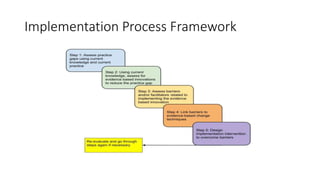
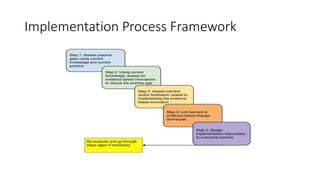
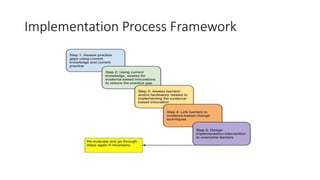
Implementation Process Framework
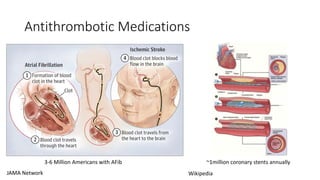
Antithrombotic Medications
JAMA Network Wikipedia
3-6 Million Americans with AFib ~1million coronary stents annually
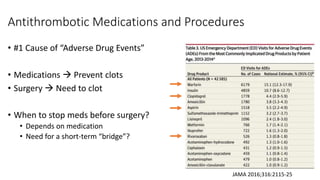
Antithrombotic Medications and Procedures
• #1 Cause of “Adverse Drug Events”
• Medications  Prevent clots
• Surgery  Need to clot
• When to stop meds before surgery?
• Depends on medication
• Need for a short-term “bridge”?
JAMA 2016;316:2115-25
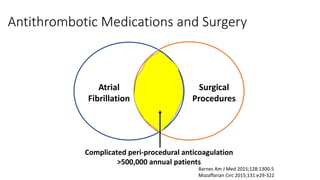
Antithrombotic Medications and Surgery
Atrial
Fibrillation
Surgical
Procedures
Complicated peri-procedural anticoagulation
>500,000 annual patients
Barnes Am J Med 2015;128:1300-5
Mozaffarian Circ 2015;131:e29-322
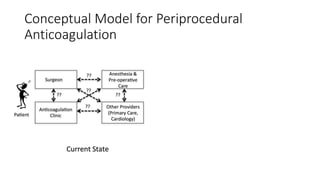
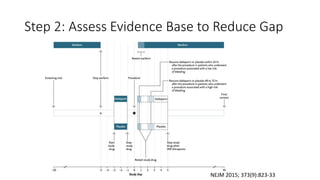
Conceptual Model for Periprocedural
Anticoagulation
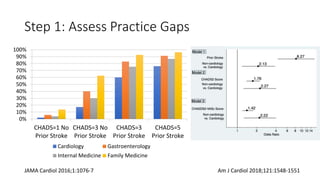
Step 1: Assess Practice Gaps
0%
10%
20%
30%
40%
50%
60%
70%
80%
90%
100%
CHADS=1 No
Prior Stroke
CHADS=3 No
Prior Stroke
CHADS=3
Prior Stroke
CHADS=5
Prior Stroke
Cardiology Gastroenterology
Internal Medicine Family Medicine
JAMA Cardiol 2016;1:1076-7 Am J Cardiol 2018;121:1548-1551
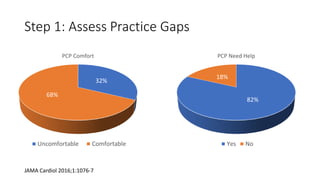
Step 1: Assess Practice Gaps
JAMA Cardiol 2016;1:1076-7
32%
68%
PCP Comfort
Uncomfortable Comfortable
82%
18%
PCP Need Help
Yes No
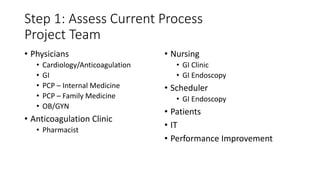
Step 1: Assess Current Process
Project Team
• Physicians
• Cardiology/Anticoagulation
• GI
• PCP – Internal Medicine
• PCP – Family Medicine
• OB/GYN
• Anticoagulation Clinic
• Pharmacist
• Nursing
• GI Clinic
• GI Endoscopy
• Scheduler
• GI Endoscopy
• Patients
• IT
• Performance Improvement
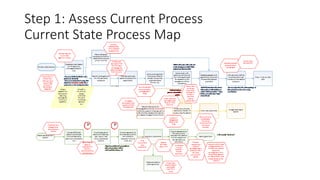
Step 1: Assess Current Process
Current State Process Map
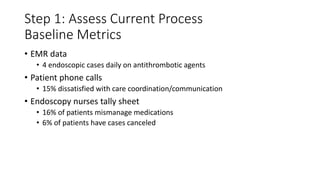
Step 1: Assess Current Process
Baseline Metrics
• EMR data
• 4 endoscopic cases daily on antithrombotic agents
• Patient phone calls
• 15% dissatisfied with care coordination/communication
• Endoscopy nurses tally sheet
• 16% of patients mismanage medications
• 6% of patients have cases canceled
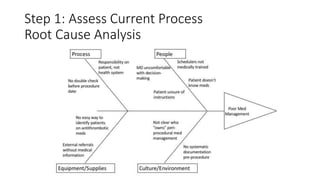
Step 1: Assess Current Process
Root Cause Analysis
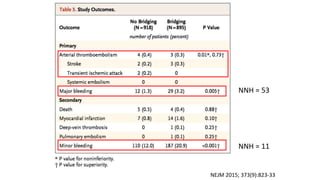
Step 2: Assess Evidence Base to Reduce Gap
NEJM 2015; 373(9):823-33
NNH = 53
NNH = 11
NNH = 53
NNH = 11
NEJM 2015; 373(9):823-33
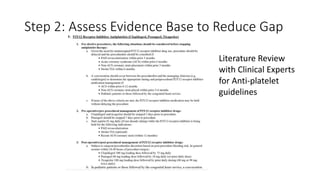
Step 2: Assess Evidence Base to Reduce Gap
Literature Review
with Clinical Experts
for Anti-platelet
guidelines
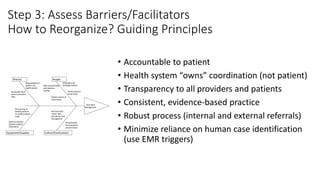
Step 3: Assess Barriers/Facilitators
How to Reorganize? Guiding Principles
• Accountable to patient
• Health system “owns” coordination (not patient)
• Transparency to all providers and patients
• Consistent, evidence-based practice
• Robust process (internal and external referrals)
• Minimize reliance on human case identification
(use EMR triggers)
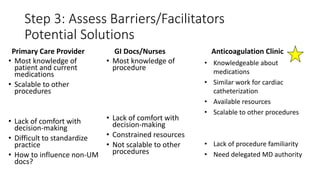
Step 3: Assess Barriers/Facilitators
Potential Solutions
Primary Care Provider
• Most knowledge of
patient and current
medications
• Scalable to other
procedures
• Lack of comfort with
decision-making
• Difficult to standardize
practice
• How to influence non-UM
docs?
GI Docs/Nurses
• Most knowledge of
procedure
• Lack of comfort with
decision-making
• Constrained resources
• Not scalable to other
procedures
Anticoagulation Clinic
• Knowledgeable about
medications
• Similar work for cardiac
catheterization
• Available resources
• Scalable to other procedures
• Lack of procedure familiarity
• Need delegated MD authority
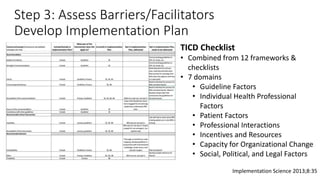
Step 3: Assess Barriers/Facilitators
Develop Implementation Plan
Implementation Science 2013;8:35
TICD Checklist
• Combined from 12 frameworks &
checklists
• 7 domains
• Guideline Factors
• Individual Health Professional
Factors
• Patient Factors
• Professional Interactions
• Incentives and Resources
• Capacity for Organizational Change
• Social, Political, and Legal Factors
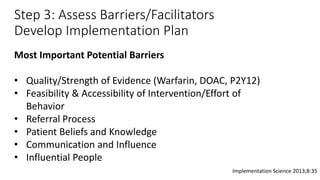
Step 3: Assess Barriers/Facilitators
Develop Implementation Plan
Implementation Science 2013;8:35
Most Important Potential Barriers
• Quality/Strength of Evidence (Warfarin, DOAC, P2Y12)
• Feasibility & Accessibility of Intervention/Effort of
Behavior
• Referral Process
• Patient Beliefs and Knowledge
• Communication and Influence
• Influential People
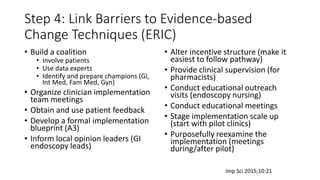
Step 4: Link Barriers to Evidence-based
Change Techniques (ERIC)
• Build a coalition
• Involve patients
• Use data experts
• Identify and prepare champions (GI,
Int Med, Fam Med, Gyn)
• Organize clinician implementation
team meetings
• Obtain and use patient feedback
• Develop a formal implementation
blueprint (A3)
• Inform local opinion leaders (GI
endoscopy leads)
• Alter incentive structure (make it
easiest to follow pathway)
• Provide clinical supervision (for
pharmacists)
• Conduct educational outreach
visits (endoscopy nursing)
• Conduct educational meetings
• Stage implementation scale up
(start with pilot clinics)
• Purposefully reexamine the
implementation (meetings
during/after pilot)
Imp Sci 2015;10:21
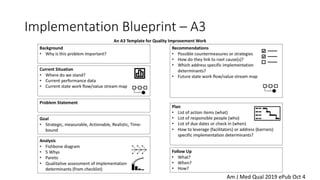
Implementation Blueprint – A3
Am J Med Qual 2019 ePub Oct 4
Implementation Blueprint – A3
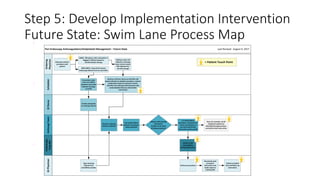
Step 5: Develop Implementation Intervention
Future State: Swim Lane Process Map
Peri-Endoscopy Anticoagulation/Antiplatelet Management – Future State Last Revised: August 9, 2017
Ordering
Physician
SchedulerAnticoagTeam
Endoscopy
PrepRN
GIPhysicianGINurse
NON UMHS: Faxes Direct Access
Endoscopy Referral form to call center
Receives call from check out staff OR calls
patient directly to schedule procedure, reviews
medications based on exclusion criteria,
describes the anticoag referral process and
sends detailed itinerary with further
instructions
Receives anticoag
referral in MiChart
1-2 weeks before
procedure, call patient to
review coordination of
care and send further
instructions (mail, portal)
Two weeks before
patient’s procedure,
review protocol
1)Need multi-provider
discussion?
2) Refer to GI clinic?
3) Delay procedure?
Perform med
reconciliation
during patient prep
Performs procedure
Documents post
procedure
instructions and
sends report to
ordering MD
Discusses need for
procedure with
patient
= Patient Touch Point
MiChart order will
default to Anticoag
team referral unless
MD indicates he/
she will manage
Patient provided
AVS and follow up
instructions
Creates and pends
an anticoag referral
UMHS: MD places order and patient is
flagged in MiChart based on
antithrombotic therapy
Transcribes order
from non-UMHS
physician and sends
InBasket message
to GI RN
Place JIT reminder call (if
needed) to patient (as
identified through previous
contact)) to take med action
Signs anticoag
referral from
nonUMHS provider
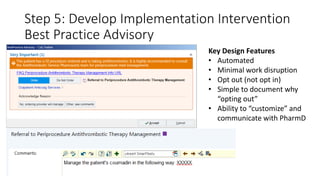
Step 5: Develop Implementation Intervention
Best Practice Advisory
Key Design Features
• Automated
• Minimal work disruption
• Opt out (not opt in)
• Simple to document why
“opting out”
• Ability to “customize” and
communicate with PharmD
Implementation Process Framework
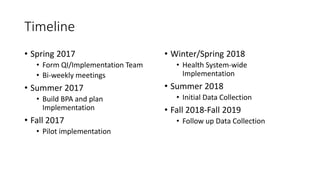
Timeline
• Spring 2017
• Form QI/Implementation Team
• Bi-weekly meetings
• Summer 2017
• Build BPA and plan
Implementation
• Fall 2017
• Pilot implementation
• Winter/Spring 2018
• Health System-wide
Implementation
• Summer 2018
• Initial Data Collection
• Fall 2018-Fall 2019
• Follow up Data Collection
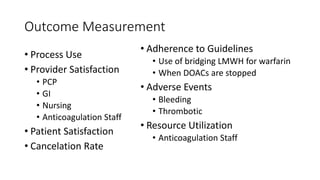
Outcome Measurement
• Process Use
• Provider Satisfaction
• PCP
• GI
• Nursing
• Anticoagulation Staff
• Patient Satisfaction
• Cancelation Rate
• Adherence to Guidelines
• Use of bridging LMWH for warfarin
• When DOACs are stopped
• Adverse Events
• Bleeding
• Thrombotic
• Resource Utilization
• Anticoagulation Staff
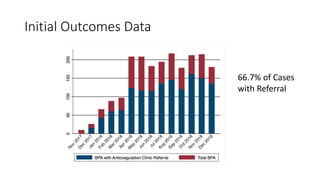
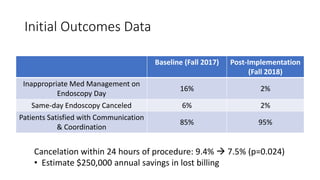
Initial Outcomes Data
66.7% of Cases
with Referral
Initial Outcomes Data
Baseline (Fall 2017) Post-Implementation
(Fall 2018)
Inappropriate Med Management on
Endoscopy Day
16% 2%
Same-day Endoscopy Canceled 6% 2%
Patients Satisfied with Communication
& Coordination
85% 95%
Cancelation within 24 hours of procedure: 9.4%  7.5% (p=0.024)
• Estimate $250,000 annual savings in lost billing
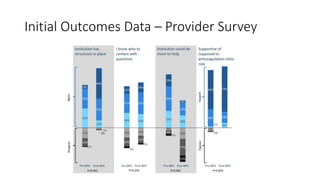
Initial Outcomes Data – Provider Survey
Implementation Process Framework

TIARA Module 4 Geoff Barnes 10302019

  • 1.
    Implementation Science inAction: A Case Study of Antithrombotic Management before GI Endoscopy Geoff Barnes, MD, MSc October 30, 2019
  • 2.
  • 3.
    Antithrombotic Medications JAMA NetworkWikipedia 3-6 Million Americans with AFib ~1million coronary stents annually
  • 4.
    Antithrombotic Medications andProcedures • #1 Cause of “Adverse Drug Events” • Medications  Prevent clots • Surgery  Need to clot • When to stop meds before surgery? • Depends on medication • Need for a short-term “bridge”? JAMA 2016;316:2115-25
  • 5.
    Antithrombotic Medications andSurgery Atrial Fibrillation Surgical Procedures Complicated peri-procedural anticoagulation >500,000 annual patients Barnes Am J Med 2015;128:1300-5 Mozaffarian Circ 2015;131:e29-322
  • 6.
    Conceptual Model forPeriprocedural Anticoagulation
  • 7.
    Step 1: AssessPractice Gaps 0% 10% 20% 30% 40% 50% 60% 70% 80% 90% 100% CHADS=1 No Prior Stroke CHADS=3 No Prior Stroke CHADS=3 Prior Stroke CHADS=5 Prior Stroke Cardiology Gastroenterology Internal Medicine Family Medicine JAMA Cardiol 2016;1:1076-7 Am J Cardiol 2018;121:1548-1551
  • 8.
    Step 1: AssessPractice Gaps JAMA Cardiol 2016;1:1076-7 32% 68% PCP Comfort Uncomfortable Comfortable 82% 18% PCP Need Help Yes No
  • 9.
    Step 1: AssessCurrent Process Project Team • Physicians • Cardiology/Anticoagulation • GI • PCP – Internal Medicine • PCP – Family Medicine • OB/GYN • Anticoagulation Clinic • Pharmacist • Nursing • GI Clinic • GI Endoscopy • Scheduler • GI Endoscopy • Patients • IT • Performance Improvement
  • 10.
    Step 1: AssessCurrent Process Current State Process Map
  • 11.
    Step 1: AssessCurrent Process Baseline Metrics • EMR data • 4 endoscopic cases daily on antithrombotic agents • Patient phone calls • 15% dissatisfied with care coordination/communication • Endoscopy nurses tally sheet • 16% of patients mismanage medications • 6% of patients have cases canceled
  • 12.
    Step 1: AssessCurrent Process Root Cause Analysis
  • 13.
    Step 2: AssessEvidence Base to Reduce Gap NEJM 2015; 373(9):823-33
  • 14.
    NNH = 53 NNH= 11 NNH = 53 NNH = 11 NEJM 2015; 373(9):823-33
  • 15.
    Step 2: AssessEvidence Base to Reduce Gap Literature Review with Clinical Experts for Anti-platelet guidelines
  • 16.
    Step 3: AssessBarriers/Facilitators How to Reorganize? Guiding Principles • Accountable to patient • Health system “owns” coordination (not patient) • Transparency to all providers and patients • Consistent, evidence-based practice • Robust process (internal and external referrals) • Minimize reliance on human case identification (use EMR triggers)
  • 17.
    Step 3: AssessBarriers/Facilitators Potential Solutions Primary Care Provider • Most knowledge of patient and current medications • Scalable to other procedures • Lack of comfort with decision-making • Difficult to standardize practice • How to influence non-UM docs? GI Docs/Nurses • Most knowledge of procedure • Lack of comfort with decision-making • Constrained resources • Not scalable to other procedures Anticoagulation Clinic • Knowledgeable about medications • Similar work for cardiac catheterization • Available resources • Scalable to other procedures • Lack of procedure familiarity • Need delegated MD authority
  • 18.
    Step 3: AssessBarriers/Facilitators Develop Implementation Plan Implementation Science 2013;8:35 TICD Checklist • Combined from 12 frameworks & checklists • 7 domains • Guideline Factors • Individual Health Professional Factors • Patient Factors • Professional Interactions • Incentives and Resources • Capacity for Organizational Change • Social, Political, and Legal Factors
  • 19.
    Step 3: AssessBarriers/Facilitators Develop Implementation Plan Implementation Science 2013;8:35 Most Important Potential Barriers • Quality/Strength of Evidence (Warfarin, DOAC, P2Y12) • Feasibility & Accessibility of Intervention/Effort of Behavior • Referral Process • Patient Beliefs and Knowledge • Communication and Influence • Influential People
  • 20.
    Step 4: LinkBarriers to Evidence-based Change Techniques (ERIC) • Build a coalition • Involve patients • Use data experts • Identify and prepare champions (GI, Int Med, Fam Med, Gyn) • Organize clinician implementation team meetings • Obtain and use patient feedback • Develop a formal implementation blueprint (A3) • Inform local opinion leaders (GI endoscopy leads) • Alter incentive structure (make it easiest to follow pathway) • Provide clinical supervision (for pharmacists) • Conduct educational outreach visits (endoscopy nursing) • Conduct educational meetings • Stage implementation scale up (start with pilot clinics) • Purposefully reexamine the implementation (meetings during/after pilot) Imp Sci 2015;10:21
  • 21.
    Implementation Blueprint –A3 Am J Med Qual 2019 ePub Oct 4
  • 22.
  • 23.
    Step 5: DevelopImplementation Intervention Future State: Swim Lane Process Map Peri-Endoscopy Anticoagulation/Antiplatelet Management – Future State Last Revised: August 9, 2017 Ordering Physician SchedulerAnticoagTeam Endoscopy PrepRN GIPhysicianGINurse NON UMHS: Faxes Direct Access Endoscopy Referral form to call center Receives call from check out staff OR calls patient directly to schedule procedure, reviews medications based on exclusion criteria, describes the anticoag referral process and sends detailed itinerary with further instructions Receives anticoag referral in MiChart 1-2 weeks before procedure, call patient to review coordination of care and send further instructions (mail, portal) Two weeks before patient’s procedure, review protocol 1)Need multi-provider discussion? 2) Refer to GI clinic? 3) Delay procedure? Perform med reconciliation during patient prep Performs procedure Documents post procedure instructions and sends report to ordering MD Discusses need for procedure with patient = Patient Touch Point MiChart order will default to Anticoag team referral unless MD indicates he/ she will manage Patient provided AVS and follow up instructions Creates and pends an anticoag referral UMHS: MD places order and patient is flagged in MiChart based on antithrombotic therapy Transcribes order from non-UMHS physician and sends InBasket message to GI RN Place JIT reminder call (if needed) to patient (as identified through previous contact)) to take med action Signs anticoag referral from nonUMHS provider
  • 24.
    Step 5: DevelopImplementation Intervention Best Practice Advisory Key Design Features • Automated • Minimal work disruption • Opt out (not opt in) • Simple to document why “opting out” • Ability to “customize” and communicate with PharmD
  • 25.
  • 26.
    Timeline • Spring 2017 •Form QI/Implementation Team • Bi-weekly meetings • Summer 2017 • Build BPA and plan Implementation • Fall 2017 • Pilot implementation • Winter/Spring 2018 • Health System-wide Implementation • Summer 2018 • Initial Data Collection • Fall 2018-Fall 2019 • Follow up Data Collection
  • 27.
    Outcome Measurement • ProcessUse • Provider Satisfaction • PCP • GI • Nursing • Anticoagulation Staff • Patient Satisfaction • Cancelation Rate • Adherence to Guidelines • Use of bridging LMWH for warfarin • When DOACs are stopped • Adverse Events • Bleeding • Thrombotic • Resource Utilization • Anticoagulation Staff
  • 28.
    Initial Outcomes Data 66.7%of Cases with Referral
  • 29.
    Initial Outcomes Data Baseline(Fall 2017) Post-Implementation (Fall 2018) Inappropriate Med Management on Endoscopy Day 16% 2% Same-day Endoscopy Canceled 6% 2% Patients Satisfied with Communication & Coordination 85% 95% Cancelation within 24 hours of procedure: 9.4%  7.5% (p=0.024) • Estimate $250,000 annual savings in lost billing
  • 30.
    Initial Outcomes Data– Provider Survey
  • 31.

Editor's Notes

  • #14 Randomized 1800 AF patients
  • #16 Randomized 1800 AF patients
  • #19 57 Determinants of Implementation
  • #20 57 Determinants of Implementation